

Key Takeaways
1. The Shattering of American Exceptionalism
To be born American in the late twentieth century was to take the fact of a particular kind of American exceptionalism as granted—a state of nature arrived at after all else had failed.
Post-Cold War Certainty. For a generation, being American meant believing in an inevitable rise to global preeminence, a natural order where democracy and free markets would triumph. The fall of the Berlin Wall in 1989 seemed to validate this, ushering in an era of unmatched military strength, technological innovation, and the promise of universal freedom. This belief in American exceptionalism was deeply ingrained, shaping national identity and purpose.
Assumptions Crashing Down. However, this assumption of an unshakeable American-led world order began to crumble within three decades. The attacks of September 11, 2001, channeled national purpose into a "forever war," while unchecked capitalism accelerated inequality and eroded traditional identities. New technologies, initially seen as unifying, segmented people into easily manipulated tribes, fostering propaganda and disinformation.
Diminished Global Standing. By 2020, America found itself diminished globally, struggling with internal crises like disease and racism, and teetering on the brink of abandoning its own democratic principles. The forces that once propelled its rise—globalization, military power, and technological innovation—had ironically accelerated its descent, bringing back older forms of nationalism and social control in new, unsettling packaging.
2. Globalization's Unintended Backlash
Ironically, once they were unbridled, the very forces that enabled this nation’s rise would accelerate its descent.
Seeds of Decline. The very pillars of American post-Cold War dominance—globalized capitalism, military power, and technological innovation—became catalysts for its decline. The pursuit of profit without restraint led to widespread inequality, assaulting people's sense of traditional identity and seeding corruption that allowed powerful elites to consolidate control.
Economic Disillusionment. The 2008 global financial crisis, largely triggered by American-made financial schemes, shattered confidence in American-led globalization. This economic devastation, coupled with a sense that the system was rigged, opened the door for deeply familiar nationalist appeals. People felt left behind, their livelihoods endangered, and their trust in the existing order eroded.
Technology's Double Edge. The rapid proliferation of new technologies, particularly the internet and social media, initially promised universal knowledge and connection. However, without understanding their full impact, these tools segmented people into isolated tribes, making them vulnerable to manipulation through propaganda, disinformation, and conspiracy theories, further undermining democratic discourse.
3. The Authoritarian Playbook's Global Spread
It struck me that Sandor could have been describing America instead of Hungary.
Orban's Blueprint. Viktor Orban's transformation of Hungary from an open democracy to an authoritarian system provided a chilling blueprint for nationalist leaders worldwide. His strategy, honed after the 2008 financial crisis, involved:
- Winning elections through right-wing populism
- Enriching corrupt oligarchs who fund his politics
- Creating a vast partisan propaganda machine
- Redrawing parliamentary districts to entrench power
- Packing courts with loyal judges
- Demonizing opponents and civil society (e.g., George Soros)
- Wrapping the project in Christian nationalism and historical grievances
Mirroring the Tea Party. This playbook found a striking parallel in the American Republican Party, particularly with the rise of the Tea Party movement. Fueled by populist anger over the financial crisis and unprecedented dark money, Republicans systematically attacked democratic institutions, reshaped media narratives, and implemented restrictive voting laws, all while appealing to identity-based grievances.
Corruption as a Core Tactic. A central element of this authoritarian playbook is the normalization of political corruption. In Hungary, EU funds were funneled to cronies who then financed Orban's party. In the US, unlimited campaign spending, enabled by Supreme Court rulings, allowed wealthy donors to shape the Republican agenda, creating a symbiotic relationship between money and power that undermined public trust.
4. Russia's Vengeful Counterrevolution
We demonstrated weakness, and the weak are beaten.
Post-Soviet Humiliation. Alexey Navalny's experience of post-Soviet Russia, marked by the humiliation of Western aid and the fraudulent privatization of national wealth, mirrored a widespread sentiment that Putin expertly exploited. Putin's rise was rooted in a desire to restore Russia's dignity after the perceived weakness and chaos of the 1990s, a period he framed as a betrayal of national greatness.
Putin's Worldview. Following the Beslan tragedy in 2004, Putin articulated a clear worldview: Russia had been weakened by the disintegration of the Soviet Union and the encroachment of the West, and this weakness invited aggression. His political project became a counterrevolution aimed at disrupting the American-led liberal order, not by directly confronting it, but by turning its own tools—capitalism, technology, and media—against it.
Weaponizing Disinformation. Putin systematically consolidated power by controlling media, enriching loyal oligarchs, and suppressing dissent. He weaponized disinformation, creating a narrative that all governments, including Western democracies, were inherently corrupt. This cynicism, amplified by social media, aimed to demoralize opponents and convince Russians that a strong, nationalist leader was the only viable path, regardless of the truth.
5. The Erosion of Truth and Reality
The aim, Szabolcs said, is 'to cast some doubt that what they are reading is also partisan, it’s influenced by George Soros—you know, there’s no reality, there’s no facts, it’s just opinion, everything is partisan.'
Propaganda Machines. Authoritarian leaders like Orban and Putin systematically dismantle independent media and cultivate vast propaganda machines. In Hungary, Orban's government filled media oversight bodies with loyalists, cut advertising to critical outlets, and used cronies to buy up and shut down independent newspapers. This created an information environment where the government's narrative was omnipresent, especially in rural areas.
Manufacturing Doubt. The goal is not necessarily to convince people of a specific lie, but to erode the very concept of objective truth. By relentlessly attacking independent journalists and civil society organizations as partisan or foreign-influenced, these regimes foster apathy and cynicism. The message is that all information is biased, all actors are corrupt, and therefore, there's "no reality, no facts, just opinion."
Social Media's Role. American-made social media platforms, designed to maximize engagement and profit from clicks, became ideal conduits for this erosion of truth. Their algorithms amplify sensational, often false, content, creating self-contained "bubbles" of information. This environment, where "rhetorical violence" and hate thrive, leaves individuals dizzy and unable to form a coherent political vision or cultural identity, making them susceptible to manipulation.
6. China's Techno-Totalitarian Model
Like a scientist in some laboratory, the Chinese Communist Party had taken American globalization and separated out any pretense of individual liberty—preserving the supply chains and movement of people and capital, but carefully removing the freedoms.
Capitalism Without Liberty. Unlike Russia or Hungary, China never pretended to embrace liberal democracy after the Cold War. Instead, the Chinese Communist Party (CCP) made a pragmatic choice to meld American capitalism with its authoritarian governance. This allowed for unprecedented economic growth, lifting hundreds of millions out of poverty, while meticulously removing any elements of individual liberty or democratic accountability.
The Chinese Dream. Under Xi Jinping, China's ambition, dubbed the "Chinese Dream," shifted from "hide your capabilities, bide your time" to "become strong." This vision, rooted in nationalist pride and historical grievances, is buttressed by a sophisticated techno-totalitarian system. The CCP uses advanced surveillance technologies, like the "Police Cloud" and "social credit" system, to monitor and control every aspect of citizens' lives, predicting and preempting dissent.
Exporting Authoritarianism. China is now exporting this model globally through initiatives like the Belt and Road Initiative (BRI). This involves massive infrastructure projects in nearly 70 countries, often funded by Chinese loans that can lead to debt traps. The CCP prefers to deal with authoritarian governments, simplifying transactions and extending its influence through corruption, economic leverage, and the export of its surveillance technologies, creating a new global order.
7. The Forever War's Corrosive Legacy
Why would we think it is okay for our country to kill people, torture people, and demonize immigrants and refugees, then be surprised when other countries emulate those actions, build upon them, or use them to justify their own repression?
Post-9/11 Securitization. America's response to 9/11, framed as a "War on Terror," led to a profound securitization of society. Laws like the PATRIOT Act granted sweeping powers for surveillance, detention without trial, and even torture. This infrastructure, while ostensibly for counterterrorism, set a dangerous precedent and provided a template for authoritarian leaders worldwide to justify their own repressive measures.
Hypocrisy and Double Standards. The US, while lecturing other nations on human rights and democracy, engaged in actions that contradicted its stated values. The invasion of Iraq on false pretenses, the use of torture, and the demonization of Muslim communities undermined America's moral authority. This hypocrisy was a gift to autocrats like Putin and Xi, who could point to American actions to justify their own disregard for international law and human rights.
Perpetuating Conflict. The "forever war" in places like Yemen, where the US found itself allied with Saudi Arabia and even inadvertently with al-Qaeda against Iranian-backed Houthis, revealed the convoluted and self-defeating logic of a purely securitized foreign policy. This endless conflict, driven by a "hypersecuritized narrative," devalued human life, fueled radicalization, and diverted resources from addressing deeper societal problems at home.
8. Identity Politics: The 21st Century's Driving Force
"Identity politics is the driving force of the twenty-first century," he said, and not happily. "Identity politics is not based on universal values, because universal values should apply to all human beings. But specific identities are not. Identity is basically rooted in some kind of discrimination, because you have to define yourself versus others."
Beyond Ideology. The ideological conflicts of the 20th century have largely given way to identity politics in the 21st. Leaders like Orban, Putin, and Trump skillfully manipulate national, ethnic, and religious identities to consolidate power, defining "Us" against a shifting "Them" (immigrants, liberals, globalists, specific ethnic groups). This approach taps into deep-seated emotions and grievances, often rooted in historical memory.
The "Us vs. Them" Dynamic. This form of politics thrives on division, asserting that one's identity is superior or threatened by others. In Hungary, Orban's Christian nationalism demonizes immigrants and George Soros. In Russia, Putin leverages anti-Western sentiment and a longing for imperial glory. In America, the Republican Party's "Take Our Country Back" rhetoric targets a diverse array of "Others," from Black presidents to Hispanic immigrants.
Erosion of Universal Values. The focus on specific, often exclusionary, identities undermines universal values like equality, human rights, and the rule of law. When identity is defined by discrimination against others, it becomes a dangerous mix that historically leads to violence and subjugation. This shift makes it harder for societies to address common challenges, as people retreat into their own "tribes" and reject shared facts.
9. America's Internal Contradictions and Vulnerabilities
Maybe this is who we are.
The "Who We Are" Dilemma. Obama's frequent assertion, "This is not who we are," when confronted with America's failings, was challenged by the rise of Trump. The election of a president who openly embraced white supremacy, crude nationalism, and conspiracy theories forced a painful national reckoning: perhaps these darker impulses were, in fact, deeply embedded in the American identity.
Racialized Grievances. The radicalization of the Republican Party, fueled by racialized grievances and the "birther" conspiracy theory against Obama, exposed deep fault lines. The inability to find common ground on issues like immigration or economic inequality was often intertwined with unspoken racial animosity, making structural change impossible and paving the way for Trump's ascent.
Conspiracy Theories as Governance. The Trump years saw conspiracy theories move from the fringes to the center of American governance. Fueled by partisan media and social media algorithms, these narratives—like QAnon or the Benghazi hoax—created an "alternative reality" for millions. This erosion of objective facts, coupled with a political party willing to weaponize it, corroded societal trust and made rational discourse nearly impossible.
10. The Ocean Liner Metaphor: Slow to Turn, Hard to Repair
He could steer the ocean liner, but he couldn’t rebuild it.
Inertia of the State. Obama often described the U.S. government as a massive "ocean liner"—a lumbering structure difficult to turn once set in motion. This metaphor highlights the systemic challenges in enacting fundamental change, constrained by Congress, courts, state governments, media, and entrenched interests. While it limits damage, it also frustrates transformative efforts.
Cleaning Up the Messes. Obama's presidency was largely dedicated to cleaning up the messes left by previous administrations: the Iraq War and the 2008 financial crisis. Despite significant achievements—like Obamacare, rescuing the auto industry, and stimulating the economy—these efforts often preserved the fundamentally unequal structures of American capitalism and the securitized nature of foreign policy, rather than rebuilding them.
Structural Damage Unaddressed. Even as Obama steered the "ocean liner" in a more progressive direction, he couldn't repair its underlying structural damage. The deep inequality of the American economy, the radicalization of foreign policy through the "forever war," and the unchecked power of social media platforms remained largely unaddressed, leaving the nation vulnerable to future crises and the rise of figures like Trump.
11. The Imperative to Redefine American Purpose
You have to begin from an uncompromising and unshakable belief: This is not who we are.
Beyond Old Narratives. The end of the Cold War left America without a clear national purpose, leading to a focus on economic expansion and a "forever war" that ultimately undermined its values. To regain its footing, America must move beyond these outdated narratives and confront its internal demons, particularly the blend of capitalism, militarism, and technology that bred identity-based polarization.
Reclaiming Universal Values. The path forward requires America to redefine its identity, not through jingoism or a return to past myths, but by recommitting to universal values: freedom, dignity, and equality for all people. This means actively fighting against racism, inequality, and the erosion of truth, and demonstrating that a multiethnic democracy can effectively address global challenges like pandemics and climate change.
Solidarity with the Oppressed. America's moral authority, though diminished, still matters to those struggling against authoritarianism worldwide. By setting a recognizable and relevant example at home, and by forging solidarity with movements and individuals like Mohamed Soltan, Alexey Navalny, and the Hong Kong protesters, America can help build a building wave of resistance. This requires an "uncompromising and unshakable belief" that the current trajectory of nationalism and authoritarianism is "not who we are," and that a better future is possible.
Review Summary
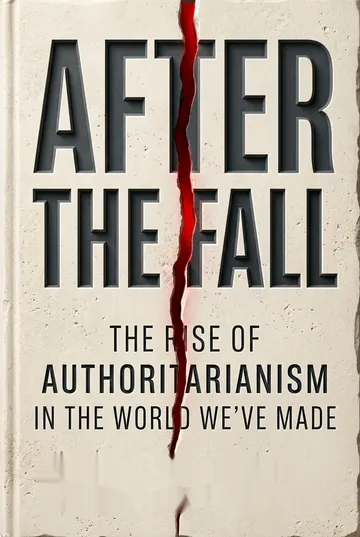
After the Fall examines America's declining global status and the rise of authoritarianism worldwide following the Cold War. Ben Rhodes, Obama's former deputy national security advisor, travels to Hungary, Russia, and China, interviewing dissidents and analyzing how American actions—including the Iraq War, 2008 financial crisis, and Trump's presidency—shaped today's political landscape. Reviewers praise Rhodes' thoughtful analysis, personal insights, and empathy, though some criticize the book's US-centric perspective and perceived whitewashing of Obama-era foreign policy. Most find it a compelling, well-written examination of democracy's challenges and what it means to be American today.
People Also Read








About the Author
Download PDF
Download EPUB
.epub digital book format is ideal for reading ebooks on phones, tablets, and e-readers.








































