Key Takeaways
1. ESP is a Scientifically Proven Human Ability, Not a Supernatural Phenomenon
Using the standards applied to any other area of science, it is concluded that psychic functioning has been well established.
Overwhelming evidence. Russell Targ, a laser physicist, asserts that decades of published experimental evidence from Stanford Research Institute (SRI) and other laboratories make it "logically and empirically incoherent to deny the existence of some kind of human ability for direct awareness or experience of distant events." This isn't about faith, but about data.
Skepticism refuted. A 1995 US Congress-commissioned assessment by the American Institutes for Research (AIR) reviewed government-funded remote viewing research. Statistician Jessica Utts concluded that "The statistical results of the studies examined are far beyond what is expected by chance. Arguments that these results could be due to methodological flaws in the experiments are soundly refuted." Even noted skeptic Ray Hyman conceded that the experiments were "free of the methodological weaknesses that plagued the early research."
Beyond chance. Modern protocols like Remote Viewing, Ganzfeld, Random Number Generation Perturbations, and Presentiment collectively show a "six-sigma effect," meaning the odds are one in a billion that results occurred by chance. This level of evidence is significantly stronger than what supports common medical practices, such as 81 mg aspirin therapy for heart attacks.
2. Remote Viewing Unlocks Perception Beyond Conventional Space and Time
This ability is about learning how to quiet your mind and separate the visual images of the psychic signal from the uncontrolled chatter of the mind.
Unobstructed awareness. Remote viewing (RV) is a technique developed at SRI that allows individuals to accurately describe and experience places and events blocked from ordinary perception by distance or time. It's a skill that expands awareness beyond conventional barriers.
Overcoming mental noise. The core of RV lies in distinguishing the "psychic signal" from "mental noise," which psychic Ingo Swann termed "analytical overlay" (AOL). AOL comprises:
- Memory
- Imagination
- Analysis
- The desire to name and concretize experiences
Nonlocal nature. Research, including studies at Princeton University, demonstrates that remote viewing is independent of distance, meaning it's no harder to view something hundreds of miles away than around the corner. Crucially, it's also independent of time, allowing for precognitive perceptions of future events.
3. Government-Funded Research Provided Overwhelming Evidence for ESP
The intelligence community had invested about $20 million over the twenty-three-year period during which the threat was being dealt with.
Cold War origins. The SRI remote viewing program, co-founded by Russell Targ and Harold Puthoff in 1972, was a $20 million, 23-year initiative supported by various US government agencies, including the CIA, NASA, and the Defense Intelligence Agency. It began partly due to fears that the Soviets were ahead in psychic research.
Operational successes. The program moved beyond basic research to operational tasks, with psychics providing actionable intelligence. Examples include:
- Locating a downed Russian bomber in Africa.
- Describing the health of American hostages in Iran.
- Identifying Soviet weapons factories in Siberia.
- Precognitively describing a Chinese atomic-bomb test three days before it occurred.
Declassification and validation. In 1995, after significant effort, Targ secured the declassification of many SRI research documents through a Freedom of Information Act request. This allowed the public release of data that further solidified the scientific credibility of remote viewing, confirming its establishment "using the standards applied to any other area of science."
4. Extraordinary Psychics Demonstrated Unprecedented Abilities
Pat Price, whom we mentioned in chapter 2, was an unexpected gift to our program at SRI.
Ingo Swann, the pioneer. Ingo Swann, a visionary artist, was instrumental in developing remote viewing. He demonstrated abilities such as:
- Psychically discovering the rings of Jupiter in 1973, six years before NASA's Voyager 1 confirmed them.
- Accurately describing a super-secret NSA listening post in Virginia from geographical coordinates.
- Precognitively detailing a failed Chinese atomic bomb test.
Pat Price, the psychic policeman. Retired police commissioner Pat Price exhibited remarkable and consistent psychic awareness. His feats included:
- Identifying Patricia Hearst's kidnapper from a mug book and locating the kidnap car.
- Describing a Soviet weapons factory at Semipalatinsk, including an eight-wheeled gantry crane and a 60-foot steel sphere under construction, confirmed by satellite years later.
- Precognitively describing the former water tanks at Rinconada Park, a site that had been a water treatment plant 60 years prior.
Hella Hammid, the reliable control. Photographer Hella Hammid, initially a "control" subject with no prior psychic experience, became SRI's most reliable remote viewer for a decade. Her achievements included:
- Accurately describing a pedestrian overpass in her first RV session.
- Consistently describing small objects hidden in film cans and even microscopic targets.
- Performing a precognition series where all four trials were successfully matched, with odds better than one in 24.
5. Precognition and Retrocausality Challenge Our Understanding of Time
For us believing physicists, the distinction between past, present, and future is only an illusion, even if a stubborn one.
Future influencing the past. Precognition, or foreknowledge of future events, is a well-documented psychic phenomenon. The concept of retrocausality suggests that a future event can affect awareness or behavior in the past.
Real-world examples:
- The unusually low occupancy (31%) of all four hijacked planes on 9/11, suggesting many people had a precognitive "gut feeling" to avoid those flights.
- William E. Cox's 1950s research showing trains that crashed had significantly fewer passengers on the day of the accident.
- A CIA contract monitor's vivid dream of a plane crash, leading him to change his flight, only for his original plane to crash, killing his colleague.
Laboratory validation. Professor Daryl Bem's "Feeling the Future" experiments at Cornell University demonstrated that future events can influence present choices. In one experiment, students were more successful at locating erotic pictures when the picture's location was randomly determined after their selection. His meta-analysis of nine experiments showed a statistical significance of more than a billion to one against chance.
6. Distant Mental Influence and Healing Are Supported by Scientific Studies
Although this presentiment effect is usually taken to reflect precognition (future-knowing) operating at an unconscious body level, these interesting findings can just as well be interpreted as instances in which objective events (the presentation of the slide itself, or the person’s future reaction to the slide) may be acting backward in time to influence the person’s physiology.
Mind-to-mind connections. Research indicates that the thoughts and intentions of one person can measurably affect the physiology of another distant person. Early Soviet research by Leonid Vasiliev demonstrated distant hypnotic induction, even through electromagnetic shielding, suggesting a non-electromagnetic medium for telepathic transmission.
Physiological responses. Douglas Dean's 1965 experiments showed that a distant receiver's autonomic nervous system (e.g., blood volume in fingers) responded significantly when a sender focused on names of emotional significance to the receiver. Dean Radin's work on "presentiment" showed physiological changes (heart rate, skin resistance) in subjects a few seconds before they were shown emotionally arousing pictures.
Distant healing efficacy. Clinical studies provide strong evidence for distant healing:
- Elisabeth Targ's double-blind study at California Pacific Medical Center showed significant health improvements and fewer hospitalizations in advanced AIDS patients receiving distant healing.
- Randolph Byrd's 1988 study and William Harris's 1999 study both demonstrated positive therapeutic effects of intercessory prayer on cardiac patients.
- A meta-analysis of 23 clinical studies by John Astin et al. found a significant effect size for distant healing, with overall significance of one in ten thousand for 2139 patients.
7. Compelling Evidence Suggests Consciousness Survives Bodily Death
The evidence that “something” survives is very strong.
Beyond super-psi. The question of survival of consciousness after death has been meticulously investigated. While some skeptics propose a "super-psi" hypothesis (universal clairvoyance by the medium), cases exist that challenge this, suggesting genuine communication with discarnate entities.
Documented cases:
- James L. Chaffin's will: A deceased man's spirit appeared to his son, revealing the location of a hidden, later will that redistributed his inheritance. No living person knew its location.
- Helen Duncan, the "witch": An English medium was imprisoned during WWII for revealing the sinking of HMS Barham through a deceased sailor's spirit, information unknown to the living.
- George Pellew's reappearance: Deceased Yale philosopher George Pellew, through medium Leonora Piper, identified 29 out of 30 of his living friends, discussing intimate details of their shared pasts.
- Maroczy-Korchnoi chess game: A deceased grandmaster, Geza Maroczy, played a seven-year chess match against living grandmaster Victor Korchnoi through a medium, playing at a grandmaster level and providing personal details.
Reincarnation evidence. Psychiatrist Ian Stevenson's lifelong research at the University of Virginia documented thousands of cases of children (typically 3-5 years old) recalling detailed memories of past lives, often with corresponding birthmarks or physical deformities matching injuries from their remembered deaths.
8. Modern Physics Offers Models for a Nonlocal, Interconnected Universe
The most incredible feature of Bell’s Theorem is that our thoroughly local-looking world cannot be explained by any conceivable local reality.
Nonlocality is fundamental. Modern physics, particularly quantum theory, provides a framework for understanding ESP through the concept of nonlocality. John Stewart Bell's 1964 mathematical proof, Bell's Theorem, demonstrates that our space-time reality is inherently nonlocal, meaning spatially separate events are not independent.
Quantum entanglement. Experiments in Berkeley, Paris, Geneva, and Vienna have repeatedly demonstrated quantum entanglement, where two particles, once connected, remain linked regardless of distance. Measuring one instantly affects the other, a phenomenon Einstein called "spooky action at a distance."
Holographic universe. Physicist David Bohm's "Undivided Universe" proposes a holographic model where the entire universe is "enfolded" in every part, and each part is enfolded in the whole. This "implicate order" suggests a unity of consciousness and a "greater collective mind," where information about every point in space-time is available to consciousness.
Eight-space model. Russell Targ and Elizabeth Rauscher developed a complex eight-dimensional Minkowski space model. This model suggests that:
- Our familiar three spatial and one temporal coordinate are expanded into real and imaginary parts.
- Any two locations in this complex space-time can be connected by a path of zero distance.
- This allows consciousness to experience zero spatial and/or temporal separation, explaining ESP and precognition.
9. Learning Remote Viewing Involves Quieting Mental Noise for Clearer Perception
Your hand may make little movements in the air over the paper; notice them and describe what your subliminal mind is trying to tell you.
Accessible skill. Remote viewing is a learnable skill, not exclusive to a gifted few. Targ's workshops worldwide, particularly with Italian women and American dowsers, have shown high success rates, suggesting that openness, self-esteem, and intention are key factors.
Simple protocol for beginners:
- Two-person game: One viewer, one interviewer.
- Blind targets: Initially, the interviewer can know the target for telepathic connection, but for true learning, the interviewer should also be blind to the target.
- Quiet environment: Dimly lit room, relaxed state.
- Focus on impressions: Describe "surprising shapes and images" that appear, avoiding naming or guessing.
- Debrief initial images: Write down and separate any pre-session thoughts.
- Sketch everything: Even fragmentary or nonsensical images.
- Sense aesthetic impact: Explore color, texture, shape, weight, smell, and function.
- Separate signal from noise: Distinguish confident psychic bits from memory, imagination, and analysis (AOL).
The "signal-to-noise" challenge. While increasing the psychic signal is difficult, reducing mental noise is achievable. This involves refraining from analysis and naming, which interfere with raw, uninterpreted imagery. Upton Sinclair's wife, Mary Craig, in her 1930 book Mental Radio, emphasized "inhibiting thought" and achieving a "blank state of consciousness" to enhance telepathic reception.
10. Ancient Wisdom Traditions Have Long Understood and Cultivated Psychic Abilities
Consciousness can be seen through the eyes of what Buddhists call “timeless or naked awareness,” a dimension of consciousness that corresponds to our deepest and most fundamental essence.
Millennia of knowledge. Psychic abilities are not a modern invention; they have been systematically studied and integrated into spiritual traditions for thousands of years. These traditions view ESP as a natural outcome of expanded consciousness, not supernatural phenomena.
Buddhist perspectives:
- Padmasambhava (8th century): Taught "naked awareness," a state free of judgment, fear, and resentment, where conditioned awareness is transcended. This aligns with RV's emphasis on overcoming AOL.
- The Flower Ornament Scripture (100 AD): Describes "Ten Super-knowledges of the Buddha," including telepathy, clairvoyance, precognition, and knowledge of past lives, all seen as manifestations of a quiet, spacious mind.
- Nagarjuna (2nd century BC): His four-valued logic (neither true nor not-true) aligns with quantum mechanics' paradoxes, suggesting that apparent paradoxes arise from flawed descriptions, not nature itself.
- Indra's Net (200 AD): A holographic metaphor for nonlocal awareness, where every jewel (consciousness) reflects all others, signifying non-separation.
Hindu perspectives:
- Patanjali's Yoga Sutras (2nd century BC): Teaches that "Yoga is mind-wave quieting," leading to divine connection and the emergence of "siddhis" (extraordinary powers) like precognition, telepathy, and healing.
- Akashic records: Patanjali described accessing these records, containing all past, present, and future information, through single-pointed focus.
- Nonduality (Atman=Brahman): The Vedas teach that individual awareness (Atman) is one with ultimate reality (Brahman), implying no fundamental separation in consciousness.
Review Summary
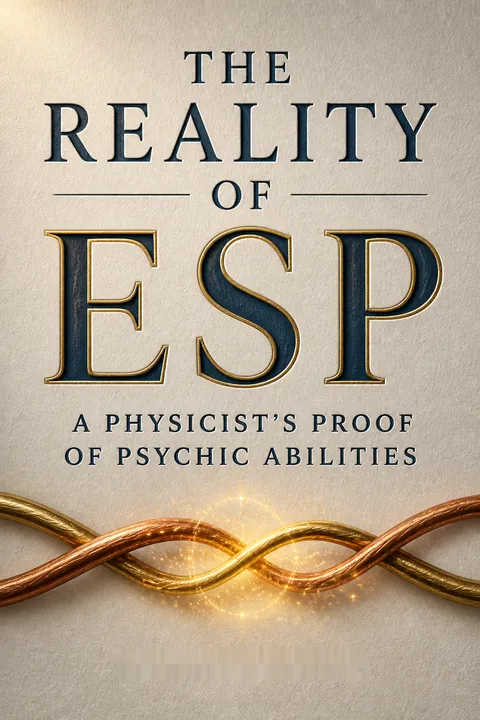
Reviews of The Reality of ESP are largely positive, averaging 4.21 out of 5. Many readers praise Targ's rigorous scientific approach, citing compelling statistical evidence from CIA and government-funded experiments. Readers appreciate the blend of hard science and accessible storytelling, with several noting the book opened their minds to remote viewing and psi phenomena. Some critics mention repetitiveness and wished for more discussion of failed trials. Overall, most readers — skeptics and believers alike — found the book thought-provoking and many highly recommend it.
People Also Read






About the Author


Download PDF
Download EPUB
.epub digital book format is ideal for reading ebooks on phones, tablets, and e-readers.








































