
Plot Summary
Legend of the Stradivarius
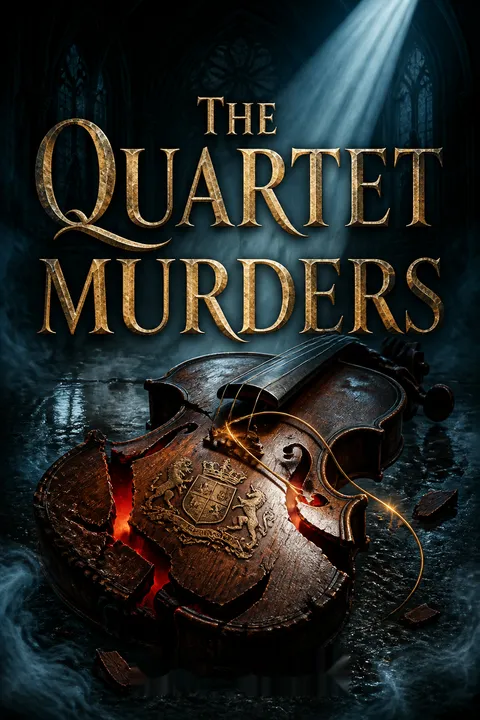
In 1709, Count Munsterhaven commissions Antonio Stradivari to craft nine string instruments, each adorned with his coat of arms, destined to become the "Munsterhaven Strads." These instruments, renowned for their beauty and sound, are coveted by musicians and collectors alike. Over centuries, their histories intertwine with tales of obsession, loss, and mystery. The legend sets the stage for a modern-day drama, where the past's shadows reach into the present, and the allure of a priceless violin becomes the catalyst for murder and intrigue.
Death at the Red Chapel
Detective Chief Inspector Oldroyd attends a chamber concert in Halifax's Red Chapel, eager to hear the famed Schubert Quartet and the legendary Munsterhaven Stradivarius played by Hans Muller. The music's serenity is shattered when Muller is shot dead mid-performance by a sniper hidden in the lighting gantry. Chaos erupts, and the audience is paralyzed by fear. Oldroyd's presence prevents panic, but the killer vanishes without a trace, leaving behind a stunned community and a crime scene that defies explanation.
Vanishing Violin, Vanishing Killer
As police swarm the Red Chapel, Oldroyd and his old friend DCI Armitage confront a baffling mystery: not only has Muller been murdered, but his Munsterhaven Stradivarius has vanished. The building is locked down, searched from top to bottom, yet neither the killer nor the violin is found. The surviving quartet members are devastated, and suspicion falls on everyone present. The audacity and precision of the crime suggest a professional operation, but the motive—murder or theft—remains elusive.
Quartet in Turmoil
The surviving members of the Schubert Quartet—Anna Robson, Michael Stringer, and Martin Hamilton—are interrogated. Old rivalries, artistic disagreements, and personal entanglements surface. Anna's past affair with Muller and her troubled marriage to the volatile Christopher Downton add layers of complexity. Hamilton's side business as a dealer in rare instruments draws suspicion, while Stringer's ambition and resentment toward Muller are exposed. The quartet's unity dissolves, each member haunted by grief, fear, and the possibility of betrayal from within.
The Collector's Web
The investigation leads Oldroyd and Carter into the shadowy world of collectors and dealers. Edward Shaw, a wealthy patron, and Paul Taylor, a dubious instrument shop owner, emerge as key figures. Their businesses mask deeper secrets—drug smuggling and illicit trades. Elizabeth Knott, a formidable London collector, is revealed to possess a hidden Munsterhaven Strad herself, acquired through questionable means. The web of greed and secrecy entangles all, as the violin's disappearance becomes a magnet for criminal ambition.
Shadows from the Past
The Munsterhaven Strad's history is traced to a Jewish family in Berlin, stolen during the Nazi era. Ruth Greenfield, a cellist and activist, campaigns for the return of Nazi-looted art and is linked to threatening messages sent to Muller. The investigation uncovers layers of trauma, loss, and unresolved vengeance. Muller's own past in East Germany is murky, and his true identity and the means by which he acquired the violin are called into question, deepening the mystery.
The Curse of the Munsterhaven
As the body count rises—Hamilton is executed in London, the violin changes hands among criminals, and attempts are made on collectors' lives—the Munsterhaven Strad seems cursed. The instrument's allure drives people to betrayal, violence, and madness. The investigation sprawls across Yorkshire and London, involving international gangs, rival collectors, and a secretive Jewish restitution group. The violin's "curse" becomes a metaphor for the destructive power of greed and unresolved history.
Greed, Grief, and Guilt
Oldroyd, Carter, and Armitage wrestle with their own regrets and family struggles as the case drags on. The surviving musicians are consumed by grief and suspicion. Anna Robson's marriage teeters on collapse, Stringer's ambitions are thwarted, and the memory of Muller's betrayal haunts all. The collectors' obsessions are revealed as hollow, their lives empty despite their riches. The investigation becomes as much about confronting personal guilt and loss as about solving the crime.
The Maze of Motives
The detectives pursue every lead: jealous musicians, vengeful spouses, greedy collectors, and political activists. Each suspect has motive and opportunity, yet none fit the facts. The Red Chapel's architecture is scrutinized for secret exits; alibis are checked and rechecked. The investigation is mired in misdirection, as the true nature of the crime remains hidden behind layers of deception. The detectives' frustration mounts as the case threatens to go cold.
The Twin Illusion
A breakthrough comes when Oldroyd realizes the solution lies not in secret passages or criminal masterminds, but in a classic illusion: the murderer both left and stayed in the building. Frank Dancek, a respected committee member, is revealed to have an identical twin, Helmut. Together, they orchestrated the murder—one as the sniper, the other as the decoy. Their perfect resemblance allowed them to swap places unnoticed, exploiting the chaos and the trust of those around them.
Vengeance and Revelation
The Dancek twins confess: their sister, Helga, was a gifted violinist who died trying to escape East Germany, betrayed by her lover—Hans Muller, whose real name was Reinhard Meyer. The murder was an act of vengeance for a decades-old betrayal and the theft of a life and a family's future. The twins' confession brings closure to the case, exposing the limits of justice and the enduring scars of history. The violin, once a symbol of beauty, is revealed as a vessel for pain and retribution.
The True Price of Music
The Munsterhaven Strad is recovered and returned to the Bloomsbury School, its legacy forever tainted by blood and loss. The collectors' schemes are exposed, and the criminal networks dismantled. Oldroyd and his colleagues reflect on the true value of art, family, and forgiveness. The case's emotional toll lingers, but the music endures, offering solace and hope. The story closes with a Christmas gathering, a reminder that love and connection matter more than any possession, however priceless.
Analysis
A meditation on justice, memory, and the true value of art"The Quartet Murders" is more than a whodunit; it is a profound exploration of how the past shapes the present, and how beauty and violence can be tragically intertwined. The Munsterhaven Stradivarius, both object of desire and vessel of history, becomes a symbol for the ways in which art can inspire, corrupt, and heal. The novel interrogates the nature of justice—legal, personal, and historical—asking whether vengeance can ever bring peace, and whether the wounds of the past can truly be healed. Through its intricate plot and psychologically rich characters, the story warns against the dangers of obsession and the emptiness of possession without love. Ultimately, it affirms the enduring power of music and human connection, suggesting that the true "wonder of the world" lies not in objects, but in the bonds we forge and the courage we show in facing our own darkness.
Review Summary
The Quartet Murders receives generally positive reviews, averaging 4.19 stars. Readers praise the atmospheric Yorkshire setting, educational content about Stradivarius violins, and the old-fashioned police procedural style reminiscent of Agatha Christie. Main character DCI Oldroyd is well-liked, though some find the pacing slow with exhaustive interviews. The impossible crime setup—a violinist shot during a concert with both killer and stolen Stradivarius vanishing—intrigues readers. Common criticisms include a predictable or clichéd solution, slow middle sections, and lack of modern forensics. Most agree it's well-written with likeable characters, though opinions split on whether it matches the first book's quality.
Characters
Detective Chief Inspector Jim Oldroyd
Oldroyd is a seasoned Yorkshire detective, deeply passionate about music and justice. His personal life is marked by loneliness and regret over a failed marriage, which colors his empathetic approach to victims and suspects alike. Oldroyd's investigative style is methodical yet imaginative, often relying on intuition and psychological insight. He is driven by a need for resolution—not just of crimes, but of the emotional wounds they expose. Over the course of the case, Oldroyd confronts his own limitations, learns from his mistakes, and ultimately finds meaning in perseverance and human connection.
Detective Sergeant Andy Carter
Carter, a Londoner transplanted to Yorkshire, brings fresh perspective and energy to Oldroyd's team. His relationship with DS Steph Johnson provides emotional stability, and his outsider's view often challenges local assumptions. Carter is quick-thinking, resourceful, and willing to question authority. He grows from a somewhat inexperienced detective into a confident investigator, learning to trust his instincts and contribute meaningfully to the case's resolution. His journey reflects the importance of adaptability and teamwork in overcoming complex challenges.
DCI Sam Armitage
Armitage is Oldroyd's longtime colleague and counterpart in Halifax. Jovial and unpretentious, he is more comfortable with routine cases than with the high-stakes, high-culture world of the Munsterhaven Strad. His strengths lie in persistence, local knowledge, and a grounded sense of justice. Armitage's friendship with Oldroyd provides comic relief and emotional support, but he also struggles with the pressures of leadership and the limitations of traditional policing. His character embodies the value of perseverance and the quiet heroism of everyday work.
Anna Robson
Anna is the violist of the Schubert Quartet, torn between her past affair with Muller and her troubled marriage to Christopher Downton. She is sensitive, introspective, and haunted by guilt and fear. Anna's relationships with her colleagues are fraught with unspoken tensions, and her grief over Muller's death is compounded by suspicion and self-doubt. Her psychological journey mirrors the destructive power of secrets and the difficulty of moving beyond trauma.
Michael Stringer
Stringer, the quartet's second violinist, is driven by artistic ambition and a desire for change. His rivalry with Muller and unrequited feelings for Anna fuel his bitterness. Stringer's defensiveness masks deep insecurity, and his actions are often motivated by a need for validation. As the investigation unfolds, he is forced to confront his own limitations and the consequences of his ambitions, ultimately emerging as a more self-aware, if chastened, individual.
Martin Hamilton
Hamilton, the quartet's cellist, leads a double life as a musician and a dealer in rare instruments. His charm and affability conceal a willingness to bend the rules for personal gain. Hamilton's theft of the Munsterhaven Strad sets off a chain of violence that leads to his own murder. His character illustrates the dangers of greed and the ease with which moral boundaries can be crossed in pursuit of desire.
Hans Muller / Reinhard Meyer
Muller, the murdered violinist, is a virtuoso haunted by a dark past. His true identity as Reinhard Meyer, a former East German who betrayed his lover, is the key to the mystery. Muller's life is marked by ambition, guilt, and a desperate need for redemption. His possession of the stolen Munsterhaven Strad symbolizes both his artistic greatness and his moral failure. His murder is both a personal reckoning and a historical reckoning with the crimes of the past.
Frank and Helmut Dancek (Franz and Helmut Weber)
The Dancek twins, posing as a single individual, orchestrate Muller's murder as an act of vengeance for their sister's death. Their psychological complexity lies in the fusion of love, loss, and righteous anger. Their plan exploits trust and perception, allowing them to evade suspicion through a classic illusion. Their confession reveals the enduring power of family bonds and the destructive potential of unresolved trauma.
Elizabeth Knott
Knott is a wealthy London collector whose life revolves around acquiring rare instruments. Her obsession with the Munsterhaven Strad drives her to criminal associations and moral compromise. Knott's emotional isolation is masked by sophistication and wit, but her ultimate downfall exposes the emptiness of possession without connection. Her character serves as a cautionary tale about the perils of unchecked desire.
Ruth Greenfield
Greenfield, a cellist and activist, campaigns for the restitution of Nazi-looted art. Her commitment to justice is rooted in personal and historical trauma. She is willing to use intimidation but draws the line at violence. Greenfield's presence in the story highlights the enduring impact of history and the importance of moral conviction in the face of injustice.
Plot Devices
The Munsterhaven Stradivarius
The Munsterhaven Strad serves as both MacGuffin and symbol, driving the plot and embodying themes of beauty, greed, and historical trauma. Its disappearance and recovery structure the investigation, while its history connects characters across generations and continents. The violin's "curse" is both literal and metaphorical, reflecting the destructive consequences of obsession and unresolved guilt.
The Locked-Room Mystery
Muller's murder in a sealed environment, with the killer vanishing without trace, creates a locked-room puzzle. The narrative structure relies on misdirection, red herrings, and the gradual elimination of suspects. The solution—a twin swap—subverts expectations and rewards close attention to detail, echoing the tradition of Golden Age detective fiction.
Misdirection and Red Herrings
The investigation is complicated by multiple motives, overlapping crimes, and a cast of unreliable witnesses. The narrative employs red herrings—drug smuggling, Nazi restitution, collector rivalries—to distract both detectives and readers from the true solution. The interplay of personal and historical motives deepens the mystery and enriches the emotional stakes.
Historical Trauma and Revenge
The story's emotional core lies in the legacy of Nazi crimes, Cold War betrayals, and family tragedy. The murder is ultimately an act of personal vengeance rooted in historical injustice. The narrative structure weaves together past and present, using flashbacks, confessions, and recovered documents to reveal the hidden connections that drive the plot.
Psychological Realism and Character-Driven Suspense
The novel's suspense arises as much from the characters' psychological struggles as from external events. Guilt, grief, ambition, and obsession shape actions and perceptions, blurring the line between victim and perpetrator. The detectives' own emotional journeys parallel the case, creating a layered narrative that explores the costs of justice and the possibility of redemption.
Yorkshire Murder Mysteries Series

Download PDF
Download EPUB
.epub digital book format is ideal for reading ebooks on phones, tablets, and e-readers.








































