
Plot Summary
Redmire's Vanishing Act
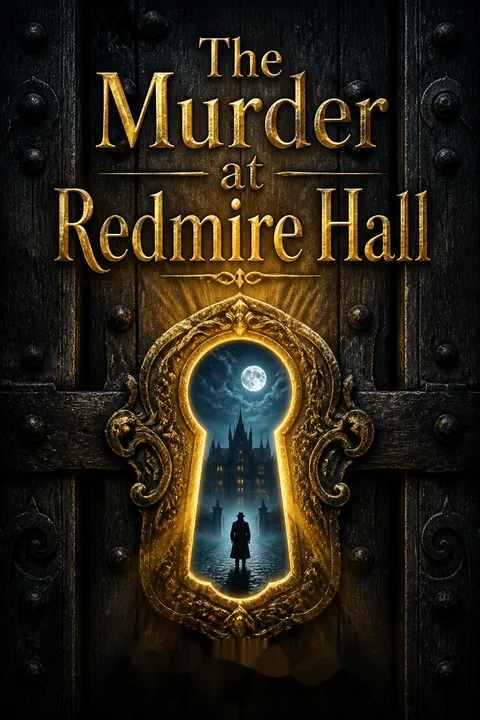
In 1980, the flamboyant Lord Vivian Carstairs, obsessed with magic, hosts a lavish party at Redmire Hall. He promises his elite guests an unprecedented illusion: he will vanish from a locked room, only to reappear moments later. The guests, after thoroughly inspecting the room for secret exits, are astounded when Vivian disappears and reappears as promised. The trick's secret remains closely guarded, and the locked room is sealed away, its mystery unsolved. Over time, the story becomes legend, and Redmire Hall's fortunes wane. The trick is never performed again, and the key to the room is lost—until decades later, when the next generation sees an opportunity to revive both the illusion and the estate's dwindling finances.
Family and Foes Gather
Years later, Frederick Carstairs, Vivian's son and the new Lord Redmire, is desperate to save the estate from financial ruin. He plans to recreate his father's legendary trick, this time for a live television audience, hoping to draw crowds and revenue. He invites his estranged family—siblings, ex-wife, children, lovers, and rivals—each with their own grievances and secrets. The gathering is tense, with old wounds reopened and new resentments simmering. Frederick's relationships are fraught: his brother Dominic resents him, his daughter Poppy is spoiled and manipulative, and his ex-wife Antonia is dignified but bitter. The stage is set for drama, both magical and mortal.
The Illusion Reborn
As the day of the televised event arrives, the estate buzzes with activity. Frederick is determined to keep the trick's mechanics secret, enlisting trusted staff and old estate hands to help. The family and guests speculate about the trick and their host's motives, while the police—led by DCI Oldroyd and DS Steph Johnson—are invited to witness and verify the illusion's authenticity. The atmosphere is electric with anticipation, suspicion, and underlying tension. Frederick's hope is that the trick's success will secure Redmire's future, but beneath the surface, old rivalries and hidden agendas threaten to turn the performance into something far more sinister.
Death in the Spotlight
The night of the performance arrives. Before a live audience and television cameras, Frederick enters the locked room, which is inspected and sealed by the police. The trick proceeds as before: Frederick vanishes, then reappears. But when the door is opened for the final reveal, Frederick collapses, a knife in his back, dead before the horrified crowd. Chaos erupts. The impossible murder—committed in a locked, closely watched room—stuns everyone. DCI Oldroyd and Steph must take charge, sealing the estate and beginning a complex investigation. The family, already fractured, is now trapped together as both suspects and potential victims.
Locked Room, Open Suspects
Oldroyd and Steph begin their investigation, interviewing the family, guests, and staff. Motives abound: financial desperation, jealousy, revenge, and old betrayals. Frederick's gambling debts, failed relationships, and plans to sell parts of the estate have left many with reasons to wish him dead. The locked-room nature of the crime baffles even the seasoned detectives. Meanwhile, the estate's staff—especially the loyal but overburdened manager Wilkins and the enigmatic PA Andrea Jenkinson—harbor their own secrets. The investigation is further complicated when a second murder occurs: Harry Robinson, a retired estate mechanic with knowledge of the trick, is found strangled in his cottage.
Secrets and Grudges Surface
As Oldroyd and Steph dig deeper, the tangled web of relationships at Redmire Hall becomes clear. The Carstairs family is rife with resentment: Dominic envies his brother's inheritance, Poppy manipulates her father for money, and ex-lovers circle with unfinished business. Staff members, too, are drawn into the drama—some loyal, some embittered. The detectives uncover evidence of blackmail, secret affairs, and financial desperation. The murder of Harry Robinson suggests the killer is eliminating anyone who knows the trick's secret. The estate's future, and the safety of those within, hang in the balance.
The Second Body
The murder of Harry Robinson, the only person besides the original magician who knew the trick's mechanics, sends shockwaves through the estate. Oldroyd theorizes that Robinson was killed to prevent him from revealing how the illusion works—or who else was involved. The detectives learn that Robinson had been paid a generous pension, likely as hush money, and that he had recently been approached about the trick's revival. The investigation widens to include the estate's staff, especially those with technical knowledge or access to the locked room. The sense of danger intensifies as it becomes clear the killer is still at large.
Inheritance and Motives
The reading of Frederick's will reveals the extent of his debts and the precariousness of the estate's future. Alistair, Frederick's son, inherits the estate, but Poppy's expected windfall is diminished by creditors. James Forsyth, a former business partner, is left a suspiciously generous legacy, raising questions about blackmail. The family's reactions to the will expose further motives for murder: disappointment, resentment, and desperation. Meanwhile, the detectives discover that Frederick had secret plans to sell off parts of the estate, angering both family and staff. The investigation uncovers a network of secrets, lies, and shifting alliances.
The Gardener's Devotion
David Morton, the head gardener, emerges as a key figure. His lifelong devotion to Redmire's gardens and his family's legacy make him fiercely protective of the estate. When he learns of Frederick's plans to sell off the historic gardens, Morton is driven to desperation. He is drawn into a conspiracy with Andrea Jenkinson, whose own motives are rooted in personal vengeance. Together, they manipulate events behind the scenes, using their knowledge of the estate and the trick to orchestrate the murders. Morton's actions are fueled by a twisted sense of loyalty—to the land, not its master.
The Assistant's Vengeance
Andrea Jenkinson's true identity is revealed: she is the illegitimate daughter of Frederick Carstairs and the original magician's assistant, abandoned and left in poverty. Consumed by bitterness over her mother's fate, Andrea infiltrates Redmire Hall as Frederick's PA, plotting revenge. She discovers the secret of the locked room through Harry Robinson and enlists Morton's help. Together, they plan and execute the murders, using the trick as both method and message. Andrea's calculated vengeance is the culmination of years of suffering and resentment, turning the illusion that once brought her parents together into the instrument of her father's destruction.
The Magic Revealed
Oldroyd, piecing together clues from interviews, forensic evidence, and a child's memory of a lost marble, finally unravels the trick. The locked room is, in fact, two identical rooms on a hidden track, allowing one to slide away and be replaced while concealed by a curtain and loud music. The killer enters through a trapdoor when the rooms are shifted, commits the murder, and escapes before the room returns. The elaborate mechanism, built decades earlier, is the perfect cover for murder. Oldroyd stages a dramatic reveal, exposing the mechanics of the illusion and confronting the conspirators before the assembled family.
Justice and Aftermath
With the murderers unmasked, the family and estate are left to reckon with the aftermath. Andrea and Morton are arrested, unrepentant in their motives—one for revenge, the other for love of the gardens. The Carstairs family, though exonerated, must face the damage wrought by generations of secrets, betrayals, and entitlement. Alistair inherits a troubled legacy, determined to restore Redmire's honor. Oldroyd, reflecting on the case, is left to ponder the nature of justice, the power of illusion, and the cost of truth. The estate, and those who remain, must find a way to move forward from the darkness that has finally been brought into the light.
Analysis
A modern locked-room mystery with psychological depth"The Murder at Redmire Hall" revitalizes the classic country house whodunit by blending ingenious plotting with a nuanced exploration of class, family, and the destructive power of secrets. At its core, the novel interrogates the illusions—both literal and figurative—that sustain privilege and power. The locked-room trick is not just a puzzle to be solved, but a symbol of the ways in which people hide from truth, responsibility, and one another. The story's emotional arc is driven by the pain of abandonment, the hunger for justice, and the corrosive effects of envy and entitlement. Through Oldroyd and Steph, the novel offers a compassionate but unsparing look at the costs of both action and inaction, reminding readers that the greatest mysteries are often those of the human heart. The ultimate lesson is that justice, while necessary, cannot undo the damage wrought by years of neglect and betrayal—but it can, at least, bring the truth into the light, allowing for the possibility of healing and renewal.
Review Summary
The Murder at Redmire Hall receives mostly positive reviews (4.28/5) for its locked-room mystery reminiscent of Agatha Christie's Golden Age detective fiction. Readers enjoyed the Yorkshire setting, DCI Oldroyd's character, and the clever plot involving Lord Redmire's death during a televised magic trick. Common praise includes the traditional mystery structure and Poirot-style denouement. Criticisms focused on dated police procedures, clichéd characters, undisclosed forensic evidence, and predictable solutions. Some found it too long or melodramatic, while others appreciated the cozy mystery atmosphere and Yorkshire atmosphere.
Characters
DCI Jim Oldroyd
Oldroyd is the lead detective, known for his sharp intellect, methodical approach, and deep sense of justice. He is both an outsider and observer, able to navigate the world of the aristocracy with skepticism and wit. Psychologically, Oldroyd is marked by personal loneliness and regret over his failed marriage, which gives him empathy for the wounded and a certain melancholy. His approach to the case is both logical and intuitive, drawing on literary and psychological insights. Over the course of the investigation, Oldroyd's dogged pursuit of truth is tested by the complexity of the locked-room mystery and the emotional toll of the family's secrets.
DS Stephanie Johnson
Steph is Oldroyd's trusted partner, providing a grounded, modern perspective. She is quick-witted, emotionally intelligent, and unafraid to challenge her superior when necessary. Her working-class background and experiences with family trauma give her insight into the dynamics of power, privilege, and resentment at Redmire Hall. Steph's relationship with Oldroyd is both professional and familial, marked by mutual respect and occasional banter. She serves as a moral compass, reminding Oldroyd of the human cost of their work and the importance of compassion amid the pursuit of justice.
Frederick Carstairs (Lord Redmire)
Frederick is the current Lord Redmire, a man living in the shadow of his father's legend and his own failings. He is charming but irresponsible, addicted to gambling and incapable of managing the estate's finances. His relationships are fraught: he is resented by his brother, estranged from his ex-wife, and manipulated by his daughter. Frederick's decision to revive the locked-room trick is both a desperate bid for salvation and a fatal act of hubris. Psychologically, he is driven by a need for approval and a fear of irrelevance, making him vulnerable to manipulation and, ultimately, murder.
Andrea Jenkinson (Dawson)
Andrea is Frederick's personal assistant, but beneath her professional exterior lies a burning desire for revenge. The illegitimate daughter of Frederick and the original magician's assistant, Andrea grew up in poverty, abandoned by her father and haunted by her mother's suicide. Her psychological profile is shaped by betrayal, loss, and a relentless drive to right the wrongs done to her family. She is methodical, patient, and ruthless in her pursuit of vengeance, using her position to orchestrate the murders. Andrea's actions are both a personal reckoning and a commentary on the destructive power of secrets and neglect.
David Morton
Morton is the head gardener at Redmire Hall, a man whose identity is inseparable from the land he tends. Generations of his family have served the estate, and he views the gardens as his true legacy. When Frederick's plans threaten to destroy the gardens, Morton's devotion turns to fanaticism. He becomes Andrea's accomplice, rationalizing murder as a necessary act to protect what he loves. Morton's psychological journey is one of loyalty twisted into violence, illustrating how noble intentions can be corrupted by desperation and a sense of powerlessness.
Harry Robinson
Robinson is a retired estate mechanic, the only person besides the original magician who knows the secret of the locked room. He is paid a generous pension to keep silent, but is drawn back into the intrigue when the trick is revived. Robinson's knowledge makes him both valuable and vulnerable; he is manipulated by Andrea and Morton, then murdered to ensure his silence. His fate underscores the expendability of those who serve the powerful, and the dangers of being caught between loyalty and survival.
Dominic Carstairs
Dominic is Frederick's younger brother, forever resentful of his sibling's inheritance and status. He is practical, conservative, and deeply dissatisfied with his lot in life. Dominic's bitterness colors his relationships—with his wife, his children, and the rest of the family. He is quick to suspect others and slow to accept responsibility for his own failings. Psychologically, Dominic embodies the corrosive effects of envy and entitlement, serving as both a red herring and a mirror for the family's dysfunction.
Poppy Carstairs
Poppy is Frederick's daughter, a product of privilege and neglect. She is charming but self-centered, using her father's guilt and affection to secure financial support. Poppy's relationship with her boyfriend Tristram is marked by co-dependency and shared recklessness. Her psychological profile is shaped by a lack of boundaries and a desperate need for validation. Poppy's grief at her father's death is genuine but complicated by her own interests, making her both a suspect and a victim of the family's legacy.
Alistair Carstairs
Alistair is Frederick's son and the heir to Redmire Hall. He is steady, conscientious, and determined to restore the estate's honor. Alistair's sense of duty is both a strength and a source of anxiety, as he navigates the expectations of family, tradition, and the future. He is contrasted with his father and sister, embodying the hope for renewal amid decay. Psychologically, Alistair is marked by a desire to do right, but also by the weight of history and the fear of repeating past mistakes.
James Forsyth
Forsyth is Frederick's former business partner and Alex Davis's current lover. He is intelligent, charming, and deeply embittered by Frederick's betrayal in business and love. Forsyth's motives are complex: he seeks both revenge and financial restitution, resorting to blackmail when other avenues fail. His psychological profile is one of wounded pride and calculated self-interest, making him a plausible suspect and a symbol of the estate's moral rot.
Plot Devices
Locked-Room Mystery
The central plot device is the locked-room murder, a staple of detective fiction. The trick's mechanics—a pair of identical rooms on a hidden track, swapped while concealed by a curtain and music—serve as both the literal and metaphorical heart of the story. The device allows for misdirection, red herrings, and a sense of the impossible, challenging both characters and readers to question appearances. The locked room also symbolizes the secrets and deceptions at the core of the Carstairs family, with the solution requiring both technical ingenuity and psychological insight.
Ensemble Cast and Multiple Motives
The narrative structure relies on a large ensemble cast of characters, each with plausible motives and hidden agendas. The investigation unfolds through a series of interviews, flashbacks, and revelations, with each character's perspective adding layers to the mystery. Red herrings abound: financial desperation, romantic betrayal, and family resentment all serve to distract from the true culprits. The device of the family gathering—isolated, suspicious, and forced to confront their past—heightens the tension and stakes.
Psychological and Social Commentary
The story uses the murder mystery as a lens to explore deeper themes: the decline of the aristocracy, the corrosive effects of privilege, and the psychological damage wrought by secrets and neglect. The locked room becomes a metaphor for the family's inability to escape their history, while the staff's complicity highlights issues of loyalty, exploitation, and revenge. The narrative structure allows for both suspense and reflection, with the detectives serving as both investigators and commentators on the human condition.
Dramatic Denouement
The climax of the story is a theatrical gathering in the very room where the murders occurred, with Oldroyd assuming the role of both detective and showman. This device mirrors the original magic performance, turning the investigation itself into a kind of illusion—one that must be unraveled to reveal the truth. The denouement is both cathartic and unsettling, forcing the characters (and readers) to confront the consequences of their actions and the limits of justice.
Yorkshire Murder Mysteries Series

Download PDF
Download EPUB
.epub digital book format is ideal for reading ebooks on phones, tablets, and e-readers.








































