


Plot Summary
Prologue
A disembodied consciousness drifts through nothingness and witnesses the birth of everything: the Ancients, the Great Creators, dreaming of what is to come and burning off their essence to craft the first Primals. It watches the true Primal of Life give the winged beasts a choice, gifting them free will that passes into the first mortal, and it sees benevolence curdle into apathy as gods and mortals grow entangled.
The Ancients foresaw that everything done to prevent the end only ensured it. Threaded through their dreams are two daughters, two kings, and the Great Conspirator,4 the fall of ruin and wrath, and the rise of blood and bone.
The creation myth functions as a thematic overture, framing the entire novel around balance and its inevitable collapse. Armentrout inverts the usual fantasy cosmogony: prevention becomes cause, and love, not hatred, destabilizes the cosmos. The passage argues that emotion itself, the capacity to grieve and cherish, is both the engine of life and the seed of ruin. By presenting free will as an accidental infection passed from beast to mortal, the prologue reframes agency as contagion. It also plants the prophecy's coded figures before we can attach them to characters, so that recognition arrives later as dread rather than surprise, priming readers to watch destiny tighten rather than unspool.
She Wakes With Silver Eyes
For days Casteel2 has knelt at Poppy's1 stasis-locked bedside, repeating a prayer that she will know herself when she opens her eyes. When her lashes finally lift, her eyes are molten silver, and twin scents flood the chamber: fresh lilacs for life, stale lilacs for death.
A surge of essence flings Casteel2 and Kieran3 across the room and knocks them cold for two days. They wake understanding the terrible gift the Joining gave them, splitting Poppy's1 dual power so death entrenches in Casteel2 and life in Kieran.3
Emil15 covered for their collapse while Poppy1 slept on. Casteel,2 gutted by guilt that healing him after a Revenant attack pushed her deeper, refuses to leave her, until Kieran3 shames him into ruling, sending him toward a grisly mystery in the Luxe.
The opening reframes intimacy as transfiguration: the Joining, a marital and magical bond, has physically rewritten three beings. Armentrout literalizes the romantasy premise that love changes you, giving Casteel death and Kieran life, a division that quietly foreshadows the book's climax. Casteel's guilt establishes his defining flaw, the compulsion to control outcomes and shield Poppy even from herself. Poppy's silence, her body present but her self absent, generates the novel's central anxiety: identity as something that can be lost, occupied, overwritten. The dual lilac scent, sweet and rotten, becomes the book's olfactory signature for the impossible coexistence of life and death within one person.
The Bloodless Ascended
In the wealthiest neighborhood of the Garden District, Casteel2 finds Ascended dead in their locked underground chambers, drained through fang marks with no struggle and no way in or out. Grass, flowers, and caged birds around each home have crumbled to gray dust, and everything reeks sweetly of decay.
He carries the puzzle to Reaver,7 who explains the impossible: Kolis,4 the true Primal of Death entombed for a millennium, survives as a shadow-soul able to inhabit the Ascended he created and drink their blood to rebuild his flesh. Reaver7 also lets slip that Isbeth11 likely meant to use Malec as a vessel for Kolis4 rather than sacrifice Poppy.1 Then dawn breaks in the west instead of the east, the first visible crack in the realm's balance.
The mystery functions as classic dramatic irony, letting readers assemble the threat before the characters name it. The drained Ascended invert the vampire's own predation, a grim poetic justice that also signals a predator above predators. Armentrout uses environmental death, dust plants and dead birds, to make Kolis's presence tangible before he appears, building him as atmosphere rather than body. The sun rising in the west is a masterstroke of cosmic wrongness: an image everyone understands instantly, converting abstract imbalance into visceral dread. Reaver's casual revelation about vessels begins dismantling the previous book's assumptions, teaching readers that everything they thought they knew was a partial truth.
A Cage of Golden Bars
When Poppy1 finally rouses, she is starving, feral, and only half-aware of who she is. A voice whispers inside her, promising to end her pain if she surrenders, and she recognizes memories of golden bars, chains, and a beautiful golden man.
Terrified of hurting Casteel,2 she fights the need to feed, then drinks and briefly returns to herself before the cold thing seizes her again. Her eyes flicker crimson, she throws bolts of eather, and she flings Reaver7 and Casteel2 across the chamber.
Stale lilacs pour off her skin. Reaver7 names the horror: Kolis4 has forged a connection through shared blood and rides her mind as he rides the Ascended. She slips between lucidity and possession, begging the others to keep away before she does something irreversible.
This section externalizes trauma as literal possession, a device that dramatizes the loss of bodily autonomy that has haunted Poppy since her Maiden days. The golden cage imagery, surfacing before she understands it, seeds the Sotoria revelation while functioning as pure nightmare logic. Armentrout stages horror through violated intimacy: the beloved becomes weapon, the safe body becomes prison. Poppy's terror is not of dying but of harming, marking her moral center even in madness. The alternation between her voice and Kolis's dry, bone-scraping cadence creates a chilling instability, forcing Casteel to love someone who might, at any second, try to kill him, and forcing readers to distrust the protagonist's own perceptions.
The Promise That Cut Deepest
In a lucid window, the trapped Poppy1 summons Kieran3 and pleads with him to honor a secret vow: if she ever loses control, he must force her into a centuries-long stasis by putting her in the ground. Casteel,2 hearing this, feels the betrayal in reverse, that she trusted Kieran3 with the unbearable task and not him.
He launches himself at the wolven he has loved since birth,3 and only Reaver7 stops the fight. Shattered, Casteel2 accepts that Poppy1 must be confined and moves her to a comfortless cell beneath Wayfair. When Kolis4 uses her hands to claw her own face bloody, Casteel2 binds her wrists, and he refuses to let anyone else share the burden of guarding her, guilt and hurt festering in equal measure.
The promise becomes the novel's emotional fault line, a wound that will fracture the central triad for hundreds of pages. Armentrout weaponizes love's asymmetry: Poppy chose Kieran precisely because Casteel could never do it, an act of protection Casteel experiences as rejection. This is astute relationship psychology, the way a partner's mercy can register as distrust. Casteel's assault on Kieran reveals how thin his control runs when his self-image as protector collapses. The cell echoes New Haven's dungeon, a callback that stresses how thoroughly this book revisits Poppy's captivity motifs, now with the horror internalized: she is imprisoned not by enemies but by the god wearing her skin.
The Ancestor Who Burned
Reaver7 travels to Iliseeum and returns with Attes,5 a Primal god who is a near-mirror of Malik8 and their father Valyn.10 Examining Poppy,1 Attes5 finds the symbol of Death branded between her breasts, proof Kolis4 reached her in stasis. To sever the bond, he uses the deadly blood of the draken Nektas, letting it eat through his own hand first to dull its potency before it touches her skin.
Poppy1 screams as the mark burns away and two serpentine shadows of Kolis's will writhe free and shatter against the wall. Attes5 reveals he descends from the same ancient bloodline as Casteel,2 making him unlikely kin. The severing works, but her interrupted Ascension and weakened body send Poppy1 tumbling into an even deeper stasis.
Attes enters as savior and enigma, his willingness to maim himself for a woman he claims only to have known long ago planting a question the book milks for tension. The scene stages love as literal self-immolation, prefiguring the thesis that a Primal's devotion is its fatal weakness. Armentrout also uses him to expand the mythos through family: the mirroring faces suggest bloodlines converging by design, not accident. The physical horror of draken blood, burning bone and flesh, grounds the fantasy stakes in body horror. Crucially, the cure causes new harm, deeper stasis, embodying the novel's recurring logic that every act of salvation exacts a proportional, often escalating, cost.
A King's Desperate Prayer
Sleepless and unraveling, Casteel2 prays directly to Seraphena,6 the awakened Queen of the Gods, vowing anything if she returns Poppy.1 Roots swallow the bed, the realm sheltering its Primal, and Poppy1 stirs at last, herself again. Relief is brief.
Feeling the agony of tens of thousands dying, she instinctively opens the realms and steps across the Primal Veil into the Continents, a vast world of steel towers and strange machines collapsing as a winged, faceless Ancient claws free of the earth.
She tries to save the drowning and the falling, fights the Ancient, and loses, rescued only when the Fate Holland drags her back. She learns the catastrophe could not be prevented, that the deaths were inevitable, and that her own awakening set it in motion.
The crossing to the Continents is a startling genre rupture, importing a recognizably modern world (skyscrapers, helicopters, news reports) into epic fantasy to universalize the stakes. Armentrout uses the alien setting to make cosmic imbalance concrete and grievable: real people, real cities, obliterated. Poppy's compulsion to heal, thwarted by Holland's insistence on inevitability, dramatizes the tragedy of a savior forbidden to save. Her defeat by the Ancient establishes a power tier above even Primals, raising the ceiling of threat. Most devastating is the guilt architecture: her existence, not her choice, caused this, forcing her to carry blame for a crime she never committed, a burden the book refuses to let her set down.
The Fates on Mount Lotho
Waking in Iliseeum, Poppy1 reunites with Vikter,14 her long-dead guardian, now revealed as the first viktor. Three Fates confront her: cheerful Holland, cruel Lirian, and flirtatious Thorne. They explain that she, Casteel,2 and Kieran3 are Deminyen Primals, a wholly new pantheon born of the Joining, bound to no Court and therefore beyond control.
Her Ascension destroyed the Continents by waking Ancients who slumber even beneath Solis. She rages that the Fates hoard the balance yet permit atrocities, calling them cowards, and when Lirian pins her by the throat she vows to discover how many Fates the realms can afford to lose. Only Kolis's4 death, she is told, can prevent more Ancients from clawing their way free.
The Iliseeum sequence is exposition transformed into confrontation, delivering worldbuilding through Poppy's escalating fury rather than lecture. Vikter's return offers a rare grace note, closure with a father figure, that also expands the mythology of viktors. The Fates function as bureaucratic gods, hiding cowardice behind the language of rules and balance, and Armentrout clearly aligns reader sympathy with Poppy's contempt for institutional inaction. Her threat to kill Fates marks a hardening: the girl who valued all life now weighs which immortals are expendable. The Deminyen revelation reframes the trio as an existential wild card, powerful enough to terrify the very beings meant to police cosmic order, seeding the anxiety that they, not Kolis, may be the real danger.
The Smiling Dead of Stonehill
A wave of dread precedes a massacre in the working-class district of Stonehill. Fifty mortals, fifteen of them children, lie with self-inflicted throat wounds and serene, frozen smiles, dinner knives still clutched in small hands. Every plant in every home is dead, the air stale with lilacs.
Poppy1 recognizes the truth: Kolis4 bent their wills like a compulsion, forcing them to end themselves, a message that he is present and untouchable. Then the corpses begin to twitch and rise as gruls, flesh-eating reanimated bodies that swarm the guards. Poppy1 and Casteel2 cut them down. Through the milky eyes of one elderly grul, Kolis4 speaks, calling Poppy1 so'lis and promising he will be seeing her soon.
Stonehill is the book's most deliberately disturbing set piece, using the murder of children to establish Kolis as beyond negotiation or comprehension. The serene smiles invert the iconography of peaceful death, making tranquility itself horrific. Armentrout stages atrocity as communication: Kolis kills not for gain but to send a message, mirroring Casteel's own past terror tactics as the Dark One, a parallel the text quietly notes to complicate its hero. The gruls literalize the theme of stolen will, bodies emptied of self and turned to appetite. The endearment so'lis, my soul, glimpsed through a corpse's eyes, fuses tenderness and violation, foreshadowing that Kolis's obsession is the true engine of the coming devastation.
The Sea Vomits the Abyss
The bay outside Lowertown fills with the drowned as dead ceeren climb the ships and skeletal seahorse riders storm the streets, all summoned by Kolis's4 will. Poppy1 unleashes her full Primal power, rising into the air and shattering them with cascading eather, but the sea recoils and a monstrous leviathan from the Abyss drags itself ashore.
As a tidal wall taller than the Rise rises to crush the city, the gods Saion and Rhahar appear. Rhahar, given Primal authority over a Court, sacrifices himself to hold back the wave and dies, sending a shockwave through the realms. Before vanishing, the gods warn that the entire assault was a diversion, a trap meant to lure a Primal into the open.
The Lowertown battle escalates spectacle while deepening cost, introducing sacrifice among the gods themselves. Rhahar's death establishes the lethal rules of Primal engagement, that dying gods release catastrophic power, which will pay off horrifically later. Armentrout dredges up mythic creatures, ceeren and leviathan, to show Kolis emptying the Abyss, converting death's realm into an army. Poppy's aerial devastation displays her ceiling of power, yet the sequence insists power is not enough against strategy. The reveal that it was all a diversion recasts the chaos as chess: Kolis is not merely raging but maneuvering, and the heroes have been reacting rather than anticipating, a strategic failure Poppy has been warning about for chapters.
The Queen of the Gods
Seraphena6 arrives in the mortal realm, stunned to find Casteel2 and Kieran3 transformed into Primals. After freeing the starved, entombed draken Jadis, she tells Poppy1 the buried truth: Poppy is Sotoria reborn, the mortal girl Kolis4 loved, killed, and resurrected across countless lifetimes, her soul stored for a millennium inside the jagged Star diamond.
This is why Kolis4 wants her. Seraphena6 confesses she and Nyktos entombed their own son Malec to end the Mierel bloodline and prevent Sotoria's rebirth, and it failed. She hands Poppy1 a dagger carved from Ancient bone, explaining that only Poppy1 can kill Kolis,4 because a Primal's single true weakness is love, and Poppy1 is his.
The Sotoria revelation is the novel's ontological gut-punch, retroactively rewriting Poppy's identity and Kolis's obsession as an ancient, inescapable pattern. Armentrout handles it carefully through Casteel's fierce insistence that Poppy remains herself, dramatizing the terror of learning your soul is borrowed. Seraphena embodies tragic maternal duty, a mother who imprisoned her son for the realm, mirroring the impossible choices the book keeps demanding. The gifted dagger and the doctrine that love is a Primal's only weakness transform romance into liability: the very bond that empowers the heroes is also the blade at their throats. Jadis's freeing, a broken creature who did not wish to wake, quietly rhymes with Poppy's own coerced returns to life.
The Ascended Who Refused
Malik8 leads Poppy1 and Casteel2 to a hidden community of Ascended who call themselves the Unbound, vamprys who feed only on animal blood, refuse to prey on mortals, and choose the sun over the bloodlust. Poppy1 learns her brother Ian was one of them, taught the way by her sister Millicent.13
Despite Casteel's2 bone-deep hatred of the Ascended, he yields to Poppy's1 insistence that they be offered a choice: live as the Unbound or die. It is not sentimentality but strategy and principle, proof the new Crown is unlike the Blood Crown. The revelation reframes everything Poppy1 believed about the Ascended and reopens her grief for the brother she was forced to kill.
The Unbound subplot complicates the series' clean moral geometry, refusing to let a whole people be defined by their worst members, a lesson Delano later voices through his sister's words. Armentrout stages a genuine ethical debate between Poppy's mercy and Casteel's vengeance, and crucially lets him concede not because he agrees but because her peace matters more than his rage, a mature model of partnership. Ian's inclusion weaponizes personal grief in service of policy, showing how Poppy's compassion is inseparable from her losses. The scene interrogates rehabilitation versus annihilation, positioning the new monarchy's legitimacy on its willingness to extend the choices the Blood Crown always denied.
Father of Hidden Blood
Returning from a scouting mission to Pensdurth, where he found gods massing and colossal spears that wounded the draken Thad, Valyn10 delivers Kolis's4 message and then confesses a secret hidden for centuries. He is no mere Elemental but a demigod, son of Elian and grandson of Attes,5 born in Iliseeum and forbidden by the Fates to speak of it.
Poppy1 also learns that Seraphena6 once saved Valyn10 and Jasper at the Battle of Pompay, striking down her own son Malec to do so and choosing the realm over her child. That single mercy, Poppy1 realizes, unknowingly guaranteed her own eventual existence, tightening fate's web around everyone she loves.
Valyn's confession deepens the novel's obsession with concealed lineages and the long reach of the Fates. For Casteel, it lands as another paternal lie stacked atop the Isbeth deception, testing whether understanding can outweigh betrayal, a smaller mirror of his conflict with Poppy. Armentrout uses the Pompay revelation to construct a devastating causal loop: Seraphena's attempt to protect the realm by killing her son is the very act that ensured Sotoria's rebirth. This is fate as tragic irony, every preventive measure functioning as the mechanism of its own defeat, exactly as the prologue promised. The demigod reveal also arms the coming climax with the question of what Casteel's uncommon bloodline truly makes him.
The Blood Queen Rises Again
During a public address meant to reassure the terrified capital, a veiled figure in crimson glides through a frozen crowd. It is Isbeth,11 whom Poppy1 reduced to ash, resurrected by Kolis4 and smiling up at the balcony. Poppy1 nearly loses control, leaping down amid burning grass, before Valyn10 reminds her that spectacle is exactly what Isbeth11 wants.
Inside the Sun Temple, Isbeth11 delivers Kolis's4 ultimatum: Poppy1 must come to Seacliffe Manor in Pensdurth by noon the next day, and Kolis4 would love for Casteel2 and Kieran3 to join her, or the city becomes a tomb. She claims a Fate will oversee the meeting, then departs under guard, deliberately untouchable while her death would doom the capital.
Isbeth's resurrection weaponizes the reader's assumption of finality: death is no longer an ending in a world with a true Primal of Death, raising the terrifying question of what victory even means. Her performance before the crowd forces Poppy to confront the political cost of raw emotion, that a Queen's fury can frighten the very people she means to protect. Armentrout stages the summons as a trap dressed as diplomacy, the phrasing (he would love for the others to join) carrying a threat Poppy immediately decodes. The chapter pivots the war from defense to a forced offensive, and Isbeth's smile signals that the coming meeting is choreography, not negotiation, with the heroes cast as unwilling players.
The Vow Laid Bare
The buried promise finally erupts into the open. Casteel2 confronts Poppy:1 that she asked Kieran,3 not him, to end her proved she believed him too weak to do the hard thing. Wounded but honest, Poppy1 apologizes yet insists he must accept his own limits. She refuses to let Casteel2 or Kieran3 accompany her to Pensdurth, because the Fate's protection will not extend to them and Kolis's4 taunts could goad them into fatal recklessness.
Death by Kolis's4 hand would sever the Joining and strip them of protection. Choosing to face Kolis4 with only Attes5 at her side, she secretly bargains with the Fate Thorne to prevent Casteel2 from following, trading an unnamed future favor for his safety.
The confrontation resolves the book's longest-running emotional thread not with reconciliation but with painful mutual truth: Poppy admits she was wrong to hide it, and demands Casteel admit he cannot do what he refuses to acknowledge he cannot do. Armentrout treats love here as a strategic vulnerability requiring management, not indulgence, inverting romance conventions. Poppy's secret bargain with Thorne is a quiet act of self-sacrifice masked as control, choosing Casteel's life over his consent, ironically repeating the very unilateral protectiveness that started the fight. The scene crystallizes the novel's thesis that in this world devotion must sometimes be enacted through deception and separation, and that keeping someone alive can feel indistinguishable from betraying them.
The Girl Who Would Not Kneel
In Kolis's4 throne room, hung with veiled corpses, Poppy1 offers false submission and drives the Ancient bone dagger into his heart. But Kolis4 is far stronger than expected, fed for centuries while entombed, and the wound only slows him. He confirms the truth Casteel2 guessed: a thousand years of imprisonment killed whatever love he felt, and now he craves only her essence and her soul, to become the true Primal of Life and Death.
He beats her down, stabs her with the same dagger, and feeds at her throat, draining her toward death while promising to resurrect her and destroy everyone she loves. Attes5 falls defending her before a blinding presence intervenes and pulls her toward Iliseeum.
The confrontation demolishes the plan built on a premise that was already false: love as Kolis's weakness assumes a love that no longer exists. Armentrout delivers Casteel's earlier warning as tragic vindication, everyone dismissed him, and he was right. Kolis emerges not as a lovesick monster but as pure appetite, obsession stripped of even its rotten tenderness, which is more terrifying because it cannot be reached. Poppy's willingness to die to buy the others time recalls Spessa's End, framing her heroism as repeated self-erasure. The scene traps her again in Death's embrace, a lifetime pattern rendered literal, and her failure to kill him detonates the catastrophe that follows, transferring the burden of the climax onto Casteel.
Death Comes to Wayfair
While Poppy1 is spirited to Iliseeum, wounded and unreachable, Kolis4 descends on Carsodonia, weakened but merciless. As Casteel2 and Kieran3 brawl over the promise, the dulling of Poppy's1 marriage imprint warns Casteel2 something is catastrophically wrong.
Kolis4 floods Wayfair with his will, compelling mortals and wolven across the north to leap to their deaths, and murders with a glance: the commander Hisa,16 the general Lizeth, the gentle wolven Delano,9 and finally Valyn,10 dissolving Casteel's2 father to blood and bone before his eyes. Casteel2 throws himself over Kieran3 to keep the true Primal of Death4 from severing their bond and killing him too, saving the one he can while the rest are torn violently away.
The massacre is the fulfillment of Kolis's Stonehill promise, now personal and total, executing the loved ones the reader has spent the series attaching to. Armentrout stages grief as helplessness: Casteel, the man who must control everything, can only choose whom to shield. The fading imprint is a brilliant device, transmitting Poppy's fall through Casteel's body before he knows what happened. Valyn's dissolution pays off the demigod reveal and the reconciliation Casteel never completed, weaponizing regret. This is the moment the novel's warnings converge, the cost of separating the triad made brutally literal, proving Poppy's protective plan and Casteel's forced restraint both failed, and priming him for transformation through unbearable loss.
The Throne of Bone and Ash
With his father and friends slaughtered and Poppy1 beyond his senses, Casteel2 breaks open something ancient buried inside himself. He feeds on Kolis,4 hurls him through the castle, and grows wings of silver feathers streaked with crimson as bone gleams beneath his fading flesh. Kolis,4 too weak to finish him, flees.
Ravens fill the sky, black vines and ice devour Wayfair, and Casteel2 takes a throne built from the bones of the dead. The prophecy the Ancients dreamed becomes clear at last: the Harbinger was Poppy,1 the Great Conspirator was Kolis,4 but the true bringer of death and destruction was never either of them. It was always Casteel,2 risen as the Primal God of Death and Destruction.
The climax reveals the prophecy's misdirection with elegant cruelty: readers were trained to fear Poppy or Kolis, when the answer was the beloved hero all along. Armentrout roots apotheosis in grief rather than ambition, making Casteel's godhood a wound rather than a triumph, the culmination of the prologue's argument that love, unleashed by loss, becomes the realm's ruin. His transformation literalizes Aydun's earlier warning that Casteel could become the fatal flaw in Poppy's armor. The imagery, ravens, ice, a throne of bone, converts the charming rogue into something mythic and terrible. The book ends not with resolution but with a new and greater danger born from the very devotion that anchored it, closing on the rise of blood and bone.
Epilogue
Weeks later, Kieran3 greets his father Jasper amid a Wayfair choked in ice and crawling black vines, its inner Rise shattered. He recounts the burial rites held for Valyn,10 Delano,9 Hisa,16 and Lizeth, and confirms that Poppy1 lives, held in Iliseeum, safe but unreachable. Millicent13 reappears, dragging a captured, half-dead Callum she has hunted across the kingdom for the secrets he holds.
Then Kieran3 leads Jasper to the Great Hall, where Casteel2 sits enthroned upon bone and vine, part shadow and silver bone, a crown of jagged antlers upon his head, ravens wheeling overhead. Kieran3 finally understands the prophecy fully: the death and destruction foretold was never Poppy1 or Kolis.4 It was always Casteel.2
Shifting to Kieran's perspective grants the transformation an outside witness, letting horror and love coexist in the observer's gaze. The choice frames the ending as aftermath rather than climax, foregrounding survivors and grief over spectacle. Millicent's return with Callum plants the sequel's engine while offering the faintest thread of agency in a landscape of loss. Armentrout uses the ruined, frozen, raven-haunted Wayfair as an externalization of Casteel's interior, a psyche crystallized in wrath. Kieran's dawning comprehension retroactively reorganizes the entire series' mythology, delivering the prophecy's true meaning as a closing revelation rather than a resolution, and leaving the reader with a beloved protagonist reborn as the very apocalypse everyone feared.
Analysis
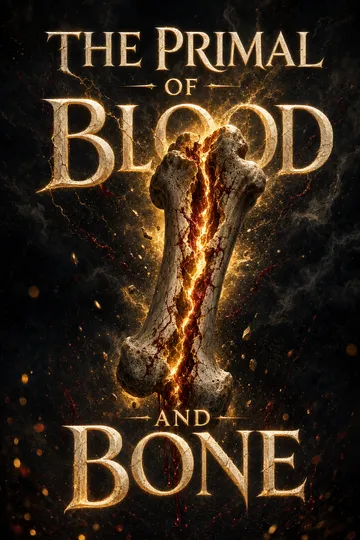
The Primal of Blood and Bone is a novel obsessed with the machinery of fate and the terrible mathematics of prevention. Its animating irony, seeded in the prologue and paid off in the finale, is that every act meant to avert catastrophe becomes its cause: Seraphena6 entombs her son and thereby ensures Sotoria's rebirth; the Fates try to stop Poppy's1 birth and steer her toward it; Poppy1 and Casteel2 separate to protect each other and thereby engineer the massacre. Armentrout builds a tragic clockwork in which love is not merely a virtue but a structural vulnerability, the one weakness that can destroy a god. The book systematically dismantles the previous volumes' certainties, revealing that death is not final, that identity can be borrowed, and that the foretold destroyer is not the villain or the heroine but the beloved. Thematically, the novel interrogates autonomy relentlessly. Poppy,1 once a silenced Maiden, spends the book fighting occupation of her own mind, learning her soul is ancient and coveted, and insisting nonetheless on being the self she chose. The Unbound Ascended and the debate over mercy versus annihilation extend this into political ethics: legitimacy is measured by the choices a ruler restores rather than the vengeance she exacts. Grief operates as the engine of transformation, culminating in Casteel's2 apotheosis, godhood born not of ambition but of unbearable loss, a devastating literalization of the idea that devotion, weaponized by mourning, becomes apocalypse. The pacing is maximalist, stacking revelations, battles, and cliffhangers, and the humor threaded through horror keeps the found family human against cosmic scale. Ultimately the book argues that balance is a lie the powerful tell to excuse inaction, and that the truest cataclysms are always intimate, born from the people we love most.
Review Summary
The Primal of Blood and Bone receives mixed reviews, with an overall rating of 4.36 out of 5. Many fans eagerly anticipate its release, praising the series' world-building and character development. Some readers express concerns about potential polyamorous relationships and power dynamics. Critics argue the series is becoming drawn out, while others defend the author's creative choices. Reviewers highlight the book's emotional impact, plot twists, and answers to long-standing questions. The delayed release date frustrates some fans, but many remain excited for the continuation of Poppy and Casteel's story.
People Also Read

Characters
Poppy (Penellaphe)
Queen and Primal goddessOnce the veiled Maiden of Solis, now Queen of Atlantia and Solis and the Primal of Life and Death. Poppy is fierce, endlessly curious, and compassionate to a degree that frustrates her allies, insisting on second chances and refusing senseless slaughter even when strategy demands it. A childhood of enforced silence and control left her hungry for autonomy and terrified of becoming her mother, Isbeth11. She wields staggering power yet fears losing control of it, and fears even more losing herself. Ferociously in love with Casteel2 and bonded to Kieran3, she repeatedly chooses self-sacrifice to protect those she loves. Her defining struggle in this book is confronting revelations about her own identity while refusing to let them redefine who she has chosen to be.
Casteel Da'Neer
King, once the Dark OneKing of Atlantia, formerly known as Hawke Flynn and feared as the Dark One, and Poppy's1 husband. Charming, arrogant, and relentlessly protective, Casteel masks deep trauma from his years as the Blood Crown's captive beneath teasing wit. His love for Poppy1 is total and consuming, the thing that first made him care about his own life again. His fatal flaw is control: he cannot bear his own limitations or the idea that someone he loves might act without him. Descended from an unusually potent bloodline, he is stronger than he should be. Throughout the book he wrestles with betrayal, guilt, and the fear that his devotion could become the very weapon used against everything he treasures.
Kieran Contou
Advisor and bonded wolvenA wolven, Advisor to the Crown, and Casteel's2 bonded companion since birth, now tied to Poppy1 through the Joining. Kieran is the level head of the trio, calm, rational, and quick to face hard realities others avoid. He carries private grief over Elashya, a love he could not save, which shaped his acceptance of loss and his understanding of his own limits. Bound by a difficult promise to Poppy1, he becomes the fulcrum of the book's central rupture. Dryly funny and fiercely loyal, he loves both Poppy1 and Casteel2 deeply and spends much of the story holding a fracturing family together while managing his own transformation into something unexpectedly new.
Kolis
The true Primal of DeathThe true Primal of Death, entombed for over a millennium and newly freed. Kolis is calculating, theatrical, and dangerously unstable, favoring displays that build fear even at cost to himself. Long ago he became obsessed with a mortal girl, an obsession that drove him to steal his brother's essence and reshape creation. Able to inhabit the Ascended and Revenants he created and to bend wills like compulsion, he treats death itself as an instrument. Beautiful in an artificial, lifeless way, he embodies appetite masquerading as devotion. He seeks to become the Primal of Life and Death and to claim what he believes is owed to him, making him a foe who cannot be reasoned with or bargained away.
Attes
Ancient Primal of WarAn ancient Primal god, once the Primal of War and Accord, who abdicated his Court and went into stasis. A near mirror of Malik8 and Valyn10, he proves to be kin to Casteel's2 bloodline. Impulsive, temperamental, and prone to violence like the family he sired, he nonetheless endures agony to aid Poppy1. He harbors a fierce hatred of Kolis4 and an old, complicated history he guards closely, including a past tie to the girl Poppy1 once was. His willingness to sacrifice himself for her raises questions everyone notices.
Seraphena
Queen of the GodsThe true Primal of Life and Queen of the Gods, wife of Nyktos, and Poppy's1 grandmother. Blunt, foul-mouthed, and prone to both temper and anxiety, she defies every expectation of a serene deity. Beneath her sharp humor lies immense grief and a history of impossible choices, including standing against her own sons to protect the realms. Fiercely protective of her bloodline, she offers Poppy1 hard truths, a lethal gift, and the promise of a family Poppy has always craved.
Reaver
Blunt, loyal drakenA draken who fought to free Casteel2 and now aids the Crown. Gruff, dry-witted, frequently and unrepentantly nude, he needles Casteel2 and Kieran3 with relentless deadpan. Beneath the abrasiveness runs deep loyalty and private sorrow, especially concerning Jadis, a draken he was raised alongside and desperately hopes to save. He knows far more about the gods and old truths than he readily shares.
Malik Da'Neer
Casteel's haunted brotherCasteel's2 older brother, long held captive by the Blood Crown and broken by watching his bonded wolven Preela tortured and killed. Once a natural leader and prankster, he is now guarded and hollowed, wearing indifference like armor. He acted in service of survival and of his heartmate, Millicent13, and carries heavy guilt over his role in Poppy's1 past. His fractured bond with his brother2 slowly mends over the course of the story.
Delano
Gentle white wolvenA snow-white wolven with an unusually strong connection to Poppy1 and a sweetness rare among warriors. Perceptive and tender, he senses the notam more keenly than most and offers Poppy1 comfort when she most needs it. His devotion is uncomplicated and pure, making him one of the emotional anchors of her found family.
Valyn Da'Neer
Casteel's father, former kingCasteel2 and Malik's8 father, a formidable general and former King of Atlantia. Honorable, weary, and burdened by the lies he told to protect his sons and the realm, he seeks reconciliation with children who have reason to distrust him. He carries a secret about his own nature guarded for centuries, and his restless need to be useful keeps drawing him toward danger.
Isbeth
The Blood QueenThe Blood Queen, Poppy's1 mother, presumed reduced to ash. Once known as Ileana, she was a demis driven by grief and vengeance for her lost child and heartmate, Malec. Manipulative, theatrical, and endlessly performative, she wielded devotion and cruelty with equal artistry. Her machinations set the entire catastrophe in motion, and her legacy haunts Poppy's1 sense of self.
Tawny Lyon
Poppy's oldest friendPoppy's1 dearest friend since her Masadonia days, irreverent, warm, and quick with a joke. Changed by a shadowstone wound that left her hair white and eyes pale, she now carries an unsettling, altered nature she does not fully understand. Her enduring friendship offers Poppy1 proof that some bonds survive transformation, even as Poppy1 wrestles with guilt over Tawny's condition.
Millicent
Poppy's enigmatic sisterPoppy's1 sister, a Revenant unlike any other, possessing a soul, and heartmate to Malik8. Odd, blunt, and prone to violent whims and crude humor, she is nearly the mirror image of Seraphena6. Secretive and elusive, she keeps her own counsel and pursues her own agenda, yet she quietly performs the mercy of standing with the Unbound as they meet the sun.
Vikter
Poppy's late guardianPoppy's1 beloved late guardian from Masadonia, revealed to be the very first viktor, dwelling now among the Fates in Iliseeum. Gruff, wise, and a father in all the ways that mattered, his reunion with Poppy1 offers rare closure and gentle guidance.
Emil Da'Lahr
Flirtatious Atlantian allyAn auburn-haired Elemental Atlantian, charming, brave, and cheerfully reckless. Endlessly flirtatious and seemingly without self-preservation, he is nonetheless fiercely loyal, often serving as Casteel's2 blood source and a steadying, humorous presence within the inner circle.
Hisa Fa'Mar
Commander of the GuardDark-haired commander of the Crown's Guard, direct, focused, and unwaveringly dutiful. One of the few Casteel2 and Poppy1 trust without reservation, she carries herself with disciplined loyalty and quiet honor.
Plot Devices
The Joining
Bond that fused three livesA sacred, intimate ritual bond among Poppy1, Casteel2, and Kieran3, meant to tie their life forces together. In this book its consequences prove far greater than intended: it splits Poppy's1 dual essence, giving Casteel2 the power of death and Kieran3 the power of life, transforming both into unprecedented Primal beings. The Joining lets them sense one another's emotions and communicate mind to mind, and it allows Poppy1 to heal them even from stasis. It becomes both salvation and vulnerability, since the bond that protects them can be severed by the true Primal of Death4, stripping away its shield precisely when they most need it. The Joining drives the plot's central power escalation and its most intimate dangers.
Kolis's Mark and Will
Possession through bloodBecause Kolis4 created the Ascended and Revenants, and because his blood was once mixed with Poppy's1, he can inhabit and control his creations and project his will (his vella) across distance. Branding Poppy1 with the symbol of Death, he rides her mind during stasis, alternating her between lucidity and cold possession. Later he compels entire districts to kill themselves, reanimates corpses as gruls, and summons dead creatures from the Abyss, all without a body of his own. The device dramatizes the theft of autonomy that runs through the series and makes Kolis4 a threat that is everywhere and nowhere, an atmosphere of dread rather than a single confrontable foe until the final chapters.
Sotoria's Soul and the Star
Hidden identity engineA jagged diamond called the Star, forged where dragon fire met Ancient flesh, was used to store a soul in a millennium-long stasis. That soul belonged to Sotoria, the mortal girl Kolis4 loved, killed, and resurrected across countless lifetimes, and it is the soul now carried by Poppy1. The revelation that Poppy1 is Sotoria reborn reframes Kolis's4 obsession, Isbeth's11 schemes, and the prophecy itself, explaining why only Poppy1 can end him and why he hunts her. It also destabilizes Poppy's1 hard-won sense of self, forcing her and Casteel2 to insist that a borrowed soul does not overwrite the person she has chosen to become.
The Vadentia
Unreliable divine foresightA form of Primal foresight Poppy1 gains through her Ascension, granting her sudden knowledge of history, the gods, and the workings of the realms. Frustratingly selective, it stays silent on anything involving her own future or how to defeat Kolis4, delivering lore precisely when it cannot solve her immediate problem. The device serves as an elegant exposition tool, letting Poppy1 explain the mythos organically, while its pointed silences preserve tension and mystery. Its limits also underscore a recurring theme: even divine knowledge cannot spare the characters from having to choose, sacrifice, and suffer their way forward.
The Ancient Bone Dagger
The only weapon against a PrimalA dagger carved from the bone of the very first beings, one of the few things capable of wounding or weakening a Primal god. Seraphena6 gifts Poppy1 the specific blade she once promised to hand her, engraved with a fire-breathing wolf, and it burns the flesh of most who touch it, yet strangely only tingles against Poppy's1 skin. Paired with the doctrine that love is a Primal's sole weakness, it forms the intended means of killing Kolis4. The dagger's role at the climax subverts expectations, becoming the instrument of a devastating reversal rather than the clean victory the heroes planned.
Blood and Ash Series
About the Author
Other books by Jennifer L. Armentrout


Download PDF
Download EPUB
.epub digital book format is ideal for reading ebooks on phones, tablets, and e-readers.








































