
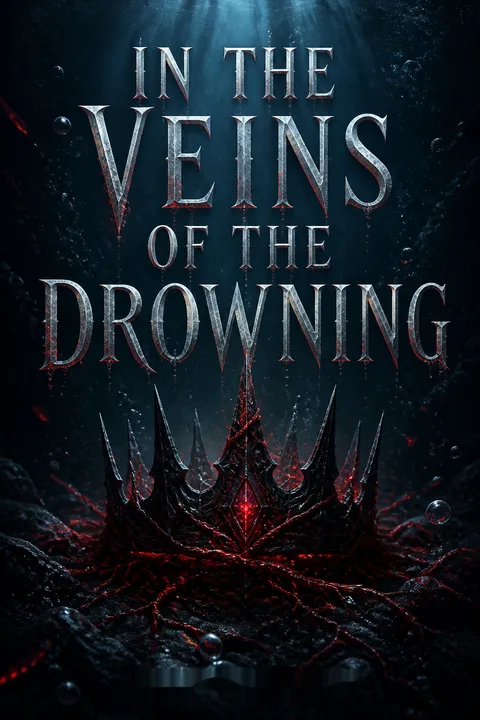


Plot Summary
Prologue
Far below the waves, something waits. An ancient power hums through a decaying body, a clawed hand searching the spume, a fist clenched around the dreamer's gut. It surges when she sleeps and fades when she wakes.
It is pure want, and the woman who dreams it1 knows it intimately, because it is reaching for her. In the warm throne room above, the scent of the sea creeps in on the silks of arriving guests, filling a young woman1 with an upending dread she has spent her whole life learning to ignore.
The opening fuses three identities that the novel will spend its length untangling: the woman, the water, and the monster. By framing the sea as appetite (a clawed hand, a tightening fist), Cassidy establishes desire itself as the book's central engine and threat. The dreamer's dread of salt air signals a protagonist at war with her own nature, having built survival on suppression. The passage primes readers to distrust the comforting surface and to anticipate that what is buried (in the deep, in the body) will not stay buried. Want, named explicitly, becomes both curse and compass.
Dread Carried on Salt Air
Imogen Nel,1 ward of the vicious King Nemea3 on the Isle of Seraf, has spent her life dodging the sea's pull, terrified of what she truly is. At her engagement feast she escapes the brine-soaked throne room to a parapet, where a dark, mocking stranger studies her face too closely. He proves to be King Theodore of Varya,2 Nemea's3 despised rival, and at the feast Nemea3 forces them to dance.
Theodore2 insists he knows her, then abandons her mid-floor in astonishment. Her betrothed, the Siren-hunting Captain Evander Ianto,6 is unexpectedly gentle, binding a cut Nemea3 inflicted on her hand. Imogen1 clings to her dulled, obedient survival, never guessing how soon every careful wall she has built will come down.
The chapter stages captivity as spectacle. Nemea dresses Imogen in a punishing gown precisely so onlookers admire his generosity while she hides her pain, a portrait of gilded coercion. Theodore's penetrating recognition introduces the gaze as a recurring motif: he sees through her armor in a way that both threatens and seduces. Evander's tenderness is a trap baited with kindness, complicating the reader's moral map. Imogen's defining psychology emerges here, a survivor who has mistaken docility for safety. The salt air functions as the return of the repressed, an external lure for the internal truth she has spent decades suffocating beneath duty and fear.
The Salt Kiss Betrayal
Drunk on Nemea's3 wine and the sea-salt clinging to Evander's6 skin, Imogen1 lets desire override a lifetime of restraint. As they fall into bed, her body ignites: wings rip from her back, talons sprout from her fingers, and the Siren she buried surges free. Evander6 recoils in horror, then fury, pinning her by the throat.
She mirrors him, drawing his blood with her claws and drunk on sudden power, until hearing her own name shrinks the monster back down. He flees in revulsion. She spends the night gripping a jeweled dagger, certain he will return to drag her to execution. Instead, by morning he wants her still, eager to force a blood bond so her power will make him untouchable among Siren hunters.
Cassidy renders transformation as a violation of self rather than triumph, the shift arriving as pleasureless loss of control. The scene literalizes the terror of being truly seen during intimacy, desire exposing the monstrous. Evander's pivot from adoration to hatred dramatizes how conditional love punishes authenticity. Crucially, Imogen experiences her own power as intoxicating yet alien, a thing that wields her as much as she wields it. His subsequent proposal reframes her body as a resource to be harvested, echoing Nemea's logic. The blood bond, introduced as a hunter's tool of ownership, plants the mechanism that will later define her bargain with a very different man.
Blood in the Mountain's Belly
In Nemea's3 subterranean ritual room, courtiers offer blood to his invented water deity, Eusia,10 reciting a prayer to cleanse the sea of Sirens. Evander6 slices Imogen's1 palm without warning and forces her through the rite. Theodore,2 seething, demands to know how much of her blood Nemea3 has taken, then kicks over the offering bowls, splattering her with gore.
Nemea3 boasts he has drained her since infancy, since the day she became his. The two kings nearly come to blows before guards separate them. Afterward Nemea3 grinds Imogen's1 wound back open, lecturing her that real power belongs only to those who seize it by any means. Watching Theodore2 silence a room by mere presence, Imogen1 resolves to beg his help in fleeing Fort Linum.
The ritual scene weaponizes faith as control: Nemea has built a private religion to sanctify his cruelty and extract Imogen's blood as devotion. Theodore's fury, oddly fixated on her specifically, seeds the mystery of her significance long before it is named. Nemea's creed, that goodness is a luxury of the divinely blessed while the lowly must manufacture power through atrocity, articulates the novel's thesis on tyranny born of resentment. Imogen's pivot is psychologically precise: she stops seeking rescue from a peer (Agatha) and turns toward power itself, recognizing in Theodore the rooted authority she has never been allowed. Survival begins curdling into ambition.
Drowning the Captain
That night Evander6 returns with soldiers, buckets of seawater, and the siphon used to force Sirens to shift before execution. He intends to bind Imogen1 to himself so her blood renders him immune to Siren lures. He dumps her into the tub and pours the sea into her lungs; she shifts, and a voice in the water greets her, claiming it has awaited her long.
When Evander6 climbs in atop her with his dagger, her power takes him: she draws the breath from his chest, then floods his lungs, drowning him in the very tub built to cage her. Alive but horrified by what she has done, she knows Nemea's3 men will torture and execute her by dawn. Survival now demands a reckless, desperate gamble.
The siphon, an instrument of execution, becomes the means of Evander's undoing, a tidy reversal that announces Imogen's emerging agency. Her power surfaces not through mastery but through threat, instinct answering violence with violence, deepening the question of whether she controls the monster or it controls her. The disembodied voice (later Eusia) transforms a survival scene into a horror beat, suggesting her power is never wholly her own. Morally, the book refuses easy catharsis: Imogen cannot decide whether killing or sparing him is worse. The murder collapses her old strategy of appeasement entirely, forcing the leap from passive endurance into active, dangerous self-rescue.
A Bargain Sealed in Blood
Imogen1 slips into Theodore's2 chamber and proposes the unthinkable: a Siren blood bond, which in Varya also constitutes marriage, though she does not yet know it. Theodore2 agrees on three conditions: denounce Nemea3 and swear fealty, sever the bond at Varya's Mage Seer,9 and later perform one task of his choosing. They cut their palms and press them together, an agony that fuses them and shifts her wings away.
Joined by Agatha,4 her Siren handmaid, and Lachlan,5 Theodore's2 commander and Agatha's4 old love, the party descends the treacherous fort stairs. Imogen1 lures and kills Nemea's3 guards, takes a sword through the thigh, and Theodore2 heals her with his divine touch as they ride hard for his waiting ship at Port Helris.
The bond literalizes the novel's tension between autonomy and dependence: to escape one king's control, Imogen ties herself to another, trading fetters for a finer chain. Her insistence on conditions of her own, and her threat to denounce him, marks the first time she negotiates rather than obeys, a quiet revolution. Theodore's open-ended third condition introduces dread into intimacy, a debt that hovers over their growing closeness. The bloody descent fuses romance with horror, her newfound power lethal and uncontrolled. That she kills to protect a man who agreed to protect her inverts the rescue fantasy, establishing a partnership built on mutual peril rather than chivalry.
The Bond That Will Not Settle
Aboard Theodore's2 vessel, sickness from the unsettled bond keeps the pair tethered within ten paces of each other. Lachlan5 gleefully reveals the bond doubles as a marriage and that Theodore2 is already promised to a foreign princess. Worse, Theodore2 confesses his true motive: he believes Imogen1 is the daughter of the vanished Great Goddess Ligea,11 queen of Sirens, and that her uncanny silent lure is divine power capable of killing Nemea's3 deity, Eusia.10
The third condition, he explains, hinges on a prophecy she must receive from the Mage Seer.9 Reeling between fury and forbidden attraction, Imogen1 refuses to be reduced to another king's instrument, even as the bond glows warm in her belly whenever he touches her.
The reveal of accidental marriage transmutes a survival pact into something unbearably intimate, the bond enforcing the very closeness Imogen fears. Theodore's transactional framing (her purpose and power exceeding her charm) wounds precisely because the bond compels tenderness alongside resentment. The Ligea theory recasts Imogen's lifelong self-loathing as buried divinity, but she resists it, because accepting greatness means accepting duty, the thing that has only ever enslaved her. Cassidy uses the physical sickness of separation as metaphor: connection and revulsion become inseparable. The chapter sharpens the central irony, that a woman desperate to belong to herself keeps discovering she belongs to bloodlines, prophecies, and kingdoms she never chose.
The Empress and Her Frozen Princess
Reaching Varya, Imogen1 glimpses a nekgya, a reanimated Siren corpse, rising beneath the ship to mouth the word home. Theodore2 explains these decaying hunters now stalk Sirens and even Varians. At Genevreer Palace he must meet Empress Nivala7 of Obelia and her daughter Halla,8 his betrothed, with Imogen1 posing as a cousin to hide the bond.
The empress,7 glacial and calculating, commands the wedding occur within a fortnight and discloses that Halla8 will not inherit Obelia; their firstborn child will. Imogen's1 jealousy flares through the bond as Theodore2 charms the pale, lovely princess.8 Cornered by the looming marriage and her own dangerous longing, she grows desperate to reach the Mage Seer9 and sever the tie before it devours her entirely.
The nekgya introduce body horror as political consequence, the dead Sirens a literal accusation rising from the water Imogen helped poison. Their whispered home plants a clue she cannot yet read. Empress Nivala embodies pure instrumental reason, treating marriage, religion, and even heirs as terms in a ledger, a chilling escalation of Nemea's transactional worldview. Halla's demotion to mere vessel for a future heir foreshadows the Obelian habit of sacrificing people to power. Imogen's jealousy, amplified by the bond, exposes how thoroughly her supposed escape has entangled her in others' destinies. The fortnight deadline tightens the narrative spring, forcing severance and self-discovery onto a collision course.
The Mirror Carved in Stone
Beneath the palace stairs Imogen1 discovers a statue of Ligea11 rendered with her own features, and the truth of her divine blood crashes over her. Shaken, she finally lets Theodore2 comfort her. To get her to the Mage Seer,9 he agrees to escort her himself, abandoning his fiancee.8
Their ride through Varya's vineyards thaws the friction between them: they air every grievance aloud, share his homemade wine, and trade confessions and heat. At a caretaker's cottage Theodore2 plays the jealous husband to keep strangers from her. Their swelling tenderness shatters when Imogen1 spots Nemea's3 eel-flagged warships massing on the horizon, the cruel king3 come to reclaim his stolen ward and the power running in her veins.
The statue collapses the distance between Imogen and myth: she can no longer dismiss the goddess theory when her own face stares back from marble. The journey functions as the romance's crucible, replacing courtly performance with the rawness of shared labor, argument, and confession. Theodore's pretend-husband act blurs into genuine claim, the fiction rehearsing a desire neither will name. Cassidy lets vulnerability accrue through small, concrete acts (folded clothes, washed skin, a kept distance) rather than declarations. Nemea's sails arriving precisely as intimacy peaks enforces the novel's structural rhythm: every approach toward belonging is interrupted by the cost of being wanted, by who else lays claim to her.
The Siren on the Shore
A nekgya attack on a fishing village forces them to act. Theodore2 saws off a wounded Siren mother's ruined wing while Imogen1 wades into the lagoon to rescue the woman's daughter. There a nekgya hands the child over and speaks Eusia's10 exact words, the same voice that greeted her in Evander's6 tub. The corpses cannot harm her because her own given blood reanimates their rotting veins.
Imogen1 grasps the full horror: every drop Nemea3 fed to Eusia10 bound her to the deity and its hunters, making her complicit in the slaughter of her kind. To shield her from the superstitious villagers, Theodore2 declares her his queen and kisses her openly, claiming her even as her guilt hardens into a vow to end Eusia.10
This is the moral nadir of Imogen's arc, the moment her victimhood and her culpability fuse: the blood extracted from her by force now powers the monsters murdering Sirens. Cassidy refuses clean innocence, locating horror in unwilling complicity. The villagers' superstition shows how fear of the misunderstood breeds violence, mirroring the persecution Imogen herself fled. Theodore's public claiming is both protection and political detonation, a king binding himself to a feared Siren before his own people. The scene transforms her quest from passive escape into active atonement, reframing the hunt for Eusia not as Theodore's errand but as her own reckoning with what was done through her.
The Mage Seer's Price
At the Sacred Holms, the ancient, rotting Mage Seer Rohana9 demands payment in flesh and blood. Refusing to let Rohana9 feed on the poisoned Theodore,2 Imogen1 carves a piece from her own body. Rohana9 can sever only the bond to Theodore,2 not the one to Eusia,10 which Imogen1 must break herself through magic.
Her smoke-borne prophecy warns of a ripped crown, a cut bond, a drained queen, and a ruined king beneath her wing, a union that brings chaos, ruin, and death. Then comes the gutting revelation: Nemea3 is her father. When Theodore2 collapses from Rohana's9 hidden hedera poison, Imogen1 commands the sea to ferry him to the cottage of Hector and Antonia,12 the gentle couple who once nursed him back from the brink.
Magic here is explicitly extractive, paid in flesh, a grotesque literalization of how power always costs the body. Rohana, withered by her own craft, is a living warning of Imogen's possible future. The prophecy's ambiguity (which king, which crown) becomes a productive engine of dread, and Imogen's withholding of its darkest line from Theodore marks a new, protective deceit. Learning Nemea fathered her detonates her identity, binding her to the very cruelty she fled by blood as well as by captivity. Her instinctive sacrifice to spare Theodore inverts the bond's compulsion into chosen love, while the rescue to Hector and Antonia reveals the surrogate family that humanized the rigid king.
The Empress's Veiled Threat
Back at the palace, Empress Nivala7 corners Imogen1 with a story: years ago the wealthy Obelian Nel family was found gutted at a dinner, their rare spinel jewels stripped, the very night Nemea3 charmed the grieving empress.7 Imogen,1 who wears such a spinel ring and bears the Nel name, understands the empress7 has guessed exactly who and what she is.
That night, amid an engagement party staged in Theodore's2 absence, the two finally fall into bed together. He confesses that his duty and his desire have become a single thing, that he wants her beyond all reason, and refuses to take the severing draught. Lachlan,5 enraged that the bond is fueling a war, threatens to put the severance to a vote before the royal council.
Nivala's anecdote is a velvet-gloved interrogation, weaponizing hospitality the way Nemea weaponizes faith; she traces the spinel's bloody provenance to signal total knowledge and total threat. The ring, a token of one ownership after another, becomes a thread linking massacre, lineage, and the saint the Obelians serve. The consummation reframes the bond: Theodore insists their connection exceeds the magic, that severance cannot touch it, dismantling Imogen's defense that desire is merely the bond's trick. Lachlan's council gambit reintroduces duty as antagonist, the institutional machinery that crushed his own love with Agatha now poised to crush theirs, raising the stakes from private to political.
Eusia, the First Mage
Reading the Great God Jesop's restricted histories through the night, Imogen1 uncovers the deity's true nature. Eusia10 is no invented god but the First Mage, Ligea's11 own sister, born nearly powerless and consumed by envy. She forged spell magic by spilling Siren blood, but that magic devours its wielder, demanding double what it gives, which is why Rohana9 rots.
Long ago Eusia10 was executed and thrown into the sea, yet survived as a gutted, deathless thing, sustaining herself on bodies and now on Imogen's1 divine power. To destroy her, Imogen1 realizes, she must wield the very magic that will hollow her out as it hollowed Rohana.9 Theodore,2 terrified of losing her to that price, begs her not to pay it.
The revelation reframes the entire cosmology around sibling envy: Eusia is Ligea's shadow, the un-blessed sister who manufactured power through sacrifice, an exact mirror of Nemea's philosophy and a dark double of Imogen herself, who also craves power to feel safe. Magic's law (it takes more than double) crystallizes the book's economy of cost, where every potency demands flesh. The horror tightens: to slay the monster, Imogen must become monstrous. Theodore's plea positions him against her chosen self-sacrifice, the dutiful king now arguing for self-preservation, a striking inversion. Knowledge here is genuinely dangerous, each truth narrowing Imogen's options toward a single ruinous path.
The Bride's Bloody Offering
On the beach, Princess Halla8 performs an Obelian rite that proves to be an offering to Eusia,10 the saint her family secretly worships, reciting Nemea's3 own cleansing prayer. Imogen1 stops her and wrenches out the truth: the empress7 sacrificed Halla's8 father to Eusia10 so Halla8 could be conceived, and the Obelians have fed the monster10 for generations.
Theodore2 openly names Imogen1 his queen, enraging Halla,8 who warns her mother7 will destroy them and demands the bond be cut before the wedding. Cornered by prophecy, by duty, and by the danger she poses to everyone she loves, Imogen1 swallows the severing draught herself. It nearly drowns her in her own blackened blood as Theodore's2 frantic healing power fails to hold her back from the dark.
Halla's rite exposes the empire's foundational sin, a child purchased with a father's life, making Obelian power a literal blood inheritance and tying every thread (Eusia, Nemea, the prayer) into one web. Imogen's interrogation in the water shows her wielding her lure with frightening ease and cruelty, the monster ascendant. Her choice to drink the draught is the chapter's tragic crux: an act of love disguised as renunciation, choosing his kingdom and his safety over her own desire to keep him. Cassidy stages it as near-death, severance enacted as drowning, so that liberation and self-destruction become indistinguishable, the bond's end as violent as its beginning.
Severed and Abandoned
Imogen1 wakes three days later, the bond gone, dressed in a binding gown Theodore2 had secretly commissioned and clutching a letter swearing he will carve himself open to take her back. But the council has proscribed her, banishing her for treason and murder, and Theodore2 has been pressured toward marrying Halla.8
The empress's7 ship has already sailed, carrying a kidnapped Agatha4 toward Anthemoessa, where Eusia10 waits. Seeking a vessel to Seraf for answers, Imogen1 is caught when Nemea's3 fleet attacks.
Boarding a Varian warship, she sinks Serafi ships, but severance has strengthened Eusia's10 grip: the deity hijacks her lures, forcing crews to gut themselves and walk into the sea as offerings. Imogen1 has become a marionette dancing on the monster's10 strings.
Freedom arrives as devastation. The severance Imogen chose for love strips away the one bond that restrained Eusia, demonstrating the cruel calculus of her sacrifice: protecting Theodore endangers everyone, including herself. The binding gown and letter render his love as unfulfillable promise, beautiful and useless. Agatha's abduction weaponizes Imogen's deepest attachment, transforming the quest from abstract duty into rescue. Most harrowing is the loss of agency over her own power; the gutting offerings make her an instrument of the very slaughter she vowed to end. The chapter completes her fall from suppressed survivor to corrupted weapon, autonomy stolen not by a king now but by a god.
Killing the Father
Imogen1 boards Nemea's3 flagship and lashes him to the mast. He confesses everything: he served Eusia10 for power, smuggled her from Obelia, bound himself to Ligea,11 and fathered Imogen1 as living food for the deity.
Ligea11 was taken, not killed, and lives still, which is why Imogen's1 lure cannot touch him. He stabs her, then, realizing her mother11 survives, heals the wound with a spell before Imogen1 drives his sword through his throat.
Eusia's10 nekgya appears, and to survive Imogen1 performs a self-spell of sand, blood, and her own flesh, becoming infected with the deity's ravenous craving for Theodore's2 blood. Vowing to reach Anthemoessa, free Agatha,4 and shield Theo2 from the threat she has become, she floats back toward Varya, more monster than woman.
Patricide here is no triumph but a grief-soaked unraveling, Nemea revealed as a man warped by a blood bond into twisted, possessive devotion, having spared Imogen only out of love for the mother he helped doom. His confession reframes cruelty as corrupted tenderness, denying the reader a clean villain. Imogen's self-spell is the prophecy fulfilling itself: to live she must become more like Eusia, hungry and hollowing. The book closes on inversion, the protector now the predator, her love for Theodore indistinguishable from the deity's appetite for his divine blood. Cassidy ends with want triumphant and weaponized, leaving Imogen poised between salvation and ruin.
Analysis
Cassidy's debut reframes the Siren myth as a meditation on appetite, complicity, and the costliness of power. Its governing metaphor is the economy of blood: every potency in this world must be paid for in flesh, whether the offerings Nemea3 extracts, the magic that rots Rohana,9 or the divine bond that sickens before it strengthens. The novel insists, through Nemea's3 creed and Eusia's10 envy, that tyranny is frequently born of the powerless manufacturing power by atrocity, and it dares to make its heroine vulnerable to the same logic. Imogen's1 craving for safety and self-determination is sympathetic, yet the book refuses to sanctify it, watching her slide toward the very monstrousness she fears as she seizes control. The romance with Theodore2 inverts genre conventions: the rigid, dutiful king must learn to want, while the suppressed woman must learn that her power is not a curse but a self. Their bond literalizes a deep psychological question, whether love freely chosen can be distinguished from love compelled, and whether duty and desire can ever be the same entity rather than enemies. Identity operates as slow horror here; each revelation (goddess's daughter, tyrant's child, the deity's blood-bound vessel) strips away a comforting fiction until Imogen1 stands exposed as both victim and weapon. The nekgya and the body horror of self-transformation render guilt physical, refusing abstraction. Cassidy's most resonant move is denying clean villainy: Nemea's3 cruelty proves rooted in a corrupted love, Halla's8 menace in desperate filial duty, even Eusia's10 hunger in a sister's wound. The book's lesson is uneasy and modern, that the line between protector and predator is thin, that belonging is purchased dearly, and that to want fiercely is to risk becoming the thing one swore to destroy.
Review Summary
In the Veins of the Drowning captivates readers with its gothic atmosphere, siren lore, and intense romance. Many praise the unique storyline, compelling characters, and beautiful writing. The slow-burn romance between Imogen and Theo is a highlight, with their yearning and tension driving the plot. Some critics note a lack of world-building and character development due to the fast pace. Overall, the book is highly recommended for fans of dark fantasy romance, with readers eagerly anticipating the sequel.
Characters
Imogen Nel
Caged ward, secret SirenRaised as the ward of a tyrant3 on a barren island, Imogen has survived by shrinking herself, mistaking obedience for safety and burying the Siren nature she fears will make her a monster. Tall, dark-haired, and uncannily resembling a goddess11, she is defined above all by want: for safety, for a home of her own, for the right to choose. Her arc traces a woman moving from suppression toward terrifying power, learning that her courage need not look like anyone else's. Tender and self-loathing, fierce and frightened, she is drawn to King Theodore2 by a bond she cannot trust and a desire she cannot deny. Her central wound is conditional love, having only ever been cared for in exchange for what she provides.
Theodore Ariti
Duty-bound king of VaryaGrandson of the Great God Panos, Theodore wields the power to heal flesh and make plants flourish, and he rules with a rigid, almost punishing devotion to duty. Golden-skinned, green-eyed, and maddeningly composed, he hides genuine warmth beneath a marble exterior built from guilt over his late father, whom he refuses to resemble. He gardens, makes wine, and once lived as a commoner in the wildlands, the happiest he has ever been. Theodore is drawn to Imogen1 first for her divine power and then, helplessly, for herself, his desire colliding with the throne's demands and an arranged marriage. His struggle is whether a man of the Great Gods is permitted to want anything for himself, or must forever carve himself empty in service.
King Nemea
Cruel king of SerafThe reclusive, Siren-hunting ruler of the Isle of Seraf, Nemea is a mortal king consumed by resentment of the divinely blessed. Barrel-chested, gray-eyed, and inventive in cruelty, he forged his own power through atrocity and forbidden service, believing might is measured by how fiercely one grips what one owns. He raised Imogen1 on extracted blood and engineered fear, dressing her in jewels to disguise his savagery as generosity. Beneath the tyranny stirs something more tangled and haunted than simple malice, a man warped by old bargains and old loves into a brutal, possessive guardian whose motives prove far stranger than his victims ever suspected.
Agatha
Loyal handmaid and SirenImogen's1 former governess and fellow secret Siren, Agatha has been her fierce, sisterly protector for years, hiding her own kind to keep the girl safe. Youthful-looking, dark-curled, and sharp-tongued, she carries an old heartbreak from a blood bond severed against her will. She pushes Imogen1 toward freedom and self-acceptance, her love steady even when her patience frays. Brave where Imogen1 is fearful, she is the moral compass Imogen1 trusts most.
Lachlan Mela
Theodore's witty right handNaval commander and Theodore's2 closest friend, Lachlan is roguish, charming, and quick with a barbed joke, masking real devotion to both his king2 and to Agatha4, the love he lost decades ago. He distrusts Imogen1 as a threat to Varya, yet cannot help liking her. Torn between loyalty, duty, and the heartbreak he never recovered from, he becomes the voice of hard political consequence as the bond endangers the kingdom.
Evander Ianto
Siren-hunting captainNemea's3 captain and Imogen's1 betrothed, Evander is handsome, amber-eyed, and disarmingly tender at first, a man who whispers treasonous protectiveness like a vow. Beneath the chivalry lies a hunger for power he can call his own and a possessive cruelty that surfaces once he learns what Imogen1 truly is. His kindness proves a cage, his desire a means of ownership.
Empress Nivala
Calculating ruler of ObeliaThe frost-pale empress of the northern continent, Nivala negotiates marriage, religion, and even heirs as cold transactions. Devoted to a saint10 she will sacrifice anything to sustain, she is emotionless, shrewd, and a nightmare of an enemy with a vast fleet at her back. Her precise contracts and veiled threats reveal a woman who bends every relationship toward her own enduring power.
Princess Halla
Theodore's pale betrothedNivala's7 daughter, all white hair and saccharine sweetness, Halla arrives to marry Theodore2 and seems a perfect, gentle match. Beneath the rosy charm she is a dutiful instrument of her mother's will, desperate to regain favor she has somehow lost. Her devotion to her family's secret saint10 and her quiet desperation make her more dangerous, and more pitiable, than she first appears.
Rohana
Decaying Mage SeerVarya's ancient Mage Seer, withered into a near-corpse by centuries of spell work, Rohana dwells in a bone-littered hut on the Sacred Holms. She speaks in a maiden's voice from a monstrous body, demands payment in flesh, and serves prophecies in poison smoke. Covetous, cruel, and intimately acquainted with Theodore's2 worst memory, she is a living omen of what magic costs.
Eusia
The hungry deityWorshipped by Nemea3 and the Obelians as a water deity, Eusia is in truth something far older and more terrible, a gutted, deathless being who feeds on bodies and reanimates Siren corpses to hunt their living kin. Driven by an ancient, insatiable envy and an endless craving for divine power, she is the lurking presence beneath the waves, the want that calls Imogen1 home. Her connection to Imogen's1 blood makes her both parasite and inescapable destiny.
Ligea
The vanished goddessThe Great Goddess of wind and sea and queen of Sirens, Ligea disappeared decades ago, leaving only legend, a severed wing on Nemea's3 wall, and a statue with Imogen's1 face. Mostly offstage, she haunts the story as Imogen's1 true mother and the measure against which Imogen judges her own courage and power.
Hector and Antonia
Theodore's surrogate parentsAn older wildland couple who once nursed Theodore2 back from death and became family to him. Warm, plainspoken, and fiercely fond of their adopted king, they offer Imogen1 a glimpse of the quiet, loving home she has always craved.
Eftan
Disapproving chancellorTheodore's2 round-faced, officious chancellor, devoted to the crown and the kingdom's stability. He regards Imogen1 as a ruinous threat and works to keep her at arm's length from his king, embodying the institutional duty that opposes the lovers.
Plot Devices
The blood bond
Forced intimacy and protectionA Siren ritual in which two people cut their palms and press the wounds together, mixing blood to compel each to protect the other at all costs and shielding the bonded from Siren lures. In Varya it also constitutes marriage. The bond makes the pair physically ill when separated and floods them with warmth and possessive concern when near, blurring the line between genuine feeling and magical compulsion. Imogen1 forges one in desperation to escape Nemea3, only to discover its complications: it ties her to a betrothed king2, sickens them both until severed, and forces a closeness that breeds love neither can untangle from the magic. Its severance proves as dangerous and violent as its creation.
The silent lure
Marks divine heritageA Siren's power to call prey toward a drowning death; ordinary Sirens must sing, but Imogen1 lures without a sound, an ability that signals power beyond any common Siren. This silent lure is the evidence Theodore2 cites for believing she descends from the Great Goddess Ligea11, and it becomes the weapon he hopes will end the deity Eusia10. Imogen1 can barely control it, often unsure whether she wields the power or it wields her, and it grows more potent and more frightening near the sea. The lure drives both her usefulness to kings and her terror of becoming a monster, embodying the novel's theme that power and identity are inseparable.
The nekgya
Body-horror manifestation of guiltReanimated Siren corpses that hunt the living near the islands, stitched together by the sea with kelp and barnacles, their eyes empty and their mouths shaping a single word: home. They first appear as ominous omens beneath Theodore's2 ship and escalate into beach attacks on Sirens and Varians alike. The nekgya carry the voice of the deity10 who animates them and, crucially, cannot harm Imogen1, a detail that unlocks the horrifying truth of her connection to them. They externalize Imogen's1 complicity and guilt, transforming the abstract crime of her extracted blood into shambling, decaying accusation, and they serve as the deity's hands in the world above the waves.
Rohana's prophecy
Ominous narrative roadmapDelivered in poison smoke by the Mage Seer9, the prophecy speaks of a crown ripped from a head, a bond cut from the blood, a queen drained of divinity, and a king left wrecked beneath her wing, warning that what these figures have made will bring chaos, ruin, and death. Imogen1 withholds its darkest line from Theodore2, convinced she is the harbinger of his destruction. The prophecy's deliberate ambiguity (which king, which crown) generates suspense and shapes Imogen's1 tragic choices, including her decision to sever the bond she most wants to keep. Its truths unfurl gradually, each fulfillment darker than the last, steering the plot toward its devastating climax.
The spinel ring
Thread of buried identityA rare gray spinel, mined only in distant Obelia, set into the engagement ring Evander6 gives Imogen1. Its impossible costliness first hints that Nemea3, not a mere captain, supplied it. When Imogen1 later notices an identical spinel at Princess Halla's8 throat and hears the empress's7 tale of a murdered Obelian family stripped of such jewels, the stone becomes a key unlocking her origins. The ring threads together massacre, the Nel name Imogen1 carries, the deity10 the Obelians feed, and the chain of ownership passed from one captor to the next. A token meant to bind her, it ultimately exposes the conspiracy of blood and power that created her.
Download PDF
Download EPUB
.epub digital book format is ideal for reading ebooks on phones, tablets, and e-readers.








































