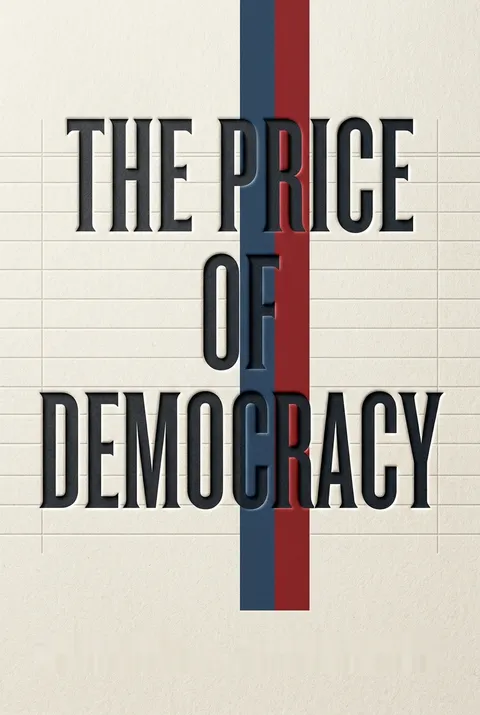

Key Takeaways
1. The American Revolution's True Stance on Taxation
The Boston Tea Party, as it is now known, is commonly recalled as evidence that Americans have always been reflexively antitax opponents of “big government.” There is just one problem with the familiar story: It is utterly untrue.
Debunking the myth. The Boston Tea Party, often cited as America's antitax origin, was actually a protest against a corporate tax cut for the floundering East India Company, a measure Samuel Adams denounced as "dangerous to Publick Liberty." Colonists were not against taxes themselves, but against taxation without representation by their own local elected officials.
Desire for self-taxation. Far from opposing taxation, Massachusetts colonists continued to collect local revenue even while flouting British authority, redirecting funds to a trusted patriot treasurer. The American Revolution, in this light, was about the desire of Americans to tax themselves and bear the legitimate burdens of a government in which they had a voice.
Consequences of falsehood. This persistent falsehood—that the nation was born in antitax opposition—has limited America's vision, implying that social investments are "un-American" and propping up a reactionary antitax political movement that threatens democracy's basic functioning.
2. Early Tax Battles Shaped American Democracy
Liberty, for colonial Americans, was not freedom from taxation but the power to impose their own taxes—at first within the British Empire, and then, when Britain would not agree, as an independent nation.
Taxation and representation. The Stamp Act crisis solidified the American understanding of representation: not "virtual" representation by a distant Parliament, but direct representation by local elected officials accountable to voters. This meant that the ability to vote became an essential aspect of one's political freedom.
Slavery as a metaphor. Colonists frequently equated "taxation without representation" with slavery, arguing that being compelled to part with property without consent was a violation of natural rights. This rhetoric, while hypocritical for slaveholders, inadvertently fueled demands for Black freedom, as enslaved people seized upon the language of universal rights to advocate for their own emancipation.
Constitutional design. Post-Revolutionary War, regressive state taxes and money shortages led to farmer rebellions like Shays's Rebellion, which elites viewed as an "excess of democracy." The Constitution was thus designed to create a strong federal government, insulated from popular control, with robust taxing powers to protect property from the "unreflecting multitude."
3. Slavery's Survival Depended on Suppressing Taxation
For the 250 years since, we have been fighting over what it means to be equal and what it means to be free.
Constitutional protections for slavery. Southern delegates at the Constitutional Convention secured strong limits on federal taxation that might threaten slavery, including the three-fifths clause for direct taxes and a cap on slave trade taxes. This reflected slaveholders' deep fear that democratic taxation could lead to abolition.
Calhoun's nullification. By the 1820s, as Northern population grew, John C. Calhoun championed "nullification" to protect slavery from federal tariffs, which he saw as taxation by a hostile majority. He believed that slaveholders needed to be the dominant political force to secure their property.
Planter class resistance. Slaveholders actively limited state taxing power and democratic institutions, such as suffrage and legislative apportionment, to prevent "soak-the-rich" taxation. They feared that taxing slaves was too easy, too popular among nonslaveholders, and too destabilizing to the master's absolute authority.
4. Reconstruction's Vision: Taxes for Black Empowerment
If there is any virtue in taxation, we will tax until we tax them out of their lands.
Revolutionary tax agenda. During Radical Reconstruction (1867-1877), Black legislators and their allies pursued a revolutionary tax agenda aimed at building a democratic, interracial political order. This included universal public schooling and land redistribution for freedmen.
Funding schools and land. New, stronger property taxes were central, intended to fund thousands of new schools for Black and white children, and to encourage former planters to sell their vast, undeveloped lands. Poll taxes, though regressive, were accepted as a compromise to ensure everyone contributed to education.
Challenging the old order. The very act of government property assessment was revolutionary, as Black officials sometimes valued the property of their former owners, directly challenging the patriarchal control of the planter class. These tax increases, though bringing Southern taxes only to national levels, were met with fierce resistance.
5. "Taxpayer" Identity Weaponized Against Multiracial Democracy
The falsehood that our nation was born in opposition to taxation has limited our vision of what America can be.
Taxpayer leagues and terror. "Taxpayer associations" emerged across the South, uniting poorer whites with elites against "corrupt" (Black-led) Republican governments. These groups often served as a respectable front for white supremacist terrorism, including the Ku Klux Klan and Red Shirts, who intimidated and murdered Black voters and officials.
Legitimizing violence. Southern elites used complaints about "burdensome taxes" and "government corruption" to justify violence and undermine Reconstruction governments, appealing to moderate Northerners. This narrative shifted attention from racial terror to fiscal mismanagement, portraying Black participation in government as inherently corrupt.
Northern complicity. Northern elites, facing their own concerns about working-class political power in cities, increasingly adopted the Southern narrative. They saw "nontaxpayers" (often immigrants) as a threat, leading to the repeal of the Civil War income tax and attempts to restrict suffrage based on taxpayer status, echoing Southern arguments.
6. Jim Crow's Fiscal Blueprint: Wealth Protection, Poor Exploitation
The most powerful forces resisting taxation in America have also been the country’s most antidemocratic elements, ready to support suffrage restrictions, malapportionment of legislative seats, minority rule, and sometimes direct intimidation and violence to keep fiscal power in elite hands.
Redeemer fiscal agenda. After overthrowing Reconstruction, "Redeemer" governments implemented a fiscal program to reinforce racial and economic hierarchy. This included drastic cuts to public spending (especially schools), tax cuts heavily favoring the wealthy, and constitutional property tax caps to prevent future majorities from taxing wealth.
Profitable forced labor. Convict leasing and chain gangs became a morally shameful but fiscally brilliant system, generating hundreds of thousands of dollars for state treasuries by exploiting Black forced labor. This system replaced white tax revenue and trapped Black workers in a cycle of poverty and criminalization.
Disenfranchisement by taxation. Southern states adopted new constitutions with poll taxes, often cumulative and non-mandatory, explicitly designed to disenfranchise Black men and poor whites. This "untaxing" of undesirable voters, combined with other restrictions, drastically reduced turnout and solidified plutocratic one-party rule for over half a century.
7. The Income Tax: A Century-Long Fight for Fiscal Fairness
Highly graduated taxation realizes most completely the supreme danger of democracy.
Gilded Age inequality. The late 19th century saw extreme wealth concentration, exacerbated by federal tariffs that enriched industrialists at the expense of farmers and workers. Populists and Progressives demanded a federal income tax to reverse this inequality and replace the regressive tariff.
Supreme Court's intervention. The 1894 federal income tax was declared unconstitutional by a conservative Supreme Court in Pollock v. Farmers' Loan & Trust Co. The Court, fearing a "war of the poor against the rich," reclassified the income tax as a "direct tax" requiring impractical apportionment, effectively blocking it.
Popular demand and ratification. This decision sparked a decades-long campaign for the 16th Amendment. Western agrarians, who saw government as a necessary counterweight to corporate power, strongly supported it. Despite fierce opposition from Northeastern industrialists (like Rockefeller, who called progressive taxation "the supreme danger of democracy"), the amendment was ratified in 1913 due to overwhelming popular demand and electoral shifts.
8. FDR Forged Mass Taxpaying for Social Security and War
We put those payroll contributions there so as to give the contributors a legal, moral, and political right to collect their pensions and their unemployment benefits. With those taxes in there, no damn politician can ever scrap my social security program.
Social Security's "earned right." During the Great Depression, FDR established Social Security, funded by regressive payroll taxes, to create an "earned right" to benefits. This funding mechanism, though excluding most Black workers due to Southern opposition, was designed to make the program politically durable against future attacks.
"Soaking the rich." Influenced by populist movements like Huey Long's "Share Our Wealth," FDR also championed progressive income and estate taxes, framing the debate as democracy versus "economic royalists." The 1935 Wealth Tax, though limited in revenue, signaled a commitment to using taxation to reduce extreme inequality.
Mass taxation for war. World War II dramatically expanded the income tax from a "class tax" on the rich to a "mass tax" on most Americans, with top rates reaching 94%. Patriotic propaganda, like Disney's "The New Spirit," successfully mobilized citizens to accept these unprecedented tax burdens as a shared sacrifice for democracy.
9. Racialized "Welfare" Fueled the Modern Antitax Movement
“Welfare,” once a positive word to describe a host of government investments in economic security and human well-being, became a racist epithet for wasteful and corrupt spending on an undeserving poor.
Segregated welfare state. Post-WWII, federal policies created a "hidden welfare state" of subsidies for white suburban homeownership and higher education (e.g., GI Bill), while urban Black communities were systematically excluded. This segregation fostered a perception that government benefits were "earned" by whites but "unearned" by Blacks.
Demonizing "welfare." As civil rights activism shifted to Northern poverty, media increasingly racialized images of the poor, associating "welfare" with Blackness and fraud. This rapidly eroded public support for antipoverty programs, despite their broad benefits and the fact that most recipients were white.
Reagan's "welfare queen." Ronald Reagan capitalized on this racialized resentment, using the "welfare queen" narrative to demonize poor Black women and promise to "stand between the taxpayer and the tax spender." This rhetoric channeled working- and middle-class white anger into support for policies that ultimately benefited the wealthy.
10. The Counterrevolution of 1978
The success of the 1978 capital gains cut seemed “to violate all the rules of politics,” wrote The New York Times in undisguised wonder.
California's Proposition 13. In 1978, California's Proposition 13, a massive property tax cut, passed despite opposition from most elites. Fueled by homeowner anger over rising assessments and racial resentment, it delivered huge benefits to corporations and wealthy property owners, demonstrating how economic concerns could be channeled into regressive tax cuts.
Federal tax cuts for the rich. Simultaneously, a new, powerful, and conservative business lobby pushed through a federal capital gains tax cut, disproportionately benefiting the wealthiest 1%. This marked a shift where massive tax breaks for the rich, previously politically difficult, became achievable through organized lobbying and new "supply-side" economic theories.
IRS and segregation academies. The IRS's attempt to remove tax exemptions from racially discriminatory private schools (many of them "Christian academies" formed to resist desegregation) galvanized conservative Christians. This "IRS debacle" became a crucial turning point, mobilizing a new, vital voting bloc for the antitax, socially conservative movement.
11. Antitax Extremism's Erosion of American Democracy
The political story of the last forty years is, to a significant degree, the story of the Republican Party’s descent into authoritarian politics. It is a story about taxes.
"47 percent" rhetoric. Mitt Romney's 2012 "47 percent" comment, though widely condemned, reflected a long-standing Republican strategy: demonizing nearly half of Americans as "dependent" and "nontaxpayers" unworthy of government support or political representation. This rhetoric transmogrified racial resentment into upward redistribution.
Austerity by dysfunction. The GOP's antitax agenda evolved into "institutional hardball," using filibusters, government shutdowns, and debt ceiling crises to obstruct Democratic governance. This strategy aimed to disable government functions that could limit private wealth or respond to non-conservative economic preferences, while simultaneously undermining the IRS's ability to audit the wealthy.
Abandoning democratic norms. The Republican Party's commitment to minority rule and antitax dogma led to an abandonment of democratic norms, including efforts to stack electoral decks and deny election results, culminating in the January 6th attack on the Capitol. This descent into authoritarian politics is inextricably linked to the party's extreme antitax position, which prioritizes oligarchy over democratic governance.
People Also Read






Download PDF
Download EPUB
.epub digital book format is ideal for reading ebooks on phones, tablets, and e-readers.








































