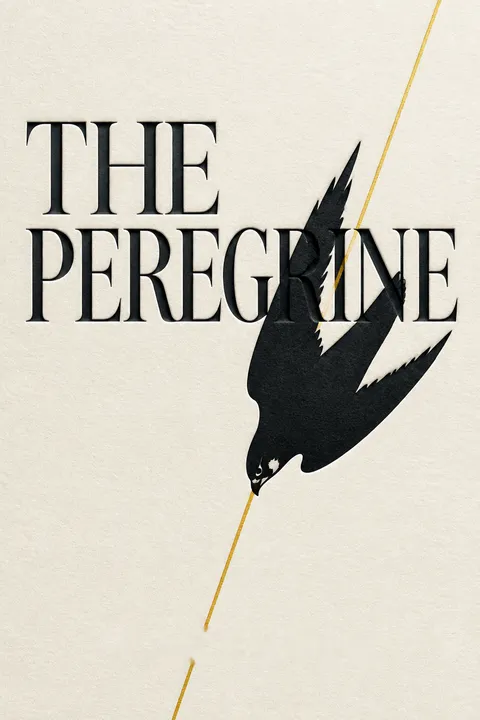

Key Takeaways
1. The Obsessive Quest for the Peregrine
For ten years I followed the peregrine. I was possessed by it. It was a grail to me. Now it has gone.
Deep immersion. Baker's decade-long pursuit of the peregrine falcon was an all-consuming obsession, transforming him into a "hawk-hunter." He sought to understand the bird's world by mirroring its behavior, becoming a part of the landscape it inhabited.
Ritualistic observation. To be accepted by the peregrine, Baker adopted a ritualistic approach: wearing the same clothes, traveling the same routes, and performing actions in the same order. This predictability aimed to soothe the hawk's wildness, allowing for closer, more truthful observation.
Transformed perception. The intense focus sharpened Baker's senses, making the landscape vivid and meaningful. This relentless pursuit was not just about seeing the bird, but about a deeper, almost spiritual, purification.
2. Intimate Connection with the Wild
The hunter must become the thing he hunts.
Embodied observation. Baker believed true understanding required profound identification with the animal, seeking to "sink into the skin and blood and bones of the hawk." He embraced fear and solitude, becoming "as solitary now as the hawk I pursue."
Shared existence. By immersing himself, Baker felt a unique bond, a "curious bond that comes with identity of position." He perceived the hawk's emotions, from boredom to hunting rage, as if they were his own.
Beyond human perception. The book explores the limits of human understanding, suggesting animals experience reality in ways inaccessible to us. The hawk's "otherness" and "unblinking and unreal looking" eyes reflect a world of "no attachment."
3. The Brutality and Beauty of Predation
I shall try to make plain the bloodiness of killing. Too often this has been slurred over by those who defend hawks.
Unflinching realism. Baker confronts the "bloodiness of killing" directly, rejecting sentimental views of nature. He emphasizes that all birds, even the seemingly gentle thrush, are "springy carnivore[s]," sustained by the act of killing.
Efficiency of the hunter. The peregrine is depicted as the ultimate predator, "efficient" and "merciful" in its design. Its stoop, talons, and bill are perfectly evolved for swift, decisive kills, often snapping the spinal cord of its prey.
Prey vulnerability. Baker details characteristics making birds vulnerable: conspicuous plumage, loud calls, inflexible flight, or being sick. The peregrine exploits these weaknesses, killing "what is commonest" for survival.
4. The Essex Landscape as a Profound Wilderness
Before it is too late, I have tried to … convey the wonder of … a land to me as profuse and glorious as Africa.
Local profundity. Baker transforms the seemingly modest Essex landscape into a place of "wonder," as "profuse and glorious as Africa." He demonstrates that profound natural beauty and mystery can be found in familiar, local environments.
Sensory geography. His descriptions imbue the landscape with sensory and emotional depth: "South is a bright, blocked place... West is a thickening of the earth into trees... East is a quickening in the sky." This personal geography reflects his intimate knowledge.
Mythic quality. By stripping away specific place names and compressing time, Baker gives the Essex landscape a universal, almost mythic quality. "The glorious landscape he explored could almost be any landscape."
5. The Peregrine's Mastery of Air and Hunt
Everything he is has been evolved to link the targeting eye to the striking talon.
Aerial prowess. The peregrine is portrayed as the "fastest-flying bird on Earth," a "crossbow flinging through the air." Its streamlined shape, long pointed wings, and powerful muscles enable incredible speed and endurance, with stoops exceeding "a hundred miles an hour."
Calculated hunting. Hunting is often preceded by "play," with the hawk feinting or harassing other birds before a sudden kill. It uses height, sun position, and ambush tactics, but is also bound by a "code of behaviour."
Unseen movements. The hawk's movements are often too swift for the human eye, appearing as "a blur imprinted softly" or "a dark incisive shape descending." Baker's prose attempts to capture this elusive speed.
6. Sensory Immersion and Synaesthesia
If a song could smell, this song would smell of crushed grapes and almonds and dark wood.
Blended perceptions. Baker's writing is characterized by "synaesthesia," experiencing one sense as another. He interprets sounds as if seen or tasted, making "immaterial and without physical form somehow concrete and solid."
Inventive language. His prose is "astonishing for its inventiveness, yet also for its clarity and precision." He uses striking juxtapositions and neologisms, such as "gulls bone-white in ashes of sky" or "I swooped through leicestershires of swift green light."
Examples of synaesthesia:
- "The pure green song of a willow warbler descends from a larch."
- "A moorhen calls from the smell of a pond."
- "The churring song of a nightjar seems to furrow the smooth surface of the silence."
7. The Otherness and Vulnerability of Wildlife
No pain, no death, is more terrible to a wild creature than its fear of man.
Distinct existence. Baker emphasizes the profound "otherness" of wildlife, their lives quickening to a "pulse our hearts can never reach." Animals exist in "simple states not possible for us," driven by instinct and immediate sensation.
Precarious survival. The book highlights the vulnerability of wild creatures, especially to the "fear of man." This fear is depicted as more terrible than death itself, leading to pathetic displays of helplessness.
Man as killer. Baker starkly states, "We are the killers. We stink of death. We carry it with us." This self-awareness underscores humanity's destructive impact on the natural world.
8. Human Impact and Environmental Loss
Foul poison burned within them like a burrowing fuse. Their life was lonely death, and would not be renewed.
Pesticide devastation. A central theme is the catastrophic decline of peregrines due to "filthy, insidious pollen of farm chemicals." Baker's quest is an elegy for a "dying world," where birds "die on their backs, clutching insanely at the sky."
Altered landscapes. The Essex countryside, though cherished, is not pristine. Hedges are cut, land is arable, and development encroaches. Baker notes the "fragrance of neglect" and a "sense of loss."
A call for awareness. Baker's writing serves as a poignant warning, urging readers to recognize the beauty and fragility of the natural world before it's "too late." His work is a testament to the fight against environmental degradation.
Review Summary
Reviewers overwhelmingly praise The Peregrine for its extraordinary, poetic prose, with many calling it a masterpiece of nature writing. Baker's lyrical descriptions of peregrine falcons across Essex's landscapes are frequently described as breathtaking, cinematic, and deeply immersive. Some readers find the diary structure repetitive and emotionally monotonous, while others see the rhythmic daily observations as meditative and hypnotic. The book's environmental subtext — documenting peregrines near extinction due to pesticides — adds poignancy. Nearly all agree the writing alone justifies reading it.
People Also Read

Download PDF
Download EPUB
.epub digital book format is ideal for reading ebooks on phones, tablets, and e-readers.








































