
Plot Summary
Shadows in the Cloisters
In the shadowed cloisters of Camelot, Mordred and Agravaine, embittered sons of the Orkney line, conspire against King Arthur. Mordred's hatred is personal, rooted in the trauma of his illegitimate birth and Arthur's attempt to destroy him as a child. Agravaine's malice is more diffuse, fueled by jealousy and resentment, especially toward Lancelot. Their conversation reveals the ancient feuds and tangled bloodlines that haunt Arthur's court, and Mordred's cold intellect contrasts with Agravaine's drunken bitterness. The two debate how to bring down Arthur, realizing that personal grievances alone are not enough—they need a public scandal. The seeds of betrayal are sown, as they fixate on the forbidden love between Lancelot and Queen Guenever, plotting to expose it and fracture the unity of the Round Table.
The Orkney Brothers' Discord
The Orkney brothers—Gawaine, Gaheris, Gareth, Agravaine, and Mordred—gather, their camaraderie quickly dissolving into accusation and near-violence. Gawaine, the clan's head, tries to keep peace, but Mordred and Agravaine insist on denouncing Lancelot and Guenever to Arthur. Gareth, the youngest and most innocent, is appalled by the prospect, while Gaheris is indecisive. The brothers' old wounds and rivalries surface, culminating in a near-brawl only interrupted by Arthur's arrival. The King's gentle presence momentarily soothes the room, but the underlying fractures remain. The Orkney family's inability to reconcile their loyalty to Arthur with their own grievances foreshadows the coming disaster.
Lovers at Sundown
In the golden light of evening, Lancelot and Guenever share a rare moment of peace, their love deepened by years of secrecy and sacrifice. They reminisce, sing, and debate the future, torn between desire and duty. Lancelot longs for openness, but Guenever, pragmatic and loyal to Arthur, refuses to break the fragile balance. Their conversation is interrupted by Arthur, who joins them in a scene of bittersweet domesticity. The three share a moment of fragile unity, but beneath the surface, guilt and foreboding linger. Arthur's kindness and vulnerability are evident, as is the unspoken knowledge that their triangle cannot last.
Arthur's Confession
Arthur, seeking honesty with his wife and best friend, confesses the secret of Mordred's birth: his unwitting incest with Morgause and the subsequent attempt to destroy the child. The revelation is met with compassion, not condemnation, from Lancelot and Guenever. Arthur's sense of justice and his struggle with guilt are laid bare. He explains his philosophy of kingship: that a ruler must be just, even to the point of executing friends or family if the law demands it. The conversation turns to Mordred, whom Arthur pities and fears, recognizing the seeds of his own destruction in his son. The trio's bond is deepened by shared sorrow, but the specter of betrayal looms.
The Accusation Unleashed
In the Justice Room, the Orkney brothers' plot comes to fruition. Mordred and Agravaine accuse Guenever and Lancelot of adultery before Arthur, demanding a legal investigation. Gawaine, Gareth, and Gaheris refuse to participate, torn between loyalty and disgust. Arthur, weary and heartbroken, is forced to allow the accusation to proceed, knowing it will destroy his court. Mordred and Agravaine insist on a civil trial, seeking to trap Lancelot and Guenever in flagrante delicto. Arthur, refusing to be complicit in their scheme, reluctantly gives permission for the trap to be set, warning that justice will be merciless to all involved.
The Trap Is Set
As Arthur departs on a hunting trip, Gareth, loyal to Lancelot, secretly warns him of the impending trap. Lancelot, confident in Arthur's honor and dismissive of Agravaine's threat, prepares to visit Guenever as usual. Gareth pleads with him to stay away, sensing disaster, but Lancelot is bound by love and duty. The stage is set for catastrophe, as the machinery of betrayal grinds inexorably forward. Gareth's anguish and Lancelot's fatalism underscore the tragedy of good intentions undone by circumstance and pride.
Night of Betrayal
In the Queen's chamber, Lancelot and Guenever share a tender, anxious moment, haunted by the sense of impending doom. Their fears are realized as Agravaine, Mordred, and an armed band break down the door. Lancelot, nearly naked and unarmed, kills Agravaine in self-defense and escapes, but the scandal is public. Guenever is left to face the consequences, and the Round Table is shattered. The lovers' private world is destroyed by the relentless forces of vengeance and law, and the court is plunged into chaos.
The Queen's Trial
Guenever is tried for treason and sentenced to be burned at the stake. Arthur, torn between love and duty, is powerless to save her. Gawaine, Gareth, and Gaheris refuse to participate in her execution, but Mordred ensures the sentence is carried out. As Guenever is led to the pyre, Lancelot and his knights charge in, rescuing her in a bloody melee. In the chaos, Gareth and Gaheris—unarmed and innocent—are killed by Lancelot, an act that will haunt him and doom any hope of reconciliation. The rescue is both a triumph and a tragedy, sealing the fate of all involved.
Siege and Sorrow
Lancelot and Guenever take refuge in Joyous Gard, besieged by Arthur and Gawaine. The court is split, the Round Table dissolved. Lancelot is tormented by guilt over Gareth's death and the destruction of all he loved. Arthur, manipulated by Gawaine's thirst for vengeance and Mordred's ambition, is unable to forgive or restore peace. The ideals of chivalry and justice that once defined Arthur's reign are consumed by blood feud and civil war. The Pope intervenes, forcing a temporary peace and Guenever's return to Arthur, but the wounds are too deep to heal.
Papal Peace, Orkney's Wrath
Under papal pressure, Arthur and Lancelot are briefly reconciled, and Guenever is restored to the King. But Gawaine, consumed by grief and rage over his brothers' deaths, refuses to forgive. He challenges Lancelot to single combat, and though Lancelot spares his life, the cycle of vengeance continues. Mordred, emboldened by the chaos, begins to plot his own rise to power. The peace is hollow, and the court is haunted by the ghosts of the past.
The Last Banquet of Love
Lancelot is banished from England, and Guenever returns to Arthur. The three share a final, poignant farewell, acknowledging the love and pain that has bound them together. Lancelot promises to defend Guenever if she is ever in danger, and Arthur, broken but dignified, accepts the end of his dream. The Round Table is no more, and the age of chivalry ends in sorrow and regret.
Mordred's Ambition
With Arthur and his knights in France, Mordred proclaims himself King and seeks to marry Guenever, his father's wife. Guenever, horrified, flees to the Tower of London and withstands a siege. Arthur and Gawaine race to return, but Gawaine is mortally wounded in battle. As England descends into anarchy, Mordred's madness and ambition threaten to destroy everything Arthur built. The final confrontation approaches, with the fate of the realm hanging in the balance.
The Candle in the Wind
On the eve of the last battle, Arthur, exhausted and despairing, reflects on the failure of his ideals. He questions the nature of war, justice, and human nature, haunted by the collapse of his dream. In a moment of hope, he entrusts his vision to a young page, Tom of Warwick, charging him to remember and retell the story of the Round Table. Arthur's candle, flickering in the wind, is passed to the next generation, a fragile hope for a better world.
The End of Gramarye
As dawn breaks, Arthur prepares to meet Mordred in battle, knowing it will be his last. The cannons thunder, and the age of chivalry ends in blood and ruin. Yet, in his final moments, Arthur recalls Merlyn's lessons and glimpses the possibility of a future where boundaries and hatred are overcome. The story closes with the image of the candle—Arthur's idea—still burning, a testament to the enduring power of hope and the human spirit.
Analysis
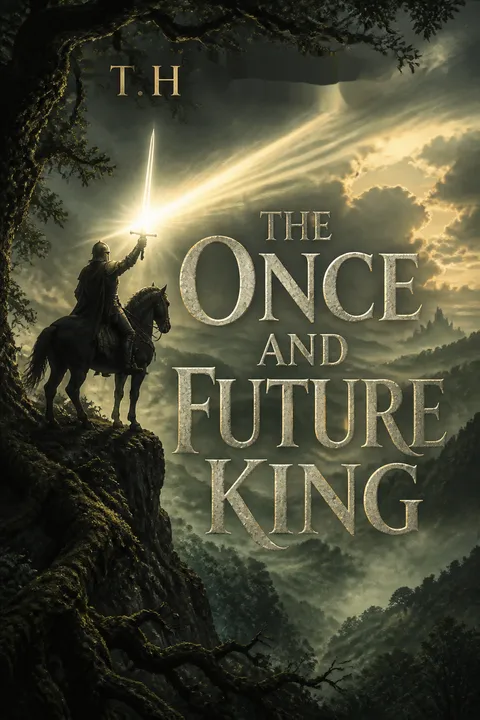
A meditation on the tragedy of idealism and the persistence of hope"The Once and Future King" is not merely a retelling of Arthurian legend, but a profound exploration of the human condition. T.H. White uses the fall of Camelot to examine the limits of justice, the dangers of vengeance, and the complexity of love and loyalty. The novel's modern sensibility—its psychological depth, its skepticism about power, its awareness of historical cycles—makes it resonate far beyond its medieval setting. White suggests that the greatest tragedy is not the failure of ideals, but the refusal to keep striving for them. Arthur's "candle in the wind" endures, passed from one generation to the next, a fragile but vital hope that humanity can learn, forgive, and build a better world. The story's lesson is both sobering and inspiring: that even in the face of inevitable loss, the effort to be decent, just, and loving is itself a victory.
Review Summary
The Once and Future King receives mixed but mostly positive reviews, averaging 4.07/5 stars. Many readers praise T.H. White's brilliant prose, philosophical depth, and complex character development, particularly of Arthur and Lancelot. The first section, The Sword in the Stone, is often cited as delightful and whimsical. However, critics note the book's uneven pacing, tonal shifts, and jarring anachronisms. Some find it slow, disjointed, and overly long, while devoted fans consider it a masterpiece that matures alongside its characters, exploring themes of justice, war, and human nature with humor and tragedy.
People Also Read



Characters
Arthur
Arthur is the heart of the story: a king who dreams of a just and peaceful realm, only to see his ideals undone by human frailty and the weight of history. Raised by Merlyn to believe in the perfectibility of man, Arthur is gentle, thoughtful, and deeply moral, but also indecisive and burdened by guilt—especially over his incestuous union with Morgause and the attempt to destroy Mordred. His relationships with Guenever and Lancelot are marked by love, forgiveness, and sorrow. As king, he strives to balance justice and mercy, but is ultimately undone by the very laws he creates. Arthur's psychological journey is one of hope, disillusionment, and, finally, a kind of tragic wisdom. His legacy is the fragile "candle in the wind"—the idea that justice and decency are worth striving for, even in a broken world.
Lancelot
Lancelot is Arthur's greatest knight and closest friend, yet also his betrayer through his love for Guenever. He is a man of contradictions: physically powerful but emotionally vulnerable, devout yet tormented by sin, capable of great mercy and terrible violence. Lancelot's love for Guenever is passionate and enduring, but it brings ruin to all three. His guilt over Gareth's death and the destruction of the Round Table consumes him, leading to self-imposed exile and, ultimately, a retreat into religious penance. Lancelot's psychological complexity—his need for love, his sense of unworthiness, his struggle with faith—makes him the most human and tragic of the knights.
Guenever
Guenever is both the catalyst and the victim of the story's central tragedy. Intelligent, passionate, and fiercely loyal, she loves both Arthur and Lancelot, but is forced to choose between them and the demands of duty. Her relationship with Lancelot is marked by tenderness and regret, while her marriage to Arthur is one of mutual respect and sorrow. Guenever's strength is revealed in her endurance—facing trial, execution, and siege with dignity—and in her final refusal to submit to Mordred. Her psychological journey is one of love, loss, and, ultimately, acceptance of her fate.
Mordred
Mordred is Arthur's illegitimate son, raised in bitterness and isolation by Morgause. Intelligent, cunning, and physically deformed, he is driven by a sense of grievance and a desire to destroy the father who rejected him. Mordred's psychological makeup is shaped by maternal domination, self-loathing, and a cold, intellectual hatred of Arthur's ideals. He manipulates events to bring about the downfall of Camelot, seizing power and attempting to marry Guenever. In the end, Mordred's ambition and madness consume him, making him both the agent and the victim of the story's tragedy.
Gawaine
Gawaine is the eldest Orkney brother, a man of great strength, loyalty, and simple morality. He is fiercely devoted to his family and to Arthur, but his inability to forgive Lancelot for Gareth's death drives the final wedge between the factions. Gawaine's psychological simplicity—his directness, his sense of honor, his quick temper—contrasts with the complexity of Arthur and Lancelot. His death marks the end of the old order and the last hope for reconciliation.
Agravaine
Agravaine is driven by envy and resentment, particularly toward Lancelot. His malice is less focused than Mordred's, but he plays a crucial role in exposing the affair and setting the trap. Agravaine's psychological weakness—his need for validation, his susceptibility to drink, his lack of self-control—makes him both a tool and a casualty of the larger tragedy.
Gareth
Gareth is the youngest Orkney brother, idealistic, gentle, and loyal to Lancelot. He is caught between family loyalty and personal honor, ultimately dying unarmed at Lancelot's hand during the rescue of Guenever. Gareth's death is the story's most poignant symbol of innocence destroyed by the cycle of vengeance and misunderstanding.
Gaheris
Gaheris is less defined than his siblings, often following the lead of others. He, too, is killed during Guenever's rescue, a victim of forces beyond his control. Gaheris represents the ordinary person caught in the crossfire of history, unable to shape his own fate.
Merlyn
Though physically absent, Merlyn's teachings and philosophy shape Arthur's worldview. He represents the hope that humanity can learn from its mistakes, and his memory haunts Arthur in his final hours. Merlyn's psychological role is that of the benevolent father, the voice of reason and compassion in a world descending into chaos.
Tom of Warwick
Tom is a young page to whom Arthur entrusts the legacy of the Round Table. He symbolizes the hope that the ideals of justice and decency can survive even in the darkest times. Tom's psychological innocence and willingness to listen make him the vessel for Arthur's "candle in the wind," the fragile hope for a better future.
Plot Devices
Tragic Irony and Foreshadowing
The narrative is structured around tragic irony: the very ideals that make Arthur's court great—justice, loyalty, love—become the seeds of its destruction. The reader is constantly aware that the characters' best intentions will lead to disaster. Foreshadowing is used throughout, from the early discussions of old feuds to Arthur's confession and the repeated warnings of impending doom. The love triangle, the Orkney brothers' discord, and Mordred's plotting all serve as ticking time bombs, their consequences inevitable yet preventable.
Psychological Realism
The story delves deeply into the psychology of its main characters, exploring their motivations, fears, and contradictions. Arthur's struggle with guilt and justice, Lancelot's torment over love and sin, Guenever's divided loyalties, and Mordred's nihilism all shape the events of the narrative. The collapse of Camelot is as much a psychological tragedy as a political one.
Symbolism and Motif
The "candle in the wind" is the central symbol, representing the fragility of hope and the persistence of ideals in a hostile world. The Round Table, the sword, the fire, and the wind all serve as motifs, reinforcing the themes of unity, conflict, destruction, and renewal. The use of animals and nature, inherited from Merlyn's teachings, underscores the contrast between human folly and the possibility of peace.
Narrative Structure
The story is told through a series of interconnected scenes, shifting between characters and settings to build a mosaic of the court's decline. Dialogue, interior monologue, and descriptive passages are woven together to create a sense of immediacy and intimacy. The use of a modern, reflective narrator allows for commentary on the events and their meaning, bridging the gap between legend and contemporary relevance.
Download PDF
Download EPUB
.epub digital book format is ideal for reading ebooks on phones, tablets, and e-readers.








































