
Plot Summary
Reunion and Restlessness
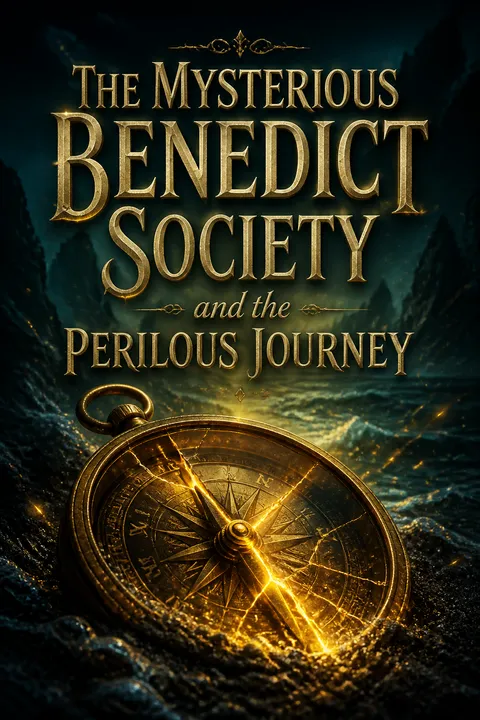
Reynie, Kate, and Sticky gather at Kate's farm, eager for their long-awaited reunion after a year apart. Their joy is tinged with a sense of restlessness and longing for purpose, as ordinary life feels dull compared to their past adventures. Constance, the youngest and most enigmatic member, is to join them soon. The friends reminisce about their previous mission, revealing how deeply their bond has grown. Each struggles with the feeling that they are meant for something more, and their conversations are laced with anticipation for the mysterious surprise Mr. Benedict has promised. The chapter sets the emotional tone: joy at being together, but a shared yearning for meaning and adventure, hinting that their peaceful days are numbered.
The Unseen Warning
As the children prepare to travel to Stonetown for their surprise, a telegram arrives at Kate's farm—too late to reach them. The message, from Rhonda, Mr. Benedict's assistant, warns them not to come, as danger awaits. Oblivious, the children and their guardians set out, excited for the adventure ahead. The narrative tension rises as the reader knows peril is imminent, but the children remain hopeful and unaware. The chapter is filled with small, odd details—like Kate's trained animals and the government's surveillance of her mail—that foreshadow the extraordinary challenges to come. The emotional undercurrent is one of innocence on the brink of being shattered.
A Surprise Gone Wrong
The children arrive at Mr. Benedict's house, expecting celebration, but are met by police and government officials. Rhonda reveals that Mr. Benedict and Number Two have been kidnapped by Mr. Curtain, Mr. Benedict's evil twin. The supposed scavenger hunt is now a ransom plot: Mr. Curtain demands information about a rare plant, duskwort, in exchange for their friends' safety. The children's excitement turns to shock and fear, but their determination to help is immediate. The emotional arc shifts from anticipation to dread, as the Society realizes they must act on their own to save their mentor.
The Society Reconvenes
In secret, Reynie, Kate, Sticky, and Constance meet to open Mr. Benedict's first clue. Despite the adults' wishes, they resolve to follow the trail themselves, believing only they can solve the riddles and rescue their friends. Their bond is reaffirmed as they promise to stick together, even in the face of danger. The chapter is filled with the thrill of secret plans and the anxiety of impending risk. The children's unique talents and personalities shine as they decipher the first puzzle, setting them on a path that will test their courage and friendship.
The Journey Begins
The children solve Mr. Benedict's riddle, which points them to a dictionary and then to a hidden journal. The journal's secret message—"Take the shortcut"—leads them to the maiden voyage of a record-breaking cargo ship, the Shortcut, bound for Portugal. They sneak away from the adults, leaving behind a note, and embark on their journey. The emotional tone is a mix of exhilaration and fear, as the children leave the safety of home for the unknown, propelled by loyalty and hope.
Escape from Stonetown
Using clever deception, the Society escapes government surveillance and makes their way to the harbor. They board the Shortcut, welcomed by Captain Noland and the exuberant Cannonball. The ship's luxury and speed are a stark contrast to the anxiety they feel about their mission. The chapter is filled with the excitement of travel and the tension of being hunted, as the children realize the stakes are higher than ever. Their resourcefulness and unity are tested as they navigate the adult world on their own.
Shortcut Across the Sea
Onboard the Shortcut, the children encounter suspicious company owners, extra security, and rumors of pirates. They befriend Cannonball and Captain Noland, who become their allies. Storms and seasickness test their resolve, while the threat of Mr. Curtain's agents looms. The journey is both physically and emotionally taxing, as the children grapple with fear, homesickness, and the weight of responsibility. The sea crossing becomes a crucible, forging their determination and deepening their bond.
Storms, Secrets, and Sickness
As the ship battles rough seas, the children confront their own insecurities and fears. Sticky struggles with pride and self-worth, Constance's mysterious abilities begin to emerge, and Reynie questions whom to trust. Captain Noland becomes a confidant, sharing stories of Mr. Benedict's past and the origins of the duskwort mystery. The emotional arc is one of vulnerability and growth, as each child faces their inner demons while the external storm rages.
Lisbon's Hidden Clues
Arriving in Portugal, the Society follows Mr. Benedict's clues to St. George's Castle, where they narrowly avoid capture by Mr. Curtain's henchmen. They retrieve the next clue, which leads them to a train station and then to Holland. The tension escalates as the children realize they are being pursued at every turn. Their quick thinking and teamwork allow them to stay one step ahead, but the danger feels ever closer. The chapter is marked by suspense, ingenuity, and the bittersweet thrill of the chase.
The Dutch Discovery
In Holland, the children visit a science museum and uncover the truth about duskwort: a legendary plant that can induce sleep and possibly cure narcolepsy. They learn Mr. Benedict's parents were close to discovering its location, but the clues are hidden in coded letters and maps. The Ten Men, Mr. Curtain's terrifying agents, attack the museum, and the children barely escape with the next clue. The emotional arc is one of awe at the mystery's depth and terror at the lengths their enemies will go to obtain it.
Peril at the Hotel
The Society follows the trail to a hotel, where they are betrayed by a staff member and confronted by a Ten Man. Milligan, Kate's father and a master spy, arrives just in time to save them. The reunion is joyous but short-lived, as Milligan insists on taking the lead. The children's relief is tempered by the realization that the adults cannot always protect them. The chapter is a rollercoaster of hope, fear, and the enduring power of family.
Milligan's Return
Milligan and the children track Mr. Benedict's path to a remote island in the North Sea, using clues left by Risker, a reluctant boatman. The Society promises to obey Milligan's orders, but their independence and courage remain central. The journey to the island is fraught with tension, as they know Mr. Curtain and his Ten Men are closing in. The emotional arc is one of trust, sacrifice, and the bittersweet acceptance that not all promises can be kept.
The Island of Winds
On the wind-swept island, the Society follows a trail of wind chimes and puzzles to an abandoned village and a hidden cave. They discover the duskwort's secret location, but Mr. Curtain's forces are everywhere. Milligan is gravely injured in a battle with the Ten Men, and the children must fend for themselves. The chapter is filled with suspense, ingenuity, and the pain of seeing their protector fall. The children's resilience and unity are tested as never before.
The Village and the Cave
The Society finds Mr. Benedict and Number Two imprisoned in a cave, guarded by Mr. Curtain and his henchmen. Using their wits and courage, the children orchestrate a daring escape, freeing Mr. Benedict and learning the truth about the duskwort: it has already been destroyed by a mimic plant, thwart-wort. Mr. Curtain, unaware, believes he has won. The emotional arc is one of triumph and heartbreak, as the children realize their journey has saved the world, but at great personal cost.
Captured by Curtain
Mr. Curtain captures the children and Mr. Benedict, using threats and truth serum to extract the duskwort's secret. S.Q., a conflicted former ally, is manipulated into helping, but ultimately betrayed. The children's hope fades as they face the possibility of permanent separation and defeat. The chapter is a study in psychological tension, as loyalty, fear, and the power of persuasion collide in the darkness.
The Duskwort Deception
Mr. Curtain escapes with what he believes is duskwort, but Mr. Benedict has tricked him: it is only thwart-wort, useless for his evil plans. The Society, battered but unbroken, is rescued by Captain Noland and the crew of the Shortcut, who ground their ship to save them. The emotional arc is one of relief, vindication, and the realization that goodness and cleverness can outwit even the most powerful villain.
The Final Escape
The Society and their allies barricade themselves in the ship's security hold as Mr. Curtain and the Ten Men attempt to break in. With the timely arrival of the Royal Navy, the villains are forced to flee. The children are reunited with their families, and Milligan, though injured, survives. The chapter is a cathartic release of tension, as the heroes are finally safe and the bonds of friendship and family are reaffirmed.
Homecoming and Reflections
Back in Stonetown, the Society recovers from their ordeal. They reflect on the lessons learned: the importance of trust, the complexity of good and evil, and the enduring power of friendship. Mr. Benedict, though still suffering from narcolepsy, is grateful for the children's bravery. The Society's bond is stronger than ever, and they look to the future with hope, knowing that together they can face whatever challenges come next.
Analysis
A modern fable of courage, trust, and the power of unityThe Mysterious Benedict Society and the Perilous Journey is more than an adventure story; it is a meditation on the complexities of good and evil, the challenges of growing up, and the necessity of trust in a world full of uncertainty. Through its intricate plot and richly drawn characters, the book explores how intelligence, empathy, and cooperation can overcome even the most daunting obstacles. The children's journey—from the safety of home to the farthest reaches of danger—mirrors the emotional journey from innocence to maturity, as they learn that true heroism lies not in individual brilliance but in collective action and selfless love. The recurring motif of twins and duality invites readers to reflect on the choices that define us, while the ever-present threat of the Ten Men serves as a reminder that evil often wears a friendly face. Ultimately, the book's greatest lesson is that hope, courage, and friendship are the most powerful tools we possess, and that even in the darkest moments, what shines in darkness is the light we kindle together.
Review Summary
People Also Read


Characters
Reynie Muldoon
Reynie is the heart and mind of the Society, gifted with extraordinary intuition and empathy. Orphaned and adopted by Miss Perumal, he craves belonging and purpose. Reynie's ability to read people and situations makes him a natural leader, but also burdens him with self-doubt and the weight of responsibility. Throughout the journey, he struggles with whom to trust—especially adults like Captain Noland—and with the moral complexity of their mission. Reynie's arc is one of growth from uncertainty to quiet confidence, learning that leadership means both making hard choices and relying on others. His bond with the other children is deep and familial, and his loyalty to Mr. Benedict is unwavering.
Kate Wetherall
Kate is the Society's action hero: athletic, resourceful, and always prepared with her trusty bucket of tools. Raised in a circus and reunited with her father Milligan, she is driven by a need to prove herself and protect her friends. Kate's impulsiveness is balanced by her ingenuity and courage, but she also grapples with vulnerability—especially when Milligan is injured. Her relationship with her father is central, as she learns to accept both his love and his limitations. Kate's arc is one of channeling her energy and anger into selfless action, and discovering that true strength lies in compassion as much as daring.
George "Sticky" Washington
Sticky is a prodigy with a photographic memory and encyclopedic knowledge, but struggles with anxiety and low self-esteem. His family's financial struggles and his own history of running away have left him sensitive to failure and desperate for approval. Sticky's journey is marked by moments of pride and shame, as he learns to balance his intellect with humility and courage. His friendship with the others, especially Reynie, helps him find confidence and purpose. Sticky's arc culminates in acts of bravery and sacrifice, proving to himself and his friends that he is more than just a brain—he is a hero in his own right.
Constance Contraire
Constance is the youngest and most enigmatic member, a three-year-old with extraordinary pattern recognition and emerging psychic abilities. Her stubbornness and bluntness mask deep insecurity and a longing for acceptance. Constance's relationship with Mr. Benedict is especially poignant, as she yearns to be adopted and fears abandonment. Her arc is one of self-discovery, as she learns to trust her gifts and her friends, and to channel her defiance into resilience. Constance's insights often save the group, and her emotional growth is a testament to the power of love and belonging.
Mr. Benedict
Mr. Benedict is a brilliant, narcoleptic scientist whose kindness and wisdom inspire the Society. Haunted by his twin brother's evil and his own physical limitations, he is driven by a sense of responsibility to protect the world—and the children he loves. Mr. Benedict's psychoanalysis reveals a man who has suffered loss and isolation, but who finds hope and healing in his chosen family. His relationship with the children is both paternal and collaborative, treating them as equals and trusting their abilities. Mr. Benedict's arc is one of sacrifice, humility, and the belief that goodness can prevail through cleverness and courage.
Milligan
Milligan is Kate's long-lost father, a master spy with a tragic past and a heart of gold. His stoic exterior hides deep love and vulnerability, especially for Kate. Milligan's role as protector is tested when he is gravely injured, forcing the children to act on their own. His arc is one of learning to trust his daughter's independence and the strength of the Society, while accepting his own limitations. Milligan's presence is a source of comfort and security, but his greatest gift is empowering the children to become heroes themselves.
Rhonda Kazembe
Rhonda is Mr. Benedict's assistant and adopted daughter, a stabilizing force in the Society. Her intelligence and emotional insight make her a trusted confidant for both adults and children. Rhonda's role is often behind the scenes, managing crises and offering guidance. She represents the importance of quiet strength and the value of support systems. Her relationship with Constance and the other children is maternal, and her loyalty to Mr. Benedict is unwavering.
Number Two
Number Two is Mr. Benedict's other assistant, known for her yellow attire, insomnia, and insatiable appetite. Her devotion to Mr. Benedict and the children is absolute, and she often puts their needs above her own. Number Two's arc involves overcoming physical and emotional exhaustion, and learning to accept help from others. Her quirky habits and dry wit provide comic relief, but her courage and resilience are central to the Society's survival.
Mr. Curtain
Mr. Curtain is Mr. Benedict's identical twin and nemesis, a genius whose brilliance is matched only by his cruelty. Driven by a need for power and a fear of helplessness, he manipulates others through fear, technology, and psychological warfare. Mr. Curtain's psychoanalysis reveals a man tormented by his own limitations and haunted by his brother's goodness. His relationship with the Society is one of twisted fascination and rivalry. Ultimately, his downfall is his inability to understand love, trust, and the strength of unity.
The Ten Men
The Ten Men are Mr. Curtain's elite agents, named for their ten methods of inflicting pain. They are outwardly polite and professional, but their briefcases conceal deadly weapons. Each Ten Man represents a different facet of cruelty and intimidation, serving as both physical and psychological threats. Their presence forces the children to confront their deepest fears and to rely on one another for survival. The Ten Men symbolize the dangers of unchecked power and the importance of resisting evil with courage and cleverness.
Plot Devices
Scavenger Hunt as Rescue Mission
The narrative structure is built around a series of riddles and clues left by Mr. Benedict, originally intended as an educational adventure for the children. When Mr. Benedict is kidnapped, the scavenger hunt transforms into a desperate rescue mission, with each clue leading the Society deeper into danger. This device allows for episodic tension, character development, and the gradual revelation of the duskwort mystery. The clues are tailored to the children's unique abilities, reinforcing the theme that their differences are strengths. The hunt also serves as a metaphor for the journey from innocence to maturity, as the children must solve not only external puzzles but also internal conflicts.
Duality and Twins
The central conflict between Mr. Benedict and Mr. Curtain is mirrored in the book's exploration of duality: good versus evil, trust versus betrayal, childhood versus adulthood. The twins' identical appearance but opposite natures highlight the thin line between virtue and vice, and the choices that define character. This device is echoed in the children's own struggles with pride, fear, and loyalty, as they navigate the complexities of morality and identity.
Foreshadowing and Pattern Recognition
The narrative is rich with foreshadowing, from Constance's emerging psychic abilities to the recurring motifs of keys, codes, and hidden messages. Pattern recognition is both a literal skill (used to solve puzzles) and a metaphor for understanding people and situations. The children's ability to see beyond the obvious—whether in deciphering a riddle or reading an adult's intentions—is crucial to their survival. This device reinforces the theme that wisdom comes from observation, empathy, and the courage to trust one's instincts.
Psychological Tension and Moral Dilemmas
The story is driven by psychological tension: whom to trust, when to obey, and how to act in the face of fear. The children are repeatedly forced to make moral choices—whether to risk themselves for others, whether to use violence, whether to trust adults who may betray them. These dilemmas are heightened by the presence of the Ten Men, whose polite menace forces the children to confront the reality of evil. The resolution of these tensions—often through cleverness, compassion, and unity—underscores the book's message that goodness is a choice, not a given.