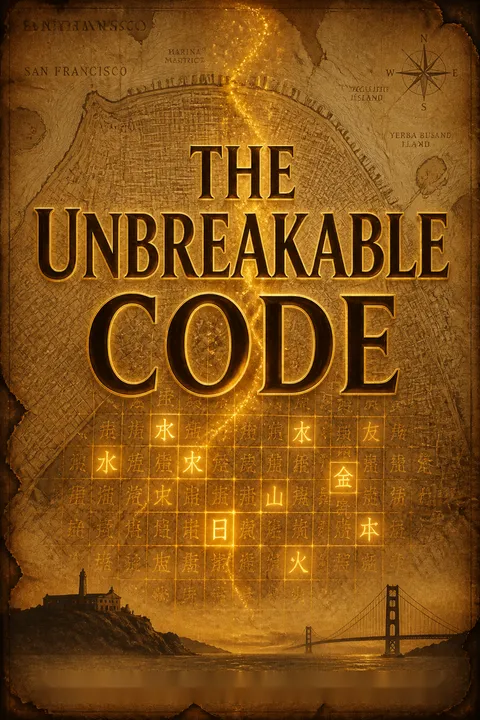

Plot Summary
The Phoenix's Secret Fire
In the opening, a shadowy man known as the Phoenix blends into a crowd, leaving behind a seemingly innocuous cup and pouch in a San Francisco park. As he boards a bus, he reflects on the explosive device he's left behind—one that will start a small fire, not for spectacle, but as part of a larger, secret plan. The Phoenix is a master of being overlooked, using people's inattention to his advantage. His actions are deliberate, calculated, and tinged with a sense of vengeance. This opening sets the tone for a story where hidden motives, overlooked details, and the power of secrets will drive the narrative, and where the consequences of small actions ripple outward in unexpected ways.
Book Party Revelations
Emily Crane, her family, and her best friend James attend a book party celebrating the discovery of a lost Edgar Allan Poe manuscript. The event is filled with Book Scavenger fans, costumed guests, and a sense of excitement. Emily, usually shy, is thrust into the spotlight as a local celebrity. Amid the festivities, she notices her strict social studies teacher, Mr. Quisling, acting suspiciously in the back of the store. The party is a swirl of pride, nerves, and the realization that the world of books and puzzles she loves is much bigger—and more complicated—than she imagined. The seeds of mystery are planted as Emily witnesses something she can't explain.
A Stolen Clue
Emily sees Mr. Quisling take something from a stranger's purse, an act completely out of character for the rule-abiding teacher. She confides in James, and together they retrieve a dropped notecard containing a coded message referencing the Niantic, a buried Gold Rush ship, and an "unbreakable code." The note challenges its recipient to solve a cipher and leave the answer with the next book. This moment marks the beginning of Emily and James's journey into a deeper mystery, blending their love of puzzles with real-world stakes. The tension between trust and suspicion, and the thrill of discovery, propel them forward.
The Unbreakable Code Emerges
Late at night, Emily and James decipher the stolen note using their own secret code and a keyword cipher. The message hints at a meeting "once we've solved the unbreakable code." Research reveals the Niantic is a ship buried under San Francisco, and the "unbreakable code" is a legendary unsolved cipher. Their curiosity is piqued, and the challenge becomes personal. The code's reputation for being unsolvable—and possibly cursed—only makes it more alluring. The friends resolve to investigate further, setting the stage for a quest that will test their intellect, courage, and friendship.
Gold Rush Ghosts
Emily and James visit the Maritime Museum to learn about the Niantic and the city's Gold Rush past. They discover that San Francisco is built atop dozens of buried ships, remnants of a chaotic era when people abandoned everything for the promise of gold. A docent warns them about the "unbreakable code," claiming it's cursed and linked to fires throughout history. They also find a photo of a young Mr. Quisling at the 1978 Niantic excavation, arm-in-arm with a girl named Miranda Oleanda. The past and present intertwine, and the legend of the code grows more ominous.
The Curse of Fire
The docent's warning about the code's curse—its supposed power to cause fires—haunts Emily and James. They learn that the code survived a fire that destroyed the Niantic in 1851 and has been associated with other mysterious blazes. The idea of a curse adds a layer of fear and excitement to their quest. Meanwhile, they notice a recent fire in Washington Square, eerily close to where the Phoenix set his trap. The line between legend and reality blurs, and the stakes of solving the code become more than just intellectual—they may be risking real danger.
The Map Beneath the City
At the main library, Emily and James meet Ms. Linden, a vibrant librarian who introduces them to the real "unbreakable code"—a parchment with a grid of letters and a faint, coffee-like stain. The code's history is tied to Mark Twain, Tom Sawyer, and a series of fires. The legend claims the code leads to a stash of gold, but is cursed. Emily and James trace the code's journey through history, learning about the real Tom Sawyer and the practice of hiding gold in everyday objects. The code is more than a puzzle; it's a map, a story, and a warning.
Book Scavenger Advisory
Emily, James, and Matthew join the Book Scavenger teen advisory committee, meeting their idol, Mr. Griswold. Once flamboyant and energetic, Mr. Griswold is now subdued after a recent attack. The kids propose ambitious ideas, but Griswold is hesitant, scarred by his trauma. The meeting is bittersweet—full of hope, but shadowed by loss. The friends also learn that the unbreakable code is known as the Mark Twain cipher and that the original document is housed at the library. Their quest gains new urgency, and the emotional stakes deepen as they see how the past can wound and inspire.
The Mark Twain Cipher
At the library, Emily and James learn the code's full legend: Mark Twain once owned it, accepted it as payment for a gambling debt, and was warned it was cursed. After a fire in his hotel room, Twain gave the code to Tom Sawyer, who displayed it in his saloon—until it, too, burned down. The code survived every fire, always untouched. The kids trace the code's journey through time, realizing that its unsolved nature has made it a magnet for obsession, hope, and disaster. The code is both a historical artifact and a living challenge.
The Library's Hidden Message
Inspired by a classroom accident with lemon juice, Emily suspects the code's parchment contains invisible ink. Using a homemade black light, she and James discover hidden Chinese characters—meaning "hope"—painted on the document. This breakthrough suggests the code's creator was Chinese, and that the solution requires knowledge of both English and Chinese. The invisible message transforms the code from a simple cipher into a multicultural, multi-layered puzzle. The friends realize that the code is not just about gold, but about the dreams and struggles of those who built the city.
New Year's Hopes and Fears
As Emily and her friends chase clues, real-life worries intrude. Emily overhears her parents arguing about money and fears they may have to move again, breaking their promise to stay in San Francisco. She resolves to help by finding the treasure or earning money herself. The friends celebrate New Year's with a book hunt and ice cream, trying to set a hopeful tone for the year. The tension between adventure and anxiety, hope and uncertainty, gives their quest emotional weight. The code becomes a symbol of their desire for stability, belonging, and a future in the city they love.
School, Secrets, and Suspicions
Back at school, Emily and James juggle their secret quest with everyday challenges—dance committee meetings, shifting friendships, and the ever-present Maddie, their competitive classmate. Mr. Quisling's odd behavior and the mysterious fires make Emily increasingly suspicious. The friends set a trap by hiding a copy of Tom Sawyer, hoping to catch the real Coolbrith in the act. Meanwhile, the Phoenix's fires escalate, and the line between game and danger grows thin. The school setting becomes a crucible where trust, loyalty, and courage are tested.
The Quest for Coolbrith
Emily and James discover that Mr. Quisling has been engaged in a secret Book Scavenger quest with "Coolbrith," exchanging coded messages hidden in copies of Tom Sawyer. Each book is linked to a fire, and the quest appears to be orchestrated by someone with a personal vendetta. The friends decode the messages, realizing that Coolbrith is not who Mr. Quisling thinks. The quest is a trap, designed to frame their teacher for arson. The tension mounts as Emily and James race to uncover Coolbrith's identity before another fire strikes.
Fires and False Leads
The Phoenix's fires become more brazen, culminating in a blaze at Hollister's beloved bookstore. Emily is caught inside, barely escaping. The fire devastates the community and leaves Emily wracked with guilt and fear. Suspicion falls on Charlie, the store's surly new employee, but the evidence is circumstantial. Meanwhile, the Book Scavenger quest thread is deleted, erasing the digital trail. Emily and James realize they must act quickly to clear Mr. Quisling's name and stop the real arsonist before someone is seriously hurt. The stakes are no longer just about solving a puzzle—they're about justice and safety.
Invisible Ink and Hope
The discovery of the Chinese characters—"hope"—proves to be the key to the unbreakable code. Emily and James realize the code must be read in columns, using "hope" as the keyword for a substitution cipher. The solution is a set of directions: "X third tree east of duck rock." The code's multicultural origins are revealed, honoring the Chinese immigrants who shaped San Francisco's history. The friends prepare for a final adventure, determined to find the treasure and bring closure to a mystery that has haunted the city for generations.
The Dance Committee Game
As the school dance approaches, Emily steps out of her comfort zone to lead a presidential relay race, inspired by Mr. Griswold's games. The event is a joyful, chaotic success, bringing together students who might otherwise never interact. Mr. Griswold, once withdrawn, is inspired to plan a new citywide game. The dance is interrupted by another fire—this time, the arsonist's trap is set for Mr. Quisling. Emily and James realize the true culprit is not Charlie, but Mr. Sloan, a substitute teacher with a decades-old grudge. The friends confront him, clearing Mr. Quisling's name and ending the Phoenix's reign of terror.
The Phoenix Unmasked
Mr. Sloan, revealed as the Phoenix, confesses to orchestrating the fires and framing Mr. Quisling. His actions are rooted in old wounds and jealousy, a cautionary tale about the corrosive power of resentment. The community rallies around Hollister, Mr. Quisling, and the kids, choosing forgiveness and hope over fear and suspicion. The mystery is solved, but the emotional scars linger. Emily and her friends learn that true strength lies in facing adversity with kindness, creativity, and resilience.
Unlocking the Treasure
With the code solved, Emily, James, and Mr. Quisling—joined by Ms. Linden and their families—sail to Gull Island. There, they find a hollow tree marked by bird droppings and, inside, a soot-covered golden bowl. The treasure is real, but its value is more than monetary—it's a testament to the city's multicultural history and the perseverance of those who came before. The bowl is donated to the Chinese Historical Society, and Emily and James receive a reward, which they offer to Hollister to help rebuild his store. The community comes together for a painting party, and Mr. Griswold announces a new citywide game, "Unlock the Rock," symbolizing hope, renewal, and the enduring power of stories.
Analysis
A celebration of curiosity, resilience, and communityThe Unbreakable Code is more than a middle-grade mystery; it's a meditation on the power of stories, the importance of history, and the necessity of hope. Through its layered puzzles and richly drawn characters, the novel explores how the past shapes the present, how trauma can be healed through creativity and connection, and how even the most daunting challenges can be overcome through collaboration. The book champions diversity—not just of backgrounds, but of perspectives and talents—and shows that true treasure lies in friendship, belonging, and the courage to face the unknown. In a world often marked by division and uncertainty, The Unbreakable Code offers a blueprint for building community, embracing difference, and choosing hope, even when the path forward is shrouded in mystery.
Review Summary
The Unbreakable Code is a well-received sequel praised for its engaging puzzles, San Francisco history, and lovable characters. Many readers found it comparable to or better than the first book, highlighting its tighter plot, higher stakes, and incorporation of Chinese-American history. Common criticisms include Emily and James making questionable decisions, a somewhat predictable mystery, and occasional pacing issues. The inclusion of literary history, particularly connections to Mark Twain, and the real San Francisco settings were widely appreciated. Overall, it resonates strongly with its target middle-grade audience.
People Also Read
Characters
Emily Crane
Emily is a thoughtful, introverted girl who finds comfort and excitement in books, puzzles, and codes. Her family's frequent moves have made her crave stability and connection, which she finds in San Francisco and her friendship with James. Emily's journey is one of growing confidence—she moves from the background to the center of her own story, learning to trust her instincts, take risks, and lead others. Her empathy and determination drive the quest to solve the unbreakable code, and her actions ultimately help heal her community. Emily's arc is about finding home, both in a place and within herself.
James Lee
James is Emily's loyal and creative partner in adventure. He's quick-witted, tech-savvy, and deeply curious, with a knack for ciphers and a love of games. James's family history—his great-grandfather's immigration through Angel Island—connects him to the city's multicultural past. He struggles with his father's frequent absences and the pressures of living up to expectations, but finds solace and purpose in his friendship with Emily and their shared quests. James's humor and optimism balance Emily's anxieties, and his insights are crucial to solving the code.
Mr. Quisling
Mr. Quisling is initially portrayed as a rigid, rule-bound social studies teacher, but beneath his stern exterior lies a passionate puzzle enthusiast and a man haunted by past disappointments. His involvement in the Book Scavenger quest and the unbreakable code is driven by nostalgia, longing for connection, and a desire to prove himself. Mr. Quisling's arc is one of vulnerability—he is framed for crimes he didn't commit, forced to confront old wounds, and ultimately redeemed by the truth and the support of his students. His relationship with Emily and James evolves from suspicion to mutual respect.
The Phoenix / Mr. Sloan
The Phoenix is the story's antagonist, orchestrating a series of fires to frame Mr. Quisling and settle a decades-old grudge. As Mr. Sloan, he presents himself as a friendly substitute teacher, but beneath the surface, he is consumed by resentment and a need for recognition. His actions are a cautionary tale about the dangers of letting bitterness and envy fester. The Phoenix's psychological complexity adds depth to the story—he is both villain and victim, undone by his inability to let go of the past.
Hollister
Hollister is the warm, eccentric owner of the local bookstore and a mentor to Emily and her friends. His store is a haven for book lovers and a symbol of resilience in the face of adversity. When his store is destroyed by fire, Hollister's response is one of hope and determination—he rebuilds with the help of his friends and neighbors. Hollister embodies the power of community, generosity, and the belief that stories can heal and unite.
Mr. Griswold
Mr. Griswold is a larger-than-life figure whose love of games, puzzles, and books inspires those around him. After surviving an attack, he becomes withdrawn and fearful, but the enthusiasm of Emily and her friends rekindles his spirit. Mr. Griswold's journey is about reclaiming joy, embracing vulnerability, and using his influence to foster creativity and connection. His decision to launch a new citywide game signals a return to hope and possibility.
Matthew Crane
Matthew is Emily's older brother, known for his humor, impulsiveness, and ability to make friends easily. Though he often teases Emily, he supports her in subtle ways and helps bridge the gap between her world and the wider community. Matthew's easygoing nature contrasts with Emily's anxieties, and his presence adds levity and warmth to the story.
Ms. Linden
Ms. Linden is a vibrant, tattooed librarian who guides Emily and James in their quest. Her knowledge of history, codes, and the city's hidden stories makes her an invaluable ally. Ms. Linden's openness and encouragement help the kids see themselves as capable of making real discoveries. She represents the transformative power of libraries and the importance of preserving and sharing knowledge.
Charlie
Charlie is Hollister's new employee, a college student with a prickly demeanor and a talent for technology. Initially suspected of being the arsonist, Charlie's true role is more complex—he is struggling to find his place and prove himself, but is ultimately innocent of the crimes. Charlie's storyline explores themes of judgment, misunderstanding, and the dangers of jumping to conclusions.
Maddie
Maddie is Emily and James's classmate and former cipher rival. Her competitiveness masks a desire for recognition and belonging. Over the course of the story, Maddie's relationship with Emily shifts from antagonism to camaraderie, reflecting the power of shared experiences to break down barriers and build new friendships.
Plot Devices
Layered Codes and Ciphers
The story is structured around a series of increasingly complex codes—keyword ciphers, book ciphers, invisible ink, and multicultural puzzles. Each code is both a literal challenge and a metaphor for the characters' emotional journeys. The process of solving the unbreakable code mirrors the process of self-discovery, healing, and building community. The codes also serve as a bridge between past and present, connecting the characters to the city's history and to each other.
Dual Timelines and Historical Echoes
The narrative weaves together contemporary events with echoes of the Gold Rush, Mark Twain, and the experiences of Chinese immigrants. The buried ships, the legend of the code, and the multicultural origins of the puzzle all serve to remind readers that history is alive, shaping the present in subtle and profound ways. The characters' quest is both a personal adventure and a journey through the city's layered past.
Red Herrings and Misdirection
The story employs classic mystery techniques—false leads, suspicious characters, and hidden motives—to keep readers guessing. Charlie is set up as a likely suspect, only to be revealed as a red herring. The true villain, Mr. Sloan, hides in plain sight, his motives gradually revealed through careful foreshadowing and psychological clues. This structure keeps the tension high and rewards attentive reading.
Community and Collaboration
The narrative emphasizes the importance of collaboration—between friends, families, and generations. The Book Scavenger advisory committee, the dance committee, and the painting party all serve as microcosms of community, showing how diverse individuals can come together to solve problems, heal wounds, and create something new. The story rejects the myth of the lone genius in favor of collective effort and shared joy.
Symbolism of Fire and Hope
Fire recurs throughout the story as both a literal and symbolic force—destroying, cleansing, and making way for new growth. The invisible ink message, "hope," becomes the key to unlocking the code and the future. The narrative structure mirrors this cycle, moving from loss and fear to discovery and renewal. The final scenes—rebuilding the bookstore, launching a new game, and finding the gold—embody the triumph of hope over adversity.
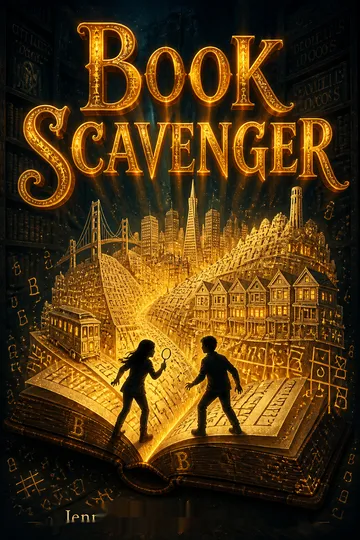
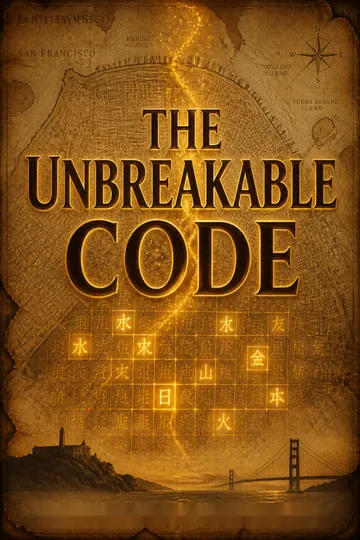
Book Scavenger Series
Download PDF
Download EPUB
.epub digital book format is ideal for reading ebooks on phones, tablets, and e-readers.








































