
Key Takeaways
1. Jesus was profoundly Jewish, not an anomaly.
To understand the man from Nazareth, it is necessary to understand Judaism.
Jewish identity. Jesus of Nazareth was a Jew, deeply rooted in the beliefs and practices of his people. He dressed like a Jew, wearing tzitzit (fringes) as commanded in Numbers, and ate like a Jew, adhering to kosher dietary laws, never consuming pork. His teachings, far from being revolutionary departures from Judaism, were consistent with Jewish thought, emphasizing love of God and neighbor, a core tenet also articulated by Rabbi Akiva a century later.
Torah observance. Jesus upheld the Torah, stating he came "not to abolish but to fulfill" the Law and the Prophets. His debates with other Jews about Sabbath observance or legal interpretations were internal Jewish discussions, demonstrating his deep commitment to the mitzvot (commandments), not a rejection of them. For instance, his healings on the Sabbath, while controversial to some, aligned with the Jewish principle that saving a life takes precedence over Sabbath restrictions, a view later echoed in the Talmud.
Prophetic tradition. Jesus's teaching style, including his use of parables, mirrored that of Jewish prophets like Nathan and rabbis, aiming to provoke thought and challenge the status quo. His prayers, such as the Lord's Prayer, resonated with Jewish liturgical traditions, addressing God as "Father" and seeking the coming of the "kingdom of heaven," a concept deeply embedded in Jewish messianic hope. Seeing Jesus within this rich Jewish context enriches understanding for both Christians and Jews, revealing continuity rather than radical opposition.
2. New Testament texts are often misinterpreted as anti-Jewish.
The text has, by far too many and for far too long, been interpreted in an anti-Jewish manner.
Interpretive challenge. While the New Testament itself is not inherently anti-Semitic, certain passages have historically been, and continue to be, read in ways that condemn Jews and Judaism. This problem stems from readers bringing their own presuppositions and experiences to the text, often leading to subjective and harmful interpretations that portray Jews negatively. The author argues that the question is not whether the New Testament is anti-Jewish, but how it has been read.
Problematic passages. Key examples include:
- 1 Thessalonians 2:14-16: Paul's statement about "the Jews, who killed both the Lord Jesus and the prophets," often interpreted as blaming all Jews for all time.
- Matthew 27:25: The crowd's cry, "His blood be on us and on our children," used for centuries to justify the charge of "Christ killers."
- John 8:44: Jesus telling "Jews who believed in him," "You are from your father the devil," which fueled the medieval notion of Jews as literal children of Satan.
Historical context. Scholars often attempt to mitigate these passages by arguing they refer to "Judeans" or specific "Jewish leaders" of the time, or that they are interpolations. However, these arguments often rely on speculation and fail to address the historical impact of such readings on Christian attitudes towards Jews. The author emphasizes that regardless of original intent, the effect of these interpretations has been profoundly anti-Jewish, necessitating a theological commitment from Christians to denounce such readings.
3. Stereotypes of Judaism are historically inaccurate and harmful.
This religious need is what, to a great extent, prompts the current description of first-century Judaism as mired in legal minutiae that trampled on individual needs, promulgating a warlike theology that had no place for peace, and obsessed with a purity system that marginalized women and promoted hatred of foreigners.
Caricaturing Judaism. Many Christian sermons and academic works perpetuate harmful stereotypes of Judaism to make Jesus appear uniquely progressive or distinct. This often involves portraying first-century Judaism as:
- Legalistic and burdensome: Implying Jewish Law was impossible to follow, contrasting it with Jesus's "easy yoke."
- Warlike and vengeful: Suggesting Jews desired a militaristic messiah, ignoring peaceful Jewish resistance and the violent aspects of Christian scripture.
- Misogynistic: Claiming Jesus was a feminist who liberated women from a repressive Jewish culture.
- Purity-obsessed and xenophobic: Depicting Jewish purity laws as mechanisms for marginalization and hatred of outsiders.
Educational failures. These stereotypes often stem from a lack of proper training in Judaica within Christian theological education. Clergy and scholars frequently rely on selective readings of the Old Testament or outdated secondary sources, rather than engaging with diverse Jewish texts like Josephus, the Dead Sea Scrolls, or rabbinic literature. This leads to a monolithic and negative portrayal of Judaism, where Jesus is presented as the sole exception to a flawed system.
Utilitarian purpose. The perpetuation of these stereotypes serves a utilitarian purpose for some Christian apologetics: by painting Judaism in negative colors, Jesus's message of social justice, peace, and inclusivity appears more radical and unique. However, this approach undermines genuine interfaith understanding and reinforces historical prejudices, ultimately doing a disservice to both Jesus's Jewishness and the integrity of Judaism.
4. The early church's separation from Judaism was complex, not simple.
The break between the two traditions began not at the cross or the tomb but centuries later.
Jewish origins. Jesus's earliest followers were all Jews, who, like him, honored the Torah and observed Mosaic law. Their belief in Jesus's resurrection transformed their loyalties and convictions, leading them to proclaim him as the Messiah. This nascent movement, initially called "the Way," attracted both Jews and Gentiles, growing within the existing framework of Jewish life and synagogue communities.
Gentile mission. The spread of the gospel to the Diaspora, particularly through figures like Paul, introduced new challenges regarding the inclusion of Gentiles. Paul argued that Gentiles did not need to convert to Judaism (i.e., be circumcised or follow dietary laws) to be part of the new community, a stance that contrasted with the views of some Jewish Christians like James and Peter, who initially maintained a "two-track" system. This theological shift was crucial for the church's universal mission.
"Parting of the ways." The eventual separation of church and synagogue was a gradual process, not a single event. Factors contributing to this divergence included:
- Messianic expectations: Jews generally expected the Messiah to inaugurate a universal messianic age of peace and justice, which had not visibly occurred.
- Paul's Law-free gospel: His insistence that Gentiles were justified by faith, not by works of the Law, created a distinct identity for the Gentile church.
- Mutual animosity: As the church defined itself, it often did so "over and against" the synagogue, and vice versa, leading to polemical rhetoric and eventual formal separation.
This complex evolution meant that practices that preserved Jewish identity for early followers of Jesus eventually became "heresies" in the predominantly Gentile church.
5. Christian and Jewish canons and interpretations are distinct.
The Tanakh thus ends not with a promise to be fulfilled by something new but with an injunction to return to one’s home, to one’s roots.
Different canonical orders. While sharing many foundational texts, Judaism and Christianity organize and conclude their sacred scriptures differently, reflecting distinct theological narratives. The Christian "Old Testament" typically ends with Malachi, anticipating the coming of Elijah and a messianic figure, setting the stage for the New Testament. In contrast, the Jewish "Tanakh" concludes with 2 Chronicles, emphasizing the return to Zion and the rebuilding of the Temple, signifying a return to origins and continuity.
Diverse interpretive traditions. Both traditions employ rich interpretive methods, but their approaches and emphases diverge significantly:
- Christian interpretation: Often reads the Old Testament retrospectively through a Christological lens, seeing prophecies fulfilled in Jesus. It also incorporates allegorical readings from Church Fathers and non-canonical texts like the New Testament Apocrypha.
- Jewish interpretation: Relies on the "Oral Torah" (rabbinic tradition, Mishnah, Talmud) to interpret the written Torah, filling in gaps and developing legal and ethical frameworks. Midrashim, for example, offer imaginative retellings of biblical stories.
Impact on understanding. These distinct interpretive traditions lead to different understandings of shared figures and events. For instance, the concept of "original sin" is central to Christian theology (derived from Paul's reading of Adam), but absent in Judaism, which emphasizes humanity's inherent capacity for good and God's readiness to forgive. Similarly, the "eye for an eye" law is interpreted literally by some Christians as Jewish vengeance, while Jewish tradition understands it as a principle of monetary compensation. Recognizing these differences is crucial for respectful dialogue, preventing one tradition from claiming exclusive "correctness."
6. Misinterpretations of parables perpetuate anti-Jewish tropes.
To recover the punch of Jesus’s parables, one must hear them with first-century Jewish ears.
Lost context. Jesus's parables, deeply embedded in first-century Jewish culture, often lose their original impact and meaning when read through modern Christian lenses. They were designed to provoke, challenge, and offer new perspectives, but centuries of interpretation have often domesticated them into "nice, if banal, stories." Understanding their Jewish context is essential to grasp their edginess and urgency.
The Good Samaritan. This parable (Luke 10:25–37) is frequently misinterpreted to malign Jewish purity laws. The common Christian reading suggests the priest and Levite avoid the wounded man due to fear of corpse contamination, implying Judaism prioritized ritual purity over compassion. However:
- The man was "half-dead," not necessarily a corpse.
- Jewish law required aiding a neglected corpse, let alone a living person.
- The priest was traveling from Jerusalem, not to the Temple, so ritual impurity for Temple service was not a direct concern.
- The parable's shock value for a Jewish audience lay in the Samaritan, a traditional enemy, acting compassionately, not in the Jewish figures' supposed legalistic coldness.
The Pharisee and the Tax Collector. This parable (Luke 18:9–14) is often used to condemn the Pharisee as arrogant and self-righteous, while praising the tax collector as a model of humble repentance. However, in a first-century Jewish context:
- Pharisees were respected for their piety and Torah observance.
- Tax collectors were agents of Roman occupation, often seen as collaborators and exploiters.
- The parable's original shock would have been the tax collector receiving any justification, and perhaps even more justification than the Pharisee, challenging conventional notions of piety and social standing.
Such misreadings, by imposing negative stereotypes on Jewish characters, inadvertently perpetuate anti-Jewish sentiments rather than illuminating Jesus's message.
7. Jesus's stance on women and divorce is often misconstrued.
To claim that Jesus “liberated” women from a repressive Judaism by forbidding divorce and so protecting women’s rights is facile, wrong, and bigoted.
"Feminist Jesus" fallacy. A common Christian feminist argument posits Jesus as uniquely progressive on women's issues, liberating them from a supposedly misogynistic Jewish culture. This narrative often relies on misinterpretations of Jewish law and social norms, creating a false dichotomy between Jesus and Judaism. The goal of promoting women's roles in the church today, while laudable, should not come at the expense of misrepresenting Judaism.
Divorce misconceptions. Jesus's injunctions against divorce (Mark 10:2-9, Matt. 5:31-32, 19:9) are often presented as protecting women from "casual divorce practices" prevalent in Judaism, citing rabbinic opinions that allowed divorce for minor reasons. However:
- Jewish law (Deuteronomy 24:1-4) presumed the right to divorce, but it was not "casual."
- Rabbinic discussions on divorce grounds (e.g., Hillel vs. Shammai) were legal debates, not necessarily reflections of common practice.
- The ketubah (marriage contract) provided women with financial protection in case of divorce.
- Jesus's prohibition was stricter than contemporary Jewish law, not a liberation from it, and his disciples themselves found it a difficult teaching.
Women's status in Judaism. The idea that Jewish women were universally oppressed or marginalized is historically inaccurate. New Testament and other ancient sources show Jewish women:
- Owning property and homes (Mary and Martha).
- Holding patronage positions (Joanna, wife of Herod's steward).
- Participating in synagogue life and Temple worship.
- Having freedom of movement and social interaction.
Jesus's interactions with women, while significant, were not anomalous in his Jewish context. Constructing a negative image of Judaism to elevate Jesus's status on women's issues is both historically flawed and perpetuates anti-Jewish bigotry.
8. The Jerusalem Temple was not an oppressive "domination system."
The Temple was the national bank; it collected tithes, and Jewish men age twenty and older did pay the Temple tax.
Mischaracterizing the Temple. The Jerusalem Temple is often portrayed in Christian scholarship as an exploitative "domination system" that oppressed the poor and marginalized, contrasting it with Jesus's advocacy for the Kingdom of God. This view frequently misrepresents the Temple's role and the attitudes of first-century Jews towards it.
Evidence against "domination":
- Jesus's actions: While Jesus disrupted Temple activities (e.g., overturning tables), the Gospels depict this as a protest against "doing business" in a sacred space, not against systemic exploitation. He did not abolish the sacrificial system or condemn the Temple as inherently evil.
- Jewish devotion: Hundreds of thousands of Jewish pilgrims flocked to the Temple for festivals, indicating widespread devotion, not resentment. Josephus records Jews risking their lives to prevent Roman desecration of the Temple, demonstrating its profound importance to the people.
- Early Christian practice: Jesus's family, John the Baptist's father (a priest), and early followers like Peter and Paul continued to worship and participate in Temple rituals, suggesting they did not perceive it as an oppressive institution.
- Charitable functions: The Temple had mechanisms for charity, such as the "chamber of the silent" for anonymous donations to the poor.
Scribes and exploitation. While Jesus criticized some scribes for "devouring widows' houses," this condemnation was directed at individual behavior, not the Temple system itself. Mark's Gospel places these rapacious scribes in synagogues and banquets, not explicitly in the Temple treasury. Equating the actions of a few individuals with the entire institution is a misrepresentation. The Temple, despite occasional corruption by individuals, was largely seen as the "house of God" and a central pillar of Jewish life.
9. Global liberation theology can inadvertently spread anti-Judaism.
In effect, much of the anti-Judaism found globally today is substantially a colonial product.
Unintended consequences. Liberation theology, which seeks to align Jesus with the oppressed and challenge systemic evils like racism and colonialism, often inadvertently perpetuates anti-Jewish stereotypes. This occurs when "Judaism" or "Pharisaism" is cast as the oppressive system from which Jesus liberates, rather than identifying the true oppressors (e.g., Roman imperialism). This framework, absorbed from Western academic scholarship, then spreads globally, poisoning interfaith relations.
Examples of problematic rhetoric:
- "Invalid Old Covenant": Gustavo Gutiérrez's claim that "infidelities of the Jewish people made the Old Covenant invalid."
- "Morbid conception of God": Leonardo Boff's assertion that "Pharisees had a morbid conception of their God," contrasting it with Jesus's God.
- "Heavy yoke of Jewish culture": African feminist theologians stating Jesus liberated women from "the heavy yoke of the Jewish culture weighing on them."
- "Jesus as Palestinian": Naim Ateek's rhetoric identifying Jesus as a "Palestinian under occupation" and comparing Israeli actions to Jesus's crucifixion, implicitly linking "the Jews" of the Bible to modern Israelis.
Colonial legacy. Many of these anti-Jewish ideas are a legacy of Western missionary efforts, which often presented Judaism as a superseded or flawed religion. When theologians from the Global South adopt these frameworks, they inadvertently recycle historical prejudices, even as they critique other forms of oppression. This creates a situation where, while celebrating diverse cultures, Jewish identity and practices are often devalued or demonized.
Need for self-critique. Even well-meaning institutions like the World Council of Churches, despite formal statements against anti-Semitism, have published materials containing such problematic rhetoric. This highlights the pervasive nature of anti-Judaism and the urgent need for rigorous self-critique within Christian theological education and publishing to prevent the continued spread of these harmful stereotypes.
10. Genuine interfaith dialogue requires humility and mutual respect.
Conversation cannot begin with either entitlement or apology.
Overcoming barriers. Effective interfaith conversation between Jews and Christians is often hindered by fear, ignorance, and historical baggage. Participants may fear sounding ignorant, proselytizing, or questioning their own faith. Stereotypes further complicate matters, leading to preconceived notions about the other's beliefs and agendas. To move forward, both sides must approach dialogue with humility and a willingness to learn.
Avoiding pitfalls:
- No collective guilt or entitlement: Christians today are not responsible for historical sins like the Holocaust or the Crusades, nor are Jews entitled to apologies for them. Regret for past wrongs and a commitment not to repeat them are appropriate, but guilt and entitlement hinder genuine engagement.
- Acknowledge internal diversity: Avoid generalizations like "all Jews think..." or "all Christians believe..." Both traditions are diverse, with a wide spectrum of beliefs and practices.
- Respect distinct identities: Dialogue should not aim to erase differences or force a bland universalism. The goal is not conversion, but understanding and appreciation of the other's tradition, even when disagreements persist.
- Beware of selective readings: Do not use the other's sacred texts selectively to create negative foils or justify one's own positions.
Building bridges. The author advocates for "holy envy"—an appreciation for the beliefs and practices of another tradition. This involves:
- Listening with "each other's ears" to understand how words and actions are perceived.
- Acknowledging the legitimacy of different canonical orders and interpretive traditions.
- Learning about each other's history, theology, and practices from primary sources, not just stereotypes.
By fostering an environment of mutual respect, Jews and Christians can move beyond forced politeness to honest communication, recognizing their shared Abrahamic heritage and common goals for peace and justice.
11. Understanding each other's "pain" is essential for true love.
To love, truly to love, means to know what brings pain to your comrade.
Empathy in dialogue. Drawing on a rabbinic story, the author emphasizes that true love and understanding in interfaith relations require deep empathy—the ability to know and acknowledge what causes pain to the other. This goes beyond intellectual agreement or polite tolerance; it demands a sensitive awareness of the historical wounds and contemporary sensitivities that shape each community's perspective.
Addressing historical wounds. For Christians, this means recognizing the profound pain caused by centuries of anti-Jewish interpretations of the New Testament, accusations of deicide, and persecution carried out in the name of Christ. It means understanding how phrases like "the Jews killed Jesus" or "children of the devil" have fueled real-world violence and discrimination. For Jews, it means acknowledging the sincerity of Christian faith and the genuine love that motivates many Christians, even when their theological claims might be perceived as exclusive or challenging.
Navigating contemporary issues. This principle is particularly vital when discussing sensitive topics like the Middle East, where deeply held beliefs and experiences often clash. It requires both sides to:
- Avoid equating "Jew" with "Israeli" or "Palestinian" with "terrorist."
- Acknowledge the suffering of all parties without dismissing or justifying violence.
- Seek solutions that ensure security and justice for everyone, rather than adopting simplistic or biased narratives.
By cultivating this profound empathy, interfaith partners can move beyond defensiveness and accusation, fostering a space where shared humanity and mutual respect can flourish, even amidst theological and political disagreements.
Review Summary
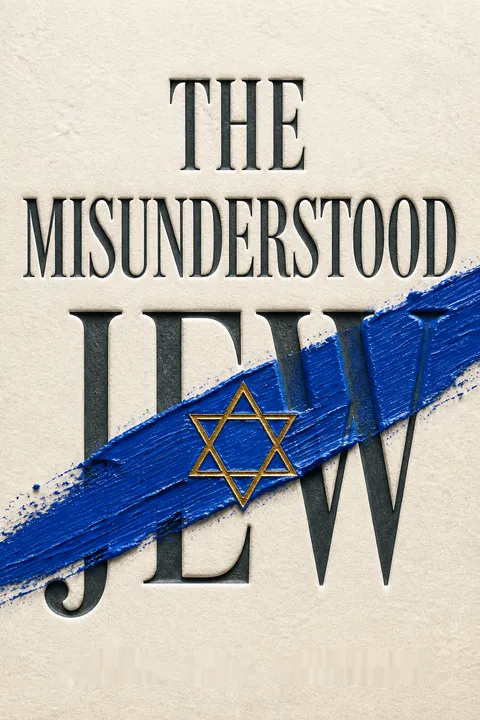
The Misunderstood Jew explores how better understanding Jesus' Jewish context can improve Christian-Jewish dialogue. Author Amy-Jill Levine, a Jewish New Testament scholar, argues Christians often misrepresent first-century Judaism to make Jesus appear more progressive, inadvertently fostering anti-Semitism. Reviewers appreciated her scholarship and wit, finding the book eye-opening regarding how Christian interpretations have harmed Jewish communities. Some felt she belabored points or showed bias, wishing for more alternative interpretations. Most recommended it for Christians and Jews alike, praising its practical suggestions for interfaith understanding, though a few found it overly scholarly or repetitive.
People Also Read




About the Author
Other books by Amy-Jill Levine

Download PDF
Download EPUB
.epub digital book format is ideal for reading ebooks on phones, tablets, and e-readers.








































