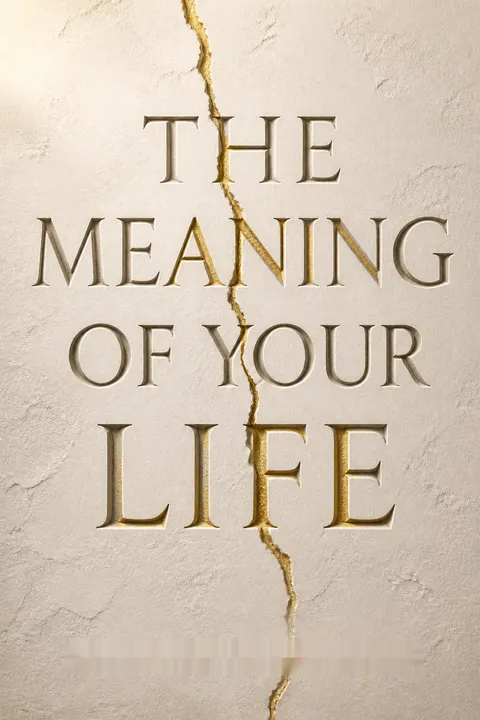

Key Takeaways
1. The Modern Crisis: A Meaningless Simulation of Life
“I feel like I’m living in a simulation.”
A psychogenic epidemic. Many young adults today, despite outward success and material comfort, experience profound feelings of emptiness, depression, and anxiety. This "psychogenic epidemic" is not due to biological causes but stems from social and psychological factors, leaving individuals like Marc, Maria, and Paul feeling disconnected and unfulfilled. They are "strivers" who, on paper, should be thriving, yet they report a core emptiness, a sense of deadness about life.
The missing element. This pervasive feeling of living in a "simulation" points to one critical absence: meaning. Life feels unreal, filled with "false rewards, empty accomplishments, therapeutic talk, and fake experiences," all curated to pass time painlessly. This crisis is particularly acute among high-achieving young adults in technologically advanced nations, who often express guilt over their unhappiness despite having "everything but feel nothing."
Beyond popular explanations. While some blame older generations for "empty promises" or young adults for "narcissism," and others point to screen overuse, these explanations fall short. Technology, like alcohol or drugs, often serves as a soothing behavior, a distraction from a deeper, unaddressed craving. The real mystery is what people are missing—what they truly want but cannot find amidst the digital noise and superficial interactions.
2. Happiness Requires Meaning: Coherence, Purpose, Significance
Happiness = Enjoyment + Satisfaction + Meaning
The happiness equation. Researchers define happiness as a combination of enjoyment, satisfaction, and meaning. While enjoyment and satisfaction levels haven't necessarily declined, the "meaning" component has collapsed, especially among young adults. This decline is directly correlated with rising rates of depression and anxiety, indicating that a lack of meaning leaves a void that cannot be filled by other forms of happiness.
Three elements of meaning. To find meaning, one must understand its three interlocking elements:
- Coherence: How the events of your life fit together, an understanding that things happen for a reason, even if not immediately apparent.
- Purpose: The existence of goals and direction in your life, a belief that you are alive to do something.
- Significance: The inherent value of your life to yourself and, crucially, to others, knowing that the world would be worse for someone you love if you didn't exist.
A map for your quest. Just as you need to define what you're looking for before you start searching, understanding these three elements provides a destination for your "meaning journey." Without this clarity, the search can become a "wild-goose chase," leading to trivial pursuits. The goal is not just to feel happy, but to live a life that feels deeply coherent, purposeful, and significant.
3. Your Brain's Two Sides: Complicated vs. Complex Life
The right side of the brain is the “master,” which asks big, transcendent questions such as “Why am I alive?” The left side—which he calls the “emissary”—addresses such practical questions as “How do I get food so I can keep being alive?”
Two ways of processing. Neuroscientist Iain McGilchrist's work suggests our brain hemispheres process information differently. The left hemisphere handles "complicated" problems—those that are hard to understand but solvable with knowledge and technology. The right hemisphere, the "master," deals with "complex" problems—those that are easy to understand but impossible to solve, requiring lived experience and an appreciation for the "numinous" (spiritual, mysterious, awe-inspiring).
Modern life's imbalance. Our increasingly technological and distracting world shoves people towards the left side of their brains, focusing on solvable, complicated details. This leaves the right hemisphere, where love, faith, beauty, and meaning reside, increasingly dormant. This imbalance creates a "complicated simulation of their complex lives," rich in activity but devoid of mystery and deep meaning.
The numinous experience. Right-hemisphere experiences are characterized by:
- Inexplicable emotional responses (e.g., being moved by a song without knowing why).
- Intuitive understanding that defies precise articulation (e.g., sensing a divine presence).
- A craving for deeper experiences beyond daily existence.
- A profound sense of importance that cannot be put into words (e.g., why you love your spouse).
These are the experiences that cannot be simulated and are crucial for finding life's meaning.
4. Break the "Meaning Doom Loop" of Digital Distraction
The paradox is that hedonism, the pursuit of pleasure for its own sake, leads to anhedonia, which is the inability to enjoy pleasure of any kind.
The vicious cycle. Modern life's over-reliance on technology creates a "meaning doom loop." Boredom and emptiness, stemming from a lack of right-brain engagement, drive people to addictive digital distractions. These distractions, in turn, further diminish the capacity to ponder complex abstractions and find meaning, intensifying feelings of emptiness and leading to even more device use. This self-reinforcing cycle accelerates unhappiness, depression, and anxiety.
Dopamine's deceptive role. Our brains are wired for learning through dopamine, which provides anticipation and reward. Tech companies exploit this by engineering apps and platforms to deliver constant dopamine hits, creating powerful addictions. This "wanting-liking-learning" mechanism, while essential for survival, becomes detrimental when it leads to compulsive scrolling and anhedonia—the inability to enjoy pleasure from anything, as the brain constantly seeks higher doses.
Digital detoxification strategies. Interrupting this doom loop doesn't mean abandoning technology entirely, but rather reclaiming control:
- Personal rules: Ban devices during meals, from the bedroom, and well before bed.
- Device-free breaks: Schedule short, regular periods (e.g., a week annually) without screens.
- Mindful consumption: Be intentional about screen time, asking if it's mindless or purposeful.
- Turn off cues: Disable notifications to prevent dopamine spikes and compulsive checking.
- Physical separation: Implement a "phone foyer" or keep devices out of reach to increase effort for access.
5. Rebel Against the Herd: Cultivate Defiance and Self-Reliance
“Whoso would be a man must be a nonconformist.”
The courage to be different. Breaking free from the meaning doom loop requires a spirit of rebellion against the cultural norms that promote distraction and superficiality. This defiance, as advocated by Ralph Waldo Emerson, means refusing to be "just another statistic" in the epidemic of unhappiness. It demands emotional energy to walk away from the "nonsober majority" who are numbly staring at their devices.
Emerson's seven steps to self-reliance:
- Reclaim privacy: Stop oversharing and making a spectacle of your life online.
- Stop conforming: Be a skeptic, question conventional wisdom, and think independently.
- Be true to yourself: Embrace independence, choose solitude over "false friends" online, and take pride in not fitting in.
- Defer gratification: Pursue long-term purpose with passion, even when arduous.
- Eliminate trivialities: Ditch empty cultural calories and focus only on what nourishes you.
- Be willing to change your mind: Reject "foolish consistency" and be open to admitting you were wrong.
- Practice complete honesty: Have the courage to speak your truth, even if it means standing against the crowd.
Overcoming biological resistance. Our brains are wired for kin-based survival, making social rejection feel like a matter of life and death. This ancient instinct, managed by the dACC, makes it hard to go against the group. However, long-term regrets often stem from not following one's heart or conscience. Cultivating defiance and self-reliance means standing up to these animal impulses to achieve loftier human aspirations.
6. Ask the Three Big "Why" Questions to Know Thyself
“The greatest and most important problems of life are all fundamentally insoluble.”
The essence of human consciousness. Unlike animals, humans possess the unique capacity to wonder and inquire about things large and small. This "aporia" – a state of puzzlement invited on purpose by deep, unanswerable questions – stimulates the numinous right hemisphere of the brain, leading to a profound sense of life's meaning. An "unexamined life" is indeed "not worth living," as Socrates suggested.
Beyond "what" and "how." Most people define themselves by their "what" (job, identity) or "how" (daily activities), which are concrete but inherently devoid of deep meaning. Strivers, in particular, often focus on external accomplishments. True self-knowledge, and thus meaning, comes from asking "why" questions about your "being self." This requires self-honesty and a willingness to confront uncomfortable truths, rather than relying on ego-protecting "willful ignorance."
Three "why" questions for meaning:
- Why do things happen the way they do in my life? (Coherence): Reflect on the interplay of your decisions, others' actions, determined physical properties, a higher being's will, and sheer randomness. Align your habits with your beliefs about these forces.
- Why am I moving in this direction? (Purpose): Examine your motivations and goals. Avoid the "arrival fallacy" of seeking extrinsic rewards (money, power) that leave you empty. Focus on intrinsic goals like loving others deeply and being loved, which are about "being," not just "doing."
- Why does my life matter? (Significance): Identify the people to whom your life holds inherent value. Cultivate "virtuous friendships" (based on mutual respect and character) over mere "utility" or "pleasure" friendships. Contemplate why you are alive and for whom you would give your life.
7. Give Your Heart Away: Embrace the Complexity of Love
Romantic love, when successful beyond the initial stages, is the ultimate right hemisphere experience—you know when you feel it, but it’s impossible to solve for it like you would a physics problem.
Love's mystical power. Romantic love, in its deepest form, is a complex, numinous experience that transcends language and logic, acting as a "Ladder of Love" that can lead to an understanding of life's deepest meaning. It begins with attraction but ideally evolves into a profound, lifelong pair-bond, synchronizing lovers' brains in the right hemisphere and often manifesting as a spiritual union.
The "love depression." Despite its profound importance, true romantic love is increasingly elusive. Marriage rates are plummeting, singledom is rising, and people are having less sex. While dating apps offer convenience, they often prioritize compatibility over complementarity, and their asocial anonymity can intensify disequilibrium in the dating market. The attempt to "solve" love with technology often misses its complex, mysterious essence.
Navigating love's challenges. To find meaning through love:
- Embrace real-life interaction: Seek connections through friends, family, and shared interests, not just apps.
- Cultivate complementarity: Look for differences that round out your personality, not just similarities.
- Prioritize oxytocin: Engage in eye contact and physical touch to foster bonding.
- Beware simulations: Avoid pornography, which unnaturally isolates sex from love, destroying meaning and increasing loneliness.
- Accept risk and rejection: The pain of rejection is real but temporary; it's a part of love's "discovery loop" that leads to learning and growth.
- Guard against the Dark Triad: Be vigilant for narcissistic, Machiavellian, psychopathic personalities who manipulate and exploit.
- Nurture close friendships: Platonic "virtuous friendships" are also powerful sources of meaning and can provide "companionate love."
8. Transcend Yourself: Look Upward and Outward
I must get above the noise. And since the noise is coming from inside myself, it means I must transcend myself.
Beyond self-focus. To find meaning, one must transcend the incessant "chatter" of the "me-self" (self-focused concerns) and engage the "I-self" (observing the outside world). This self-transcendence involves two key pathways: lifting attention to the divine (looking upward) and serving others with compassion (looking outward). This shift provides peace, perspective, and an undistorted moment of meaning, moving beyond the trivial to the sublime.
Divine transcendence. Spiritual needs are fundamental to human nature, even for those who don't identify with traditional religion. Kierkegaard's "religious stage" of life involves a "leap of faith" to associate one's life with a transcendent cause or purpose, revealing deeper meaning beyond aesthetic pleasures or ethical commitments. This doesn't require conversion but an open mind to metaphysical dimensions, as evidenced by the innate human tendency towards religiosity and the profound impact of spiritual experiences on the brain.
Serving others. Giving generously to others, without expectation of return, is a powerful form of self-transcendence. Making a tangible difference in one person's life, or consistently engaging in prosocial behavior, shifts one's mindset from "person with problems" to "problem solver," boosting well-being and a sense of purpose. This "will the good of another" is the core of self-transcendence, especially potent when giving is anonymous.
The art of receiving. Learning to graciously accept kindness and ask for small favors is as crucial as giving. It fosters mutual caring, makes others feel purposeful and significant, and strengthens social bonds. This reciprocal generosity, like the circulation of blood, keeps goodwill flowing. Ultimately, recognizing oneself as "one of eight billion people" and transcending self-focused concerns for the good of others connects one to a universal love and meaning.
9. Find Your Calling: Work as Vocation, Not Just a Job
To have a calling doesn’t necessarily mean you have to have a divine vision and live in poverty. It means you have a purpose—clear goals and direction.
Work as meaning. Work, which occupies a significant portion of our lives, must be integrated into our search for meaning. The "hierarchy of meaning in work" progresses from "necessary evil" to "duty," "craft," "service," and finally, "calling." A calling is a deep, subjective sense of purpose in one's productive efforts, often encompassing lower motives but driven by something higher, even spiritual.
Subjective careers and earned success. Finding a calling involves pursuing a "subjective career" focused on intrinsic rewards rather than objective measures like money, power, or prestige. This means:
- Earned success: Being recognized and rewarded for merit and personal responsibility, combating "learned helplessness" and fostering a sense of control over one's destiny.
- Serving others: Feeling genuinely needed by others through one's work, which directly enhances significance and purpose. This doesn't require heroic acts; being a kind colleague or considerate manager counts.
Aligning values and goals. To make work a calling, focus on "values seeking" rather than just "enjoyment seeking." Intrinsic motivation, where satisfaction comes from within, is key. If your material needs were met, would you still do your job? If not, it's time to re-evaluate. Even in seemingly "pointless" jobs, small acts of kindness and service to colleagues can generate intrinsic rewards and a sense of purpose.
Proxy goals for a calling. To guide your search for meaningful work, set "proxy goals" that align with your internal values:
- Non-zero sum: Goals where your achievement doesn't diminish others' chances (e.g., fostering good relationships, not just becoming CEO).
- Approach-motivated: Seeking positive outcomes (e.g., learning new skills) rather than avoiding negative ones (e.g., avoiding poverty).
- Non-positional: Goals not based on social comparison or impressing others, but on using your unique gifts.
These goals, combined with flexibility and a focus on the journey, lead to a true calling.
10. Surround Yourself with Beauty: Art, Nature, and Morality
Become a student of beauty, and it will reveal the meaning of your life.
Beauty's profound impact. Beauty, in its artistic, natural, and moral forms, is a powerful conduit to meaning. It illuminates life's coherence, purpose, and significance, often in ways that words cannot articulate. Unfortunately, modern life, with its screens and urban environments, has diminished our exposure to these vital experiences, contributing to the meaning crisis.
Artistic beauty's mysterious power. Art and music create emotional resonance, improve mood, and can even have therapeutic effects on neurological problems. At a deeper level, they induce spiritual understanding and fulfillment, reflecting an ultimate reality beyond physical perception. Like Schopenhauer, who found meaning in music despite his pessimism, we can use art to pierce the veil of illusion and access numinous truths. To cultivate this:
- Dive into art and music you love, learning more about it.
- Attend live performances and visit museums.
- Create art yourself, like painting or playing an instrument.
Natural beauty's recalibration. Spending uninterrupted time in nature recalibrates body and mind, synchronizing circadian rhythms and improving mood. From the "desolate, grim beauty" of the Badlands that healed Theodore Roosevelt to the calming effect of daily walks, nature fosters a sense of peace, perspective, and awe. To integrate natural beauty:
- Build daily contact with nature into your schedule (e.g., walks in parks, woodland).
- "Earthing" or "grounding" by walking barefoot outdoors.
- Embrace the "lonely freedom" of wilderness, allowing it to reveal meaning.
Moral beauty's uplifting force. Witnessing acts of selflessness and goodness, like Father Maximilian Kolbe's sacrifice in Auschwitz, elicits "moral elevation"—a feeling of warmth and upliftment that inspires us to be better people and help others. This increases our sense of significance. To cultivate moral beauty:
- Keep morally beautiful company, avoiding cynical gossip circles.
- Adopt service as a leisure activity, volunteering in your community.
- Practice gratitude, consciously noticing kindness and good deeds.
- Celebrate moral beauty publicly, recognizing "unsung heroes."
- Avoid moral ugliness as entertainment (e.g., true crime), which leads to emptiness.
11. Don't Waste Your Suffering: It's a Feature, Not a Bug
Your suffering is sacred and central to your search for meaning. Do not waste it.
Suffering's inevitability. Life inherently involves suffering, whether minor annoyances or profound misery. Philosophers and spiritual traditions, from the Buddha to Stoics, acknowledge this as a fundamental aspect of existence. While negative emotions like fear and sadness are evolutionary signals for threats, and some desires lead to unhappiness, suffering is not merely a "bug" in life's software.
Suffering as a source of meaning. Pain is a crucial "feature" that allows us to access the mysterious complexity of life and learn its meaning. People often refer to painful periods when asked how they found their life's purpose. It puts life into perspective, fostering growth and understanding. The goal is not to seek suffering, but to manage it when it inevitably arrives, transforming it into learning and growth.
Managing pain, not eliminating it. The "fear-avoidance model" shows that trying to eliminate physical or psychological pain often makes it worse, leading to disuse, addiction, and a negative life purpose. Instead, embrace acceptance:
- Mindfulness-based cognitive therapy: Accept distress as painful but not catastrophic, reducing resistance.
- Acceptance and commitment therapy: Acknowledge suffering, then shift focus to meaningful aspects of life.
- Process over outcomes: Focus on what you can control in the present, not future fears.
- Mindful absorption: Be fully present in the process, dissolving self-consciousness.
- Release the ego: Detach from personal offense, listen with curiosity, and learn from differing views.
The journal of failure and disappointment. A powerful metacognitive technique is to journal about your worries, anxieties, and disappointments. This moves emotions from the limbic system to the prefrontal cortex for rational interpretation. By revisiting these entries, you'll see how problems often diminish over time and how even grave tragedies can lead to unexpected learning and benefits, fostering confidence that current challenges will also lead to growth.
12. Live an "Old-Fashioned" Life to Be Found by Meaning
My life now, my whole life apart from anything that can happen to me, every minute of it is no more meaningless…. [It] has the positive meaning of goodness, which I have the power to put into it.
Tolstoy's revelation. Konstantin Levin, the character in Tolstoy's Anna Karenina, found meaning not through frantic analysis or worldly pursuits, but by simply living his ordinary life day-to-day: focusing on family, caring for others, engaging in work, and embracing a simple, transcendent faith. He realized that meaning wasn't something to be found through external search, but rather something he had the "power to put into" his life through goodness.
The new "ordinary." Today's "ordinary life" is a stark contrast to Tolstoy's era. It's a "bundle of tech-laden distractions, complicated tasks that crowd out complex challenges, and—especially for strivers—a manic focus on achievement." What was once automatic behavior—love, work, faith, beauty, suffering—now requires conscious, intentional adoption to access the right hemisphere of the brain where meaning resides.
Rules for a new, old-fashioned life:
- Caution with technology: Treat tech that substitutes for in-person experiences like an addictive drug.
- Shun self-focus: Eliminate anything that makes you focus on yourself instead of others.
- Risk love: If afraid of real-life love, take more risks with your heart.
- Rebalance priorities: If the material world crowds out the supernatural, rebalance your time.
- Seek calling: If work isn't a calling, plot your exit.
- Embrace beauty: Go outside in nature immediately, without your phone.
- Welcome trials: Affirm daily that challenges are evidence of living life to the fullest.
Be still, and be found. Meaning isn't something you actively "find" at the end of a frantic search; it's something that finds you when you create the conditions for it to appear. Like the author's Camino pilgrimage, stripping away distractions and living an "old-fashioned" life—without technology, in nature, with loved ones, embracing big questions and even physical pain—allows meaning to emerge. When you live with openness and vulnerability, your meaning will find you.
Review Summary
The Meaning of Your Life receives mostly positive reviews, averaging 4.13 out of 5. Many readers praise its structured, evidence-based approach to finding purpose, blending philosophy and psychology in a way that feels both practical and accessible. Standout features include reflection questions, actionable strategies, and Brooks' personal storytelling. Critics note some content feels repetitive or overly constructed, with a few pointing to heavy-handed critiques of technology and occasional political tangents. Overall, it resonates strongly with readers navigating life transitions, uncertainty, or a search for deeper purpose.
People Also Read









Download PDF
Download EPUB
.epub digital book format is ideal for reading ebooks on phones, tablets, and e-readers.








































