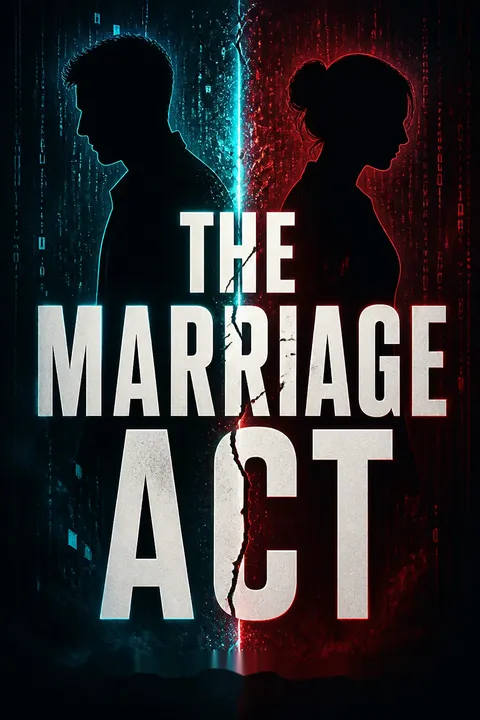

Plot Summary
Prologue: The Last Broadcast
Jem Jones, Britain's most famous social media influencer, records a raw, emotional farewell livestream. Once beloved, she's now the face of the controversial Sanctity of Marriage Act, targeted by relentless online abuse and government manipulation. Jem's confession reveals the crushing toll of public scrutiny, cancel culture, and the weaponization of technology against dissenters. Her suicide, broadcast live, becomes a national trauma and a catalyst for the events that follow, exposing the dark underbelly of a society obsessed with control, conformity, and the illusion of happiness. Jem's death is both a personal tragedy and a public reckoning, setting the stage for a nation on the brink of transformation.
Smart Marriage Society
Britain has rebuilt itself around the Smart Marriage Act, a government program incentivizing couples to "upgrade" their marriages with AI surveillance (Audite), tax breaks, and social privileges. The Act promises health, wealth, and happiness, but at the cost of privacy and autonomy. Single people, divorcees, and non-compliant couples are marginalized, taxed, and excluded from opportunity. The state's vision of "building back better" is enforced by technology that monitors, judges, and intervenes in private lives. The promise of utopia is undercut by a growing sense of unease, division, and the quiet suffering of those who don't fit the mold.
Roxi's Ambition Ignites
Roxi Sager, a struggling vlogger and mother, is consumed by envy of more successful influencers. Her family life is fraught: her daughter Darcy resents her, her husband Owen is distant, and her own sense of worth is tied to online validation. Jem Jones' suicide becomes Roxi's opportunity—she vows to fill the void, rebranding herself as the voice of the modern woman. But her ambition blinds her to the cost: she reports her own daughter's social media accounts, exploits family pain for content, and becomes a lightning rod for controversy. Roxi's rise is as brittle as her self-esteem, and the seeds of her undoing are sown.
Jeffrey: Relationship Responder
Jeffrey Beech is a government-trained Relationship Responder, dispatched to couples flagged by Audite as "at risk." His job is to observe, counsel, and ultimately judge whether marriages should be saved or dissolved. Haunted by his own loneliness and a dark past, Jeffrey becomes obsessed with his clients, blurring professional boundaries. His interventions are invasive, manipulative, and sometimes deadly. As he moves in with Noah and Luca, a same-sex couple, his fixation grows, and his methods become increasingly unhinged. Jeffrey embodies the dangers of unchecked authority and the human cost of a system that values stability over truth.
Corrine's Secret Mission
Corrine Nelson, outwardly a privileged wife and mother, secretly works with Freedom for All, an underground resistance group fighting the Marriage Act's injustices. Disillusioned by her loveless marriage and the fate of friends destroyed by the system, Corrine risks everything to expose government corruption and abuse. Her activism leads her into dangerous territory: a botched sting against a predatory MP, the near-death of a young accomplice, and the threat of losing her family and freedom. Corrine's journey is one of awakening, sacrifice, and the search for meaning beyond prescribed roles.
Arthur and June's Twilight
Arthur Foley, a retired firefighter, cares for his wife June as she succumbs to dementia. Their long marriage, once a source of joy, is now surveilled and threatened by the Act's rules. When June dies, Arthur hides her body to avoid being forced into a new relationship or losing his home. His quiet rebellion is an act of love and defiance, but it brings the full weight of the law upon him. Arthur's story is a poignant meditation on aging, grief, and the right to choose one's own ending.
Anthony's Hidden Hand
Anthony Alexander, a government strategist, is the unseen force behind the Act's propaganda and the campaign against Jem Jones. He orchestrates online harassment, deepfakes, and public opinion, all while struggling with his own family's disintegration. Anthony's work is both brilliant and monstrous, and his conscience is increasingly troubled by the consequences. His son's struggles with ADHD and his wife Jada's growing alienation force Anthony to confront the personal cost of his professional success. As the government's ambitions turn to even more dystopian projects, Anthony faces a reckoning with his own complicity.
The Death of Jem Jones
Jem's suicide becomes a national spectacle, exploited by all sides. The government uses her death to justify further crackdowns on dissent and to rally support for the Act. Freedom for All claims her as a victim of state oppression. Roxi and other influencers rush to fill the vacuum, each with their own agenda. The public's grief is real, but quickly commodified. Jem's legacy is rewritten, her image weaponized, and the truth of her life and death is lost in the noise. Her absence haunts the characters and the nation alike.
Roxi's Rise and Fallout
Roxi's campaign to become the new face of the Act brings her fleeting fame and a torrent of abuse. Her marriage is flagged for intervention, her daughter is bullied, and her husband grows more distant. As Roxi's online persona grows, her real life unravels. She is trolled, accused of hypocrisy, and ultimately betrayed by those closest to her. In a desperate bid to save her marriage and career, Roxi confronts her supposed rival—only to commit a fatal act that will destroy everything she's built. Her story is a cautionary tale of ambition, addiction, and the price of self-deception.
Corrine's Double Life
Corrine's activism puts her at odds with her husband, her children, and the law. When her attempt to expose a corrupt MP backfires, she is forced to choose between her principles and her family's security. Blackmailed, betrayed, and financially ruined, Corrine must navigate a world where every choice is compromised. Her journey from privileged wife to working-class survivor is marked by loss, resilience, and the hope of redemption. Corrine's voice becomes a rallying cry for those left behind by the system.
Arthur's Grief and Defiance
Arthur's refusal to let go of June leads to prosecution, public scandal, and the loss of everything he holds dear. Forced into a government matchmaking program, he resists the pressure to remarry, choosing instead to join June in death. His quiet, dignified exit is both a protest and a release. Arthur's story is a testament to the enduring power of love and the right to self-determination, even in a world that seeks to regulate every aspect of life and death.
Jeffrey's Obsession Grows
Jeffrey's interventions with Noah and Luca become increasingly intrusive and dangerous. His jealousy, loneliness, and need for control drive him to sabotage their relationship, exploit their vulnerabilities, and ultimately commit murder. As his crimes come to light, Jeffrey becomes the symbol of the system's failure—a monster created by a monstrous regime. His downfall is swift and public, but the damage he's done is lasting. The exposure of his actions helps fuel the growing resistance to the Act.
The Marriage Act Unravels
The cumulative weight of personal tragedies, public scandals, and organized protest brings the Marriage Act to the brink of collapse. Freedom for All's campaign exposes government corruption, sexual abuse by officials, and the human cost of surveillance and control. The stories of Roxi, Corrine, Arthur, and others converge in a national reckoning. The government's plans for even more draconian measures—such as separating "underachieving" children from their families—are revealed, sparking outrage and mass mobilization.
Betrayals and Revelations
The personal and political collide as betrayals are exposed: Owen's secret therapy, Roxi's accidental killing, Corrine's blackmail, Anthony's complicity, and Jeffrey's crimes. The truth about Jem Jones is finally revealed—she was a government-created Deepfake, a manufactured icon used to manipulate the public. The revelation shatters the last vestiges of trust in the system and galvanizes the opposition. The characters are forced to confront the consequences of their actions and the lies they've lived.
Corrine's Trap and Escape
Corrine's attempt to blackmail a powerful MP backfires, leading to the destruction of her family's finances and the erasure of evidence against her target. Stripped of privilege, Corrine must rebuild her life from scratch, finding new purpose in work, art, and activism. Her journey is one of survival, self-discovery, and the forging of new alliances. Corrine's resilience becomes a beacon for others seeking to escape the system's grip.
Arthur's Final Journey
Facing imprisonment and the loss of his home, Arthur chooses to join June in death, driving their beloved campervan into oblivion. His story ends not in defeat, but in a final act of agency and love. Arthur's quiet rebellion is a reminder that dignity and meaning can be found even in the face of overwhelming odds. His legacy lives on in the memories of those who loved him and in the movement he helped inspire.
Anthony's Reckoning
Anthony's attempt to expose the government's next dystopian project—Young Citizen Camps for "problem" children—leads to his own destruction. Betrayed by his former masters, his family is targeted, and he is killed in a staged accident. Before his death, Anthony leaves behind evidence of the government's crimes, including the truth about Jem Jones. His confession becomes the catalyst for the final uprising, and his sacrifice is both a penance and a gift to those he loves.
Roxi's Undoing
Roxi's accidental killing of Antoinette Cooper, her husband's secret therapist, leads to her arrest and imprisonment. Offered a Faustian bargain by the government, she becomes the new face of the Marriage Act, vlogging from prison in exchange for her family's security. Roxi embraces her role, sacrificing her remaining ties for fame and influence. Her story ends with a hollow victory—celebrated, envied, and utterly alone, a cautionary emblem of a society that values image over substance.
Jeffrey's Downfall
Jeffrey is tried and convicted for his crimes, but even in prison, he is manipulated by the same shadowy forces that created the Act. His death is staged as a suicide, and his story is used to further political agendas. The exposure of his actions, and the system that enabled them, helps bring about the Act's repeal. Jeffrey's legacy is a warning of what happens when power is unchecked and empathy is lost.
The Protest and Aftermath
The Freedom for All rally in London becomes the turning point. Corrine, Nathan, and others publicly expose government crimes, including sexual abuse by officials and the truth about Jem Jones. Anthony's posthumous confession reveals the full extent of the state's manipulation. The public, shocked and galvanized, votes overwhelmingly to repeal the Marriage Act. The government falls, and a new era begins—one marked by uncertainty, hope, and the hard-won lesson that love and freedom cannot be engineered.
Epilogue: New Beginnings
The characters emerge from the wreckage of the old order, scarred but resilient. Corrine finds meaning in work, art, and activism. Luca and Noah, survivors of Jeffrey's abuse, rebuild their lives together. Roxi, now a symbol of both the system's cruelty and its seductive power, faces an uncertain future. The nation, freed from the yoke of the Marriage Act, must reckon with the legacy of surveillance, control, and the dangers of trading liberty for security. The story ends with a call to vigilance, compassion, and the enduring power of human connection.
Analysis
A chilling vision of engineered intimacy and the cost of controlThe Marriage Act is a speculative dystopia that interrogates the intersection of technology, government, and the most intimate aspects of human life. Marrs imagines a world where the pursuit of social harmony and economic efficiency leads to the commodification of love, the erosion of privacy, and the weaponization of data. The novel's multiple storylines reveal the psychological toll of living under constant surveillance, the fragility of relationships subjected to external judgment, and the dangers of trading freedom for security. The use of deepfakes and manufactured reality is a prescient warning about the malleability of truth in the digital age. Ultimately, the book argues that love, authenticity, and agency cannot be engineered or enforced—they must be chosen, risked, and fought for. The collapse of the Marriage Act, brought about by personal courage, collective action, and the exposure of systemic lies, is both a cautionary tale and a call to vigilance. In a world increasingly shaped by algorithms and authority, The Marriage Act reminds us that the most important battles are fought not in the public square, but in the private spaces of the heart.
Review Summary
The Marriage Act receives mostly positive reviews, with readers praising its thought-provoking premise and fast-paced storytelling. Set in a dystopian future where the government incentivizes and monitors marriages, the novel explores themes of privacy, surveillance, and relationship dynamics. Many readers find the concept chillingly plausible and appreciate the interconnected storylines. Some critics note an abundance of characters and occasional lack of subtlety. Overall, fans of Marrs' previous works, especially "The One," are likely to enjoy this speculative fiction thriller.
People Also Read










Characters
Jem Jones
Jem is the face of the Smart Marriage Act, a social media influencer whose rise and fall mirror the nation's obsession with image, conformity, and control. Initially sincere and relatable, Jem is ultimately revealed to be a government-created Deepfake, a tool for propaganda and manipulation. Her "suicide" is both a personal tragedy and a calculated political act, weaponized to justify further repression. Jem's story is a meditation on authenticity, the dangers of celebrity, and the ease with which truth can be manufactured and destroyed.
Roxi Sager
Roxi is a struggling vlogger, wife, and mother whose hunger for validation drives her to exploit her family, betray her daughter, and ultimately commit a fatal act. Her rise to fame is built on self-delusion and the manipulation of public sentiment. Roxi's psychological arc is one of addiction—to attention, to approval, to the fantasy of a perfect life. Her inability to find fulfillment in real relationships leads her to sacrifice everything for the fleeting high of online celebrity. In the end, she becomes both a victim and a perpetrator, a symbol of a society that confuses visibility with worth.
Jeffrey Beech
Jeffrey is a Relationship Responder, tasked with saving marriages but driven by his own unresolved trauma and need for control. His interventions are invasive, manipulative, and ultimately violent. Haunted by a history of rejection and a capacity for self-deception, Jeffrey projects his longing onto his clients, sabotaging their relationships to fill his own void. His descent into criminality is both a personal tragedy and a systemic failure, exposing the perils of unchecked authority and the dehumanizing effects of surveillance culture.
Corrine Nelson
Corrine is a privileged woman trapped in a loveless marriage, who finds purpose and agency in the underground resistance. Her journey is one of awakening, as she confronts the cost of complicity and the necessity of sacrifice. Corrine's relationships—with her husband, her children, her friends—are marked by disappointment and betrayal, but also by resilience and hope. Her psychological arc is one of self-discovery, as she learns to assert her own needs and values in a world that demands conformity.
Arthur Foley
Arthur is an elderly man caring for his dying wife, June, in a society that punishes vulnerability and non-compliance. His refusal to let go of June, and his ultimate decision to join her in death, is an act of love and defiance. Arthur's story is a meditation on aging, grief, and the right to self-determination. His quiet dignity and resistance stand in stark contrast to the system's cold efficiency.
Anthony Alexander
Anthony is the government strategist behind the Act's propaganda, the architect of Jem Jones, and the orchestrator of public opinion. His professional success is built on manipulation, deception, and the sacrifice of personal integrity. As his family unravels and the consequences of his actions become clear, Anthony is forced to confront the cost of his ambition. His psychological arc is one of guilt, reckoning, and, ultimately, sacrifice. Anthony's story is a warning about the dangers of technocratic power and the loss of empathy.
Owen Sager
Owen is Roxi's husband, a decent man whose needs and concerns are ignored in the pursuit of his wife's ambition. His attempts to save their marriage—through therapy, honesty, and self-sacrifice—are ultimately futile. Owen's psychological journey is one of disillusionment and quiet endurance, as he is forced to choose between his own well-being and the demands of a system that values appearances over substance.
Noah Stanton-Gibbs
Noah is a junior doctor and half of a same-sex couple targeted by Audite and Jeffrey. Outwardly confident, he is deeply insecure and resistant to vulnerability. His relationship with Luca is tested by surveillance, intervention, and betrayal. Noah's arc is one of forced self-examination, as he confronts the limits of love, the dangers of pride, and the necessity of trust.
Luca Stanton-Gibbs
Luca is Noah's husband, a man caught between loyalty and self-preservation. His openness and desire for connection make him vulnerable to Jeffrey's manipulation, but also enable him to survive and rebuild after trauma. Luca's journey is one of healing, self-assertion, and the reclamation of agency in the face of systemic and personal abuse.
Henry Hyde
Hyde is the government's chief strategist, the puppet-master behind the Act, Jem Jones, and the campaign to control society through technology. Cold, calculating, and amoral, Hyde embodies the dangers of technocratic power unchecked by empathy or accountability. His relationships are transactional, his loyalty only to the system he serves. Hyde's psychological profile is that of a sociopath, capable of great vision and great harm.
Plot Devices
Surveillance and AI Intervention
The Audite system is the central plot device, a ubiquitous AI that monitors, records, and judges the private lives of citizens. It offers the promise of harmony and support, but in practice becomes a tool of control, coercion, and punishment. The random recording of conversations, the escalation of interventions (from notifications to human Responders to court-mandated divorce), and the use of data to shape behavior all serve to illustrate the dangers of surveillance culture. The narrative structure uses multiple perspectives to show the varied impact of this system on different lives.
Deepfakes and Manufactured Reality
The creation and manipulation of Jem Jones as a Deepfake influencer is a masterstroke of narrative misdirection and commentary. The use of deepfakes, bots, and online propaganda blurs the line between reality and fiction, exposing the vulnerability of society to manufactured consent and the erasure of authentic voices. The ultimate revelation that Jem never existed is both a plot twist and a thematic statement about the nature of power, celebrity, and truth in the digital age.
Parallel Storylines and Intersecting Fates
The novel weaves together the stories of Roxi, Jeffrey, Corrine, Arthur, Anthony, and others, each representing a different facet of society under the Act. Their lives intersect through the mechanisms of surveillance, intervention, and resistance. The use of parallel narratives allows for a panoramic view of the system's impact, while the convergence of their stories in the final protest and aftermath provides narrative cohesion and emotional payoff.
Foreshadowing and Irony
The narrative is rich with foreshadowing: Jem's early warnings about the dangers of fame, Roxi's self-destructive ambition, Jeffrey's inability to separate personal need from professional duty, Anthony's growing guilt, and the government's ever-expanding appetite for control. Irony abounds: those who seek to save marriages destroy them; those who crave connection are left alone; those who build systems of control are ultimately undone by them.
Public Spectacle and Private Pain
The novel repeatedly contrasts public events—broadcasts, protests, trials, media campaigns—with the private suffering of individuals. The spectacle of Jem's suicide, the televised debates, the viral hashtags, and the mass protest are all set against the intimate betrayals, losses, and acts of courage that drive the characters. This device underscores the theme that systems and ideologies are lived, suffered, and resisted at the level of the individual.
About the Author
Other books by John Marrs






Download PDF
Download EPUB
.epub digital book format is ideal for reading ebooks on phones, tablets, and e-readers.








































