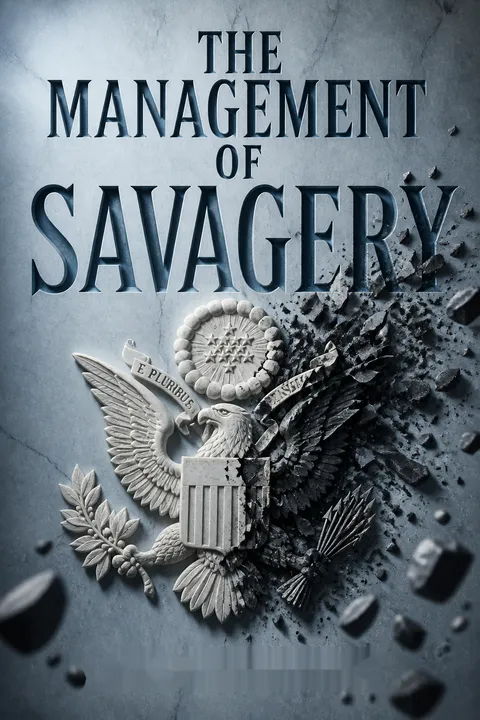

Key Takeaways
1. The Afghan Trap: US-backed Jihadism's Genesis
That secret operation was an excellent idea. It had the effect of drawing the Russians into the Afghan trap and you want me to regret it? The day that the Soviets officially crossed the border, I wrote to President Carter, essentially: ‘We now have the opportunity of giving to the USSR its Vietnam war.’
Cold War strategy. The book argues that the roots of modern jihadism lie in the 1979 Soviet invasion of Afghanistan, which Zbigniew Brzezinski, President Carter's national security advisor, deliberately provoked. The US funneled billions in arms and aid to the mujahideen, aiming to bleed the Soviet Union. This covert operation, known as Operation Cyclone, was the largest in CIA history.
Empowering extremists. The US allowed Pakistan's Islamist-oriented military dictator, Muhammad Zia-ul-Haq, to control the distribution of aid, favoring radical Islamist factions. This propelled figures like Osama bin Laden and Ayman al-Zawahiri from the fringe to the mainstream. Saudi Arabia also matched US funding, using the jihad as a "ventilation mechanism" for its own extremism, with clerics like Abdul Aziz bin Baz issuing fatwas for global Muslim participation.
- CIA funneled billions to mujahideen.
- Pakistan's ISI favored radical Islamist factions.
- Saudi Arabia matched US funding, promoting Wahhabism.
- Osama bin Laden and Ayman al-Zawahiri gained power.
Unintended consequences. While the strategy successfully weakened the Soviet Union, it transformed Afghanistan into a "petri dish for international jihadism." The book highlights how the US also looked away as Pakistan developed nuclear weapons and as US-funded textbooks promoted violence against Soviets, later adopted by the Taliban. This laid the groundwork for future conflicts and the rise of transnational terror groups.
2. The Peril of Unchecked Covert Operations
The CIA was so determined to protect its relationship with the Blind Sheikh, it 'may have run interference for Ali [Mohamed] as he sought entry to the United States and a position of influence at Fort Bragg, the heart of the US military’s black operations.'
Infiltrating US institutions. The book details the alarming case of Ali Abdel Saoud Mohamed, known as "Ali the American," an Egyptian special-forces soldier who allegedly infiltrated the CIA, FBI, and US Army with startling ease. Despite warnings from Egyptian intelligence and being on a State Department terrorist watch list, Mohamed was able to enter the US and enlist in the Army at Fort Bragg, a hub for the Afghan proxy war.
Missed warnings and protection. Mohamed, while serving in the US Army, gained access to special-forces equipment and training manuals, which he translated into Arabic and smuggled to jihadist cadres, including El-Sayyid Nosair. He even took leave to fight in Afghanistan and trained jihadists. The book argues that the FBI and CIA repeatedly ignored specific information from Mohamed about Al Qaeda's existence and its determination to strike American assets, possibly to protect him as an informant or to avoid exposing their own long-standing relationships with jihadist figures.
- Mohamed, a known jihadist, entered the US and joined the Army.
- He smuggled US training manuals to jihadist groups.
- FBI/CIA allegedly ignored his warnings about Al Qaeda.
- He was protected despite betraying the CIA and having terror ties.
Blowback on US soil. This unchecked covert activity had direct consequences, as Nosair, trained by Mohamed, assassinated Rabbi Meir Kahane in 1990. Investigators found classified documents from Fort Bragg and detailed plans for attacks on US "civilized pillars" in Nosair's apartment. The book contends that the government's subsequent "Day of Terror" trial was a "courtroom cover-up" to avoid exposing the CIA's past collaboration with the defendants and its ongoing relationship with Mohamed.
3. Propaganda and the Manufacturing of Consent for War
Of all the accusations made against [Saddam Hussein], none had more impact on American public opinion than the one about Iraqi soldiers removing 312 babies from their incubators and leaving them to die on the cold hospital floors of Kuwait City.
Selling the Gulf War. The book highlights how public relations firms, like Hill & Knowlton and the Rendon Group, were instrumental in shaping American public opinion for the 1991 Gulf War. They fabricated stories, such as the "incubator babies" testimony by "Nayirah" (the Kuwaiti ambassador's daughter), to demonize Saddam Hussein and garner support for intervention. This created a "simulacrum" of war, where digital abstraction and patriotic hoopla overshadowed critical faculties.
- PR firms fabricated stories to justify intervention.
- "Nayirah" testimony about incubator babies was a key falsehood.
- Media coverage was driven by market-tested talking points.
- Public approval for the war surged due to propaganda.
The Iraq War playbook. This propaganda playbook was refined for the 2003 invasion of Iraq. The Office of Special Plans (OSP), a neoconservative project, allegedly "stovepiped cooked intelligence" past the CIA to link Saddam Hussein to Al Qaeda, despite evidence to the contrary. Figures like Judith Miller of the New York Times and Iraqi defector Ahmad Chalabi were used to spread false claims about WMDs, creating a "smoking gun" narrative.
- OSP allegedly created false links between Saddam and Al Qaeda.
- Defectors like Adnan al-Hadeiri provided fabricated WMD claims.
- PR firms received millions to promote regime change.
- The "mushroom cloud" rhetoric was a key Bush administration talking point.
Silencing dissent. The book argues that mainstream media largely fell in line, silencing anti-war voices like Phil Donahue and promoting a narrative of "evil" that justified intervention. This ensured public consent for wars, turning generals into heroes and abstracting the human cost. The book suggests this pattern of propaganda and media compliance set the stage for future interventions and a "forever war."
4. Regime Change as a Catalyst for Chaos
What happened to everyone there? Did they join the new army? The soldier replied, 'They’re all insurgents now.'
Iraq's collapse. The 2003 invasion of Iraq, driven by neoconservative ambitions, immediately plunged the country into chaos. The US-led Coalition Provisional Authority (CPA), under L. Paul Bremer, implemented "de-Ba'athification" and disbanded the Iraqi army, leaving hundreds of thousands of skilled workers and soldiers unemployed and enraged. This created a fertile ground for insurgency.
- "De-Ba'athification" purged thousands of government employees.
- The Iraqi army and intelligence services were disbanded.
- 250,000 tons of ammo and explosives disappeared.
- Unemployed former soldiers and officials joined the insurgency.
The rise of Zarqawi and ISIS. The book highlights how this power vacuum was exploited by figures like Abu Musab al-Zarqawi, a Jordanian militant who had previously been marginalized by Saddam's regime. Zarqawi, with his organization Monotheism and Jihad, was able to enter Iraq's Sunni Triangle and ignite a brutal sectarian war against the Shia majority, inadvertently fulfilling his strategy of polarizing the country.
- Zarqawi, a former Afghan war veteran, exploited the chaos.
- He targeted Shia holy sites to provoke sectarian conflict.
- His brutal tactics forced Sunnis to seek protection under an Islamic state.
- Al Qaeda in Mesopotamia, the precursor to ISIS, was formed.
Libya and Syria's descent. The pattern repeated in Libya in 2011, where NATO intervention led to the collapse of a stable state and its takeover by jihadist militias, including Al Qaeda affiliates. Similarly, in Syria, the US and its allies' support for "moderate rebels" against Bashar al-Assad fueled a civil war that empowered Salafi-jihadi groups, leading to the establishment of ISIS's caliphate in Raqqa. The book argues that these interventions consistently created the very "administrations of savagery" they claimed to fight.
5. The Symbiotic Relationship Between Extremists and Interventionists
If the choice is between Iran and the Islamic State, I choose the Islamic State.
Mutual benefit from chaos. The book argues that jihadists and Western interventionists, particularly neoconservatives, often shared a "symbiotic relationship," each benefiting from the other's actions and the resulting instability. Jihadists, as articulated in Abu Bakr Naji's "The Management of Savagery," sought to exploit chaos to establish an Islamic State, while interventionists saw the destabilization of adversarial states as a strategic goal.
Israel's strategic calculus. The book points to Israel as a key example of this dynamic. Figures like Efraim Inbar of the Begin-Sadat Center for Strategic Studies openly advocated for prolonging the Syrian civil war and even for a "weak IS" as a "useful tool" against Iran and Hezbollah. Israeli officials, including former defense minister Moshe Ya'alon, explicitly stated a preference for ISIS over Iran in Syria, and the Israeli military provided aid to rebels, including Al Qaeda affiliates, near its border.
- Jihadists exploit state collapse for "administrations of savagery."
- Neoconservatives seek to destabilize adversarial states.
- Israeli strategists preferred ISIS over Iran/Hezbollah.
- Israeli military provided aid to Syrian rebels, including Al Qaeda affiliates.
Washington's blind eye. Despite clear intelligence warnings about the rise of jihadist groups in Syria, the US and its allies continued to arm and support "moderate rebels," many of whom ultimately aligned with Al Qaeda or ISIS. The book suggests that Washington's desire for regime change in Syria, driven by its alignment with Russia and Iran, overrode concerns about empowering extremists. This created a self-fulfilling prophecy where the "far enemy" (ISIS) was inadvertently strengthened to weaken the "near enemy" (Assad/Iran).
6. Blowback: Refugee Crises and the Rise of the Far Right
What comes around goes around. What goes around comes around. And I think we’ve got to think very carefully about the policies we’ve had over the past fourteen years, ever since 9/11.
Mass displacement. The book argues that decades of US military interventions in the Muslim world, from proxy wars to full-scale invasions, directly caused unprecedented refugee crises. Millions fled the destabilized states of Iraq, Libya, and Syria, seeking refuge in Europe and other Western countries. This mass migration, a direct consequence of Western foreign policy, became a potent political weapon for the rising far-right.
- Interventions in Iraq, Libya, and Syria caused mass displacement.
- Millions of refugees fled to Europe.
- Sanctions on Syria also contributed to the crisis.
- The death of Alan Kurdi became a symbol of refugee plight.
Fueling the far right. In Europe, the influx of refugees fueled a "Kulturkampf" and propelled ultra-nationalist parties from the margins to the mainstream. These "counter-jihadists" exploited fears of "creeping Sharia" and cultural erosion, blaming migrants and "globalist elites" for the crisis. Figures like Nigel Farage and Viktor Orban gained power by promising to "keep the Muslims out" and restore national identity.
- Far-right parties gained power across Europe (e.g., True Finns, AFD, Freedom Party).
- They used anti-immigrant rhetoric and "sex crime panic."
- The Brexit vote was significantly influenced by immigration fears.
- Donald Trump's campaign mirrored European far-right tactics.
The "fringe effect." The book describes a "fringe effect" where anti-Muslim and extremist organizations successfully hijacked mainstream media by mobilizing public outrage. This amplified their influence and normalized their narratives, often by transmuting traditional anti-Semitism into Islamophobia and forging alliances with pro-Israel groups. The book concludes that the "very hard war between Muslims and Westerners" foreshadowed by bin Laden's circle was coming home.
7. The "Deep State" and the Perpetuation of Imperial Agendas
There’s a playbook in Washington that presidents are supposed to follow. It’s a playbook that comes out of the foreign-policy establishment. And the playbook prescribes responses to different events, and these responses tend to be militarized responses.
Continuity of interventionism. The book posits the existence of a "deep state" or "steady state" in Washington, an unelected military-intelligence apparatus that ensures the continuity of interventionist foreign policy regardless of the president. This establishment adheres to a "playbook" of militarized responses, often overriding presidential skepticism or alternative diplomatic approaches.
Obama's dilemma. President Obama, despite his initial skepticism about foreign interventions (e.g., calling the Libyan intervention a "shit show"), ultimately succumbed to pressure from "military humanists" like Samantha Power and Hillary Clinton. These figures, advocating for "Responsibility To Protect" (R2P), pushed for interventions in Libya and Syria, framing them as humanitarian necessities while ignoring warnings about destabilization.
- Unelected national security state drives foreign policy.
- Presidents often follow a "militarized playbook."
- Obama was pressured by "military humanists" like Power and Clinton.
- R2P doctrine used to justify interventions.
Trump's challenge. Even Donald Trump, who campaigned on an "America First" platform and criticized Bush's wars, found his anti-interventionist agenda sabotaged by this entrenched establishment. His inner circle was gradually replaced by hard-line militarists, and his foreign policy shifted towards "great power conflict" with Russia and China, mirroring neoconservative blueprints. The book suggests that the "deep state" successfully co-opted or neutralized presidential attempts to deviate from the established imperial agenda.
8. Russiagate: A New Cold War and Domestic Control
Russiagate had provided the national security state with a convenient lever for reasserting its authority over the national discourse.
A manufactured enemy. The book argues that Donald Trump's election triggered a "moral panic" about foreign meddling, which the national security state exploited to replace the "war on terror" with a new, familiar enemy: Russia. Russiagate, a narrative of Trump-Russia collusion, served to deflect blame from Hillary Clinton's campaign failures and to brand Trump as a "Russian sleeper agent," fueling xenophobia within the Democratic Party.
- Trump's election sparked a "moral panic" about foreign meddling.
- Russiagate replaced the "war on terror" with Russia as the new enemy.
- It deflected blame from Clinton's campaign failures.
- Fueled xenophobia and anti-Russian sentiment among Democrats.
Rehabilitating the establishment. This new Cold War narrative allowed American liberals to defend conservative institutions like the FBI, the "intelligence community," and NATO, which Trump had criticized. Neoconservatives, previously marginalized, were welcomed into the "resistance," consolidating a liberal-neocon alliance against Russia. The book highlights how this shift enabled smear campaigns against anti-war figures like Jeremy Corbyn and Bernie Sanders.
- Liberals defended FBI, intelligence community, and NATO.
- Neoconservatives were rehabilitated and joined the "resistance."
- Smear campaigns targeted anti-war figures.
- The narrative justified increased defense spending and hostility towards Russia.
Controlling the narrative. Russiagate also provided a pretext for a top-down campaign against "fake news" and alternative media, allowing the national security state to reassert control over national discourse. Private cybersecurity firms like CrowdStrike, linked to interventionist think tanks, were used to attribute hacks to Russia, while the FBI's reliance on informants and questionable dossiers fueled the narrative. The book concludes that this manufactured crisis served to preserve the "management of savagery abroad" and postpone accountability at home.
9. The Weaponization of Humanitarianism
The scale of the threat to civilians was presented with unjustified certainty.
R2P doctrine. The book highlights the "Responsibility To Protect" (R2P) doctrine as a key tool for justifying military interventions under the guise of humanitarianism. This approach, championed by figures like Samantha Power and Anne Marie Slaughter, used the discourse of human rights to advocate for military action, often to prevent "imminent genocide," thereby neutralizing progressive anti-war elements.
Libya as a case study. In Libya, the Obama administration, influenced by R2P advocates, pushed for intervention based on exaggerated claims of an impending "bloodbath" in Benghazi. The book cites a British House of Commons report that found the "scale of the threat to civilians was presented with unjustified certainty" and that "émigrés opposed to Muammar Gaddafi exploited unrest... by overstating the threat." Allegations of Gaddafi supplying Viagra to troops for mass rape, broadcast by Al Jazeera, further fueled the hysteria.
- R2P doctrine used to justify military action.
- Exaggerated claims of "imminent genocide" in Libya.
- British report found "unjustified certainty" in threat assessment.
- False allegations, like Viagra-fueled rape, were spread.
Syria's "red line." In Syria, the "red line" policy on chemical weapons, enacted by Obama, incentivized the opposition to allege chemical attacks, creating a pretext for intervention. The book questions the timing and evidence of the East Ghouta attack in 2013, noting that UN investigators had previously found "strong, concrete suspicions" of rebel use of sarin gas. The book argues that emotionally charged images of suffering children were used to trigger calls for military action, often without independent verification.
10. The "Moderate Rebel" Illusion and its Consequences
There were no moderates.
The myth of moderate rebels. The book argues that the concept of "moderate rebels" in Syria was a dangerous illusion perpetuated by the US and its allies to justify arming the opposition. Douglas Laux, the CIA's lead member of its Syrian Task Force, later admitted, "There were no moderates." Despite intelligence warnings about jihadist forces, the US continued to funnel weapons to groups often aligned with Al Qaeda or ISIS.
Empowering jihadists. The Free Syrian Army (FSA), promoted as a moderate umbrella group, was often a "brand name only," with its fighters merging with or being subsumed by hard-line Islamist factions like Jabhat al-Nusra (Al Qaeda's Syrian affiliate) and Ahrar al-Sham. The book details instances where US-backed FSA commanders openly praised ISIS and Al Qaeda, and even collaborated with them in battles like the takeover of Menagh air base.
- "Moderate rebels" was a misleading label.
- FSA fighters often merged with Al Qaeda or ISIS.
- US-trained ISIS leader Abu Omar al-Shishani.
- FSA commanders praised and collaborated with jihadist groups.
The White Helmets controversy. The book highlights the White Helmets, a civil defense group funded by the US and UK, as a key propaganda tool for the Syrian opposition. While presented as neutral rescuers, the book claims they were an "international influence operation" lobbying for regime change and a no-fly zone. It cites evidence of White Helmet members appearing alongside Al Qaeda fighters, participating in public executions, and even being evacuated by the Israeli military, suggesting a deep entanglement with extremist groups.
- White Helmets were a PR operation, not neutral.
- Lobbied for no-fly zones and sanctions.
- Members filmed with Al Qaeda and at executions.
- Evacuated by Israeli military, highlighting partisan ties.
Review Summary
The Management of Savagery examines how U.S. foreign policy since the 1970s has fueled Middle Eastern instability and jihadist extremism. Reviewers praise Blumenthal's detailed documentation of American support for radical Islamic groups, particularly in Afghanistan, Iraq, Libya, and Syria, arguing these interventions created the very terrorist threats used to justify further military expansion. Most appreciate the well-researched connections between imperialism, jihadism, and Western xenophobia. Critics note the book's Western-centric focus, alleged pro-Assad bias, and weaker arguments regarding Syria's White Helmets and Russiagate. Overall, readers find it essential but often one-sided reading.
People Also Read



About the Author
Other books by Max Blumenthal


Download PDF
Download EPUB
.epub digital book format is ideal for reading ebooks on phones, tablets, and e-readers.








































