
Key Takeaways
1. Appalachia is a diverse region consistently misrepresented by outsiders.
The intentional omission of these voices fits a long tradition of casting Appalachia as a monolithic “other America.”
Challenging stereotypes. Appalachia is often portrayed as a homogenous, white, poor, and backward region, a "monolithic 'other America'" that defies progress. This narrow view ignores the vibrant diversity of its 25 million residents across thirteen states, including significant and growing populations of African American and Hispanic individuals, LGBTQ+ communities, and progressive political movements. Such misrepresentations serve to relegate Appalachia to a past tense, out of step with any contemporary or progressive future.
Beyond white miners. The average Appalachian is not the hypermasculine white coal miner often depicted in popular media. While many are working-class, their realities complicate popular definitions, as coal mining is a shrinking sector with middle-class wages, unlike the true forgotten working class of home health workers and Dollar General employees, often women. This selective portrayal erases the lives and contributions of non-white Appalachians and those in diverse fields like education and healthcare, who are crucial to the region's vitality.
Old game, new players. Using Appalachians to fill made-to-order constituencies, anchored by race, is a tired game that has persisted for over a century. As editor Bruce Crawford noted in the 1920s, outsiders often arrive seeking a specific "mountain white" to fit their preconceived notions, ignoring the complex realities and diverse individuals they encounter. This tendency to simplify Appalachia does a disservice to its people and prevents genuine understanding of its interconnectedness with broader national issues.
2. The "Trump Country" narrative is a strategic, flawed projection of Appalachia.
For liberal political commentators there were no wealthy donors, white suburban evangelicals, or insular Floridian retirees responsible for Trump’s victory, only hillbillies.
Simplifying complex politics. The "Trump Country" genre, prevalent after the 2016 election, sought to explain Donald Trump's success by singularly focusing on Appalachia, particularly West Virginia, as a model of disaffected white voters. This narrative, however, was a melodramatic and strategic projection, deflecting responsibility from other demographics like wealthy donors, white suburban evangelicals, and affluent individuals who also contributed significantly to Trump's victory. It cast Appalachians as a mournful, dysfunctional "other" responsible for moving the nation backward.
Ignoring diverse voices. This genre largely omitted the voices of Appalachians as experts on their own condition, instead presenting them as subjects for external analysis. It ignored the region's internal political complexities, such as the strong support for Bernie Sanders in many Appalachian areas, or the presence of progressive movements. The focus on a singular "Trump voter" caricature obscured the nuanced political landscape and the diverse reasons behind voting patterns, including alienation from both parties and white racial anxiety, which were not unique to Appalachia.
A convenient scapegoat. The media's intense scrutiny of Appalachia, despite its limited electoral college votes, served to create a convenient scapegoat for national political anxieties. This allowed pundits to applaud the "casting choice" of Appalachians in this role without questioning the "script" written by external forces. The narrative of Appalachia as a place of self-sabotage and false hope became weaponized, reflecting a longstanding pattern of presenting the region as a monolithic "other America" that defies narratives of progress.
3. Hillbilly Elegy perpetuates harmful stereotypes and a dangerous "Scots-Irish myth."
This is a remarkable statement, because the only way to truly understand Hillbilly Elegy is through a racial prism, one that centers a mythical form of whiteness that has a dangerous history.
Commodification of "otherness." J.D. Vance's Hillbilly Elegy presents a world of "naked druggies" and chaotic homes, transforming his personal difficult childhood into a universal Appalachian experience. He argues that Appalachia's problems are self-created, not caused by corporations or government, and can only be fixed by its people. This narrative, lauded by conservatives, implicitly links white Appalachian decline to the "black underclass," suggesting a shared "self-sabotage" that conveniently sidesteps structural racism.
The Scots-Irish fiction. Vance anchors his narrative in the enduring, yet mythical, belief that white Appalachians share a common Scots-Irish ethnic ancestry, endowing them with innate characteristics like loyalty and fierce dedication, but also a dislike for outsiders and a "peculiar crisis of masculinity." This "Greater Appalachia" concept, borrowed from popular histories, is historically inaccurate and serves to construct white Appalachians as a distinct ethnic entity. This allows Vance to argue that their destructive path is due to innate traits, not racism, making racial determinism "more palpable."
Dangerous intellectual lineage. Vance's work places him in a disturbing lineage of intellectuals who exploit the "malleable whiteness" of Appalachia. His approving citations of Razib Khan (who wrote about "Scots-Irish as Indigenous People" to critique white privilege discussions) and Charles Murray (author of The Bell Curve, known for scientific racism) reveal a pattern. This connection highlights how narratives of "defective people" in Appalachia can attract eugenicists and white supremacists, using poor white people to deflect from discussions of systemic racism and white privilege.
4. Historical narratives of Appalachia were often crafted to justify exploitation and eugenics.
The belief that poverty is a character flaw—a demonstration of moral weakness—hangs over every image of a barefoot child or unemployed miner.
Profitable "otherness." The invention of the Appalachian "other" went hand-in-hand with the desire to exploit the region's rich land and poor people. Post-Civil War, industrialists justified land acquisition and the recruitment of local populations by portraying "backward mountaineers" in need of "development." Sensationalized accounts like T.C. Crawford's "Murderland" (about the Hatfield-McCoy feud) depicted Appalachians as primitive and lawless, making the region seem ripe for external intervention and "taming" by industry.
Degraded "pioneer stock." In the early 20th century, a new class of reformers deployed visual and graphic images of white Appalachians to demonstrate the dangers of clinging to the past. Books like Hollow Folk (1933) described residents of Virginia's Shenandoah Valley as "less evolved individuals" with "monoculture degraded through idleness and inbreeding." This narrative, often supported by selective photography (e.g., Arthur Rothstein's FSA work), served to justify forced evictions for national parks and, more sinisterly, provided fodder for eugenicists.
Eugenics and forced sterilization. Virginia, a leader in the American eugenics movement, used such narratives to justify compulsory sterilization. Charles Davenport, director of the Eugenics Record Office, called Virginia's mountain people "a combination of the worst traits, a badly put together people." Residents identified as "degenerate" were institutionalized and sterilized, a process that occurred during the creation of Hollow Folk. This dark history reveals how the commodification of Appalachian "otherness" directly led to the dehumanization and physical harm of its people.
5. The War on Poverty, while bringing aid, reinforced problematic "poverty industry" narratives.
Poverty pictures allowed comfortable white Americans to consume the difference embedded in the images while believing they were engaging critically with pressing social issues.
Appalachia as "third world." John F. Kennedy's campaign in West Virginia in 1960 brought national attention to Appalachian poverty, framing it as a "third world within the heart of America." This Cold War-era twist on existing narratives suggested that if America could develop African nations, it should do the same for its own poor. This logic, adopted by the Johnson administration's War on Poverty, positioned Appalachia as the face of poverty, often prioritizing white poverty over Black poverty to garner broader public support.
The "poverty industry." The influx of photographers, journalists, and reformers created a "poverty industry" that mined images of Appalachian deprivation. Life magazine's "The Valley of Poverty" (1964) featured stark images of hungry children and dilapidated homes, intended to indict "a wealthy nation's indifference." These "poverty pictures" allowed middle-class white viewers to consume a familiar yet alien world, offering an escape from critically engaging with racial inequality and the civil rights movement.
Disillusionment and genetic blame. Harry Caudill, initially a fierce critic of coal exploitation, became a prominent spokesperson for Appalachia during this era. However, disillusioned by the perceived failures of the War on Poverty, he later concluded that Appalachian poverty was "largely genetic in origin and is largely irreducible." This shift led him to associate with eugenicists like William Shockley, who advocated coercive sterilization for the "genetically unfit," demonstrating how the "poverty industry" could lead even its proponents to disturbing conclusions about the "undeserving poor."
6. Appalachians have a rich, diverse history of radical resistance and social justice.
This is how I prefer to remember the Battle of Blair Mountain. There was, of course, a battle; a weeklong campaign during which miners fought valiantly against a private army that the National Rifle Association would later praise for “using every type of firearm produced in the United States.”
Fighting for dignity. Appalachia's history is not one of passive victimhood but of fierce resistance against exploitation. The Battle of Blair Mountain in 1921, the largest armed labor uprising in U.S. history, saw 13,000 diverse individuals—including African Americans, women, and farmers—unite against coal operators and their private armies. Wearing red bandanas, these "rednecks" fought for unionization and basic human rights, demonstrating a profound commitment to justice that challenges narratives of complacency.
Censored histories. Attempts to document this radical history, such as the Federal Writers' Project's West Virginia guidebook in the 1930s, faced intense censorship from pro-business politicians like Governor Homer Holt. Holt called the manuscript "propaganda from start to finish" because it dared to include the mine wars, labor agitation, and corporate abuses. This suppression highlights the ongoing battle to control Appalachia's narrative, where powerful interests seek to erase episodes of self-determination and social change.
Enduring legacy of activism. From the Highlander Folk School, a training ground for civil rights leaders like Martin Luther King Jr. and Rosa Parks, to community organizers like Huey Perry fighting political corruption in Mingo County, Appalachians have consistently engaged in radical action. This legacy includes armed resistance against land destruction (Ollie Combs, Dan Gibson), union building, mutual aid, and confronting systemic inequality, proving that rebellious activism is deeply rooted in the mountains, not transplanted by "outsiders."
7. Systemic economic exploitation, not individual pathology, is the root of Appalachia's problems.
Many Appalachians are poor, but their poverty has a deep and coherent history rooted in economic exploitation.
Corporate welfare, not dependency. Discussions of Appalachia's economy often falsely trade on the perception that its people are dependent on government assistance. This "dependency narrative" conceals the reality of corporate welfare, where private businesses and out-of-state landowners shirk their tax burdens, hoard land, and wield enormous political influence. For example, Harvard University paid just $2.82 in annual property taxes on over 11,000 acres in Martin County, Kentucky, in 1979, while impoverished Kentuckians subsidized its endowment.
Extractive logic's ruin. The dominance of coal's extractive logic has permanently ruined people and land, creating a vast system of economic exploitation. Coal companies, often importing labor and housing workers in coercive company towns, suppressed union agitation with extreme violence, including machine gun fire against miners' families. This political corruption, exemplified by figures like Logan County sheriff Don Chafin, ensured that corporate profits were prioritized over the lives and well-being of the workforce.
Uneven distribution of wealth. The region's problems stem from a stark imbalance in wealth and resources, not from individual moral failings. The Appalachian Land Study in 1981 confirmed that outside corporations owned the majority of mineral rights and almost half the surface land, while non-corporate landowners bore a disproportionate tax burden. This systemic exploitation makes it impossible for communities to thrive, perpetuating poverty and undermining efforts for economic diversification, despite political rhetoric blaming overregulation for industry decline.
8. Appalachian activism connects local struggles to broader movements for justice.
The people of Appalachia have never needed empathy; what we need is solidarity, real and true, which comes from understanding that the harm done to me is connected to the harm done to you.
Solidarity, not pity. Appalachians have consistently demonstrated solidarity with other marginalized groups, understanding that their struggles for clean water, workers' rights, and social justice are interconnected with national and global movements. From supporting communities in Flint and Standing Rock to fighting for prison abolition, Appalachian activists recognize that the harm done to one community is connected to the harm done to all. This perspective rejects the need for external empathy in favor of genuine, reciprocal solidarity.
Fighting for land and people. Grassroots organizations like the Appalachian Group to Save the Land and People emerged in the 1960s to combat the wholesale destruction of land by strip-mining coal companies. Members, often elderly Kentuckians, engaged in legal challenges, militant actions, and even industrial sabotage to protect their homes and cemeteries. This fight against corporate abuse, often met with political harassment and "un-American" accusations, highlights a deep-seated commitment to environmental and community defense.
Modern connections. Contemporary Appalachian activism continues this tradition, linking anti-coal and anti-poverty legacies to modern causes like #BlackLivesMatter, Fightfor15, and prison abolition. Organizations like Appalshop and WMMT serve as hubs for communication and organizing, connecting incarcerated individuals and their families across vast distances. This work demonstrates that the fight for racial, environmental, and labor justice, wherever it takes place, is always an Appalachian fight, challenging the notion of the region as isolated or politically complacent.
9. The "internal colony" model offers a powerful, albeit imperfect, framework for understanding exploitation.
It thereby creates Appalachia as a regional collectivity, no longer pathologized but oppressed, and enables us to situate ourselves in a shared cultural geography that recognizes all residents as heirs to a special, place-based identity.
Understanding systemic exploitation. The "internal colony" model, introduced in 1978 by Helen Lewis, Linda Johnson, and Donald Askins, defined Appalachia's history of destruction as a form of colonialism. This framework provided many Appalachians with a powerful tool to understand the region's web of exploitation, from early 19th-century local color writers to 20th-century coal industry corruption. It transformed shame into righteous anger, helping residents understand that their heritage and culture were not the problem, but rather the structural nature of power.
Connecting to broader issues. This model, grounded in a sense of place and class relations, helped students of Appalachia situate "place-based exploitation with cultural degradation." It fostered a regional collectivity, recognizing residents as heirs to a shared, place-based identity, and drawing a clear line between innocent victims inside the region and profiteering elites outside. This understanding, in turn, connected Appalachians to broader issues of racism, classism, and homophobia due to their shared structural nature.
Limitations and blind spots. Despite its strengths, the "internal colony" model has limitations. It risks eliding the region's history of indigenous colonization and the continued marginalization of Native American individuals. It also tends to situate Appalachia's problems as solely imported woes, potentially excusing residents from complicity in structural inequality, such as local political support for the coal industry or internal homophobia, racism, and xenophobia. Acknowledging these complexities is crucial for a more nuanced and effective strategic vision for the region.
10. True solidarity requires challenging internal biases and external misrepresentations.
In Appalachia, there’s a tendency to believe that tensions only occur when outsiders meddle in our business.
Myth of "Holy Appalachia." There's a persistent, benevolent stereotype in Appalachia that tensions only arise from outside interference, a myth Allen Batteau called "Holy Appalachia." This fiction, dating back to the Civil War, allowed white Appalachians to be seen as immune from racial hysteria due to their perceived distance from plantation slavery. This myth of racial innocence has been frequently invoked, notably by J.D. Vance, to claim that white Trump voters in Appalachia are uncontaminated by racism, deflecting from internal biases.
Confronting local extremism. The myth of "Holy Appalachia" was challenged when white supremacists rallied in Pikeville, Kentucky, in 2017, claiming to defend "white families" and promote economic uplift. Local commentary often emphasized that both the white supremacists and counter-protestors were "outsiders," attempting to maintain an image of folksy neutrality. However, many local residents did counter-protest, explicitly connecting their Appalachian identity with anti-racism, demonstrating that racism and the fight against it are wholly consistent with the region's history.
Beyond classism. The belief that "hillbillies are the only group it's still socially acceptable to belittle" often masks blind classism among those who otherwise claim progressive credentials. This attitude manifests in the harmful suggestion that Appalachians could escape their problems if they would "just move," equating migration with opportunity without acknowledging personal factors or the systemic issues that follow them. True solidarity requires confronting these classist assumptions and recognizing that the desire to stay and fight for one's home is a valid and powerful form of resistance.
11. The fight for Appalachia's future is a continuous battle against exploitation and for self-determination.
Part of our work now and for the next fifty years is to turn everything over.
The never-ending battle. Few places symbolize Appalachia's ongoing struggles like Blair Mountain, a site of the 1921 mine wars. The second Battle for Blair Mountain in 2009-2016, a campaign against mountaintop removal, highlighted the continuous fight to protect land and recognize cultural significance against coal industry interests. The industry's argument, "What good is a mountain just to have a mountain?", starkly contrasts with the activists' understanding that "there are no jobs on a dead planet," revealing the deep divisions and the cyclical nature of exploitation.
New forms of exploitation. After the mines closed, the prisons came, transforming mountains into sites for the prison industrial complex. This industry, like coal, commodifies human dignity and exploits labor and land, often pitting poor white communities against predominantly African American inmates. Activists, like those from Appalshop and WMMT, connect this new form of exploitation to the legacy of anti-coal and anti-poverty movements, using media and community organizing to fight for prison abolition and challenge the economic logic that relies on harming others.
Turning everything over. The story of Florence Reece, who wrote the labor anthem "Which Side Are You On?" by turning over a calendar, symbolizes the need for Appalachians to "turn everything over"—to challenge existing power structures and narratives. This means rejecting the "dismal banality of the dominion of coal" and the idea that it's easier to bury a person alive than lift her up. The future of Appalachia, envisioned by activists like Larry Gibson and Judy Bonds, is not coal black, but bright with the colors of resilience, deep roots, and self-determination, where people capture their own images and define their own history.
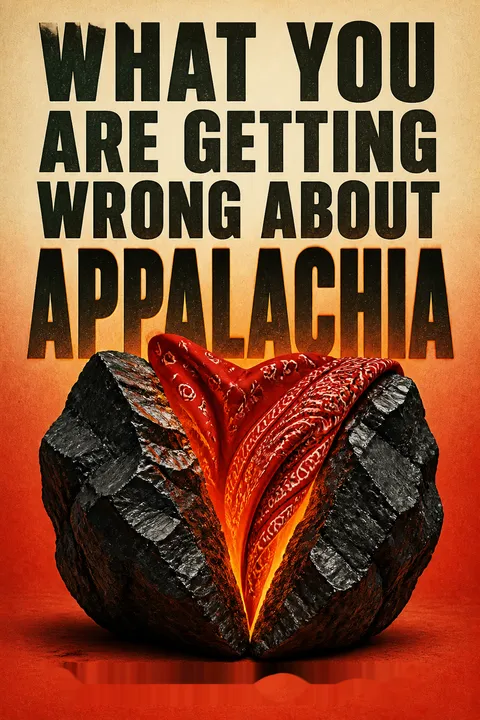
Review Summary
What You Are Getting Wrong about Appalachia by Elizabeth Catte serves as a critical rebuttal to J.D. Vance's Hillbilly Elegy. Reviewers praise Catte for dismantling stereotypes about Appalachia, highlighting its ethnic diversity, labor activism, and progressive movements while exposing how corporate exploitation created regional poverty. Many appreciate her historical expertise and insider perspective as a native Tennessean. However, some criticize the book's lack of organization, academic language, and fragmentary structure, suggesting it needed better editing. Most readers value Catte's exposure of eugenicist undertones in traditional Appalachian narratives and her demonstration that the region extends beyond white, conservative stereotypes.
People Also Read


Download PDF
Download EPUB
.epub digital book format is ideal for reading ebooks on phones, tablets, and e-readers.








































