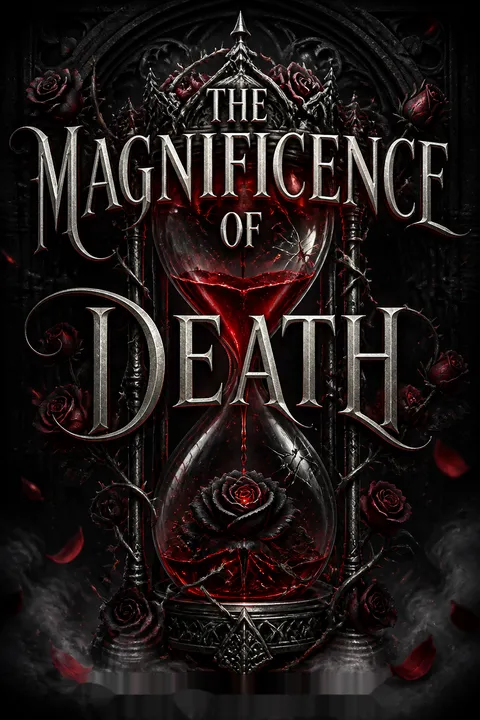

Plot Summary
Cursed Bloodlines Unravel
Astoria Devlin Tempest is born into a line of women marked by a mysterious curse: each is doomed to a unique, isolating fate at age twenty-two. Her great-grandmother lost her senses, her grandmother her name, her mother her kindness. Astoria, believing herself immune, is proven wrong when she stops aging at twenty-two. The curse's true horror is revealed when her daughter, Beatrice, is killed in a car accident and Astoria's desperate love brings her back—at the cost of her husband's life. This act binds Astoria to Death itself, setting in motion a cycle of grief, guilt, and impossible choices that will echo through every chapter of her long, haunted life.
Bargain with the Reaper
In the aftermath of Beatrice's resurrection, Astoria meets Death incarnate—a being both terrifying and strangely compassionate. He confronts her for disrupting the natural order, warning that every life she saves must be balanced by another's death. Their fates entwine in a dangerous bargain: Astoria's soul for the chance to break her curse and save those she loves. This uneasy truce becomes a dance of power, regret, and longing, as Astoria is forced to confront the cost of her defiance and the seductive pull of Death's presence in her life.
Death's Relentless Shadow
Decades pass, and Astoria's inability to age forces her into a life of constant reinvention and secrecy. She becomes a caretaker for a young girl, Ishani, whose illness draws Death's attention once more. Astoria's curse is both a shield and a prison, keeping her apart from those she loves and making every attachment a potential tragedy. Death, now known as Grim, haunts her steps—sometimes adversary, sometimes confidant, always a reminder of the price she pays for every stolen moment of happiness.
The Price of Resurrection
When Ishani's life hangs in the balance, Astoria faces the same impossible choice: save the child and doom another. The act of resurrection is never clean; it stains Astoria's soul and leaves her reeling with guilt. Each time she intervenes, Death is there to collect his due, and the weight of her actions grows heavier. The cycle of loss and return becomes unbearable, forcing Astoria to question whether her love is a blessing or a curse, and whether she can ever truly atone for the lives she's taken, even unintentionally.
Haunted by Immortality
Astoria's immortality becomes a double-edged sword. She outlives her children, her lovers, and every friend she dares to make. The world changes around her, but she remains the same—an unaging anomaly, forever on the run from discovery and heartbreak. Her only constants are the memories of those she's lost and the relentless pursuit of Death, who is both her judge and her only true companion. The ache of loneliness is matched only by the terror of what she might lose next.
The Dance of Grief
Over the years, Astoria's relationship with Grim deepens, shifting from antagonism to a complex, aching intimacy. They share moments of tenderness and understanding, but their connection is always shadowed by the knowledge that Death is both lover and executioner. Their dance is one of longing and denial, of stolen nights and bitter partings. Through masquerade balls, wartime losses, and quiet confessions, Astoria learns that even Death is not immune to the pain of love and the burden of regret.
Names and Memory Lost
The curse's true cruelty is revealed in the way it erases and distorts identity. Astoria's grandmother forgets her own name; her mother becomes a vessel for bitterness. Astoria herself is forced to adopt new names and lives, each one a mask to hide her unchanging face. The act of naming—of claiming and remembering—becomes an act of resistance against the curse's erasure. Through journals, letters, and stories, Astoria fights to preserve her own history and the memory of those she loves.
Death's Unforgiving Kindness
Grim is not the monster of childhood tales, but neither is he a savior. His kindness is sharp-edged, his mercy always conditional. He warns Astoria of the consequences of her actions, but cannot help being drawn to her defiance and her pain. Their relationship is a study in contrasts: tenderness and cruelty, desire and duty, hope and despair. In the end, Death's greatest gift is not escape, but the chance to face the truth and choose her own ending.
Breaking and Becoming
Astoria's journey becomes one of self-discovery as she seeks the origin of her curse and the possibility of breaking it. With the help of magical allies—Fate, Time, and Fortune—she uncovers the tangled history of her bloodline and the true nature of the curse. The answer is not in magic, but in naming the pain, facing the past, and choosing to live despite it. The act of breaking the curse is not a single moment, but a process of becoming: accepting her scars, her guilt, and her right to happiness.
The Weight of Guilt
The revelation that every life Astoria saved cost another—often someone she knew—nearly destroys her. She is forced to confront the reality that her attempts to play God have left a trail of unintended victims. The guilt is crushing, but it is also clarifying. In facing the truth, Astoria finds the strength to forgive herself and to see that her curse was never just about punishment, but about the human struggle to balance love and loss, hope and regret.
The Truth in the Curse
With the help of Gentry, a kind scholar, and the guidance of Fate, Astoria uncovers the true story behind her family's curse. It was not a punishment from without, but a wound inflicted by betrayal and silence within her own bloodline. The curse is revealed as a legacy of pain passed from mother to daughter, a cycle that can only be broken by naming it and choosing to live differently. The act of truth-telling becomes the key to freedom.
Choosing to Live
The curse is finally broken not by magic, but by Astoria's decision to stop running, to accept her past, and to live fully in the present. She allows herself to age, to love, to grieve, and to hope. The gift of mortality—once a source of terror—becomes a blessing. Astoria's story is no longer defined by what she has lost, but by what she chooses to build: a home, a family, a legacy of survival and love.
The Final Goodbye
In her final years, Astoria returns to the places and people that shaped her. She visits the graves of her loved ones, writes her story, and makes peace with the ghosts that have haunted her. Death, ever her shadow, waits patiently for the moment when she is ready to rest. Their last meeting is not an ending, but a homecoming—a recognition that love and loss are inseparable, and that every story, even one marked by death, can end in grace.
The Gift of Aging
For the first time in over a century, Astoria begins to age. Each wrinkle, each gray hair, is a triumph—a sign that she is finally free from the curse's grip. She embraces the changes in her body and spirit, finding joy in the ordinary moments of life. Aging becomes a privilege, a testament to her survival and her choice to live on her own terms. The curse is not defeated by force, but by surrendering to the flow of time and the inevitability of change.
Love Beyond the End
Astoria's relationship with Grim is the heart of her journey—a love that is both impossible and inevitable. Their connection endures through every trial, every loss, every transformation. In the end, Death is not her enemy, but her companion, her witness, and her home. Their final reunion is a promise kept: that love, once truly seen and chosen, can outlast even the boundaries of life and death.
The Legacy of Survival
Astoria's greatest act is not breaking the curse, but telling her story. By naming her pain, claiming her history, and refusing to be defined by the wounds of the past, she creates a legacy of hope for those who come after her. Her survival is not just endurance, but transformation—a testament to the magnificence of living, loving, and letting go. In the end, her story is not about death, but about the courage to begin again.
Analysis
A modern meditation on grief, agency, and the meaning of survivalThe Magnificence of Death is a sweeping, emotionally charged exploration of what it means to live in the aftermath of loss. Through Astoria's journey, the novel interrogates the seductive allure of immortality and the true cost of trying to outwit fate. The generational curse is a powerful metaphor for inherited trauma and the cycles of silence, guilt, and self-blame that can haunt families for centuries. By personifying Death as both adversary and lover, the story challenges our cultural fear of endings and reframes mortality as the very thing that gives life its meaning. The novel's ultimate message is one of radical acceptance: that healing comes not from denying pain or seeking perfection, but from naming our wounds, telling our stories, and choosing to live—fully, imperfectly, and with open hands. In a world obsessed with youth and happy endings, The Magnificence of Death offers a bracing, hopeful reminder that the truest magnificence lies in survival, in love that endures loss, and in the courage to begin again.
Review Summary
The Magnificence of Death by Rhea Rainwater receives mixed reactions, averaging 4.01 stars. Many readers praise the lyrical prose, emotional depth, and themes of grief, love, and immortality, with some calling it life-changing and comparable to The Invisible Life of Addie LaRue. Critics appreciate the romance between immortal Astoria and Death (Grim), though several find the protagonist immature for her age. Common complaints include a slow middle section, an anticlimactic curse resolution, and forced conflict. Despite divisive opinions on execution, most agree the writing is beautiful and emotionally impactful for a debut novel.
People Also Read
Characters
Astoria Devlin Tempest
Astoria is the last in a line of women marked by a generational curse, doomed to stop aging at twenty-two. Her life is a tapestry of loss, guilt, and longing, shaped by the impossible choices she makes to save those she loves. Astoria is fiercely loyal, stubborn, and compassionate, but also deeply wounded by the consequences of her actions. Her relationship with Death is both adversarial and intimate, evolving from fear to love as she confronts the truth of her curse. Over time, Astoria learns to forgive herself, embrace her mortality, and claim her right to happiness. Her journey is one of self-discovery, agency, and the transformative power of grief and love.
Grim (Death)
Death, known as Grim, is the personification of death—ancient, powerful, and bound by duty. He is both judge and witness, tasked with maintaining the balance between life and death. Grim is drawn to Astoria's defiance and pain, finding in her a mirror for his own loneliness and longing. Though he appears cold and unyielding, he is capable of deep compassion and even love, struggling with the paradox of his role. His relationship with Astoria challenges his understanding of mercy, justice, and the possibility of change. In the end, Grim is transformed by their connection, learning that even Death can be touched by hope and forgiveness.
Gentry Townes
Gentry is a historian and academic who becomes Astoria's ally and, eventually, her second great love. He is kind, patient, and deeply curious, offering Astoria the stability and acceptance she has long craved. Gentry's willingness to believe in magic and to help Astoria unravel her curse is matched by his own quiet strength and loyalty. He represents the possibility of a life built on trust, partnership, and the courage to face the past. Through Gentry, Astoria learns that love can be gentle as well as fierce, and that healing is possible even after centuries of pain.
Beatrice DuPont
Beatrice is Astoria's beloved daughter, whose death and resurrection set the story's central conflict in motion. Her curse—an inability to lie—mirrors the family's legacy of painful truth. Beatrice's loss is the wound that haunts Astoria, driving her to make the fateful bargain with Death. Though her time in the story is brief, Beatrice's presence lingers as a symbol of innocence, hope, and the devastating cost of love.
Lucy Tempest
Astoria's mother, Lucy, is cursed to speak only unkind truths, driving away everyone she loves. Her bitterness is both a symptom and a cause of the family's suffering, shaping Astoria's understanding of love, loss, and the dangers of silence. Lucy's story is a cautionary tale about the corrosive power of unspoken pain and the importance of breaking cycles of harm.
Feodora (Fate)
Feodora is the personification of Fate, a powerful and enigmatic figure who helps Astoria uncover the origins of her curse. She is wise, playful, and sometimes inscrutable, offering guidance without interference. Feodora's role is to remind Astoria—and the reader—that destiny is shaped by choices as much as by circumstance, and that the act of naming and facing pain is the first step toward freedom.
Day (Time)
Day, or Time, is another Absolute who becomes Astoria's confidant and companion. He is lighthearted, mischievous, and deeply empathetic, providing comic relief and emotional support throughout Astoria's journey. Day's presence underscores the story's themes of impermanence, change, and the importance of living in the present.
Regina
Regina is a nurse who becomes collateral damage in Astoria's quest to save Ishani. Her death is a turning point, forcing Astoria to confront the true cost of her actions and the impossibility of escaping the consequences of love. Regina's story is a reminder that even the best intentions can have devastating effects.
Ishani Kapoor
Ishani is the young girl Astoria cares for, whose illness and near-death experience bring Death back into Astoria's life. Ishani's resilience and sweetness offer a glimpse of hope and renewal, even in the face of overwhelming loss. Her survival is both a miracle and a burden, highlighting the story's central tension between love and sacrifice.
Nemo
Nemo is a mysterious figure who helps Astoria navigate the practical challenges of her immortal life—new identities, forged documents, and hidden truths. He is pragmatic, unflappable, and quietly loyal, serving as a bridge between the magical and mundane worlds. Nemo's presence underscores the importance of community, resourcefulness, and the quiet acts of care that make survival possible.
Plot Devices
Generational Curse
The central plot device is the curse that afflicts the women of Astoria's family, manifesting differently in each generation but always isolating and destroying. The curse is both literal and metaphorical—a symbol of inherited trauma, unspoken grief, and the ways families pass down wounds as well as love. Its unraveling drives the narrative, forcing Astoria to confront the past, seek the truth, and ultimately choose her own fate.
Personification of Death
By making Death a character—complex, wounded, and capable of change—the story explores the paradoxes of mortality, love, and the human desire to control the uncontrollable. Death's relationship with Astoria is both a source of conflict and a path to healing, allowing the narrative to examine themes of agency, forgiveness, and the possibility of transformation even for the most immutable forces.
Resurrection and Sacrifice
The act of bringing someone back from the dead is never free; it always demands a sacrifice. This device forces Astoria to grapple with the consequences of her choices and the limits of her power. It also serves as a metaphor for the ways we try to undo loss, and the impossibility of escaping the price of love.
Magical Realism and Time
The story weaves together the mundane and the magical, using elements like enchanted objects, time manipulation, and cosmic beings to heighten the emotional stakes and explore the nature of fate, memory, and change. The presence of Fate, Time, and Fortune as characters allows for playful yet profound meditations on agency, destiny, and the meaning of survival.
Epistolary and Metafictional Elements
Astoria's habit of journaling, letter-writing, and storytelling becomes a key device for both character development and plot resolution. The act of writing her own story is what ultimately breaks the curse, transforming pain into meaning and survival into legacy. The narrative's self-awareness invites the reader to consider the power of naming, truth-telling, and authorship in shaping our own lives.
Download PDF
Download EPUB
.epub digital book format is ideal for reading ebooks on phones, tablets, and e-readers.








































