
Key Takeaways
1. The Enduring Cycle of Empire and Anarchy
Empires may leave chaos in their wake, but it is also true that they have arisen as solutions to chaos.
Historical Pattern. The Greater Middle East has historically oscillated between periods of imperial order and subsequent anarchy, a pattern that continues to cast a long shadow on contemporary politics. This region, often characterized by contested frontiers and political tumult, has rarely achieved lasting unity outside of imperial structures. The collapse of empires, from the Ottoman to the American, frequently leaves a vacuum that local powers struggle to fill, leading to instability.
Post-Imperial Vacuum. The current violence and political instability in the Middle East are largely attributed to its post-imperial phase, where no dominant world empire maintains order. This vacuum has allowed regional powers with long-standing imperial traditions—such as Iran, Turkey, and Russia—to reassert influence, often clashing in a "fight zone" where states are weak or non-existent. The absence of a unifying external force exacerbates internal divisions and power struggles.
Order vs. Freedom. While empire represents an extreme form of order and anarchy an extreme form of disorder, the latter is often more devastating. As the eleventh-century Persian philosopher Abu Hamid al-Ghazali suggested, even tyranny causes less damage than anarchy, which is the tyranny of a whole population against each other. This grim reality often leads populations to prefer strong, even coercive, rule over the unpredictable violence of lawlessness, a lesson painfully learned in countries like Iraq and Syria.
2. Geography as Destiny in the Middle East
The Nile not only begets the land, the trees, the animals and the people, it also begets the laws and the first sciences.
Shaping Civilizations. The physical geography of the Middle East—its deserts, river valleys, mountains, and strategic crossroads—has profoundly shaped its cultures, political systems, and historical trajectories. The Nile, for instance, dictated Egypt's centralized, hierarchical governance for millennia due to the necessity of organized water distribution. Similarly, Mesopotamia's challenging river systems and lack of natural barriers fostered a "fundamental pessimism" and vulnerability to invasion.
Natural Divisions. The region's diverse terrain often creates natural divisions that resist political unity.
- Kurdistan's mountains isolate communities, fostering tribalism and making state control difficult.
- Syria's crossroads location made it a battleground for empires and a mosaic of conflicting identities.
- Arabia's vast desert bred unconquerable tribes and a unique, austere culture.
These geographical realities often render artificial state borders, drawn by external powers, inherently unstable.
Geopolitical Crossroads. The Greater Middle East's position as a bridge between Europe, Asia, and Africa has made it a perennial stage for great power struggles. From ancient empires to modern global initiatives like China's Belt and Road, control over this region's choke points and landmass is crucial for global dominance. This inherent geopolitical significance means external powers are constantly drawn in, further complicating local dynamics.
3. Culture's Deep Roots Shape Political Realities
Culture...is the ultimate source for what we think constitutes common sense.
Beyond Quantification. Culture, defined as the sum total of a people's collective experience in a particular landscape over centuries, is a fundamental, albeit often overlooked, factor in political analysis. It dictates how individuals operate within society, influencing everything from daily interactions to attitudes towards authority and justice. Dismissing culture as "subjective" or "deterministic" leads to a superficial understanding of political dynamics.
"Thick Description." Understanding a culture requires "thick description"—a deep, immersive study of local customs, beliefs, and behaviors, as exemplified by anthropologists like Clifford Geertz. This approach reveals the "normalness" and internal logic of a people, even if their practices seem alien to outsiders. It moves beyond bland clichés to uncover the underlying forces that shape political legitimacy, identity, and social order.
Modernization's Paradox. Modernization and education, rather than eradicating traditional cultural traits, often intensify them by raising group consciousness and competition for resources and status.
- Urbanization can transform traditional religious practices into more ideological and extreme forms as people seek identity in anonymous mass societies.
- Increased literacy makes people more aware of their collective pasts and differences, fueling ethnic and sectarian tensions.
This paradox highlights how progress can, in its initial phases, lead to greater instability rather than less.
4. Western Ideals Often Clash with Local Histories
The ferocity and mechanization of Arab dictatorships are a partial result of the Arab world’s encounter with the techniques of the West; and thus the demands of Islamists for Shari‘a law represent less an extreme philosophy than an understandable rejection of the lawless authoritarianism under which they suffer.
Unintended Consequences. Westernization and the imposition of Western political ideals, such as nationalism and democracy, have frequently had destabilizing and unintended consequences in the Middle East. The "fatal idea" of modern nationalism, imported from the West, transformed multiethnic Ottoman communities into monoethnic states, often leading to violent conflicts and ethnic cleansing. Similarly, Western techniques of governance and control have been adopted by local regimes, leading to more efficient and brutal forms of authoritarianism.
"Failure of Imagination." Western policymakers often suffer from a "failure of imagination," projecting their own historical experiences and values onto vastly different societies. This leads to a belief that democracy is a universal solution, ignoring the deep-seated historical, cultural, and geographical realities that make such transitions difficult or impossible. The Arab Spring, for instance, was often interpreted as a straightforward movement for democracy, when it was more fundamentally a revolt against decadent authority that often devolved into anarchy.
The "Chatham House Version." Elie Kedourie critiqued a "fashionable western sentimentality" that romanticized Arab nationalism and underestimated the region's inherent political instability. He argued that Western policies, driven by guilt over colonialism and a naive belief in the transformative power of ideals, often exacerbated problems by failing to grasp the "impure, realist requirements of politics and necessary force." This perspective suggests that well-intentioned interventions can inadvertently pave the way for worse outcomes.
5. The Complex Evolution of Turkey's Identity
Understanding the importance of Turkey’s imperial past is essential to understanding modern Turkey.
Atatürk's Legacy and Its Unraveling. Modern Turkey was founded by Mustafa Kemal Atatürk on fiercely secular, uniethnic principles, rejecting the cosmopolitanism of the Ottoman Empire and orienting the nation towards the West. However, this radical secularization proved to be an "interregnum" in Turkey's long history. Over decades, a gradual return to religion began, culminating in Recep Tayyip Erdoğan's Islamist-trending rule, which consciously re-embraced a neo-Ottoman identity and shifted Turkey's focus back to the Middle East and Central Asia.
Neo-Ottomanism and Authoritarianism. Erdoğan's rule has seen a militaristic neo-Ottomanism, with Turkish troops intervening in Syria, Libya, and other former Ottoman territories, driven by a desire to restore regional influence and address perceived threats like Kurdish separatism. This has coincided with a consolidation of autocratic power, the emasculation of the secular military, and a "lumpen-Islamist" movement that appeals to a newly urbanized, conservative populace. The conversion of Hagia Sophia back into a mosque symbolized this reassertion of imperial and religious identity.
Internal Contradictions. Despite its re-engagement with its imperial past, Turkey faces significant internal contradictions.
- The enduring "Kurdish question" remains a major source of instability, with a large ethnic-Kurdish population seeking greater autonomy.
- The political system, though formally democratic, has seen its legitimacy eroded by Erdoğan's authoritarian tendencies and alliances with far-right nationalists.
- The tension between a Westernized elite and a conservative, religious majority continues to shape the country's trajectory, making its future uncertain beyond Erdoğan's rule.
6. Egypt's Perpetual Dance with Autocracy
After 5,000 years of civilization, Egypt’s political system remains pyramid-shaped. Cairo sits indomitably at the pinnacle.
Ancient Roots of Centralization. Egypt's unique geography, centered on the Nile River, has historically necessitated a highly centralized and often tyrannical form of governance. From the pharaohs to modern dictators, control over the densely populated and agriculturally vital Nile Valley has always required a strong hand. This deep historical pattern makes democratic transitions exceptionally challenging, as evidenced by repeated failures.
Failed Democratic Experiments. Egypt's modern history is marked by two significant, yet ultimately failed, attempts at democratic self-rule:
- 1922-1952: The "liberal experiment" following British semi-independence, plagued by political infighting, corruption, and the rise of the Muslim Brotherhood, ended with the Free Officers coup.
- 2011-2013: The Arab Spring uprising in Tahrir Square, initially filled with hope, quickly devolved into chaos and the incompetent rule of the Muslim Brotherhood, leading to a military takeover.
In both cases, the military, as the most organized force, reasserted control, demonstrating the fragility of civilian institutions.
Modernizing Autocracy. Under President Abdel Fattah al-Sisi, Egypt has returned to a coercive, top-down autocracy, albeit with a focus on modernization and economic development, often inspired by the Chinese model. While human rights abuses are rampant, many Egyptians, traumatized by the chaos of the Arab Spring, prioritize stability and economic security. This "fight mode" regime aims to prevent future unrest by streamlining governance and investing in infrastructure, even as it suppresses dissent and muzzles the media.
7. Ethiopia's Imperial Struggle for Unity
Ethiopia has been at once a loose and sprawling empire and a deeply institutionalized state.
A Unique African Empire. Ethiopia stands apart from other African nations due to its millennia-long history as a multiethnic empire, never formally colonized by Europeans. Its unique Miaphysite Christianity, Semitic languages, and mountainous geography have fostered a distinct civilization with deep historical ties to the Middle East. This imperial legacy, however, also presents a perpetual challenge: how to maintain unity across diverse ethnic groups while transitioning to modern governance.
Ethnic Federalism vs. Centralization. Ethiopia's political landscape is defined by the tension between ethnic federalism, which grants significant autonomy to various groups, and the desire for a strong, centralized state. Prime Minister Abiy Ahmed's efforts to centralize power and dismantle ethnic federalism, while promoting liberalization, have ignited violent conflicts, most notably the war in Tigray. This struggle reflects a deeper historical competition between dominant ethnic groups like the Amharas and Tigrayans.
Modernity's Tumult. Modernization, including increased literacy and economic development, has paradoxically intensified ethnic consciousness and competition for spoils, leading to greater instability. The war in Tigray, fueled by historical grievances and a desire for self-determination, threatens to unravel the Ethiopian state, drawing comparisons to the dissolution of Yugoslavia. External powers, including Turkey, the UAE, and Iran, have supplied drones, further complicating the conflict and highlighting Ethiopia's geopolitical significance in the Horn of Africa.
8. Saudi Arabia's Autocratic Liberalization
The government no longer imposes on you how to dress in public. That is an accommodation to global urban civilization. Isn’t the spirit of democracy giving the vast majority of the people what they want?
From Desert to Metropolis. Saudi Arabia, once the "Arabia Deserta" of Doughty and Lawrence, has undergone a rapid transformation from a tribal desert kingdom to a highly urbanized, oil-rich metropolis. This shift has brought immense wealth and a complex interplay between traditional Wahhabi conservatism and global cosmopolitanism. The kingdom's stability, rooted in the Al Saud family's long-standing rule and vast oil revenues, is now being tested by rapid social change.
"Autocratic Liberalization." Under Crown Prince Mohammed bin Salman (MBS), Saudi Arabia is experiencing a unique form of "autocratic liberalization." While the regime maintains tight political control and engages in severe repression, it has simultaneously introduced significant social reforms:
- Lifting bans on cinemas, concerts, and women driving.
- Increasing women's participation in the workforce.
- Modernizing governance and combating corruption.
These reforms, driven by MBS's ambition to prepare Saudi Arabia for a post-petroleum age (Vision 2030), are popular with the youthful population, who prioritize personal freedoms and economic opportunity over Western-style democracy.
Geopolitical Realignments. Saudi Arabia's reforms and pragmatic foreign policy are reshaping regional alliances. The kingdom is increasingly aligning with Israel (Abraham Accords) and China, driven by security concerns regarding Iran and a desire for economic diversification. While the West often criticizes Saudi human rights abuses, the Saudis view their approach as a necessary path to stability and progress, contrasting it with the chaos of democratic experiments elsewhere in the Middle East.
9. The Fertile Crescent's Cycle of Tyranny and Chaos
The three coups d’état of 1949 were the prelude to successive…interventions by army officers which put paid…to any possibility of Syria being governed through parliamentary and representative institutions.
Artificial States, Brutal Realities. The Fertile Crescent, a natural geographical unity, was carved into artificial states like Syria and Iraq after the collapse of the Ottoman Empire. This imposed gridwork, ignoring deep-seated ethnic and sectarian divisions, necessitated extreme forms of coercion to maintain unity. The result was a cycle of coups, instability, and brutal dictatorships, with anarchy always lurking beneath the surface.
Syria's "Ambition." Syria, a crossroads of civilizations, struggled to forge a cohesive national identity, finding unity primarily in pan-Arab nationalism and opposition to Israel. Hafez al-Assad, an Alawite minority, brought three decades of ruthless stability by mastering the art of survival and balancing internal factions. However, his regime was a "carapace of tyranny" over a "writhing nest of anarchy," which erupted under his less capable son, Bashar, in the 2011 civil war, leading to hundreds of thousands of deaths and regional destabilization.
Iraq's "Pessimism." Iraq, even more artificial and geographically vulnerable than Syria, experienced even greater brutality. Its history of invasions, sectarian divides (Sunni, Shi'ite, Kurd), and the perennial struggle against nature bred a "fundamental pessimism." Saddam Hussein's totalitarian regime, a "thermonuclear-style summation" of Mesopotamia's violent tendencies, maintained order through industrial-scale repression. The 2003 U.S. invasion, intended to bring democracy, instead unleashed a chaos that proved equally, if not more, bloody, demonstrating the profound difficulty of imposing external models on such a deeply fractured society.
10. Afghanistan: A Graveyard of Empires and Tribal Resilience
The Pathans, in a word, were an extension of an altogether rugged and impossible landscape.
Tribal Resilience vs. Imperial Ambition. Afghanistan, a landlocked crossroads between empires, has historically been defined by the resilience of its tribal societies, particularly the Pathans (Pashtuns), against external invaders. From Ahmad Shah Durrani's 18th-century kingdom to the Soviet and American occupations, foreign powers have consistently underestimated the deep-rooted tribal structures and the "Pukhtunwali" code of conduct, which prioritizes revenge, honor, and hospitality.
The "AfPak" Quagmire. The artificial Durand Line, drawn by the British, divided the Pathan people between Afghanistan and Pakistan, creating a porous border that has fueled instability for over a century. This region, often called "AfPak," is characterized by weak states and strong, well-functioning tribal groups that resist central authority. The Soviet invasion (1979-1989) and the subsequent American war (2001-2021) both failed due to an inability to subdue these tribal forces, which used the borderlands as safe havens and supply routes.
Anarchy and Extremism. The withdrawal of imperial powers often leaves a vacuum filled by anarchy, as seen after the Soviet departure in 1989, which led to a Hobbesian "all against all" civil war. This chaos paved the way for the rise of the Taliban, an ethnic-Pathan movement that imposed a brutal, religiously informed order, drawing on both Islamic Shari'a and Pukhtunwali. The Taliban's success highlights how extreme disorder can lead to a desperate embrace of any force capable of restoring stability, however repressive.
11. The Rise of New Imperial Powers and a Shifting World Order
The Chinese and Russian leaders and their delegations come regularly to visit the Arab League, the Americans almost never.
Vacuum of Influence. With the decline of Western, particularly American, influence in the Greater Middle East, new global and regional powers are stepping into the vacuum. China, Russia, Turkey, and Iran, each with their own imperial traditions and strategic ambitions, are actively reshaping the region's geopolitical landscape. This marks a shift from a unipolar world to a more multipolar one, where competition for resources and influence is intensifying.
China's "Mercantilist Imperialism." China's Belt and Road Initiative (BRI) is a prime example of this new "mercantilist imperialism," connecting Eurasia's "Heartland" with its "Rimland" through massive infrastructure projects.
- Pakistan is a key corridor, linking China's land and maritime Silk Roads.
- Egypt is becoming a core component of BRI in the Middle East.
- Iran is a critical junction for China's westward expansion.
China's approach, focused on economic development and stability without moral lectures on human rights or democracy, appeals to many regimes in the region, challenging traditional Western alliances.
Russia's Resurgence and Regional Powers. Russia, despite being weakened by the Ukraine war, maintains significant military and security influence in Central Asia and parts of the Middle East (e.g., Syria). Meanwhile, regional powers like Turkey and Iran are pursuing their own neo-imperial agendas, often clashing with each other and with Western interests. This complex interplay of old and new imperial ambitions creates a volatile and unpredictable environment, where no single power is likely to achieve unchallenged dominance.
12. The Imperative of Imagination in Geopolitical Understanding
Knowing something and actually believing it can be two different things.
Beyond Reason and Analysis. True geopolitical foresight requires more than just reason and analysis; it demands a powerful imagination. As Tolstoy's Count Rastopchin learned, one can intellectually "know" a future event but fail to "believe" it in a way that translates into effective action. This "failure of imagination" leads to being surprised by predictable events, from Pearl Harbor to the fall of Kabul, and to misjudging the consequences of interventions.
Learning from Mistakes. The Iraq War serves as a stark personal example of this failure, where theoretical knowledge of potential chaos was overridden by the inability to vividly imagine its reality. This experience underscores the need for humility, empathy, and a deep, granular understanding of local realities, rather than relying on abstract ideals or self-serving rationalizations. Wisdom, however painful to acquire, comes from confronting and learning from one's errors.
Navigating the Future. The Greater Middle East will continue to test our imaginations, presenting scenarios that seem "unimaginable" yet are entirely possible. The path forward requires:
- Seeking consultative regimes over arbitrary ones, prioritizing stability and dignity.
- Avoiding idealistic raptures in the service of change, recognizing that revolutions often lead to worse outcomes.
- Understanding that progress is crooked, not linear, and that societies evolve in their own complex ways.
- Acknowledging the interconnectedness of global forces with local realities, making pure civilizations and simple solutions impossible.
The challenge is to reconcile what is just with what is possible, accepting that in a world of imperfect choices, the middle path, however difficult, offers the only hope for a better future.
Review Summary
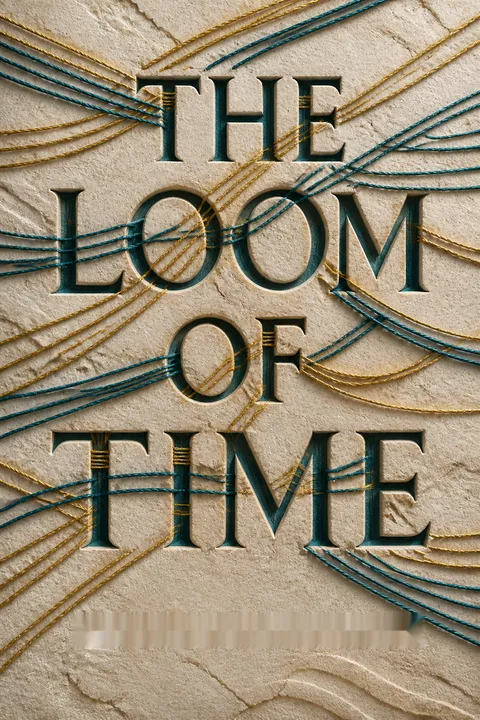
The Loom of Time receives acclaim for its dense historical analysis and geopolitical insights spanning from the Mediterranean to China. Readers appreciate Kaplan's blend of travelogue, history, and political commentary examining Turkey, Egypt, Syria, Iraq, Iran, and Afghanistan. The book argues that Western-style democracy may not suit all Middle Eastern regions, where tyranny can sometimes be preferable to anarchy. Reviewers value Kaplan's humility in admitting his mistaken support for the Iraq War and his pragmatic realism. Some criticize his lack of systematic thinking and surface-level analysis, but most find it educational and thought-provoking, particularly regarding China's growing influence.
People Also Read



About the Author
Other books by Robert D. Kaplan


Download PDF
Download EPUB
.epub digital book format is ideal for reading ebooks on phones, tablets, and e-readers.








































