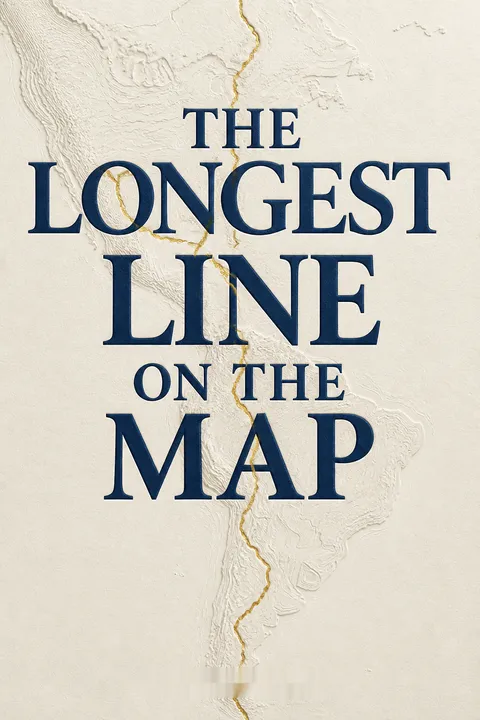

Key Takeaways
1. The Century-Long Dream of Hemispheric Connectivity
"Why not by rail?"
A visionary's question. In 1866, Hinton Rowan Helper, a former US consul to Buenos Aires, conceived the audacious idea of a ten-thousand-mile hemispheric railway connecting North and South America. This vision, born from his personal discomfort during a stormy sea voyage, aimed to boost US commerce and unite the Americas, echoing Henry Clay's earlier "American System" ideals.
Pan-Americanism's early form. Helper's "Three Americas Railway" proposal gained political traction, leading to the 1889 Pan-American Conference, championed by James G. Blaine. This conference, though fraught with political tensions, established the Intercontinental Railway Commission, marking the first official US-sponsored effort to link the continents.
Initial challenges. Despite grand ambitions, the railway project faced immense logistical and financial hurdles. Early surveys in Central and South America revealed treacherous terrain and a lack of local support, leading to cost overruns and delays. The dream of a unified rail network, however, laid the groundwork for future aspirations of hemispheric integration.
2. US Railroad Titans Reshape Mexico's Infrastructure
"Between strength and weakness, the desert."
The Mexican frontier. In the late 19th century, US railroad magnates like Collis P. Huntington and Jay Gould saw Mexico as a new frontier for expansion. Their fierce competition and strategic investments led to the construction of three major international rail lines connecting Mexico City to the US border, transforming Mexico's economy.
Diaz's calculated gamble. Mexican President Porfirio Diaz, despite concerns about "Yankee capital," actively encouraged US investment, believing it essential for national development. He granted lucrative concessions, often with subsidies, to accelerate rail construction, aiming to modernize Mexico and consolidate his power.
Mixed outcomes. While US-built railroads spurred economic growth and trade between the two nations, they also led to significant Mexican debt and a reliance on foreign capital. The "railway invasion" of Mexico, though a period of "dumb growth" for some US companies, marked the beginning of large-scale US industrial expansion abroad, setting a precedent for future infrastructure projects.
3. The "Good Roads" Movement Transforms US Transportation
"The faculty, the art, the habit of road building marks in a nation those solid, stable qualities, which tell for permanent greatness."
A nation stuck in mud. For decades after the Civil War, US rural roads were notoriously poor, lagging far behind Europe. The rise of railroads had shifted focus away from highways, leaving local communities with inadequate "working out" systems for maintenance. This hindered agricultural trade and rural life.
Bicycles spark reform. The League of American Wheelmen, initially formed to protect cyclists' rights, became a powerful advocate for "good roads" in the late 19th century. They campaigned for state-level reforms and federal involvement, arguing that improved roads would benefit everyone, especially farmers.
Federal aid emerges. Despite initial resistance, particularly from southern states wary of federal overreach, the movement gained momentum. Key figures like Logan Waller Page, a pioneering highway engineer, and later Thomas H. MacDonald, pushed for scientific road-building and federal funding. The 1916 Federal Aid Highway Act finally established a national system of cooperative road construction, marking a significant shift in US infrastructure policy.
4. Highway Diplomacy Exports US Road-Building Expertise
"The improvement of means of communication is a matter far more closely related to democratic development than we are accustomed to suppose."
A new vision for Pan-Americanism. With its domestic highway system taking shape, the US began to export its road-building expertise to Latin America in the 1920s. This initiative, framed as "Highways of Friendship," aimed to foster hemispheric unity and economic integration, replacing the earlier focus on railways.
The 1924 tour. A landmark tour brought Latin American delegates to the US to observe modern road construction. Led by figures like Thomas MacDonald and J. Walter Drake (from the auto industry), the tour showcased US engineering and manufacturing, subtly promoting US automotive exports and influencing Latin American leaders to prioritize road development.
Coolidge's endorsement. President Calvin Coolidge, and later Herbert Hoover, embraced the idea of a hemispheric highway as a tool for goodwill and closer relations. The 1928 Havana Pan-American Conference formally sanctioned the "Inter-American Highway" project, leading to a US congressional appropriation for a reconnaissance survey in Central America and Panama.
5. The Inter-American Highway: A "Good Neighbor" Initiative
"Plan your work as if you expected to live forever; Work your plan as if you expected to die tomorrow."
Roosevelt's commitment. President Franklin D. Roosevelt, seeking to demonstrate his "Good Neighbor Policy," became a strong advocate for the Inter-American Highway. In 1934, he secured an unprecedented $1 million congressional appropriation for actual construction in Central America and Panama, marking the first time the US government directly funded overseas development unrelated to military occupation.
Cooperative construction. The Public Roads Administration, led by Edwin Warley James, implemented a cooperative model: the US provided bridge designs, cement, and structural steel, while host nations contributed labor and local materials. This approach aimed to avoid direct financial transfers and foster genuine partnership.
Early challenges and successes. Despite initial resistance from some Central American nations wary of US influence or concerned about railway competition, agreements were reached with Panama, Honduras, and Guatemala. The project faced immense logistical difficulties in the rugged tropical terrain, but by 1939, fourteen bridges and fifty miles of highway were under development, showcasing a new era of US foreign policy.
6. Wartime Urgency Drives the "Pioneer Road" to Panama
"The Operations Division considers that the utility of the proposed road to the present war is problematical. Consequently, no justification exists for the diversion to this project of men or critical materials or equipment."
Defense imperative. With the outbreak of World War II and the threat of German U-boats to sea lanes, the Inter-American Highway gained new strategic importance as an overland supply route to the Panama Canal. This shifted its rationale from goodwill to hemispheric defense.
Military involvement. In 1942, the US Army Corps of Engineers, under General Brehon Somervell, launched the "Pioneer Road" project to rapidly construct a basic, all-weather route from Guatemala to the Canal Zone. This ambitious undertaking aimed for completion within a year, utilizing military funds and personnel.
Logistical and ethical failures. The project was plagued by low priority ratings, supply shortages, and immense environmental challenges. Segregated work camps and widespread racism among US contractors, coupled with allegations of fraud and incompetence, led to a "debacle." Despite spending over $30 million, the road remained largely incomplete when the military abandoned the project in 1943, having failed to meet its objectives.
7. Cold War Ideology Fuels the "Highway of Freedom"
"Gentlemen, the red tide has touched the Western Hemisphere. This is war as truly as if we were opposed by armed might and a physical enemy."
Post-war disillusionment. After World War II, Latin American nations felt overlooked by US foreign aid, particularly the Marshall Plan, which prioritized Europe. This led to resentment and accusations of US imperialism, creating a diplomatic crisis at the 1948 Pan-American Conference in Bogota.
Anti-communism as a new rationale. The Bogota riots, blamed on Communists, galvanized US officials like Secretary of State George Marshall to frame the Inter-American Highway as a tool against the "red menace." The road was re-imagined as a "highway of freedom," vital for economic stability and countering subversive influences.
Nixon's decisive push. Despite lingering skepticism and budget constraints, the highway gained renewed political backing. Vice President Richard Nixon's 1955 goodwill tour of Central America, where he was lobbied extensively, convinced him of the road's anti-Communist value. His advocacy led President Eisenhower to secure a $75 million appropriation, committing the US to finally complete the Inter-American Highway to Panama City.
8. The Darien Gap: An Unconquered Frontier of Jungle and Myth
"That jungle happens to have a worse reputation than any bush country in Africa, that’s all. A dozen explorers have tackled it, but not one of them has gone through."
The ultimate missing link. With the Inter-American Highway nearing completion to Panama City, the Darien Gap—a 250-mile stretch of dense jungle and swamps between Panama and Colombia—remained the final, formidable obstacle to a continuous Pan-American Highway. Legends of head-hunters, deadly fevers, and impassable terrain surrounded the region.
Tewkesbury's symbolic crossing. In 1939, Richard Tewkesbury, a North Carolina schoolteacher, undertook a solo expedition across Darien, aiming to prove its traversability. Despite getting lost and suffering malaria, his harrowing journey, widely publicized, fueled the belief that a road could eventually conquer the "missing link."
Renewed efforts and challenges. In the 1950s, Panamanian engineer Tommy Guardia Jr. and Mexican magnate Rómulo O’Farrill spearheaded a renewed campaign to close the gap. Their preliminary surveys confirmed the extreme engineering difficulties, particularly the vast Atrato Swamp in Colombia, but they remained convinced the challenges were "surmountable."
9. Environmental and Health Concerns Halt the Final Link
"The idea that the road threatens the environment is nothing less than a distracting sophism."
The aftosa threat. As plans to close the Darien Gap advanced in the 1970s, a new, critical concern emerged: foot-and-mouth disease (aftosa). The Darien Gap served as a natural buffer preventing the disease, prevalent in South America, from spreading north to the US, where an outbreak could cost billions.
Environmental opposition. International environmental groups, led by the Sierra Club, launched legal challenges, arguing the highway would cause irreparable ecological damage and threaten indigenous communities. They successfully used the National Environmental Policy Act (NEPA) to halt construction, demanding thorough environmental impact assessments.
A project stalled. Despite US funding and a commitment from Colombia to control aftosa, the project ultimately stalled. Panama's growing ambivalence, fueled by fears of Colombian violence and unchecked immigration, combined with the environmental and health concerns, led to the de facto abandonment of the Darien Gap Highway. The dream of a continuous road gave way to the recognition of the gap's ecological and social importance.
10. The Pan-American Highway: A Monument to a Forgotten Path
"The road is a monument to a forgotten path."
An incomplete dream. After a century and a half of ambition, the Pan-American Highway remains unfinished, with the Darien Gap standing as a symbolic and physical barrier. The quest to link the Americas, once a driving force in US-Latin American relations, ultimately succumbed to a complex interplay of political, economic, environmental, and social factors.
Shifting priorities. The decline of the Pan-American Highway project mirrored a broader shift in US foreign policy. The idealism of Pan-Americanism faded, replaced by Cold War anti-communism and later, a focus on globalization and border security. The US increasingly viewed Latin America through the lens of drug interdiction and migration control, rather than cooperative infrastructure development.
A reminder of past visions. Though incomplete, the Pan-American Highway stands as a testament to a powerful, albeit unrealized, vision of hemispheric unity. It reminds us of a time when leaders imagined a continent bound by shared infrastructure, a stark contrast to contemporary discussions of walls and divisions.
Review Summary
The Longest Line on the Map receives mixed reviews, averaging 3.03/5 stars. Readers consistently criticize the book's structure: the first 40% covers Pan-American railroad history rather than the highway itself. Many found it excessively detailed, dry, and textbook-like, focusing heavily on political machinations and funding struggles rather than actual construction. Several reviewers noted disappointment that South American portions received minimal coverage, and the highway remains incomplete through the Darien Gap. While praising Rutkow's thorough research, most felt the book was too long, unfocused, and better suited for academics than general readers.
People Also Read







Download PDF
Download EPUB
.epub digital book format is ideal for reading ebooks on phones, tablets, and e-readers.








































