
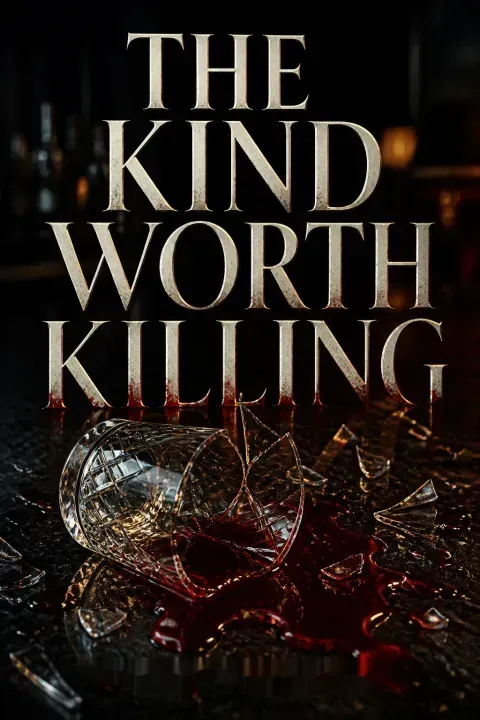


Plot Summary
Strangers at the Airport Bar
Ted Severson,2 a wealthy Boston entrepreneur, drinks martinis at Heathrow Airport's business class lounge, seething over his wife Miranda's3 affair with their Maine contractor Brad Daggett.4 A red-haired woman1 sits beside him, compliments his drink order, and they begin talking.
He tells her the whole story: how he surprised Miranda3 at their half-built beach house, watched through binoculars as she and Brad4 shared a cigarette with casual intimacy, then witnessed them having sex. When the woman1 asks what he plans to do, Ted2 jokes he wants to kill his wife.3 She does not laugh.
Instead, she tells him he should do it, that some people are the kind worth killing. On their shared flight to Boston, seated together in business class, Lily1 proposes they play a truth game. She reveals she considers murder less immoral than most people believe. Ted2 finds himself admitting he has actually fantasized about killing Miranda.3
This opening sets up the novel's core moral question: are some lives forfeit? Lily's immediate validation of Ted's murderous impulse is not merely provocative but diagnostic. She recognizes in him a man whose rage has been pathologically suppressed by social convention. The airport setting functions as a liminal space where normal rules are suspended, strangers become confessors, and the gin dissolves inhibition. Lily's 'truth game' is a seduction in two registers: she is testing whether Ted has the constitution for murder while making herself indispensable to his fantasy. Her flat affect when discussing killing suggests a fully formed philosophy, not mere shock value.
The Girl in the Meadow
Years earlier, teenage Lily Kintner1 grows up neglected at Monk's House, her parents David8 and Sharon more interested in drinking and affairs than parenting. That summer, a painter named Chet9 stays in the studio apartment. He watches Lily1 swim, calls her beautiful, and one Saturday night during a party, slips into her bedroom.
Feigning sleep, Lily1 endures as Chet9 masturbates beside her and touches her chest. She decides against telling her parents, certain they would side with Chet9 or dismiss her.
Instead, she prepares: gathering rocks, positioning a rope over an abandoned well in a nearby meadow, greasing the first few feet with hair pomade. At dusk, she lures Chet9 to the well by claiming she found something attached to a rope and needs help pulling it up. When he kneels to grip it, she shoves him in and drops rocks on his skull until he is dead.
Lily's first murder is a masterclass in self-preservation that crosses into something darker. The text deliberately parallels the earlier scene of Lily killing a feral tomcat to protect her cat Bess, framing her response to Chet as instinctual and natural rather than pathological. Her parents' neglect is both cause and context: she cannot trust adults to protect her, so she becomes her own executioner. The well becomes a psychic burial site, a place where she deposits not just Chet's body but her childhood victimhood. The satisfaction she feels afterward, the sense of power rather than guilt, establishes the template for every subsequent killing.
Eric Washburn's Two Faces
At Mather College, Lily1 falls in love with Eric Washburn,6 a tall, aristocratic upperclassman who belongs to the elite St. Dunstan's society. She spends nearly every weekend with him, their relationship becoming a comfortable routine of classes, parties, and sex.
Eric's6 ex-girlfriend Faith (who later reinvents herself as Miranda)3 remains ever-present at social gatherings, though Lily1 convinces herself this means nothing. The summer after Eric6 graduates, he visits Lily1 at Monk's House on weekends while supposedly working in New York during the week.
Then Lily1 runs into a college acquaintance in Manhattan who mentions Eric6 visits his father every weekend. Lily1 knows his father is not sick. She stakes out Eric's6 office and watches him emerge, kiss a red-haired woman: Faith,3 who has dyed her hair to match Lily's.1 They have been together in the city the entire time.
The betrayal cuts deeper because of its architectural precision. Eric did not simply cheat; he compartmentalized Lily into a weekend fantasy while maintaining a weekday life with the woman who came before her. Faith's red hair is the cruelest detail: a mimicry that makes Lily's identity feel stolen rather than merely disrespected. This is the moment where Lily's earlier killing of Chet finds its emotional sequel. Chet was a straightforward predator; Eric is worse because he made her believe in love. The revelation transforms Lily from a girl who killed in self-defense into someone who will kill to punish those who have weaponized intimacy.
Cashews and an EpiPen
After discovering Eric's6 betrayal, Lily1 does not confront him. She continues the relationship through the summer, then departs for her year abroad at London's Faunce Institute. Eric6 visits in October. Lily1 has prepared meticulously: she orders chicken korma from a local Indian restaurant, knowing it contains cashews.
She removes the whole cashews, grinds half into paste, and stirs the paste back into the sauce, making it undetectable. She also hides Eric's6 two EpiPens under her mattress. She steers Eric6 toward a notorious pub beer challenge, which he completes, returning drunk and ravenous.
She offers him the korma and goes to the bedroom. Minutes later, Eric6 stumbles in, face reddening, throat closing. He cannot find his EpiPens. Lily1 pretends to search, then waits until he stops breathing before dialing 999. The coroner rules the death accidental. Lily1 feels no remorse.
This murder represents Lily's evolution from reactive killing to premeditated execution. Unlike Chet, whom she killed to stop an immediate threat, Eric's death is punitive. She could have simply ended the relationship; instead she chose annihilation. The method is cruelly poetic: Eric's fatal weakness becomes hers to exploit, and his drunkenness ensures he will not question her food. The staged panic, the hidden EpiPens, the postmortem phone call, all demonstrate Lily's theatrical competence at manufacturing innocence. Her lack of remorse signals that she has fully embraced a predator's morality: those who betray her forfeit their right to exist.
A Plan in Concord
One week after their flight, Ted2 and Lily1 meet at the Concord River Inn. Ted2 has spent the week pretending normalcy with Miranda,3 who remains in Maine with Brad.4 Over drinks in the small back bar, Lily1 outlines their advantage: she is invisible, connected to no one in Ted's2 life.
She explains that the key to getting away with murder is hiding the body so thoroughly it is never found, or making the body tell a false story. Since Miranda's3 disappearance would trigger a search, they need the police to find a body that implicates someone else.
Lily1 asks Ted2 how he feels about Brad4 living or dying. When Ted2 says he wants Brad4 dead too, Lily1 smiles and tells him that makes everything much simpler. They will kill them both and stage it so Brad4 appears to be the murderer who then fled. Their next meeting is set for an old cemetery in Concord.
The Concord River Inn, where Ted's mother once dreamed of living, becomes the site of his pact with Lily. Lily's criminal expertise is revealed: she thinks like an investigator, anticipating the narrative the police will construct from evidence. Her invisible accomplice strategy exploits the very anonymity that modern life provides. The question of how many people she has killed hangs unspoken but palpable. Ted's willingness to kill Brad as well shows how thoroughly Lily has reframed his grievance into a total solution: it is not enough to punish Miranda; the affair's existence must be erased, and Brad must become the story's villain.
Spy in Camouflage
Ted2 spends a full week in Kennewick, ostensibly vacationing with Miranda3 but actually gathering intelligence for Lily.1 He drinks with Brad4 at Cooley's, the local dive bar, then at Brad's4 rental cottage. Playing the clueless husband, Ted2 asks about Brad's4 divorce, his kids, his boat.
When Brad4 passes out drunk on the couch, Ted2 searches the cottage. He finds a Smith and Wesson revolver in the utility drawer and a box of spare keys. He pockets one, tests it on Brad's4 front door: it works. A few days later, Ted2 also discovers Brad's4 Viagra stash in the medicine cabinet. The week solidifies Ted's2 contempt.
Drinking with his wife's3 lover, hearing Brad's4 boorish opinions, watching him chain-smoke and gulp beer, Ted2 becomes convinced that eliminating Brad4 is a moral good. The key slips into his pocket like an invitation. Miranda,3 meanwhile, showers Ted2 with uncharacteristic affection, her performance as the loving wife now nauseating to him.
Ted's reconnaissance mission operates as a dark inversion of his business instincts: due diligence before acquisition becomes surveillance before execution. The stolen key is the section's totemic object, a physical token of access gained through deception. Brad's cottage, sterile and bleak, reveals a man already living a half-life, and this makes Ted's murderous intent feel almost merciful. Miranda's sudden warmth toward Ted adds dramatic irony: both spouses are now performing for each other, each mistaking their own duplicity for cleverness. The reader begins to sense that the murder plot, so carefully planned, is already curdling into chaos.
Miranda's Own Game
While Ted2 and Lily1 were conspiring, Miranda3 was running her own operation. She had decided months earlier that she could not endure decades married to a man whose breathing irritated her. One morning, watching Ted2 sleep, she knew she wanted him dead.
She seduced Brad Daggett,4 the contractor, feeding him a story about a loveless marriage and a husband who ignored her. When Brad4 fell for her, she casually mentioned how much easier life would be if Ted2 simply disappeared. Brad4 volunteered. Miranda3 chose Friday night deliberately: a bachelorette party in Miami provided her alibi while Ted2 would be home alone.
Brad4 drove from Maine to Boston, broke into a neighbor's house first to simulate a burglary spree, then knocked on Ted's2 door with a revolver. Miranda's3 only miscalculation was Brad's4 fragility: after killing Ted,2 he became a trembling wreck, his guilt and paranoia growing by the day.
Miranda's perspective reveals her as Lily's mirror image: a woman who views other people as instruments and murder as a practical solution to inconvenience. Where Lily kills from a twisted sense of justice, Miranda kills for money and freedom. Her manipulation of Brad follows the same playbook she used on Ted: sexual allure plus manufactured vulnerability equals enslavement. The detail that she cannot bear the sound of Ted's breathing is chillingly banal. Miranda's fatal flaw is underestimating the psychological weight of murder on her instrument. Brad was a contractor, not a killer, and the gap between those identities will undo everything.
Blood on the Landing
On Friday evening, Ted2 is home alone, the lamb chops defrosting in the kitchen. Earlier that day he drove to Winslow on an impulse, hoping to glimpse Lily,1 earning a parking ticket. That evening, the doorbell rings. Ted2 opens the door to find Brad Daggett,4 drunk and holding a gun.
Brad4 forces his way inside. Ted2 lunges, shoving Brad4 against the door, then races up the stairs toward the second-floor phone. Brad4 fires. The bullet hits Ted2 in the stomach. He collapses on the landing, blood soaking through his shirt. Brad4 stands over him, breathing hard, saliva hanging from his lip.
In his dying moments, Ted2 realizes Miranda3 orchestrated everything. He tells Brad4 that Miranda3 is using him, that the police will suspect Brad4 immediately, that she is in Florida with an airtight alibi. Brad's4 face flickers with doubt, then he pulls the trigger a second time.
Ted's death is the novel's structural midpoint, collapsing the revenge fantasy Lily constructed and replacing it with an actual murder that demands real vengeance. The dramatic irony is multilayered: Ted planned to kill Miranda but was beaten to the act; Brad is both murderer and future victim; Lily's invisible accomplice strategy now must pivot from offense to retribution. Ted's final recognition that Miranda outplayed him carries tragic weight. He was never the predator in this story, merely prey who briefly fantasized about becoming one. The parking ticket in Winslow, a romantic impulse, becomes the thread that will eventually unravel everything.
Lily Finds Her Prey
Reading about Ted's2 death in the Sunday Globe, Lily1 feels a grief that surprises her. She had grown fond of him, perhaps even loved him. But grief quickly hardens into purpose: Miranda3 must pay. Lily1 drives to Kennewick, checks into the inn, and spends two days gathering information at the Livery bar and walking the cliff walk.
She learns no one in town suspected Miranda's3 affair, confirming how carefully Miranda3 concealed it. On Monday night, Lily1 waits in the Cooley's parking lot until Brad Daggett4 arrives. She calls his name. He is jumpy, hollow-eyed, reeking of alcohol.
She tells him she knows everything: how Miranda3 manipulated him, how she will throw him to the police. Sitting in his truck, Lily1 presents herself as his only ally. She will help him kill Miranda3 and escape. Brad,4 desperate and half-broken, agrees to become her weapon.
Lily's recruitment of Brad reverses the novel's power dynamics. Where Miranda used sex to control Brad, Lily uses truth, telling him what he already suspects but cannot face: that Miranda will sacrifice him. This is psychological jiujitsu. Brad's need for absolution, even from a stranger, makes him malleable. Lily's grief over Ted complicates her character: she is not a pure sociopath but a woman who has learned to convert emotional pain into lethal action. The two days she spends in Kennewick, nursing beers and listening to gossip, demonstrate her patience and her understanding that information is the most dangerous weapon.
Miranda's Last Drive
Miranda,3 having identified Brad4 from a police sketch, drives to Maine to prepare him for questioning. She arrives at his cottage and sees a red-haired woman1 leaving. It is Lily.1 Inside, Brad4 claims Lily1 tried to recruit him to kill Miranda,3 but he pretended to agree so they could ambush her instead.
He proposes a plan: Miranda3 should meet Lily1 at the unfinished house, and Brad4 will sneak in through the back and kill Lily1 with a wrench. Miranda3 agrees, relieved Brad4 is still loyal. That night, under a moonless sky, Brad4 drives Miranda3 to the dark, cavernous house.
She enters through the front door, calling Lily's1 name. Lily1 stands waiting in the darkness, calm as still water. Miranda3 hears Brad4 approaching from behind, confident he is coming to kill Lily.1 Instead, the wrench crashes down on her skull.
This chapter layers deception upon deception. Miranda believes she is the predator, walking into a trap she helped set. Brad believes he is choosing between two manipulative women but is actually Lily's instrument. The unfinished house, a monument to Miranda's greed, becomes her tomb. Her confidence in Brad's loyalty, despite all evidence of his fragility, reveals her own blindness: she mistakes sexual power for total control. The wrench, a tool of construction repurposed for destruction, symbolizes how every relationship Miranda built was hollow at its core. Lily's stillness in the darkness represents her apex: she has orchestrated everything while remaining invisible.
Strangled in the Truck
Brad4 bludgeons Miranda3 to death with a wrench while Lily1 watches. They leave her body on the sawdust floor. Outside, in Brad's4 truck, Lily1 offers him her flask of apricot brandy laced with chloral hydrate. He drinks deeply, his adrenaline crashing.
As he smokes a cigarette, Lily1 tells him the truth: she met Ted2 on a plane, she knew about the affair, Ted2 had planned to kill them both. Brad4 is too sedated to react. He slumps sideways, unconscious. Lily1 straightens a coat hanger from his toolbox, loops it around his neck, and twists it tight with her Leatherman pliers.
She drives the truck through the night to Connecticut, to the meadow behind the abandoned Bardwell farm. There she drags Brad's4 body to the same well where Chet9 has rested for over a decade. Brad4 tumbles down onto the painter's9 bones.
Brad's death completes Lily's cycle of vengeance but also her corruption. He is the first person she killed who was not a direct threat to her or a betrayer of her love. He was a tool, used by both Miranda and Lily, and his disposal is pragmatic rather than righteous. The well becomes a repository for disposable men, a secret that connects Lily's girlhood to her womanhood. The cross-country drive with a corpse, the swapped license plates, the abandoned truck in New York City: every detail demonstrates Lily's evolution into a criminal who thinks like a professional. Yet the moment she stands alone in the meadow, feeling 'totally alive,' reveals the emotional truth: killing is her addiction.
A Detective's Fascination
Detective Henry Kimball5 of the Boston PD catches the Severson case. Miranda's3 identification of Brad4 from the sketch leads nowhere: Brad4 has vanished. Kimball5 discovers Ted's parking ticket in Winslow and traces it to Lily.1 He interviews her at her cottage, immediately struck by her beauty and composure.
Lily1 lies smoothly, claiming barely knowing Ted.2 But Kimball5 keeps digging. He learns she stayed in Kennewick after Ted's2 murder, that she shared Ted's2 flight from London. In a second interview, Lily1 admits more while still concealing her involvement.
Kimball5 senses the gaps but cannot stop thinking about her. He begins following her in his personal car, watching her house at night, writing crude limericks about her. His partner Roberta James7 warns him he has crossed a line. Kimball5 does not listen. He is falling in love with his suspect.
Kimball represents the institutional threat Lily has always feared: someone methodical who can connect dots she has scattered. His literary sensibilities and awkward charm make him an unusual antagonist, more Nick Carraway than Javert. His obsession with Lily mirrors Ted's: both men project their desires onto her enigmatic surface. The limericks are pathetic but also diagnostic of his unraveling professionalism. In pursuing Lily, Kimball is also pursuing a fantasy of intimacy with danger. James functions as his conscience, the voice of procedure that he ignores at his peril. His deepening fixation sets the stage for Lily's most brazen act.
The Knife in the Graveyard
Lily1 notices Kimball5 following her and realizes he will not stop. She drives to the Old Hill Burying Ground in Concord, the cemetery where she once kissed Ted,2 and slowly walks up the hill. She kneels before a gravestone inscribed BE MINDFUL OF DEATH, knowing Kimball5 will investigate it after she leaves.
She hides under a chestnut tree. When Kimball5 appears at dusk and crouches to read the inscription, Lily1 approaches silently. He turns, surprised, maybe expecting a romantic encounter. She presses a filleting knife between his ribs, angling toward his heart, and whispers that she is sorry.
Blood spills over her gloved hand. But before she can finish, Detective James7 charges up the hill, gun drawn, having followed her obsessed partner. She commands Lily1 to the ground, ties her wrists with a cloth belt, and calls an ambulance. Kimball5 survives.
The cemetery confrontation is the novel's true climax, the moment Lily's invisible self finally becomes visible to the law. The gravestone's warning is grimly appropriate: Lily has been mindful of death her entire life, has dealt it and courted it. Her whispered apology suggests complicated feelings about Kimball, perhaps even a recognition that he was not her enemy but a man as lonely and misguided as Ted. James's intervention is narratively satisfying: the one detective who kept her head saves her partner from the woman who claimed his. The arrest closes Lily's run of perfect crimes, but the evidence against her is for attempted murder, not the bodies in the well.
Bulldozers at the Meadow
In jail, Lily1 constructs a defense: Kimball5 was stalking her, she acted out of irrational fear. Her lawyer sees a path to a psychiatric plea and minimal time. Kimball5 is suspended after crude limericks about Lily1 are found. Things are looking manageable until Lily1 receives a letter from her father.
David Kintner,8 now living with his ex-wife at Monk's House, writes that the abandoned Bardwell farm next door has been sold to a young hedge fund manager. Bulldozers are arriving. The new owner plans to level the meadow, the one Lily1 loved as a child.
Her father mentions it casually, not knowing what lies beneath the well cover. Lily1 stares at the letter. The bodies of Chet9 and Brad,4 buried for years, are about to be excavated. The perfect invisibility she maintained is about to shatter, not through investigation but through the mundane machinery of real estate development.
The ending is a masterstroke of delayed consequence. Lily has evaded punishment for every murder she committed, only to be undone by random chance: a rich man buying land. The bulldozers are a secular deus ex machina, revealing what human justice could not. The letter from her father, written with warmth and obliviousness, layers domestic normalcy over impending catastrophe. Lily's story has been one of control, of manipulating narratives and hiding evidence. The bulldozers are indifferent to narrative. They will dig because digging is what they do. The final image is one of inexorable exposure: the well yielding its secrets not to a detective's deduction but to the simple passage of time and the relentless churn of property development.
Analysis
The Kind Worth Killing operates as a thriller built on a philosophical premise: that some people deserve to die, and that removing them from the world is not merely justified but morally cleansing. Peter Swanson embeds this argument in Lily Kintner,1 a protagonist whose childhood trauma shaped her into a self-appointed executioner. The novel's structural brilliance lies in making readers complicit in Lily's1 logic; by the time we understand what she is, we have already spent chapters inside her perspective, finding her calm, rational, and even sympathetic. Her first kill was arguably self-defense. Her second was romantic revenge. By the third and fourth, she is killing not for herself but for Ted,2 a man she barely knew. This progression maps the seduction of vigilante morality: once you grant yourself the authority to decide who deserves death, the criteria keep expanding. The novel's multiple first-person narrators create a hall of mirrors where each character believes they are the protagonist of their own noir. Ted2 thinks he is the wronged husband plotting righteous murder. Miranda3 thinks she is the clever femme fatale who will inherit a fortune. Brad4 thinks he is the loyal lover protecting his woman. Lily1 is the only one who understands the game because she has been playing it since she was thirteen. The final irony, delivered through David Kintner's8 letter, is that Lily's1 perfect crimes are undone not by detective work but by the banal machinery of real estate development. The bulldozers coming for the meadow are morally neutral, indifferent to the secrets buried there. This ending is Swanson's commentary on the nature of evil: it hides not in dramatic confrontation but in the quiet spaces between events, waiting for mundane chance to bring it into the light.
Review Summary
The Kind Worth Killing received mostly positive reviews, with readers praising its unpredictable twists, engaging plot, and morally ambiguous characters. Many compared it favorably to other popular thrillers like Gone Girl. Readers found the multiple perspectives and alternating timelines effective in building suspense. Some criticized the lack of distinctive character voices and occasional plot implausibilities. Overall, reviewers described it as a gripping, fast-paced psychological thriller that kept them guessing until the end, despite some flaws.
People Also Read



Characters
Lily Kintner
Serial killer, vigilante archivistA pale, red-haired woman in her late twenties who works as a college archivist in Winslow, Massachusetts. Lily is the product of profound parental neglect by her famous novelist father8 and artist mother. From adolescence, she developed a self-sufficient morality that equates survival with the elimination of threats. She is patient, observant, and preternaturally calm under pressure. Her emotional life is compartmentalized: she can feel affection and even love, but those feelings do not constrain her actions. She views murder not as transgression but as a form of natural justice, a predator's response to those who have wounded her. Her intellectual brilliance manifests in her capacity to plan crimes that appear accidental or attributable to others. She is the most dangerous person in any room precisely because she seems the least threatening.
Ted Severson
Wealthy cuckolded husbandA dot-com millionaire in his late thirties who cashed out before the bubble burst. Ted is handsome in a generic way, socially awkward despite his wealth, and deeply conventional in his expectations of marriage. His discovery of Miranda's3 affair shatters not just his trust but his sense of self; he cannot reconcile the woman he married with the calculating liar he now sees. His rage is genuine but his capacity for violence is theoretical. He gravitates toward Lily1 because she articulates what he cannot say aloud. Ted is, at his core, a lonely man who mistook a gold digger's performance for love, and his tragedy is that he recognized the truth too late to save himself.
Miranda Severson
Manipulative wife and gold diggerBorn Miranda Faith Hobart to an impoverished family in Maine, she reinvented herself at Mather College and again through marriage to Ted2. Stunningly beautiful with dyed black hair and a figure that stops conversations, Miranda understands desire as a transaction and men as resources to be managed. She married Ted2 for his money and found the reality of daily life with him intolerable. Her affair with Brad4 began as a practical solution to her boredom, then evolved into a murder conspiracy when she realized she could have the wealth without the husband. Miranda is neither tortured nor conflicted about her choices; she views morality as a luxury for people without ambition.
Brad Daggett
Contractor turned murdererA rugged, goateed contractor in his forties, divorced with two children he seldom sees. Brad runs Crescent Cottages in Kennewick, Maine, and drinks heavily at Cooley's bar. He is physical, impulsive, and emotionally inarticulate. When Miranda3 seduced him, he mistook sexual availability for genuine affection, then confused that affection with a willingness to kill. He murdered Ted Severson2 and immediately began to unravel, his guilt manifesting as paranoia and heavy drinking. Brad is the novel's most pathetic character: a man who believed he was the hero of a noir romance when he was merely the disposable weapon in someone else's scheme.
Detective Henry Kimball
Obsessed police investigatorA Boston PD detective in his thirties with literary aspirations who secretly writes limericks. Kimball is a dedicated investigator but emotionally porous; he falls in love with the idea of women rather than the women themselves. His discovery that Lily1 is the daughter of his favorite novelist, David Kintner8, amplifies his fascination with her. He recognizes her deceptions but continually rationalizes them because he is attracted to her mystery. His unprofessional surveillance of Lily1 and his decision to follow her alone to the cemetery represent a catastrophic failure of judgment rooted in romantic obsession rather than investigative rigor.
Eric Washburn
Two-timing college boyfriendA tall, wealthy Mather College legacy student and president of the exclusive St. Dunstan's society. Eric was charming, competitive, and fundamentally dishonest about his emotional commitments. He maintained simultaneous relationships with Lily1 and Faith (Miranda)3, compartmentalizing them geographically. His death in London from anaphylactic shock was ruled accidental, but Lily1 engineered it. Eric represents the specific wound that transformed Lily1 from a girl who killed in self-defense into a woman who kills for retribution.
Detective Roberta James
Disciplined partner and rescuerKimball's5 tall, black, impeccably professional partner. James is voluntarily celibate, sharp-eyed, and the only person in the department who recognizes Kimball's5 obsession before it becomes catastrophic. She follows him to Concord, arriving just in time to prevent Lily1 from completing his murder. James represents institutional competence and emotional restraint, the qualities Kimball5 fatally lacks in this case.
David Kintner
Famous novelist, negligent fatherAn English-born novelist who achieved fame with a boarding-school farce. David is a functioning alcoholic whose charm and talent coexisted with profound selfishness. After killing his second wife in a drunk-driving accident and serving prison time, he returns to America a broken man. He moves back into Monk's House with his ex-wife Sharon. His letter to Lily1, casually mentioning the impending bulldozing of the meadow, provides the novel's devastating final irony.
Chet
Predatory houseguest painterAn outsider artist invited to stay at Monk's House for the summer. Chet wore paint-spattered overalls, thick glasses, and a bushy beard. He fixated on thirteen-year-old Lily1, watching her swim and eventually entering her bedroom at night to masturbate beside her sleeping body. His murder was Lily's1 first kill, and his remains lie at the bottom of the meadow well.
Polly Greenier
Brad's unwitting alibiA blond, heavy-drinking local woman who has been Brad's4 on-again, off-again romantic interest since high school. Brad4 deliberately got her drunk and brought her to his cottage on the night he killed Ted2, ensuring she passed out and could not confirm he had left. Her honest but incomplete testimony to Kimball5 destroys Brad's4 alibi.
Plot Devices
The Meadow Well
Burial site connecting past and presentAn abandoned, rectangular well hole in a meadow behind an old farmhouse near Monk's House. Lily1 discovered it as a child and used it to dispose of Chet's9 body and belongings in her first murder. Fifteen years later, she returns to dump Brad Daggett's4 corpse into the same hole. The well functions as Lily's1 secret repository, a physical manifestation of her hidden history. At the novel's end, David Kintner's8 letter reveals that bulldozers are about to level the meadow for new construction, meaning both bodies are about to be unearthed. The well ties Lily's1 past and present crimes together through geography rather than investigation, making random chance the agent of her potential exposure.
Eric's Nut Allergy
Lethal vulnerability exploited for murderEric Washburn6 had a fatal tree-nut allergy requiring EpiPens. His vanity prevented him from carrying the pens publicly. Lily1, intimately familiar with his condition, used this knowledge to murder him in London by hiding his EpiPens and feeding him chicken korma with ground cashew paste. The method allowed her to stage the death as a tragic accident caused by Eric's6 drunken carelessness. No inquest was held. This plot device establishes Lily's1 signature approach to murder: using a victim's own characteristics against them to create deaths that read as natural or accidental.
Brad's Stolen Key
Evidence connecting Ted to BradDuring his reconnaissance visit to Brad's4 cottage, Ted2 stole a newly cut key from a drawer. He later hid it in his bedroom. After Ted's2 murder, Detective Kimball5 found the key during a search and discovered it opened Brad's4 cottage door. This created an investigative puzzle: why did Ted2 have a key to his contractor's home? The key became evidence that Ted2 and Brad4 had a relationship beyond employer and employee, complicating the police narrative. Kimball5 even tested the key in Lily's1 front door, demonstrating how close he was to connecting all the pieces.
The Parking Ticket
Paper trail to the hidden connectionOn the day Ted2 was murdered, he impulsively drove to Winslow hoping to see Lily1. He earned a fifteen-dollar parking violation. After his death, Kimball5 found the ticket and traced it to Lily's1 town, which led him to question her and eventually discover she shared Ted's2 flight from London. The ticket is the investigative thread that unravels Lily's1 carefully constructed invisibility. Ted's2 romantic impulse, a gesture of affection toward Lily1, became the evidence that drew police attention to her.
The Unfinished Beach House
Symbol of corrupted ambition and murder sceneThe eight-bedroom mansion on the Kennewick bluff was Miranda's3 project, funded entirely by Ted's2 wealth. Its scale, described as obscene for a childless couple, represents Miranda's3 greed and Ted's2 complicity in his own exploitation. The house became the site of Miranda's3 murder, where Brad4 killed her with a wrench on the sawdust-covered floor. Its unfinished state mirrors the Seversons' marriage: structurally sound but hollow, destined never to be occupied. After both deaths, the house remains a partial skeleton on the cliffs, a monument to desires that devoured everyone who held them.
FAQ
Synopsis & Basic Details
What is The Kind Worth Killing about?
- A chance encounter sparks darkness: The novel centers on a chance meeting between two strangers, Ted and Lily, in an airport bar, where they bond over shared grievances and a dark sense of justice.
- A pact for murder: Their conversation escalates into a plan to commit murder, with Ted seeking revenge on his unfaithful wife, Miranda, and Lily offering her assistance.
- A web of deceit and betrayal: The story unfolds as a complex web of deceit, manipulation, and shifting alliances, where the lines between predator and prey become increasingly blurred.
Why should I read The Kind Worth Killing?
- Twisty psychological thriller: The novel offers a suspenseful and unpredictable plot, filled with unexpected twists and turns that keep readers guessing until the very end.
- Complex and morally ambiguous characters: The characters are deeply flawed and morally ambiguous, challenging readers to question their own sense of right and wrong.
- Exploration of dark themes: The book delves into dark themes of revenge, betrayal, and the nature of evil, providing a thought-provoking and unsettling reading experience.
What is the background of The Kind Worth Killing?
- Contemporary setting: The story is set in the present day, with references to modern technology and social norms, creating a relatable and immersive experience for the reader.
- Geographical contrast: The story moves between the urban setting of Boston and the coastal landscapes of Maine, highlighting the contrast between the characters' lives and their inner turmoil.
- Psychological focus: The novel delves into the psychological complexities of its characters, exploring their motivations, desires, and the dark secrets that drive their actions.
What are the most memorable quotes in The Kind Worth Killing?
- "I think you should,": Lily's chilling response to Ted's desire to kill his wife, marking a pivotal moment where their dark pact is solidified.
- "Everyone dies. What difference does it make if a few bad apples get pushed along a little sooner than God intended?": Lily's unsettling philosophy on murder, revealing her amoral worldview and justifying her actions.
- "The moment of the rose and the moment of the yew-tree are of equal duration.": Lily's quote from T.S. Eliot, highlighting her belief that all lives are complete experiences, regardless of their length, and justifying her view on murder.
What writing style, narrative choices, and literary techniques does Peter Swanson use?
- Alternating perspectives: Swanson employs alternating points of view between Ted and Lily, creating suspense and allowing readers to understand their complex motivations and inner thoughts.
- Foreshadowing and callbacks: The narrative is filled with subtle hints and clues that foreshadow future events, creating a sense of unease and anticipation.
- Psychological realism: Swanson delves into the psychological complexities of his characters, exploring their dark sides and the moral ambiguities that drive their actions.
Hidden Details & Subtle Connections
What are some minor details that add significant meaning?
- The book titles: Lily's choice of Patricia Highsmith's "The Two Faces of January" foreshadows the duplicity and hidden agendas of the characters, while her later reading of Agatha Christie's "Crooked House" hints at the twisted nature of the relationships.
- The mention of James Thurber: Ted's attempt to pass off a famous quote as his own reveals his insecurity and desire to impress Lily, highlighting his flawed character.
- The description of Miranda's style: Miranda's deliberate "tousled" hair and black eyeliner, described as though she'd come straight from bed, foreshadow her duplicitous nature and the performative aspect of her personality.
What are some subtle foreshadowing and callbacks?
- Chet's gaze: Chet's unsettling gaze at Lily's chest foreshadows his later intrusion into her bedroom, highlighting the predatory nature of some of the characters.
- The stray cat incident: Lily's killing of the stray cat foreshadows her later actions, revealing her capacity for violence and her willingness to take matters into her own hands.
- The mention of the well: Lily's description of the old well in the meadow foreshadows its later use as a burial site, creating a sense of dread and anticipation.
What are some unexpected character connections?
- Lily and Miranda's shared history: The revelation that Lily and Miranda knew each other in college adds a layer of complexity to their relationship, suggesting a deeper connection beyond their shared involvement with Ted.
- Ted's mother and Concord: Ted's childhood connection to Concord, where his mother dreamed of moving, adds a layer of irony to his meeting with Lily at the Concord River Inn.
- Lily and Detective Kimball's shared interest in literature: The revelation that Detective Kimball is a fan of Lily's father's books adds an unexpected layer of connection between them, hinting at a deeper understanding that transcends their roles in the investigation.
Who are the most significant supporting characters?
- Brad Daggett: As Miranda's lover and the prime suspect in Ted's murder, Brad plays a crucial role in driving the plot forward, highlighting the destructive consequences of infidelity and manipulation.
- Detective Henry Kimball: As the lead investigator, Kimball's relentless pursuit of the truth and his growing obsession with Lily add a layer of suspense and complexity to the narrative.
- Polly Greenier: As Brad's alibi, Polly's testimony and her relationship with Brad reveal the extent of his deception and the web of lies that surround the murders.
Psychological, Emotional, & Relational Analysis
What are some unspoken motivations of the characters?
- Lily's desire for control: Lily's actions are driven by a deep-seated need for control, stemming from her traumatic past and her desire to manipulate the world around her.
- Ted's need for validation: Ted's willingness to engage in a murder plot is fueled by his need for validation and his desire to reclaim his masculinity after being betrayed by his wife.
- Miranda's fear of aging: Miranda's obsession with her appearance and her desire for wealth and status reveal her underlying fear of aging and losing her power.
What psychological complexities do the characters exhibit?
- Lily's amoral nature: Lily's lack of remorse and her detached approach to murder reveal a complex psychological profile, suggesting a possible sociopathic tendency.
- Ted's internal conflict: Ted's internal struggle between his desire for revenge and his growing feelings for Lily highlights his psychological vulnerability and his susceptibility to manipulation.
- Miranda's duplicity: Miranda's ability to deceive and manipulate those around her reveals a complex psychological makeup, suggesting a possible narcissistic personality.
What are the major emotional turning points?
- Ted's discovery of Miranda's affair: The moment Ted witnesses Miranda and Brad together marks a major emotional turning point, fueling his desire for revenge and setting the plot in motion.
- Lily's decision to help Ted: Lily's decision to assist Ted in his murder plot marks a significant emotional shift, revealing her dark side and her willingness to act on her amoral beliefs.
- Ted's growing feelings for Lily: Ted's growing feelings for Lily add a layer of emotional complexity to the story, blurring the lines between revenge and desire.
How do relationship dynamics evolve?
- Ted and Lily's twisted bond: The relationship between Ted and Lily evolves from a chance encounter to a dangerous partnership, fueled by shared grievances and a dark sense of justice.
- Miranda and Brad's power imbalance: The relationship between Miranda and Brad is characterized by a power imbalance, with Miranda manipulating Brad to achieve her own goals.
- Ted and Miranda's strained marriage: The marriage between Ted and Miranda is marked by a lack of communication and a growing sense of alienation, ultimately leading to betrayal and violence.
Interpretation & Debate
Which parts of the story remain ambiguous or open-ended?
- Lily's true motives: Lily's true motivations for helping Ted remain ambiguous, leaving readers to question whether she is driven by a desire for justice, a thirst for power, or something else entirely.
- The extent of Miranda's manipulation: The extent to which Miranda manipulated Brad and Ted is left open to interpretation, raising questions about her true nature and her role in the events that unfold.
- The possibility of redemption: The novel leaves open the possibility of redemption for its characters, challenging readers to consider whether anyone is truly beyond saving.
What are some debatable, controversial scenes or moments in The Kind Worth Killing?
- Lily's encouragement of murder: Lily's casual encouragement of Ted's desire to kill his wife is a controversial moment, raising questions about her morality and her role in the unfolding tragedy.
- The graphic depiction of violence: The novel's graphic depiction of violence, particularly the murder of Miranda, is a controversial element, challenging readers to confront the brutal reality of the characters' actions.
- The lack of clear moral compass: The absence of a clear moral compass in the novel is a controversial aspect, forcing readers to grapple with the complexities of human nature and the ambiguity of right and wrong.
The Kind Worth Killing Ending Explained: How It Ends & What It Means
- Lily's capture: The ending sees Lily captured after attempting to kill Detective Kimball, marking the end of her carefully constructed plan and her reign of manipulation.
- The cycle of violence: The ending highlights the cyclical nature of violence, as Lily's actions lead to her own downfall, suggesting that violence begets violence.
- The ambiguity of justice: The ending leaves readers to question the nature of justice, as Lily's capture does not necessarily bring closure or resolution to the complex moral questions raised by the story.
Henry Kimball/Lily Kintner Series

Download PDF
Download EPUB
.epub digital book format is ideal for reading ebooks on phones, tablets, and e-readers.








































