
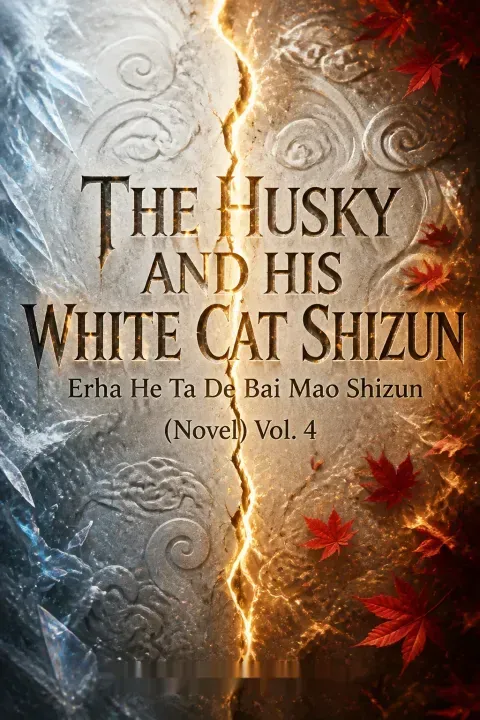


Plot Summary
Sealed for Five Years
At dawn, disciples in white mourning robes line the path to the Red Lotus Pavilion as elders bear Chu Wanning2's black-ice coffin. Master Huaizui of Wubei Temple, carrying a lantern brilliant even in daylight, selects the spot beside the lotus pond for the revival ritual.
One by one, they say their goodbyes. Xue Meng3 weeps through his promise to win the Spiritual Mountain Competition. Shi Mei4 stands silent, eyes wet. Then Mo Ran1 steps forward and places a pale pink haitang blossom into the coffin, his hand brushing Chu Wanning2's face.
He manages only three words: I'll wait for you. The barrier descends like a gate separating life from death. Thousands of disciples drop to their knees as Xue Zhengyong5's voice booms across the peak, wishing the Yuheng Elder2 well in his seclusion.
The funeral-as-revival ceremony inverts mourning into vigil. Each farewell reveals character: Xue Meng's competitive tears, Shi Mei's eloquent silence, and Mo Ran's devastatingly simple promise. The haitang blossom (symbol of unrequited love throughout the novel) placed by Mo Ran's now-adult hand signals the emotional terrain ahead: he still cannot name what burns inside him, but the flower speaks what his words cannot. Huaizui's presence as the architect of resurrection introduces the volume's central tension between debt and resentment that will surface when Chu Wanning awakens.
Becoming Mo-zongshi
Mo Ran1 descends the mountain alone, counting the 3,797 steps Chu Wanning2 once climbed while carrying him, hands chafed raw and bloody. Over the next five years, he wanders the realm: dispatching a water spirit at Blossom Crossing, obtaining a spiritual stone for Xue Meng3's Longcheng blade, cultivating in Snow Valley to harvest frost lotuses.
His letters to Xue Zhengyong5 grow from chicken-scratch apologies into neat, mature script. When Nangong Si7 mistakes him for Chu Wanning2 from behind in a crowded Linyi street, Mo Ran1 glances at his reflection and realizes his white robes, his ponytail, even his mannerisms have unconsciously molded themselves after the man he lost. He murmurs to himself that he has become the Chu Wanning2 he held in his heart.
The five-year montage demonstrates psychological incorporation: Mo Ran does not merely miss Chu Wanning, he metabolizes him. The counting of steps (3,797, precisely remembered) reveals a mind clinging to physical proofs of love he cannot yet articulate. His handwriting gradually resembling Chu Wanning's is a quiet masterpiece of showing-not-telling: the disciple literally rewrites himself in his master's image. Nangong Si's mistaken identity functions as external validation of an internal truth Mo Ran still refuses to name. He has loved Chu Wanning long enough to become him.
The Yuheng Elder Awakens
Master Huaizui departs before dawn on the day Chu Wanning2 opens his eyes. Xue Meng,3 hearing the news mid-training, drops Longcheng and sprints to the Red Lotus Pavilion, only to be blocked by his father.5 Sent to Wuchang Town to buy chronicle books, Xue Meng3's errand is derailed by a scandalous ranking booklet that places him second in ego behind Nangong Si,7 sending him into a rage.
That evening, he finally enters the pavilion carrying stacks of books, only to be attacked from the shadows by a freshly-bathed Chu Wanning2 who does not recognize the broad-shouldered twenty-one-year-old kneeling before him. When recognition dawns, Chu Wanning2's shock at Xue Meng3's height marks the first true measure of what five years has cost him.
Chu Wanning's disorientation on waking functions as emotional time-travel: he returns to a world where children have become adults, where the boy who once wept easily now carries a blade that won a continent's tournament. The humor of the ranking booklet (Xue Meng indignantly demanding why he's listed as 'second in ego') leavens the reunion's weight while revealing Xue Meng's unchanged core vanity. But the fight in the dark is the chapter's true thesis: love requires recognition, and five-year absences make strangers even of those we raised.
Fireworks Spell His Name
The welcome banquet fills Mengpo Hall with laughter and pear blossom white wine, but Chu Wanning2's eyes keep drifting to the empty seat where Mo Ran1 should be. He swallows his disappointment with stewed crab meatballs and refuses to ask Xue Zhengyong5 if Mo Ran1 wrote what time he would arrive.
Then, as the banquet nears its end, brilliant fireworks begin exploding overhead. One by one, golden-red characters form across the darkness: Disciple Mo Ran1 welcomes Shizun2 back from seclusion.
The message, projected by Xuanji Elder's signal fireworks from wherever Mo Ran1 rides through the night, is visible for hundreds of miles. Chu Wanning2 stands in the courtyard, staring upward, feeling surrounded by that one person's joys and sorrows, longings and regrets.
The fireworks sequence solves a narrative problem elegantly: Mo Ran cannot physically reach Chu Wanning in time, so he makes his presence felt across the sky itself. The public nature of the message (every disciple reads it aloud) transforms a private apology into a communal celebration. For Chu Wanning, whose entire romantic history consists of hidden sacrifices and unacknowledged longing, being publicly claimed as someone worth welcoming home with such spectacle is emotionally overwhelming. The fireworks signal the volume's central shift: Mo Ran is no longer taking Chu Wanning for granted.
Naked at Melodic Springs
Late that night, Chu Wanning2 seeks the communal baths to wash off the wine. Only one other pair of boots sits at the entrance. He wades through steam toward the waterfall and nearly collides with a tall, tanned man showering with his back turned. Flustered by the stranger's sculpted body, Chu Wanning2 tries to flee, slips, and is hauled from the water by a strong hand.
The man's voice asks if he is all right. When Chu Wanning2 snaps at him to stop following, his assailant persists, asking about soap bubbles in his hair. Enraged, Chu Wanning2 summons Tianwen and lashes out. The golden light illuminates Mo Ran1's face. He asks why Mo Ran1 did not dodge. Mo Ran1 replies that he wanted to see if it would hurt: if it hurts, then it is not a dream.
The bathhouse reunion is structured as romantic comedy that barely conceals erotic charge: mistaken identity, naked vulnerability, physical rescue, and a climactic recognition that draws blood. Mo Ran's refusal to dodge Tianwen (he needs pain as proof of reality) reveals the psychological toll of five years waiting for a resurrection he could not trust. When Chu Wanning flees in panic after realizing they are both naked, the power dynamic of their entire relationship is viscerally renegotiated: the disciple now towers over the master, and both are defenseless.
A Lifetime of Umbrellas
After dressing in each other's clothes by mistake (Chu Wanning2 swimming in Mo Ran1's oversized robes, Mo Ran1 barely covered by Chu Wanning2's undersized ones), they walk through the rain under a cold-warding barrier Mo Ran1 conjures, adorned with five-petaled haitang blossoms.
Chu Wanning2 tries to dismiss him, but Mo Ran1 drops to one knee and declares he wants to hold an umbrella over his shizun2 for as long as he lives. When Chu Wanning2 protests that he might walk too fast, or stop walking entirely, or even be unable to walk at all, Mo Ran1 answers each objection: he will chase, he will stand still, and if necessary, he will carry Chu Wanning2 on his back. Chu Wanning,2 flustered, finally snaps that he does not want his company. Mo Ran1 misunderstands and begs not to be expelled from the sect.
The umbrella promise is this volume's emotional anchor: Mo Ran articulates devotion in terms of relentless presence rather than heroic sacrifice. Each of Chu Wanning's hypothetical objections is really a test: will you stay when I am difficult, demanding, and immobile? Mo Ran passes by offering not grand gestures but stubborn accompaniment. The haitang blossoms on the barrier (five petals, specifically named) confirm what Mo Ran cannot yet say: he is copying Chu Wanning's motifs because he has absorbed the man into his aesthetic and emotional vocabulary.
Dinner for Three, Heart for One
Mo Ran1 invites Chu Wanning2 to a new restaurant in Wuchang Town. Shi Mei4 arrives with wine from Xue Zhengyong5 and is invited to stay. During the meal, Mo Ran1 rearranges the dishes so Chu Wanning2's favorites sit within easy reach, leaving Shi Mei4's preferences at a distance.
When Shi Mei4 drops his chopsticks near Mo Ran1's feet and his hand inadvertently brushes Mo Ran1's leg while retrieving them, Mo Ran1 chokes on his wine, disturbed rather than aroused. Shi Mei4 then confesses the old secret: the bowl of wontons Mo Ran1 cherished was not made by him but by Chu Wanning.2 Watching Mo Ran1's gentle gaze fixed on their shizun2 rather than himself, Shi Mei4 realizes something fundamental has changed in the years he was away.
This dinner scene accomplishes multiple structural tasks simultaneously: it resolves the wonton misunderstanding, demonstrates Mo Ran's shifted affections through action rather than internal monologue, and seeds Shi Mei's awareness of being displaced. The leg-brush moment is ambiguous by design (accident or test?), but Mo Ran's reaction of distress rather than excitement confirms to the reader what he himself cannot yet name: his feeling for Shi Mei has become aesthetic appreciation devoid of desire. The seating arrangement (Chu Wanning at the center of Mo Ran's attention) literalizes the new emotional geography.
Harvest of Longing
Xue Zhengyong5 assigns Chu Wanning2 and Mo Ran1 to help Yuliang Village with the autumn harvest. Chu Wanning,2 who has never done farm work, is shamed by the village children into wading into the paddies.
A croaking frog startles him, and he topples forward, grabbing Mo Ran1's belt for support and landing against his chest just as a village maiden warbles a coy love song about tugging at a loverboy's belt. Mo Ran1 teaches him to reap rice, adjusting his grip with careful hands, murmuring instructions to relax that only make Chu Wanning2 more tense.
At lunch, Chu Wanning2 cannot handle the spicy Sichuan food; Mo Ran1 swaps their bowls without a word. Later, Mo Ran1 rubs Chu Wanning2's aching feet and applies ointment to a small scratch, kneeling before him with a devotion that blurs the line between service and worship.
The farm work episode places the ethereal Yuheng Elder in the humbling context of manual labor, stripping away his spiritual authority to reveal physical incompetence that Mo Ran (who grew up poor) must remedy. The belt-grabbing moment, synchronized with the love song, is a novelistic wink at both characters' unconscious desires. Mo Ran's foot massage, performed on his knees, inverts their hierarchy while maintaining its form: the disciple serves the master, but the service is now charged with an erotic tenderness neither can acknowledge. The spicy-food bowl swap is love as instinct: Mo Ran anticipates Chu Wanning's needs before they are spoken.
The Back-Scrubbing
Overwhelmed by arousal while watching Mo Ran1 pound rice cakes, Chu Wanning2 retreats to their shared cabin and douses himself with cold water. Mo Ran1 and the village girl Ling-er11 both walk in on him naked. Mo Ran1 shields him with his body, arms braced against the wall on either side of Chu Wanning,2 close enough that his hot breath grazes Chu Wanning2's ear.
To cover his own state of arousal, Chu Wanning2 blurts out a command to scrub his back. Mo Ran1 complies, dragging a washcloth across Chu Wanning2's shoulders and spine while both men tremble with suppressed desire. After Mo Ran1 leaves, Chu Wanning2 presses his forehead to the cold wall and masturbates for the first time in his life, cursing himself as a bastard when it is over.
This sequence marks Chu Wanning's sexual awakening as a fall from grace in his own eyes. For a man who has practiced purity-based cultivation his entire adult life, masturbation is not pleasure but apostasy. The back-scrubbing is excruciating precisely because it is both intimate and deniable: a legitimate service between master and disciple that nonetheless functions as foreplay. Chu Wanning's post-climax self-loathing reveals the tragedy of his position: desire, for him, is indistinguishable from self-betrayal. The cold water he uses to suppress himself becomes the baptism of a new, unwanted self-awareness.
What Is Your Type?
At the harvest-end bonfire, Ling-er11 corners Mo Ran1 and confesses her feelings. When he rejects her, she demands to know his type. The question stuns him into silence. Walking alone afterward, Mo Ran1 realizes no one has ever asked him what he likes.
As a starving child on the streets, as a lowborn youth at Sisheng Peak, as Emperor Taxian-jun, he had only ever accepted what was given or taken what he could. But now he examines his own heart: did he truly prefer gentleness over stubbornness?
Sweet temper over fierce pride? Peach-blossom eyes over sharp phoenix eyes? Did he really love Shi Mingjing,4 or had he mistaken gratitude and aesthetic appreciation for romantic love? The name he has buried beneath years of delusion finally surfaces: Chu Wanning.2
Ling-er functions as an accidental therapist whose simple question dismantles Mo Ran's entire self-narrative. The insight that poverty and trauma stripped him of the capacity to form 'preferences' is psychologically sophisticated: Mo Ran has never distinguished between survival gratitude and genuine desire. His epiphany reframes the entire series: his obsession with Shi Mei was a category error, mistaking the comfort of the first kindness he received for romantic love. Real love, he now understands, is the thing that makes his blood run hot and his conscience ache: it is inextricably tangled with lust, remorse, and the desperate need to be worthy.
Three People I Like Most
The villagers play a drinking game: whoever holds the woven grass wreath when the drum stops must answer a question truthfully. Chu Wanning,2 trying to avoid being questioned, volunteers to beat the drum blindfolded. When the drumming stops, the wreath has landed on Mo Ran.1
The question he draws: name the three people you like most. He names his mother first. Then Shi Mei,4 as a shige who treats him better than a brother by birth. Chu Wanning,2 expecting this, pours himself tea and braces for the familiar ache.
But Mo Ran1's third answer is his shizun.2 Then he drops to one knee, brings himself level with where Chu Wanning2 sits, and says softly but clearly: I like you. The crowd applauds the filial devotion. Only Ling-er11 senses something deeper in Mo Ran1's eyes.
The bonfire confession is a masterpiece of dramatic irony: Mo Ran speaks his truth aloud while knowing it will be misread as disciple-to-master affection. The kneeling posture, the public setting, and the careful framing all allow him to say what he cannot say (I love you) by saying what he can (I like you). Chu Wanning's near-choking on his tea reveals his own hope and terror. The three answers form a timeline of emotional maturation: mother (inherited love, lost early), Shi Mei (misdirected love, now recontextualized), Chu Wanning (true love, finally recognized).
The Thin Wooden Wall
En route to Nangong Si7's wedding, the Sisheng Peak party stops at the same Dai City inn where they stayed six years ago. By coincidence, Mo Ran1 gets the room that was Chu Wanning2 's, and Chu Wanning2 gets Mo Ran1's old room. Their beds share a wall. That night, Mo Ran1 presses his forehead to the planks and masturbates while thinking of Chu Wanning,2 murmuring his name.
Chu Wanning,2 lying inches away on the other side, hears every stifled groan and heavy breath. The sounds ignite him. For the first time without self-loathing, he surrenders to desire, stroking himself in rhythm with Mo Ran1's movements, imagining the wall does not exist. When Mo Ran1 climaxes with a low roar, Chu Wanning2 follows moments later, gasping into his pillow.
This scene is the volume's erotic climax, structured as a duet performed in separate rooms. The wall functions as both barrier and conductor: it prevents touch but transmits sound, allowing intimacy without the complications of actual contact. Crucially, this is Chu Wanning's first experience of desire unaccompanied by shame. The shift from his previous self-flagellation after masturbation to this peaceful surrender indicates genuine psychological growth: he is learning that wanting Mo Ran does not make him a bastard. They are still apart, but for the first time, they are apart together.
Sparring Turns Intimate
The night before departing for Linyi, Chu Wanning2 challenges Mo Ran1 to a sparring match at the Red Lotus Pavilion. They trade over a hundred blows with willow vine and sword, evenly matched, until Chu Wanning2's blade shatters. They switch to hand-to-hand combat.
Mo Ran1's larger build gives him the advantage; he eventually pins Chu Wanning2 from behind, arms locked around him, lips accidentally brushing his earlobe as he pants from exertion. Chu Wanning,2 enraged and trembling, demands to be released.
When Mo Ran1 lets go, Chu Wanning2 spins and kicks him hard enough to crack ribs. But in trying to help him up afterward, Chu Wanning2's exhausted legs give out and he collapses on top of Mo Ran,1 immediately feeling the evidence of his disciple1's arousal pressing against him.
The sparring scene channels sexual tension through physical combat, a classic romance convention executed with particular intensity because both participants are elite fighters. The moment of Mo Ran's accidental ear-brush and Chu Wanning's full-body tremble reveals that neither can maintain professional detachment when their bodies are this close. Chu Wanning's retaliatory kick (potentially breaking ribs) is disproportionate violence that reveals disproportionate feeling: he is not angry at Mo Ran's impertinence but at his own response to it. The arousal he feels against his thigh when he falls is the truth neither can speak.
Rufeng Sect's Gilded Smile
The Sisheng Peak delegation arrives at the foremost sect in the cultivation world, where qi-refinement paving stones line fifteen-foot-wide roads and camellia cultivars worth tens of thousands of gold bloom in every reception room.
Nangong Liu9 greets them with effusive, florid praise that leaves Xue Zhengyong5 beaming and even Xue Meng3 momentarily charmed. But Chu Wanning2 stands rigidly at the window, refusing pleasantries: he has a history with this sect, displayed publicly years ago when he stripped off Rufeng Sect's jade headpiece in the grand hall and renounced them.
Mo Ran,1 lounging in his chair and refusing to stand, offers Nangong Liu9 backhanded compliments about his silver tongue. The atmosphere curdles despite the ambergris incense.
Rufeng Sect represents everything Sisheng Peak is not: wealthy, hierarchical, performatively polite, and morally bankrupt beneath the surface. Nangong Liu's obsequiousness is a survival mechanism that Chu Wanning finds contemptible and Mo Ran recognizes from his past life as the lubricant of corruption. Mo Ran's calculated rudeness (staying seated, interrupting compliments) is performative solidarity with Chu Wanning: if the world will call his shizun cold and intractable, Mo Ran will be ruder still, drawing fire onto himself. The opulence (taishi chairs, pearl curtains, priceless camellias) serves as ironic backdrop to the human misery about to unfold.
Ye Wangxi's Hollow Eyes
Mo Ran1 seeks out Ye Wangxi6 in the courtyard called Farewell to Three Lifetimes, where he lives with his yifu and shizun, Xu Shuanglin.10 He finds Xu Shuanglin10 barefoot in the cold, feeding sunflower seeds to a parrot and teasing it for being smarter than Ye Wangxi6 was as a child.
When Ye Wangxi6 appears, Mo Ran1 sees a face worn thin by sorrow. They stroll to a bamboo grove where Ye Wangxi,6 asked about his plans, answers with devastating calm: he will stay at Rufeng Sect, serve the sect leader, serve his yifu, and later, serve the young master and the young mistress.
The word mistress breaks something in Mo Ran.1 He remembers his past life: Xu Shuanglin10 dying to shield Ye Wangxi6 from a killing blow, Ye Wangxi6's scream tearing the heavens. Mo Ran1 makes a silent vow that Nangong Si7 will not marry Song Qiutong.8
Ye Wangxi's arc mirrors Chu Wanning's: both are people of fierce integrity who love someone who cannot or will not return their feelings, both bury their pain beneath steely composure, and both are surrounded by people who fail to see their suffering. The phrase 'young mistress' spoken by Ye Wangxi himself is an act of self-immolation: he is already writing himself out of Nangong Si's story. Xu Shuanglin's eccentricity (barefoot, arguing with parrots) serves as dark dramatic irony for readers who know volume 4 is the prelude to his future death. Mo Ran's vow to interfere with the wedding transforms him from passive regret into active intervention: he will not let this lifetime repeat the last one's tragedies.
Analysis
Volume 4 of 'The Husky and His White Cat Shizun' is fundamentally a study in delayed recognition and the long, slow labor of self-forgiveness. The novel's central dramatic question shifts from 'Can Mo Ran1 escape his past?' to 'Can Mo Ran1 and Chu Wanning2 recognize what they mean to each other?' The answer to both is a qualified, painful yes.
The volume's architecture is built around five years of absence and the months of reunion that follow. This temporal gap does crucial psychological work: it allows Mo Ran1 to transform from the impulsive, guilt-ridden teenager of earlier volumes into someone capable of sustained devotion, and it allows Chu Wanning2 to return to a world where the disciple he once carried on his back now towers over him. Their physical reconfiguration (Mo Ran1 taller, broader, stronger) literalizes their emotional reconfiguration: the one who once took now seeks to give, and the one who once protected must learn to be cared for.
What makes this volume extraordinary within the danmei genre is its treatment of sexual desire as both sacred and profane. Chu Wanning2's awakening is not presented as liberating but as terrifying: for a man whose entire identity is built on ascetic self-mastery, wanting Mo Ran1 is indistinguishable from self-destruction. The back-scrubbing scene, the masturbation against the inn wall, the erotic dream that bleeds into sparring: these are not titillating set pieces but carefully observed studies in the violence of suppressed desire meeting its object. Chu Wanning2 does not enjoy his awakening; he endures it.
Mo Ran1's parallel journey is intellectual where Chu Wanning2's is physical. His epiphany (that he has loved the wrong person for two lifetimes) arrives not through dramatic revelation but through a simple question from a village girl he barely knows. Ling-er11 asks 'What is your type?' and Mo Ran,1 who has never been permitted to have preferences, suddenly realizes he has always had one: stubbornness over gentleness, phoenix eyes over peach-blossom eyes, Chu Wanning2 over anyone else. The tragedy is that he discovers this truth only after he believes himself forever barred from acting on it.
The wedding plotline that closes the volume extends these themes outward. Ye Wangxi,6 serving as a dark mirror to Chu Wanning,2 demonstrates what happens when devotion is offered to someone who cannot value it. His hollow-eyed acceptance of Nangong Si7's marriage, his calm plan to serve the young mistress alongside the young master, is a vision of the future Chu Wanning2 once expected for himself: to be the silent pillar, the unacknowledged sacrifice, the one who loves from a distance until death. Mo Ran1's resolution to interfere with the wedding is more than a plot beat; it is the first time he consciously chooses to rewrite a tragedy instead of merely accepting his own redemption. He will not let this timeline repeat the sorrows of the last. The volume ends on this vow, poised between hope and the gathering weight of Rufeng Sect's corruption.
Review Summary
The Husky and His White Cat Shizun receives overwhelmingly positive reviews, praised for its intense romantic tension, character development, and emotional depth. Readers appreciate the mutual pining between protagonists Mo Ran and Chu Wanning, as well as the fluff and comedy in this volume. Many find the writing beautiful and poetic, though some note repetitive descriptions. Fans eagerly anticipate future volumes, expressing both excitement and trepidation for potential angst. Overall, reviewers consider it a masterful, unforgettable story that evokes strong emotions.
People Also Read

Characters
Mo Ran
Reborn disciple turned zongshiNow twenty-two, Mo Ran has spent five years wandering the cultivation world after Chu Wanning2's death, unconsciously transforming himself into a reflection of the man he lost. Known across the realm as Mo-zongshi for his barrier techniques and demon-slaying prowess, he carries immense guilt from his past life as Emperor Taxian-jun while desperately trying to become someone worthy of standing beside his shizun2. He is physically imposing (tall, broad-shouldered, tanned from years of outdoor labor), emotionally volatile beneath a genial surface, and ferociously protective of Chu Wanning2. His belated realization that he loves Chu Wanning2 romantically, not Shi Mei4 as he had always assumed, shatters his self-understanding and reorients his entire emotional world.
Chu Wanning
Resurrected elder, hidden desireThe Yuheng Elder awakens after five years of deathlike seclusion to a world that has moved on without him. A master of barriers and mechanical engineering with a fearsome reputation for severity, he privately grapples with his long-suppressed love for Mo Ran1, a love he believes can never be returned. His carefully maintained ascetic discipline crumbles as proximity to the grown, physically overwhelming Mo Ran1 awakens desires he has spent a lifetime denying. Prideful, thin-skinned, and catastrophically incompetent at daily self-care, he is nonetheless capable of extraordinary sacrifice and tenderness when no one is watching.
Xue Meng
The darling of the heavensChu Wanning2's first disciple, now twenty-one, winner of the Spiritual Mountain Competition. Proud, competitive, and emotionally transparent, he has matured considerably over five years but retains his fiery temper and fierce devotion to his shizun2. His relationship with Mo Ran1 has evolved from hostility to grudging respect, though he remains easily baited by his cousin's teasing. He crafted clay figurines of his shizun2 and fellow disciples, complete with voice charms, as a gift representing the family Chu Wanning2 left behind.
Shi Mei
Gentle healer, displaced belovedChu Wanning2's second disciple, now strikingly tall and beautiful at twenty-four. Gentle and soft-spoken, he has spent the five years studying medicine at Guyueye and tending to the sick. He was the object of Mo Ran1's obsessive devotion in both lifetimes, but Mo Ran1's recent emotional shift has left him uncertain of his place. He confesses at dinner that the bowl of wontons Mo Ran1 treasured was actually made by Chu Wanning2, not himself, finally clearing a long-standing misunderstanding. His beauty and gentleness mask a growing unease at being displaced in Mo Ran1's affections.
Xue Zhengyong
Booming sect leader, devoted uncleThe jovial, forthright leader of Sisheng Peak who built the sect from nothing with his late brother. He treats Mo Ran1 as his own son and has spent five years worrying about Chu Wanning2 finding a cultivation partner so he will not be alone. Unfailingly generous to the lower cultivation realm's common people, he is the moral anchor of the sect and the warm counterpoint to Chu Wanning2's coldness. His reaction to Rufeng Sect's luxury (imagining qi-refinement squares in every poor village) reveals where his true values lie.
Ye Wangxi
Stoic warrior, unrequited loverA disciple of Rufeng Sect, adopted by Elder Xu Shuanglin10, and in Mo Ran1's past life the second-strongest cultivator in the world after Chu Wanning2. Honorable, upright, and deeply repressed, he loves Nangong Si7 with a devotion that has brought him only suffering. At the restaurant years ago, he begged Nangong Si7 to return home, offering to leave forever in exchange. Now, on the eve of Nangong Si7's wedding to Song Qiutong8, his face is hollow with grief and he calmly speaks of serving the young mistress who will take his place. His quiet endurance mirrors Chu Wanning2's own hidden suffering.
Nangong Si
Wild young master of RufengThe only son of Rufeng Sect's leader, a brash, headstrong young man who rides a faewolf and is about to marry Song Qiutong8. In Mo Ran1's past life, he died young of illness; in this timeline, he has survived but rejected Ye Wangxi6 in favor of a woman who will bring catastrophe. He wears a threadbare, patched quiver embroidered with camellias, clearly a sentimental object whose significance remains mysterious. Proud and willful, he represents the tragedy of misplaced affection.
Song Qiutong
Beautiful opportunist, past-life empressA Butterfly-Boned Beauty Feast disciple at Rufeng Sect who, in Mo Ran1's past life, became his wife and empress after betraying everyone who had helped her. Now she is engaged to marry Nangong Si7. Mo Ran1 treats her with barely concealed revulsion, remembering her casual cruelty. She writes to Mo Ran1 requesting to purchase a lunar crystal as part of her dowry, claiming it is to protect her husband's spiritual core. Her beauty is undeniable, but Mo Ran1 knows the rot beneath the surface.
Nangong Liu
Obsequious sect leaderLeader of Rufeng Sect, the foremost sect in the cultivation world. Outwardly effusive and flattering to all, he is a master of political survival whose excessive praise masks a moral vacancy. Chu Wanning2 publicly broke with him years ago over matters involving Jincheng Lake, holy weapons, and the late madam of Rufeng Sect. He fled during Mo Ran1's past-life destruction of the sect, leaving his people to die.
Xu Shuanglin
Eccentric elder, devoted fatherElder of Rufeng Sect and Ye Wangxi6's adoptive father and shizun. He appears to be in his early thirties due to his cultivation method, with a whimsical, mischievous personality at odds with the solemn plaque on his courtyard (Farewell to Three Lifetimes). He walks barefoot in the cold, feeds sunflower seeds to his parrot, and teases Ye Wangxi6 with affection. In Mo Ran1's past life, he died heroically defending Ye Wangxi6 during the slaughter of Rufeng Sect.
Ling-er
Ambitious village girlA pretty, bold young woman from Yuliang Village who dreams of escaping poverty by marrying well. She pursues Mo Ran1 during the harvest season, confessing her feelings at the farewell bonfire. When rejected, she asks the question that catalyzes Mo Ran1's emotional awakening: what is his type? Humiliated but resilient, she plans to seek her fortune in Linyi, despite Chu Wanning2's warning that Rufeng Sect is more complicated than it appears.
Mei Hanxue
Notorious philanderer of Taxue PalaceHead disciple of Kunlun Taxue Palace, a strikingly handsome man with exotic features (pale gold hair, jade green eyes) and a reputation for sleeping with anyone regardless of gender. He encountered the Sisheng Peak party at an inn in Dai City, greeting Xue Zhengyong5 with impeccable politeness while Xue Meng3 fumed at the memory of being groped by him at Peach Blossom Springs. His cold exterior belies his scandalous behavior, and Xue Meng3 finds his hypocrisy infuriating.
Plot Devices
The Letter Book
Five-year emotional time capsuleMo Ran1 commissioned a book of exactly 1,825 pages, one for each day of Chu Wanning2's seclusion. On every page, he wrote a letter to his shizun2, chronicling his travels, his cultivation insights, his small joys, and his daily longing. The pages overflowed (some days he could not stop writing), so additional letters were stuffed into the back. Chu Wanning2 reads through the entire book after awakening, watching Mo Ran1's handwriting transform from childish scrawl to elegant script, a visible record of his maturation. The book functions as both apology and love letter, a private counterpart to the public fireworks message, and the physical proof that Mo Ran1 thought of Chu Wanning2 every single day.
Dragonblood Crystal Pendants
Secret couple tokenA pair of inexpensive crystal pendants with warming properties, purchased by Mo Ran1 at a Linyi shop. The crystals change color with the wearer's body heat, growing more vibrantly red as the temperature rises. The shopkeeper assumes one is for a dual cultivation partner, guessing correctly that the pendants are meant to 'spice things up.' Mo Ran1 gives one to Chu Wanning2 as a practical gift for warding off winter cold, keeping the other hidden against his own chest. When worn beneath clothing, the pendants become a secret link between them, glowing with the heat of their bodies. Mo Ran1's decision to buy a matched pair and wear one himself transforms a practical item into an intimate secret.
Holy Night Guardian
Proof of imitation and growthChu Wanning2's mechanical automaton design for protecting villages from minor evil spirits. During his travels, Mo Ran1 repeatedly failed before successfully constructing a crude but functional version for a remote border village. The villagers, delighted, began calling him Mo-zongshi, a title that embarrassed him because it belonged to his shizun2. The Holy Night Guardian represents Mo Ran1's journey from destruction to creation: where Taxian-jun built nothing, Mo-zongshi learns to build, even if his creations are clumsy imitations of Chu Wanning2's originals.
The Lunar Crystal
Catalyst for wedding revelationA rare, powerful spiritual stone formed from a thousand years of condensed moonlight, obtained by Mo Ran1 when he killed a carp spirit plaguing Yunmeng Marsh. Mo Ran1 sent it to Xue Meng3 years ago to be used in refining the Longcheng blade. When Song Qiutong8 writes to Mo Ran1 before her wedding, offering any price for the lunar crystal to include in her dowry (ostensibly to protect Nangong Si7 from qi deviation), Mo Ran1 reveals he no longer possesses it. This exchange alerts him to the wedding itself and forces him to confront the wrongness of this timeline: a man who should be dead is marrying the woman who was Mo Ran1's empress.
Signal Fireworks
Long-distance public declarationXuanji Elder's ingenious invention: fireworks that project messages written with spiritual energy across the sky in characters large enough to be seen from Sisheng Peak regardless of the sender's location. They are prohibitively expensive and difficult to manufacture. Mo Ran1 uses them on the night of Chu Wanning2's welcome banquet, unable to physically arrive in time, and projects 'Disciple Mo Ran welcomes Shizun back from seclusion' across hundreds of miles. The fireworks transform his private regret into a public spectacle that moves everyone who sees it, including Chu Wanning2, who feels surrounded by Mo Ran1's devotion.
FAQ
Synopsis & Basic Details
What is The Husky and His White Cat Shizun: Erha He Ta De Bai Mao Shizun (Novel) Vol. 4 about?
- Five years of waiting: The volume opens with Chu Wanning entering a five-year magical seclusion to heal after the events at Butterfly Town, leaving his disciples Mo Ran, Xue Meng, and Shi Mei to navigate a world without his direct guidance.
- Growth and transformation: Mo Ran travels the cultivation world, seeking redemption for his past life's tyranny, while Xue Meng and Shi Mei train at Sisheng Peak; all three mature significantly in Chu Wanning's absence.
- A world changed: The narrative follows the disciples' individual journeys, the Spiritual Mountain Competition, a new Heavenly Rift crisis, and culminates in Chu Wanning's awakening and his complex reunion with his now-grown disciples, particularly Mo Ran, against the backdrop of brewing political tensions and the lingering threat of a mysterious antagonist.
Why should I read The Husky and His White Cat Shizun: Erha He Ta De Bai Mao Shizun (Novel) Vol. 4?
- Deep character evolution: Witness the profound psychological and emotional growth of Mo Ran as he grapples with past sins and discovers his true feelings, and Chu Wanning's struggle with vulnerability and burgeoning desire after years of asceticism.
- Rich emotional landscape: The volume masterfully explores themes of guilt, redemption, longing, and the complexities of love, moving beyond plot to delve into the characters' inner lives and unspoken emotions.
- Subtle world-building and mystery: Gain deeper insights into the cultivation world's social dynamics, political undercurrents (Rufeng Sect, Bitan Manor), and the ongoing mystery of the fake Gouchen, adding layers to the overarching narrative.
What is the background of The Husky and His White Cat Shizun: Erha He Ta De Bai Mao Shizun (Novel) Vol. 4?
- Cultivation world hierarchy: The story is set in a world divided into upper and lower cultivation realms, with Sisheng Peak being the sole great sect in the lower realm, contrasting sharply with the opulence and complex politics of upper realm sects like Rufeng Sect.
- Post-disaster recovery: The events unfold after a major catastrophe (the Heavenly Rift at Butterfly Town), highlighting the fragility of the barrier between the mortal and ghost realms and the varying responses of the sects to protect the common people.
- Cultural and philosophical context: The narrative incorporates elements of Chinese mythology (underworld, reincarnation, mythical beasts), philosophy (Daoist concepts, Confucian ideals, yin/yang), and cultural practices (courtesy names, specific flowers like haitang symbolizing unrequited love, traditional etiquette), enriching the setting and character motivations.
What are the most memorable quotes in The Husky and His White Cat Shizun: Erha He Ta De Bai Mao Shizun (Novel) Vol. 4?
- "I'll wait for you.": Mo Ran's simple yet profound promise to Chu Wanning before his seclusion, encapsulating his newfound devotion and the five years of longing that follow.
- "Shizun, I've Crossed Five Years to Come See You": The message Mo Ran projects across the sky with fireworks upon Chu Wanning's awakening, a grand, public declaration of his enduring connection and anticipation.
- "Shizun, I like you.": Mo Ran's hesitant confession at the village bonfire, a pivotal moment revealing the depth of his feelings, cloaked in ambiguity but clear in its emotional weight.
What writing style, narrative choices, and literary techniques does Rou Bao Bu Chi Rou use?
- Repetitive chapter titles: The consistent "Shizun..." chapter titles emphasize Chu Wanning's central importance and Mo Ran's focus on him, creating a thematic rhythm throughout the volume.
- Alternating perspectives and flashbacks: The narrative frequently shifts between third-person perspectives focusing on different characters and incorporates flashbacks to Mo Ran's past life, creating dramatic irony and highlighting character growth and internal conflict.
- Symbolism and motif: Recurring symbols like the haitang flower (unrequited love), water (desire, purification), walls (separation, barriers), and mirrors/shadows (identity, imitation) are woven throughout the text to deepen thematic resonance and emotional subtext.
Hidden Details & Subtle Connections
What are some minor details that add significant meaning?
- Nangong Si's worn quiver: Despite his arrogant "spirited stallion" persona and Rufeng Sect's wealth, Nangong Si carries a visibly patched, threadbare quiver, hinting at a sentimental attachment or hardship not immediately apparent, connecting to the theme of hidden depths beneath outward appearances.
- Mo Ran's improved handwriting: Mo Ran's letters to Xue Zhengyong show his penmanship gradually becoming "neat and mature," eventually resembling Chu Wanning's script, a subtle detail revealing Mo Ran's unconscious emulation and deep-seated influence from his shizun during his years of travel.
- The specific camellia names: The detailed description of rare camellias at Rufeng Sect, with names like "eight immortals crossing the sea" and "blushing maiden clad in white," adds a layer of cultural allusion (Jin Yong's novels) and contrasts the refined, almost excessively aesthetic world of Rufeng Sect with Sisheng Peak's more practical simplicity.
What are some subtle foreshadowing and callbacks?
- Mo Ran's dream of Shi Mei's death: Mo Ran's recurring nightmare of Shi Mei dying at Butterfly Town, mirroring the actual events of his past life, serves as a callback to his trauma and subtly foreshadows potential future dangers or the lingering influence of the past timeline on the present.
- Nangong Si mistaking Mo Ran for Chu Wanning: Nangong Si's initial confusion, thinking Mo Ran was Chu Wanning due to his "clothing and silhouette," subtly foreshadows Mo Ran's transformation and his unconscious adoption of Chu Wanning's mannerisms and appearance over the five years.
- The mention of Jiang Xi and Xu Shuanglin: The discussion about powerful cultivators who haven't been seen recently, specifically Jiang Xi and Xu Shuanglin, serves as subtle foreshadowing that these figures, particularly Xu Shuanglin (Ye Wangxi's yifu), may play a role in the unfolding mystery of the fake Gouchen or other future events.
What are some unexpected character connections?
- Mo Ran's past life marriage to Song Qiutong: For readers unaware of the full scope of Mo Ran's past as Taxian-jun, his intense revulsion towards Song Qiutong, who is presented as a beautiful and gentle woman in this volume, is an unexpected reaction rooted in their history as tyrannical emperor and empress.
- Ye Wangxi's relationship with Xu Shuanglin: The reveal that Xu Shuanglin is not only Ye Wangxi's shizun but also his "yifu" (foster father) establishes a deep, familial bond that explains Ye Wangxi's fierce loyalty and provides a poignant contrast to the strained relationship between Nangong Si and his own father, Nangong Liu.
- Chu Wanning's history with Nangong Liu: The intense animosity between Chu Wanning and Nangong Liu, rooted in a past conflict at Rufeng Sect involving "Jincheng Lake," "holy weapons," and "the madam," is an unexpected revelation that adds complexity to Chu Wanning's character and the political landscape of the cultivation world.
Who are the most significant supporting characters?
- Xue Zhengyong: As Sect Leader and Mo Ran's uncle, he provides a grounding force of warmth, practicality, and unwavering support, embodying the values of Sisheng Peak and acting as a crucial bridge between Chu Wanning and his disciples.
- Ye Wangxi: A figure of quiet integrity and deep loyalty, his tragic unrequited love for Nangong Si and his connection to Xu Shuanglin make him a poignant parallel to the main characters and potentially significant in the unfolding plot related to Rufeng Sect and the antagonist.
- Shi Mei: While less central in Mo Ran's emotional journey in this volume compared to the past, his continued presence as a kind and skilled healer, and the lingering memory of Mo Ran's past feelings for him, serve as a mirror for Mo Ran's evolving understanding of love and desire.
- Nangong Si: The arrogant but ultimately vulnerable young master of Rufeng Sect, his relationship dynamics with Ye Wangxi and his impending marriage to Song Qiutong are key plot points that highlight the altered timeline and introduce potential conflict.
Psychological, Emotional, & Relational Analysis
What are some unspoken motivations of the characters?
- Chu Wanning's avoidance of physical intimacy: His extreme discomfort and panic during physical contact, especially with Mo Ran, stem from a deep-seated asceticism and pride, compounded by his inexperience and the shame he feels over his own burgeoning desires and "vulgar" physical reactions.
- Mo Ran's need to perform acts of service: His insistence on doing small, practical things for Chu Wanning (cooking, fetching tea, offering foot rubs) is driven by a profound sense of guilt and a desperate, unspoken need to atone for the immense suffering he inflicted in his past life by showing tangible care and devotion in this one.
- Shi Mei's confession about the wontons: While presented as genuine remorse, his timing and the subtle way he highlights Chu Wanning's kindness could also be interpreted as an unconscious or subtle effort to reinforce his own image as the kind, honest disciple and perhaps gauge Mo Ran's current feelings.
- Nangong Liu's excessive flattery: His over-the-top obsequiousness towards Xue Zhengyong and even Mo Ran is likely a calculated political strategy, possibly masking insecurity or a manipulative agenda beneath a veneer of overwhelming friendliness.
What psychological complexities do the characters exhibit?
- Mo Ran's split identity and self-loathing: Mo Ran is tormented by the duality of his past self (Taxian-jun) and his present self, experiencing vivid nightmares and internal dialogues where his past self curses him, revealing a deep psychological wound and struggle for integration and self-forgiveness.
- Chu Wanning's struggle with desire and purity: His long-held identity as an ascetic, pure being clashes violently with his physical and emotional reactions to Mo Ran, leading to intense internal conflict, shame, and confusion as he grapples with the "beastly nature carved into the bones of every human."
- Xue Meng's fragile ego and need for validation: Despite his outward arrogance and competitive spirit, Xue Meng is deeply insecure, constantly seeking approval, particularly from Chu Wanning, and reacting with disproportionate anger or embarrassment when his pride is challenged or he feels inadequate.
- Ye Wangxi's emotional repression: His stoic demeanor and polite smiles mask profound sorrow and unrequited love, demonstrating a complex psychological defense mechanism where he sacrifices his own emotional well-being for duty and the happiness of others.
What are the major emotional turning points?
- Mo Ran's realization of his love for Chu Wanning: The moment at the bonfire when Mo Ran names Chu Wanning as one of the three people he likes most, immediately followed by the shocking realization that his feelings are romantic love and desire, fundamentally shifts his understanding of himself and his relationship with his shizun.
- Chu Wanning's experience of desire and climax: His physical reactions to Mo Ran's presence, culminating in masturbation while listening to Mo Ran next door, marks a significant emotional turning point where he confronts and begins to accept his own capacity for carnal desire, breaking years of asceticism and changing his perception of physical intimacy.
- Mo Ran's decision to prioritize Chu Wanning's well-being: His choice to eat with Chu Wanning daily, despite the awkwardness and his own internal struggles, and his determination to ensure Chu Wanning eats well, signifies a shift in his priorities and a tangible expression of his deep care and devotion.
- Ye Wangxi's quiet despair over Nangong Si's marriage: Ye Wangxi's admission of his unrequited feelings and his resigned acceptance of serving Nangong Si and Song Qiutong highlights the tragic emotional weight he carries and serves as a poignant emotional beat contrasting with the main couple's burgeoning hope.
How do relationship dynamics evolve?
- Mo Ran and Chu Wanning's bond deepens: Their relationship moves beyond the formal master-disciple dynamic towards one of mutual care, unspoken affection, and intense physical attraction, marked by awkward intimacy, shared vulnerability, and a growing emotional reliance on each other.
- Mo Ran's feelings for Shi Mei shift: Mo Ran's past infatuation with Shi Mei transforms into a comfortable, brotherly affection, as he realizes his romantic feelings were misplaced or have faded, allowing him to see Shi Mei more clearly as a friend rather than an object of desire.
- Mo Ran and Xue Meng's rivalry softens: Their relationship evolves from intense animosity and competition to a more relaxed dynamic characterized by teasing, banter, and underlying mutual respect and care, demonstrating their maturation and the healing of old wounds.
- Ye Wangxi and Nangong Si's relationship strains: The once-close bond between Ye Wangxi and Nangong Si is strained by Nangong Si's choices and Ye Wangxi's unrequited love, highlighting the pain of mismatched feelings and the complexities of loyalty and duty within Rufeng Sect.
Interpretation & Debate
Which parts of the story remain ambiguous or open-ended?
- The true identity and motives of the fake Gouchen: The antagonist's identity is still unknown, though hinted to be a reborn soul possibly connected to Rufeng Sect or other powerful figures; their ultimate goals and methods of manipulation remain unclear, leaving their threat open-ended.
- The full history between Chu Wanning and Master Huaizui: The nature of their falling out, the "old injury" Master Huaizui mentions, and the extent of Master Huaizui's "immense guilt" are only hinted at, leaving their complex past and the possibility of reconciliation or further conflict unresolved.
- The future of Mo Ran and Chu Wanning's romantic relationship: While mutual desire and affection are clearly established by the end of the volume, the path forward is uncertain due to societal norms, their own internal conflicts, past trauma, and the potential interference of external threats, leaving their romantic future open to interpretation.
What are some debatable, controversial scenes or moments in The Husky and His White Cat Shizun: Erha He Ta De Bai Mao Shizun (Novel) Vol. 4?
- Mo Ran's past life actions and their portrayal: The detailed recollections of Taxian-jun's tyranny and his cruel treatment of Chu Wanning are inherently controversial and can spark debate among readers regarding the extent of his villainy and the possibility/worthiness of his redemption.
- The hot springs encounter and subsequent masturbation scenes: These scenes, particularly Chu Wanning's physical reactions and internal turmoil, can be debated regarding their portrayal of desire, the impact of past trauma (implied non-consensual acts in past life dreams), and whether they align with or challenge traditional character archetypes.
- Mo Ran's bluntness and perceived rudeness: Mo Ran's interactions with characters like Ling-er and Nangong Liu, where he is unusually direct or dismissive, can be debated as either justified (protecting Chu Wanning, rejecting unwanted advances/flattery) or simply rude and lacking in social grace.
The Husky and His White Cat Shizun: Erha He Ta De Bai Mao Shizun (Novel) Vol. 4 Ending Explained: How It Ends & What It Means
- Arrival at Rufeng Sect: Volume 4 concludes with the Sisheng Peak group arriving at Rufeng Sect for Nangong Si's wedding to Song Qiutong, setting the stage for interactions with other major sects and characters from Mo Ran's past life.
- Mo Ran's self-discovery: Mo Ran has definitively realized his deep romantic love and desire for Chu Wanning, moving past his previous delusion regarding Shi Mei, marking a crucial turning point in his emotional arc and establishing the central romantic tension for future volumes.
- Chu Wanning's awakening desire: Chu Wanning is grappling with his own unexpected physical and emotional attraction to Mo Ran, challenging his long-held ascetic identity and opening the possibility of him reciprocating Mo Ran's feelings, though he remains outwardly reserved.
- Lingering threat and altered fate: The presence of Song Qiutong and Nangong Si, whose
The Husky and His White Cat Shizun: Erha He Ta De Bai Mao Shizun (Novel) Series
Download PDF
Download EPUB
.epub digital book format is ideal for reading ebooks on phones, tablets, and e-readers.








































