
Plot Summary
Shadows and Suspicions Ignite
In the chaos of White No-Face's lair, Xie Lian, Feng Xin, and Mu Qing are beset by suspicion and old grievances. Accusations fly as Feng Xin blames Mu Qing for an attack, but evidence is murky. The trio's deep familiarity with each other's fighting styles only heightens the tension, as does the knowledge that White No-Face can disguise himself as anyone. The air is thick with mistrust, and even Hua Cheng's sudden appearance is met with wary scrutiny. The group's unity is fragile, threatened by the possibility of impostors and the weight of their shared history. The armory they find themselves in is haunted by a murderous aura, echoing the unresolved conflicts between them. As weapons rattle and old wounds are reopened, the group teeters on the edge of violence, their bonds tested by the darkness around—and within—them.
Shackles, Secrets, and Betrayals
The discovery of a cursed shackle on Mu Qing's wrist forces him to confess to actions he'd rather keep hidden. He admits to striking Feng Xin, not out of malice but misguided protection, and reveals Jun Wu's attempt to coerce him into harming Xie Lian. Mu Qing's refusal led to his punishment, but his pride and shame keep him from full honesty. The group's trust is further eroded as accusations of betrayal and cowardice surface, dredging up ancient grievances—like Mu Qing's theft of Xie Lian's blessed land. The emotional landscape is fraught, with each character's insecurities and regrets laid bare. The tension is only broken by a sudden attack from the armory's possessed weapons, forcing the group to fight for survival even as their relationships threaten to unravel completely.
Lavafall Peril and Rescue
Fleeing the armory, the group is swept into a deadly underground river of lava, forced to ride on the backs of empty-shelled spirits. The peril intensifies as Mu Qing is left clinging to a saber above a chasm, his life hanging by a thread. Old resentments and pleas for trust resurface as he begs Xie Lian for help, echoing a moment from their shared past. Xie Lian's decision to save Mu Qing, despite the risk and the doubts sown by Jun Wu, is an act of faith and forgiveness. The rescue is harrowing, requiring ingenuity and courage, and ultimately reaffirms the bonds between the former friends. Yet, the ordeal leaves them physically and emotionally battered, with the specter of betrayal still looming.
Bridge of Old Wounds
Xie Lian and Mu Qing find themselves on the Heaven-Crossing Bridge, a relic of ancient tragedy. Injured and vulnerable, they are forced to confront the truth of their relationship. Mu Qing's long-held resentments and admiration for Xie Lian spill out in a raw confession, revealing the complexity of his feelings—envy, awe, and a desperate desire for friendship. The bridge itself becomes a metaphor for their journey: unstable, dangerous, and haunted by the vengeful spirits of the past. As they navigate its treacherous path, they are joined by Feng Xin, and together the trio must rely on each other to survive. The process of saving one another, both physically and emotionally, begins to heal old wounds and rekindle the camaraderie of their youth.
Confessions Amidst Fire
The trio's journey across the bridge is fraught with danger, but also with moments of levity and reconciliation. As they fight side by side against the vengeful spirits, their banter and teamwork recall happier times. Mu Qing's vulnerability and Feng Xin's blunt honesty allow for a clearing of the air, with Xie Lian mediating and encouraging them to move forward. The confessions and apologies exchanged are cathartic, allowing each to acknowledge their faults and the pain they've caused. The fire and chaos around them serve as both a literal and figurative crucible, burning away the remnants of bitterness and leaving behind the possibility of renewed friendship.
Battle of Ghost Kings
At the end of the bridge, Hua Cheng faces White No-Face—now revealed as Jun Wu—in a battle of terrifying power. The fight is not just physical but psychological, as Jun Wu taunts Xie Lian with memories of his darkest moments and the threat of exposing his past to Hua Cheng. The battle is a whirlwind of spiritual power, ancient weapons, and personal stakes. Xie Lian and Hua Cheng fight in perfect tandem, their trust in each other unshakable even as Jun Wu tries to drive a wedge between them. The confrontation is a test of their love, loyalty, and self-acceptance, with the fate of the heavens and their own hearts hanging in the balance.
Shattering the Cursed Past
Jun Wu's power seems insurmountable, bolstered by the domain of Mount Tonglu and the weight of his own suffering. Xie Lian and Hua Cheng are pushed to their limits, both physically and emotionally. In a moment of ultimate sacrifice, Hua Cheng pours his spiritual power into Xie Lian, shattering the cursed shackles that have bound him for eight hundred years. The act is both a gift and a risk, as it leaves Hua Cheng dangerously weakened. Empowered and unburdened, Xie Lian finally confronts Jun Wu as an equal, fighting not just for victory but for the right to define his own destiny. The battle ends with Jun Wu's defeat and a sense of release—for him, for Xie Lian, and for the world.
Reunion and Sacrifice
In the aftermath, the group regathers atop Mount Taicang, where the dust of centuries finally settles. Xie Lian and Hua Cheng share a moment of profound intimacy and revelation, as Hua Cheng's true identity as Wuming is laid bare. Their love, forged through lifetimes of suffering and devotion, is finally acknowledged in full. Yet, the cost is steep: Hua Cheng, having given too much, begins to fade from the world. Xie Lian's grief is raw and desperate, but Hua Cheng's promise to return is unwavering. The pain of separation is tempered by hope, as Xie Lian vows to wait—no matter how long it takes—for the one he loves.
Waiting Through Seasons
Time passes in solitude as Xie Lian waits for Hua Cheng's return, tending to the mundane tasks of life and the shrine rebuilt by the villagers. The seasons change, and with them, Xie Lian's understanding of love and endurance deepens. Each visitor, each small act of kindness, is a reminder of the connections he has forged and the faith that sustains him. When Hua Cheng finally returns, heralded by a sky full of lanterns, their reunion is both quiet and overwhelming—a testament to the power of belief, persistence, and the promise that love, once found, can always be found again.
Lanterns, Riddles, and Fate
The story continues with vignettes of daily life, festivals, and the playful rituals that bind Xie Lian and Hua Cheng together. Lantern riddles become a metaphor for their relationship—puzzles to be solved, answers hidden in plain sight, and the joy of discovery. The world around them is filled with laughter, teasing, and the warmth of shared moments. Even the gods and ghosts join in the festivities, their stories interwoven with those of the mortals they once were. Through it all, the theme of fate—sometimes cruel, sometimes kind—remains ever-present, guiding their steps toward happiness.
Amnesia and Rediscovery
In a whimsical yet poignant interlude, Xie Lian loses his memory and is forced to rediscover himself, his friends, and his love for Hua Cheng. The journey is both comic and touching, as misunderstandings and mistaken identities abound. Through trials, confessions, and the kindness of strangers, Xie Lian comes to understand the depth of his own heart and the devotion of the one who has always watched over him. The restoration of his memories is a rebirth, allowing him to embrace both his past and his future with renewed clarity and joy.
Stories, Statues, and Legends
The narrative turns reflective, exploring the stories told about Xie Lian and Hua Cheng by mortals and immortals alike. Statues come to life, legends are embellished, and the line between truth and fiction blurs. Through bedtime stories, folk customs, and the playful chaos of the Cave of Ten Thousand Gods, the enduring impact of their love and deeds is celebrated. The world remembers them not just as gods or ghosts, but as beings who suffered, loved, and triumphed together. Their legacy is one of hope, resilience, and the belief that even the most broken can be made whole.
Ghost King's Birthday
As Hua Cheng's birthday approaches, Xie Lian is determined to give him a gift worthy of their bond. The search for the perfect present is both humorous and heartfelt, involving the help (and mischief) of friends and ghosts alike. In the end, it is not rare treasures or grand gestures that matter, but the sincerity of the heart. Even when a curse threatens to ruin the day, the strength of their love prevails. The celebration becomes a testament to the joy found in simply being together, and the knowledge that, after all the trials and tribulations, they have finally found their way home.
Analysis
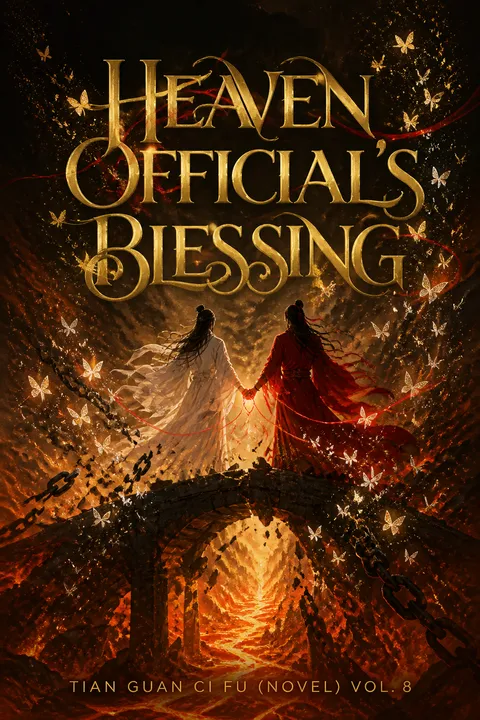
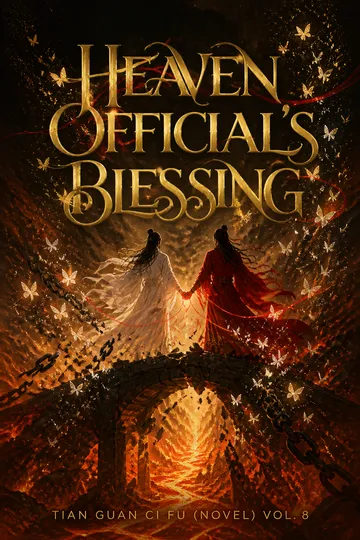
Heaven Official's Blessing Vol. 8 is a masterful meditation on endurance, forgiveness, and the transformative power of love. At its core, the novel is about the struggle to accept oneself—flaws, failures, and all—and to find meaning in suffering. Through the intertwined journeys of Xie Lian and Hua Cheng, the story explores the ways in which trauma can both isolate and connect us, and how true intimacy requires vulnerability and trust. The narrative's structure—layered with flashbacks, confessions, and mythic retellings—mirrors the process of healing: nonlinear, painful, and ultimately redemptive. The book's modern resonance lies in its refusal to offer easy answers; instead, it celebrates the messy, ongoing work of reconciliation—with others, with the past, and with oneself. The lessons are clear: love is not a panacea, but a choice made again and again; forgiveness is both a gift and a discipline; and even in the face of overwhelming darkness, hope can be found in the smallest acts of kindness and the courage to keep going. In a world obsessed with perfection and victory, Heaven Official's Blessing reminds us that true strength lies in persistence, compassion, and the willingness to begin anew.
Review Summary
Heaven Official's Blessing has captivated readers with its epic love story, complex characters, and masterful storytelling. Fans praise the emotional depth, character development, and satisfying conclusion. Many express deep attachment to the main couple, Xie Lian and Hua Cheng, calling their romance unparalleled. Readers appreciate the blend of humor, action, and heartfelt moments. While some found certain plot elements or character arcs less engaging, the overall reception is overwhelmingly positive. Many readers describe the series as life-changing and eagerly anticipate rereading it.
Characters
Xie Lian
Once the beloved Crown Prince of Xianle, Xie Lian's journey is one of repeated ascension and devastating falls. His life is marked by loss, shame, and the burden of others' expectations, yet he never loses his core of kindness and resilience. Xie Lian's relationships—with friends, enemies, and especially Hua Cheng—are shaped by his capacity for forgiveness and his refusal to give up on himself or others. Psychologically, he is both deeply wounded and astonishingly hopeful, able to find meaning in suffering and joy in the smallest acts. Over the course of the story, he learns to accept love, to let go of guilt, and to embrace the happiness he once thought he did not deserve.
Hua Cheng (San Lang)
The Crimson Rain Sought Flower, supreme ghost king, and Xie Lian's most faithful believer, Hua Cheng is a figure of both awe and tenderness. His love for Xie Lian spans centuries, manifesting in acts of sacrifice, protection, and playful affection. Beneath his confident exterior lies a soul shaped by loneliness, longing, and the pain of unrequited devotion. Hua Cheng's psychological complexity is rooted in his willingness to give everything for love, even at the cost of his own existence. His journey is one of transformation—from nameless ghost to king, from distant admirer to beloved partner—culminating in the fulfillment of his deepest wish: to stand by Xie Lian's side, not as a shadow, but as an equal.
Mu Qing
Mu Qing's role as the Martial God of the Southwest belies a lifetime of insecurity and envy. His relationship with Xie Lian is fraught with admiration, resentment, and a desperate need for validation. Psychologically, Mu Qing is torn between his desire to be seen as worthy and his fear of rejection. His actions are often defensive, masking vulnerability with sarcasm and pride. Over time, he confronts his own failings and seeks reconciliation, ultimately finding a measure of peace in honesty and friendship.
Feng Xin
As the Martial God of the Southeast and Xie Lian's former bodyguard, Feng Xin embodies steadfastness and integrity. His straightforward nature often puts him at odds with Mu Qing, but his devotion to Xie Lian is unwavering. Psychologically, Feng Xin is grounded by a strong sense of duty and a deep well of empathy, though he struggles with guilt over past failures. His journey is one of learning to forgive himself and to accept the complexities of those he loves.
Jun Wu / White No-Face
Once the Crown Prince of Wuyong, Jun Wu's transformation into the Heavenly Emperor and White No-Face is driven by betrayal, isolation, and a desperate need for understanding. His actions are both monstrous and pitiable, reflecting a psyche fractured by loss and the inability to let go of the past. Jun Wu's relationship with Xie Lian is marked by projection and obsession, as he seeks in Xie Lian the redemption and companionship he was denied. His ultimate defeat is both a release and a lament, a recognition that some wounds cannot be healed by force.
Ling Wen
As the top civil god, Ling Wen is the backbone of Heaven's bureaucracy, managing chaos with efficiency and wit. Her personal history is marked by sacrifice and unrequited love, particularly in her connection to Bai Jing. Psychologically, she is guarded and self-reliant, masking vulnerability with competence. Her arc is one of quiet endurance, finding meaning in service and the small joys of friendship.
Shi Qingxuan
The former Wind Master, Shi Qingxuan is a source of levity and warmth, even in the face of loss and hardship. Their ability to adapt, to find humor in adversity, and to care for others speaks to a deep inner strength. Psychologically, Shi Qingxuan is both lighthearted and principled, refusing to be defined by misfortune. Their journey is one of self-acceptance and the rediscovery of purpose beyond status or power.
Jian Lan / Lan Chang
Once a noblewoman, later a ghost and mother to the fetus spirit Cuocuo, Jian Lan's story is one of survival and the cost of love. Her relationship with Feng Xin is marked by regret and the recognition that some wounds cannot be healed by reunion. Psychologically, she is pragmatic and protective, choosing to forge her own path rather than become a burden. Her arc is a meditation on letting go and the bittersweet nature of memory.
Bai Jing / Brocade Immortal
The spirit within the Brocade Immortal, Bai Jing's story is one of betrayal and the destructive power of obsession. His relationship with Ling Wen is complex, rooted in love, manipulation, and the hope for redemption. Psychologically, he is a figure caught between rage and longing, seeking release from the cycle of pain. His arc is a cautionary tale about the dangers of unchecked desire and the possibility of forgiveness.
Lang Qianqiu
As the former king of Yong'an, Lang Qianqiu is driven by a strong sense of duty and a desire to atone for the past. His relationship with Xie Lian is complicated by history, guilt, and the burden of leadership. Psychologically, he is earnest and self-critical, striving to do what is right even when the path is unclear. His journey is one of reconciliation—with others and with himself.
Plot Devices
Duality and Mirroring
The narrative is structured around the dualities of god and ghost, love and hate, past and present. Characters are often paired or contrasted—Xie Lian and Hua Cheng, Xie Lian and Jun Wu, Mu Qing and Feng Xin—highlighting the ways in which their choices and traumas reflect and refract each other. The use of mirroring extends to plot events (rescues, betrayals, confessions) and to the physical spaces they inhabit (bridges, armories, shrines), reinforcing the theme that understanding oneself requires confronting one's reflection in others.
Foreshadowing and Symbolism
The story is rich with foreshadowing—dice rolls, cursed shackles, lantern riddles, and the ever-present red string of fate. Objects like Fangxin, Eming, and the longevity lock carry layers of meaning, serving as both plot devices and symbols of love, sacrifice, and the burdens of history. The narrative frequently references past events, using them to inform present choices and to create a sense of inevitability and destiny.
Nonlinear Storytelling and Vignettes
The main plot is punctuated by flashbacks, side stories, and "extras" that explore the characters' histories, relationships, and the legends that grow around them. This nonlinear approach allows for a gradual revelation of secrets and motivations, building empathy and complexity. The vignettes—ranging from comedic to tragic—serve to humanize the gods and ghosts, grounding their epic struggles in the everyday realities of love, loss, and longing.
Metafiction and Mythmaking
The narrative is self-aware, often commenting on the ways in which history is remembered, retold, and transformed into myth. Statues come to life, bedtime stories are retold with a twist, and the characters themselves become the subjects of folk tales and worship. This metafictional layer invites readers to question the nature of heroism, the reliability of memory, and the power of narrative to shape reality.
天官赐福 [Tiān Guān Cì Fú] Series
About the Author
Other books by Mò Xiāng Tóng Xiù


Download PDF
Download EPUB
.epub digital book format is ideal for reading ebooks on phones, tablets, and e-readers.








































