
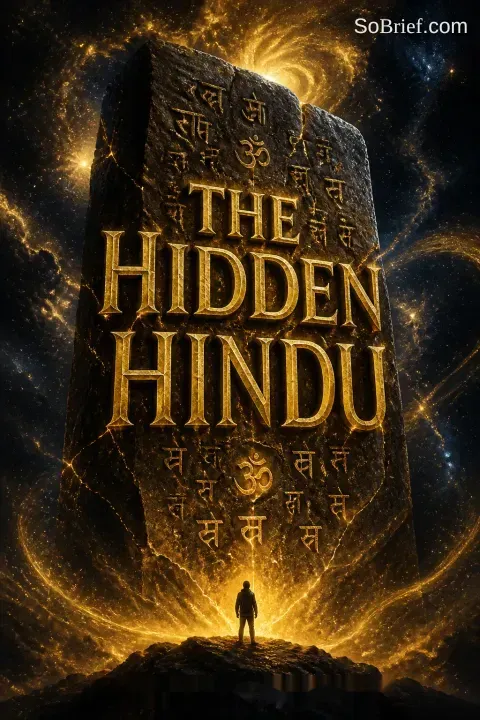


Plot Summary
Prologue
In 2041, Prithvi,14 a young man barely twenty, stands before a seventy-four-year-old Mrs Batra15 in a silent room. She is agitated, bewildered that someone born after 2020 could claim to have witnessed the events of that year on Ross Island. Prithvi14 insists he was present there in more than one way, though he was not yet born.
Mrs Batra15 confesses she wanted an ordinary death in 2020, but everything changed. She is the last person to have seen the mysterious man1 the team interrogated back then. Prithvi14 offers a pact: if she will reveal everything she knows about that man,1 he will tell her what truly happened on the island. She agrees, desperate to understand why her life was upended, and Prithvi14 begins his narration.
The frame narrative establishes immediate dramatic tension: a young man claims knowledge of events before his birth, setting up the central mystery of inherited memory or reincarnation. Mrs Batra functions as the reader's surrogate, her skepticism and emotional exhaustion mirroring the audience's likely response to mythological impossibilities. The pact, trading stories for stories, signals that truth is a guarded commodity in this world, bartered rather than freely given. The revelation at the epilogue's end, that Prithvi is Om's son, recontextualizes this prologue entirely, transforming an interrogation of history into a son's quest for his father.
The Ash-Smeared Captive Awakens
An unconscious man,1 face painted white, body smeared in ashes, is flown by helicopter to Ross Island in the Andaman and Nicobar archipelago. He wears only a loincloth, a rudraksha rosary, and a rusted trident in his matted hair. Veerbhadra,8 a retired army brigadier turned security chief, receives the captive1 with four armed guards and orders him unmasked and unshackled.
The facility is a high-tech glass dome with motion sensors and coastal monitoring systems. Dr Srinivasan,2 a sixty-five-year-old South Indian scientist of diminutive stature but commanding presence, arrives with Dr Batra,4 a tall Sikh physician with an intellectual bearing.
The captive1 is dragged into an interrogation room and strapped to a steel chair. Around 11 a.m., he stirs, overhearing Abhilash,11 a mythology expert, explain the Aghori traditions of cannibalism, cremation-ground worship, and their devotion to Shiva and Kali. Dr Batra4 injects him with a narcotic. At the sound of a sacred chant, the man1 opens his eyes.
The opening is a collision of ancient and modern: a glass dome of sensors houses an ash-smeared ascetic, symbolizing the book's central tension between mythology and science. The facility is a panopticon where everyone is watched, hinting at layers of surveillance beyond Dr Srinivasan's control. Om's passivity during capture, his silence while drugged and restrained, suggests either profound detachment or absolute confidence. The team of specialists, each an expert in their field, represents institutional knowledge brought to bear on a mystery that may transcend all of it.
Names Spoken Across Millennia
Dr Shahista,3 a renowned psychiatrist and hypnotism expert with copper-brown hair, arrives and takes charge of the interrogation. The captive,1 heavily sedated with a cocktail of midazolam and barbiturates, calmly introduces himself as Om Shastri.1 When he spots Dr Srinivasan,2 he exclaims a childhood nickname that no one present should know.
Drugged further and placed under hypnosis, Om1 recites names from impossibly distant eras: Banda Bahadur, a Sikh general executed by the Mughal emperor Farukh Siyar; Sanjay, the advisor to King Dhritarashtra during the Mahabharata war; and Vidur,1 the prime minister of Hastinapur.
He also claims he was Sushen,1 the vaidya who saved Lakshman during the Ramayana, and Vishnu Gupt,1 the strategist known to history as Chanakya.1 Then, defying all medical expectation, he wakes from the narcotic stupor within an hour. Dr Batra4 is horrified: the dose should have incapacitated him for eight hours and was strong enough to kill an ordinary man.
Om's premature awakening is the first scientific impossibility the team confronts, cracking their faith in empirical methods. The childhood nickname functions as a seed of doubt in Dr Srinivasan, a personal thread that later unravels his entire mission. Om's recitation of names enacts the multiplicity of his identity while demonstrating that his consciousness cannot be contained by modern pharmacology. The team's alternating fascination and denial mirrors the reader's own negotiation with the text's mythological claims.
A Forty-Year-Old Face in 1874
LSD,9 a young hacker with an offhanded manner, uncovers a web of identities. Under various names, Govindlal Yadav, Protim Das, Gursheel Singh Khullar, Bankim Chandra Chakraborthy, and others, Om Shastri1 possesses bank accounts, driving licenses, voter IDs, and passports across India. The photographs on all documents show the same face.
In several cases, he is listed as his own father and then his own son, cycling through generations with identical features. Dr Srinivasan,2 confronted by the team demanding answers, opens a vault in his desk and produces photographs of Om1 taken in 1874 in Banaras, 1882 in Haryana, 1888 in Madras, 1916 in Lucknow, 1930 at the Salt Satyagraha, 1944 in Subhash Chandra Bose's Forward Bloc, and at the funerals of Jawaharlal Nehru, Indira Gandhi, and Rajiv Gandhi.
In every image, Om1 appears approximately forty years old. Death certificates prove each identity died officially, yet Om1 keeps reappearing alive elsewhere with the same unaged face.
The photographic evidence transforms the interrogation from a hunt for a terrorist into something far stranger. LSD's data and Dr Srinivasan's archive function as competing versions of proof: one digital and discovered, the other physical, curated, and long-concealed. The revelation that Dr Srinivasan has been collecting this evidence for a hidden superior shifts the story's stakes: the team are not independent investigators but unwitting instruments of a larger agenda. The photographs place Om at key moments of Indian national history, suggesting his immortality is entwined with the subcontinent's destiny.
The Yugas and the Debate
With reincarnation and split-personality theories collapsing under photographic evidence, the team speculates wildly. LSD9 proposes time travel, which Abhilash11 dismisses. Instead, the mythology expert11 unfolds the Hindu concept of four yugas: Satya, Treta, Dwapara, and Kali, spanning millions of human years in a 4:3:2:1 ratio of divine years.
He calculates that if Om1 was Sushen1 in the Treta yuga and Vidur1 in the Dwapara yuga, his lifespan spans thousands of years. When Dr Shahista3 dismisses this as unscientific nonsense, Abhilash11 retaliates with calculations from the Hanuman Chalisa that pinpoint the distance from Earth to the sun at 153 million kilometres, a Vedic verse that computes the speed of light, and ancient descriptions of vimanas and solar eclipses.
Parimal10 adds that the Sushruta Samhita13 described surgical procedures predating modern science. Dr Batra4 concedes that archaeological evidence from Mehrgarh shows dental drilling 7,500 to 9,000 years ago.
This debate crystallizes the book's central thematic conflict: the tension between mythological knowledge systems and scientific empiricism. Abhilash's calculations weaponize sacred texts as proto-scientific documents, challenging the hierarchy that places modern Western science above indigenous knowledge. Dr Shahista's resistance is not mere stubbornness but an existential defense: accepting these implications would force her to reconstruct her entire understanding of reality. The chapter implicitly argues that mythology and science may be different languages describing the same phenomena.
Memories Projected on Screen
The team switches tactics. LSD9 and Dr Batra4 connect Om1 to a device that converts his brainwaves into visual projections on a screen, paired with a lie detector. When Dr Shahista3 asks about Sushen,1 the screen fills with images of an ancient tribal village, dense forests, and a man with Om1's face dressed in saffron, kneeling beside an unconscious body while another man weeps and monkey-faced beings look on.
The scene matches the Ramayana: Sushen1 attending to the wounded Lakshman as Lord Ram and Hanuman watch. Om1 confirms he was that vaidya, living in Suchindram in what is now Tamil Nadu's Kanyakumari district.
He explains he has not aged since the Treta yuga. He falls ill and gets injured, but just before death can claim him, he recovers. Dr Batra4 erupts, calling it elaborate fantasy. But the lie detector remains silent: Om1's pulse is calm, his body registers no deception.
The thought-visualization device is a narrative conceit that literalizes the problem of testimony. Seeing Om's memories projected makes them shareable but not necessarily more believable; Dr Batra's objection, that vivid imagination can produce equally clear images, is philosophically difficult to refute. The lie detector's silence introduces a paradox: a truth-telling machine cannot adjudicate between historical fact and sincerely held delusion. The scene with Lakshman depicts Om not as a warrior or king but as a healer, establishing his fundamental orientation toward preservation rather than destruction.
The Locker's Metal Book
Veerbhadra8 travels to the mainland at night to collect the contents of Om1's bank lockers. He returns with two chests. Inside are copper sheets, each engraved with one of Om1's identities as a header, written in Sanskrit, Hindi, and Prakrit.
An ancient stone kharal for grinding herbs emerges, along with heavy finger rings, rare coins from various historical empires, and a book wrapped in leaves and a blood-stained white cloth. The book has metal covers. Dr Batra4 examines its pages and freezes: there are diagrams of DNA structures and gene extraction methods, millennia ahead of their scientific discovery.
Dr Srinivasan2 also finds a map and a bottle of mercury. He secretly assigns LSD9 to decipher the map within six hours. Meanwhile, he takes the book to a hidden chamber where an old man,7 his true superior, resides. The old man7 is furious: every alternate page has been removed. The book is useless without its missing half.
The copper sheets and the blood-stained book are material anchors that transform mythological abstraction into physical evidence. The DNA diagrams force even Dr Batra, the staunchest skeptic, into silence: how could a text of such antiquity depict molecular biology? The missing pages introduce a structural mystery, a literal gap in knowledge that drives the plot toward Sri Lanka. The old man's fury reveals that the interrogation of Om was never about information but about acquisition: the Mrit Sanjeevani texts are the true prize.
Born from Death, Named Mrityunjay
Under the projector, Om1 tells his origin. He awoke in a Himalayan hut, his body covered in stitches and wounds. His face was a ruin: one eye socket melted, his right ear missing, his skin scarred like a demon's. Three sages tended him. The senior was Kasiraja,12 also called Dhanvantari,12 the god of Ayurvedic medicine, who had selected ten sages to preserve the knowledge of healing.
The other two were Sushruta,13 his first and finest disciple, and Devdrath. A fourth, Nagendra,7 also served them. Kasiraja12 named the resurrected man Mrityunjay:1 the one who conquered death. Om1 learned he had been dead when they found him, revived by a procedure called Mrit Sanjeevani.
He had been unconscious for 150 days. For nine more days, he could not eat solid food. Over months, Sushruta13 performed reconstructive surgeries on his face using banana leaves as templates, restoring his features. Om1 stayed with them for over a year, learning Ayurveda as he recovered.
Om's origin is a reversal of the typical hero's journey: he is born not from a mother but from death itself, his body a canvas for divine medical art. The name Mrityunjay is both gift and burden, marking him as an artifact of Dhanvantari's genius rather than a person with a past. His destroyed face, slowly reconstructed through Sushruta's surgeries, literalizes the theme of hidden identity: every face he wears is both authentic and prosthetic. The 150-day slumber echoes gestation, positioning his awakening as a second nativity into a life without end.
The Poisoned Feast
Sushruta13 spent each night in Kasiraja12's hut, secretly compiling the Mrit Sanjeevani procedure. Om,1 discovering the truth from the resentful Nagendra,7 confronted Sushruta13 and learned the full scope of his condition: he had fallen out of the circle of time, invisible to its passage, immune to aging and death.
On the day the sages were to disperse and return to their cities to serve mankind, Devdrath and Nagendra7 prepared a farewell feast. Nagendra7 brought kheer to Kasiraja,12 Sushruta,13 and Om.1 Kasiraja12 tasted it, detected poison, and warned Sushruta.13 Nagendra7 attacked with a knife, slashing Sushruta13 and overpowering the aged Dhanvantari.12
Sushruta,13 bleeding, wrapped the Mrit Sanjeevani texts in white cloth, stained it with his blood, and thrust it into Om1's hands. He commanded Om1 to run south, wait for him for a day, and if he did not appear, to protect the books with his life. Om1 fled. He waited for days, but Sushruta13 never arrived. When he returned, all the sages lay dead, their bones scattered across the ground.
Nagendra's betrayal is the primordial sin that sets the entire conflict in motion across millennia. His motivation, though hinted at through resentment, remains partially opaque, an ambiguity that sustains his menace. The blood-stained cloth becomes a sacred relic, the physical trace of Sushruta's sacrifice and the burden Om carries forward. The scene echoes the fall from Eden: a poison in the food, a brother turned murderer, knowledge that brings death rather than life when seized improperly. Om's flight initiates his millennia-long existence as a guardian and fugitive.
Ambush in Sri Lanka
Following LSD9's deciphered map, Veerbhadra8 leads a team to a cave in Sri Lanka. They find a metallic chest containing the missing half of the Mrit Sanjeevani book, along with ancient weapons: a massive bow, arrows, a golden crown, carved metallic arms, ornaments, and laboratory equipment.
As Veerbhadra8 reports the discovery to Dr Srinivasan,2 gunfire erupts. A masked man with inhuman combat skills slaughters nine of his men. Veerbhadra8 flees with the book, backed by covering fire from his remaining soldiers. The attacker pursues relentlessly. A second masked figure monitors the island facility from the woods. They communicate via encrypted channels.
When the first attacker reports that Veerbhadra8 escaped with the book, the order comes back: recover it at any cost, kill anyone necessary. Veerbhadra,8 wounded and smeared in blood, boards the chopper back to Ross Island with the book clutched to his chest, unaware that his attacker is following him across the sea.
The Sri Lanka sequence shifts the genre from philosophical thriller to action spectacle, introducing masked attackers whose supernatural combat skills mark them as something beyond human. The weapons found alongside the book, the bow and the arsenal, foreshadow the immortals' entrance. Veerbhadra's bravery is the ordinary human response to extraordinary circumstances: he fights and bleeds without understanding what he is protecting or who is trying to take it. His ignorance of the larger forces at play makes his courage simultaneously admirable and tragic.
The Old Man's Strength
Dr Srinivasan,2 horrified by the murders in Sri Lanka, storms into the old man7's hidden chamber. He demands to know the book's worth and who their enemies are, threatening to freeze the entire operation.
The old man,7 who had seemed frail and decrepit, suddenly straightens his spine and grabs Dr Srinivasan2 by the biceps, hurling him eight feet into a wall with one effortless motion. His eyes grow immense, unblinking, pupils contracting and expanding with unnatural speed. He speaks with terrifying calm: the team belongs to him, not to Dr Srinivasan.2
He has had many servants, and only those who never asked questions have died natural deaths. He gestures to the screen showing the interrogation room and the unsuspecting team members.
Dr Srinivasan2 can either let them go home with unanswered questions or trade their lives for the answers he wants. Dr Srinivasan,2 looking at the faces of his younger colleagues, breaks down and agrees. He leaves the chamber, wiping tears, and heads back toward the interrogation room, resolved to rectify his mistake.
The old man's physical dominance shatters the illusion that he is merely a shadowy financier. His strength and eyes, described with almost reptilian intensity, position him as something transhuman, potentially another immortal. The threat to the team's lives clarifies the moral stakes: Dr Srinivasan's complicity, once passive and mercenary, has become active and coerced. His tears signal his belated recognition that he has been a tool in a far older and darker project than he imagined, and that redemption will require more than obedience.
Knives in the Dark
As gunfire echoes through the facility's corridors, LSD9's computer beeps with a coded message. Her face, once carelessly cheerful, hardens into cold professionalism. Simultaneously, Parimal,10 who has always stammered and been ignored, moves with sudden fluid precision. He approaches the sleeping Abhilash11 and kills him silently.
In the washroom, LSD9 retrieves a hidden cache of weapons: twin automated pistols. When Dr Srinivasan2 returns to the interrogation room clutching the second book, LSD9 shoots him in the chest without hesitation. She snatches the book and trains her guns on Dr Batra4 and Dr Shahista,3 warning them not to move.
Dr Shahista,3 showing courage, continues untying Om.1 LSD9 shoots her. Om,1 seeing the gun aimed at his defender, throws himself into the bullet's path, taking a hit in his back. LSD9 then shoots Dr Shahista3 again. She drags the bleeding Om1 toward a hidden door in the wall as Parimal10 enters through the secret passage, armed and ready for war.
LSD and Parimal's transformation from quirky sidekicks to cold-blooded operatives is the most shocking betrayal of the novel. Their earlier performances, LSD's cheerful irreverence and Parimal's endearing stammer, were masks as complete as any of Om's identities. The hidden passage and weapon cache reveal that the facility was always designed for covert operations, its glass transparency a decoy. Abhilash's silent death, so quick it goes unnoticed by the others, is a brutal punctuation: knowledge of mythology cannot protect against a knife in the dark.
Immortals Collide
The main door to the interrogation room splinters under a tremendous kick. The man who enters is one of the faces from Om1's projected memories: Parashuram,5 the sixth avatar of Vishnu, wielding the farsaa axe and a bow. His eyes burn with divine fury.
From the hidden passage, Parimal10 emerges and opens fire. The two exchange shots as LSD9 drags Om1 through the narrow corridor toward the old man7's chamber. Outside, the second masked attacker, revealed as Ashwatthama,6 cuts through the remaining guards with his automated arrow shooter and ancient combat prowess.
Veerbhadra,8 realizing he has been deceived, turns his gun on Parimal10 but is outmatched. Parashuram5 and Ashwatthama6 fight their way toward Om,1 who lies bleeding heavily. Ashwatthama6 finds Om1 in the kitchen, tearing fabric to bind his wounds.
Om,1 fading, asks why they came. Ashwatthama6 replies that Om1 holds the key to the end. Parashuram5 places detonators throughout the facility. Veerbhadra8 is shot by both immortals during the crossfire and dies in Om1's lap, apologizing for failing to protect him.
The entrance of Parashuram and Ashwatthama transforms the conflict from espionage thriller to mythological warfare. Their combat styles, blending ancient weapons with modern firearms, embody the book's central synthesis of past and present. Veerbhadra's death is the tragic consequence of a soldier's loyalty misplaced: he fought for a cause he did not understand and died for a man he barely knew. The revelation that Om 'holds the key to the end' reframes his existence: his blood, infused with Dhanvantari's original formulation, is the missing ingredient Nagendra needs.
Vanished with the Books
The old man,7 revealed to be Nagendra,7 the ancient betrayer who murdered the sages, activates his escape sequence. A keypad hidden behind his screen opens multiple doors and a staircase beneath the marble floor. He gathers the Mrit Sanjeevani books and medicine, wrapping them in blood-red cloth.
With LSD9 and Parimal,10 he descends into a tunnel that leads to the seashore, where a submarine waits. They board and vanish beneath the waves. Parashuram,5 after blasting through the steel door, finds only an empty chamber with multiple corridors leading to dead ends.
The detonators ignite. The facility collapses into rubble and flame. Ashwatthama6 and Parashuram5 carry the unconscious Om1 to safety on the rocky shore. Dr Batra,4 who escaped separately with Om's blood sample, LSD9's laptop, and the investigation file, hides on another corner of the island, watching the destruction.
Parashuram5 tells Ashwatthama6 they must protect Om1 now, because Nagendra7 will return: without a drip of Dhanvantari12's blood still flowing in Om1's veins, the Mrit Sanjeevani procedure cannot be completed.
Nagendra's escape via submarine literalizes his ability to move beneath the surface of history, undetected and unstoppable. The destruction of the facility is both climax and erasure, the glass dome that symbolized transparency and control reduced to fragments. Dr Batra's survival with Om's blood sample introduces a critical variable: Parashuram believes only they possess this key ingredient, but Dr Batra now carries it too, unaware of its significance. The story ends not with resolution but with preparation for the next phase of a war spanning millennia.
Epilogue
Back in 2041, Prithvi14 pauses to drink from his water bottle. Mrs Batra,15 who has been listening intently, demands answers. She asks how he could possibly know all these details and who he is searching for. Prithvi14 looks into her eyes and delivers the revelation: Om Shastri1 is his father.
He has been searching for him across the decades, and Mrs Batra,15 the last person known to have seen Om,1 is his final lead. The book ends on this cliffhanger, promising a continuation of the hunt for the immortal1 who has vanished once again into the folds of history.
The epilogue's revelation transforms the entire narrative retroactively. The story we have been reading is not an omniscient account but a son's reconstruction of his father's life, assembled from testimony and research. Prithvi's existence raises profound questions: How was he conceived? Does he share his father's immortality? Is his search filial devotion or something more strategic? The frame narrative, by placing the story in 2041, extends the timeline of consequence, suggesting that the events of 2020 reverberate through decades and that the war between the immortals is far from concluded.
Analysis
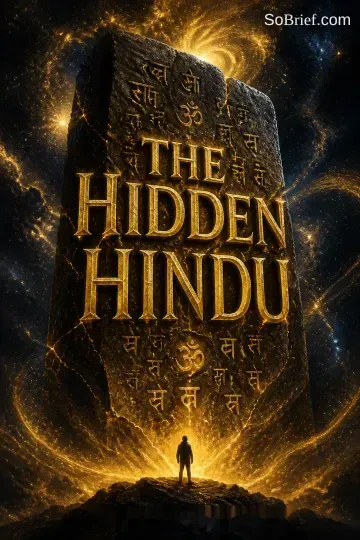
The Hidden Hindu operates at the intersection of mythology and science fiction, using the thriller genre as a vehicle for exploring profound questions about immortality, identity, and the nature of truth. The novel asks whether the ancient texts dismissed as myth might instead be records of advanced knowledge that modern science has only recently begun to rediscover. The DNA diagrams in a millennia-old manuscript, the precise astronomical calculations embedded in devotional hymns, the surgical techniques described in the Sushruta Samhita,13 all challenge the linear narrative of scientific progress that positions modernity as the pinnacle of human achievement.
The book's central metaphor is the hidden door: every character conceals a true identity, every fact a deeper truth, every glass wall a secret passage behind it. Om Shastri1 is not one man but many, his face a palimpsest of lives lived across yugas. LSD9 and Parimal10 are not quirky colleagues but ruthless operatives. The facility itself is a mask, its transparent dome disguising a covert war room. This layering suggests that reality, particularly in the context of Indian history and spirituality, cannot be apprehended through surface readings.
The conflict between Nagendra7 and Om1 represents two approaches to immortality: one acquisitive and power-seeking, the other custodial and protective. Nagendra7 kills to obtain the secret; Om1 hides it to prevent its misuse. The novel implies that the quest for eternal life is morally neutral, its value determined by the uses to which it is put. The cliffhanger ending, with Prithvi14's revelation of his parentage, suggests that this ancient war is now entering a new generational phase, and that the synthesis of past and present is not merely theoretical but biological: the ancient bloodline continues, carrying both the promise and the peril of Dhanvantari12's creation into an uncertain future.
Review Summary
The Hidden Hindu receives mixed reviews, with ratings ranging from 1 to 5 stars. Positive reviews praise its intriguing blend of mythology and science fiction, fast-paced storytelling, and engaging plot twists. Readers appreciate the unique concept and mythological elements. However, negative reviews criticize poor writing, underdeveloped characters, and confusing narrative structure. Some readers find the book difficult to follow and poorly edited. Despite criticisms, many readers express interest in continuing the trilogy to see how the story unfolds.
People Also Read

Characters
Om Shastri / Mrityunjay
Immortal Aghori, keeper of Mrit SanjeevaniAn immortal who has walked the earth since the Satya yuga. Originally a dead man revived by Dhanvantari12 using the Mrit Sanjeevani procedure, he bears the name Mrityunjay, the one who conquered death. Over millennia, he has lived as Sushen the vaidya who saved Lakshman, Vidur the wise prime minister of Hastinapur, Chanakya the strategist behind the Maurya empire, and countless other identities. He cannot age or die permanently, though he feels pain, hunger, and grief. His existence is one of perpetual hiding, cycling through names every forty to fifty years to conceal his secret. An Aghori by outward practice, his calm, ascetic demeanor masks a deep loneliness accumulated over thousands of years. He is both guardian and prisoner of the Mrit Sanjeevani texts.
Dr Srinivasan
Mission leader with a hidden pastA retired scientist from the National Institute of Science Communication and Information Resources, now leading the covert interrogation on Ross Island. Small in stature at 4 feet 8 inches but commanding in presence, he was once a bullied schoolboy whom Om Shastri1, as a teacher, protected. He works for a secret superior7, motivated primarily by money, unaware of the ancient vendetta he serves. His authority over the team is absolute until he discovers the true human cost of his mission. His journey from confident commander to guilt-ridden penitent drives the moral arc of the first half of the story.
Dr Shahista
Psychiatrist and hypnotism expertA celebrated psychiatrist and hypnotism expert called from Pune. Beautiful and elegant with copper-brown hair and sea-blue eyes, she balances scientific rigor with genuine empathy. She wears jewel stones for astrological protection and a tabeez on her bicep. Her approach to Om1 evolves from professional interrogation to something approaching maternal compassion, particularly as she witnesses his suffering. She advocates for treating him without drugs, believing direct communication may yield more than chemical coercion. Her courage under fire reveals depths beyond her clinical training.
Dr Tej Batra
Skeptical physician seeking answersA fifty-year-old Sikh physician, quick-tempered and driven by logic. His wife lies on her deathbed, a situation he is powerless to change despite his medical expertise, fueling his frustration and underlying despair. He initially dismisses Om1 as a delusional patient but slowly confronts evidence he cannot explain, including DNA diagrams in an ancient text and Om1's ability to neutralize potent narcotics. His skepticism is not cynicism but a rigorous demand for proof that the extraordinary claims demand extraordinary evidence.
Parashuram
Immortal warrior, sixth avatar of VishnuThe sixth avatar of Vishnu, an immortal warrior who has appeared in every yuga. He wields the divine farsaa axe and the Vijaya bow. He is the mentor of Dronacharya and thus connected to Ashwatthama6 across eras. For millennia, he has tracked Om Shastri1, protecting him from the shadows without revealing himself. His patience is infinite, his rage in battle terrifying. In the modern era, he operates with a blend of ancient combat mastery and contemporary tactical sophistication, embodying the book's fusion of mythological past and technological present.
Ashwatthama
Cursed immortal searching for BoseThe son of Dronacharya, cursed by Krishna with immortality and a never-healing wound on his forehead after the Kurukshetra war. He has spent centuries searching for Subhash Chandra Bose, whom he believes is also an immortal. A master of all weapons and sixty-four forms of art, he fights alongside Parashuram5 to protect Om1. His loyalty is absolute, born of a curse that binds him to wander the earth until the end of Kali yuga. His devotion to his guru Parashuram5 mirrors the ancient guru-shishya tradition.
Nagendra
Ancient antagonist seeking immortalityAn ancient figure who once studied under Dhanvantari12 alongside Sushruta13 in the Himalayas. In the present day, he controls the Ross Island operation from a hidden chamber, pursuing the Mrit Sanjeevani texts for his own purposes. His frail, aged appearance masks a terrifying physical power: he can throw a grown man across a room with one hand and his eyes possess an unnerving, almost reptilian quality. He is patient, ruthless, and has spent millennia working toward a single goal. His network of agents extends deep into seemingly innocuous places.
Veerbhadra
Loyal security chiefA voluntarily retired Indian army brigadier serving as security chief on Ross Island. Tall, dusky, scarred, with jet-black eyes hidden behind aviator glares. He is brave, curious, and honorable, following orders even when they trouble him. His military training keeps him alert even as the situation around him defies all logic. His loyalty to Dr Srinivasan2 and his protective instinct toward the team place him in impossible positions as the mission unravels.
LSD (Lisa Samuel D'Costa)
Hacker with hidden allegiancesA twenty-five-year-old hacker from a small town whose skills caught the attention of the Indian Cyber Cell. She presents as carefree and impulsive, chewing gum, cracking jokes, and wearing bold accessories including an axe pendant. Her digital expertise is formidable: she can unearth bank accounts, personal histories, and encrypted locations with a few keystrokes. Beneath her casual exterior lies a capacity for ruthless efficiency that no one on the team suspects.
Parimal
Stammering historianA thirty-five-year-old PhD in Indian history from Wardha, Maharashtra, where his father worked as a farmer. An introvert who stammers badly, he is routinely ignored by the team despite his deep knowledge of Sanskrit, ancient texts, and Indian history. His diffidence and quietness make his presence and absence indistinguishable to most. He wears a checked brown shirt, keeps his coal-black hair oiled, and possesses knowledge that far exceeds what his timid manner would suggest.
Abhilash
Mythology expert and traditionalistA thirty-year-old mythology expert from a Brahmin family of Raj Purohits in Ambikapur. Proud, caste-conscious, and steeped in Hindu texts, he wears numerous rings set with various stones, a rudraksha string, and a sandalwood tilak on his forehead. He carries a jute bag filled with mantra books and never hesitates to offer unsolicited advice. His ego and religious prejudice make him difficult company, but his encyclopedic knowledge of Hindu mythology proves invaluable for decoding Om1's identities and the implications of his claims.
Dhanvantari / Kasiraja
Divine physician, creator of Mrit SanjeevaniThe god of Ayurvedic medicine, appearing as an aged rishi named Kasiraja in a Himalayan hermitage. He selected ten sages to preserve and disseminate the knowledge of healing. He created the Mrit Sanjeevani procedure and used it to revive a dead man, whom he named Mrityunjay1. His wisdom is profound, his compassion genuine, and his authority among the sages absolute. He serves as the moral counterweight to the ambition that Mrit Sanjeevani inspires.
Sushruta
First surgeon, Dhanvantari's finest discipleDhanvantari12's most devoted and skilled disciple, later known to history as the author of Sushruta Samhita, the foundational text of surgery. At forty-nine, with a long beard and calm face, he performed reconstructive surgeries on Om1's destroyed face using banana leaves as measurement templates. He was entrusted with compiling the Mrit Sanjeevani procedure and, ultimately, with protecting both the texts and Mrityunjay1. His devotion to his guru and his oath to safeguard the books define his actions in the critical moment.
Prithvi
Son searching for his immortal fatherA young man of about twenty in the year 2041, searching for Om Shastri1. He possesses detailed, firsthand knowledge of events from 2020, despite not being born yet. His calm demeanor and carefully chosen words suggest a maturity beyond his years. His quest drives the frame narrative.
Mrs Batra
Last witness to the 2020 missionA seventy-four-year-old woman in 2041 who was part of the original Ross Island mission. She lost everything in those events and has spent decades trying to understand why. She serves as Prithvi14's audience and the final link to Om Shastri1's known whereabouts.
Plot Devices
Mrit Sanjeevani
Immortality procedure texts, two volumesThe two-volume text containing Dhanvantari12's procedure for conquering death and achieving immortality. Written partly on ancient paper and partly on copper sheets in Sanskrit, Hindi, and Prakrit, it includes remarkably advanced content such as diagrams of DNA structures and gene extraction methods millennia ahead of modern science. The books were separated and hidden by Om1 after Nagendra7's betrayal, each half useless without the other. The procedure requires a biological key, a sample of Dhanvantari's blood lineage, which flows only in Om's veins. Nagendra7 has pursued these texts across millennia, believing they hold the secret to completing his own transformation.
Thought-Visualization Machine
Projects memories as screen imagesA device that captures brainwave patterns and converts them into visual projections on a screen, allowing the interrogation team to see Om1's memories as he narrates them. Paired with a lie detector that monitors pulse rate and physiological responses, it creates an apparently foolproof system for extracting truth. However, it cannot distinguish between genuine memories and vividly imagined experiences, leaving a philosophical gap that becomes a point of contention among the team. When Om1's eyes are open, the images vanish; when he blinks or closes them, the projection resumes, creating a delicate procedure requiring both cooperation and control.
The Hidden Facility Infrastructure
Secret passages, armory, escape tunnelsA network of concealed passages, weapons caches, and escape routes built into the Ross Island dome. Behind ordinary walls lie narrow corridors leading to a fully stocked armory of assassination weapons, bulletproof armor, and combat suits. The hidden infrastructure is accessed via a code, 1 Corinthians 15:51, the biblical verse about victory over death. An escape tunnel beneath the marble floor leads from the old man7's chamber to the seashore, where a submarine can dock undetected. The existence of this infrastructure reveals that the glass facility was always a facade, designed from inception for covert operations far beyond the official interrogation mission.
Om's Blood
Biological key to immortality procedureThe blood flowing in Om Shastri1's veins carries the original Mrit Sanjeevani formulation, inherited from Dhanvantari12's revival procedure thousands of years ago. It is the missing biological component that Nagendra7 needs to complete the immortality process described in the stolen books. Without a sample of this blood, the Mrit Sanjeevani texts are theoretically fascinating but practically useless. The blood's unique properties also make Om1 resistant to drugs and capable of recovering from fatal wounds. During the chaos of the facility's destruction, Dr Batra4 escapes with a vial of Om1's blood, unknowingly becoming a critical variable in the ongoing war for immortality.
The Encrypted Map
Locates the second Mrit Sanjeevani bookAn ancient map found in Om1's bank locker alongside the first half of the Mrit Sanjeevani book. Its coordinates are deliberately scrambled: latitude and longitude values are swapped, water bodies are depicted as landscapes and vice versa. The encryption ensures that only someone with both modern decryption capabilities and access to the map can locate the second book. LSD9 deciphers it using her equipment, revealing a cave-like structure in Sri Lanka where Om1 had hidden the missing volume. The map drives the Sri Lanka expedition and the subsequent ambush that brings the immortals into direct conflict.
FAQ
Synopsis & Basic Details
What is The Hidden Hindu about?
- Immortal man's secrets: In 2041, Prithvi seeks to uncover the truth about Om Shastri, an immortal man held captive on Ross Island.
- Historical identities revealed: Om claims to have lived through various historical eras, possessing knowledge of ancient figures and events.
- Quest for ancient knowledge: The story revolves around the pursuit of the Mrit Sanjeevani, ancient books said to hold the key to immortality, blending mythology and science fiction.
Why should I read The Hidden Hindu?
- Unique blend of genres: The novel combines mythology, science fiction, and historical fiction, offering a fresh and engaging reading experience.
- Exploration of immortality: It delves into the philosophical and ethical implications of eternal life, prompting readers to contemplate the value of existence.
- Intriguing mystery: The story presents a compelling mystery surrounding Om Shastri's true identity and the secrets he holds, keeping readers hooked until the end.
What is the background of The Hidden Hindu?
- Mythological roots: The story draws heavily from Hindu mythology, referencing figures like Sushen, Vidur, Parashuram, and Ashwatthama, grounding the narrative in ancient lore.
- Historical context: The narrative weaves in historical events and figures, such as the Maurya Empire and Subhash Chandra Bose, creating a rich and immersive world.
- Technological setting: Set in 2041, the story incorporates advanced technology, such as high-tech interrogation facilities and sophisticated surveillance systems, blending the ancient with the futuristic.
What are the most memorable quotes in The Hidden Hindu?
- "He is the divine truth, an undefeated challenge to the gods of death and destruction.": This quote, spoken by Prithvi, establishes Om Shastri as a figure of immense power and significance, setting the stage for the central mystery.
- "All my identities are true.": This statement by Om Shastri encapsulates the complex nature of his existence, suggesting that his various historical personas are not merely fabrications but integral parts of his being.
- "Hide and be hidden.": This cryptic mission statement reveals Om Shastri's purpose, hinting at a deeper conflict and the need to protect something of great importance.
What writing style, narrative choices, and literary techniques does Akshat Gupta use?
- Blending genres seamlessly: Gupta masterfully combines mythology, science fiction, and historical fiction, creating a unique and engaging narrative tapestry.
- Multiple perspectives: The story unfolds through various characters' viewpoints, offering a multifaceted understanding of the central mystery and its implications.
- Foreshadowing and suspense: Gupta employs subtle foreshadowing and cliffhangers to maintain suspense, keeping readers invested in the unfolding events and revelations.
Hidden Details & Subtle Connections
What are some minor details that add significant meaning?
- Ashes on Ross Island: Om Shastri's body shedding ashes on Ross Island connects him to the Aghori tradition and hints at his detachment from the physical world. "His bare feet continued to leave traces of ashes on the floor."
- Om's vegetarian diet: Om's specific dietary requests (vegetarian, no cabbage, separate salt/chili) foreshadow his heightened sensory awareness and connection to nature. "I'm a vegetarian. I don't like cabbage. Potatoes and pulses will work. Green chilli and salt separately, please."
- The recurring number forty: The consistent age of forty in Om's various incarnations suggests a cyclical pattern and a specific stage of life where his purpose is renewed. "Remarkably, he has the same age in each photograph, neither younger nor older. Approximately forty years."
What are some subtle foreshadowing and callbacks?
- Veerbhadra's kitchen intuition: Veerbhadra's sudden urge to check the kitchen foreshadows Om's heightened senses and ability to perceive events beyond normal human capabilities. "The temperature of the oil is rising! The chopped onions will burn if there is even a slight delay."
- The significance of names: The repeated mention of names like Sushen, Vidur, and Vishnu Gupt serves as callbacks to Om's past lives, reinforcing the theme of reincarnation and the interconnectedness of history.
- The old man's redial: The old man's redialing of Dr. Srinivasan's number foreshadows his control over the situation and the predetermined nature of the events unfolding. "He picked up a cellular phone and pressed the redial button, as his eyes were fixed on the screen."
What are some unexpected character connections?
- Om and Dr. Srinivasan's past: Om's recognition of Dr. Srinivasan by his childhood nickname, "Chinna," reveals a hidden connection and suggests a shared history that transcends their current roles. "As soon as he did that, his eyes widened and he almost screamed, 'Chinna?'"
- Dr. Batra and Shahista's shared history: The revelation that Dr. Batra and Dr. Shahista have worked together previously adds a layer of complexity to their interactions and suggests a deeper understanding between them. "Yes. We have worked together earlier."
- LSD and the code: LSD's knowledge of the code tattooed on her toe, "1 Corinthians 15:51," connects her to a larger plan and reveals her allegiance to a hidden agenda.
Who are the most significant supporting characters?
- Dr. Shahista: As a psychiatrist, she provides a psychological lens through which to examine Om's claims, and her empathy humanizes the interrogation process.
- Abhilash: His extensive knowledge of Hindu mythology provides context for Om's claims, even as his skepticism creates tension and debate within the team.
- LSD (Lisa Samuel D'Costa): Her hacking skills are crucial for uncovering Om's various identities and the secrets surrounding the Mrit Sanjeevani, making her a key player in the investigation.
Psychological, Emotional, & Relational Analysis
What are some unspoken motivations of the characters?
- Dr. Srinivasan's desire for validation: He seeks recognition and validation from the old man, driving him to pursue the Mrit Sanjeevani at any cost.
- LSD's need for belonging: She craves acceptance and validation from the team, leading her to excel in her role and prove her worth, even if it means betraying her own values.
- Om's longing for connection: Despite his immortality, Om yearns for connection and understanding, evident in his willingness to share his stories and memories with the team.
What psychological complexities do the characters exhibit?
- Dr. Batra's grief and obsession: His wife's terminal illness fuels his obsession with finding a cure, making him vulnerable to manipulation and clouding his judgment.
- Om's burden of immortality: He grapples with the loneliness and isolation of his eternal existence, struggling to find meaning and purpose in a world that constantly changes around him.
- Abhilash's ego and prejudice: His inflated ego and discriminatory views reveal a deep-seated insecurity and a need to assert his superiority over others.
What are the major emotional turning points?
- Dr. Srinivasan's realization of betrayal: His discovery that he is being manipulated by the old man shatters his worldview and forces him to confront the ethical implications of his actions.
- Om's grief over lost loved ones: The recurring images of the woman he loved and her death in various lifetimes evoke deep sorrow and highlight the cyclical nature of his existence.
- The team's shock at LSD's betrayal: The revelation that LSD is working for the enemy shatters the team's trust and forces them to question their own judgment and loyalties.
How do relationship dynamics evolve?
- Skepticism to empathy: The team's initial skepticism towards Om gradually transforms into empathy as they witness his memories and understand the burden of his immortality.
- Trust to betrayal: The bond between the team members is shattered by Dr. Srinivasan and LSD's betrayals, highlighting the fragility of trust and the consequences of hidden agendas.
- Teacher and student: The relationship between Om and Dr. Srinivasan evolves from captor and captive to a poignant connection rooted in a shared past, showcasing the enduring power of human relationships.
Interpretation & Debate
Which parts of the story remain ambiguous or open-ended?
- The identity of the old man: His true nature and motivations remain shrouded in mystery, leaving readers to speculate about his ultimate goals and the extent of his power.
- The future of Prithvi: The ending leaves Prithvi's quest unresolved, suggesting that the search for Om and the secrets of immortality will continue in future installments.
- The nature of Mrit Sanjeevani: The exact mechanics and ethical implications of the Mrit Sanjeevani remain open to interpretation, prompting readers to consider the potential benefits and dangers of such a power.
What are some debatable, controversial scenes or moments in The Hidden Hindu?
- The graphic violence: The descriptions of torture and death, particularly in the context of Banda Bahadur's execution, may be considered excessive or gratuitous by some readers.
- The portrayal of religious figures: The depiction of mythological figures like Parashuram and Ashwatthama as active participants in contemporary events may be seen as disrespectful or sacrilegious by some.
- The ethical implications of immortality: The story raises complex ethical questions about the value of life, the consequences of tampering with nature, and the potential for abuse of power, prompting debate and discussion among readers.
The Hidden Hindu Ending Explained: How It Ends & What It Means
- Prithvi's lineage revealed: The revelation that Prithvi is Om Shastri's son establishes a direct connection between the past and the future, suggesting that the quest for immortality is a legacy passed down through generations.
- The cycle continues: The "TO BE CONTINUED…" ending implies that the conflict over the Mrit Sanjeevani and the secrets of immortality is far from over, setting the stage for future installments in the series.
- Hope for the future: Despite the betrayals and violence, the ending offers a glimmer of hope, suggesting that Prithvi's determination to uncover the truth may ultimately lead to a better understanding of life, death, and the human condition.
The Hidden Hindu Series
Download PDF
Download EPUB
.epub digital book format is ideal for reading ebooks on phones, tablets, and e-readers.








































