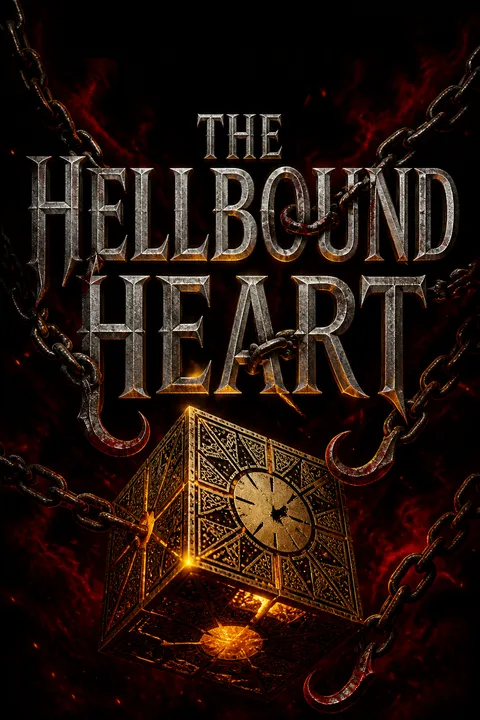

Plot Summary
Puzzle Box Unleashed
Frank Cotton, a man jaded by earthly pleasures, acquires Lemarchand's puzzle box, rumored to unlock realms of ultimate sensation. Driven by a desperate hunger for new experiences, he meticulously solves the box, performing a ritual that summons the Cenobites—otherworldly beings who promise pleasures beyond imagination. Instead, Frank is overwhelmed by a torrent of excruciating sensations, his body and mind torn apart by the Cenobites' definition of pleasure, which is indistinguishable from pain. The room is left empty, but Frank's essence is trapped between worlds, his fate sealed by his own reckless ambition. The box, now closed, waits for its next victim, while the house retains the echo of Frank's suffering.
The Cenobites' Bargain
The Cenobites, grotesque and enigmatic, confront Frank, questioning his desires. He asks for pleasure, but their interpretation is alien and horrific. They subject him to an endless cycle of agony and sensation, blurring the line between ecstasy and torment. Frank's expectations of sensual fulfillment are shattered; instead, he is dissected and remade by their hands, his soul trapped in a liminal state. The Cenobites' bargain is a warning: those who seek forbidden knowledge may find themselves consumed by it. Frank's suffering becomes a cautionary tale, his cries echoing in the void, as the Cenobites retreat, leaving the box and the house forever changed.
House of Shadows
Rory, Frank's brother, and his wife Julia move into the old family house, unaware of its dark history. The house is cold and unwelcoming, its upper rooms untouched since Frank's disappearance. Julia is unsettled by the atmosphere, sensing a presence lurking in the shadows. As they settle in, Julia's memories of Frank resurface, mingling desire and guilt. The house becomes a stage for buried secrets and unresolved passions, its walls absorbing the tension between the living and the damned. The mundane act of moving in is overshadowed by the house's latent menace, foreshadowing the horrors to come.
Julia's Secret Longing
Julia, haunted by a past affair with Frank, finds herself drawn to the room where he vanished. Her marriage to Rory is hollow, her passion reserved for the memory of Frank's dangerous allure. She visits the sealed room, feeling both comforted and disturbed by its darkness. Julia's longing becomes an obsession, her emotional void echoing Frank's own hunger for sensation. The house amplifies her desires, blurring the line between memory and reality. Julia's secret becomes the catalyst for the unfolding tragedy, as her yearning for Frank sets her on a path toward betrayal and blood.
Blood Awakens the Damned
While working in the house, Rory accidentally cuts his hand, spilling blood on the floor of the forbidden room. Unbeknownst to him, the blood seeps into the boards, nourishing the spectral remains of Frank. Julia, witnessing the aftermath, senses a shift in the room's atmosphere. Frank's presence grows stronger, able to reach out to Julia, whispering her name and demanding more blood. The house becomes a conduit for resurrection, the boundaries between life and death weakening. Julia's guilt and desire intertwine, compelling her to consider the unthinkable: sacrificing others to restore Frank.
Frank's Resurrection
Driven by love, guilt, and obsession, Julia lures a stranger to the house under the pretense of an affair. In the darkness of the forbidden room, she murders him, offering his blood to the half-formed Frank. The corpse is drained, its essence consumed as Frank's body slowly regenerates. Each sacrifice brings him closer to wholeness, but also deepens Julia's damnation. The act of murder becomes both a ritual and a perverse act of devotion. Julia's transformation from victim to accomplice is complete, her morality eroded by her longing for Frank's touch.
Seduction and Sacrifice
Emboldened by Frank's growing strength, Julia continues her deadly seductions, luring more men to their deaths. The house becomes a slaughterhouse, its walls absorbing the screams and blood of the victims. Frank, now partially restored, demands more, his appetite insatiable. Julia's complicity deepens, her identity entwined with Frank's monstrous rebirth. The murders strain her sanity and her marriage, as Rory remains oblivious to the horrors unfolding under his roof. The cycle of seduction and sacrifice accelerates, drawing the house's inhabitants ever closer to destruction.
Kirsty's Suspicion
Kirsty, Rory's friend and secret admirer, grows suspicious of Julia's behavior and the strange happenings in the house. Her concern for Rory drives her to investigate, leading her to witness one of Julia's murders. Horrified, Kirsty flees with Lemarchand's box, unwittingly becoming entangled in the supernatural web. The box's allure and danger become clear as Kirsty's actions set in motion a confrontation with the Cenobites. Her discovery marks a turning point, as the truth about Frank's resurrection and Julia's complicity threatens to destroy them all.
The Monster Grows Stronger
With each victim, Frank regains more of his humanity, but his soul remains corrupted. He becomes increasingly demanding and violent, manipulating Julia and plotting to reclaim his life fully. Frank's desire for escape from the Cenobites' grasp leads him to a desperate plan: to kill Rory and steal his skin, allowing him to masquerade as his brother. Julia, torn between love and horror, becomes complicit in the ultimate betrayal. The house, now a nexus of death and deception, teeters on the brink of collapse as Frank's monstrous nature is revealed.
Betrayal and Skin
In a final act of treachery, Frank kills Rory, flaying him and donning his skin to evade the Cenobites. Julia assists in the deception, presenting Frank as her husband to Kirsty and the world. The horror of the act is matched only by its cunning, as Frank's transformation is nearly complete. Kirsty, however, senses the truth, her grief and rage fueling her determination to expose the imposter. The boundaries between self and other, love and hate, are obliterated in this grotesque masquerade, setting the stage for the final reckoning.
The Cenobites Return
Pursued by Frank, Kirsty solves the puzzle box, summoning the Cenobites. She pleads for her life, offering Frank in her place. The Cenobites, intrigued by the prospect of reclaiming their escaped victim, agree to the bargain if Frank confesses his identity. Kirsty's courage and quick thinking turn the tables, but the cost is high. The house becomes a battleground between human and inhuman forces, as the Cenobites close in on their prey. The tension between justice and damnation reaches its peak, with Kirsty's soul hanging in the balance.
Hell's Reckoning
In a climactic confrontation, Kirsty tricks Frank into revealing himself. The Cenobites seize him, their hooks and chains tearing him apart in a spectacle of retribution. Julia, mortally wounded, is left to die, her dreams of love and escape shattered. The house is consumed by chaos, the boundaries between worlds collapsing as the Cenobites claim their due. Kirsty narrowly escapes, traumatized but alive, as the supernatural forces withdraw. The cycle of desire, betrayal, and punishment is complete, leaving only ruins and memories in its wake.
The Box's Keeper
In the aftermath, Kirsty finds herself in possession of Lemarchand's box, its surfaces polished and inscrutable. The Cenobites are gone, but the box remains, a silent promise of future horrors. Kirsty is left to ponder the nature of desire, suffering, and the thin line between them. The house stands empty, its secrets buried, but the box's allure endures. Kirsty becomes the unwilling guardian of its mysteries, her ordeal a warning to those who would seek forbidden pleasures. The story ends with the sense that the cycle may one day begin anew.
Analysis
Clive Barker's The Hellbound Heart is a meditation on the perilous pursuit of forbidden desire and the consequences of transgressing moral and existential boundaries. Through the intertwined fates of Frank, Julia, Rory, and Kirsty, Barker explores the seductive power of curiosity and the self-destructive nature of obsession. The Cenobites, with their ambiguous blend of pleasure and pain, serve as both tempters and punishers, embodying the dangers of seeking sensation without restraint. The novel's use of the puzzle box as a central symbol reflects the human compulsion to solve mysteries, even at great personal cost. In a modern context, the story resonates as a cautionary tale about the limits of experience, the cost of betrayal, and the thin line between love and destruction. Barker's narrative warns that the search for transcendence, if untethered from empathy and morality, can lead not to enlightenment but to damnation. The cycle of temptation and consequence, embodied in the ever-returning box, suggests that such dangers are eternal, awaiting the next unwary soul.
Review Summary
The Hellbound Heart by Clive Barker receives mostly positive reviews, averaging 4.08/5 stars. Readers praise Barker's beautiful prose and atmospheric writing in this novella about Frank Cotton, who opens a puzzle box summoning the Cenobites—beings who blur pleasure and pain. Many note the book's compact 176-page length packs an intense punch with gore and disturbing imagery. Some reviewers prefer the film adaptation's fuller characterization and Cenobite development, wishing for more exploration of these creatures. Critics appreciate the human villains, particularly Julia and Frank's selfishness, though some find characters underdeveloped. Most consider it a horror masterpiece and excellent introduction to Barker's work.
People Also Read
Characters
Frank Cotton
Frank is the novel's catalyst, a man whose relentless pursuit of pleasure leads him to Lemarchand's box and the Cenobites. His psychological profile is marked by nihilism, restlessness, and a disregard for moral boundaries. Frank's inability to find satisfaction in ordinary life drives him to self-destruction, and ultimately, to a monstrous rebirth. His relationships are predatory—he seduces Julia, betrays Rory, and manipulates all around him. Frank's transformation from jaded hedonist to literal monster embodies the dangers of unchecked desire and the self-annihilation that can result from the pursuit of forbidden knowledge.
Julia Cotton
Julia is Rory's wife and Frank's former lover, torn between her mundane marriage and her passionate memories of Frank. Her psychological journey is one of descent: from longing and guilt to active complicity in murder. Julia's obsession with Frank overrides her morality, leading her to lure and kill strangers to restore him. She is both victim and perpetrator, her actions driven by a desperate need for connection and meaning. Julia's relationship with Frank is toxic and consuming, while her marriage to Rory is hollow. Her arc is a tragic one, ending in betrayal, loss, and death.
Rory Cotton
Rory is Frank's brother and Julia's husband, characterized by his gentleness and emotional vulnerability. He is oblivious to the darkness festering in his home and marriage, trusting Julia implicitly. Rory's psychological simplicity and need for affection make him an easy target for betrayal. His relationship with Frank is fraught with sibling rivalry and unresolved tension, while his devotion to Julia blinds him to her duplicity. Rory's tragic fate—murdered and usurped by Frank—underscores the novel's themes of innocence corrupted and the destructive power of desire.
Kirsty
Kirsty is a friend of Rory's and secretly in love with him. Her psychological strength lies in her intuition and moral clarity, which drive her to investigate Julia's suspicious behavior. Kirsty's journey is one of transformation: from passive observer to active participant in the supernatural conflict. She endures trauma and violence but ultimately outwits both Frank and the Cenobites, surviving where others perish. Kirsty's empathy and courage set her apart, making her the story's unlikely heroine and the final keeper of the puzzle box's secrets.
The Cenobites
The Cenobites are the novel's supernatural antagonists, beings who exist beyond human morality and sensation. Their appearance is grotesque, their pleasures indistinguishable from pain. They are both judges and executioners, enforcing the consequences of forbidden desire. The Cenobites' interactions with Frank and Kirsty reveal their alien logic and indifference to human suffering. They serve as a metaphor for the dangers of transgressive curiosity and the limits of human understanding. Their presence is both terrifying and strangely alluring, embodying the novel's central paradox.
The Engineer
The Engineer is a shadowy figure, rarely seen but deeply influential. As the architect of the Cenobites' realm, the Engineer represents the ultimate authority over the box and its victims. His interventions are subtle but decisive, guiding the fates of Frank, Julia, and Kirsty. The Engineer's motivations are inscrutable, his actions governed by a logic beyond human comprehension. He embodies the impersonal, inescapable nature of the forces unleashed by the box, serving as a reminder that some mysteries are best left unsolved.
Lewton and Mad Bob
Lewton and Mad Bob are friends who help Rory and Julia move into the house. Their roles are minor but serve to anchor the story in the mundane world, contrasting with the escalating supernatural horror. They represent normalcy and community, highlighting the isolation of the main characters as they descend into madness and violence.
Patrick and Sykes
Patrick and Sykes are among the men lured to their deaths by Julia. Their brief appearances underscore the predatory nature of Julia and Frank's partnership, as well as the indiscriminate nature of the violence unleashed by the box. They are symbols of innocence corrupted and the collateral damage of obsession.
The House
The house on Lodovico Street is more than a setting; it is a character in its own right. Its rooms absorb the secrets, desires, and violence of its inhabitants, becoming a crucible for transformation and horror. The house's atmosphere shapes the characters' actions and reflects their psychological states, serving as both sanctuary and prison.
Plot Devices
The Puzzle Box (Lemarchand's Configuration)
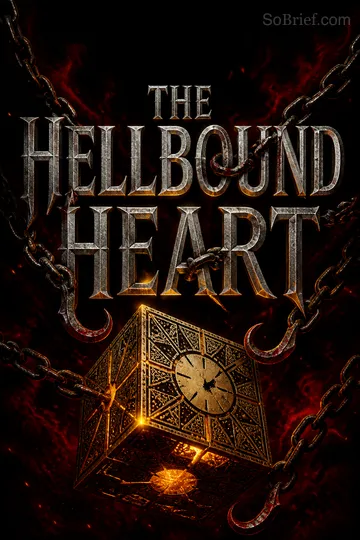
The puzzle box is the central plot device, serving as both literal and symbolic gateway to the Cenobites' world. Its intricate design and mysterious mechanism represent the allure of forbidden knowledge and the dangers of curiosity. The box's ability to summon the Cenobites and open the Schism between worlds drives the narrative, linking the fates of Frank, Julia, and Kirsty. The box's cyclical nature—passing from hand to hand, always ready to ensnare a new victim—embodies the story's themes of temptation, consequence, and the eternal return of desire.
Duality of Pleasure and Pain
The novel's central motif is the indistinguishability of pleasure and pain, embodied by the Cenobites and experienced by Frank. This duality is explored through physical sensation, emotional longing, and moral transgression. The pursuit of ultimate pleasure leads to ultimate suffering, challenging the characters' understanding of themselves and the world. The motif is reinforced by the narrative structure, which alternates between moments of desire and horror, intimacy and violence.
Resurrection and Identity
The process of Frank's resurrection—requiring blood, sacrifice, and the theft of identity—serves as a metaphor for the destructive power of obsession. The act of flaying and assuming another's skin literalizes the erasure of boundaries between self and other, love and hate. The motif of resurrection is intertwined with themes of guilt, complicity, and the impossibility of escape from one's past.
Foreshadowing and Symbolism
The novel employs foreshadowing through recurring motifs—bells, blood, locked rooms, and mirrors—that signal impending doom. The house itself is a symbol of repressed desire and hidden violence, while the puzzle box represents the seductive danger of the unknown. These devices create a sense of inevitability, drawing the characters inexorably toward their fates.
Hellraiser Series Series
About the Author

Download PDF
Download EPUB
.epub digital book format is ideal for reading ebooks on phones, tablets, and e-readers.








































