
Plot Summary
Old Woman On The Edge
Eighty-four-year-old Muriel McAuley is the last remaining pillar of old Witchaven, refusing to sell her home to the relentless billionaires' agents. Long accustomed to tragedy, she stands firm against the American businesswoman's threats and condescension. The struggle is not just for land—it is a standoff between tradition and the encroaching, uncaring machinery of progress that calls her home a "slum." As memories of her lost husband Billy and vanished neighbors haunt her, Muriel's stubbornness is fueled by dignity and the memory of the sea disaster she survived decades before. All around her, the landscape and the community shrink under heavy-handed development, but Muriel clutches fiercely to the last scraps of her world.
Memories Of Home
Each day, Muriel's world contracts: she tends her chickens, recalls her late husband with aching fidelity, and feels the slow abandonment by family—especially her absent grandson, Jack. With old friends gone and her health failing, she survives on pride and routine, surrounded by reminders of better, busier times. Traces of WWII resourcefulness and the memory of a lost career sustain her identity, but looming progress brings dread, not hope. Even comfort in solitude is tinged with the fear of being forcibly removed or left utterly alone, her sense of self tightly entwined with the home Billy built for her.
Witchaven's Last Stand
The village's few stubborn holdouts—Muriel, Arthur, and a shrinking council—meet in an atmosphere thick with resignation and betrayal. Longstanding friendships break under the pressure of buyouts and the threat of compulsory eviction. Guilt and defiance mix, particularly as lifelong neighbor Davey finally capitulates, leaving the remaining handful grasping at the straws of legal rights and communal solidarity. Mourning the steady loss of her world, Muriel's hope sputters beside the embers of shared memories and the specter of extinction.
Encroaching Machines
A walk through devastated Witchaven—past erased landmarks, felled trees, and barbed-wire perimeters—underscores the villagers' irrelevance. Arthur protects Muriel as best he can, but both are battered relics, silenced by the weight of loss and isolation. Their conversation oscillates between nostalgia for youth and rage at the new normal, until violence arrives at Muriel's doorstep. Her chicken coop destroyed, she witnesses Arthur, weapon in hand, try to halt the bulldozers—a doomed gesture that signals the futility of resistance and the callousness of unchecked power.
The Sea's Haunting Mist
In the aftermath of destruction and public humiliation, Muriel is beset by pain, intrusive memories, and mounting despair. As the misty 'haar' rolls in—a phenomenon both comforting and foreboding—she seeks solace in the wild, haunted by the echo of her vanished husband and the growing threat to her last refuge. A chance encounter on the beach between tides brings a strange vision—a shimmering presence in the fog—hinting that not all is as dead as it seems, or that something from the ancient sea awaits her at the edge.
An Unlikely Rescue
Muriel, battered by Conor Grant's cruel assault, stumbles across a wounded, otherworldly sea creature beached in the fog. Drawn to its silent plea, she overcomes her fear and carries the dying entity—Avalon—home in her wheelbarrow. The act is less rescue than communion: as Avalon's touch soothes her pain, Muriel's existential wounds are momentarily healed, replaced by an uncanny sense of connection and vitality. The bath becomes Avalon's sanctuary, and as Muriel watches over him, she wonders if this is the glimmer of an impossible redemption or a final blur into madness.
Avalon In The Bath
Muriel bonds with Avalon, who becomes a strange companion, easing her wounds and sharing fragmented thoughts. Yet Avalon's healing is not benign—it is driven by an insatiable hunger for blood that soon becomes apparent. Muriel, both benefactor and addict, feeds him from her own veins, a transaction that blurs pain and pleasure and begins to erode her boundaries. Her efforts to hide Avalon from Arthur—and the wider world—grow more desperate, as does her yearning for the presence that seems to channel her lost Billy.
Price Of Healing
Muriel's willingness to bleed for Avalon accelerates; he takes not just her aches but her memories, subsuming her loneliness with waves of euphoria tinged with intrusive visions. The healing becomes transactional and compulsive, laced with grief and the guilt of enabling—or being unable to refuse—Avalon's appetite. The spirit of Billy overlays Avalon's presence, the distinction between creature, memory, and resurrected husband growing ever more uncertain. Muriel's arms and soul both bear new scars, warning of the price of crossing boundaries between life and the unexplained.
Arthur's Blaze
Isolated and exhausted after a sleepless night, Muriel watches helplessly as arsonists—hired thugs in the pay of Grant's organization—set fire to Arthur's cottage. The event marks the literal and psychological end of community resistance. Arthur dies in agony at the hands of amoral youth, while Muriel is left to confront the horror and futility of her struggle. The police dismiss her as a troublemaker; the powerful manipulate the narrative as progress's final price becomes evident: the sacrificial burning of the old world, and any who would defend it.
Night's Blood
Violence spills into Muriel's own home as one of Arthur's murderers, wounded and desperate, seeks refuge there. Avalon—the sea creature—responds as both guardian and monster, dissolving and consuming the intruder in a shocking display of predatory alien retribution. Muriel's home becomes a chamber of horror. The overlapping emotions of terror, guilt, and grim satisfaction knit ever more deeply, and Avalon's transformation into the shape of her dead husband signifies both wish fulfillment and the perverse union of love and supernatural vengeance.
Transformation And Grief
Avalon, now fully manifest as Billy, brings a bittersweet joy to Muriel's life. She embraces the illusion—or is it reality?—of reunion, teaching him the ways of humanity and cherishing every borrowed moment. Yet the resurrection is fleeting and dangerous: Avalon's form degrades, requiring ever more sustenance. The memories and personalities he absorbs—including the darkest from his victims—confuse reality and unleash monstrous hungers. Muriel is forced to confront the moral cost of keeping her impossible love alive, and the horror that may yet come from it.
Funeral Without Closure
Arthur's funeral is sparsely attended, an echo of once-robust kinship now eroded by fear and resignation. Muriel mourns not just her friend but the loss of everything and everyone that anchored her sense of self. With the last of the villagers capitulating to Grant and fleeing Witchaven, she is left almost entirely alone, her determination curdling at the edge of despair. Avalon's dependence—his need for 'feeding'—makes even love and loyalty fraught, as the question of how far Muriel will go to keep him rises painfully.
Lonely Inheritance
With no one left to confide in, Muriel faces the mounting reality that feeding Avalon requires more than small sacrifices; it asks for murder. Her values, so entwined with community and decency, begin to erode as she justifies the deaths of "bad people," and rationalizes her complicity. When enchanted, she regains youth and pleasure with Billy at her side, but at the cost of others' lives and blood. The boundaries between self, monster, and memory are dissolving. The haunting question: if the world offers only loneliness or monstrosity, what choice does a survivor have?
Feed The Monster
Attacked by Grant's hired goons, Muriel reluctantly lures them to Avalon. Their deaths are as grisly as they are necessary to sustain Billy's presence. For a night, with new strength, Billy and Muriel relive their love—the crescendo of a lifetime's longing realized by supernatural means. But the joy is always borrowed, purchased in blood, and every moment of warmth and youth is shadowed by guilt and dread. Avalon's hungers grow more demanding, requiring escalating violence. Muriel's nightmare tightens as she becomes both accomplice and caretaker.
Invasion At Midnight
The relentless assault by Grant and his agents climaxes with a dramatic home invasion. Shelly, the businesswoman who personified the remorseless logic of Capital, becomes Avalon's next victim in Muriel's desperate bid to save herself. The barrier between resistance and massacre collapses utterly: Avalon erupts in monstrous fury, and blood fills the bathtub, turning vengeance into spectacle. The story's core dilemma—can love survive when it is fed only by death?—reaches unbearable pitch as Muriel becomes both survivor and perpetrator.
Goodbye To The World
The world converges on Witchaven's last home. With the media, law, and Grant's gathered minions at her door, Muriel faces the endgame. Her loneliness is total, her pain visible in the wounds she bears for Billy. Despite the cameras and the spectacle, no one truly sees her; history is being rewritten even as the present collapses. In the storm of accusation and chaos, Muriel's only power left is her own end—her final act to control, to say goodbye on her terms, to decide what shall remain of her story.
Caught By The Haar
Pursued by the police and the world's eyes, Muriel drags Grant at gunpoint through the thick haar to the spot where it all began: Rory's Cave by the sea. The boundary between worlds—life and death, memory and flesh—thins as Billy returns one last time, asking Muriel to choose: another monstrous final stand, or to let go, surrendering herself wholly to the sea and to him. Closing her eyes, refusing to be seen by those who never saw her, Muriel disappears into the mist, fusing with Billy and Avalon beyond the reach of violence and modernity.
Last Day Together
In the aftermath, the world is left to spin stories and explanations for the disappearance of Muriel McAuley, the billionaire, and the bloodbath in Witchaven. Only those touched by love—her grandson among them—glimpse the depth beneath. Muriel, now wholly joined to Billy, descends with him into the ocean's depths, their identities melting into legend and the churn of time. What remains—after all the battles, bargains, and betrayals—is a love that refuses to vanish, even as its shape defies human explanation.
Analysis
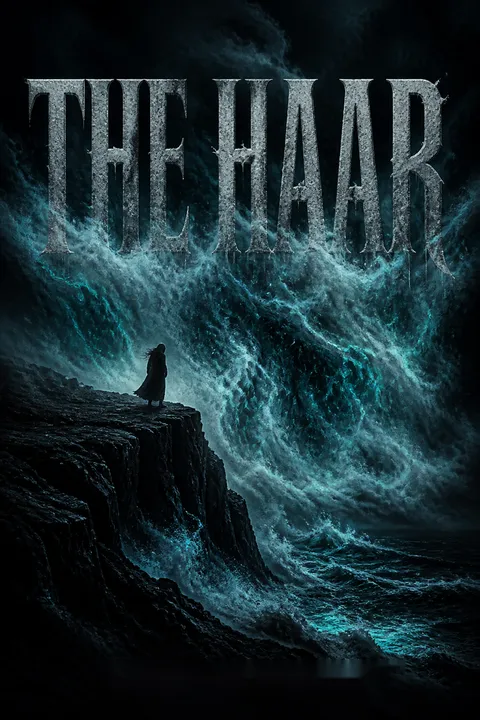
The Haar is a melancholy horror novel about the vanishing of an old world and the desperate, doomed efforts of one woman to hold onto love, dignity, and memory against the erasing tides of progress and time. Through Muriel's determined resistance, the book exposes the brutal mechanics of modernity: how the commodification of land and life leaves the vulnerable dispossessed and unseen. Sodergren's use of supernatural horror and shapeshifting is not just a vehicle for gore or monstrous transformation, but a metaphor for grief, the porousness of memory, and the price paid for refusing to let go. In Muriel's alliance with Avalon/Billy, she gains the illusion of wholeness—at the cost of moral clarity and communal roots. The novel ultimately interrogates whether love can survive (or is even real) if it devours everything in its path, suggesting that, for the marginalized, paradise and oblivion may look much the same. Even as Muriel vanishes into myth, the world continues on, its wounds unhealed, its lessons consigned to the haar.
Review Summary
The Haar receives mostly glowing reviews, with readers praising its unique blend of gore, romance, and heartfelt emotion. The elderly Scottish protagonist, Muriel, is widely celebrated as a compelling, feisty heroine. Many highlight the atmospheric Scottish setting and the creature's imaginative design. Critics note that villains feel one-dimensional and cartoonish, and some find logical inconsistencies. A few readers were disappointed by mismatched expectations. The inclusion of the author's grandmother's memoirs was frequently noted as a touching addition.
People Also Read
Characters
Muriel McAuley
Muriel is the emotional and moral heart of the story: an elderly widow clinging fiercely to her home, her memories, and what remains of community amidst relentless erasure. Her psyche is shaped by trauma (the sea disaster, wartime displacement, Billy's disappearance), which grants her resilience but also a profound, aching loneliness. Muriel's dignity and wit mask near-crippling isolation. As Avalon/Billy offers her succor and resurrection, she slides into a complicated dependency, torn between self-preservation and self-erasure. Her journey is both universal—coping with loss, aging, and irrelevance—and singular in her descent into myth and horror.
Avalon / Billy
Avalon is an alien, protean sea-entity discovered by Muriel, whose ability to heal and consume is both miraculous and monstrous. By feeding on blood and memory, Avalon becomes the incarnation of Muriel's long-lost husband, Billy—offering love, comfort, and fleeting youth. Yet "Billy" is a construct, a reflection of memory as much as a resurrection. Avalon/Billy's hunger is existential, and as he devours both enemies and the innocent, he highlights the porousness between healing and harm, love and predation. His development pivots on negotiating human emotion, loneliness, and the ethics of survival.
Arthur Eastman
Arthur, Muriel's neighbor and confidant, carries both the burden and gentleness of old age. Once Billy's rival and now Muriel's protector, he anchors the last threads of the vanishing Witchaven community. Arthur is defined by a deep sense of decency, affection, and humor, masking his own pain and fears about death, irrelevance, and loss. His murder by arson is the emotional nadir for Muriel—a watershed where hope merges with rage, setting the stage for her descent (and that of Witchaven) into violence and the supernatural.
Patrick Grant
The American billionaire seeking to obliterate Witchaven for profit is a caricature of power unchecked by empathy or tradition. Charming on camera but monstrous in action, Grant is the living force behind the village's destruction, the intimidator-in-chief. His sociopathy is emblematic of the larger machinery that turns human dignity and natural beauty into disposable commodities. As the story unravels, his role mutates—from remote antagonist to direct victim of the supernatural, and, ultimately, a shell taken over by Avalon. Grant encapsulates the story's critique of exploitative modernity.
Shelly
The perfectly composed businesswoman who serves as Grant's chief enforcer, Shelly exemplifies learned ruthlessness—her smiles conceal fangs, and her mission is to break Witchaven's holdouts through every legal and moral loophole. Her relationship to Muriel is one of generational and cultural antagonism. She is ultimately rendered powerless and devoured by Avalon, her fate a symbol of the perils—and the expendability—of those in service to larger, more faceless forms of exploitation.
Jack McAuley
Muriel's grandson Jack, who lives far away in London, is primarily an avatar for contemporary disconnection and the erosion of family ties over time and distance. His growing realization of the depth of Muriel's love and loss (and his own responsibilities) provides a subtle foil to the main narrative: he alone receives the story's final message about love and memory, ensuring that Muriel's struggle does not vanish entirely.
Conor Grant
Grant's son, ostentatious and predatory, is an embodiment of toxic entitlement. His violence toward Muriel emphasizes the generational continuity of exploitation and sadism. Conor is rendered a target for both Muriel's and Avalon's vengeance, his fate an extension and acceleration of the family's destructive path.
Avalon's Victims (Arthur's murderers, Grant's goons, construction workers)
These various "bad people" are the disposable agents of violence and greed: young men corrupted and desensitized, mercenaries in a system that rewards brutality and punishes compassion. Their presence catalyzes Avalon's monstrous transformations and allows Muriel the false comfort of justified revenge, while reinforcing the story's bleak view of institutionalized amorality.
The Haar (Sea Mist)
Not a character in a conventional sense, the recurring sea mist—the haar—is the story's supernatural veil, a space where the boundaries between past and present, memory and reality, are most permeable. It both hides and reveals: serving up Avalon, hiding Muriel's flight, muting the world's judgments. It is, in effect, the narrative's silent chorus.
Witchaven
The village itself, though steadily destroyed, retains an agency: a repository of memory, tradition, and loss. Witchaven's slow extinction is not just a backdrop, but the living context within which the characters' struggles deteriorate into violence, fantasy, and oblivion.
Plot Devices
The Haar (The Mist)
The sea mist is not just a weather phenomenon—it is a threshold state, allowing the intrusion of the supernatural and protecting Muriel at her moments of greatest vulnerability or intent. The haar enables secrecy, escape, and transformation, and is invoked at all moments of liminality (Muriel's discovery of Avalon, her escape to the cave, the final merging with Billy). Its recurring presence signals that what is hidden in the world may be as powerful as what is seen.
Shapeshifting and Identity
Avalon's capacity to become Billy (or anyone else from history or recent meals) serves as a visceral metaphor for memory's power and the porousness of identity. This plot device allows fantasy-fulfillment—the lost love returned—but also surfaces deep moral unease: is Billy a ghost, a monster, or merely memory given monstrous form? The shapeshifting structure is both reward and damnation, offering joy with the price of complicity.
Foreshadowing of Violence
Early references to past catastrophes (the Charlotte Dane shipwreck, WWII trauma), institutional failures, and small infractions accumulating into larger collapses all set the stage for the village's and Muriel's destruction. Foreshadowing is used to imbue Muriel's refusals and tiny victories with both pathos and dread, ensuring the reader expects (and dreads) the inevitable.
Moral Bargaining and Escalation
The book's escalation mechanism is as much psychological as plot-driven: Muriel's acceptance of small compromises (feeding Avalon, condoning violence) opens the door to larger horrors. Each crisis is resolved only at the cost of greater moral erosion, until the violence can no longer be contained, and love and monstrosity are inseparable.
Found Footage and Media Spectacle
The standoff's culmination as a public spectacle—media crews, social media livestreams, the narrative instantly rewritten for audiences far away—highlights contemporary anxieties about memory, scrutiny, and invisibility. The truth is pulverized into scandal and myth, and the deeply personal is erased by the spectacle of violence and madness.
Download PDF
Download EPUB
.epub digital book format is ideal for reading ebooks on phones, tablets, and e-readers.








































