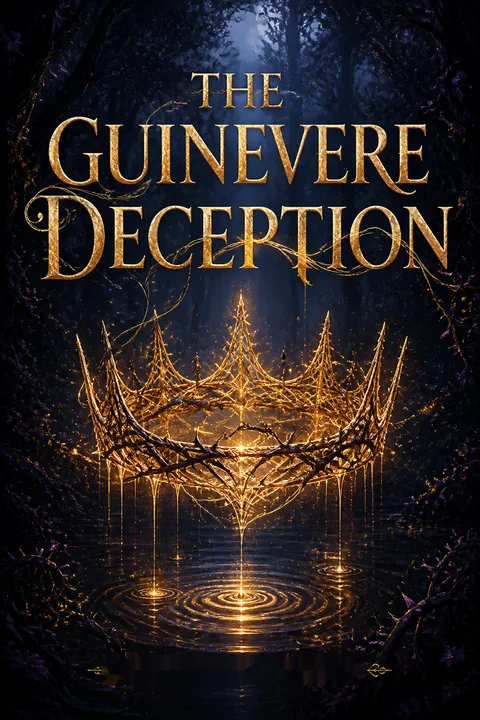

Plot Summary
A Queen Arrives in Disguise
Sixteen-year-old Guinevere, not the real princess but a girl sent by the banished Merlin, travels to Camelot to marry King Arthur. Her true identity is hidden, even from her closest companion, Brangien. Guinevere's journey is fraught with unease—she is an imposter, tasked with protecting Arthur from magical threats in a kingdom where magic is forbidden. The forests and rivers she passes through are alive with danger and secrets, and her own fear of water hints at a deeper, magical vulnerability. As she enters Camelot, she is awed by its grandeur and the weight of her deception. The city's people celebrate her arrival, but Guinevere feels the burden of her falsehood and the loneliness of her mission.
Knots, Names, and Deceptions
Guinevere's magic is not the grand power of Merlin, but the delicate art of knotting—binding small spells into her hair, clothing, and the world around her. She uses these knots to protect Arthur, herself, and the castle, always wary of discovery in a land where magic is outlawed. Her true name is a secret, her past a foggy memory shaped by Merlin's manipulations. The real Guinevere is dead, her existence erased to make room for this new protector. Guinevere's sense of self is fragile, her identity a patchwork of lies, magic, and longing for belonging. She is both shield and spy, always watching, always hiding.
Camelot's Forbidden Magic
Camelot is a kingdom built on the rejection of magic, yet it cannot escape its influence. Arthur's rule depends on the banishment of Merlin and the suppression of the old ways, but the land itself is restless. Guinevere senses the tension between order and chaos, between the safety of stone walls and the wildness of the forests. She learns that even within the castle, magic lingers—Brangien knows small spells, and the city's people remember the old stories. Guinevere's own magic is a dangerous secret, one that could mean her death or banishment if discovered. Yet, without it, Arthur is vulnerable to threats he cannot see.
The King and His Shadows
Arthur is young, idealistic, and burdened by the legacy of his father, Uther Pendragon. His court is a place of alliances and rivalries, where knights like Mordred, Sir Tristan, and Sir Bors each carry their own scars and ambitions. Mordred, Arthur's nephew, is both protector and potential betrayer, always watching Guinevere with unsettling intensity. The patchwork knight, a mysterious newcomer, wins the people's admiration and Guinevere's suspicion. As Guinevere navigates the politics and personalities of Camelot, she must decide whom to trust and how to fulfill her mission without losing herself.
The Patchwork Knight's Secret
The patchwork knight, known for unmatched skill in the arena, is revealed to be Lancelot—a woman disguised as a man, seeking a place among Arthur's knights. Guinevere discovers Lancelot's secret after being saved from a magical boar attack. Their bond is forged in shared danger and mutual recognition as outsiders. Lancelot's courage and loyalty make her Guinevere's most trusted ally. Together, they face threats both magical and mundane, challenging the rigid rules of Camelot and redefining what it means to be a knight or a queen.
Market Day Intrigues
On market day, Guinevere explores the city with Brangien and Mordred, uncovering the rhythms of daily life and the undercurrents of fear and hope. She notices strange exchanges—rocks passed in secret, whispers of forbidden magic. Rhoslyn, a woman accused of witchcraft, is banished, but Guinevere suspects a deeper plot. The patchwork knight's involvement with Rhoslyn hints at a network of magical resistance within Camelot. Guinevere's investigation leads her to hidden spells, enchanted stones, and the realization that the greatest threats may come from within the city's own walls.
The Weight of Protection
Determined to shield Arthur, Guinevere weaves powerful protections around the castle, using iron, blood, and her own strength. The effort leaves her physically and emotionally drained, blurring the line between sacrifice and self-destruction. She learns that every act of magic demands a price—her memories, her energy, her sense of self. As she recovers, she faces the expectations of queenship, the loneliness of her role, and the growing complexity of her relationships with Arthur, Brangien, and Mordred. The burden of protection is heavy, and Guinevere wonders if she can bear it alone.
The Tournament of Masks
The long-awaited tournament brings excitement and anxiety. Lancelot, still in disguise, defeats Arthur's best knights and faces the king himself. Their battle is fierce and evenly matched, ending in mutual respect. Lancelot's victory secures her place as a knight, but her secret is discovered, and she is dismissed. Guinevere's joy at her friend's success is tempered by her own sense of displacement and the realization that her role as queen is both performance and prison. The tournament exposes the limits of Camelot's ideals and the cost of living behind masks.
The Forest's Awakening
A series of magical attacks—possessed animals, deadly spiders, and waking trees—signal the return of the Dark Queen's influence. Guinevere, Mordred, and Lancelot are drawn into a desperate struggle to contain the chaos. Mordred reveals his true heritage as the son of Morgan le Fay and the Green Knight, straddling the worlds of men and magic. In a moment of crisis, Guinevere uses her blood and power to awaken the ancient forest, unleashing forces she cannot control. The boundaries between protector and destroyer blur, and Guinevere faces the consequences of wielding magic in a world that fears it.
The Dark Queen Stirs
The Dark Queen, long thought defeated, begins to rise again, fed by the chaos and bloodshed in the land. Mordred, torn between loyalty and resentment, manipulates events to free his grandmother, believing that the world needs the wildness of magic as much as the order of men. Guinevere is caught between Arthur's vision of peace and Mordred's call to freedom. The cost of awakening the forest is high—innocents die, and the balance of power shifts. Guinevere must confront the darkness within herself and decide what kind of queen she will be.
Betrayals and Revelations
Guinevere learns that Merlin's true purpose in sending her to Camelot was not to protect Arthur, but to keep her safe from the Lady of the Lake. Mordred's betrayal is revealed—he has used Guinevere's magic to free the Dark Queen, believing it is the only way to restore balance. Arthur's trust is shaken, and Guinevere's sense of self is fractured by the weight of lies and manipulation. The lines between friend and foe, love and duty, become dangerously blurred. Guinevere must choose between the world she has come to love and the wild magic that calls to her.
The Price of Power
The battle against Maleagant, a ruthless warlord, forces Guinevere, Lancelot, and Mordred to make impossible choices. Guinevere's magic is both weapon and curse, capable of saving lives or unleashing destruction. The unmaking of magic—embodied in Excalibur—threatens to consume her. In the end, Guinevere chooses to sacrifice her own safety and happiness for the good of Camelot, refusing to let Arthur risk his kingdom for her. The cost of power is steep, and Guinevere learns that true strength lies in the willingness to bear it.
Maleagant's Threat
Guinevere is kidnapped by Maleagant, who seeks to use her as a pawn against Arthur. Isolated and powerless, she faces the reality that Arthur cannot sacrifice his kingdom for her. Lancelot and Mordred, acting outside Arthur's orders, risk everything to rescue her. The ordeal exposes the limits of loyalty, the dangers of unchecked ambition, and the vulnerability of even the most protected. Guinevere's escape is a testament to her resilience and the bonds she has forged, but it leaves scars that will not easily heal.
The Unmaking of Magic
The final confrontation with the Dark Queen and Mordred brings the truth about Excalibur to light—it is not a tool of magic, but its end. The sword's power is to unmake, to erase the wildness and wonder that once filled the world. Guinevere realizes that her own magic, her very self, is threatened by the weapon that made Arthur king. The choice to use Excalibur against the Dark Queen would mean sacrificing Guinevere as well. Arthur refuses, choosing love and hope over absolute victory. The world is changed, but not destroyed.
The Choice of Queens
In the aftermath, Guinevere rejects both Mordred's call to chaos and Merlin's manipulations. She chooses to remain in Camelot, not as a pawn or a protector, but as a queen in her own right. She demands the freedom to fight for what she believes in and the right to choose her own knight—Lancelot. The bonds of friendship, love, and loyalty are reforged, stronger for having been tested. Guinevere's identity is no longer defined by magic or deception, but by her own choices and the people she loves.
The Return to Camelot
Guinevere, Arthur, and Lancelot return to Camelot, greeted as heroes. The city celebrates their survival and the promise of a new era. Brangien, Dindrane, and the other women of Camelot welcome Guinevere home, their friendships deepened by shared trials. The scars of battle and betrayal remain, but so does hope. Guinevere's acceptance of her role as queen is hard-won, and she is determined to use her power to protect and nurture the kingdom she has come to love.
The Lady in the Lake
Even as Camelot rejoices, the Lady of the Lake stirs beneath the surface, her loss and fury undiminished. The threat of magic's return, of chaos and unmaking, remains ever-present. Guinevere's connection to the Lady, to Merlin, and to the wildness of the world is unresolved. The balance between order and chaos, between the human and the magical, is fragile. The story ends with the promise that the struggle is not over, and that Guinevere's journey is only beginning.
A New Kind of Queen
Guinevere stands on the threshold of a new life—not as a false queen or a hidden witch, but as a woman who has claimed her own destiny. She is shaped by loss, love, and the choices she has made. With Lancelot at her side and Arthur's trust, she is ready to face whatever comes next. The legacy of magic, the wounds of the past, and the hope for the future are all hers to bear. Guinevere is no longer just a protector or a pawn—she is Camelot's queen, and her story is far from over.
Analysis
Kiersten White's The Guinevere Deception is a bold reimagining of Arthurian legend, centering the story on a heroine who is both imposter and innovator. The novel interrogates the nature of identity, the cost of power, and the tension between order and chaos. Guinevere's journey is one of self-discovery, as she navigates the expectations of queenship, the dangers of magic, and the complexities of love and loyalty. The story challenges traditional gender roles, celebrates the strength of women's bonds, and questions the morality of both magic and monarchy. At its heart, the book is about choice—the power to define oneself, to protect others, and to shape the future. The lessons are clear: true strength lies in vulnerability, true leadership in sacrifice, and true magic in the courage to be oneself. The ending is both triumphant and unresolved, promising that the struggle between light and dark, human and magical, will continue—and that Guinevere, at last, is ready to face it on her own terms.
Review Summary
People Also Read



Characters
Guinevere
Guinevere is a girl without a past, sent by Merlin to impersonate the dead princess and protect Arthur from magical threats. Her identity is a fragile construction of lies, magic, and longing. She is skilled in knot magic—subtle, binding spells that protect and conceal—but her power is limited and costly. Guinevere's relationships are complex: she is both shield and spy, friend and outsider. Her fear of water, her missing memories, and her struggle to define herself drive her journey. Over the course of the story, Guinevere evolves from a tool of others' plans to a queen who claims her own destiny, forging bonds of love and loyalty that transcend magic and deception.
King Arthur
Arthur is young, noble, and determined to build a kingdom of justice and order. Haunted by the violence of his father, Uther Pendragon, and the manipulations of Merlin, Arthur strives to be a different kind of ruler. He is beloved by his people and knights, but the weight of leadership isolates him. His relationship with Guinevere is marked by trust, respect, and unspoken longing, but also by the demands of duty. Arthur's refusal to sacrifice his kingdom for personal happiness defines his character, as does his willingness to choose hope over absolute power. He is both the bridge between worlds and the foundation of Camelot's future.
Merlin
Merlin is a figure of immense power and ambiguity, walking through time and shaping events to his will. He erases the real Guinevere, creates the imposter, and sends her to Camelot—not to protect Arthur, but to keep her safe from the Lady of the Lake. Merlin's magic is both wondrous and violent, his motives inscrutable. He is both father and stranger to Guinevere, guiding her with riddles and half-truths. Ultimately, Merlin sacrifices himself, allowing the Lady to seal him away, trusting that Guinevere and Arthur will carry on his work. His legacy is one of both creation and destruction, love and betrayal.
Mordred
Mordred is Arthur's nephew, the son of Morgan le Fay and the Green Knight. He is both protector and threat, always observing, always calculating. Torn between loyalty to Arthur and resentment of Camelot's order, Mordred seeks to restore the wildness of magic by freeing the Dark Queen. His relationship with Guinevere is charged with attraction, understanding, and manipulation. Mordred's actions are driven by a belief that the world needs chaos as much as order, and that Guinevere belongs to the wild, not the throne. His betrayal is both personal and cosmic, forcing Guinevere to confront the darkness within herself.
Lancelot
Lancelot is the patchwork knight, a woman disguised as a man, seeking a place among Arthur's knights. Her skill, courage, and loyalty make her Guinevere's most trusted ally. Lancelot's journey is one of self-discovery and defiance, challenging the rigid rules of Camelot and redefining what it means to be a knight. Her bond with Guinevere is forged in shared danger and mutual recognition as outsiders. Lancelot's acceptance as the queen's protector marks a new era for Camelot, one where strength and honor are not limited by gender or tradition.
Brangien
Brangien is Guinevere's companion and confidante, skilled in small magics and knot spells. Her loyalty is unwavering, but she carries her own sorrows—the loss of her beloved Isolde, banished from Camelot. Brangien's friendship with Guinevere is a source of strength and comfort, and her willingness to risk everything to find and protect her queen is a testament to her courage. Brangien's story is one of love, loss, and quiet rebellion against the constraints of her world.
The Dark Queen
The Dark Queen is the embodiment of wild magic, chaos, and the untamed world. Long thought defeated, she is awakened by Guinevere's blood and Mordred's schemes. The Dark Queen seeks to reclaim the earth from the order of men, bringing death, transformation, and the promise of a new age. She is both terrifying and alluring, a force that cannot be controlled or reasoned with. Her return signals the end of an era and the beginning of a new struggle for the soul of Camelot.
Rhoslyn
Rhoslyn is a woman accused of witchcraft and exiled from Camelot. She represents the hidden network of magical resistance within the kingdom, aiding those in need and defying the laws that would destroy her. Rhoslyn's story intersects with Guinevere's as both protector and potential threat. Her survival and resilience challenge the notion that magic can be truly banished, and her presence is a reminder of the costs of fear and intolerance.
Maleagant
Maleagant is a ruthless warlord and former knight, seeking to claim Camelot through violence and manipulation. He kidnaps Guinevere, hoping to use her as a pawn against Arthur. Maleagant's cruelty and ambition are matched only by his cunning, making him a formidable adversary. His death at the hands of Guinevere's awakened magic is both a victory and a warning—the dangers of unchecked power, whether magical or mundane.
The Lady of the Lake
The Lady of the Lake is an ancient, powerful being, both ally and enemy to Merlin and Arthur. She is the source of Excalibur and the guardian of the world's magic. Betrayed by Merlin, she seeks to reclaim what was taken from her, threatening both Guinevere and Camelot. The Lady's presence is a constant reminder of the unresolved tensions between the human and the magical, the past and the future.
Plot Devices
Impersonation and Identity
The central device is Guinevere's impersonation of the real princess, orchestrated by Merlin to protect her from magical threats. This deception creates tension, vulnerability, and a constant sense of danger, as Guinevere must navigate court life, magic, and her own sense of self. The theme of identity—chosen, imposed, or lost—runs throughout, shaping every relationship and decision.
Knot Magic and Subtle Power
Guinevere's knot magic is a unique device, emphasizing the power of subtlety, patience, and sacrifice. Each spell is a risk, each protection a potential exposure. The limitations and costs of magic—memory loss, exhaustion, pain—underscore the story's themes of sacrifice and the price of power. The contrast between Guinevere's magic and Merlin's grander spells highlights the changing nature of the world.
Foreshadowing and Prophecy
The narrative is laced with foreshadowing—visions, dreams, and warnings from Merlin and the land itself. The threat of the Dark Queen, the Lady of the Lake, and the unmaking power of Excalibur are all hinted at long before they fully emerge. Guinevere's fear of water, her missing memories, and the recurring motif of choice prepare the reader for the story's climactic decisions.
Dualities and Mirrors
The story is structured around dualities—Camelot's order and the wildness of the forest, Arthur's justice and Mordred's chaos, Guinevere's longing for love and her duty as protector. Characters mirror and challenge each other: Lancelot and Guinevere as outsiders, Arthur and Mordred as rival heirs, Merlin and the Lady as creators and destroyers. These oppositions drive the emotional and narrative arc.
Narrative Structure and Perspective
The story is told primarily from Guinevere's perspective, allowing deep psychological exploration of her fears, desires, and growth. The use of internal monologue, dreams, and magical senses creates intimacy and immediacy. The structure alternates between action and reflection, building tension and emotional resonance.
Download PDF
Download EPUB
.epub digital book format is ideal for reading ebooks on phones, tablets, and e-readers.








































