
Key Takeaways
1. Black Wall Street's Violent End: The 1921 Tulsa Race Massacre.
More than one thousand homes and businesses. Restaurants and movie theaters, churches and doctors’ offices, a hospital, a public library, a post office. Looted, burned, and bombed from the air.
A thriving community. In the spring of 1921, Tulsa's Greenwood district, known as "Black Wall Street," was a vibrant African American community. It boasted numerous businesses, churches, schools, and a hospital, fostering a self-sufficient economy where money circulated within the district multiple times before leaving. This prosperity was a testament to the grit and gumption of its residents, who built their own version of the American Dream despite systemic racism.
The spark of violence. The massacre ignited on May 30, 1921, after a young Black shoeshiner, Dick Rowland, was accused of assaulting a white elevator operator, Sarah Page. Despite Page's refusal to press charges, rumors of a lynching spread through white Tulsa, fueled by an inflammatory newspaper editorial. This led to a white mob gathering at the courthouse, intent on taking Rowland.
Unleashed destruction. When armed Black veterans arrived to protect Rowland, a confrontation erupted, leading to gunfire. This triggered a full-scale assault on Greenwood by thousands of armed whites, including deputized citizens and local National Guardsmen. Over less than 24 hours, the district was systematically looted, burned, and bombed from the air, resulting in:
- Over 1,000 homes and businesses destroyed.
- An unknown number of deaths, estimated between 29 and 300.
- Thousands of residents left homeless and interned.
2. A Deliberate Silence: Decades of Erasing the Massacre from History.
Over the course of less than twenty-four hours in the spring of 1921, Tulsa’s famous “Black Wall Street” was wiped off the map—and erased from the history books.
The immediate cover-up. In the massacre's aftermath, Tulsa's white civic and business leaders quickly moved to suppress the truth. Official records, including police, grand jury, and cemetery documents, disappeared. Photographs were confiscated, and local newspapers ceased mentioning the event, even omitting it from "Fifteen Years Ago" columns that revisited past news. This deliberate erasure aimed to protect the city's image and bury an "ugly episode."
A conspiracy of silence. The suppression extended beyond official channels, becoming a social taboo in white Tulsa. Newcomers were "admonished not to mention the riot," and even in Greenwood, many survivors, like combat veterans, filed away their painful memories, often to protect future generations from the trauma. This collective silence meant that children and grandchildren grew up unaware of the horrific events that had shaped their community.
Lost honesty. This deliberate obfuscation created a distorted historical narrative, where the massacre was either minimized or completely omitted from public discourse and textbooks. John Hope Franklin, a renowned historian from Greenwood, observed that "Tulsa lost its sense of honesty." This deep-seated denial prevented the city from confronting its past, leaving a profound void in its collective memory and hindering genuine reconciliation.
3. Greenwood's Resilience: Rising from Ashes, Twice.
Despite the city’s efforts, Greenwood rose again.
Rebuilding from scratch. Against the backdrop of attempted land grabs by city officials and a new fire ordinance designed to prevent rebuilding, Greenwood's residents demonstrated extraordinary resilience. Using scrap lumber and sheer determination, they defied the odds, slowly reconstructing their homes and businesses. Within two years, a near-exact replica of the Williams Building stood again, symbolizing their unwavering spirit.
A second golden age. By the 1940s, Greenwood's commercial district, dubbed "Greenwood 2.0" or "Little Black Wall Street," was even more vibrant than before the massacre. It boasted:
- The Hotel Small with 77 rooms.
- Three African American pharmacies.
- Numerous restaurants, dry goods stores, and professional offices.
- Its own Black-owned bus line and a thriving entertainment scene.
This resurgence showcased the community's ability to thrive despite immense adversity, creating a powerful testament to Black entrepreneurship and self-determination.
The second decline. However, this second flourishing was not to last. By the late 1950s, Greenwood faced new challenges:
- The rise of national chain stores, undercutting local businesses.
- Desegregation, which, while a civil rights victory, drew Black dollars to white-owned businesses.
- "Urban renewal" projects, culminating in the construction of I-244, which "plowed its way... through the heart of the Greenwood business district," physically and economically isolating north Tulsa.
These forces led to a "deadly free fall," leaving behind vacant lots and the poignant "Steps to Nowhere," concrete remnants of homes long gone.
4. Unearthing Truth: The Power of Suppressed Eyewitness Accounts.
But there were some secrets that would not die.
Early awakenings. The long-buried truth of the massacre began to surface through the courage of individuals. Nancy Feldman, a sociology instructor new to Tulsa in the 1940s, was stunned when Robert Lee Fairchild, a Black recreation officer and massacre survivor, shared his firsthand account. Her attempt to teach this to her all-white students was met with disbelief and a threat of dismissal, highlighting the depth of the historical suppression.
Breaking the silence. Decades later, Don Ross, a former "ne'er-do-well" turned journalist and activist, took up the mantle. Despite initial skepticism, he began interviewing older Greenwood residents, eventually publishing a series of columns in the Oklahoma Eagle in 1968. These columns, drawing on rare sources like Mary Parrish's Events of the Tulsa Disaster, were the first public exposé of the massacre in decades, piercing the "veil of silence" within the Black community.
Personal revelations. The author's own journey to understanding began as a child, hearing whispers of "the riot" and later discovering microfilmed newspaper accounts. His pivotal interview with W. D. Williams, a survivor who had read the incendiary Tulsa Tribune editorial and witnessed the events unfold, transformed his understanding. Williams's detailed, firsthand testimony provided crucial insights into how the city descended into "madness" and underscored the importance of individual memory in reconstructing history.
5. The Search for the Lost: An Archaeological Quest for Unmarked Graves.
It recounts the ongoing archaeological and true-crime saga of the search for the unmarked graves of the victims of the massacre, and of the fight to win restitution for the survivors and their families.
A renewed mandate. The Tulsa Race Riot Commission, established in the late 1990s, reignited the quest for the massacre's dead. Prompted by journalist Kelly Kurt's AP story on the search for mass graves, and encouraged by survivor George Monroe, the commission authorized an archaeological investigation. This marked a historic moment: the first time an American government actively sought to locate the remains of racial violence victims.
Following the clues. The search was a meticulous, multi-pronged effort, combining oral histories, archival research, and cutting-edge technology. Dick Warner, a dedicated volunteer, became instrumental in uncovering forgotten records and interviewing hundreds of Tulsans. Leads emerged from various sources:
- Robert Patty, a former police officer, recalled a photo of trench burials.
- The "Lady with a Cane" and Elwood Lett pointed to specific areas in Booker T. Washington Cemetery (now Rolling Oaks).
- Accounts of trucks carrying bodies to Newblock Park.
- Clyde Eddy's childhood memory of wooden crates and a large pit at Oaklawn Cemetery.
Initial findings and challenges. Ground-penetrating radar (GPR) surveys at Oaklawn, Rolling Oaks, and Newblock Park yielded mixed results, with some anomalies suggesting disturbed soil consistent with burials. However, the first excavation at Oaklawn's "Sexton's Site" proved inconclusive, revealing only landfill. This setback highlighted the difficulty of the task, but the commitment to finding the victims remained steadfast, driven by the moral imperative to honor the lost.
6. The Reparations Divide: A Century-Long Battle for Justice.
To me, it’s a matter of conscience.
A call for restitution. The Tulsa Race Riot Commission's recommendation for reparations, including college scholarships and direct payments to survivors, ignited a fierce debate. While supporters, like Eddie Faye Gates, argued it was a matter of conscience and a small financial burden, opponents cited "the sins of the fathers" argument and concerns about setting precedents. Public opinion, as revealed by polls, largely opposed direct payments.
Political maneuvering. Don Ross, a master legislator, strategically pushed for the commission's creation, knowing it could advance the reparations cause. Despite the commission's vote in favor of reparations, the Oklahoma legislature ultimately passed the 1921 Tulsa Race Riot Reconciliation Act in 2001, which included no direct payments to survivors, offering only gold-plated medallions. This outcome was deemed "scandalous" by John Hope Franklin.
Legal battles continue. The fight for reparations shifted to the courts with Charles Ogletree's 2003 lawsuit, Alexander v. State of Oklahoma. This suit sought financial payments for survivors and descendants, arguing that the suppression of the massacre's history had prevented timely legal action. Despite powerful testimony, the lawsuit ultimately failed to overcome the statute of limitations, though it raised national awareness and affirmed the humanity of the survivors. A new lawsuit in 2020, led by Damario Solomon-Simmons, adopted a "public nuisance" legal strategy, aiming to hold the city and other institutions accountable for the ongoing effects of the massacre.
7. Tulsa's Lingering Scars: Modern Racial Tensions Mirror the Past.
The shooting split the city, largely, though not entirely, along racial lines.
Echoes of violence. The 2016 killing of Terence Crutcher, an unarmed Black man, by Tulsa police officer Betty Jo Shelby, starkly revealed the city's enduring racial divisions. Despite Crutcher having his hands raised, Shelby shot him, leading to her acquittal and widespread protests. This incident, like the massacre, exposed deep-seated assumptions about Black males and the persistent fear within the African American community regarding law enforcement.
Intersectional protests. Modern calls for reparations, championed by figures like Reverend Robert Turner, pastor of Vernon AME Church, often intersected with other social movements. An anti-mask protest at city hall saw white demonstrators clash with Turner, who linked their concerns about "tyrannical overreach" to the city's historical disregard for Black lives and justice. This moment underscored how unresolved historical grievances continue to fuel contemporary tensions.
National spotlight. The massacre's story gained unprecedented national and global attention through HBO's Watchmen series and the controversy surrounding a Trump rally scheduled on Juneteenth in Tulsa. These events forced a broader public reckoning with the city's past, highlighting how historical injustices remain relevant in ongoing debates about race, policing, and systemic inequality across America.
8. The Bones Speak: Forensic Science as the Ultimate Witness.
The bones are always the best and last witness to history.
A new scientific approach. The search for massacre victims' graves was elevated by the involvement of forensic anthropologists like Clyde Snow and Phoebe Stubblefield. Snow, a world-renowned expert in mass graves and skeletal identification, proposed not only locating the graves but also exhuming remains to determine victims' race, age, sex, and cause of death, and potentially extracting DNA to connect them with living descendants. This scientific rigor transformed the search from a historical inquiry into a forensic investigation.
Uncovering the truth. The second excavation at Oaklawn Cemetery in October 2020, specifically at the "Original 18 Site," yielded significant results. After initial disappointment at the "Sexton's Site," archaeologists discovered the outlines of twelve coffins, laid side-by-side in a mass grave. These "simple pine boxes" contained extremely fragile human remains, confirming long-held oral traditions and providing tangible evidence of the massacre's victims.
The dirt whisperers. The archaeological team, including "dirt whisperers" like Kary Stackelbeck and Lee Bement, meticulously worked to uncover these remains. Their expertise in discerning subtle soil changes and identifying fragments of wood and bone was crucial. The discovery of these coffins, in an area where official records claimed no burials, underscored the power of forensic archaeology to reveal suppressed truths and give voice to those silenced by history.
9. The Unseen Hand: Bureaucracy's Role in Greenwood's Decline.
Because the decimation of the second, reborn Greenwood can also be laid at the feet of men and women who sat in air-conditioned offices and did their work with pencils and calculators, blue-line maps, real estate estimates, and government statistics.
Systemic erosion. While the 1921 massacre was a violent act, the subsequent decline of Greenwood was a more insidious process, driven by bureaucratic decisions. Urban renewal, redlining, and "slum clearance" policies, often framed as "progress," systematically dismantled the community. These policies, enacted by city planners and officials, effectively continued the destruction initiated by the mob, albeit through legal and administrative means.
Highway through the heart. The construction of Interstate 244 in the early 1970s delivered a "death blow" to Greenwood's commercial district. Despite alternative routes, the highway was deliberately routed through the heart of the Black community, severing north Tulsa from the city's booming south side. This infrastructure project not only displaced businesses and residents but also created a physical barrier, exacerbating economic decline and racial segregation.
Loss of opportunity. The cumulative effect of these policies was a severe lack of opportunity, jobs, and capital in Greenwood. Abandoned homes were stripped for materials, and bulldozers completed the work of erasure, leaving behind empty lots and the poignant "Steps to Nowhere." This bureaucratic "decimation" ensured that the community, once a symbol of Black prosperity, struggled to regain its footing, perpetuating the long shadow of the massacre.
10. A City's Imperative: Confronting History for Future Honesty.
For us to learn from the past, we have to look at and wrestle with all of it—the sad and the ugly as well as the good and the great.
The ongoing reckoning. Tulsa's journey to confront its past has been long and arduous, marked by resistance and gradual acceptance. The discovery of mass graves, coupled with increased media attention and legal battles for reparations, has made it impossible to ignore the "once secret tragedy." This process of unearthing the truth is not just about historical accuracy but about restoring honesty to the city's narrative.
A national mirror. The Tulsa Race Massacre, once a buried secret, has now entered the national consciousness, serving as a powerful symbol in the broader "Age of Reevaluation." It highlights how racial violence and systemic injustice have shaped America, prompting other communities to examine their own hidden histories. The story of Greenwood underscores the importance of listening to marginalized voices and challenging long-standing narratives.
The path forward. While the true impact of the recent discoveries and ongoing efforts is yet to be fully known, they represent a critical turning point. The commitment to finding and honoring the victims, coupled with continued calls for justice and reparations, offers a roadmap for healing. As the centennial approaches, Tulsa's struggle reminds us that confronting the "sad and the ugly" parts of history is not just necessary for one city, but for a nation striving for a more honest and equitable future.
Review Summary
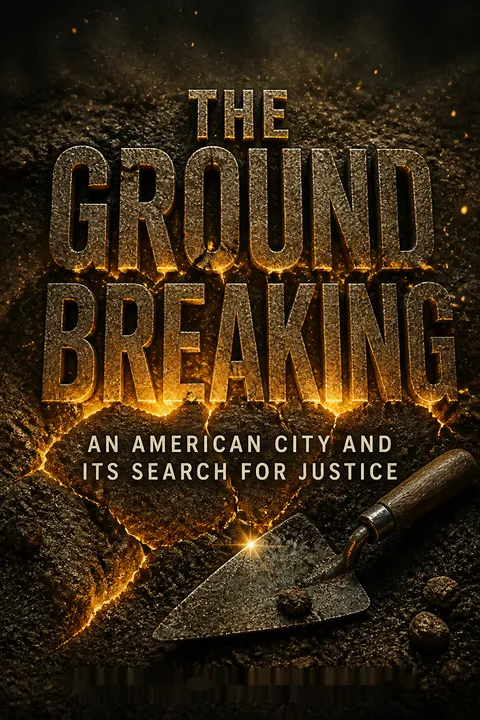
The Ground Breaking examines the 1921 Tulsa Race Massacre and its century-long cover-up. Reviews praise Ellsworth's meticulous research and decades-long dedication to uncovering truth, though some criticize the book's focus on the author himself rather than the Black community. Most readers appreciate the detailed account of how Tulsa systematically erased this history—removing newspaper articles, destroying records, and silencing discussion. The book focuses more on the aftermath, cover-up, and search for mass graves than the massacre itself. Readers found it essential, heartbreaking reading that exposes America's racial violence and institutional denial.
People Also Read


Download PDF
Download EPUB
.epub digital book format is ideal for reading ebooks on phones, tablets, and e-readers.








































