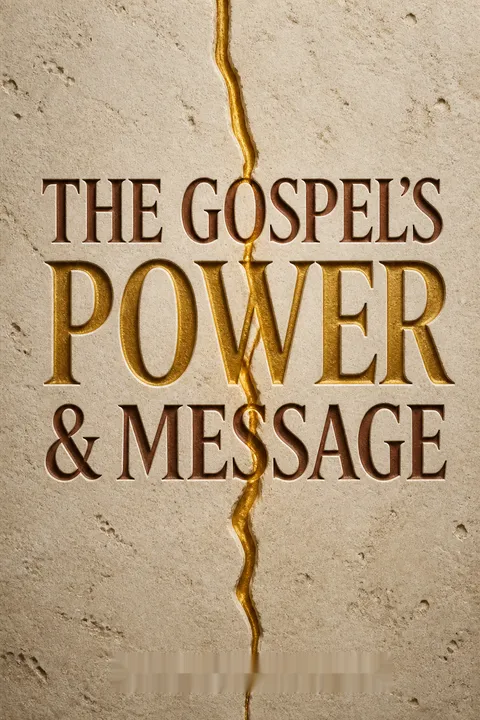

Key Takeaways
1. The Gospel is the unchanging, preeminent message of Christianity.
The gospel of Jesus Christ is the greatest of all treasures given to the church and the individual Christian.
Centrality of the Gospel. The gospel is not merely an introductory message to Christianity, but the message of Christianity itself, foundational to all other biblical truth. It is the power of God for salvation, the means of sanctification, and the pristine fountain of all Christian motivation. To neglect it is to invite all other maladies into the church.
Unchanging Truth. Paul Washer emphasizes that the gospel is a specific, eternal, and immutable message, not to be revised or adapted for different cultures or epochs. Any attempt to water down its truth, remove its offense, or repackage it for contemporary relevance results in a "different gospel, which is not another," and brings a curse upon those who preach it. This singular message, delivered once for all to the saints, must be guarded and proclaimed in its apostolic purity.
Lifetime Pursuit. Believers are called to a lifetime of careful investigation into the gospel's glory, recognizing that even after an eternity, its depths remain unsearchable. Genuine, enduring passion for God is born out of an ever-increasing understanding of what God has done in Christ. This pursuit is the "magnificent obsession" that fuels true devotion and effective proclamation, far surpassing fleeting emotional experiences or humanistic strategies.
2. The Gospel is inherently scandalous and exclusive, challenging all humanistic thought.
The true gospel is radically exclusive.
Offensive to the World. The primitive gospel was, and remains, scandalous because it contradicts every tenet of contemporary culture, including relativism, pluralism, and humanism. To the Jew, it was blasphemy; to the Greek, absurdity. It awakens man from his self-imposed slumber, exposing his fallen state and demanding absolute submission to Christ, rejecting personal autonomy.
Radical Exclusivity. The gospel declares Jesus is the way, not a way, forcing a choice between Christ and all other hopes. This exclusivity is intolerable to a pluralistic world that seeks to validate all religious views. Yet, to compromise this truth is to deny Christ and leave the world without a Savior. The gospel's power lies in its scandalous nature, designed by God to humble human pride and ensure that "He who glories, let him glory in the LORD."
Unbelievable Message. The gospel's claims—that a crucified Jewish carpenter is the eternal Son of God, Savior, King of Kings, and Lord of Lords—are so astounding that its spread is supernatural proof of its divine origin. It defies human logic and wisdom, demonstrating that conversion is an "impossible" work of God's Spirit, not human brilliance or clever strategies. Therefore, faithful proclamation, not apologetic prowess, is the means of its advance.
3. Understanding God's holy character is essential to grasping the gravity of sin.
To understand the heinous nature of the sin they are committing, men must come to understand Scripture’s exalted view of the One against whom they are sinning.
Sin Against God. All sin, regardless of its impact on man or creation, is ultimately and most importantly sin against God. Its heinous nature is not merely due to its devastation, but primarily because it offends an infinitely glorious God worthy of perfect love, devotion, and obedience. An ignorance of God leads to a low view of sin, treating it as a minor matter.
God's Attributes Revealed. To expose the sinfulness of sin, preachers must proclaim the full counsel of Scripture concerning God's attributes, especially His supremacy, sovereignty, holiness, righteousness, and love.
- Supremacy: God is the Most High, before whom nations are a drop from a bucket, and all things exist for His glory.
- Sovereignty: He does according to His will in heaven and earth; no one can thwart His plans.
- Holiness: He is transcendent, separate from all creation and all moral corruption, pure and impeccable.
- Righteousness: His nature is rightness and moral excellence; He loves righteousness and hates evil, judging all with perfect justice.
- Love: His love is benevolent, merciful, gracious, and patient, supremely manifested in giving His Son.
Consequences of Ignorance. A low view of God, often fueled by humanistic trends in Christianity, prevents men from fearing the Lord or comprehending the atrocious nature of their sin. This ignorance leads to idolatry and a distorted view of self, hindering true repentance and appreciation for salvation. Preaching God's full character is a loving act, necessary to break hearts and point them to Christ.
4. Man's pervasive depravity makes him utterly unable to save himself.
Man’s total helplessness and inability to save himself is one of the darkest truths in Scripture.
Universal Corruption. The Bible unequivocally declares that "all have sinned and fall short of the glory of God." Sin is not a rare phenomenon but universal, affecting every member of Adam's race. This pervasive depravity means moral corruption has affected man's entire being—body, intellect, and will—from birth.
Total Depravity Defined:
- Not total loss of God's image: The image is defaced, not erased.
- Not total ignorance of God: All men know enough to be without excuse, but suppress the truth.
- Not absence of conscience: Conscience exists, but men are not wholeheartedly obedient to it.
- Not incapacity for virtue: Men can do good deeds, but not from genuine love for God.
- Not as bad as possible: All are capable of unspeakable crimes, but common grace restrains them.
- Not lack of faculties: Man has intellect, will, and freedom, but his inability is moral, stemming from hostility toward God.
Spiritual Death and Moral Inability. Man is born spiritually dead, alienated from God's life, and unresponsive to His will. This leads to moral inability: man cannot love, obey, or please God because he will not, due to his inherent hostility. His will is in bondage to his depraved nature, always freely choosing evil. This truth underscores that salvation is impossible apart from God's supernatural power.
5. God's righteous indignation and hatred of sin are undeniable realities.
God is a just judge, and God is angry with the wicked every day.
Divine Anger. Contrary to popular evangelical sentiment, God is an angry God, and this is a good thing. His anger is not an irrational emotion but a holy displeasure and righteous indignation against sin, stemming from His holiness, righteousness, and love. If God did not burn with indignation over evil, He would not be truly good or moral.
God's Hatred. The Scriptures explicitly state that God not only hates sin but also "all workers of iniquity." This hatred is not a denial of His love but a necessary consequence of it; His intense love for righteousness demands an equal hatred for evil. God's hatred is holy, just, and exists in perfect harmony with His other attributes.
Holy War. The hostility between God and the unrepentant sinner is mutual. When men declare war on God, God turns Himself against them as an enemy, taking vengeance on His adversaries. This "holy war" is not a relic of the Old Testament but an enduring biblical truth. Christ, who gave His life for the nations, will also strike them down and rule them with a rod of iron, appearing with His robe dipped in the blood of His enemies.
6. The Cross resolves God's divine dilemma: Justification through propitiation.
Whom God set forth as a propitiation by His blood, through faith.
The Divine Dilemma. The greatest problem in Scripture is: How can a just God pardon the wicked? God is righteous and must punish sin, yet He also offers forgiveness. The proverb "He who justifies the wicked... is an abomination to the LORD" highlights this paradox. God cannot simply "forgive and forget" without compromising His justice, denying His glory, or allowing creation to descend into anarchy.
God's Public Display. God "set forth" or "displayed publicly" His Son on the cross to demonstrate His righteousness. This public act was necessary because throughout history, in His forbearance, God had "passed over the sins that were previously committed," granting forgiveness without immediate judgment. The cross vindicated God, proving that His past pardons were not arbitrary but based on a future, perfect sacrifice.
Christ as Propitiation. The answer to the dilemma is "propitiation," meaning Christ's death took our sin away, satisfied God's divine justice, and appeased His wrath. On the cross, Christ stood in the place of His guilty people, their sin imputed to Him, and He bore the full measure of God's wrath. Because Jesus paid the debt in full, God can now justly extend mercy to the guilty, being both "just and the justifier of the one who has faith in Jesus."
7. Christ's unique qualifications as God-Man made Him the perfect Redeemer.
To be the Savior of the world it was necessary that Christ be God, and yet it is also true that the justice of God required sin to be punished in the same nature in which it had been committed.
Necessity of Deity. God alone is Savior, and He shares this prerogative with no one. Therefore, for Jesus to be the Savior, He must be God in the strictest sense. His divine nature gave infinite dignity to His person and infinite value to His sacrifice, enabling Him to endure the infinite wrath of God and pay the debt for countless sins. Without His deity, His sacrifice would have been insufficient.
Necessity of Humanity. Justice required sin to be punished in the same nature in which it was committed. As man broke God's law, a man must die. Christ, being truly man, could stand in the place of the guilty. His perfect human obedience (active obedience) made His sacrificial death (passive obedience) acceptable to God and provided the perfect righteousness to be imputed to His people.
Perfect Mediator. As the God-Man, Jesus is uniquely qualified to mediate between God and man. His true humanity allows Him to sympathize with our weaknesses, while His true deity enables Him to deal with God on equal terms. He is the "Man Christ Jesus," who laid His hand upon both God and man, reconciling them through His dual nature and perfect work.
8. Christ's forsakenness and curse on the Cross paid the full price for sin.
My God, My God, why have You forsaken Me?
Forsaken of God. Christ's cry from the cross, "My God, My God, why have You forsaken Me?", reveals the core meaning of His death: He was truly abandoned by God. This was not a symbolic forsakenness, but a real withdrawal of the Father's presence, as Christ bore the iniquity of His people. He became a "worm and no man," a serpent lifted up, and a scapegoat driven out, symbolizing His identification with sin and its consequences.
Made Sin and a Curse. The sinless Messiah was "made to be sin" and became "a curse for us." This means our sins were imputed to Him, and God treated Him as guilty of our crimes, pouring out the judgment we deserved. He did not become morally corrupt, but bore our guilt, experiencing unspeakable anguish as the beloved Son judged by His own Father.
Bearing the Divine Curse. Christ bore the full weight of the divine curse for violating God's law, receiving the opposite of every blessing. He was "singled out for adversity," crushed under God's wrath, and made a spectacle to angels and devils. This terrifying cost, where God "did not spare Him," demonstrates the immense hatred God has for sin and the immeasurable love that led Him to sacrifice His Son for our redemption.
9. The Resurrection is the invincible proof of Christ's divine Sonship and our justification.
Why do you seek the living among the dead? He is not here, but is risen!
Historical Reality. The physical, historical resurrection of Jesus Christ is a non-negotiable pillar of the Christian faith. Without it, our faith is worthless, we are still in our sins, and those who died have perished. The empty tomb, the inability of enemies to produce a body, and the transformation of disciples provide strong historical and legal evidence, though the ultimate foundation of faith is the Holy Spirit's regenerating work.
Vindication of Christ. The resurrection publicly and powerfully declared Jesus to be the Son of God and the promised Messiah. It was God's "mighty, striking, and triumphant" vindication of Christ, proving His divine sonship and messiahship beyond refutation. All the accusations and mockeries against Him were silenced by the empty tomb and His appearances.
Confirmation of Faith. Christ "was raised because of our justification," meaning His resurrection is God's divine pledge that His atoning sacrifice for our sins has been accepted and our justification secured. It confirms that His redemptive work on the cross was complete and effective. This truth provides unwavering assurance that by faith in His sacrifice, we are declared righteous before God.
10. Christ's Ascension establishes Him as the universal Lord, High Priest, and Judge.
Therefore God also has highly exalted Him and given Him the name which is above every name, that at the name of Jesus every knee should bow, of those in heaven, and of those on earth, and of those under the earth, and that every tongue should confess that Jesus Christ is Lord, to the glory of God the Father.
Exaltation to Lordship. Forty days after His resurrection, Christ ascended into heaven and was enthroned at the right hand of God, receiving "all authority... in heaven and on earth." This divine decree establishes His universal and absolute sovereignty, making His lordship immutable and incontestable. He is the "King of Glory," to whom all creation must ultimately bow.
High Priest and Forerunner. As the glorified God-Man, Christ serves as our merciful and faithful High Priest, interceding for His people before God's throne. He is our "Forerunner," having gone before us into glory, securing our place and guaranteeing our future glorification. His intercession includes:
- Appearing before God as the once-for-all sacrifice.
- Lifting actual prayers and petitions for His people.
- Defending believers against the devil's accusations.
- Providing comfort and grace in times of need.
Universal Judge. Christ's lordship also means He is the appointed Judge of all. Every moral creature will one day bow and confess Him as Lord, either in joyful submission or terrifying judgment. This truth demands complete allegiance from all men, for there will be dire consequences for those who refuse to honor the Son. He is the "Lamb" who takes away sin, but also the "Lamb" whose wrath will cause the greatest men to hide from His face.
Review Summary
The Gospel's Power & Message receives overwhelmingly positive reviews (4.59/5) for its clear, biblically-saturated presentation of the gospel. Readers praise Washer's straightforward, passionate teaching that emphasizes man's depravity, God's wrath, and Christ's redemptive work. Many appreciate the Scripture-heavy approach and call it essential reading for Christians and pastors. Common themes include the book's power to deepen gospel understanding and challenge watered-down modern evangelism. Some critics note repetitiveness and an archaic writing style, but most find it profoundly impactful and transformative.
People Also Read




Download PDF
Download EPUB
.epub digital book format is ideal for reading ebooks on phones, tablets, and e-readers.








































