
Key Takeaways
1. Expository Apologetics: A Universal Call to Every Believer
Every believer is required and expected to be an apologist (1 Pet. 3:15).
Apologetics redefined. Apologetics is not an elite discipline for intellectual giants or formal debaters; it's a practical expression of knowing what we believe, why we believe it, and communicating that effectively to others. This biblical mandate applies to every Christian, regardless of their academic background or perceived gifting. It's about defending the faith with confidence, rooted in humility and holiness.
Biblical foundation. The core of expository apologetics is found in 1 Peter 3:15, which calls all believers to "always being prepared to make a defense to anyone who asks you for a reason for the hope that is in you; yet do it with gentleness and respect." This means our defense must be biblical, easy to remember, and conversational, reflecting Christ's character even amidst opposition and suffering.
Beyond debate. This approach moves apologetics out of the academic tower and into the pew, making it accessible for everyday encounters. It emphasizes that our goal is not to win arguments for argument's sake, but to win souls by addressing legitimate objections and pointing people to Christ, understanding that our faith will naturally provoke curiosity and opposition.
2. Unbelief Stems from Suppressed Truth, Not Mere Ignorance
For although they knew God, they did not honor him as God or give thanks to him, but they became futile in their thinking, and their foolish hearts were darkened.
The sin problem. Romans 1:18-32 reveals that unbelief isn't primarily an information deficit, but a sin problem. People "suppress the truth" they inherently know about God through general revelation, leading to a downward spiral of ungodliness and unrighteousness. They are "without excuse" because God's "eternal power and divine nature" are "clearly perceived" in creation.
Fools, not just uninformed. Those who deny God's existence are described as "fools" (morons) who claim wisdom apart from God, exchanging His glory for idols. This understanding shapes our apologetic strategy:
- Don't be intimidated by worldly wisdom.
- Recognize their blindness and self-deception.
- Focus on repentance, not just information.
Gospel as the solution. Since the problem is sin, the solution is the Gospel, which is "the power of God for salvation to everyone who believes." Apologetics must always be gospel-centered, aiming to win the person, not just the argument, by exposing their need for a Savior and reminding them of the truths they already suppress.
3. Paul's Model: Scripture-Driven, Gospel-Centered Engagement
Paul was most certainly in touch with the way people think and how they respond to the claims of the gospel.
Apostolic example. The Apostle Paul, particularly in Romans, provides a classic example of expository apologetics. He frequently anticipates and addresses objections from an imaginary interlocutor, grounding his answers firmly in Scripture. These aren't mere rhetorical devices; they reflect real questions and struggles he encountered or wrestled with himself.
Contextual adaptation. Paul's approach varied depending on his audience.
- Jewish audience (Romans, Thessalonica): Extensive use of Old Testament quotes and reasoning from the Scriptures.
- Gentile audience (Acts 17, Mars Hill): Allusions to creation, references to their own poets/philosophers, but still overtly presenting biblical truth (creation, fall, redemption, consummation) and the resurrection of Jesus.
Uncompromising message. Despite adapting his presentation, Paul never compromised the core message. He always led to the gospel, exposing sin and calling for repentance. His goal was not to avoid offense or gain popularity, but to proclaim Christ crucified, even when it was a "stumbling block to Jews and folly to Gentiles."
4. Creeds, Confessions, and Catechisms: Essential Apologetic Tools
Ancient creeds are the wellspring of apologetic thought for at least three reasons.
Historic and apologetic. Creeds (like the Apostles', Nicene, Athanasian) and confessions (like the Westminster or London Baptist) are not man-made substitutes for Scripture, but summaries of biblical truth developed in response to heresy and opposition. They clarify what Christians believe and why, providing a ready defense against common errors.
Practical benefits: These tools offer several advantages for the expository apologist:
- Historic: Connects believers to the enduring faith of the church, showing that our beliefs are not novel.
- Memorable: Their concise, often poetic nature makes them easy to memorize, enabling quick recall in conversations.
- Transferable: Excellent for discipleship, teaching new believers and children the foundational truths of Christianity systematically.
Defining orthodoxy. Familiarity with these documents helps identify and refute heresies (e.g., Arianism, Modalism) by clearly articulating orthodox doctrines like the Trinity and Christ's dual nature. They equip believers to confidently state what they believe, rather than being caught off guard by theological challenges.
5. The Moral Law: God's Enduring Standard for All Humanity
The moral Law doth for ever bind all, as well justified persons as others, to the obedience thereof, and that not only in regard of the matter contained in it, but also in respect of the authority of God the Creator; who gave it.
Universal and perpetual. The moral law, summarized in the Ten Commandments, is a transcendent, unchanging standard binding on all people, in all places, for all times. It reflects God's very character and is the basis upon which He judges all humanity, not just believers. This is why God judges even pagan nations for their unrighteousness.
Jesus's affirmation. Jesus, in the Sermon on the Mount, didn't abolish the law but brought it into "sharper ethical focus," revealing its depth to encompass the heart and mind, not just outward actions. This exposes the sinfulness of all, religious and irreligious alike, and highlights the need for a Savior.
Cultural relevance. Understanding the moral law is crucial for addressing contemporary ethical dilemmas. Issues like slavery, discrimination, and child abuse are universally condemned, yet without God's law, the basis for such condemnation becomes arbitrary and unsustainable, leading to moral decay and nihilism.
6. Answering "Why Pick and Choose?": Understanding the Law's Divisions
The difference is, we have reason to do so, and they do not.
Threefold division of the law. To answer the common objection, "Why do you keep some Old Testament laws but not others?", we must understand the biblical distinction between:
- Moral Law: Forever binding on all (e.g., Ten Commandments).
- Ceremonial Law: Prefigured Christ and His work, abrogated by His fulfillment (e.g., dietary laws, sacrificial system).
- Civil/Judicial Law: Specific to ancient Israel as a nation, not universally binding today, though their "general equity" (underlying moral principles) remains useful.
Integrity in application. This framework allows Christians to "pick and choose" with integrity, demonstrating a consistent hermeneutic rooted in progressive revelation and Christ's fulfillment. When confronted, we can acknowledge our selective application while exposing the arbitrary "picking and choosing" of those who reject God's authority.
Exposing hypocrisy. By pointing to passages like Leviticus 18 (which includes prohibitions against incest, adultery, child sacrifice, sodomy, and bestiality), we can show that even skeptics implicitly uphold certain moral laws while rejecting others. This levels the playing field, forcing them to articulate their own moral standard and its source, often revealing its inconsistency and man-centeredness.
7. The Expository Apologetic Waltz: A Three-Step Conversational Method
At some point in a meaningful conversation, the person to whom you are speaking will make a truth claim.
A graceful engagement. This three-step process provides a structured yet gentle way to engage in apologetic conversations:
- Show their worldview is inconsistent: Listen carefully, summarize their position generously, then gently expose the logical flaws or inconsistencies in their truth claim.
- Show where they're counterfeiting: Identify the biblical/theological source of the good ideal they are promoting (e.g., "rights" rooted in God's image), cite that source, and explain how their version is an inferior, flawed counterfeit.
- Show what the real thing looks like: Explain why the Christian worldview is true (based on reliable revelation), better (rooted in a timeless, perfect, external God), and why it ultimately matters (judgment is coming, and the Gospel offers salvation).
Leading to the Gospel. The "Waltz" is designed to move beyond mere intellectual sparring. Each step aims to dismantle false presuppositions and highlight the coherence and superiority of the Christian worldview, ultimately creating an opening to present the Gospel as the ultimate answer and hope. It's about demonstrating the need for Christ, not just winning an argument.
8. Preaching and Teaching: Cultivating an Apologetic Mindset
For this reason, I believe every sermon ought, in part, to be an exercise in expository apologetics.
Proclamation as persuasion. Preaching and teaching are acts of persuasion, calling for a response to Christ. Since the "word of the cross is folly to those who are perishing" and even believers wrestle with doubt, every sermon and lesson should incorporate expository apologetics to address anticipated objections and strengthen faith.
Practical preparation: To preach and teach like an expository apologist:
- Read like a skeptic: Anticipate objections, misunderstandings, and points of offense in the text.
- Argue with yourself: Internally challenge your points to ensure clarity and defensibility.
- Preach to people, not at them: Connect with real-life doubts and questions, aiming to change minds and hearts.
Sources of objections: Draw from various sources to understand common challenges:
- Personal interactions: Friends, family, and evangelistic encounters provide real-time questions.
- Broader culture: News and social media reveal popular objections and underlying biases.
- Academy and history: Academic trends (New Atheism, Jesus Seminar) and historical theological debates offer deeper insights into enduring objections.
Discipleship's role. Discipleship is inherently apologetic, equipping believers to know and defend their faith. Using creeds, confessions, and catechisms systematically helps disciples connect rote memory to real-life application, preparing them to be effective apologists themselves.
Review Summary
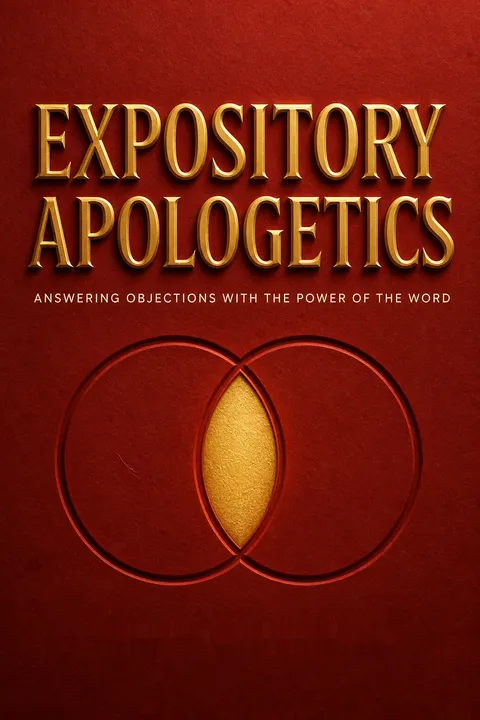
Expository Apologetics receives overwhelmingly positive reviews (4.35/5) for making presuppositional apologetics accessible to everyday Christians. Readers praise Baucham's biblical, practical approach that emphasizes defending faith through Scripture rather than philosophical arguments. The book teaches Christians to engage conversations naturally while keeping the gospel central. Reviewers appreciate its focus on catechisms, creeds, and the Ten Commandments as tools, plus practical guidance for apologetic encounters. Some note the book feels disjointed or lacks conversational examples. Critics wanting technical depth found it basic, but most consider it essential reading for equipping all believers—not just specialists—to defend their faith biblically and winsomely.
People Also Read


About the Author
Other books by Voddie T. Baucham Jr.

Download PDF
Download EPUB
.epub digital book format is ideal for reading ebooks on phones, tablets, and e-readers.








































