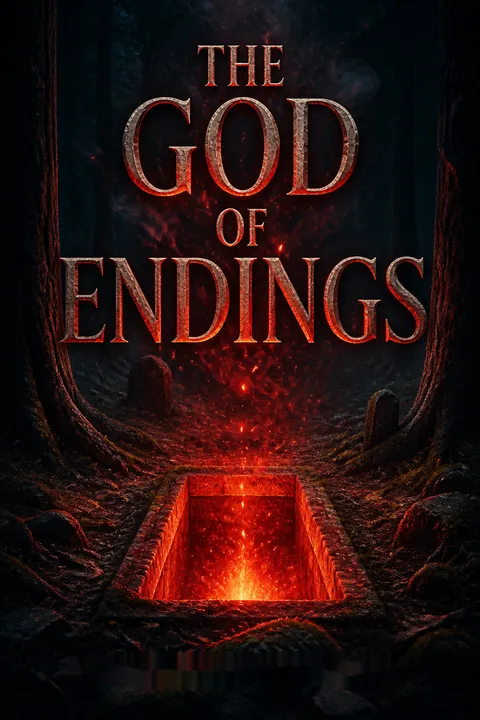

Plot Summary
Death's Apprentice
Anna's earliest memories are steeped in the presence of death—her father is a gravestone carver, her mother dies young, and her brother succumbs to illness. In 1830s New York, death is both feared and mythologized, and Anna's family is swept up in the superstitions of the time. When tuberculosis ravages her village, Anna witnesses the community's desperate rituals to ward off evil, culminating in the desecration of graves and the forced consumption of ashes. Orphaned and ostracized, Anna is rescued by her enigmatic grandfather, who whisks her away from the violence and fear of her childhood, setting her on a path that will forever entwine her with death and immortality.
The Gift of Immortality
Near death from illness, Anna is transformed by her grandfather into an immortal being—a vampire, though the word is never spoken. She awakens in her own grave, reborn but forever changed, and must learn to survive on blood. Her grandfather, a centuries-old being himself, teaches her the rules of their kind: she will never age, never die, but must feed on the living. Anna's new life is marked by isolation, secrecy, and the struggle to reconcile her humanity with her monstrous hunger. She is sent away to Eastern Europe, where she is raised among others like herself, learning to hunt and to hide, and discovering the loneliness and pain that come with immortality.
A School of Innocents
In 1984, Anna—now Collette LeSange—runs an elite preschool in upstate New York, creating a sanctuary of beauty and innocence for her young students. The school is her greenhouse, a place where she can nurture life and shield herself from the world's cruelties. Yet, as she cares for the children, she is acutely aware of her own monstrous nature and the hunger that gnaws at her. The children, especially the frail and artistic Leo, become both her solace and her torment, reminding her of all she has lost and all she must never allow herself to love too deeply.
Hunger and Restraint
Anna's hunger is a constant, growing threat. She feeds on animals—cats, cows, wild creatures—carefully avoiding humans, especially children. But her hunger intensifies, becoming unpredictable and insatiable. She fears losing control and harming those she cares for. The school's routines and rituals are her bulwark against chaos, but cracks begin to show. Nightmares, sleepwalking, and mysterious injuries suggest that her body is acting on its own, driven by needs she can no longer suppress. The line between self-control and monstrosity blurs, and Anna is haunted by the possibility that she may become the very thing she fears.
The Past Returns
Anna's past is never far behind. Memories of her childhood, her transformation, and the friends and lovers she has lost—Vano, Piroska, Paul—surface in dreams and waking visions. Encounters with other immortals, like Agoston, and the reappearance of her grandfather's influence, remind her that she is not alone in her condition, but also not truly at home anywhere. The world has changed, but Anna remains an outsider, burdened by centuries of grief and guilt. The past intrudes on the present, threatening the fragile peace she has built.
The Child Leo
Leo, a sickly, sensitive boy at Anna's school, becomes the focus of her care and concern. His home life is troubled—his mother, Katherine, is addicted and neglectful; his stepfather, Dave, is cold and possibly abusive. Leo's older brother, Max, has died in a tragic accident, and Leo carries the secret guilt of that loss. Anna sees in Leo a reflection of her own lost innocence and the children she could never save. As Leo's health deteriorates and his family unravels, Anna is drawn ever closer to him, torn between her desire to protect him and her fear of what she might do if her hunger overwhelms her.
The Weight of Memory
Anna's immortality is a curse of memory—she cannot forget the people she has loved and lost, nor the mistakes she has made. The deaths of her family, her friends, and the children in her care accumulate like stones in her heart. She is tormented by the memory of Halla, a street child she failed to save in Alexandria, and by the knowledge that every attachment she forms is doomed to end in loss. The god of endings—Czernobog—becomes a symbol of the inevitability of death and change, a presence she feels stalking her through the centuries.
The God of Endings
Czernobog, the Slavic god of endings, is both a literal and metaphorical force in Anna's life. He represents the inescapable truth that all things must end, that every love and every life is temporary. Anna's dreams and visions are filled with fire, ash, and the sense of being pursued by this god. Yet, through her suffering, she comes to see that endings are also necessary for new beginnings. The pain of loss is the price of love, and to refuse endings is to refuse life itself. Anna must learn to accept the god of endings, to let go of the past, and to open herself to the possibility of something new.
The Door Opens
As Anna's hunger grows uncontrollable and her life unravels, she begins to dig a grave in the woods—a compulsion she does not understand but cannot resist. The grave becomes a symbol of her readiness for an ending, a door to whatever comes next. She is haunted by the memory of Halla, who appears to her in dreams, urging her not to leave her behind again. Anna realizes that she is being called to make a choice: to embrace the end of her old life and to risk everything for the sake of love, even if it means facing the unknown.
The Grave Digger
When Leo falls gravely ill and his mother abandons him, Anna takes him into her home. As his condition worsens, she is faced with an impossible choice: let him die, or use her power to save him, knowing that it will make him like herself—immortal, but forever changed. Anna's grave becomes the site of this transformation, a place where endings and beginnings meet. She performs the exchange, giving Leo her own blood and taking his death into herself. It is an act of love and sacrifice, a promise kept to Halla and to all the children she could not save.
The Price of Love
The aftermath of Leo's transformation is fraught with uncertainty. Anna must stage his death, endure the suspicion of the authorities, and face the grief of his family and community. She is wracked with guilt and fear—what if she has only doomed him to a life of loneliness and pain? Yet, in the darkness, she waits by his grave, hoping for a sign that her gift has taken root, that Leo will awaken to a new life. The price of love is loss, but also the possibility of redemption.
Monsters and Mothers
Anna's relationship with Katherine, Leo's mother, and with her own grandfather, is a meditation on the nature of motherhood and monstrosity. Both women are flawed, both cause harm to those they love, yet both are driven by a desperate need to protect and to be loved. Anna must confront her own capacity for violence and her longing for connection, recognizing that to be a mother—or a monster—is to be both creator and destroyer, giver and taker. The line between love and harm is thin, and the courage to care is also the courage to risk loss.
The Final Exchange
As Anna prepares to leave her old life behind, she is visited by the ghosts of her past—Vano, Halla, her father—and by the god of endings. She comes to understand that to live is to accept the inevitability of loss, to hold what is given tenderly but loosely, and to trust that every ending makes space for something new. She promises Halla that she will not leave her behind again, and she waits by Leo's grave, ready to welcome him into a new existence. The final exchange is not just of blood, but of hope for despair, of love for fear, of life for death.
The Promise Kept
In the end, Anna's act of love is both an ending and a beginning. She keeps her promise to Halla, to Leo, and to herself: to choose everything, even with its pain and uncertainty, over nothing. As Leo stirs in the earth, Anna is ready to guide him into his new life, to face the future together, and to accept whatever endings and beginnings may come. The god of endings is also the god of gifts, and Anna, at last, is ready to receive.
Analysis
A meditation on immortality, loss, and the courage to loveThe God of Endings is a profound exploration of what it means to live with the knowledge of death and the inevitability of loss. Through Anna's journey, the novel interrogates the costs and gifts of immortality: the pain of endless memory, the temptation to withdraw from life, and the risk inherent in every act of love. The god of endings—Czernobog—is not merely a destroyer, but a necessary force that makes space for new beginnings. The novel suggests that to truly live is to accept the cycle of endings and beginnings, to hold what is given with gratitude and to let go when the time comes. The courage to love, even knowing it will end, is the ultimate act of defiance against despair. In a world marked by suffering and impermanence, the choice to embrace everything, rather than nothing, is both a gift and a responsibility. The God of Endings invites readers to consider the meaning of care, the complexity of harm, and the possibility of redemption through the acceptance of change.
People Also Read
Characters
Anna/Collette LeSange
Anna is the protagonist, a woman transformed into an immortal being as a child after the loss of her family to disease and superstition. Her journey is one of survival, loneliness, and the search for meaning in a world where she can never truly belong. As Collette LeSange, she creates a sanctuary for children, seeking to nurture innocence and beauty as a way to atone for the violence and loss that define her existence. Anna is deeply introspective, burdened by memory and guilt, and struggles to reconcile her monstrous nature with her longing for love and connection. Her development is marked by cycles of hope and despair, culminating in the courage to risk everything for the sake of another.
Leo Hardman
Leo is a young, sickly boy at Anna's school, marked by the trauma of his brother's death and his mother's neglect. Sensitive and gifted, Leo finds solace in art and in Anna's care, but is haunted by the belief that he is to blame for Max's drowning. His relationship with Anna is one of mutual need—she sees in him a chance for redemption, while he finds in her the safety and understanding he lacks at home. Leo's journey is one of suffering and resilience, and his transformation at the novel's end is both a rescue and a rebirth, offering hope for a new beginning.
Katherine Hardman
Katherine is Leo's mother, a woman undone by grief, addiction, and self-loathing. Her relationship with Leo is fraught—she loves him, but her pain and neediness often make her harmful and unreliable. Katherine's interactions with Anna are marked by cycles of intimacy and betrayal, apology and manipulation. She is both victim and perpetrator, a mother who cannot protect her child and who ultimately abandons him. Katherine's character is a study in the complexity of harm and care, and her fate is a cautionary tale about the costs of denial and self-destruction.
Grandfather (Vadim Semenov/George Benton)
Anna's grandfather is the one who transforms her into an immortal, believing he is giving her a gift. He is a survivor, a warrior, and a manipulator, more concerned with strength and endurance than with tenderness. His relationship with Anna is complicated—he rescues her, but also abandons her, believing that hardship will make her strong. He represents the old world, with its harsh lessons and its refusal to apologize. Yet, he also offers Anna a place among her own kind, and his presence is a reminder of the possibility of community, even for the monstrous.
Agoston/Philippe
Agoston is Anna's childhood guardian, a fellow immortal who serves her grandfather and later reappears in her life as Philippe. He is both terrifying and comforting, a figure of strength and endurance. Agoston's role is to guide, protect, and occasionally challenge Anna, reminding her of her origins and the community of immortals to which she belongs. He is pragmatic, accepting of the world's violence, and offers Anna a perspective on survival that is both comforting and unsettling.
Vano
Vano is Anna's first love and spiritual guide during her years in Eastern Europe. Sensitive, wise, and attuned to the mysteries of the world, Vano teaches Anna about the old gods, the cycles of nature, and the necessity of endings. His death is a defining trauma for Anna, and his presence lingers in her dreams as a symbol of hope, courage, and the promise of new beginnings. Vano's influence shapes Anna's understanding of loss and transformation.
Halla
Halla is a street child Anna befriends in Alexandria, a gifted artist who dreams of escaping poverty and suffering. Anna's failure to save Halla—her refusal to adopt or transform her—becomes a source of lifelong guilt and sorrow. Halla's ghost haunts Anna, urging her not to make the same mistake again. She represents the possibility of redemption through courage and the willingness to choose everything, even with its risks, over nothing.
Piroska
Piroska is the wise woman who shelters Anna and other outcasts in Eastern Europe. She is a healer, a teacher, and a source of comfort, embodying the possibility of community and care even in a brutal world. Her death at the hands of fearful villagers is a pivotal loss for Anna, reinforcing the dangers of difference and the inevitability of endings.
Ehru
Ehru is Vano's twin brother, a fellow immortal marked by trauma and rage. He is both a companion and a cautionary example for Anna, embodying the dangers of unchecked violence and the struggle to find peace. Ehru's journey from self-destruction to leadership in a new era is a testament to the possibility of transformation, even for the most damaged.
Katherine's Step-Father Dave
Dave is Katherine's husband and Leo's stepfather, a man who provides materially but is emotionally distant and often antagonistic. His relationship with Katherine is marked by conflict and mutual disappointment, and his departure leaves Leo even more vulnerable. Dave's perspective offers a counterpoint to Katherine's, highlighting the failures of adult care and the ways in which children are often left to fend for themselves.
Plot Devices
Nonlinear Narrative and Memory
The novel's structure is nonlinear, moving fluidly between Anna's childhood in the 1830s, her years of wandering and loss, and her present-day life as Collette LeSange. This structure mirrors the experience of immortality—time is not a straight line, but a series of overlapping memories, traumas, and longings. The use of memory as a plot device allows the reader to experience Anna's psychological reality, where the past is always present and every loss is cumulative.
The Grave as Symbol and Motif
The recurring image of the grave—first as a site of death, then as a place of rebirth, and finally as a door to transformation—serves as a central motif. Anna's compulsion to dig a grave in the woods is both a literal and symbolic act, representing her readiness for an ending and her hope for a new beginning. The grave is a place of fear, but also of promise, a threshold between worlds.
The God of Endings (Czernobog)
Czernobog, the Slavic god of endings, is both a mythic figure and a psychological force in the novel. He represents the inevitability of loss, the necessity of letting go, and the possibility that every ending makes space for something new. His presence is foreshadowed through dreams, visions, and the recurring imagery of fire, ash, and smoke alarms. Czernobog's pursuit of Anna is both literal and metaphorical, driving her toward the acceptance of change.
The Child as Catalyst
Children—Leo, Halla, the orphans, Anna herself—are central to the novel's emotional arc. Their innocence and suffering are both a source of hope and a reminder of the world's cruelty. The child is a catalyst for Anna's transformation, forcing her to confront her own capacity for love and harm, and to risk everything for the sake of another.
Art as Survival and Connection
Art—painting, drawing, teaching—is Anna's way of making sense of the world and connecting with others. It is both a means of survival and a form of resistance against the darkness. The act of creation is a way to hold onto beauty, to nurture life, and to find meaning in the face of loss. Art is also a way to pass on hope, to teach the next generation, and to keep the memory of the dead alive.
Foreshadowing and Symbolic Dreams
Anna's dreams are filled with symbols—fire, ash, graves, doors—that foreshadow the novel's climactic events. These dreams are both warnings and invitations, urging Anna to prepare for the ending that is coming and to find the courage to embrace it. The line between dream and reality is often blurred, reflecting the porous boundaries of Anna's immortal consciousness.
Download PDF
Download EPUB
.epub digital book format is ideal for reading ebooks on phones, tablets, and e-readers.








































