
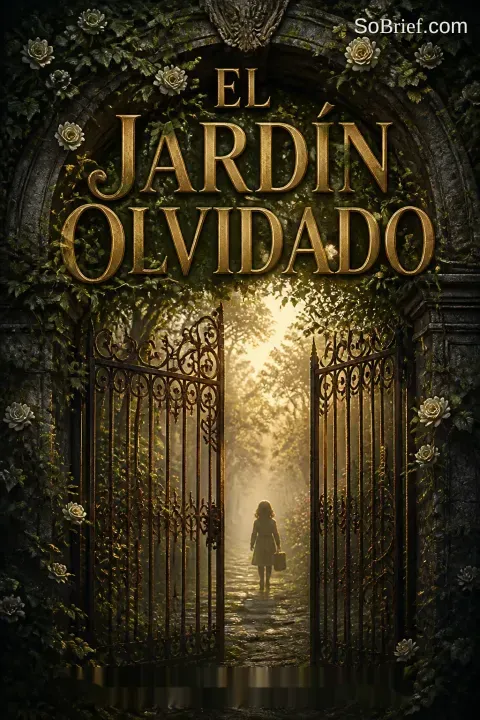


Summary Temporarily Unavailable
This summary is temporarily unavailable and is currently being updated. You can still explore the FAQs and other metadata below.
Plot Summary
Prologue
A little girl crouches behind wooden barrels on a ship at the London docks in 1913. The Authoress3 has told her to wait, that it is not safe yet, that they must be as quiet as mice. It is a game, like hide-and-seek.
She makes pictures in her mind as Papa taught her: sailors shouting, gulls cawing, the ship groaning as it prepares to depart. She knows who the lady is: the Authoress lives in the cottage beyond the maze on the estate, a place the little girl was forbidden to visit.
She knows about secrets, too: Mamma4 is not well, and some things must stay hidden. A boy finds her and asks her name, but she will not tell; it is part of the game. When he runs off after another child, the little girl hesitates, then leaves her hiding spot and follows him onto the open deck.
The prologue establishes the novel's central mystery through a child's limited perspective, creating dramatic irony that will not resolve for generations. The girl's innocence (treating her abandonment as a game) heightens the reader's unease. Key motifs are seeded: the Authoress as both protector and agent of separation, the maze as physical and psychological labyrinth, secrets kept to protect fragile mothers, and the tension between obedience and curiosity. The girl's decision to leave her hiding spot, defying the Authoress's instruction, sets in motion consequences that will span continents and decades. This is a story about the stories we are told to keep us safe and the truth that waits to be uncovered by those brave enough to stop hiding.
The Birthday Confession
At Nell1's 21st birthday party in Brisbane, 1930, held in the Foresters' building on Latrobe Terrace, her father Hugh8 leads her outside to a fallen gum tree. He has dreaded this moment for seventeen years. Taking her hands in his, he whispers the secret he and his wife Lil16 have kept: Nell is not their biological daughter.
Hugh found her as a small child, sitting alone on a white suitcase on the Maryborough wharf in 1913, after a ship arrived from England. No one claimed her. In the weeks that follow, Nell breaks her engagement to Danny, leaves her job at the newspaper shop, and withdraws from her younger sisters.
The easy affection between her and Hugh evaporates. She cannot believe, no matter how vehemently he insists, that he loves her as much as the daughters who are truly his. The book that was her life has been tossed into the air, its pages scattered beyond reassembly.
Hugh's confession is an act of love that functions as a wound. His belief that truth-telling is ethical collides with the reality that identity is fragile and socially constructed. Nell's response (breaking her engagement, withdrawing from family) reveals that when foundational stories about ourselves shatter, we often dismantle everything rather than live with the inconsistency. Her inability to meet Hugh's eyes afterward speaks to the profound alienation of discovering you are not who you thought you were. This moment echoes across the novel: secrets, once spoken, cannot be unspoken, and the cost of truth is sometimes the loss of the relationships it was meant to honor.
A Cottage in Cornwall
Nell1 dies at age 95 in a Brisbane hospital in 2005, her final words fragments about the Authoress3 and a boat. After the funeral, her younger sisters Phyllis and Dot reveal the family secret over tea: Nell was a foundling, discovered on the Maryborough wharf by Hugh8 when she was barely four years old.
The sisters never told Nell they knew. Days later, Ben, Nell's lawyer and friend at the antique center, arrives with her will. Nell has left Cassandra2 everything: the Paddington house, the antique stall, and something entirely unexpected.
A sealed envelope, kept with the will since Nell's diagnosis, contains the deeds to a cottage in Tregenna, Cornwall, purchased in December 1975 during a sudden and mysterious trip Nell took to England. A note stapled to the deed reads: "For Cassandra, who will understand why." Cassandra is baffled. Nell never mentioned the cottage or the trip.
This turning point shifts the novel's emotional weight from loss to inheritance. Nell's death, rather than ending her story, passes the torch to Cassandra. The aunts' revelation that they knew Nell's secret but never spoke of it illuminates the family's culture of protective silence, where love is expressed through complicity in denial. Ben's delivery of the will transforms grief into purpose: the cottage becomes a physical manifestation of the unknown self, a place where answers might be excavated. The cryptic note positions Cassandra as the intended recipient of a quest Nell could not complete, suggesting an intergenerational bond that transcends verbal confession.
The White Suitcase
Cassandra2 remembers the white suitcase from her own childhood: when she was ten and her mother Lesley13 first left her at Nell1 's, she disobeyed instructions and found the case beneath a fold-out bed in the downstairs flat. Now, after Nell's death, she retrieves it from the wardrobe.
Inside, wrapped in a tea towel, is a book of fairy tales, Magical Tales for Girls and Boys, by Eliza Makepeace.3 The frontispiece shows a fairy-like woman, the illustrator's caption reading "Your storyteller, Miss Makepeace." There is also a silver hairbrush with a leopard's head hallmark, a child's white dress, a bundle of letters, a charcoal sketch of a woman beneath a garden arch, and a lined notebook filled with Nell's scratchy, mold-damaged handwriting.
Reading the journal, Cassandra learns that Nell recognized the Authoress3 from recovered childhood memories and believed that finding Eliza Makepeace was the key to discovering her own identity. Nell had traveled to England in 1975 to trace her origins.
The suitcase serves as both literal and symbolic container: it holds the artifacts of a lost identity and the tools for its recovery. Cassandra's childhood memory of finding the case prefigures her adult role as detective, completing a circle of curiosity and disobedience that began decades earlier. The fairy tale book is particularly resonant: Eliza's stories, like all fairy tales, use fantasy to encode painful truths. Nell's journal transforms the reader from passive consumer of mystery to active participant, its mold-spotted pages a metaphor for memory itself (fragmented, water-damaged, requiring careful deciphering). The quest has now been formally handed from grandmother to granddaughter.
Mr. Snelgrove's Discovery
In London, 1975, Nell1 visits Mr. Snelgrove's cramped antiquarian bookshop in Cecil Court. The frail, irascible old man is dismissive until she shows him the fairy tale book. His demeanor shifts instantly: it is exceptionally rare, the only edition, with illustrations by Nathaniel Walker.5
He retrieves a reference book containing a biography of Eliza Makepeace.3 Eliza was born in 1888 in Battersea, daughter of Georgiana Mountrachet, who caused a society scandal by eloping with a penniless sailor named Jonathan Makepeace. Jonathan died before Eliza's birth.
Georgiana raised her twins in poverty until her death from consumption in 1900, after which eleven-year-old Eliza was sent to live with her mother's estranged family at Blackhurst Manor in Cornwall. Eliza published her only collection of fairy tales in August 1913, then vanished. The biography notes she was the subject of a charcoal sketch by Nathaniel Walker titled The Authoress.3
This is the first major revelation in Nell's investigation: the Authoress has a name, a birthplace, and a documented link to the Mountrachet family. Snelgrove functions as the classic gatekeeper figure of the quest narrative. The biography's details establish the class tensions that will drive the tragedy: the scandal of Georgiana's elopement, the poverty of Eliza's childhood, and the social gulf between Battersea slums and the Cornish manor. The mention of Eliza's twin Sammy introduces the theme of the lost double. The note that Eliza disappeared after 1913 sets up the central question: what happened to her, and how did a child end up alone on a ship to Australia?
Mamma in the Gallery
At the Tate Gallery, Nell1 finds Nathaniel Walker5's charcoal portrait of Eliza,3 titled The Authoress.3 She studies the unsmiling face, willing it to speak and reveal why Eliza put a little girl on a boat over sixty years ago. As Nell turns to leave, a second portrait catches her eye: a dark-haired woman with pale skin and plump red lips, painted by John Singer Sargent.
Recognition hits her physically, a thousand fragments of memory coalescing before conscious thought. She whispers "Mamma.4" The subject is Rose Elizabeth Mountrachet.4 Hurrying to the Central Reference Library, Nell consults Who Was Who and learns that Rose married Nathaniel Walker in 1908 and had one daughter, Ivory Walker, listed as deceased.
A biography of Nathaniel confirms the story: he and Rose died in a train crash at Ais Gill in September 1913, and their daughter Ivory supposedly died of scarlet fever days later. But Nell knows she is Ivory. She was not dead; she was stolen.
This turning point delivers the novel's most emotionally charged recognition scene: Nell confronting her mother's portrait. That recognition comes through an image rather than a document emphasizes the body's capacity to remember what the conscious mind has repressed. The library research that follows transforms intuition into evidence, establishing the official record that pronounced Ivory dead. This creates the novel's central paradox: the historical record is simultaneously authoritative and false. Nell now knows who she was, but not why she was taken, by whom, or how she came to be erased from history. The tension between documented truth and lived experience becomes the engine of the remaining investigation.
The Fisherman Remembers
In Tregenna, Cornwall, Nell1 meets Robyn Martin,18 a local historian, who introduces her to her grandfather William Martin (Gump),10 a retired fisherman in his nineties. William knew Eliza Makepeace3 well when he was a young man. He describes her as unforgettable: red hair to her waist, free-spirited, unlike anyone from the grand house.
He was in love with her, though he was engaged to another. One spring night around 1908, emboldened by drink, he went to the cliff cottage intending to propose. Through the window, he saw Eliza with a man who was family to her. The betrayal shattered him.
William also reveals that Eliza went away for a year and returned changed, less herself somehow. He becomes evasive when Nell presses about the cottage's dark reputation, saying only that things happened there that were not right. Later, he invites her back, hinting he has more to tell about Eliza's disappearance.
William Martin embodies the village's collective memory: a repository of secrets guarded by superstition and personal pain. His testimony introduces the crucial clue that Eliza was seen with a male family member at the cottage, a detail that will only make sense much later. His description of Eliza's transformation after her year away (some spark missing) foreshadows the surrogacy trauma without yet naming it. His reluctance to speak about the cottage reflects the community's instinct to bury uncomfortable truths. The scene also establishes the novel's pattern of partial revelations: each informant offers fragments, never the complete picture, requiring Nell (and later Cassandra) to assemble the mosaic herself.
Sammy's Last Game
In 1900 London, twelve-year-old Eliza Makepeace3 lives with her twin Sammy in a windowless room above the Swindells' rag-and-bottle shop on Battersea Church Road. Their mother Georgiana has died of consumption. Eliza launders stolen dresses for Mrs. Swindell, while Sammy cleans chimneys.
One foggy day, Eliza convinces Sammy to play the Ripper, their favorite game: she creeps ahead while he stalks her. At the river, she realizes he has not followed. Pushing through a crowd, she finds Sammy's body beneath a black horse's hooves, his chest crushed. The butcher asks if anyone knows the boy; Eliza steps forward.
Afterward, Mrs. Swindell insists on a pauper's funeral at St. Bride's. When parish women come to take Eliza to the workhouse, a carriage arrives. A man named Newton announces she is the ward of Lord Mountrachet.7 Another man, Mansell,14 waits inside. Eliza chooses the unknown over the workhouse.
Sammy's death is the primal wound that shapes Eliza's entire life. As her twin, he represented her other half, and his loss creates an emptiness she will spend years trying to fill (first with Rose, then with her writing, finally with her daughter). The Ripper game they played is chillingly prophetic: Eliza as both predator and prey, rehearsing the pursuit that will later claim her. Her decision to enter the carriage with Mansell (the Bad Man her mother warned about) demonstrates her defining trait: a will to rescue herself, however imperfect the options. The transition from Battersea to Blackhurst will prove that physical escape does not equal freedom; the gilded cage of the manor is as dangerous as the London streets.
Blackhurst's Cold Welcome
Eliza3 arrives at Blackhurst Manor, a vast stone house on the Cornish coast. Her Aunt Adeline6 greets her with ice: she must never speak of her mother Georgiana, who brought shame upon the family name. Uncle Linus7 is absent, traveling in Scotland. The housekeeper draws Eliza a bath with carbolic to scrub away the London grime.
The next morning, Eliza meets her cousin Rose,4 a pale, sickly girl confined to her room. Rose is initially haughty, appalled by Eliza's cropped hair and rough manners, but Eliza's wild stories captivate her. She spins a tale about a mad Other Cousin locked in the attic, terrifying and delighting Rose.
Over the years that follow, the two girls become inseparable. Eliza explores the cove and meets Davies,17 the elderly gardener and maze keeper, who tells her about the abandoned cottage on the cliff. The maze is forbidden, but Eliza is drawn to its dark passages.
The arrival at Blackhurst establishes the novel's gothic vocabulary: the forbidding house, the icy matriarch, the absent patriarch, the imprisoned princess (Rose), and the forbidden labyrinth. Adeline's obsession with erasing the past (banning Georgiana's name, scrubbing Eliza's skin) reveals her terror of contamination, both literal and social. Her own secret origin as Georgiana's paid companion, not an aristocrat, fuels her rigidity. Eliza's storytelling is positioned as both survival strategy and weapon: her tale of the mad Other Cousin bonds the girls while demonstrating narrative's power to create intimacy. The maze serves as the novel's central metaphor: a place of danger and promise, where getting lost is the only way to find what is hidden.
The Sixty-Minute Exposure
By 1907, Rose4 has recovered enough to travel to New York with Adeline,6 where she meets Nathaniel Walker,5 a handsome but poor immigrant artist. Despite Adeline's horror at his background (Polish, Catholic, son of a dockworker), Rose marries him in 1908. But Rose's deepest longing is for a child, and month after month she fails to conceive.
The cause, unknown to the family at the time, lies in a childhood incident. When Rose was eight and swallowed a thimble, Dr. Matthews ordered X-rays. Her father Linus,7 an avid photographer, took the pictures using a sixty-minute exposure, a massive dose of radiation.
The procedure left Rose with permanent burn scars on her stomach (which she hides with shame) and, far more devastatingly, destroyed her ovaries. She cannot carry a child to term. This medical reality, concealed in a published journal article no one connects to her condition, dooms Rose's dreams. Her grief consumes her, and she withdraws from Nathaniel, fixated on the one thing she cannot have.
The X-ray revelation is the novel's most devastating irony: a procedure intended to help (locating a harmless swallowed thimble) becomes the instrument of lifelong tragedy. The sixty-minute exposure, driven by Dr. Matthews's ambition to publish and Linus's photographic obsession, embodies the collision of Victorian ignorance with modern technology. Rose's burn scars, which she hides with such shame, are external markers of internal damage, and her body becomes a text of hidden trauma. The fact that her infertility is iatrogenic, caused by those who were supposed to care for her, transforms her from a merely sympathetic figure into a truly tragic one.
The Surrogacy Pact
Adeline,6 seeing Rose4's despair and fearing for her daughter's life, conceives a plan. She proposes that Eliza3 (strong, healthy, and devoted to Rose) should conceive a child with Nathaniel,5 then give the baby to Rose. When Rose begs Eliza for help, Eliza agrees without hesitation.
Her motivation is complex: guilt over her growing distance from Rose, a desperate need to be needed, and the belief that this sacrifice will restore their bond. Nathaniel is instructed to visit Eliza at the cliff cottage for a calculated week. On the first night, they are awkward strangers. But as the week progresses, an unexpected intimacy develops between them.
Nathaniel shows her his illustrations for her fairy tales, and they discover a rare creative and emotional connection. Eliza realizes she is falling in love with him, but she says nothing, knowing it would destroy everything. At the week's end, they part, and the arrangement's true cost is only beginning to unfold.
The surrogacy pact is the novel's moral center, a compact that seems monstrous when stated plainly but emerges organically from the characters' pathologies. Eliza's agreement is less about generosity than about her own abandonment wounds: having lost Sammy and been pushed aside by Rose after the marriage, she will do anything to reclaim her place as essential. Adeline's role as architect of the plan reveals her pragmatism overriding ethical qualms; she is willing to commodify Eliza's body to save Rose's spirit. The unexpected intimacy between Eliza and Nathaniel introduces the story's most painful subtext: the arrangement creates real feelings that must then be denied, making the eventual separation from both the child and the child's father doubly devastating.
The Golden Egg
Eliza3 becomes pregnant. Adeline6 has a tall stone wall built around the cliff cottage to conceal her condition. The southern door from the hidden garden to the estate is removed and bricked up so no one can enter. Word spreads that Eliza has gone traveling. Mary,11 a maid, is the only regular visitor, bringing supplies and news.
During her months of isolation, Eliza writes two new fairy tales: The Crone's Eyes (about a quest for lost truth) and The Golden Egg (about a maiden forced to give up her precious birthright under duress). Rose4 visits less and less, unable to bear the sight of Eliza's growing belly.
When the baby girl is born, Mary helps deliver her. Eliza spends three days alone with her daughter before Mary comes to take the infant to Blackhurst. Rose names the child Ivory. Eliza, having fulfilled her promise, is left alone in the silent cottage, hollowed out, suddenly understanding the true cost of her sacrifice.
The pregnancy sequence is the novel's most psychologically rich passage. The wall that imprisons Eliza physically also functions as a metaphor for her emotional isolation. Her fairy tales become her only outlet for processing trauma: The Golden Egg is unmistakably autobiographical, depicting a maiden who surrenders her birthright under duress and is subsequently destroyed. The three days Eliza spends with her newborn before relinquishing her represent a liminal space of impossible knowledge, the mother bonding with the child she must lose. Rose's increasing absence during the pregnancy reveals the cruelty at the heart of the arrangement: Rose wanted the product, not the process, and the sight of Eliza's fertile body is an unbearable reproach.
Chloroform at Battersea
In August 1913, the published book of fairy tales arrives at the cottage. Eliza,3 feeling an irresistible pull, breaches the maze gate and delivers a copy to Rose4 and Ivory in the garden. Rose is terrified by this transgression and, with Nathaniel,5 decides to move to New York. Before they can leave, Rose and Nathaniel travel to Carlisle for a portrait commission.
Their train collides with another at Ais Gill on September 2, 1913, and both are killed. Eliza, learning of their deaths, finds Ivory alone in the hidden garden (kept home with a cold) and takes her, determined to reclaim her daughter. They travel to London, where Eliza books passage to Australia under a false name.
She leaves Ivory on the ship, playing a hiding game among the barrels, while she goes to the Swindells' house in Battersea to retrieve her mother's mourning brooch from the chimney. As she descends the stairs with the clay pot, a man with pince-nez (Mansell14) presses a chloroform sponge to her face. The ship sails without her.
The train crash that kills Rose and Nathaniel is the deus ex machina that enables Eliza to reclaim her daughter, transforming her from passive observer to active agent. But the retrieval of the brooch proves fatal. The brooch represents Eliza's maternal lineage (the hair of generations of women woven into its design), and her need to reclaim it before starting a new life is psychologically inevitable: she cannot move forward without her past. Mansell's chloroform ambush mirrors the original abduction from the Swindells' when Eliza was twelve, creating a terrible symmetry. The ship sailing without Eliza, carrying her daughter alone into an unknown future, is the novel's most wrenching image of severed connection, a separation that will last nearly a century.
The Burned Letter
Late in 1913, a ship arrives in Maryborough, Australia, after a harrowing journey from England with typhoid and sunstroke among the passengers. After the crowds disperse, Portmaster Hugh O'Connor8 notices a small figure left behind: a little girl, barely four years old, with red hair and blue eyes, sitting on a white suitcase.
She cannot (or will not) tell him her name. He takes her home to his wife Lil,16 who has just suffered another miscarriage. They name her Nell.1 Six months later, a letter arrives at the port office from a man named Henry Mansell14 in London, inquiring after a missing girl matching Nell's description.
Hugh, panicked at the thought of losing the child who has made his wife happy and turned them into a family, folds the letter into his pocket. That night, he tosses it into the fire. The family moves to Brisbane soon after, where no one knows their story. The secret holds for decades.
Hugh's decision to burn the letter is the moral fulcrum of Nell's Australian life. It is simultaneously a profound act of love (he cannot break Lil's heart or lose the child he has come to adore) and a profound act of theft (he robs Nell of her identity and her birth family of their child). The novel refuses to judge him, instead exploring how ordinary people make impossible choices under the pressure of love. The amnesia Nell experiences (whether from a shipboard fall or from trauma) is psychologically plausible: children in extreme circumstances sometimes repress memories as a survival mechanism. The burned letter leaves no paper trail, ensuring the secret can be kept for a lifetime.
Cassandra at the Doorstep
In late 1975, Nell1 is preparing to return to Cornwall permanently. She has sold many of her antiques, visited a detective in Truro who confirmed that Eliza3 never actually left the cottage during her supposed year away, and made arrangements to close her Brisbane life. Then, in January 1976, a car pulls up outside her Paddington house.
Her estranged daughter Lesley13 gets out, wearing large bronze sunglasses and tiny shorts, with a skinny ten-year-old girl (Cassandra2) trailing behind. Lesley announces she is leaving Cassandra with Nell just for a week or two, just until she and her boyfriend Len get things sorted.
Nell's plans evaporate. She cannot abandon her granddaughter the way Lesley abandons her child, the way she herself was abandoned. The week stretches into years. Nell raises Cassandra, teaching her about antiques, art, and survival. The Cornwall cottage sits empty, waiting for an owner who will not return in her lifetime.
Lesley's abandonment of Cassandra is the intergenerational echo of Eliza's abandonment of Nell, creating a pattern of maternal disruption spanning three generations. Nell's choice to stay in Brisbane is an act of reparation: she cannot heal her own wound (being abandoned as a child), but she can prevent the same wound from destroying her granddaughter. This decision gives her life a purpose that the mystery of her origins never fully provided. The irony is profound: Nell's quest for identity is interrupted by her commitment to protecting Cassandra's, suggesting that who we are is defined less by origins than by actions. The cottage, left empty for thirty years, becomes a symbol of deferred dreams, waiting for the next generation to complete what Nell began.
Rose's Scrapbook Secrets
At the Blackhurst Hotel in 2005, Cassandra2 meets Julia Bennett,12 the owner, who found a collection of Rose4's scrapbooks hidden in a wall cavity on Christmas Eve 1974. Julia12 loans them to Cassandra. Through Rose's entries, Cassandra traces the arc of Rose's life: her childhood illness, the joy of Eliza3's arrival, the New York romance with Nathaniel,5 and the devastating failure to conceive.
The scrapbooks also contain Rose's account of the wall being built around the cottage in April 1909, with a cryptic note: "One can never be too careful, for where there is much to gain, there is ever much to lose."
Working alongside Christian Blake9 (the same boy who showed Nell1 the hidden garden in 1975, now a doctor turned gardener), Cassandra learns from his medical research that the sixty-minute X-ray would have destroyed Rose's ovaries. Rose could not have been Nell's biological mother. The real mother must be someone else: Eliza.
Rose's scrapbooks function as a counter-narrative to the official record: where Who Was Who listed Ivory as dead, these private pages reveal the desperation that drove the surrogacy. The scrapbooks are also an act of self-construction, Rose curating her identity through fabric swatches, poems, and carefully worded entries that hint at truths she cannot state plainly. Her cryptic note about the wall collapses the distance between reader and subject: Rose knew the arrangement was precarious. Christian's medical insight (connecting the X-ray to infertility) eliminates Rose as a possible biological mother and redirects the search toward Eliza, transforming the entire framework of the mystery.
Buried with the Brooch
Cassandra2 and Christian9 visit Clara19 in Polperro, the daughter of Mary11 (Eliza3's maid and confidante). Clara reveals the truth her mother told her before dying: Eliza was Nell1's biological mother. Mary helped deliver the baby and served as the go-between for the surrogacy.
Clara also gives Cassandra a letter from Harriet Swindell15 (written to Nell in 1975 but never delivered) describing how Eliza was chloroformed at the Battersea house while retrieving a clay pot from the chimney. Back at the cottage, Christian digs in the hidden garden where the southern door once stood and unearths that same clay pot.
Inside are Eliza's cut red hair (severed after Sammy's death), two Victorian coins from her childhood savings, and a mourning brooch inscribed to Georgiana Mountrachet. Cassandra realizes the pot was buried with Eliza: she died trying to return to her daughter and was concealed in the garden, her fate hidden for over ninety years. Cassandra weeps, understanding the full tragedy. She decides not to sell the cottage.
The discovery of the clay pot transforms the garden from a site of beauty into both a grave and a monument. Every detail of the pot's contents resonates: the hair (severed when she assumed Sammy's identity), the coins (from her rat-catching savings, hoarded for escape), and the brooch (the maternal lineage she died trying to reclaim). The inscription "Past. Future. Family." encapsulates the novel's preoccupation: identity is inherited but also chosen, a braid of what came before and what we make. Eliza's burial in the garden, unmarked and unknown for nearly a century, explains why she never returned for Nell. She was not faithless; she was killed in the act of trying to get back. Cassandra's decision to stay and restore the cottage transforms the garden from a place of concealment into one of remembrance and new growth.
Epilogue
In the Brisbane hospital, Nell1 feels the world dimming. She is on the ship again, then in a dark, cold place with tall leafy walls on either side. She recognizes it: the maze. She knows the way; she has been here before. She moves faster, certainty pushing in her chest, until light appears ahead.
A figure emerges from the shadows: the Authoress,3 holding out her hand, her silvery voice saying she has been waiting. The Authoress steps aside, and Nell sees she has reached the end of the maze. She crosses the threshold into the most beautiful garden she has ever seen. She is home at last.
The epilogue completes the novel's emotional arc by reuniting mother and daughter in a space beyond time. The maze, which throughout the novel has symbolized danger, secrecy, and the difficulty of finding truth, becomes in Nell's dying vision a passage to reunion. Eliza's presence at the gate fulfills her broken promise from 1913 (when she told the little girl she would come back). The garden, tended across generations by Eliza, Christian, and Cassandra, represents the restoration of what was lost: not just identity but connection. The epilogue echoes the fairy tale structure that has underpinned the novel, offering the happily ever after that reality denied. Nell was always loved; she simply never knew it until now.
Analysis
The Forgotten Garden is a meditation on the relationship between identity and origin. Through three generations of women (Eliza,3 Nell,1 and Cassandra2 ), Kate Morton asks whether knowing where we come from is essential to knowing who we are, and she answers by tracing both the devastating consequences of severed connection and the redemptive possibilities of chosen connection. The novel uses the fairy tale form at multiple levels (Eliza's stories, the novel's gothic atmosphere, its structure) to suggest that the most painful truths are often best approached through indirection. The Golden Egg, the story Eliza wrote about her own coerced surrogacy, tells the truth more powerfully than any journal entry could, precisely because its fantasy framework creates the distance necessary to bear what might otherwise be unbearable. Morton implies that all families have such stories: fictions that encode fact, secrets that shape identity whether or not they are consciously known. The garden is the novel's central, organizing metaphor. It is simultaneously a place of creation and concealment, where an apple tree planted in hope continues to fruit long after the planters are dead, and where the earth holds the body of a woman whose story was buried with her. Gardens require tending across seasons; so too does family history. What one generation hides, another may uncover. What seems dead can be restored to life. The novel also offers a sustained critique of the class and gender constraints of Edwardian England. Adeline6's obsession with propriety, Rose4's desperation for a child within the bounds of marriage, and Eliza3's vulnerability as a poor relation all flow from a social order that valued appearances over truth and lineage over love. The tragedy at the novel's heart is not any single character's fault but the product of a system that made it impossible for an unmarried woman to keep her child without catastrophic consequences. Ultimately, Morton affirms that bonds of choice and care (Hugh8 and Lil16 raising Nell, Nell raising Cassandra, Cassandra choosing to stay and restore the cottage) can be as real and redemptive as bonds of blood. The past shapes us, she suggests, but it need not imprison us. What matters is not only where we came from, but what we choose to grow.
Last updated:
Report IssueReview Summary
The Forgotten Garden is a multi-generational mystery that captivates readers with its intricate plot, beautiful prose, and intertwining timelines. While some praise its enchanting storytelling and character development, others find it predictable or overly long. The novel explores themes of identity, family secrets, and the power of the past. Many readers appreciate Morton's skillful weaving of fairy tales and historical elements, though some criticize the pacing and character decisions. Overall, the book elicits strong reactions, with most readers finding it an engaging and atmospheric read.
People Also Read






Characters
Nell Andrews
The Foundling Who Searches for IdentityNell is a woman forged by a single devastating revelation: at age 21, she learns she was found on a wharf and is not the biological daughter of the parents who raised her. This knowledge fractures her sense of self, causing her to break off her engagement and withdraw into emotional self-sufficiency. Pragmatic, sharp-tongued, and fiercely independent, she becomes an antiques dealer specializing in restoring damaged objects, a vocation that mirrors her deepest longing to repair her own broken history. Beneath her prickly exterior lies a profound loneliness and a hunger for belonging that she has spent decades suppressing. When she finally receives the white suitcase at 65, it triggers long-buried childhood memories and launches her on an overseas quest to discover her origins. Her story asks whether knowing where we come from is essential to knowing who we are.
Cassandra Ryan
The Granddaughter Who Completes the QuestCassandra carries the weight of multiple abandonments: first by her mother Lesley13 at age ten, then by the sudden deaths of her husband Nick and young son Leo in a car accident. She has responded to grief by making herself small, invisible, and afraid of attachment. For a decade she has lived in the flat beneath Nell1's house, her world contracted to the antique stall and the routines of survival. When Nell dies and leaves her a cottage in Cornwall, Cassandra is paralyzed by the unexpected inheritance. But following the clues Nell left behind awakens capacities she had buried: curiosity, courage, and an artist's eye she has not used since before the accident. Her journey to Cornwall becomes a journey back to herself, as she discovers that the past, when faced, can release rather than imprison.
Eliza Makepeace
The Authoress, Writer of Dark Fairy TalesBorn in 1888 in a Battersea slum, Eliza is the daughter of Georgiana Mountrachet, who eloped with a sailor and was disowned. After her twin brother Sammy's death when they are twelve, Eliza is left with a profound sense of incompleteness. Fiercely imaginative, resistant to rules, and skilled at survival, she is taken to Blackhurst Manor in Cornwall to live with her mother's estranged family. There she meets her cousin Rose4, and the two girls forge an intense bond. Eliza's gift for storytelling becomes her currency and her refuge; she writes dark, beautiful fairy tales that encode the truths she cannot speak aloud. Her devotion to Rose is absolute, leading her to a sacrifice that will have consequences spanning generations. Eliza is a study in the cost of love and the redemptive power of stories to preserve what reality destroys.
Rose Mountrachet Walker
The Delicate Cousin Who Longs for a ChildRose is the cherished but fragile daughter of Adeline6 and Linus Mountrachet7. Kept confined by real and imagined illnesses throughout her childhood, she finds liberation through her cousin Eliza3's arrival at Blackhurst. Eliza's wild stories and fearless adventures give Rose a window to a world beyond her sickroom. As a young woman, Rose defies her mother by marrying Nathaniel Walker5, a poor American artist, convinced that love will give her the normal life she craves. Her deepest longing is for a child, and when her body fails her, the desperation that results drives her to choices that will echo across generations. Rose is neither villain nor victim: she is a woman shaped by privilege and limitation, whose understanding of love is as constricted as the Edwardian world she inhabits.
Nathaniel Walker
The Artist Who Illustrates Eliza's TalesAn American portrait painter born to Polish immigrants, Nathaniel rises from poverty through talent and the patronage of a wealthy New Yorker. He meets Rose4 in 1907 and is captivated by her beauty and fragility. His marriage ties him to the Mountrachet family and its suffocating expectations, forcing him into society portraiture that stifles his creativity. His true passion is sketching, and his collaboration with Eliza3 on illustrating her fairy tales awakens a rare artistic intimacy. Nathaniel is a decent man caught between love, ambition, and the compromises that his rise in status demands of him, his moral compass gradually strained by the family he has married into.
Adeline Mountrachet
The Cold Matriarch of BlackhurstAdeline is the mistress of Blackhurst Manor, a woman who clawed her way from humble origins (she was Georgiana Mountrachet's paid companion, not an aristocrat) to become Lady Mountrachet through marriage. Her entire identity rests on the rigid observance of social rules, and she polices the behavior of everyone around her with cold precision. Her love for Rose4 is fierce but smothering: she has kept her daughter infantilized and dependent, while viewing Eliza3 as a contaminant to be managed. Adeline's desperation to preserve her family's position and her daughter's happiness drives her to moral compromises that will have lasting and devastating consequences.
Linus Mountrachet
The Lame Lord with a Dark ObsessionLinus is the lord of Blackhurst, physically and emotionally crippled by a childhood of paternal rejection. His entire emotional life has been shaped by his obsessive love for his sister Georgiana, and when she eloped, he spent years searching for her. His discovery of Georgiana's daughter Eliza3 ignites a new, uncomfortable fixation. He lurks in his darkroom, emerging only to photograph Eliza with his camera, his attentions possessive and predatory. Linus embodies how the wounds of childhood, left unhealed, can warp an entire life into something hungry and distorted.
Hugh O'Connor
The Portmaster Who Found NellThe portmaster of Maryborough, Australia, a decent, hardworking Irishman. Hugh finds four-year-old Nell1 alone on the wharf in 1913 and takes her home to his wife Lil16, who has just lost another baby. His decision to raise the child as their own, and his later choice to destroy a letter inquiring after a missing girl, are driven by love and fear in equal measure. He cannot bear to break Lil's heart or lose the child who has made them a family. Hugh carries the guilt of this secret for over sixty years, finally confessing to Nell on her 21st birthday. He represents the moral ambiguity at the novel's heart: an act of profound love that is also an act of profound theft.
Christian Blake
The Doctor-Turned-GardenerA former oncology doctor who left medicine after years of relentless loss (including his mother's death from cancer when he was a child), Christian returns to his hometown of Tregenna to work as a gardener for his brother Michael. As a boy in 1975, he met Nell1 when she discovered him trespassing in the hidden garden; she asked him to look after it. Now an adult, he helps Cassandra2 restore the cottage and walled garden, and his medical knowledge proves essential to solving the mystery. Gentle, perceptive, and carrying his own wounds, Christian understands that some things need time, tenderness, and the right conditions to grow again.
William Martin (Gump)
The Old Fisherman Who Knew ElizaA retired Cornish fisherman in his nineties, William Martin is one of the few people still living in 1975 who remembers Eliza Makepeace3 personally. As a young man, he loved her, but his hopes were shattered when he witnessed her through the cottage window with a man he could not name. He named his fishing boat the Piskie Queen in her memory and never forgot her. His reluctant testimony provides Nell1 with vital clues about Eliza's pregnancy and disappearance, though he remains guarded, a keeper of the village's collective secrets.
Mary Martin
The Loyal Maid Who Kept the SecretA warm-hearted, curly-haired housemaid at Blackhurst Manor, Mary becomes Eliza3's closest friend and confidante. She serves as the essential go-between during the critical months of Eliza's life, bringing supplies and news, and helping to deliver the baby. Mary knows the full truth of what happened at Blackhurst but carries it silently for decades, revealing it only to her daughter Clara19 in her final days. Her preserved memories and the objects she saved from Eliza's estate sale become the final pieces of the puzzle.
Julia Bennett
The Hotel Owner Who Preserves the PastA former romance novelist who bought the derelict Blackhurst Manor with her husband in the 1970s, Julia is glamorous, warm, and theatrical. She discovered Rose4's scrapbooks hidden in a wall cavity on a stormy Christmas Eve and has guarded them ever since, feeling a superstitious connection to the young woman who lived there a century ago. Julia befriends both Nell1 (in 1975, when she caught her scaling the gate) and Cassandra2 (in 2005), providing access to the house and its secrets with characteristic generosity and gin.
Lesley
The Wild Daughter Who Abandons Her ChildNell1's only daughter, a restless and rebellious spirit who clashed with her mother from birth. After her father Al's death, Lesley grew increasingly untethered, leaving home at seventeen to drift through relationships and locations. Her casual abandonment of her own daughter Cassandra2 at Nell's house (intended as a temporary arrangement that became permanent) makes her the third generation in a pattern of maternal disruption, though her motives remain opaque even to herself. She sends birthday cards signed with extravagant kisses but never returns.
Henry Mansell
The Family's Shadowy EnforcerA detective in the employ of the Mountrachet family, Mansell is the Bad Man Georgiana warned her children about. He tracked Eliza3 to Battersea as a child and brought her to Blackhurst in 1900. Thirteen years later, he is dispatched again to retrieve her. He enforces the family's will without conscience or hesitation.
Harriet Swindell
The Witness in BatterseaThe daughter of the Swindells, in whose Battersea shop Eliza3 lived as a child. In 1913, at age sixteen, Harriet watched Eliza return to retrieve something from the chimney and saw her chloroformed by Mansell14. Decades later, in 1975, she writes Nell1 a letter describing what she witnessed, a letter that does not reach its intended recipient until thirty years later.
Lil O'Connor
The Wife Who Raised a FoundlingHugh8's gentle wife, who suffered multiple miscarriages and stillbirths. When Hugh brought Nell1 home from the wharf, Lil embraced her instantly, finding in the little girl the child she had longed for. She never knew Hugh burned the letter that could have returned Nell.
Davies
The Loyal Gardener and Maze KeeperThe aging gardener at Blackhurst who tends the maze and gardens. Davies befriends young Eliza3, shows her the hidden garden, and helps her plant it. He is one of the few people at Blackhurst who treats her with genuine kindness, preferring plants to the society of the house.
Robyn Jameson
The Local HistorianWilliam Martin10's granddaughter, a prim and enthusiastic local historian. In 1975, as Robyn Martin, she helps Nell1 with research. By 2005, she is married (now Robyn Jameson) and provides Cassandra2 with the long-lost letter from Harriet Swindell15.
Clara
Mary's Daughter, Keeper of the Final TruthThe plump, cheerful daughter of Mary11, living in Polperro. Before Mary's death, she told Clara the long-kept secret about Eliza3 and the baby. Clara passes this final, essential piece of the puzzle to Cassandra2 and Christian9 when they visit her.
Plot Devices
The White Suitcase
Container of Lost IdentityA child-sized white leather case with silver buckles, found with four-year-old Nell1 on the Maryborough wharf in 1913. Inside were a child's dress, a silver hairbrush, and the book of fairy tales. The case was kept hidden by Hugh8 for over sixty years before being delivered to Nell after his death. It triggers her first recovered memories of the Authoress3 and contains the clues that launch her investigation. For Cassandra2, the suitcase becomes the tangible link to the grandmother she thought she knew, its contents mapping the path to a century-old mystery. The case was purchased by Eliza3 in London in 1913, packed with essentials for the daughter she intended to raise in Australia.
The Book of Fairy Tales
Autobiography Encoded as FantasyMagical Tales for Girls and Boys by Eliza Makepeace3, published in August 1913 with illustrations by Nathaniel Walker5. The collection includes several original fairy tales, most significantly The Crone's Eyes (a quest narrative about restoring lost sight and truth) and The Golden Egg (an allegory of a maiden forced to surrender her precious birthright under duress). The Golden Egg was cut from Nell1's copy, the missing pages themselves a clue. Eliza's stories are thinly veiled autobiography, processing the trauma of her life through the indirection of fantasy. The book links all three generations: Eliza wrote it for the daughter she lost, Nell treasured it without understanding why, and Cassandra2 uses it to decode the past.
The Mourning Brooch
Symbol of Severed Maternal LineageA round brooch with decorative gems on the border and a woven hair pattern at the center, inscribed to Georgiana Mountrachet on the occasion of her sixteenth birthday. The brooch contains hair from generations of women in Georgiana's family, making it a physical representation of maternal continuity. It was hidden in a clay pot in the chimney of the Battersea house after Georgiana's death. Eliza3's attempt to retrieve it in 1913, before departing for Australia with her daughter, led to her abduction and death. The brooch was buried with Eliza in the hidden garden and discovered by Christian9 and Cassandra2 in 2005, confirming her fate.
The Hidden Garden
Sanctuary, Prison, and Revealer of TruthA walled garden at the back of the cliff cottage, accessible originally through the maze via a gate (later bricked up). It was given to Eliza3 by her uncle Linus7, and she and Rose4 planted an apple tree there together in 1907. The garden became Eliza's sanctuary, then her prison when a stone wall was built around the cottage to conceal her pregnancy. After her death, it became her unmarked grave, the southern door removed and the hole deepened to receive her body. The garden lay neglected for decades until Christian9 showed it to Nell1 in 1975 and later helped Cassandra2 restore it. The discovery of the buried clay pot transforms the garden from a place of hidden tragedy into a site of remembrance and healing.
The Maze
Labyrinth of Memory and TruthA bramble maze on the Blackhurst estate, connecting the manor to the hidden garden and the cliff cottage. Linus7 was traumatized by it as a child when his father refused to send help after he became lost. Eliza3 learned its paths and used them to move secretly between the cottage and the house. In the novel's symbolic structure, the maze represents the convoluted journey to self-knowledge: confusing, dark, full of dead ends, but leading ultimately (if navigated correctly) to revelation and home. Nell1's dying vision of walking through the maze to find Eliza waiting at the garden gate brings the metaphor to its fullest expression.
FAQ
```markdown
Synopsis & Basic Details
What is The Forgotten Garden about?
- A Multi-Generational Quest: The Forgotten Garden weaves together the stories of three women across a century, beginning with Nell, a child found abandoned in Australia in 1913, and her granddaughter Cassandra, who inherits a mysterious cottage in Cornwall in 2005. The novel explores their intertwined journeys to uncover a hidden family history, revealing secrets of identity, love, and sacrifice.
- Unraveling a Family Mystery: At its core, the narrative follows Cassandra's investigation into her grandmother Nell's origins, which leads her to the enigmatic figure of Eliza Makepeace, a Victorian authoress of fairy tales, and the aristocratic Mountrachet family of Blackhurst Manor. The story delves into the complex relationships and desperate choices that led to Nell's abandonment and Eliza's disappearance.
- The Power of Place and Memory: The novel uses the atmospheric setting of Cornwall, particularly the secluded Cliff Cottage and its walled garden, as a central metaphor for buried truths and forgotten lives. As Cassandra restores the neglected garden, she unearths the emotional and historical layers of her family's past, ultimately finding healing and a new sense of belonging for herself.
Why should I read The Forgotten Garden?
- Intricate, Layered Mystery: Readers who enjoy complex family sagas with a strong sense of mystery will be captivated by the novel's interwoven timelines and gradual revelation of secrets. Kate Morton masterfully builds suspense, inviting readers to piece together the puzzle alongside the characters, making for a deeply immersive experience.
- Rich Character Depth: The book offers a profound psychological exploration of its characters, particularly the women, delving into their unspoken motivations, emotional wounds, and resilience. Their struggles with identity, loss, and societal expectations resonate deeply, creating a powerful emotional connection.
- Evocative Atmosphere & Symbolism: Morton's descriptive prose brings the Cornish landscape and the historical settings vividly to life, imbuing them with symbolic meaning. The recurring motifs of gardens, mazes, and fairy tales enrich the narrative, offering layers of interpretation that elevate the story beyond a simple mystery.
What is the background of The Forgotten Garden?
- Edwardian and Victorian Societal Norms: The historical backdrop is crucial, highlighting the rigid class structures, strict moral codes, and societal pressures of late 19th and early 20th century England. These norms, particularly around illegitimacy and female propriety, directly drive the desperate choices made by characters like Adeline and Rose, and the need for profound secrecy.
- Early Medical Practices & Ethics: A subtle but significant background element is the nascent field of X-ray technology in the late 1800s. Dr. Matthews's ambitious, yet reckless, use of a "sixty-minute exposure" on young Rose, leading to her infertility, underscores the era's limited understanding of medical risks and the devastating, unforeseen consequences of scientific advancement.
- Post-War Australian Immigration: The Australian timeline reflects the country's role as a destination for British migrants, often seeking new beginnings. Nell's arrival on the Maryborough wharf in 1913, amidst a wave of European immigration, grounds her abandonment in a specific historical context of displacement and the challenges faced by new arrivals.
What are the most memorable quotes in The Forgotten Garden?
- "Secrets had a way of making themselves known and it was better, surely, that she learned the truth from him." (Hugh, Chapter 2): This quote encapsulates the central theme of hidden truths and their inevitable surfacing. It highlights Hugh's moral dilemma and foreshadows the profound impact of Nell's origins on her life and subsequent generations, driving the entire narrative's quest for identity.
- "You make a life out of what you have, not what you're missing." (Ruby, Chapter 43): Spoken by Ruby to Cassandra, this line serves as a powerful thematic statement on resilience and acceptance. It directly addresses Cassandra's grief and sense of incompleteness, offering a philosophy of moving forward by embracing the present rather than dwelling on past losses, a lesson Nell also grappled with.
- "Memory is a cruel mistress with whom we all must learn to dance." (Eliza, Chapter 42): This poignant quote from Eliza reflects the complex and often painful nature of memory throughout the novel. It speaks to the characters' struggles to reconcile their pasts, highlighting how memories can haunt, mislead, or ultimately, with acceptance, become a source of strength and understanding.
What writing style, narrative choices, and literary techniques does Kate Morton use?
- Lush, Evocative Prose: Morton employs a rich, descriptive writing style that immerses the reader in the sensory details of each setting, from the "fusty smell" of London tenements to the "salt-licked" air of the Cornish coast. This creates a strong sense of atmosphere, making the locations feel like characters themselves and enhancing the emotional resonance of the story.
- Non-Linear, Multi-Perspective Narrative: The novel's intricate structure, shifting between three distinct timelines (1913, 1975, 2005) and multiple character perspectives, is a key narrative choice. This fragmented approach mirrors the fragmented nature of memory and identity, gradually revealing pieces of the puzzle and building suspense as the reader connects the dots across generations.
- Symbolism and Allegory: Beyond the explicit use of fairy tales as metaphors, Morton subtly weaves in recurring symbols like the maze, the walled garden, and specific objects (the brooch, the X-ray images). These elements carry deeper thematic weight, representing hidden truths, confinement, transformation, and the enduring legacy of the past, inviting readers to interpret their layered meanings.
Hidden Details & Subtle Connections
What are some minor details that add significant meaning?
- Linus's Lameness and Photography: Linus Mountrachet's childhood lameness and his subsequent obsession with photography are subtle but crucial details. His physical "imperfection" and the trauma of being lost in the maze as a child shape his withdrawn, controlling personality and his fixation on capturing Georgiana (and later Eliza) through his lens, revealing a deep-seated need for control and a desire to possess what he perceives as perfect.
- The "Fairyland" Luster Vase: Nell's prized "Fairyland" luster vase, kept hidden and cherished, symbolizes her own hidden identity and the elusive magic of her forgotten past. Its material value is secondary to its symbolic representation of her "first nugget" of discovery, mirroring her lifelong quest for her true origins and the "gold" of self-knowledge.
- The Rose Thorn in Adeline's Palm: During Eliza's burial, Adeline is pricked by a rose thorn, drawing blood. This seemingly minor detail is highly symbolic, representing the "curse" or karmic retribution for her cruel actions and the "blood" on her hands from orchestrating Eliza's confinement and death. It foreshadows her eventual descent into madness and the unraveling of her carefully constructed facade.
What are some subtle foreshadowing and callbacks?
- Eliza's "Cuckoo" Fairy Tale: The final fairy tale, "The Cuckoo's Flight," published posthumously, subtly foreshadows Eliza's ultimate fate and Nell's journey. The cuckoo bird, known for laying its eggs in other birds' nests, mirrors Eliza's act of giving her child to Rose, while the bird's eventual flight to a "new land of hope" directly parallels Nell's journey to Australia and her eventual self-discovery.
- The "Keep Out" Sign at Cliff Cottage: The sign reading "Keep Out or the risk be all yours" at the cottage gate initially seems a simple warning. However, it subtly foreshadows the dangerous secrets hidden within the property and the emotional "risk" Cassandra takes by delving into the past, echoing the Mountrachet family's desperate attempts to keep their secrets contained.
- Nell's Childhood Memory of "Ivory": Nell's fragmented memory of her name being "sharp and jagged like a star cut from cardboard with pointed scissors" (Chapter 33) is a powerful callback to Ivory Walker's perspective in Chapter 42, where she describes her name as a "weapon." This shared, visceral perception of the name subtly links Nell to her true identity long before it is explicitly revealed.
What are some unexpected character connections?
- Nathaniel Walker's Illustrations for Eliza's Tales: The revelation that Nathaniel, Rose's husband, secretly illustrated Eliza's fairy tales creates an unexpected artistic and emotional bond between them. This collaboration, born of Nathaniel's suppressed passion for sketching and Eliza's need for an outlet, hints at a deeper, unspoken connection that transcends their formal family roles and Rose's jealousy.
- Christian Blake's Childhood Connection to Nell: Christian's revelation that he met Nell as a child, when she caught him trespassing in the walled garden, establishes a poignant, pre-destined connection between him and Cassandra's quest. His memory of Nell as a "sad face" and his own mother's death from cancer provide a shared understanding of loss that draws him to Cassandra and the garden's restoration.
- Harriet Swindell's Witness Account: The seemingly minor character of Harriet Swindell, the daughter of Eliza's London landlords, becomes a crucial witness. Her detailed letter to Nell, describing Eliza's abduction by Mansell, provides the missing link in the mystery of Eliza's disappearance, transforming a peripheral figure into a pivotal one who holds the key to a century-old secret.
Who are the most significant supporting characters?
- Henry Mansell, the Detective: Mansell, initially hired by Linus to find Georgiana and later Eliza, is a shadowy figure who embodies the darker side of the Mountrachet family's secrets. His role in Eliza's abduction and subsequent death is pivotal, making him the unwitting instrument of Adeline's desperate plan to bury the truth. His "steady voice" and "pince-nez" become symbols of cold, calculated control.
- Mary Martin, the Loyal Maid: Mary serves as Eliza's confidante and a silent witness to the secret pregnancy and adoption. Her loyalty to Eliza, despite her own dismissal and personal loss, highlights the deep bonds formed outside the rigid class system. Her later "unburdening" to her daughter Clara is crucial for Cassandra's final discovery.
- William Martin, the Unrequited Lover: Mary's brother, William, provides a grounded, empathetic perspective on Eliza. His unrequited love for her and his "addiction" to her presence reveal Eliza's captivating nature and the profound impact she had on those around her. His initial reluctance to speak about Eliza's disappearance, and his later hints to Nell, underscore the lingering power of the past and the burden of secrets in a small community.
Psychological, Emotional, & Relational Analysis
What are some unspoken motivations of the characters?
- Adeline's Fear of Social Ruin: Beyond simply maintaining appearances, Adeline's deepest unspoken motivation is a profound fear of social ruin, stemming from her own humble origins and her husband Linus's family scandal (Georgiana's elopement). Her relentless pursuit of propriety and control, culminating in Eliza's murder, is driven by a desperate need to secure her family's fragile social standing and prevent any further "stain" on the Mountrachet name.
- Linus's Obsession with Georgiana's "Replacement": Linus's fixation on Eliza, and later Ivory, as replacements for his lost sister Georgiana, is an unspoken motivation rooted in his childhood trauma and feelings of inadequacy due to his lameness. His photography, initially a hobby, becomes a means to "capture" and control these women, reflecting his inability to cope with loss and his desperate longing for a perfect, unchanging "poupée."
- Eliza's Desire for Unconditional Belonging: While Eliza agrees to bear Rose's child out of love and a desire to be "needed," an unspoken motivation is her deep-seated longing for unconditional belonging, a feeling denied by her orphaned status and transient childhood. Her hope that this sacrifice will "cement their bond forever" with Rose reveals her vulnerability and desperate need for a permanent family connection.
What psychological complexities do the characters exhibit?
- Rose's Fragility and Self-Deception: Rose exhibits the psychological complexity of a "delicate child" whose ill health has fostered a self-centeredness and a tendency towards self-deception. Her desperate longing for a child, coupled with her inability to accept her infertility, leads her to rationalize the unethical "bargain" with Eliza. Her subsequent withdrawal from Eliza and her denial of the truth highlight her psychological fragility and her inability to confront uncomfortable realities.
- Nathaniel's Artistic Compromise and Guilt: Nathaniel is a complex character torn between his artistic integrity and his desire for social acceptance and financial stability. His "pumping out portraits" for the elite, while secretly illustrating Eliza's fairy tales, reveals his internal conflict. His guilt over his complicity in the secret adoption and his "betrayal" of Eliza's trust contribute to his eventual withdrawal and the "stunted" nature of his later work.
- Cassandra's Grief and Avoidance: Cassandra's psychological complexity lies in her profound grief over the loss of her husband and child, which manifests as a desire for isolation and an avoidance of her past. Her feeling of being "half-light" and her initial reluctance to engage with Nell's mystery reflect a protective mechanism. Her journey is one of gradually dismantling these emotional walls, finding healing not by forgetting, but by confronting and understanding loss.
What are the major emotional turning points?
- Nell's 21st Birthday Revelation: Hugh's confession on Nell's 21st birthday is a pivotal emotional turning point, shattering her established identity and sense of belonging. This moment of profound shock and betrayal sets Nell on her lifelong quest for truth, transforming her from a contented young woman into a "prickly" and independent seeker.
- Eliza's Decision to Bear Rose's Child: Eliza's agreement to carry Rose's child marks a significant emotional turning point, driven by her deep love for Rose and her own longing to be needed. This decision, born of sacrifice and a desire for an unbreakable bond, sets in motion the central tragedy of the novel, leading to her own profound loneliness and eventual death.
- Cassandra's Dream of Pregnancy: Cassandra's vivid dream of being pregnant in the walled garden, feeling the baby kick, is a powerful emotional turning point. It forces her to confront her own unresolved grief over Leo's death and her suppressed maternal instincts, signaling a shift from passive mourning to active engagement with life and the possibility of new beginnings.
How do relationship dynamics evolve?
- Rose and Eliza's Shifting Friendship: The relationship between Rose and Eliza evolves from a deep, almost symbiotic childhood friendship, where Eliza fills the void in Rose's isolated life, to one strained by jealousy and betrayal. Rose's increasing possessiveness and Eliza's sacrifice for her ultimately fracture their bond, leading to Eliza's self-imposed exile and Rose's denial of their shared past.
- Nell and Hugh's Adoptive Bond: The relationship between Nell and her adoptive father, Hugh, is initially one of deep, unquestioning love. However, Hugh's delayed revelation of Nell's true origins creates a lasting rift, transforming their bond from one of easy affection to one marked by unspoken hurt and distance, despite his enduring love and guilt.
- Cassandra and Christian's Healing Connection: Cassandra's relationship with Christian evolves from a professional acquaintance to a deep emotional connection. Their shared experiences of loss (Christian's mother, Cassandra's husband and child) and their mutual involvement in restoring the forgotten garden create a foundation of empathy and understanding, allowing them to heal together and forge a new, hopeful future.
Interpretation & Debate
Which parts of the story remain ambiguous or open-ended?
- The Full Extent of Linus's Complicity: While Linus's obsession with Georgiana and his desire for a "replacement" are clear, the full extent of his knowledge and direct involvement in Eliza's abduction and murder remains somewhat ambiguous. Adeline orchestrates the final act, but Linus's earlier hiring of Mansell and his general detachment suggest a deeper, though perhaps passive, complicity in the family's dark secrets.
- Eliza's Final Moments and Intentions: Eliza's death, as described in Harriet Swindell's letter and her own fragmented memories, leaves some ambiguity about her precise intentions. While she clearly intended to reclaim Ivory and reunite her with Mary, the exact plan for her own future and how she would navigate life with her reclaimed daughter remains open to interpretation, cut short by her tragic end.
- The "Curse" of the Mountrachets: The "curse" mentioned by William Martin, stemming from the Mountrachet family's violent origins (smuggling, murder), is presented as a local superstition. While the family certainly experiences tragedy and psychological torment, it remains ambiguous whether this is a literal curse or a metaphorical representation of the destructive consequences of their actions and secrets.
What are some debatable, controversial scenes or moments in The Forgotten Garden?
- Rose's Bargain with Eliza for a Child: The most controversial moment is Rose's desperate request for Eliza to bear Nathaniel's child, and Eliza's agreement. This act raises significant ethical questions about bodily autonomy, exploitation, and the commodification of life, sparking debate about the morality of their choices and the societal pressures that led to such a desperate pact.
- Adeline's Orchestration of Eliza's Murder: Adeline's calculated decision to have Eliza abducted and murdered, ensuring her silence and the continued secrecy of Nell's true parentage, is a highly controversial and shocking moment. It highlights the extreme lengths to which characters will go to protect reputation and control, forcing readers to confront the dark side of human nature and the devastating consequences of unchecked power.
- Hugh O'Connor's Decision to Keep Nell's Origins Secret: Hugh's choice to conceal Nell's true identity for over two decades, despite his love for her, is debatable. While motivated by a desire to protect Lil and Nell, it ultimately causes profound psychological damage to Nell, raising questions about the ethics of withholding truth, even with good intentions, and the long-term impact of such secrets on identity.
The Forgotten Garden Ending Explained: How It Ends & What It Means
- Eliza's Tragic Fate and Nell's Abandonment: The ending reveals that Eliza Makepeace was Nell's biological mother, not Rose. After Rose and Nathaniel's deaths, Eliza reclaimed Nell (Ivory) and intended to take her to Mary Martin, Nell's biological aunt, in Australia. However, Eliza was abducted and murdered by Henry Mansell, likely at Adeline Mountrachet's command, to prevent the truth from surfacing. Eliza's body was secretly buried in the walled garden of Cliff Cottage, and Nell was left alone on the ship to Australia, leading to her adoption by the O'Connors. This explains [Nell's](#nell
About the Author
Kate Morton is a bestselling author known for her intricate, multi-layered novels that span generations and unravel family secrets. Born in South Australia and raised in Queensland, she now divides her time between London and Australia. Morton has degrees in dramatic art and English literature, initially aspiring to join the Royal Shakespeare Company before realizing her true passion for writing. Her seven novels have been published in over 45 countries and 38 languages, all becoming international bestsellers. Morton's work is characterized by its atmospheric settings, complex characters, and the interweaving of past and present narratives.
Other books by Kate Morton
Download PDF
Download EPUB
.epub digital book format is ideal for reading ebooks on phones, tablets, and e-readers.








































