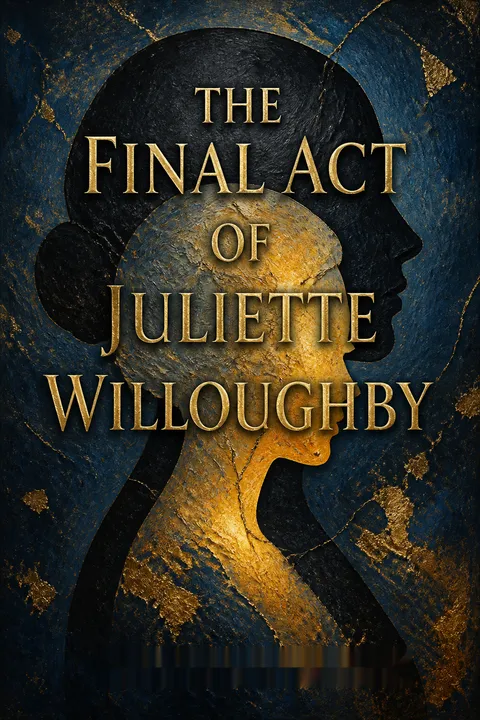

Plot Summary
The Sphinx Unveiled
In the present day, Dr. Caroline Cooper, a Cambridge art historian, stands before a crowd in Dubai, introducing Juliette Willoughby's "Self-Portrait as Sphinx"—a painting long thought destroyed. Its rediscovery, and the staggering sum it fetches at auction, ignite a media frenzy. But the painting's reappearance is more than a financial event: it challenges everything known about Juliette, a British Surrealist whose life and death were shrouded in mystery. As Caroline prepares to explain the painting's significance, the event is interrupted by the arrest of Patrick Lambert, her former lover and the gallery's co-organizer, for murder. The stage is set for a story that will unravel decades of secrets, betrayals, and the true meaning behind a masterpiece.
Cambridge Connections
Flashing back to 1991, we meet Patrick and Caroline as Cambridge undergraduates, awkwardly reunited for dissertation supervision under the eccentric Alice Long. Their shared history—brief romance, unresolved tension—colors their collaboration as they're drawn into the enigma of Juliette Willoughby. Alice, a mysterious figure with a shadowy past, challenges them to look beyond the accepted narrative: Juliette's art is lost, her life a footnote to her lover Oskar Erlich's. But Alice's provocations spark a quest that will bind Patrick and Caroline together, both professionally and personally, as they begin to dig into the Willoughby family's secrets.
The Lost Journal
Caroline's research leads her to the Willoughby Bequest at Cambridge—a chaotic trove of Egyptological artifacts and family detritus. Amid the clutter, she discovers Juliette's passport, a pendant, and most crucially, her journal from Paris in 1937–38. The diary, filled with sketches and confessions, brings Juliette's voice to life: her passionate affair with Oskar, her flight from a stifling English upbringing, and her struggle to assert herself as an artist. The journal hints at trauma, obsession with Sphinxes, and a family history haunted by tragedy and possible madness. For Caroline, the journal is both a scholarly goldmine and a deeply personal touchstone, echoing her own fraught relationship with her mother and her fear of intimacy.
Surrealist Obsessions
Juliette's journal reveals her immersion in the Surrealist movement, her creative rivalry with Oskar, and her determination to paint her own reality. The "Self-Portrait as Sphinx" emerges as a work of defiance and coded autobiography, blending mythological motifs with personal trauma—her sister's drowning, her father's Egyptomania, and her own time in a mental institution. The painting's symbolism—six-breasted Sphinx, feline haunches, a drowned girl, a boatman—invites endless interpretation. Meanwhile, Patrick and Caroline's research uncovers the Willoughby family's pattern of loss, scandal, and the persistent rumor of a curse linked to their Egyptian collection.
The Willoughby Curse
The Willoughby legacy is marred by the drowning of Juliette's sister Lucy and the mysterious disappearance of Jane Herries, the "Missing Maid." The family's obsession with Egyptology, embodied in Cyril Willoughby's pyramid mausoleum and the Osiris Society he founded at Cambridge, feeds rumors of curses and dark rituals. As Patrick and Caroline dig deeper, they sense that the family's secrets are encoded not just in Juliette's art, but in the very stones of Longhurst Hall. The past is not dead—it is waiting to be unearthed.
The Osiris Society Initiation
Patrick's induction into the Osiris Society—a secretive, all-male club with roots in Egyptology—exposes the lingering influence of the Willoughby patriarch. The society's bizarre initiation, involving a sedated kitten and ancient incantations, is both farce and foreshadowing: the club's rituals echo the funerary magic Cyril Willoughby so obsessively collected. The society's signet ring, bearing the same "eye" as Juliette's pendant, links the present to the family's occult past. The club's members—Patrick, Harry Willoughby, and the troubled Freddie Talbot—will all play roles in the unfolding drama.
Fire and Ashes
In 1938 Paris, Juliette and Oskar's love affair ends in tragedy. A fire consumes their apartment, killing both and supposedly destroying all their work—including "Self-Portrait as Sphinx." The official story is accident, but Juliette's journal and the suspicions of those who knew her suggest otherwise. Was it arson, revenge, or a cover-up? The fire becomes the central trauma around which the novel's mysteries orbit: what survived, who was responsible, and what secrets died with Juliette?
Art, Love, and Betrayal
As Patrick and Caroline's research brings them closer, so does their personal connection. Their relationship, shadowed by Caroline's fear of love and Patrick's family baggage, mirrors the passionate, destructive bond between Juliette and Oskar. At a lavish party at Longhurst, Caroline's attempt to uncover the painting's fate leads to disaster: she is rebuffed by the Willoughbys, who are desperate to bury the past. Yet, in the chaos, Caroline finds and "rescues" the lost painting, setting off a chain of events that will reverberate for decades.
The Painting Resurfaces
Back in Cambridge, Patrick and Caroline struggle with the ethics of their discovery. To legitimize the painting's provenance, Patrick hatches a risky plan: plant it in a house clearance so they can buy it at auction. But at the sale, they are outbid by a mysterious phone bidder—Terry, Patrick's overlooked college neighbor, who will later become tech billionaire Dave White. The painting vanishes into private hands, only to reappear years later, setting the stage for a new round of intrigue.
Auction and Aftermath
The rediscovery of "Self-Portrait as Sphinx" transforms Caroline's career and the art world's understanding of Juliette. The painting's exhibition at Tate Modern, and Caroline's bestselling biography, bring overdue recognition to a forgotten woman artist. Yet the painting's provenance remains murky, and the wounds of the past—personal and historical—are far from healed. Patrick and Caroline's relationship falters under the strain of ambition, regret, and unresolved secrets.
Double Portraits
Decades later, a second "Self-Portrait as Sphinx" surfaces, offered for sale by Harry Willoughby in Dubai. Caroline is summoned to authenticate it, only to discover that both paintings are genuine, with subtle but significant differences—overpainted details, hidden symbols, and a narrative encoded in their imagery. The existence of two originals raises questions of forgery, identity, and the lengths to which the Willoughbys went to conceal their family's crimes. The mystery deepens: what is the secret the Sphinx is guarding?
Blackmail and Ghosts
As the Dubai sale approaches, blackmail notes and photographs threaten to expose Caroline's youthful theft and Harry's darkest secrets. The long-missing Freddie Talbot, presumed dead for decades, is revealed to be alive and living in Dubai with Athena, Caroline's estranged friend. Freddie's reappearance, and his role in Harry's murder, bring the story's buried traumas to a violent climax. The past refuses to stay buried.
The Dubai Dilemma
Patrick is arrested for Harry's murder, framed by circumstantial evidence and a broken champagne glass. Caroline, trapped in Dubai without her passport, races to clear his name. Tech mogul Dave White, the former "Terry," uses his surveillance empire to uncover the truth: Freddie, not Patrick, killed Harry, motivated by blackmail and a lifetime of resentment. The case exposes the dark side of wealth, technology, and the global art market, as well as the enduring power of old wounds.
The Secret in the Pyramid
The final pieces fall into place as Caroline and Patrick return to Longhurst, following the clues hidden in Juliette's painting. In the pyramid mausoleum, they discover a secret chamber containing the remains of Jane Herries and others—victims of Cyril Willoughby's deranged quest for resurrection, inspired by his obsession with Egyptian funerary magic. The painting's cryptic symbols—boat, pyramid, hieroglyphs—are revealed as a map to the truth: the Willoughby curse was not supernatural, but the legacy of a patriarch's madness and murder.
The Final Act
The truth about Juliette, the painting, and the Willoughby family is finally exposed. The dual existence of the "Self-Portrait as Sphinx" is explained: Juliette survived the fire, assumed the identity of Alice Long, and repainted her masterpiece in secret, planting clues for future generations. The novel's central mysteries—artistic authorship, female erasure, and the cost of silence—are resolved, but not without loss. Patrick and Caroline, scarred but wiser, find their way back to each other, determined to honor Juliette's legacy and their own.
Resurrection and Revelation
In the epilogue, the remains of Jane Herries are reburied, and the two versions of "Self-Portrait as Sphinx" are finally displayed together. Caroline, reflecting on the journey, realizes that Juliette's greatest act was not her art, but her survival: she reclaimed her story, her voice, and her agency, defying the forces that sought to erase her. The novel ends with the recognition that history is not fixed, but can be rewritten—if we are willing to look, to listen, and to believe in the possibility of resurrection.
Analysis
A meditation on erasure, survival, and the rewriting of history"The Final Act of Juliette Willoughby" is both a literary thriller and a feminist reclamation, using the conventions of the art mystery to interrogate who gets to be remembered, who is silenced, and how the past can be recovered. Through its intricate plot—spanning decades, continents, and generations—it explores the ways in which women's voices and achievements are buried, overwritten, or claimed by others, and the extraordinary lengths required to reclaim them. The novel's central image—the Sphinx, both riddle and guardian—embodies the challenge of interpretation: to see what is hidden, to listen to the silenced, to piece together a story from fragments and absences. In the end, the book argues that resurrection is possible—not as magic, but as the hard, collective work of looking, listening, and refusing to accept the official version of events. The lessons are clear: history is not fixed, art is not neutral, and the act of bearing witness—of telling the truth, even in disguise—is itself a form of survival.
Review Summary
The Final Act of Juliette Willoughby is a captivating mystery thriller with historical elements, exploring the world of art and a family's dark secrets. Set across three timelines, it follows the story of Juliette Willoughby, a 1930s artist, and two Cambridge students investigating her mysterious death. Readers praised the intricate plot, well-developed characters, and unexpected twists. While some found the multiple perspectives challenging, most appreciated the book's atmospheric setting and clever storytelling. Overall, it's a compelling read that blends art history with suspense.
People Also Read

Characters
Juliette Willoughby / Alice Long
Juliette is the novel's haunted heart: a brilliant, troubled British Surrealist who flees her oppressive family for Paris, only to be consumed by love, trauma, and the drive to create. Her "Self-Portrait as Sphinx" is both confession and riddle, encoding her grief, rage, and resistance. After surviving the fire that supposedly killed her, Juliette reinvents herself as Alice Long, living in obscurity but orchestrating the rediscovery of her own work. Her journey is one of self-assertion against erasure—by men, by family, by history—and her final act is a triumph of survival and self-authorship.
Caroline Cooper
Caroline is both detective and inheritor, her life shaped by loss, abuse, and the longing for connection. Her discovery of Juliette's journal and painting is both professional breakthrough and personal catharsis, mirroring her own struggle to overcome trauma and trust in love. Caroline's psychoanalytic depth—her fear of intimacy, her identification with lost women—drives the narrative's emotional core. Her relationship with Patrick is fraught but redemptive, and her ultimate recognition of Juliette/Alice's survival is a testament to the power of women's voices to endure.
Patrick Lambert
Patrick is a product of privilege and insecurity, shaped by his father's expectations and his own desire for significance. His journey from callow undergraduate to embattled gallery owner is marked by ethical compromises, romantic failures, and a longing for validation. Patrick's relationship with Caroline is both a source of hope and a site of repeated wounding. His complicity in the art world's machinations is balanced by genuine passion for discovery and justice. Ultimately, Patrick's growth lies in his willingness to confront the past and choose integrity over self-interest.
Oskar Erlich
Oskar is Juliette's older, celebrated Surrealist lover—brilliant, mercurial, and ultimately destructive. Their relationship is a crucible of creativity and violence, with Oskar's jealousy and volatility mirroring Juliette's own family traumas. His death in the fire is both literal and symbolic: the end of an era, the price of passion, and the catalyst for Juliette's transformation.
Harry Willoughby
Harry is the inheritor of Longhurst and the Willoughby legacy—a man burdened by family secrets, guilt, and the weight of expectation. His complicity in covering up Freddie's "death," his descent into paranoia and blackmail, and his ultimate murder in Dubai are the tragic consequences of a life spent evading the truth. Harry's arc is a study in the corrosive effects of privilege, denial, and unresolved trauma.
Freddie Talbot
Freddie is the wild card: Harry's cousin, addict, and eventual murderer. Presumed dead for decades, he reemerges in Dubai, driven by resentment and a sense of entitlement. Freddie's actions—blackmail, violence, and manipulation—are the dark mirror of the Willoughby family's own history of erasure and exploitation. His relationship with Athena is both toxic and redemptive, a partnership forged in exile and secrecy.
Athena Galanis
Athena is Caroline's glamorous, enigmatic friend, whose loyalty to Freddie leads her to deception and complicity. Her own family's fall from grace, her resourcefulness, and her ability to navigate elite worlds make her both ally and adversary. Athena's choices—especially her role in the Dubai auction scam—underscore the novel's themes of female agency, complicity, and the costs of survival.
Dave White / Terry
Once "Next-Door Terry," the ignored Cambridge neighbor, Dave becomes a billionaire tech mogul whose facial recognition empire is both tool and metaphor for the novel's obsession with identity and visibility. His acquisition of both Sphinx paintings, and his role in exposing the truth, is a subtle revenge on those who dismissed him. Dave embodies the power of the unseen to shape history.
Cyril Willoughby
Cyril is the origin of the Willoughby curse: a grieving father whose obsession with Egyptian resurrection magic leads him to murder Jane Herries and others in a deranged quest to bring his daughter Lucy back from the dead. His legacy is one of trauma, secrecy, and the transmission of violence across generations. Cyril's madness is both personal and symbolic—a warning about the dangers of unchecked power and patriarchal control.
Quentin Lambert
Patrick's father is a charming, unreliable art dealer whose involvement in forgeries and manipulation of provenance is both comic and sinister. His role in planting the painting at Longhurst, and his complicity in the novel's central mysteries, make him a linchpin of the plot. Quentin's relationship with Patrick is a study in generational disappointment and the longing for approval.
Plot Devices
Dual Timelines and Narrative Layering
The novel's structure alternates between the 1930s (Juliette's journal, the fire, the creation of the painting) and the 1990s/2020s (Caroline and Patrick's investigation, the Dubai auction, the murder). This layering allows for gradual revelation, dramatic irony, and the mirroring of personal and historical trauma. The reader is constantly invited to piece together the puzzle, with each timeline shedding light on the other.
Unreliable Narrators and Hidden Identities
The story is told through multiple voices—Caroline, Patrick, Juliette/Alice—each with their own blind spots, biases, and secrets. The ultimate twist—that Alice Long is Juliette, that the painting was repainted, that the "dead" are not always dead—relies on the reader's willingness to question appearances and accept the possibility of resurrection, both literal and metaphorical.
Art as Cipher and Confession
"Self-Portrait as Sphinx" is not just a work of art but a coded narrative, its imagery a riddle that, once solved, exposes murder, madness, and the cost of silence. The painting's overpainted details, mirrored versions, and symbolic motifs (Sphinx, boat, pyramid, hieroglyphs) are plot devices that drive both the mystery and the thematic exploration of female erasure and the rewriting of history.
Foreshadowing and Echoes
The novel is rich in foreshadowing: the Osiris Society's rituals, the recurring motif of resurrection, the family's obsession with Egypt, and the repeated disappearances and deaths. These echoes create a sense of inevitability and fate, while also inviting the reader to look for the hidden connections that will ultimately explain the mystery.
Modern Technology as Revelation
The use of facial recognition, CCTV, and digital forensics in the Dubai sections is both a plot device (solving the murder, exposing Freddie) and a thematic commentary on visibility, privacy, and the power of those who control the narrative. The contrast between lost women of the past and the all-seeing eye of the present is a central tension.
FAQ
Synopsis & Basic Details
What is The Final Act of Juliette Willoughby about?
- Art World Mystery Unfolds: The novel begins in present-day Dubai with Dr. Caroline Cooper, a Cambridge art historian, presenting "Self-Portrait as Sphinx" by British Surrealist Juliette Willoughby, a painting long believed destroyed. The event is dramatically interrupted by the arrest of Patrick Lambert, Caroline's former lover and gallery co-organizer, for murder, setting off a dual-timeline investigation.
- Past Secrets Resurface: Flashing back to 1991 Cambridge, the story follows young Caroline and Patrick as they are drawn into the enigma of Juliette Willoughby by their eccentric supervisor, Alice Long. Their research unearths Juliette's lost journal from 1937 Paris, revealing her passionate affair with artist Oskar Erlich, her flight from a stifling aristocratic family, and her struggle to create her masterpiece amidst personal trauma and the looming threat of war.
- Unraveling a Family's Dark Legacy: The narrative weaves between Juliette's past and Caroline and Patrick's present, exposing the Willoughby family's history of tragedy, including a sister's drowning and a missing maid, all linked to an ancient Egyptian obsession. The quest to authenticate the painting and clear Patrick's name leads to shocking revelations about murder, blackmail, and the true identity of Alice Long, forcing a re-evaluation of art, history, and personal truth.
Why should I read The Final Act of Juliette Willoughby?
- Intricate Art Historical Thriller: Readers seeking a meticulously plotted mystery that blends art history, psychological suspense, and a touch of romance will be captivated. The novel offers a deep dive into the Surrealist movement and the complex world of art authentication, making it a compelling read for fans of literary puzzles.
- Powerful Feminist Reclamation: At its heart, the story is a profound exploration of female erasure in history and art. It champions the voice of a forgotten woman artist, Juliette Willoughby, whose life and work are reclaimed from patriarchal narratives, offering a resonant message about resilience and self-authorship.
- Rich Character-Driven Narrative: Beyond the thrilling plot, the novel excels in its character development, particularly the intertwined journeys of Caroline and Juliette. Their struggles with trauma, identity, and love provide a deeply emotional core, inviting readers to reflect on the lasting impact of family secrets and the courage it takes to forge one's own path.
What is the background of The Final Act of Juliette Willoughby?
- Surrealism and 1930s Paris: The novel is deeply rooted in the historical and cultural context of the Surrealist movement in 1930s Paris, featuring real historical figures like André Breton, Man Ray, and Salvador Dalí. This period provides a vibrant backdrop for Juliette Willoughby's artistic rebellion and her tragic romance with Oskar Erlich, highlighting the era's intellectual ferment and social upheaval.
- Cambridge Academia and British Aristocracy in the 1990s: The 1991 timeline immerses readers in the world of Cambridge University, with its distinctive academic culture, secret societies like the Osiris Society, and the lingering influence of old money and aristocratic families like the Willoughbys. This setting contrasts sharply with the bohemian Paris of Juliette, showcasing the rigid class structures and hidden histories of England.
- Modern Dubai's Art Market and Surveillance: The present-day narrative is set against the glittering, high-stakes backdrop of Dubai's burgeoning art market, a hub for global wealth and cutting-edge technology. The city's unique legal system and advanced surveillance capabilities become crucial plot elements, reflecting contemporary concerns about privacy, power, and the intersection of art and finance.
What are the most memorable quotes in The Final Act of Juliette Willoughby?
- "I am Juliette Willoughby and I'm an artist.": These defiant words, spoken by Juliette to Oskar upon their first meeting (Chapter 1), encapsulate her unwavering self-belief and determination to assert her identity as an artist, challenging the societal expectations and patriarchal structures that sought to diminish her. It's a powerful declaration of artistic agency and a recurring motif throughout her journey.
- "Lots of things in the world are only lost because no one has bothered to look for them.": Alice Long's insightful remark to Caroline and Patrick (Chapter 1) serves as a guiding principle for their entire investigation. It underscores the novel's central theme of historical erasure, particularly of women's contributions, and the active effort required to uncover forgotten truths and reclaim lost legacies.
- "They thought I was a Surrealist, but I wasn't. I never painted dreams. I painted my own reality.": This quote, attributed to Frida Kahlo in the Part IV epigraph, perfectly encapsulates Juliette Willoughby's artistic philosophy and the novel's core message. It highlights her commitment to depicting her lived experiences and traumas, rather than abstract dreams, making her art a powerful form of confession and truth-telling.
What writing style, narrative choices, and literary techniques does Ellery Lloyd use?
- Dual-Timeline Narrative Structure: The novel masterfully employs a dual-timeline structure, alternating between Juliette's journal entries in 1937-38 Paris and Caroline and Patrick's investigation in 1991 Cambridge and 2023 Dubai. This allows for a gradual unveiling of secrets, creating suspense and drawing parallels between past and present struggles, enhancing the reader's understanding of the unfolding mystery.
- Multiple First-Person Perspectives: The story is primarily told through the first-person perspectives of Caroline, Patrick, and Juliette (as Alice Long), offering intimate access to their thoughts, motivations, and emotional complexities. This narrative choice highlights the subjective nature of truth and memory, inviting readers to piece together the full picture from their often-biased or incomplete accounts.
- Epistolary and Found Document Elements: The integration of Juliette's journal, historical documents, photographs, and later, CCTV footage and AI analysis, serves as a crucial literary technique. These "found" documents lend authenticity to the narrative and act as vital clues, driving the plot forward and allowing the characters (and the reader) to reconstruct a hidden history.
Hidden Details & Subtle Connections
What are some minor details that add significant meaning?
- Patrick's MG Convertible: The red MG, a gift from his father, symbolizes Quentin Lambert's influence and Patrick's initial, somewhat superficial, Cambridge persona. It later becomes a crucial plot device, used to transport the "stolen" painting and inadvertently involved in the cover-up of Freddie's "death," highlighting how seemingly minor possessions can become entangled in major events.
- Freddie's "Usborne World of the Unknown" Book: This childhood book, mentioned by Patrick (Chapter 4), introduces the "Missing Maid of Longhurst" story as a family myth. It subtly foreshadows the dark truths hidden within Longhurst Hall and the Willoughby family's history, showing how sensationalized narratives can obscure real tragedies.
- The Osiris Society's Founding by Cyril Willoughby: The detail that Juliette's father, Cyril, founded the Osiris Society in 1901 (Chapter 3) is more than a historical note; it directly links his Egyptological obsession to the society's rituals and later, to his deranged quest for resurrection, revealing the deep roots of the "Willoughby curse" in his personal pathology.
What are some subtle foreshadowing and callbacks?
- Juliette's Fear of Oskar's Wife: Juliette's journal entries detail her anxiety about Oskar's estranged wife, Maria, stalking them and her capacity for revenge (Chapter 3). This subtly foreshadows the later revelation that her own family, particularly Uncle Austen, would go to extreme lengths, including murder, to control her and her art.
- Quentin Lambert's "Raphael" Story: Patrick's father's anecdote about being "robbed" of a valuable Raphael painting (Chapter 5) directly foreshadows Patrick's own experience of losing "Self-Portrait as Sphinx" at auction. It highlights Quentin's deep-seated resentment and desire for a "sleeper," which Alice Long later exploits in her elaborate plan.
- Caroline's Mother's Burned Sketchbooks: Caroline's poignant memory of her father burning her mother's artwork after her murder (Chapter 5) is a powerful callback to the theme of artistic erasure and the destruction of women's voices. It directly parallels the Willoughby family's attempts to destroy Juliette's painting and journal, making Caroline's "rescue" of the Sphinx deeply personal.
What are some unexpected character connections?
- Dave White (Terry) as the Auction Buyer: The revelation that the mysterious phone bidder who outbid Patrick and Caroline for the first "Self-Portrait as Sphinx" was "Next-Door Terry" (Dave White) (Chapter 11) is a surprising twist. It transforms a minor, overlooked character into a pivotal figure whose past resentment fuels his later actions, including his use of AI to expose the truth.
- Quentin Lambert's Complicity with Alice Long: Patrick's father, Quentin, is revealed to have been an unwitting accomplice in Alice Long's elaborate scheme to bring Juliette's painting to light (Chapter 22). His involvement, driven by his desire for a "sleeper" and his connections to the Willoughbys, creates an unexpected alliance that manipulates Patrick and Caroline for a greater purpose.
- Arno von Westernhagen's Fake Identity: The discovery that Arno, a member of the Osiris Society, fabricated his aristocratic German background (Chapter 17) reveals a hidden vulnerability. This facade makes him susceptible to Harry's blackmail, highlighting the pressures of maintaining social status and the unexpected ways in which characters are connected through shared secrets and compromises.
Who are the most significant supporting characters?
- Alice Long (Juliette Willoughby): Her true identity as Juliette is the ultimate reveal, making her the mastermind behind the entire plot to resurrect her art and expose her family's crimes. Her role as the eccentric Cambridge supervisor who sets Caroline and Patrick on their path is crucial to the narrative's inception and resolution.
- Dave White (Terry): Initially a mocked college neighbor, Dave transforms into a billionaire tech mogul whose advanced surveillance and facial recognition technology become instrumental in solving Harry's murder and authenticating the paintings. His personal vendetta against Patrick adds a layer of unexpected motivation to his actions.
- Quentin Lambert: Patrick's father, an art dealer with a penchant for "sleepers" and a long-standing connection to the Willoughby family, plays a critical, albeit manipulated, role in Alice Long's plan. His character highlights themes of ambition, class insecurity, and the complex dynamics of father-son relationships.
Psychological, Emotional, & Relational Analysis
What are some unspoken motivations of the characters?
- Juliette's Quest for Validation and Truth: Beyond artistic recognition, Juliette's drive to paint "Self-Portrait as Sphinx" is fueled by a desperate need to process her trauma and expose her family's dark secrets. Her journal entry, "What I never promised was that I would not draw or paint them" (Chapter 4), reveals her art as a defiant act of truth-telling against a world that sought to silence her.
- Patrick's Deep-Seated Insecurity: Despite his outward confidence and privileged background, Patrick is driven by a profound need for his father's approval and a fear of failure. His involvement with the Osiris Society and his initial career aspirations are shaped by Quentin's expectations, making him susceptible to Alice Long's manipulations and his own risky schemes.
- Athena's Protective Loyalty to Freddie: Athena's unwavering support for Freddie, even after his disappearance and later, his criminal actions, stems from a deep, perhaps codependent, loyalty. Her willingness to lie and manipulate for him (Chapter 22) is rooted in their shared history of feeling marginalized and her desire to protect him from the consequences of his self-destructive behavior.
What psychological complexities do the characters exhibit?
- Caroline's Trauma and Philophobia: Caroline's chronic fear of falling in love ("Philophobia," Chapter 1) is a direct psychological consequence of witnessing her mother's murder and living under the shadow of her violent father's threats. Her identification with Juliette's story becomes a form of self-therapy, allowing her to confront her own anxieties and eventually open up to Patrick.
- Cyril Willoughby's Grief-Induced Delusion: Cyril's descent into madness and murder is a chilling study of how unchecked grief can warp a mind. His obsession with Egyptian resurrection rituals, initially an eccentric hobby, transforms into a pathological quest to bring his drowned daughter, Lucy, back to life, leading him to commit horrific acts (Chapter 21, Alice's POV).
- Freddie Talbot's Resentment and Entitlement: Freddie's "mean streak" and later, his vengeful actions, are rooted in a complex mix of resentment over his disinheritance and a sense of entitlement. His psychological profile is one of a neglected child who, feeling cheated by his family, seeks to reclaim what he believes is rightfully his through manipulation and violence.

Download PDF
Download EPUB
.epub digital book format is ideal for reading ebooks on phones, tablets, and e-readers.








































