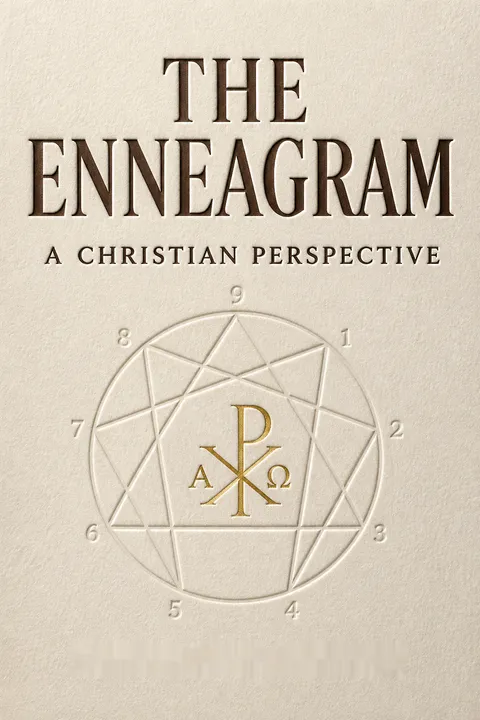

Key Takeaways
1. The Enneagram: A Dynamic Map for Spiritual Awakening
The Enneagram is more than an entertaining game for learning about oneself. It is concerned with change and making a turnaround, with what the religious traditions call conversion or repentance.
Beyond typology. The Enneagram is an ancient, dynamic typology that goes beyond simply categorizing human behavior. While other systems might label personality traits, the Enneagram serves as a profound tool for spiritual and psychological growth, aiming to liberate individuals from their unconscious compulsions. It's a map designed to guide us toward self-knowledge and transformation, not merely to describe our current state.
Ancient wisdom. Its origins are traced back to the 4th-century Christian Desert Father Evagrius Ponticus, who developed a psychology of vices, and the 13th-century Franciscan Ramón Lull, who explored divine qualities through a nine-point figure. This rich, often orally transmitted, history suggests a deep connection to mystical traditions, influencing both Christian and Sufi thought before being introduced to the West by G.I. Gurdjieff and later systematized by Oscar Ichazo.
Purposeful journey. The ultimate goal of engaging with the Enneagram is to move beyond superficial self-understanding to a genuine encounter with one's "True Self in God." It challenges us to confront our "false self"—the egoic identity we construct—and to discern the subtle ways we hide from ourselves and, consequently, from God. This journey is not about acquiring information, but about undergoing a profound, often humbling, personal transformation.
2. Our Gifts, Our Traps: How Strengths Become Core Sins
Every gift that we get excessively fixated on paradoxically becomes our sin.
Double-edged gifts. The Enneagram reveals a profound paradox: our greatest gifts and talents, when clung to excessively, become our "root sins" or compulsions. We identify so strongly with what we do well that this strength, meant to serve life, turns into a trap, limiting our growth and preventing us from experiencing true freedom. This realization is often a humbling, mid-life "aha-experience."
The dark side. Our "sins" are not merely moral failings but the distorted expressions of our natural energies, the very ways we seek to protect ourselves and derive a sense of worth. For instance, a ONE's idealism, when fixated, can become hypercritical anger, or a TWO's caring nature can morph into manipulative pride. The Enneagram uncovers this false energy, forcing us to look our real dilemma in the eye.
God's surprising use. This understanding leads to a liberating insight: God, in His unconditional love, can use even our "sins" for His purposes. Recognizing that our motives are often mixed—doing the "right thing for the wrong reasons"—allows for an experience of grace that transcends our self-imposed standards of perfection. It's a call to accept our imperfection, knowing that God works with what is, not just what "should be."
3. The Three Centers of Being: Gut, Heart, and Head Intelligence
In each person one of the three areas predominates.
Three intelligences. The Enneagram organizes its nine types into three fundamental centers of intelligence: the Gut (instinctive), the Heart (emotional), and the Head (mental). Each center represents a primary way of perceiving, processing, and responding to the world, influencing our core motivations and defense mechanisms. Understanding these centers is crucial for recognizing our dominant energy.
Gut types (EIGHT, NINE, ONE). These individuals are primarily driven by instinct and a concern for power and justice. They react spontaneously, often aggressively (openly or subtly), and tend to blame themselves when things go wrong. Their task is to transform generic loving into authentic, specific love, often benefiting from solitary, body-focused meditation practices like Zen.
Heart types (TWO, THREE, FOUR). Governed by emotions and intersubjective relations, these types are concerned with image, prestige, and how others perceive them. They struggle with genuine access to their own feelings, often experiencing themselves in reaction to others. Their path to growth involves learning solitude and prayer that isn't driven by external validation, as their own body can be their best teacher.
Head types (FIVE, SIX, SEVEN). These individuals lead with their intellect, prioritizing reflection, order, and duty. They tend to step back from situations to analyze and understand, often feeling isolated or confused internally despite appearing clear and clever externally. Their spiritual journey often involves moving from thought to action, from isolation to community, and cultivating faith beyond mere intellectual assent.
4. Nine Faces of the Soul: Unveiling Our Core Fixations
Our “sins,” in fact, are the other side of our gift. They are the way we get our energy.
Core dilemmas. Each of the nine Enneagram types is characterized by a specific "fixation" or "pitfall"—an ingrained, unconscious life program that shapes their perception and action. These fixations are emergency solutions adopted in childhood to cope with perceived threats, but they become the very obstacles to true self-realization in adulthood.
The nine fixations:
- ONE (Resentment): Driven by a need for perfection, leading to suppressed anger and hypercriticism.
- TWO (Pride): Motivated by a need to be needed, resulting in manipulative helpfulness and hidden self-interest.
- THREE (Deceit): Compelled to succeed, leading to self-deception and image management.
- FOUR (Envy): Longing to be special, resulting in melancholy, self-pity, and a focus on what's missing.
- FIVE (Avarice): Seeking knowledge and self-sufficiency, leading to emotional detachment and hoarding of resources.
- SIX (Fear): Driven by a need for security, manifesting as anxiety, suspicion, and reliance on external authority or rebellion.
- SEVEN (Gluttony): Avoiding pain, leading to a restless pursuit of pleasure, planning, and superficiality.
- EIGHT (Lust/Shamelessness): Needing to be against, resulting in a drive for control, confrontation, and denial of vulnerability.
- NINE (Sloth/Laziness): Seeking peace and comfort, leading to passivity, self-forgetting, and avoidance of conflict.
Unconscious programs. These fixations are so deeply embedded that we often don't recognize them as problematic; they feel like "just the way I am." The Enneagram's power lies in bringing these unconscious patterns to light, revealing how they color every aspect of our lives and prevent us from living authentically.
5. The Path of Growth: Integrating Strengths, Navigating Stress
The direction of the arrows marks the path of regression and disintegration. In stressful situations, people searching for relief and consolation move with the arrow to another type.
Dynamic movement. The Enneagram is not static; it illustrates a dynamic process of growth and regression through its connecting lines, or "arrows." These arrows show how our personality shifts under different conditions, revealing both our vulnerabilities and our potential for integration.
Disintegration (stress). When under stress or facing significant challenges, individuals tend to move with the direction of the arrows, adopting the less healthy, immature traits of another type. This is a "false consolation" that offers temporary relief but ultimately exacerbates the core fixation. For example:
- A stressed ONE (perfectionist) may become moody and self-absorbed like an unhealthy FOUR.
- A stressed TWO (helper) may become aggressive and controlling like an unhealthy EIGHT.
- A stressed THREE (achiever) may become passive and disengaged like an unhealthy NINE.
Integration (growth). Conversely, on the path to spiritual maturity and integration, individuals move against the direction of the arrows, embodying the positive, healthy qualities of another type. This is "true consolation," leading to genuine freedom and balance. For example:
- A growing ONE learns to relax and embrace joy like a healthy SEVEN.
- A growing TWO learns self-acceptance and creativity like a healthy FOUR.
- A growing THREE develops faithfulness and commitment like a healthy SIX.
Conscious choice. Understanding these movements allows for conscious engagement with our patterns. Instead of blindly falling into stress reactions, we can intentionally cultivate the integrating qualities, transforming our compulsions into virtues and moving towards a more balanced and authentic self.
6. Beyond the Core: The Nuance of Wings and Instinctual Subtypes
The two types directly neighboring each number are its “wings.”
Wing influence. Each Enneagram type is not an isolated island but is influenced by its two neighboring types, known as "wings." These wings add nuance and complexity to our core personality, providing additional resources or challenges. For example, a FIVE might have a strong FOUR-wing, making them more artistic and introspective, or a SIX-wing, making them more analytical and cautious.
Subtypes: instinctual drives. Further complicating the picture are the three "instinctual subtypes" for each Enneagram type:
- Self-Preserving: Focus on security, material well-being, and personal comfort.
- Social: Focus on belonging, group dynamics, and social roles.
- Sexual (or One-to-One): Focus on intense, intimate connections and personal magnetism.
These drives are the "raw material" of our being, and one typically dominates, coloring how the core type's fixation manifests. This creates 27 distinct variations, explaining why individuals of the same core type can appear so different.
Holistic understanding. Recognizing the interplay of our core type, dominant wing, and instinctual subtype provides a more comprehensive understanding of our unique personality. It highlights that growth involves not just addressing the core fixation but also balancing the influence of our wings and integrating our instinctual energies, rather than suppressing them.
7. Jesus: The Fully Integrated Human Archetype
Jesus realized “true personhood” in a manner that explodes the possibility of pinning him down to any one personality type.
The Christ-Enneagram. For Christians, Jesus Christ represents the ultimate "face of God" and the "true man," embodying a fully integrated humanity that transcends any single Enneagram type. While the Gospels are faith testimonies, they reveal a Jesus who navigated all nine temptations and manifested all nine "fruits" of the Enneagram in a balanced and perfected way.
Embodying all virtues. Jesus demonstrated the positive aspects of every type:
- ONE: Teaching, tolerance, patience, righteous anger against injustice.
- TWO: Care, compassion, solidarity, serving without hidden motives.
- THREE: Ambition for God's kingdom, energetic pursuit of vision, resisting worldly success.
- FOUR: Creativity, sensitivity, naturalness, deep emotional life, embracing suffering.
- FIVE: Distance, sobriety, wisdom, withdrawing for prayer, yet engaging actively.
- SIX: Fidelity, obedience to God, trust, overcoming fear, challenging false authority.
- SEVEN: Festiveness, joie de vivre, enjoying life's pleasures, yet confronting pain.
- EIGHT: Confrontation, clarity, authority, fighting for justice, protecting the weak.
- NINE: Composure, peaceableness, love, radiating calm, reconciling opposites.
Model for transformation. Jesus's life offers a model for how to integrate our own fragmented selves. He shows that true personhood involves embracing both strength and vulnerability, action and contemplation, joy and suffering. His example invites us to see our own temptations in his mirror and to develop the unique talents God has placed within us, moving towards a holistic and Christ-like existence.
8. Repentance as Reorientation: Changing Our Mind, Not Just Our Actions
The Greek word metanoiete, which is found at this point in the original text of the New Testament, means literally, “Change your mind, think differently!”
Beyond moralism. Jesus's call to "repent" (metanoiete) is not merely a summons to feel guilty or change outward behavior, but a radical invitation to "change your mind" – to fundamentally reorient our perception of the world, God, and ourselves. The Enneagram serves as a tool to identify the specific "pitfalls" or distorted ways of thinking that keep us from this new perspective.
Nine invitations. For each Enneagram type, there is a corresponding "invitation" or "holy idea" that represents the path to liberation from their core fixation:
- ONE: Patience (from anger)
- TWO: Humility (from pride)
- THREE: Truthfulness (from deceit)
- FOUR: Balance (from envy)
- FIVE: Wisdom (from avarice)
- SIX: Faith (from fear)
- SEVEN: Joy (from gluttony)
- EIGHT: Innocence/Mercy (from shamelessness/lust)
- NINE: Action/Love (from laziness)
Divine offer. These invitations are not self-generated ideals to strive for through willpower, but rather gifts of divine grace. They emphasize that true change comes from accepting God's offer of freedom and allowing these "fruits of the spirit" to grow within us, transforming our compulsive patterns into authentic expressions of our true self.
9. The Inner Observer: Cultivating Self-Awareness and Discernment
With the help of the inner observer I can perceive every complex of thoughts and every mixture of feelings.
Awakening awareness. A crucial instrument for transformation is the "inner observer" or "fair witness"—an innate capacity within us to perceive our thoughts, feelings, and behaviors without judgment. This observer is distinct from our ego, conscience, or critical inner voices; it simply notes what is happening on our inner stage.
Creating space. By activating this neutral observer, we create a vital space between our automatic reactions and our conscious response. This "broad fairway" allows us to uncouple from the compulsive patterns of our Enneagram type, interrupting the cycle of self-deception and reactivity. It's the first step towards genuine inner freedom, where unconditional love can enter.
Discernment of spirits. As the inner observer strengthens, it refines our "discernment of spirits"—the ability to distinguish between impulses that lead to life and those that lead to destruction. This spiritual instinct helps us unmask the seductive distortions of our patterns, allowing us to choose responses that align with our true self and God's will, rather than being enslaved by our ingrained habits.
10. Freedom from Compulsion: Embracing Unconditional Love
We are no longer slaves; we are the sons or daughters of God who have been set free.
Beyond the law. The Enneagram, like the "law" Paul describes, reveals our un-freedom and the compulsions that bind us. However, its ultimate purpose is to point beyond itself to a greater reality: the liberation offered by Christ. Through faith in Him, we are freed from being mere products of our past or victims of our environment, becoming instead "children of God."
New birth. This liberation is akin to a "new birth" by the Spirit, as Jesus explained to Nicodemus. It's a total transformation that makes us capable of living spontaneously and authentically, no longer chained to predictable, mechanical patterns. Our true, divine potential begins to unfold, guided by the Spirit rather than by fear or egoic striving.
Agape: all-encompassing love. The journey culminates in embracing agape—unconditional, all-encompassing love. This love, which God extends to us, empowers us to love ourselves and others without conditions, judgments, or hidden agendas. It's a love that "swallows up everything," transforming our old patterns into selfless charisms and allowing us to live in a state of profound peace, joy, and freedom, even amidst life's challenges.
Review Summary
The Enneagram by Richard Rohr receives mixed reviews (4.15/5). Supporters praise it as a transformative tool for spiritual growth and self-awareness, connecting personality types to root sins and spiritual development. Many find the descriptions humiliatingly accurate and deeply insightful. Critics object to its theological soundness, questioning Rohr's biblical interpretation and Christian orthodoxy. Some view it as New Age teaching infiltrating the church. Others find the typology reductive or struggle to identify with a single type. Most agree it's best for mature readers seeking spiritual transformation, though some sections are dry.
People Also Read






About the Author
Other books by Richard Rohr







Download PDF
Download EPUB
.epub digital book format is ideal for reading ebooks on phones, tablets, and e-readers.








































