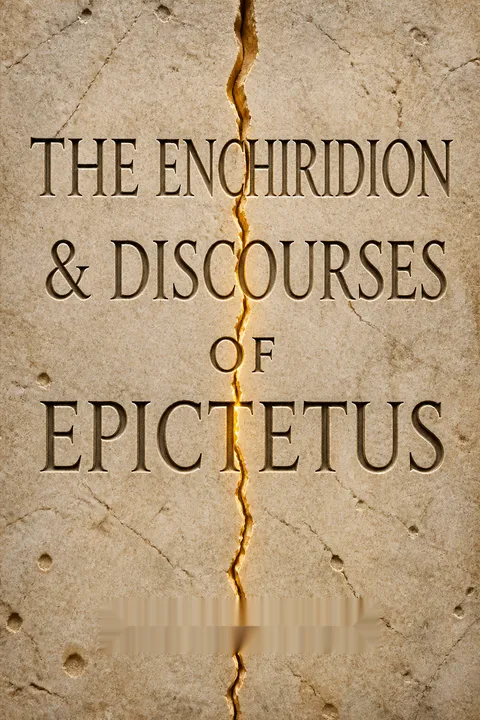

Key Takeaways
1. Master Your Inner World: Control What's Yours
Of things some are in our power, and others are not.
Focus inward. The fundamental principle of Stoicism is to distinguish between what is within our control and what is not. Our opinions, desires, aversions, and actions are entirely within our power. Everything else—our body, possessions, reputation, and external events—is beyond our control.
Inner peace. By focusing solely on what we can control, we free ourselves from external hindrances and disturbances. If we mistakenly believe that external things are ours to command, we invite frustration, lamentation, and blame, leading to unhappiness and a sense of being enslaved by circumstances.
Path to freedom. This distinction is the bedrock of freedom and happiness. When we accept that external things belong to others or to fate, we become unhindered, uncompelled, and immune to harm. This mindset allows us to navigate life's challenges with an unshakeable inner calm.
2. Opinions, Not Events, Cause Distress
Men are disturbed not by the things which happen, but by the opinions about the things.
Perception is reality. It is not death itself that is terrible, but our opinion that death is terrible. When we feel impeded, disturbed, or grieved, the fault lies not with external events or other people, but with our own judgments and interpretations.
Self-blame, then none. An uninstructed person blames others for their misfortunes. One who has begun to learn blames themselves. But a fully instructed person blames neither others nor themselves, understanding that their inner state is a product of their own opinions.
Mastering appearances. When confronted with a harsh appearance, immediately remind yourself: "You are an appearance, and in no manner what you appear to be." Then, test it against the rule: Is this within my power or not? If not, dismiss it as irrelevant to your true self.
3. Embrace Providence: Accept What Happens
Seek not that the things which happen should happen as you wish; but wish the things which happen to be as they are, and you will have a tranquil flow of life.
Divine order. The universe is governed by a rational and just Providence. To live in harmony with this divine administration, we must align our will with what happens, accepting events as they unfold. This acceptance is not resignation but a profound understanding of the natural order.
Contentment is freedom. True freedom comes from being contented with the divine administration and wishing for things to happen exactly as they do. To demand that things conform to our inconsiderate whims is madness. Instead, we learn to wish for things as they are, recognizing the wisdom in the universal design.
Gratitude for existence. We are parts of a greater whole, like an hour is part of a day. Just as a foot is meant to step in mud or be cut off for the body's good, we must accept our role in the grand scheme. Complaining about what happens is impiety, an ungrateful rejection of the gifts and design of God.
4. Cultivate Virtue: The Path to True Good
The good then are virtues, and the things which participate in virtues; and the bad are the contrary; and the indifferent are wealth, health, reputation.
Inner good. The true good resides solely in our will and its virtuous exercise. Virtues like fidelity, modesty, justice, and steadfastness are the only things that genuinely benefit us. Conversely, evil lies in a corrupted will, manifested through vices such as faithlessness or immoderation.
Externals are indifferent. Wealth, health, reputation, and other external circumstances are indifferent; they are neither good nor bad in themselves. They serve merely as materials for our will to act upon. Our opinions about these externals determine whether our will becomes good or bad.
Practice makes perfect. Cultivating virtue requires consistent practice, not just theoretical knowledge. We must actively apply right opinions to our daily actions, strengthening our character through modest, faithful, and temperate deeds. This continuous effort transforms us from mere expositors of philosophy into living examples.
5. True Freedom Lies in Detachment
Whoever then wishes to be free let him neither wish for anything nor avoid anything which depends on others: if he does not observe this rule, he must be a slave.
Freedom from external masters. A truly free person lives as they wish, unhindered by compulsion or force. This freedom is not found in wealth, power, or social status, but in detaching our desires and aversions from things outside our control.
The slave's chains. Anyone whose happiness depends on external factors—money, a person, a tyrant's favor—is a slave, regardless of their social standing. Their will is bound by what others can give or take away. Even a consul, if he flatters for position, is a great slave.
Despise death, not kings. Despising death and bonds is an act of our own will, making us impervious to threats. We do not despise kings, but we refuse to grant them power over our inner freedom. Our true master is Zeus, who has set us free in our will, and no human can enslave his son.
6. Practice Resilience Against Adversity
It is circumstances (difficulties) which show what men are.
Training for life. Difficulties are like a trainer matching a wrestler with a tough opponent, designed to make us Olympic conquerors. We must view challenges—sickness, poverty, exile, calumny—as opportunities to exercise our inner strength and prove our philosophical training.
Inner resources. God has given us faculties like greatness of soul, manliness, and endurance. These are unimpeded and entirely in our power. When adversity strikes, we should not lament or blame, but use these inherent powers to honor ourselves through what happens.
The scout's report. Like a scout sent to assess the enemy, we must report on life's challenges without fear. Diogenes, the ultimate scout, reported that death is no evil, fame is the noise of madmen, and nakedness is better than purple robes. His proof was his own courage, tranquility, and freedom.
7. Live Consistently with Your Principles
Every habit and faculty is maintained and increased by the corresponding actions.
Habit formation. Just as walking strengthens the habit of walking, virtuous actions strengthen virtuous character. Conversely, immodest actions destroy modesty, and anger fuels an angry temper. Our actions reinforce the kind of person we become.
Curing mental diseases. Diseases of the mind, like the love of money or anger, grow through repeated indulgence. To cure them, we must apply reason to perceive the evil and then oppose the bad habit with a contrary one. Counting days without anger, for instance, weakens the habit.
Authentic living. Don't just learn philosophy; live it. If you claim to be a Stoic but are disturbed by external events, you are merely an expositor of others' opinions. The true philosopher demonstrates their principles through their actions, showing freedom from perturbation, fear, and passion.
8. Recognize Your Divine Kinship and Duty
We are all sprung from God in an especial manner, and that God is the father both of men and of gods.
Noble descent. Recognizing our kinship with God elevates our self-perception, preventing ignoble thoughts. We possess reason and intelligence, shared with the gods, making us superior to animals. This divine spark within us demands a life of fidelity, modesty, and rational action.
Citizen of the world. As citizens of the world and parts of the divine administration, our duty is to act with reference to the whole, not just our individual interests. This means cooperating with the universal arrangement, even if it entails sickness, danger, or premature death.
Nourishing a god. We carry a god within us. It is shameful to pollute this divine presence with impure thoughts and dirty deeds. Our purpose is to be spectators and interpreters of God's works, living a life conformable to nature, ending in contemplation and understanding, not merely animalistic existence.
9. Beware of External Desires and Attachments
Whatever the external thing may be, the value which we set upon it places us in subjection to others.
The cost of desire. Desiring external things—power, riches, leisure, even learning for its own sake—makes us mean and subject to others. The value we place on these externals determines our degree of servitude. If a book, like a consulship, can impede our tranquility, it becomes a master.
Ephemeral pleasures. To love an earthen vessel, a child, or a wife, remember their transient nature. They are human beings, earthen vessels, given for a time. When they are gone, we should not be disturbed, for we loved them for what they were, not as eternal possessions.
The banquet of life. Life is like a banquet. Take what is offered with decency, but do not cling to it if it passes by, nor send your desire forward for what has not yet come. This detachment allows us to be worthy partners at the banquet of the gods, or even partners in their power.
10. The Philosopher's Purpose: Self-Correction and Tranquility
The first business of him who philosophizes? To throw away self-conceit (oiaesis).
Humility and inquiry. Philosophy begins with acknowledging our own weakness and inability regarding necessary things. We must shed self-conceit, recognizing that we don't inherently know good from evil, or how to apply preconceptions correctly. This humility opens the door to true learning.
Examining rules. The philosopher's work is to examine and confirm the rules of right judgment, then use them consistently. This involves testing appearances against established principles, like using a balance for weights. This process cures the madness of relying solely on "seeming" and leads to clear, fixed preconceptions.
The true athlete. The true athlete of philosophy exercises against deceptive appearances, engaging in a divine combat for kingship, freedom, and happiness. This means constantly directing our efforts to being faultless, cultivating our ruling faculty, and living a life free from perturbation and fear.
Review Summary
Reviews of The Enchiridion & Discourses of Epictetus are largely positive, averaging 4.24 out of 5. Many readers find Stoicism's core framework — distinguishing between what is and isn't within our control — practically useful and timeless. The Enchiridion is widely praised for its accessibility, while the Discourses are noted as repetitive but rewarding. Some critics find the philosophy emotionally detached or inhuman, particularly regarding grief. Others appreciate its parallels with Buddhism and modern cognitive therapy, though religious underpinnings and potential to justify injustice draw occasional criticism.
People Also Read








About the Author

Download PDF
Download EPUB
.epub digital book format is ideal for reading ebooks on phones, tablets, and e-readers.








































