
Plot Summary
Drought and Death's Arrival
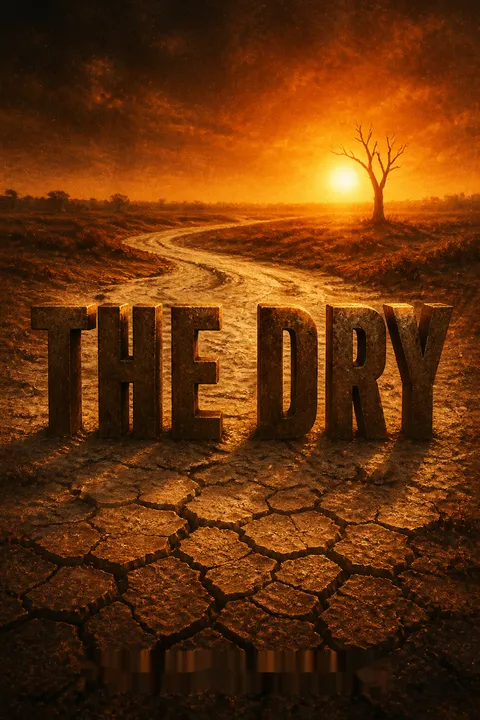
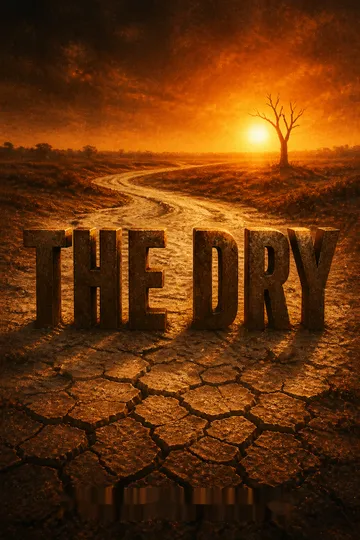
Kiewarra, a rural Australian town, is parched by a relentless drought, its people and land brittle with desperation. Amid this hardship, tragedy strikes: the Hadler family—Luke, Karen, and their young son Billy—are found dead in an apparent murder-suicide. The only survivor is baby Charlotte. The deaths shock the already fragile community, and the land's dryness becomes a metaphor for the emotional and moral desiccation of its people. The opening scene, with blowflies swarming the corpses, sets a tone of decay and foreboding, hinting that beneath the surface, more is rotting than just the crops.
Falk Returns, Old Wounds
Aaron Falk, a federal police investigator in Melbourne, returns to Kiewarra for the Hadler funeral. He is not welcomed; his presence stirs up old suspicions about the death of Ellie Deacon, a girl who drowned twenty years earlier. Falk and Luke had provided each other alibis back then, but the town never believed them. Now, Luke's father, Gerry, summons Falk with a cryptic note: "Luke lied. You lied. Be at the funeral." Falk's return is fraught with tension, guilt, and the weight of unresolved trauma, both his own and the town's.
The Funeral's Unspoken Tensions
At the funeral, the community's grief is palpable, but so is suspicion. The Hadlers' deaths are seen as both a personal tragedy and a symptom of the town's decline. Falk reconnects with Gretchen, the fourth member of their old teenage group, and is reminded of the past's unresolved pain. The funeral exposes the town's fractures: some blame the drought, others whisper about Luke's character, and many look askance at Falk, the outsider who never really left their collective memory.
Ghosts of the Past
Falk is drawn into the Hadlers' orbit by Gerry and Barb, who refuse to believe Luke killed his family. They beg Falk to investigate, convinced something is amiss. Falk's own memories of Ellie Deacon's death—her note with his name, the alibi he and Luke concocted—haunt him. The past and present blur as Falk realizes that the truth about the Hadlers may be entangled with the secrets of his youth. The town's collective memory is long, and forgiveness is in short supply.
The Hadler Farm Crime Scene
Falk and local sergeant Greg Raco examine the Hadler farm. The evidence points to Luke: his gun, his fingerprints, his truck. But Raco is unsettled by inconsistencies—wrong ammunition, the methodical search for Billy, the sparing of baby Charlotte. The crime scene feels staged, too neat. Raco's doubts mirror Falk's, and together they begin to question the official story. The drought's oppressive heat amplifies the sense of suffocation and urgency.
Raco's Doubts and Discoveries
Raco shares his unease with Falk, and the two form an uneasy alliance. They re-examine witness statements, timelines, and forensic details. The security footage shows only Luke's truck, not the killer. The town's new sergeant, Raco, is an outsider too, and his empathy for the victims drives him to dig deeper. Falk's own investigation into the Hadlers' finances reveals no clear motive, but Karen's meticulous bookkeeping hints at hidden stress. The partnership between Falk and Raco becomes the engine of the investigation.
The Town's Suspicion and Secrets
As Falk and Raco probe, the town's hostility intensifies. Old enemies like Grant Dow and Mal Deacon resurface, threatening Falk and spreading rumors. Vandalism and anonymous flyers accuse Falk of being involved in Ellie's death. The town's collective guilt and fear manifest as aggression, and Falk is forced to confront not only the case but his own reputation. The investigation becomes as much about surviving the town's judgment as about finding the truth.
Ellie Deacon's Shadow
Ellie Deacon's drowning two decades earlier is the town's original sin. Her note, naming Falk, has never been explained. Through flashbacks and confessions, it becomes clear that Ellie was abused and desperate to escape. The alibi Falk and Luke gave each other was a lie, meant to protect themselves from suspicion, but it also shielded the real darkness in Ellie's life. The unresolved trauma of her death hangs over every character, shaping their actions and relationships.
Jamie Sullivan's Alibi
Jamie Sullivan, Luke's friend and the last to see him alive, provides an alibi that doesn't hold up. Under pressure, it's revealed that Jamie was with Dr. Leigh, the town's GP, in a secret romantic relationship. Their fear of exposure led them to lie, inadvertently muddying the investigation. This revelation clears Jamie but exposes the town's intolerance and the lengths people go to hide their true selves. The theme of secrets—personal and communal—intensifies.
Money Troubles and Motives
Falk's investigation into the Hadlers' finances uncovers the pressures of drought, debt, and pride. Karen was worried about the farm's future and confided in the school principal, Scott Whitlam. A mysterious note in Karen's handwriting—"Grant??" and Falk's phone number—suggests she was seeking help. The possibility of financial motive, blackmail, or outside involvement grows. The town's economic despair is both backdrop and catalyst for violence.
Schoolyard Grief and Revelations
At the school, grief is raw. Principal Whitlam appears supportive but distracted. Karen's recent anxiety and her canceled playdate for Billy the day of the murders raise questions. The school's poverty, the children's bleak drawings, and the adults' inability to protect them underscore the novel's themes of lost innocence and communal failure. The investigation circles around the school, hinting that the key to the case may lie there.
Gretchen's Warnings
Gretchen, once the golden girl of their group, is now a single mother struggling to keep her farm afloat. Her relationship with Luke was complicated, marked by loyalty, jealousy, and unspoken longing. She warns Falk to be careful—both of the town and of digging too deep. Their renewed connection is tinged with regret and the possibility of healing, but also with the knowledge that the past cannot be undone.
The River Runs Dry
Falk visits the river, now a dry scar in the land. The absence of water is a powerful symbol for the town's emotional drought. Here, he remembers childhood adventures, Ellie's presence, and the moment everything changed. The river's emptiness is both literal and metaphorical—a place where secrets are buried and where hope has evaporated. Falk's grief and guilt are laid bare.
The Rock Tree's Secret
At the rock tree, a childhood hiding place, Falk discovers Ellie's backpack and diary. The diary reveals her plan to run away, her fear of her father, and her hope for a new life. The note with Falk's name was a talisman, not an accusation. The truth of Ellie's abuse and her father's violence is finally exposed. The discovery is both a vindication for Falk and a condemnation of the town's blindness.
The Foursome Fractures
Flashbacks reveal the dynamics of the teenage foursome: Falk, Luke, Gretchen, and Ellie. Their bonds were strong but fragile, strained by secrets, jealousy, and the pressures of adolescence. The group's fracture after Ellie's death set the stage for the town's long-standing divisions. The emotional fallout from those years shapes every character's present, especially Falk's sense of responsibility and loss.
Gretchen and Falk Reconnect
Falk and Gretchen's relationship deepens as they share memories and confessions. Both are marked by what they've lost—friends, innocence, dreams. Their connection offers a glimmer of redemption, but is shadowed by the knowledge that some wounds never fully heal. The possibility of a future together is left open, but uncertain.
Threats, Violence, and Vandalism
As Falk and Raco close in on the truth, the town's hostility escalates. Falk's car is vandalized, and he is threatened and ostracized. The violence is both a symptom and a cause of the town's sickness. The investigation becomes a crucible, testing Falk's resolve and forcing him to confront his own limits. The town's capacity for cruelty is laid bare.
The Truth About Ellie
Ellie's diary, found at the rock tree, is the key to the past. It details her abuse, her plan to escape, and her love for Falk. The note with his name was a sign of hope, not guilt. Her father, Mal Deacon, killed her to prevent her from leaving. The town's failure to protect her is its greatest shame. The revelation brings closure for Falk, but not absolution.
The Principal's Desperation
The investigation uncovers that Scott Whitlam, the school principal, embezzled a grant meant for the school to pay off gambling debts. Karen Hadler discovered the theft and was about to expose him. In a panic, Whitlam killed Karen, then Billy, and staged the scene to frame Luke. The drought, the town's decline, and Whitlam's own weakness combined to create a perfect storm of desperation and violence.
The Final Confrontation
As the truth closes in, Whitlam flees into the bush, threatening to set the land ablaze. Falk and Raco pursue him, risking their lives to prevent a catastrophe. In a tense standoff, Whitlam confesses, justifying his actions as acts of protection for his family. The confrontation ends in fire and injury, but the town is saved. Justice, imperfect and hard-won, is served.
Aftermath and Reckoning
In the aftermath, Falk and Raco recover from their injuries. The Hadlers' names are cleared, and the town begins to reckon with its past. Falk finds a measure of peace, both with Gretchen and with his own history. The drought continues, but there is hope that rain—and renewal—may come. The story ends with a sense of hard-earned catharsis, the promise that even in the driest places, life can begin again.
Analysis
Jane Harper's The Dry is a masterful exploration of how secrets, trauma, and communal failure can fester in the heat of isolation—both literal and emotional. The drought-stricken landscape is a powerful metaphor for the town's spiritual desiccation, where empathy and trust have evaporated, leaving only suspicion and blame. Through Aaron Falk's journey, the novel interrogates the cost of silence: how lies meant to protect can instead perpetuate harm, and how the refusal to see abuse or wrongdoing allows it to flourish. The story's structure—interweaving past and present, layering red herrings and revelations—mirrors the complexity of truth itself, which is rarely simple or comfortable. The ultimate lesson is that healing requires both the courage to confront the past and the humility to accept one's own failings. In the end, The Dry is not just a whodunit but a meditation on the corrosive power of secrets, the necessity of community, and the possibility of redemption even in the most barren places.
Review Summary
The Dry garners overwhelmingly positive reviews for Jane Harper's debut novel, with readers praising its atmospheric Australian setting during a devastating drought. The mystery follows Federal Agent Aaron Falk returning to his hometown for a funeral, investigating an apparent murder-suicide while confronting his past. Reviewers highlight the excellent character development, compelling dual timelines, vivid sense of place, and skillful pacing. Most appreciate the slowly unraveling plot and the "why" behind crimes over the "who." Critics note slow pacing and underdeveloped characters. Many express excitement for the series continuation featuring protagonist Aaron Falk.
People Also Read


Characters
Aaron Falk
Aaron Falk is a federal police officer specializing in financial crimes, but his return to Kiewarra is deeply personal. Marked by the trauma of being accused in Ellie Deacon's death as a teenager, Falk is both outsider and native son. His relationship with Luke was once brotherly, but guilt and suspicion have long haunted him. Falk is analytical, reserved, and driven by a need for truth—not just for the Hadlers, but for himself. His psychological journey is one of confronting the past, seeking forgiveness, and learning to trust again. His bond with Gretchen offers a fragile hope for healing.
Luke Hadler
Luke is the center of the old teenage group—confident, charming, and sometimes reckless. As an adult, he is a husband and father, struggling under the weight of drought and debt. His apparent murder-suicide shocks the town, but as the investigation unfolds, it becomes clear he was a victim, not a perpetrator. Luke's loyalty to Falk—lying to protect him after Ellie's death—shaped both their lives. His complexity lies in his mix of bravado and vulnerability, and his fate is a commentary on the pressures that can break even the strongest.
Gretchen Schoner
Gretchen is the fourth member of the teenage group, now a single mother and farmer. She is tough, resourceful, and fiercely loyal, but also burdened by regret and loss. Her relationship with Luke was complicated by love, jealousy, and the shifting dynamics of adolescence. With Falk, she shares a deep, if wounded, connection. Gretchen's warnings and confessions are pivotal to the investigation, and her own secrets—about Luke, about Ellie—underscore the novel's themes of hidden pain and the difficulty of moving on.
Karen Hadler
Karen is Luke's wife, a careful bookkeeper and devoted mother. Her anxiety about the farm's finances and her discovery of the principal's theft set the plot in motion. Karen's actions—seeking help, confiding in Whitlam, trying to protect her family—are those of a woman trapped by circumstance but determined to do right. Her murder is both a personal tragedy and a symbol of the town's failure to protect its own.
Billy Hadler
Billy is Luke and Karen's young son, whose death is the most senseless of all. His presence in the story is brief but powerful, a reminder of the stakes and the cost of adult failures. The sparing of his baby sister, Charlotte, is a chilling detail that underscores the killer's calculation.
Greg Raco
Sergeant Greg Raco is new to Kiewarra, an outsider like Falk. He is empathetic, methodical, and driven by a sense of justice. Raco's doubts about the official story and his willingness to work with Falk are crucial to solving the case. His own struggles—with the town's suspicion, with the demands of the job—mirror Falk's, and their partnership is a study in trust and perseverance.
Grant Dow
Grant is Mal Deacon's nephew, a man marked by resentment and aggression. He is a constant antagonist to Falk, spreading rumors and threats. His proximity to the Hadlers and his history with Ellie make him a suspect, but ultimately he is a red herring—a product of the town's toxicity rather than its cause.
Mal Deacon
Mal is Ellie's father, a violent, alcoholic man whose abuse drove his daughter to despair. His presence is a shadow over the entire story, embodying the town's darkest impulses. His denial and aggression are both defense mechanisms and admissions of guilt. Mal's actions are the root of much of the town's suffering.
Scott Whitlam
Whitlam is the school principal, outwardly supportive but inwardly unraveling. His gambling addiction and theft of school funds set off the chain of events leading to the Hadlers' deaths. When Karen discovers his crime, his panic and self-justification drive him to murder. Whitlam is a study in how ordinary weakness, under pressure, can become monstrous.
Ellie Deacon
Ellie is the story's ghost, her death the original wound. Abused by her father, isolated by her peers, she planned to run away but was killed before she could escape. Her diary, found by Falk, reveals the truth and exonerates him. Ellie's tragedy is the novel's emotional core—a reminder of the cost of silence and the necessity of seeing what is hidden.
Plot Devices
Dual Timelines and Flashbacks
The novel's structure alternates between the present-day investigation and flashbacks to the events surrounding Ellie Deacon's death. This dual timeline allows the reader to see how the past informs the present, and how old secrets cast long shadows. The gradual revelation of what really happened to Ellie is mirrored by the unfolding of the Hadler case, creating a sense of inevitability and deepening suspense.
Red Herrings and Misdirection
The narrative is rich with red herrings—Grant Dow's aggression, Mal Deacon's history, Jamie Sullivan's lies—each serving to distract both characters and readers from the real culprit. These misdirections are not just plot devices but thematic statements about the dangers of prejudice, rumor, and the refusal to see what is uncomfortable.
Symbolism of Drought and Water
The drought is more than setting; it is a living metaphor for the town's emotional and moral barrenness. The dry riverbed, the dead crops, the ever-present threat of fire—all symbolize the community's inability to nurture, protect, or renew itself. Water, when it appears in memory, is associated with life, hope, and, tragically, death.
The Hidden Diary and the Rock Tree
The discovery of Ellie's diary at the rock tree is the novel's pivotal plot device. It literalizes the idea that the truth is buried, waiting to be found, and that only by returning to the source can healing begin. The rock tree, a childhood hiding place, becomes the site of revelation and closure.
Community as Character
Kiewarra is not just a backdrop but an active force—its gossip, suspicion, and desperation shape every event. The town's refusal to forgive, its tendency to scapegoat, and its capacity for both cruelty and solidarity are central to the story's emotional arc.
Aaron Falk Series
Download PDF
Download EPUB
.epub digital book format is ideal for reading ebooks on phones, tablets, and e-readers.








































