
Summary Unavailable
This book is not suitable for a summary (it may be a textbook, workbook, cookbook, reference book, or collection). However, you can still explore the FAQs, about author, and other metadata below!
Key Takeaways
1. History's Relentless Pull: The Dead's Grip on the Living
All the essays I’ve collected in the book concern the hold of the dead over the living—the tug of time, as inevitable as gravity.
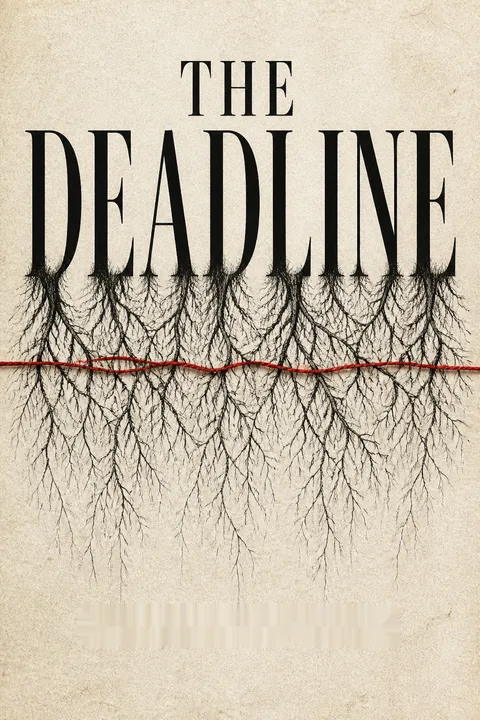
The "dead line." The author introduces her collection of essays as a meditation on the profound influence of the past on the present, a "tug of time" that shapes individual lives and national destinies. This concept is embodied in the dual meaning of "deadline"—both a temporal constraint for writing and a metaphorical river dividing the living from the dead. The remnants left behind, from personal memories to historical documents, continuously assert their presence.
Inspecting roots. Lepore views history as an ongoing inquiry, an attempt to "yank a plant out of the ground and inspect its roots for grubs and rot and stunted growth." This investigative approach seeks to understand how past events, decisions, and forgotten figures continue to impact contemporary issues, from political polarization to constitutional crises. The past is not merely a backdrop but an active force, demanding attention and interpretation.
Personal echoes. The author's own life is deeply intertwined with this theme, as seen in her reflections on her parents' deaths and her essay "Prodigal Daughter," which explores the life of Benjamin Franklin's overlooked sister, Jane. This personal connection underscores the universal experience of being shaped by those who came before, highlighting how individual stories become threads in the larger tapestry of history.
2. The Historian's Dilemma: Weaving Personal Truths into Public Narratives
The feminism of writers who are mothers is a fetish, but the motherhood of scholars is forbidden.
Navigating conventions. Lepore initially resisted incorporating personal experiences into her academic writing, feeling constrained by the "buttoned-up conventions of the discipline" and a desire to "write like a man" about grand historical themes. She observed a societal tendency to either fetishize or forbid the personal narratives of female intellectuals, creating a narrow path for serious women writers.
Breaking the mold. Despite her initial resolve to hide her personal life, particularly her motherhood, Lepore gradually began to "sneak in little asides," using domestic metaphors and maternal observations in her essays. This shift was partly a response to readers who connected intimately with these glimpses of her humanity, and partly a personal evolution after achieving tenure and experiencing profound grief.
Authenticity and insight. The integration of her personal life—cooking, quilting, nursing, gardening—into her intellectual work became a "compulsion," revealing a belief that the division between the intimate and the intellectual is "wildly overdrawn." This approach suggests that lived experience, especially the complexities of caregiving, can offer unique insights into broader societal and political structures, enriching historical understanding.
3. The Shifting Sands of Truth: Facts, Fiction, and the Digital Age
The past has not been erased, its erasure has not been forgotten, the lie has not become truth.
Truth's evolution. The concept of "truth" in history has evolved dramatically, from ancient literary art filled with invention to the 19th-century "cult of the fact" based on empirical evidence. Yet, the line between history and fiction has always been contested, with novelists like Henry Fielding claiming "true history" and philosophers like David Hume exploring how the same text can be read as both.
Digital erosion. In the 21st century, the digital age introduces new challenges to truth, as "facts" are replaced by "data" and knowledge becomes "Google-knowing." The internet, while offering vast information, also suffers from "reference rot"—links disappearing or changing—making historical evidence unstable and unreliable. This digital ephemerality threatens the very foundation of verifiable knowledge.
Epistemological chaos. The author highlights a growing "epistemological havoc" where society struggles to agree on how to know what's true, leading to phenomena like "truthiness" and political debates resembling "trial by combat." This erosion of shared standards for reliable information undermines democratic deliberation and citizenship, as individuals forfeit their reason by outsourcing knowledge to machines.
4. The Media's Double-Edged Sword: From Gatekeepers to Disrupters
Well-reported news is a public good; bad news is bad for everyone.
Decline of the press. The traditional newspaper, once the "taproot of modern journalism," has faced a precipitous decline due to conglomeration, the rise of the internet, and the shift from subscription-based models to free, ad-supported online content. This has led to widespread layoffs, reduced news coverage, and a "newspaper mortality rate" that threatens the existence of quality journalism.
New media, new problems. The emergence of online news aggregators and social media platforms like Facebook and BuzzFeed has fundamentally reshaped journalism. These platforms, driven by algorithms that prioritize "raw buzz" and "attention minutes," have blurred the lines between news and entertainment, and between editorial content and "native advertising." This has contributed to a "schizophrenic late-capitalist accelerated visual culture" where information is often sensationalized and unverified.
Political consequences. The transformation of media has profound political implications, contributing to "political chaos and epistemological mayhem." The author argues that the Trump era, with its "Trump bump" in ratings and the president's direct attacks on the press, exacerbated these issues, leading to a situation where "the more adversarial the press, the more loyal Trump’s followers, the more broken American public life." The press, in chasing readers, increasingly mirrored the polarization of politics.
5. Constitutional Contests: The Enduring Struggle for American Ideals
The U.S. Constitution, no less than the UK’s unwritten constitution, is more than the sum of its words; it’s the accretion of practices and precedents.
War's constitutional legacy. Linda Colley's "Rule" posits that "wars make states make constitutions," arguing that the increasing lethality and cost of 18th-century warfare compelled rulers to grant rights and limit their powers in exchange for public consent and sacrifice. This global context reveals the U.S. Constitution as both less unique and more a product of its violent era than commonly understood.
Beyond the text. The U.S. Constitution, though revered, is not a static document but a living entity shaped by continuous interpretation, amendment, and the "accretion of practices and precedents." The author highlights how rights not explicitly mentioned, such as those related to women or immigrants, have been fought for through constitutional arguments, often leveraging amendments like the Fourteenth.
Unresolved tensions. Despite centuries of struggle, fundamental constitutional questions remain contested, from the scope of judicial review to the meaning of "due process" and "equal protection." The difficulty of amending the Constitution, coupled with political polarization, has led to its circumvention and abandonment, raising concerns about the fragility of American democracy and the potential for its "betrayal."
6. The Perils of Progress: Technology's Unforeseen Consequences
Disruptive innovation is competitive strategy for an age seized by terror.
The disruption myth. The concept of "disruptive innovation," popularized by Clayton Christensen, is presented as a modern theory of change, often framed as inevitable and universally applicable across industries. However, Lepore critiques its historical basis, arguing that it relies on "handpicked case studies" and "shaky evidence," often misinterpreting business failures and successes.
Beyond business. The rhetoric of disruption, a "language of panic, fear, asymmetry, and disorder," has spread from business to non-business sectors like education, healthcare, and journalism. This application is problematic because these institutions have obligations (to patients, students, readers) that transcend purely economic metrics, and applying a business-centric model can undermine their core values.
Human cost. The relentless pursuit of "innovation" and "disruption" often comes at a human cost, contributing to job insecurity and the erosion of traditional work structures. The author suggests that this focus on technological change can obscure deeper societal problems and the human agency involved in shaping the adoption and impact of new machines.
7. Battleground America: Violence, Division, and the Fragility of Civil Society
When carrying a concealed weapon for self-defense is understood not as a failure of civil society, to be mourned, but as an act of citizenship, to be vaunted, there is little civilian life left.
A nation armed. The United States stands out globally for its high rate of civilian gun ownership, a phenomenon deeply intertwined with its history of violence and racial injustice. The author traces the evolution of gun rights arguments from the Second Amendment's original intent (well-regulated militia) to the modern interpretation of individual self-defense, often fueled by the gun lobby.
Policing's dark origins. The history of American policing is rooted in slavery, with slave patrols and Jim Crow laws establishing a system of force and control over Black populations. Modern policing, influenced by military tactics and disproportionately targeting communities of color, continues to grapple with this legacy, leading to ongoing crises of police brutality and calls for systemic reform.
Fractured society. Events like school shootings, the killing of Trayvon Martin, and the Jackson State shootings expose deep societal divisions and the fragility of civil society. The author argues that the inability to have a candid discussion about guns and violence, coupled with political polarization, has turned American streets into "battlegrounds," where the logic of self-defense often overshadows the need for collective peace.
8. The Human Cost of Modernity: Loneliness, Burnout, and Isolation
Loneliness is grief, distended.
The modern affliction. Loneliness and burnout are presented as pervasive conditions of modern life, exacerbated by the pandemic but with roots stretching back over a century. Loneliness, defined as a "conscious, cognitive feeling of estrangement," is linked to evolutionary drives for social connection that now backfire in an increasingly individualized world.
Indoor generation. Humans have become an "indoor species," spending 90% of their lives inside buildings, cars, and offices. This "Great Confinement," driven by urbanization and climate change, has health consequences, yet indoor environments are largely unregulated. The pursuit of "personalized indoor health" through technology risks further segregation and detachment from nature.
Historical shifts. The rise of chronic loneliness is tied to capitalism and secularism, as traditional communal living gave way to individualism and single-person households. Similarly, "burnout," a term coined in the 1970s, evolved from describing drug addiction to a badge of high achievement, reflecting a society that demands relentless striving and places the burden of systemic problems on the individual.
9. The Pervert and the Politician: Sex Panics as Political Weapons
The #MeToo movement is accomplishing what sexual harassment law to date has not.
Sex panics as political tools. The author explores "sex panics" as recurring phenomena that, while appearing to address sexual misconduct, often serve political ends by obscuring actual issues and targeting specific groups. J. Edgar Hoover's "War on the Sex Criminal" in the 1930s, for instance, conflated various sexual behaviors and targeted gay men amidst anxieties about masculinity and national security.
Conflation and consequence. A key characteristic of sex panics is the inability to distinguish between degrees of misconduct, from "patting someone on the butt" to rape. This conflation, seen in both Hoover's era and aspects of the #MeToo movement, can lead to judicial overreach and the erosion of due process, as standards like "presumption of innocence" are set aside in the name of purity.
Political terror. The #MeToo movement, while driven by a pursuit of justice for victims of harassment and assault, also exhibited characteristics of a sex panic, including public shaming and a "never-trust-anyone-over-forty" generational divide. This suggests that such movements, when unchecked, can become "political terror," achieving political ends through methods that bypass established legal and ethical norms.
10. The Unfinished American Story: From Founding Ideals to Present Crises
We need solely to make up our own minds and to act.
Cycles of crisis. American democracy has faced recurring existential threats, from the 1930s rise of authoritarianism to contemporary challenges like misinformation, polarization, and a "criminal president." The author draws parallels between these eras, highlighting how past generations grappled with questions of national identity and the survival of self-government.
The people's voice. The concept of "the People" as sovereign, a foundational American creed, has always been a "make-believe" that requires constant effort and belief. The author questions whether Americans still possess the collective will and shared understanding to defend democracy, especially when political communication is "frantic, volatile, shortsighted, sales-driven, and antidemocratic."
Action over despair. Despite the grim historical parallels and the "epistemological chaos" of the present, the author emphasizes that political problems are not external forces but within human control. Drawing inspiration from those who "stopped the rain" in the 1930s—teachers, artists, activists—she calls for active civic engagement, critical thinking, and a renewed commitment to democratic ideals, rather than succumbing to despair.
Last updated:
Report IssueReview Summary
The Deadline by Jill Lepore is a 640-page collection of 46 essays, mostly from The New Yorker, spanning nearly 20 years. Readers praise Lepore's brilliant research, engaging writing style, and ability to connect historical context with contemporary issues. The essays cover diverse topics including politics, law, technology, literature, motherhood, gun violence, Supreme Court decisions, and Trump-era America. While most reviewers rate it highly (4.31 average), some find certain essays—particularly on technology—less compelling or too detailed. Many describe it as thought-provoking and deeply analytical, with personal essays providing unexpected emotional resonance. Several readers note it's challenging but rewarding.
People Also Read
About the Author
Jill Lepore is the David Woods Kemper '41 Professor of American History at Harvard University, where she chairs the History and Literature Program. She is also a staff writer at The New Yorker. Her distinguished career includes winning the Bancroft Prize and being a Pulitzer Prize finalist. Lepore has received the Anisfield-Wolf Award and numerous other honors for her historical writing. She co-founded the magazine Common-place and has contributed to major publications including the New York Times and Washington Post. Her research has been supported by prestigious institutions including the National Endowment for the Humanities. She lives in Cambridge, Massachusetts.
Other books by Jill Lepore
Download PDF
Download EPUB
.epub digital book format is ideal for reading ebooks on phones, tablets, and e-readers.








































