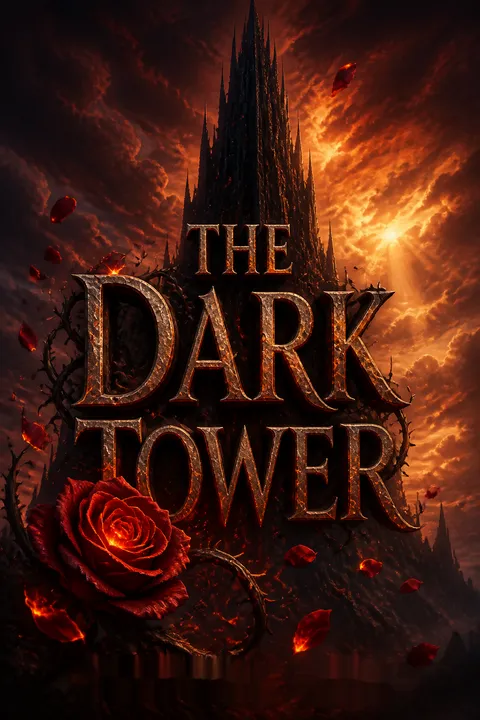

Plot Summary
The Last Stand Begins
Roland's ka-tet, battered and scattered, launches a final, desperate assault on the Crimson King's forces. Jake and Callahan storm the Dixie Pig, a vampire stronghold, to rescue Susannah, while Eddie and Roland race through Maine to secure the fate of the Tower in the real world. The group faces overwhelming odds, and the sense of doom is palpable. Each member is haunted by the knowledge that not all will survive. The battle is fierce, and the cost is high, but the gunslingers press on, driven by duty, love, and the inexorable pull of ka. The story's tone is one of grim determination, as the last stand against chaos and darkness begins.
Sacrifice at the Dixie Pig
Jake and Callahan, accompanied by Oy, infiltrate the Dixie Pig, confronting vampires and monstrous taheen. The tension is suffocating as they fight through waves of enemies, using both cunning and raw firepower. Callahan, seeking redemption for past failures, makes a final, selfless stand, sacrificing himself so Jake can continue. The battle is brutal, and the cost is Jake's innocence. The loss of Callahan is deeply felt, and Jake is left changed, carrying the weight of sacrifice and the hope of saving Susannah. The chapter is a meditation on courage, faith, and the price of heroism.
The Writer's World Collides
Eddie and Roland, in 1977 Maine, realize that the fate of the Tower is bound to the life of Stephen King, the writer. They must ensure King survives to finish the story, for his death would doom all worlds. The gunslingers navigate a world both familiar and strange, encountering ordinary people and supernatural threats. Their mission is complicated by time's instability and the looming threat of King's prophesied accident. The blending of fiction and reality creates a sense of wonder and dread, as the characters confront the power and fragility of storytelling itself.
The Breaking of Ka-Tet
The ka-tet suffers devastating losses. Eddie is mortally wounded in a firefight at Algul Siento, dying in Susannah's arms. Jake, in a final act of love and duty, sacrifices himself to save King from a fatal accident, ensuring the story continues. Oy, the loyal bumbler, mourns his friends. Susannah is left shattered, and Roland is haunted by guilt and grief. The breaking of the ka-tet is a moment of profound sorrow, marking the end of an era and the beginning of the final, lonely leg of Roland's quest. The emotional weight is immense, as love and loss intertwine.
The Birth of Mordred
Susannah, trapped in Fedic, witnesses the birth of Mordred, the prophesied child of Roland and the Crimson King. Mordred is both human and spider, a creature of prophecy and horror, destined to destroy his fathers. His birth is violent and tragic, resulting in the death of his mother, Mia. Mordred's hunger and hatred are palpable, and he quickly becomes a deadly force, stalking Roland and his remaining companions. The chapter is a chilling exploration of destiny, monstrosity, and the consequences of obsession.
The Wolves and the Breakers
Roland and his allies, with the help of Ted Brautigan and Sheemie, assault Algul Siento, the prison where psychic Breakers are forced to destroy the Beams that hold the Tower. The battle is fierce, with cunning and sacrifice on both sides. The Breakers are freed, and the Beams are saved, but at great cost. Sheemie dies, and the survivors are left to reckon with the aftermath. The victory is bittersweet, a moment of hope shadowed by loss. The chapter is a testament to resistance, unity, and the power of small acts of rebellion.
The White Lands of Empathica
Roland, Susannah, and Oy cross the White Lands, a frozen, haunted wasteland. They endure bitter cold, hunger, and the constant threat of Mordred. The landscape is a reflection of Roland's inner emptiness, filled with ghosts and echoes of the past. The trio's bond is tested, and Susannah is haunted by dreams of another world, a door she must find. The journey is both physical and spiritual, a passage through grief, memory, and the fading light of hope.
The Artist and the Eraser
In Odd's Lane, Roland and Susannah encounter Dandelo, a psychic vampire who feeds on emotion. With the help of Patrick Danville, a mute artist with supernatural talent, they defeat Dandelo. Patrick's drawings have the power to alter reality; he can erase what he draws. Susannah realizes her path lies elsewhere and asks Patrick to draw her a door to another world. She leaves Roland, seeking peace and love in a parallel New York, while Patrick stays to help Roland face the Tower. The chapter is a meditation on art, agency, and the courage to choose one's own ending.
The Crimson King's Trap
Roland and Patrick reach Can'-Ka No Rey, the field of roses surrounding the Dark Tower. The Crimson King, now mad and monstrous, is trapped on a balcony, hurling deadly sneetches to prevent Roland's approach. The Tower's song is irresistible, threatening to draw Roland to his death. With Patrick's help, using a rose and Roland's blood, they draw and erase the Crimson King from existence, leaving only his red eyes. The path to the Tower is open, but the victory is hollow, marked by exhaustion and the loss of all companions.
The Unfound Door
Susannah, guided by dreams and Patrick's art, finds the Unfound Door. She chooses to leave Roland's world, seeking a life free from violence and sorrow. Passing through the door, she is reunited with versions of Eddie and Jake in a parallel New York, where happiness is possible. Oy's fate is ambiguous, but hope lingers. The chapter is a gentle, bittersweet farewell, honoring the power of choice, love, and the possibility of healing after trauma.
The Tower's Final Gaze
Alone, Roland approaches the Dark Tower, calling the names of all he has lost. The Tower's doors open, and he ascends, passing through rooms that replay the story of his life—his loves, betrayals, and sacrifices. At the top, he discovers the truth: he has reached the Tower many times before, only to be sent back to the beginning, his memories erased, doomed to repeat his quest until he learns true redemption. The Tower is both his salvation and his damnation, the axis of all worlds and the mirror of his soul.
The Wheel Turns Again
The story closes with Roland once again in the desert, chasing the man in black, horn of Eld in hand—a small but crucial change. The cycle begins anew, but hope glimmers that this time, things may be different. The tale is both an ending and a beginning, a meditation on fate, free will, and the eternal return. The emotional arc is one of sorrow, acceptance, and the faint possibility of grace. The wheel of ka turns, and the story, like life, goes on.
Analysis
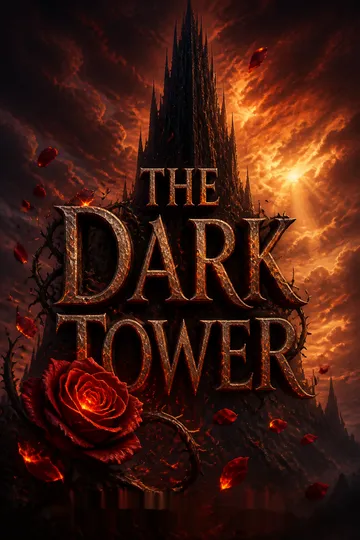
The Dark Tower is Stephen King's magnum opus, a genre-defying epic that blends fantasy, horror, western, and metafiction into a meditation on obsession, loss, and the search for meaning. At its heart is Roland, a tragic hero whose relentless pursuit of the Tower costs him everything he loves. The story interrogates the nature of storytelling itself, blurring the line between fiction and reality, and suggesting that stories are both the source of hope and the engine of fate. The cyclical structure—Roland doomed to repeat his quest until he learns true redemption—reflects the human struggle to break free from destructive patterns and find grace. The novel is unflinching in its portrayal of sacrifice, trauma, and the cost of obsession, but it is also suffused with love, resilience, and the possibility of change. The ending is both heartbreaking and hopeful: the wheel turns, but the presence of the horn suggests that this time, things may be different. The Dark Tower is a story about the power of choice, the necessity of letting go, and the eternal return of hope. It is, ultimately, a tale about the stories we tell, the lives we live, and the towers we build in our hearts.
Review Summary
The Dark Tower receives an overall rating of 4.29/5, with readers deeply divided. Many praise the cyclical ending as thematically perfect, reflecting the series' core message that the journey matters more than the destination. Roland's emotional arc moves countless readers to tears. Critics argue the finale feels rushed, with major villains like the Crimson King and Randall Flagg receiving anticlimactic endings. King's meta-inclusion of himself polarizes readers. Despite flaws, most consider the series an imaginative, genre-blending masterpiece spanning decades of storytelling.
People Also Read
Characters
Roland Deschain
Roland is the last gunslinger of Gilead, driven by an unyielding quest to reach the Dark Tower, the linchpin of all existence. His psyche is marked by trauma, loss, and a relentless sense of duty. He is both hero and antihero, sacrificing friends, lovers, and even his own soul in pursuit of his goal. Roland's relationships are complex: he is a surrogate father to Jake, a mentor to Eddie and Susannah, and a tragic figure whose love is often destructive. Over the course of the story, Roland is forced to confront the consequences of his obsession, the pain he has caused, and the possibility of redemption. His journey is both external and internal, a search for meaning, forgiveness, and peace.
Susannah Dean
Susannah is a woman of extraordinary strength, forged by trauma and split identities (Odetta, Detta, and later Mia). Her journey is one of integration, healing, and self-assertion. She is fiercely loyal, courageous, and resourceful, often serving as the moral center of the ka-tet. Her relationship with Eddie is deeply loving, and her bond with Roland is one of mutual respect and occasional conflict. Susannah's arc culminates in her choice to leave Roland's world, seeking happiness and wholeness in a parallel reality. Her story is a testament to agency, resilience, and the power of love to heal even the deepest wounds.
Eddie Dean
Eddie is a former heroin addict from New York, whose humor and vulnerability mask deep pain. He is the emotional glue of the group, bringing levity and compassion to their grim quest. Eddie's relationship with Susannah is transformative, offering both redemption and purpose. His loyalty to Roland is fierce, but he is unafraid to challenge the gunslinger's ruthlessness. Eddie's death is a moment of profound loss, underscoring the story's themes of sacrifice and the cost of obsession. In the end, Eddie's spirit endures, a symbol of hope and the possibility of change.
Jake Chambers
Jake is a boy from New York, repeatedly drawn into Roland's world and repeatedly sacrificed for the quest. His relationship with Roland is that of a son to a flawed, tragic father. Jake's courage, intelligence, and empathy make him both a victim and a hero. His death to save Stephen King is the ultimate act of love and duty, ensuring the continuation of the story and the survival of all worlds. Jake's journey is a meditation on childhood, loss, and the longing for belonging.
Oy
Oy is a billy-bumbler, a small, intelligent creature who becomes Jake's devoted friend. Oy's loyalty, bravery, and simple wisdom provide comfort and hope amid darkness. His death, defending Roland from Mordred, is a final act of love and sacrifice. Oy represents the purity and goodness that endure even in a world gone wrong, and his loss is deeply felt by both characters and readers.
Mordred Deschain
Mordred is the offspring of Roland and the Crimson King, born of prophecy and horror. He is both human and spider, a creature of hunger, hatred, and loneliness. Mordred's existence is a curse, and his brief life is marked by suffering and violence. He stalks Roland, seeking vengeance and fulfillment of his dark destiny, but ultimately dies unloved and alone. Mordred embodies the consequences of obsession, the dangers of prophecy, and the tragedy of a child denied love.
The Crimson King
The Crimson King is the story's ultimate antagonist, a being of immense power and madness, trapped at the top of the Tower. He seeks to destroy the Beams and bring about the end of all worlds. His insanity is both terrifying and pitiable, and his final defeat—erased from existence by Patrick's art—underscores the story's themes of creation, destruction, and the limits of evil. The Crimson King is both a cosmic force and a cautionary tale about the dangers of unchecked ambition.
Patrick Danville
Patrick is a young man with supernatural artistic talent, able to alter reality by drawing and erasing. Rescued from captivity by Roland and Susannah, Patrick becomes the key to defeating the Crimson King. His innocence and vulnerability contrast with his immense power. Patrick's art is both a gift and a burden, and his journey is one of liberation, agency, and the quiet heroism of creation.
Father Callahan
Callahan is a former priest haunted by failure and addiction, seeking meaning and forgiveness. His journey intersects with the ka-tet's, and he ultimately sacrifices himself to save Jake, finding redemption in his final act. Callahan's story is one of faith, doubt, and the possibility of grace even after great failure.
Stephen King
King appears as a character in his own story, both creator and created, whose life and work are essential to the survival of the Tower. His presence blurs the line between fiction and reality, raising questions about fate, free will, and the power of storytelling. King is both a figure of awe and vulnerability, a reminder that even creators are subject to the forces they unleash.
Plot Devices
The Tower as Metaphor and Motive
The Dark Tower is both a literal structure and a symbol of meaning, order, and the axis of all realities. Its call is irresistible, shaping the destinies of all who seek it. The Tower's rooms replay Roland's life, making the quest both external and internal. The Tower is the story's ultimate plot device, representing the search for purpose, the cost of obsession, and the possibility of redemption or damnation.
The Cycle and Eternal Return
The narrative structure is cyclical: Roland's quest is revealed to be an endless loop, each journey erasing his memory and beginning anew. This device explores themes of fate, free will, and the possibility of change. The presence of the horn of Eld in the final cycle suggests hope that the pattern can be broken, that redemption is possible. The cycle is both a curse and a chance for growth.
Metafiction and the Writer's Hand
The story is self-aware, with Stephen King appearing as a character whose survival is essential to the plot. The metafictional device raises questions about the nature of storytelling, the power of the author, and the relationship between creator and creation. The characters' awareness of their fictional status adds depth and complexity, making the story both a fantasy epic and a meditation on art.
Sacrifice and Substitution
The plot is driven by acts of sacrifice: Callahan for Jake, Jake for King, Eddie for the ka-tet, Oy for Roland. Each loss is both a wound and a step forward, underscoring the story's themes of love, duty, and the cost of obsession. Sacrifice is both a plot engine and a source of emotional resonance.
The Power of Art and Imagination
Patrick's ability to draw and erase is a literalization of the story's themes: art can create, destroy, and transform. The act of drawing the door, erasing the Crimson King, and healing Susannah's wound are all moments where imagination becomes reality. This device celebrates the power of creativity and the courage to choose one's own ending.
Foreshadowing and Prophecy
The story is rich with prophecy, dreams, and riddles, from Browning's poem to Susannah's visions. These devices create suspense, guide the characters, and reinforce the sense of fate and inevitability. The fulfillment and subversion of prophecy are central to the story's structure and meaning.
The Dark Tower Series


About the Author
Other books by Stephen King




Download PDF
Download EPUB
.epub digital book format is ideal for reading ebooks on phones, tablets, and e-readers.








































