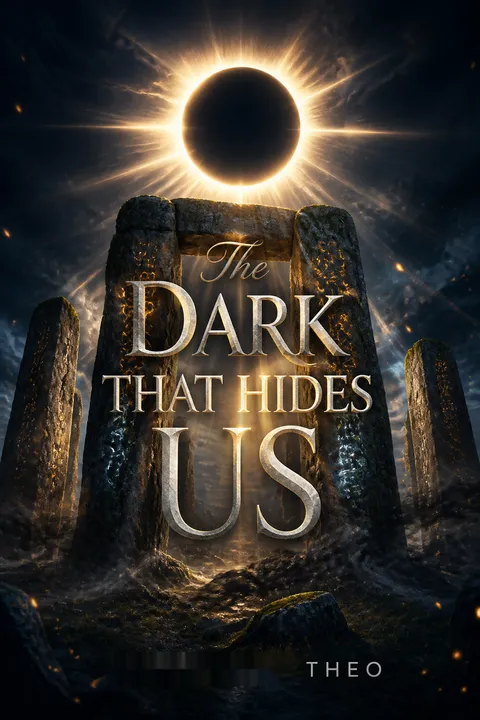

Plot Summary
Shadows in the Wardrobe
Blaise Ademola, a young boy, hides in his wardrobe, terrified by a midnight visitor in his home. His parents, obsessed with making him "fearless," ignore his true anxieties, focusing only on his strength and beauty. The mysterious visitor calls his mother "My Queen," hinting at a hidden legacy and a tribe that Blaise cannot yet understand. Witnessing his mother's betrayal and being told to forget, Blaise internalizes the lesson that love is complicated and that his value lies in his appearance and strength. This formative night plants the seeds of fear, shame, and confusion that will haunt him into adulthood, setting the stage for a life spent battling both external threats and the darkness within himself.
Beautiful, Not Fearless
Years later, Blaise has grown into the "pretty boy" everyone expects, but inside he is still ruled by fear and insecurity. He clings to his looks as his only worth, unable to form deep connections, except with Alexis, whose confidence and depth he envies. The world is on the brink of disaster, with Mortem, a dark Elemental, threatening to enslave all with Elemental blood. Blaise's attempts at distraction and connection are rebuffed, leaving him alone with his anxieties. The lesson from his childhood—never show fear, never be weak—remains a prison. As the threat of war looms, Blaise's internal struggle mirrors the external chaos, and he must decide whether to run or finally face what he fears most: himself.
The Gathering Storm
Valentina, a powerful portaller, is haunted by abuse and betrayal. She has burned her past to ashes and is driven by revenge against Mortem, who enslaved her. Trust is impossible; even kindness from Ziya, the Haven's gentle leader-in-training, cannot reach her. Valentina's secret—marked by a dragon tattoo—makes her a target, and she plans to disappear before anyone can betray her again. Meanwhile, Alexis, the thoughtful and tormented Child of Water, trains obsessively, fighting his own proxy to escape the guilt of killing with his shadow powers. Demi, the Child of Earth, struggles with the morality of violence, her faith shaken by the necessity of killing to survive. The group's bonds are tested as secrets, shame, and trauma threaten to tear them apart before the real battle even begins.
Four Elements, Four Fates
The Children of the Elements—Alexis (Water), Blaise (Fire), Caeli (Air), and Demi (Earth)—are called to defend Stonehenge from Mortem's impending attack. Each is burdened by personal pain: Alexis by guilt and a prophecy of darkness, Blaise by abandonment and self-doubt, Caeli by unrequited love and the fear of never being enough, and Demi by the weight of her faith and the violence she's committed. Their mentor, Incantus, reveals the Prophecy of Light and Darkness, which foretells that only by uniting their powers can they hope to defeat Mortem. As the summer solstice and solar eclipse approach, the group must decide whether to fight or flee, knowing that the cost may be their lives—or their souls.
The Prophecy's Weight
Incantus leads the Children into the White Room beneath Stonehenge, where the Elemental Gems are kept. He explains that their combined powers are the only hope against Mortem's darkness, but warns that using them could have catastrophic consequences. The group is torn: Alexis is determined to fight, driven by a need for redemption and revenge; Demi, Blaise, and Caeli are reluctant, fearing the loss of themselves or each other. Ultimately, they choose to stand together, forging a pact of solidarity. As they prepare the battlefield, each creates defenses inspired by their element and their deepest memories. The Prophecy hangs over them, its meaning unclear, but its threat ever-present: "By oneself is how the other will be slain."
Bonds Forged in Fire
On the eve of battle, the Children of the Elements share a rare moment of peace. They drink, laugh, and confess their fears and desires. Caeli and Blaise's unresolved tension simmers, while Alexis and Demi's bond deepens into something more than friendship. Ziya, revealed as the granddaughter of the legendary Serena Aevum, struggles with her own powerlessness but finds comfort in the group's acceptance. The arrival of Serena and the Elementals of the Sanctuario brings hope and unity, as the army gathers for the coming war. Yet beneath the camaraderie, secrets and insecurities fester, and the knowledge that tomorrow may bring death or darkness makes every touch and word more precious.
The Haven's Heart
Blaise learns that his parents were never truly his—they were part of the Fire Tribe, tasked only with raising him for the Prophecy. Their abandonment reopens old wounds, but Alexis and Serena offer him the family and acceptance he's always craved. Incantus, too, is revealed to be more than a mentor; his own losses and grief bind him to the Children as a surrogate father. The group's found family is both their greatest strength and their deepest vulnerability. As the eclipse draws near, each must confront the pain of their past and the uncertainty of their future, knowing that love and loyalty may be all that stands between them and oblivion.
Betrayal and Battlelines
The battle begins with chaos and bloodshed. The High Order, the Elemental world's governing body, refuses to help, paralyzed by fear and politics. Ziya and Blaise confront them, but are met with cowardice and betrayal. On the battlefield, friends fall—Joe Coin dies, and Alexis is forced to kill an imprinted Shadowless, shattering his resolve. Caeli and Blaise finally confess their feelings, only for Caeli to lose her hand in the fighting. Valentina returns, saving the group and seeking her own vengeance. As the eclipse approaches, the Children are pushed to their limits, their defenses crumbling, and the Prophecy's shadow looming ever larger.
The Eclipse Approaches
As the moon covers the sun, Mortem unleashes monstrous Demons—manifestations of stolen shadows—upon the battlefield. The Children, empowered by their Gems, transform into elemental avatars, battling the Demons in a desperate bid to protect Stonehenge. Serena sacrifices herself to destroy the Demons, her death a beacon of hope and grief. Incantus, mortally wounded by Mortem, is saved only by the Children's combined power. In a final gambit, Alexis uses a projection to trick Mortem, buying precious moments for the group to unite their powers and unleash the light that banishes darkness. The cost is immense: lives lost, bodies broken, and the world forever changed.
Demons in the Dark
In the aftermath, the survivors are left to pick up the pieces. Caeli grapples with her amputation, Blaise with guilt and grief, Demi with the consequences of her power, and Alexis with the knowledge that he may have killed his own mother. Ziya uncovers secrets about Alexis's adoption, hinting that his parents may have abducted him. The Shadow Man—Alexis's lifelong hallucination—returns, suggesting that the darkness is not truly gone. The Prophecy's promise of peace is revealed to be fragile, as the Children's victory comes at the cost of innocence and certainty. The world is saved, but the scars remain.
Sacrifice and Survival
The group mourns their dead and celebrates their survival, but the wounds—physical and emotional—run deep. Incantus, now mortal, becomes a symbol of hope and resilience, guiding the next generation. The Children struggle with the consequences of their actions: the natural disasters caused by their powers, the trauma of battle, and the knowledge that darkness still lingers within them. Friendships are tested, love is both a balm and a burden, and the search for identity continues. The story ends not with triumph, but with the quiet determination to heal, to remember, and to keep fighting the darkness—both in the world and in themselves.
The Light That Remains
As the Children prepare to leave the Haven and return to the world, they are haunted by the knowledge that their story is not over. The Prophecy may be fulfilled, but new threats emerge: mysterious figures watching Alexis's family, secrets about his origins, and the persistent voice of the Shadow Man. The group's bond endures, but each is changed—older, wiser, and marked by loss. The final image is one of hope and uncertainty: a photograph capturing a fleeting moment of light, even as darkness gathers at the edges. The battle is won, but the war within continues.
Aftermath and Ashes
The Haven mourns its dead, honors its heroes, and begins the slow work of rebuilding. Incantus and Ziya take on new roles as leaders, while the Children struggle to find meaning in their pain. The world outside is forever altered by the battle, with natural disasters and political upheaval echoing the chaos within. Each character must choose how to move forward: to forgive, to remember, to love, and to hope. The story ends with the promise of new beginnings—and the warning that darkness, once awakened, is never easily put to rest.
The Shadow Within
In the epilogue, Alexis overhears his parents discussing mysterious watchers and the need to keep secrets from him. He glimpses a pale-faced man in the shadows, realizing that the threats to his family and his own sanity are far from over. The Shadow Man's voice lingers, a reminder that the battle against darkness is never truly won. The story closes on a note of ambiguity and anticipation, as Alexis and his friends step into an uncertain future, carrying both the light they have kindled and the shadows that still hide within them.
Analysis
Andy Darcy Theo's The Dark That Hides Us is a sweeping, emotionally charged fantasy that uses the trappings of elemental magic and epic prophecy to explore the deepest wounds of the human psyche. At its heart, the novel is about the battle between light and darkness—not just in the world, but within each character. The story's true power lies in its psychological realism: trauma, shame, and fear are not obstacles to be vanquished, but companions on the journey toward healing. The found family at the story's core offers a vision of hope, showing that love and loyalty can be forged in the crucible of pain. Yet the novel refuses easy answers; the return of the Shadow Man and the lingering scars of battle remind us that darkness is never truly defeated, only held at bay by the light we kindle in ourselves and each other. In a world obsessed with strength and perfection, The Dark That Hides Us is a testament to the beauty of vulnerability, the necessity of facing one's fears, and the enduring power of hope.
People Also Read


Characters
Alexis Michaels
Alexis is the Child of Water, adopted and raised in the mortal world, but forever marked by trauma, psychosis, and a mysterious legacy. He is introspective, compassionate, and deeply burdened by guilt—over his powers, his parentage, and the violence he is forced to commit. His relationship with Demi is the emotional core of his journey, offering both hope and vulnerability. Alexis's greatest fear is that he is irredeemably tainted by darkness, a fear embodied by the Shadow Man that haunts him. His arc is one of self-acceptance, learning that heroism is not the absence of darkness, but the choice to keep fighting for the light.
Blaise Ademola
Blaise, the Child of Fire, is outwardly confident and charming, but inside he is ruled by insecurity and a desperate need for validation. Raised by parents who valued only his strength and beauty, he struggles to form genuine connections and is terrified of being alone. His journey is one of confronting his fears—of love, of weakness, of being unwanted—and learning to find strength in vulnerability. His relationship with Caeli is both a source of comfort and pain, as they navigate the complexities of desire, jealousy, and loss. Blaise's arc is about reclaiming agency and discovering that true courage is not the absence of fear, but the willingness to face it.
Demi Nikolas
Demi, the Child of Earth, is the group's moral compass, guided by her faith and a deep sense of right and wrong. She is nurturing and strong, but the violence of battle and the necessity of killing shatter her innocence. Her struggle is to reconcile her beliefs with the realities of war, and to forgive herself for the choices she is forced to make. Her love for Alexis is both a source of healing and a reminder of what is at stake. Demi's arc is one of resilience, learning that faith is not certainty, but the courage to hope in the face of darkness.
Caeli Doran
Caeli, the Child of Air, is brilliant, ambitious, and plagued by self-doubt. She craves validation and fears never being enough, both for herself and for those she loves. Her relationship with Blaise is a tempest of longing and frustration, culminating in both passion and tragedy when she loses her hand in battle. Caeli's arc is about accepting imperfection, finding strength in vulnerability, and learning that worth is not measured by achievement or ability, but by the courage to keep going.
Incantus Arcangelo
Incantus is the immortal Elemental of Light, leader of the Haven, and surrogate father to the Children. Haunted by loss—of his wife, his brother Mortem, and his friends—he is both wise and weary, carrying the weight of prophecy and responsibility. His love for the Children is unconditional, and his willingness to sacrifice his immortality for Alexis is the ultimate act of selflessness. Incantus's arc is one of letting go: of control, of grief, and of the belief that he must bear the world's burdens alone.
Ziya Parashakti
Ziya is the granddaughter of Serena Aevum and a natural leader, despite lacking Elemental powers. She is intelligent, compassionate, and often overlooked, but her resourcefulness and loyalty make her indispensable. Ziya's struggle is to find her place in a world that values power above all, and to prove that strength comes in many forms. Her friendship with the Children, especially Valentina, is a source of quiet strength and hope.
Valentina (Lì Nà Jìng)
Valentina is a powerful portaller, scarred by abuse and driven by revenge against Mortem. She is fiercely independent, distrustful, and slow to accept kindness, but her loyalty, once earned, is unbreakable. Her journey is one of reclaiming agency, finding family in unexpected places, and learning that healing is possible, even after unimaginable pain.
Mortem Arcangelo
Mortem is Incantus's brother and the story's primary antagonist, wielding the power of darkness and seeking to enslave all Elementals. He is charismatic, ruthless, and driven by a twisted sense of destiny. Mortem's relationship with Alexis is fraught with hatred and a perverse sense of kinship, as both are marked by the same shadow. His defeat is both a victory and a warning: darkness, once unleashed, is never easily contained.
Serena Aevum
Serena is the legendary leader of the Sanctuario and Ziya's grandmother. She is bold, irreverent, and fiercely protective of those she loves. Her sacrifice to destroy the Demons is a turning point in the battle, embodying the story's theme that true strength lies in selflessness. Serena's legacy endures in the hope and resilience she inspires.
The Shadow Man
The Shadow Man is both a literal hallucination and a symbol of Alexis's internal struggle. It represents the fear that he is irredeemably tainted, that darkness is his true nature. Its return at the story's end is a reminder that the battle against inner demons is ongoing, and that the greatest threats are often those we carry within ourselves.
Plot Devices
Prophecy and Destiny
The Prophecy of Light and Darkness is the narrative's central engine, driving the characters' choices and shaping their fates. Its ambiguity allows for both hope and dread, as each character interprets its meaning through the lens of their own fears and desires. The Prophecy's power lies not in its inevitability, but in the way it shapes the characters' actions—sometimes leading them to fulfill the very outcomes they most wish to avoid. This device explores the tension between fate and free will, and the danger of letting fear dictate one's path.
Duality and Mirrors
The story is structured around dualities: light and darkness, heroism and villainy, love and fear, self and other. Characters are often paired with their opposites—Alexis and Mortem, Incantus and Mortem, Blaise and Caeli—highlighting the ways in which they reflect and distort each other. The use of proxies, projections, and illusions blurs the line between reality and perception, forcing characters to confront the parts of themselves they would rather deny. This device deepens the psychological complexity of the narrative, making the battle against darkness as much internal as external.
Found Family and Chosen Bonds
The group's bond is both their greatest weapon and their deepest vulnerability. The theme of found family recurs throughout, offering hope and healing in a world marked by loss and betrayal. The willingness to sacrifice for one another, to forgive and to fight, is what ultimately allows them to overcome Mortem's darkness. This device underscores the story's central message: that love, in all its forms, is the light that can banish even the deepest shadows.
Trauma, Healing, and the Cycle of Violence
The narrative does not shy away from the psychological cost of violence and loss. Characters are marked by trauma—physical, emotional, and spiritual—and the process of healing is slow, painful, and incomplete. The story interrogates the cycle of violence, the temptation of revenge, and the difficulty of forgiveness, both of others and of oneself. The return of the Shadow Man and the lingering effects of the battle suggest that healing is ongoing, and that the fight against darkness is never truly over.
Illusion, Reality, and Unreliable Perception
The use of projections, hallucinations, and illusions is central to both the plot and the psychological landscape of the story. Mortem is ultimately defeated not by brute force, but by a trick of perception—a fake Stonehenge that exploits his arrogance and desire. Alexis's lifelong struggle with the Shadow Man blurs the line between reality and delusion, raising questions about what can be trusted, both in the world and in oneself. This device reinforces the theme that the greatest battles are often fought in the mind.
Download PDF
Download EPUB
.epub digital book format is ideal for reading ebooks on phones, tablets, and e-readers.








































