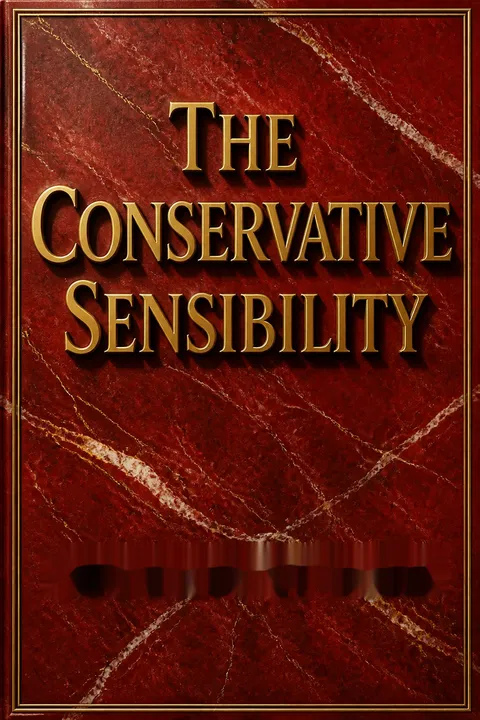

Key Takeaways
1. The American Founding: A Philosophy of Natural Rights and Limited Government
The American project, distilled to its essence, was, and the conservative project is, to demonstrate that a government constructed on the assumptions of natural rights must be limited government.
Founders' core belief. The American Founders, drawing heavily from John Locke, asserted a universal human nature endowed with rational faculties and natural rights—life, liberty, and the pursuit of happiness—that pre-exist government. Government's primary, limited purpose is to "secure" these rights, not to bestow them. This foundational premise, articulated in the Declaration of Independence, implies that individual sovereignty is paramount, and government's powers are secondary and derivative.
Constitutional design. The Constitution, seen as the "silver frame" for the Declaration's "apple of gold," was designed to implement these principles through a system of limited, enumerated powers and checks and balances. This architecture aimed to channel and temper public passions, especially those of majorities, to prevent the "tyranny of the majority" and protect individual liberties. The Founders, unsentimental about human nature, understood that "if men were angels, no government would be necessary."
Enduring relevance. This Madisonian persuasion, which defines American conservatism, posits that the constancy of human nature necessitates constant vigilance against government overreach. It emphasizes that while individuals are inherently different in capacities and aspirations, they are equally entitled to pursue happiness within a spacious zone of personal sovereignty, free from excessive governmental interference.
2. Progressivism's Fundamental Challenge to the Founders' Vision
Progressivism represents the overthrow of the Founders’ classical liberalism.
Rejection of fixed nature. Early 20th-century progressives, influenced by German historicism and Darwinian thought, explicitly repudiated the Founders' concept of an unchanging human nature. They argued that human nature is malleable, constantly shaped by historical and social forces, and thus can be improved, even perfected, through deliberate social engineering by an enlightened state. This view radically elevated the stakes of politics, making government the primary agent of human transformation.
Expansion of state power. This new philosophy justified a vast expansion of governmental scope and competence, moving beyond merely securing rights to actively defining and delivering happiness, understood as material well-being and social security. Figures like Woodrow Wilson and Franklin Roosevelt advocated for a "living Constitution" that could adapt to modern exigencies, dismissing the Founders' principles as "anachronistic" and "unscientific."
- Wilson: "The rhetorical introduction of the Declaration of Independence is the least part of it."
- Dewey: Natural rights "exist only in the kingdom of mythological social zoology."
Majoritarianism and efficiency. Progressives prioritized majoritarian rule and governmental efficiency, viewing the Founders' separation of powers as an impediment to a unified national will. They envisioned a state led by disinterested experts, capable of orchestrating collective life for the common good, even if it meant overriding individual liberties in the name of progress.
3. The Rise of the Administrative State and Presidential Supremacy
The ever-expanding powers and pretenses of the presidency have become a menace to America’s Madisonian balance of separated powers.
Executive exuberance. Theodore Roosevelt initiated an era of executive exuberance, proclaiming a "stewardship" theory of the presidency that justified doing anything not explicitly forbidden by the Constitution. Woodrow Wilson further theorized the president as the nation's "spokesman for the real sentiment and purpose of the country," capable of interpreting and leading the public will. This laid the groundwork for a "Gaullist presidency" that aggregates power.
Congressional abdication. Congress, often complicit in its own diminution, has increasingly delegated its legislative powers to executive agencies, leading to the proliferation of the administrative state. This transfer of authority, exemplified by the vast number of regulations compared to laws, has created a "fourth branch of government" largely unaccountable to elected representatives.
- In 2016, Congress passed 2,966 pages of laws, while federal agencies churned out 97,110 pages of new regulations.
- The "Chevron deference" doctrine further empowers agencies by requiring courts to defer to their "reasonable" interpretations of ambiguous laws.
Fiscal irresponsibility. The administrative state fuels fiscal irresponsibility by enabling "regulatory insouciance and freewheeling finance." Government uses regulation to impose costs on the private sector less obviously than taxation, and deficit spending to fund current consumption by burdening future generations. This "political class" consensus prioritizes short-term electoral gains over long-term national solvency.
4. Judicial Duty: Protecting Liberty Against Majoritarian Overreach
The central premise and purpose of America’s collective existence is not simply that majorities shall rule.
Counter-majoritarian difficulty. The Supreme Court's power of judicial review, established by John Marshall, is often seen as a "counter-majoritarian difficulty" in a democracy. However, this view is flawed if one understands the Constitution's primary purpose: to secure natural rights, not merely to facilitate unbridled majority rule. The Declaration of Independence logically precedes the Constitution, setting the framework for its interpretation.
Judicial engagement vs. restraint. Conservatives have often mistakenly championed judicial "restraint," deferring to legislative majorities even when their actions are constitutionally dubious. This stance, however, inadvertently serves progressivism by allowing the expansion of government power. Instead, an "engaged" judiciary is needed to actively defend individual liberty and enforce constitutional limits, particularly against arbitrary government actions that infringe on unenumerated rights like economic liberty.
- The Ninth Amendment affirms the existence of unenumerated rights.
- The "rational basis" test for government actions often leads to judicial abdication, allowing rent-seeking and arbitrary regulations to stand.
Protecting the individual. Cases like Lochner v. New York (1905), often derided by progressives, correctly asserted the liberty of contract against rent-seeking legislation. The court's subsequent abandonment of robust protection for economic rights, especially after 1937, has allowed government to increasingly micromanage individual lives and economic activity, often for the benefit of powerful factions rather than the public good.
5. Economic Dynamism: The Unplanned Marvel of Free Markets
The curious task of economics is to demonstrate to men how little they really know about what they imagine they can design.
Spontaneous order. Adam Smith's "invisible hand" and Friedrich Hayek's "fatal conceit" highlight that free markets are marvels of spontaneous order, efficiently generating and collating dispersed information that no central planner could ever possess. This decentralized decision-making, driven by individual self-interest, produces "universal opulence" and social betterment far more effectively than government design.
- The Great Enrichment (post-1800) saw average wealth increase 30 to 100-fold, driven by "the great oomph of liberty and dignity."
- Examples of market-driven innovation: steam engine, railroads, microprocessors, smartphones, which were not centrally planned.
Skepticism of planning. Hayek warned against the "scientistic" frame of mind, which overestimates humanity's ability to "shape the processes of society entirely to our liking." Government interventions, often based on incomplete knowledge, frequently lead to unintended consequences, such as the "easy to raise snakes" phenomenon where bounties on snakes led to snake farming.
- The 1972 "Limits to Growth" predictions of resource depletion proved wrong due to human ingenuity and market adaptation.
Capitalism as soulcraft. Beyond material benefits, a market society fosters virtues like industriousness, thrift, self-reliance, and civility. It requires and develops trust, cooperation, and rules-constrained competition, gently pushing individuals to consider what others value. This system, while producing inequalities, also offers upward mobility and broad access to goods and services, making even the middle class "richer than Rockefeller" in terms of quality of life.
6. Culture, Not Just Politics, Shapes Society's Success
The central conservative truth is that it is culture, not politics, that determines the success of a society.
Beyond material conditions. While government can remove legal barriers to opportunity, as with the Civil Rights Act of 1964, it struggles to address deeper cultural pathologies. Daniel Patrick Moynihan's "scissors" illustrated how improved economic conditions did not always correlate with decreased welfare dependency, pointing to the critical role of family structure and social norms.
- Moynihan's scissors: Declining male unemployment coincided with rising welfare cases.
- Three rules to avoid poverty: finish high school, marry, have no child before age 20.
Family disintegration. The explosive growth of single-parent, female-headed households, particularly among African-Americans, has created a "tangle of pathologies" that cripples opportunities and is largely immune to government intervention. Early childhood development studies show that verbal stimulation in intact families is crucial, and "school comes too late for many children."
- By age three, poor children hear 30 million fewer words than professional-class children.
Destigmatizing dependency. The expansion of the entitlement state, particularly since the Great Society, has destigmatized dependency and fostered a "flight from work" among adult men. This "quiet catastrophe" has transformed America's national character, weakening self-reliance and personal responsibility, and making the nation less exceptional.
- Entitlement transfers grew from 28% to 67% of federal spending between 1960 and 2010.
- Male labor force participation (ages 20+) dropped from 80.6% in 1964 to 67.6% in 2014.
7. Education's Role: Transmitting Enduring Virtues and Knowledge
The fundamental function of liberal education still should be the transmission of the basic truths of the arts and sciences in order to enable students to become critical and independent thinkers.
Cultivating national character. Education is crucial for transmitting the "mystic chords of memory" and the shared identity necessary for a diverse nation. Universities, as "organs of recollection," should steep young people in "seasoned ideas" and the "best that has been thought and said," rather than emancipating them from the past.
- Lincoln emphasized "reverence for the laws" breathed by mothers to babes.
- The Northwest Ordinance included federal subsidies for public schools.
Beyond relativism. Modern higher education, influenced by postmodernism and "deconstruction," often promotes epistemological nihilism, asserting that "there are no facts, but only interpretations." This leads to a "cultural amnesia" and the balkanization of curricula into identity-based enclaves, undermining the idea of a common culture and universal standards of excellence.
- The "one-drop rule" and identity politics foster division rather than unity.
- "Sensitivity" as a political imperative can lead to intolerance of dissenting ideas.
Virtues over values. Education should focus on cultivating virtues—habits of self-control, empathy, and responsibility—rather than merely affirming subjective "values." While democracy is politically egalitarian, universities should remain meritocratic institutions that identify and elevate excellence, providing standards and leaders for society. A "talent for pessimism," grounded in historical realism, is also essential to counter naive optimism and prepare citizens for life's inevitable challenges.
8. Foreign Policy: Idealism Tempered by Bleak Realism
The United States, unique in the clarity of its founding moment and purposes, would inevitably be unique in its approach to international relations.
Creedal universalism. America's identity as a "creedal nation" founded on universal natural rights inevitably imbues its foreign policy with idealism. Woodrow Wilson's principle of "self-determination" and George W. Bush's assertion that "freedom is the Almighty's gift to every man and woman" reflect this enduring belief in America's mission to spread liberty globally.
- John Quincy Adams warned against going "abroad in search of monsters to destroy," advocating for influence through example.
- Wilson's post-WWI efforts to redraw maps based on ethnic self-determination led to unforeseen conflicts.
Lessons from history. The 20th century, marked by two world wars and totalitarian regimes, provided a "painful tutorial in the limits of the possible." Events like the Vietnam War, seen as a "professors' war" driven by overconfident intellectuals, demonstrated the folly of attempting "nation-building" in cultures poorly understood.
- The "Vietnam syndrome" was a "vaccination" against interventions without clear objectives or understanding of local culture.
- The Iraq War, justified by the "human heart theory" of universal democratic yearning, failed to account for complex cultural realities.
Prudence and limits. A conservative foreign policy acknowledges that war is a persistent feature of human history and that "peace does not keep itself." It tempers idealism with a "bleak realism" about human nature's enduring capacity for conflict and the limits of external intervention. While promoting freedom and dignity, it recognizes that democracy requires specific cultural and institutional prerequisites that cannot be imposed by force or naive optimism.
9. Secular Conservatism: Embracing the Unplanned "Whirl" of Existence
There is, however, a conservative sensibility that finds flux exhilarating, that is delighted rather than depressed by the idea that there is no beyond and that everything is contingent.
Religion's role. While religion has historically played a crucial role in nurturing virtues and social cohesion in America, a conservative sensibility does not necessarily require theism. The Founders, many of whom were deists, prioritized a secular state to tame religious passions and ensure domestic tranquility, believing that religious truth was unknowable and best left to private judgment.
- Jefferson: "Our civil rights have no dependence on our religious opinions, any more than our opinions in physics or geometry."
- Washington: "The path of true piety is so plain as to require but little political direction."
Cosmological humility. A secular conservative embraces the "whirl" of an unplanned, contingent universe, finding beauty and exhilaration in its complexity and spontaneous order. This perspective, informed by Darwinian evolution and modern cosmology, fosters humility about human knowledge and the limits of design, aligning with the conservative skepticism of grand political schemes.
- Darwin's theory of natural selection explained order without a divine Orderer, challenging natural theology.
- Einstein's relativity and quantum mechanics reveal a universe far more complex and counterintuitive than previously imagined.
Dignity in agency. Despite scientific insights into biological and environmental determinism, the conservative sensibility affirms human dignity through moral agency and free will. It recognizes that while we are "compositions of matter," our capacity for self-control, reason, and choice allows us to shape our lives and build a virtuous society, even in a universe without a predetermined plan. This perspective counters the demoralizing effects of fatalism and the "cultural contradiction" of capitalism, which can erode the virtues necessary for self-government.
Review Summary
The Conservative Sensibility receives mixed reviews averaging 4.11/5 stars. Supporters praise Will's erudite, thoughtful defense of constitutional principles, natural rights, and limited government, calling it essential reading on conservative philosophy. Critics fault his elitism, oversimplification of poverty and social problems, cherry-picking of evidence, and failure to address Trump or conservatism's complicity in current political dysfunction. Many note the book's length, density, and baroque prose style. Reviewers across the spectrum acknowledge Will's intellectual rigor and departure from vulgar populism, though some question whether his classical liberal conservatism remains relevant to today's political landscape.
People Also Read









Download PDF
Download EPUB
.epub digital book format is ideal for reading ebooks on phones, tablets, and e-readers.








































