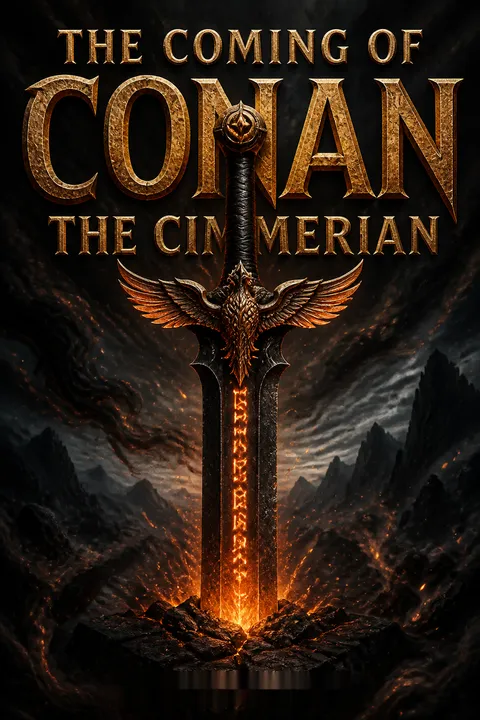

Summary Unavailable
This book is not suitable for a summary (it may be a textbook, workbook, cookbook, reference book, or collection). However, you can still explore the FAQs, about author, and other metadata below!
Plot Summary
Cimmeria: Land of Shadows
Cimmeria is a land of perpetual gloom, mist, and brooding hills, where the sun rarely shines and the forests are thick with ancient secrets. This is the birthplace of Conan, a people marked by melancholy, fatalism, and a fierce independence. The Cimmerians are descendants of lost Atlanteans, living in a world where hope is fleeting and the gods are distant and cold. The landscape itself forges Conan's character: he is moody, introspective, and driven by a restless energy. The poem "Cimmeria" sets the tone for the saga, evoking a sense of exile and longing, and establishing the existential struggle that will define Conan's journey. The land's darkness is not just physical but spiritual, shaping a hero who seeks meaning in a world of chaos and violence.
The Phoenix Conspiracy
Conan, now King of Aquilonia, faces a web of intrigue spun by discontented nobles and the sinister sorcerer Thoth-amon. The "Phoenix on the Sword" reveals a kingdom rife with unrest, where the people have turned against their barbarian king, manipulated by poets and conspirators. Ascalante, a cunning outlaw, leads a plot to assassinate Conan, aided by the supernatural malice of Thoth-amon, who regains his lost ring and unleashes a demon. Conan, haunted by dreams of the ancient sage Epemitreus, receives a mystical mark on his sword, enabling him to defeat both mortal and otherworldly foes. The chapter explores the loneliness of power, the burden of kingship, and the ever-present threat of betrayal, as Conan's raw strength and indomitable will are tested against both steel and sorcery.
Frost and Flame
In "The Frost-Giant's Daughter," a young Conan, after a brutal battle in the frozen north, is lured by a mysterious, ethereal woman across the blood-stained snow. Driven by desire and rage, he pursues her through a landscape of shifting lights and ancient magic, only to be ambushed by her giant brothers. Conan's primal ferocity allows him to survive, but the encounter leaves him questioning the boundaries between dream and reality. The story is a fevered vision of lust, death, and the supernatural, highlighting Conan's vulnerability to both physical and psychological temptation. The north is a place where gods and monsters still walk, and Conan's brush with the divine leaves him marked by both longing and loss.
The God in the Bowl
Conan, now a thief in the city of Numalia, becomes entangled in a murder investigation when a powerful merchant is found strangled in his own museum. The "God in the Bowl" is a tale of suspicion, interrogation, and creeping dread, as Conan is accused of the crime and must navigate the labyrinthine politics of the city's authorities. The true killer is revealed to be a monstrous, ancient serpent-god, unleashed from a Stygian sarcophagus. The story blends noir detective elements with cosmic horror, as Conan's brute honesty and defiance clash with the corruption and skepticism of civilization. The encounter with the god leaves a stain of terror, suggesting that beneath the veneer of order, ancient evils still lurk, waiting to be awakened.
Tower of the Elephant
In the decadent city of Zamora, Conan seeks to steal the fabled Heart of the Elephant from the sorcerer Yara's impregnable tower. "The Tower of the Elephant" is a tale of daring, betrayal, and unexpected empathy. Conan joins forces with Taurus, the prince of thieves, only to witness his companion's death at the hands of a monstrous spider. In the tower's heart, Conan encounters Yag-kosha, an alien being enslaved and tortured by Yara. Moved by pity, Conan grants the creature's wish for release, setting in motion a magical vengeance that destroys Yara and the tower itself. This chapter reveals Conan's capacity for mercy and his awe before the mysteries of the universe, as well as the limits of human ambition in the face of cosmic forces.
Sorcery and Scarlet Chains
"The Scarlet Citadel" finds Conan betrayed and captured after a disastrous battle, imprisoned in the sorcerer Tsotha-lanti's nightmarish dungeons. The story is a descent into horror, as Conan faces monstrous serpents, demonic experiments, and the living dead. With the aid of the rival wizard Pelias, Conan escapes the labyrinth, returns to his kingdom, and leads a desperate counterattack against his enemies. The tale is a meditation on resilience, the thin line between civilization and barbarism, and the power of friendship and magic. Conan's journey through the underworld is both literal and symbolic, reaffirming his status as a hero who survives by strength, cunning, and an unbreakable will.
Queen of the Black Coast
Conan becomes the lover and consort of Bêlit, the fierce pirate queen of the Black Coast. Together, they terrorize the southern seas, forging a partnership of passion and plunder. Their quest leads them up the haunted river Zarkheba to a lost city filled with ancient treasures and lurking horrors. Bêlit's obsession with wealth and her defiance of fate bring doom upon her and her crew, as supernatural forces claim her life. Conan, devastated by grief, gives her a fiery funeral and sails alone into the unknown. This chapter is a sweeping romance and a meditation on mortality, desire, and the price of living "deep while I live." Bêlit's ghostly return to save Conan in his darkest hour is a testament to love's power beyond death.
Black Colossus Rises
A desert sorcerer, Thugra Khotan—reborn as Natohk the Veiled One—raises an army to conquer the Hyborian kingdoms. Princess Yasmela, haunted by supernatural terror, is told by the god Mitra to entrust her fate to the first man she meets: Conan. Thrust into command, Conan must unite a fractious army and face both the seductive power of Yasmela and the black magic of Natohk. The climactic battle is a clash of faith, will, and steel, as Conan's leadership and raw courage turn the tide. The story explores themes of destiny, the weight of responsibility, and the eternal struggle between light and darkness. Conan's victory is both a personal and a civilizational triumph, but it comes at the cost of innocence and certainty.
Iron Shadows and Moonlight
Fleeing with Olivia, a noblewoman escaping slavery, Conan finds refuge on a mysterious island in the Vilayet Sea. "Iron Shadows in the Moon" is a tale of pursuit, supernatural terror, and survival. The island is littered with lifelike iron statues—remnants of a vanished race—and stalked by a monstrous gray ape and other lurking horrors. As pirates arrive and chaos erupts, Conan's ferocity and Olivia's courage are tested to the limit. The story is a fever dream of moonlit dread, where the past's sins manifest as living nightmares. Conan's ability to adapt and overcome, even in the face of the uncanny, is a testament to his primal resilience.
Xuthal's Dreaming Dusk
Lost in the desert with Natala, Conan stumbles upon the city of Xuthal, whose decadent inhabitants live in a perpetual dream induced by the black lotus. The city is haunted by Thog, a monstrous entity that preys on the sleepers. Conan and Natala become entangled in the city's sensual lethargy and the jealousies of Thalis, a Stygian sorceress. As Thog's shadow falls, Conan must fight both human treachery and cosmic horror to escape. The story is a meditation on decadence, addiction, and the thin barrier between pleasure and annihilation. Conan's vitality and refusal to succumb to despair are contrasted with the city's self-destructive apathy.
Pool of the Black One
Conan joins a crew of Zingaran pirates and becomes embroiled in a struggle for leadership and survival on a mysterious island. The "Pool of the Black One" is a tale of mutiny, supernatural menace, and transformation, as the pirates are hunted by black giants who turn men into miniature statues. Conan's strength and cunning allow him to defeat the island's monstrous master and claim command of the ship. The story is a dark fable of ambition, the dangers of the unknown, and the price of power. The island's secrets remain unresolved, a reminder that some mysteries are best left undisturbed.
Rogues and Red Priests
In a city of intrigue, Conan is drawn into a deadly game between Murilo, a desperate nobleman, and Nabonidus, the cunning Red Priest. "Rogues in the House" is a labyrinthine tale of shifting alliances, double-crosses, and monstrous creations. Conan must navigate a house filled with traps, secret passages, and Thak, an ape-man who has usurped Nabonidus's place. The story is a meditation on the nature of power, the thin line between man and beast, and the futility of treachery. In the end, all the "rogues" pay a price, and Conan's brutal honesty stands in stark contrast to the duplicity of civilization.
Vale of Lost Women
Livia, an Ophirean captive, bargains with Conan—now a war-chief among the Bamulas—to rescue her from the black king Bajujh. The "Vale of Lost Women" is a tale of cultural collision, sexual politics, and supernatural dread. As Conan fulfills his promise, Livia flees into a forbidden valley, where she encounters a cult of transformed women and a monstrous bat-god. Conan's intervention saves her, but he releases her from their bargain, recognizing her unsuitability for his savage world. The story is a critique of both civilization's and barbarism's limitations, and a meditation on freedom, trauma, and the boundaries of belonging.
The Devil in Iron
A Yuetshi fisherman unwittingly revives Khosatral Khel, a primordial being of living iron, on the island of Xapur. Conan, now a kozak chief, is lured to the island by a trap set by his enemies, seeking to rescue the captive Octavia. The city of Dagon rises anew, peopled by the dead, and Conan must face both human treachery and the invulnerable devil. Only a magical blade forged from a fallen star can defeat Khosatral Khel. The story is a fevered vision of resurrection, the persistence of evil, and the limits of mortal strength. Conan's victory is hard-won, and the boundaries between dream and reality blur in the aftermath.
Barbarism and Civilization
Throughout Conan's adventures, the tension between barbarism and civilization is a recurring theme. Howard's world is one where empires rise and fall, corrupted by decadence and undermined by their own excesses. Conan, the outsider, is both a destroyer and a savior, embodying the virtues and vices of the wild. The stories explore the fragility of order, the inevitability of decay, and the resilience of the human spirit. Civilization is shown as both a source of beauty and a breeding ground for treachery, while barbarism offers freedom but also violence and uncertainty. The cycle of history is relentless, and only those who adapt survive.
The Hyborian Age Unfolds
Howard's "Hyborian Age" is a grand tapestry of lost civilizations, migrations, and cataclysms. The essay outlines the rise and fall of kingdoms—Aquilonia, Nemedia, Stygia, and others—tracing their origins to the survivors of Atlantis and Lemuria. The world is shaped by cycles of barbarism and empire, with each new power eventually succumbing to internal rot or external invasion. The Hyborian Age is a stage for the drama of human ambition, folly, and resilience, providing a rich backdrop for Conan's exploits. The essay situates the stories within a larger mythic framework, suggesting that all history is a struggle against oblivion.
Shadows, Swords, and Sorcery
Magic, monsters, and ancient secrets pervade the Hyborian Age. Sorcerers wield powers drawn from forgotten gods and cosmic abysses, while lost cities hide treasures and terrors beyond mortal comprehension. Conan's world is one where the supernatural is both a source of wonder and a constant threat. Swords and strength are often pitted against spells and curses, and the line between hero and monster is thin. The stories revel in the clash of steel and sorcery, exploring the limits of human agency in a universe ruled by fate and the unknown.
The Enduring Legend
Conan's saga is more than a series of adventures; it is a meditation on the outsider's journey through a world of shifting allegiances and uncertain values. He is a thief, a reaver, a king, and always a stranger, moving between cultures but never fully belonging. His code is personal, his loyalty hard-won, and his victories often bittersweet. The stories endure because they speak to the universal longing for freedom, meaning, and self-mastery. Conan's legend is a testament to the power of myth, the allure of the unknown, and the eternal dance between darkness and light.
Analysis
Howard's Conan stories endure because they tap into primal anxieties and desires: the longing for freedom, the fear of oblivion, and the search for meaning in a world of violence and uncertainty. The Hyborian Age is a mirror of our own history, stripped of illusions and laid bare in its cycles of rise and fall, corruption and renewal. Conan himself is both a critique and an ideal: a man who lives by his own code, unbound by the hypocrisies of civilization but capable of compassion and growth. The stories blend action, horror, romance, and philosophy, using the tools of sword and sorcery to explore existential questions. Howard's prose is vivid, muscular, and relentless, driving the reader through landscapes of wonder and terror. The recurring themes of barbarism versus civilization, the limits of power, and the persistence of the unknown give the tales a depth that transcends their pulp origins. In the end, Conan's legend is not just a fantasy of strength and adventure, but a meditation on the human condition: our capacity for both destruction and creation, our yearning for connection, and our defiance in the face of the void.
Last updated:
Report IssueReview Summary
The Coming of Conan the Cimmerian is praised for its vivid prose, world-building, and memorable characters. Readers appreciate Howard's original vision of Conan, distinct from later adaptations. The stories are lauded for their fast-paced action, atmospheric settings, and Howard's skillful writing. Some reviewers note dated elements of racism and sexism but generally view the collection as an important work in fantasy literature. Critics highlight the book's influence on the sword-and-sorcery genre and its historical significance, recommending it to fans of adventure and fantasy.
People Also Read
Characters
Conan the Cimmerian
Conan is the central figure of the saga, a man forged in the harsh, shadowed land of Cimmeria. He is physically imposing—tall, muscular, with black hair and blue eyes—but his true strength lies in his adaptability, cunning, and indomitable will. Conan is both a product and a critic of his world: he despises the decadence and hypocrisy of civilization, yet is capable of compassion, loyalty, and even tenderness. His journey takes him from thief and mercenary to pirate, general, and king, but he remains an outsider, never fully at home in any society. Psychologically, Conan is driven by a deep-seated melancholy, a sense of exile, and a hunger for meaning. He is haunted by the futility of existence, yet embraces life with ferocious intensity, seeking pleasure, battle, and love as antidotes to the darkness within. His code is personal and pragmatic, valuing strength, honesty, and freedom above all.
Thoth-amon
Thoth-amon is a Stygian wizard whose power is rooted in ancient, forbidden magic. Once mighty, he is reduced to servitude after losing his Serpent Ring, but regains his strength through cunning and malice. Thoth-amon is a master manipulator, orchestrating plots from the shadows and unleashing supernatural horrors upon his enemies. His hatred for Conan is both personal and symbolic, representing the eternal conflict between chaos and order, darkness and light. Psychologically, Thoth-amon is consumed by pride, resentment, and a desire for domination. He is a figure of existential dread, a reminder that the past's evils are never truly vanquished.
Bêlit
Bêlit is the Queen of the Black Coast, a Shemite woman who commands a crew of black corsairs and lives by her own rules. She is passionate, fearless, and driven by an insatiable hunger for life and treasure. Her love affair with Conan is tempestuous and all-consuming, marked by both ecstasy and doom. Bêlit is both a symbol of female power and a tragic figure, undone by her defiance of fate and the gods. Her ghostly return to save Conan in death reveals the depth of her devotion and the enduring power of love. Psychologically, Bêlit is a study in obsession, charisma, and the costs of living without restraint.
Yasmela
Yasmela is the ruler of Khoraja, thrust into power by circumstance and terrorized by supernatural forces. She is intelligent, proud, and vulnerable, torn between duty and desire. Her decision to entrust her kingdom to Conan is both an act of faith and desperation, reflecting her struggle to reconcile personal fear with public responsibility. Yasmela's relationship with Conan is complex, blending attraction, dependence, and the burdens of command. Psychologically, she embodies the anxieties of leadership, the longing for protection, and the costs of survival in a world ruled by violence and magic.
Thalis
Thalis is a Stygian woman in Xuthal, a city lost to lotus dreams and supernatural horror. She is beautiful, manipulative, and driven by jealousy and lust. Thalis's rivalry with Natala and her obsession with Conan lead her to betrayal and ultimately to destruction at the hands of Thog. She represents the dangers of unchecked passion and the self-destructive allure of decadence. Psychologically, Thalis is both predator and victim, caught in the web of her own desires and the city's fatal lethargy.
Murilo
Murilo is an aristocrat caught in the deadly politics of a corrupt city. He is clever, resourceful, and willing to use any means—including Conan—to save himself from the Red Priest Nabonidus. Murilo's journey through the house of traps in "Rogues in the House" reveals both his cunning and his limitations. He is a man of civilization, adept at intrigue but ultimately outmatched by the raw power and honesty of Conan. Psychologically, Murilo is driven by fear, ambition, and a flexible morality, embodying the ambiguities of urban life.
Nabonidus
Nabonidus is a cunning, ruthless manipulator who rules from the shadows. His house is a labyrinth of secrets, traps, and monstrous creations, reflecting his own twisted psyche. Nabonidus is both a symbol of civilization's potential for evil and a victim of his own machinations, ultimately undone by the beast he sought to control. Psychologically, he is a study in paranoia, hubris, and the dangers of unchecked intellect divorced from empathy.
Olivia
Olivia is a noblewoman fleeing slavery, whose journey with Conan on a haunted island tests her courage and resilience. She is sensitive, imaginative, and haunted by dreams that blur the line between reality and nightmare. Olivia's relationship with Conan is one of mutual dependence and growing trust, as she learns to face both external and internal terrors. Psychologically, Olivia represents the struggle to reclaim agency and hope in a world of trauma and uncertainty.
Livia
Livia is an Ophirean woman captured by black tribesmen, whose ordeal in the "Vale of Lost Women" is a harrowing exploration of powerlessness, trauma, and the longing for rescue. Her bargain with Conan is fraught with ambiguity, as she confronts both the brutality of her captors and the limitations of her own agency. Livia's journey through the forbidden valley and her encounter with eldritch horror force her to confront the boundaries of fear, desire, and belonging. Psychologically, she is a study in survival, adaptation, and the costs of freedom.
Khosatral Khel
Khosatral Khel is a primordial being awakened from millennia of slumber, whose body is living iron and whose will is indomitable. He is both a god and a monster, resurrecting the city of Dagon and its dead inhabitants to serve his purposes. Khosatral Khel is invulnerable to mortal weapons, defeated only by a magical blade forged from a fallen star. Psychologically, he represents the persistence of ancient evil, the futility of human ambition against cosmic forces, and the terror of the unknown.
Plot Devices
The Hyborian Age: Mythic Prehistory
Howard's invention of the Hyborian Age is a masterstroke of world-building, providing a pseudo-historical backdrop that blends real and imagined cultures. By situating Conan's adventures in a forgotten epoch, Howard frees himself from the constraints of actual history while evoking the grandeur and tragedy of lost civilizations. The Hyborian Age is a tapestry of migration, conquest, and decay, where empires rise and fall in endless cycles. This device allows for a rich variety of settings—deserts, jungles, cities, and ruins—and a cast of characters drawn from every stratum of society. The mythic prehistory also serves as a commentary on the transience of power and the universality of human folly.
Sword and Sorcery: The Clash of Steel and Magic
The stories are structured around the tension between brute strength and arcane power. Conan's world is one where magic is real but dangerous, often corrupting or destroying those who wield it. Sorcerers like Thoth-amon and Tsotha-lanti are formidable adversaries, but their power is always counterbalanced by Conan's vitality, courage, and cunning. The interplay of sword and sorcery creates a dynamic narrative, where the outcome is never certain and the cost of victory is high. This device also allows for explorations of fate, free will, and the limits of human agency.
The Outsider's Perspective
Conan is always an outsider, whether as a thief, mercenary, or king. His perspective exposes the hypocrisies, weaknesses, and corruptions of the societies he encounters. This device enables Howard to critique both barbarism and civilization, showing their respective strengths and flaws. Conan's adaptability and skepticism make him both a critic and a catalyst, disrupting stagnant orders and challenging the status quo. The outsider's gaze is also a source of humor, irony, and pathos, as Conan navigates worlds that are both alluring and alien.
Cycles of Betrayal and Loyalty
The stories are rife with plots, conspiracies, and shifting alliances. Conan is often betrayed by those he trusts, but he also inspires fierce loyalty in others. The cycle of betrayal and loyalty is both a narrative engine and a psychological exploration, reflecting the uncertainties of a world where survival depends on both strength and cunning. This device also allows for moments of unexpected compassion, sacrifice, and redemption, as characters are forced to choose between self-interest and solidarity.
Foreshadowing and Prophecy
Howard frequently employs dreams, prophecies, and supernatural warnings to foreshadow coming events. Conan is haunted by visions, guided by oracles, and marked by destiny, but he resists fatalism with action and defiance. The use of prophecy creates suspense and a sense of inevitability, while also allowing for reversals and surprises. This device underscores the tension between fate and free will, and the hero's struggle to assert meaning in a chaotic universe.
Conan the Cimmerian Series
About the Author
Robert Ervin Howard was an American pulp writer known for his fantasy, horror, and adventure stories. Born in Texas, he wrote prolifically during the 1920s and 1930s, creating memorable characters like Conan the Barbarian. Howard's vivid imagination and powerful prose style set him apart from his contemporaries. He contributed extensively to Weird Tales magazine and is considered a pioneer of the sword-and-sorcery subgenre. Despite his short life—he died by suicide at 30—Howard left a lasting impact on fantasy literature. His works, particularly the Conan stories, have been adapted into various media and continue to influence modern fantasy writers.
Other books by Robert E. Howard
Download PDF
Download EPUB
.epub digital book format is ideal for reading ebooks on phones, tablets, and e-readers.








































