
Key Takeaways
1. Humanity's cultural evolution diverged into two fundamental models: Dominator and Partnership.
underlying the great surface diversity of human culture are two basic models of society.
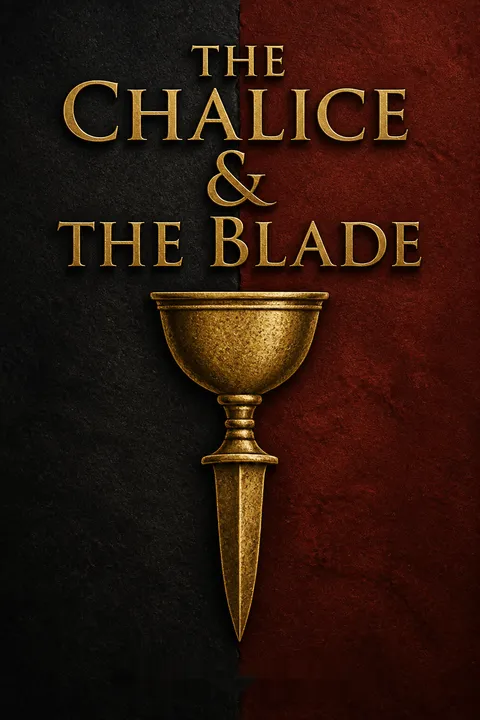
Two societal models. Human cultural evolution is fundamentally shaped by two contrasting social models: the dominator model, or androcracy, and the partnership model, or gylany. The dominator model is characterized by hierarchy, male dominance, violence, and the "Blade" as a symbol of power to destroy. Conversely, the partnership model emphasizes linking, equality between sexes, peace, and the "Chalice" as a symbol of power to nurture and create.
Beyond conventional views. This framework challenges traditional historical narratives that often assume male dominance and warfare are inherent to human nature. By analyzing history through a gender-holistic lens, it reveals how the structure of relations between the sexes profoundly impacts all aspects of a social system, from its values to its propensity for peace or war. This perspective allows for a deeper understanding of societal dynamics.
Defining power differently. The core distinction lies in how power is conceived: as "domination power" (power over others, enforced by threat) versus "actualization power" (power to create, nurture, and enable). The dominator model inherently inhibits higher human functions, while the partnership model maximizes potentials by valuing diversity without equating it to inferiority or superiority.
2. Prehistoric societies, particularly in Old Europe and Crete, flourished under a peaceful, Goddess-centered Partnership model.
They reveal a long period of peace and prosperity when our social, technological, and cultural evolution moved upward: many thousands of years when all the basic technologies on which civilization is built were developed in societies that were not male dominant, violent, and hierarchic.
Ancient partnership evidence. Archaeological discoveries from the Paleolithic and Neolithic eras, particularly in Old Europe and Minoan Crete, reveal societies that were remarkably peaceful, equalitarian, and centered around the worship of a Goddess. These cultures developed foundational technologies without exhibiting signs of male dominance, organized warfare, or rigid social hierarchies.
Old Europe's peacefulness. In Old Europe (7000-3500 B.C.E.), communities like Vinca and Cucuteni were sedentary horticulturalists, living in unfortified towns chosen for their beauty and resources, not defense.
- Absence of heavy fortifications and thrusting weapons.
- Equalitarian social structure, likely matrilinear and matrilocal.
- Women played key roles in religious rituals and craft production.
- Art celebrated life, nature, and the Goddess in various forms (Maiden, Mother, Ancestress).
Crete's unique civilization. Minoan Crete (2000-1450 B.C.E.) represents a high point of this partnership model, characterized by a "love of life and nature."
- Absence of war glorification in art.
- Equitable sharing of wealth and advanced public works.
- Women held prominent social, economic, and religious positions.
- Bull-games involved equal participation of men and women, symbolizing mutual trust.
3. The "Dominator Detour" began with invasions that violently imposed male-dominant, warlike social structures.
At this pivotal branching, the cultural evolution of societies that worshiped the life-generating and nurturing powers of the universe—in our time still symbolized by the ancient chalice or grail—was interrupted.
Peripheral invaders emerge. Around the fifth millennium B.C.E., nomadic, warlike groups from the arid steppes (Kurgans, Indo-Europeans) and deserts (Hebrews) began to invade the fertile heartlands of Goddess-worshipping agrarian societies. These "peripheral invaders" brought with them a fundamentally different social and ideological system.
Metallurgy's lethal role. While earlier Neolithic peoples used metals for tools and ornaments, these invaders weaponized metallurgy, forging daggers, battle-axes, and spears. This shift in technological emphasis from production to destruction was crucial in establishing their dominance. The "Blade" became the supreme symbol of power, replacing the life-giving "Chalice."
Cultural regression and shift. The invasions led to widespread destruction, cultural regression, and the imposition of a dominator model.
- Massacres, enslavement of conquered populations (especially women).
- Rise of chieftain graves with human and animal sacrifices.
- Displacement of Goddess worship by virile, heroic male warrior gods.
- Social structures became patrilineal, stratified, and authoritarian.
4. Myths and laws were systematically "re-mythed" to justify male supremacy and suppress partnership values.
For in the end it was this seemingly puny tool that was to literally stand reality on its head.
Rewriting reality. To consolidate the new dominator order, priests and scribes systematically rewrote ancient myths and laws, transforming them to legitimize male dominance and violence. This "re-mything" process, akin to Orwell's "Ministry of Truth," reshaped collective consciousness over millennia.
Biblical re-interpretations. The Old Testament provides striking examples of this transformation.
- The Garden of Eden story: The serpent, once a symbol of Goddess wisdom, becomes an agent of evil. Eve's pursuit of knowledge is condemned, leading to her subjugation.
- Cain and Abel: The pastoralist's blood sacrifice is favored over the agrarian's grain offering, reflecting the shift in values.
- Oresteia: A Greek drama that justifies matricide and the shift from matrilineal justice to patriarchal law, with Athena casting the deciding vote for male supremacy.
Suppression of symbols. Symbols once associated with the Goddess were either appropriated or demonized. The bull, formerly a symbol of nature's power, became a symbol of male deities or even Satan. The serpent, once representing regeneration and wisdom, was cast as a tempter. This ideological shift was crucial for maintaining the new power structure.
5. The suppression of women and "feminine" values is inextricably linked to authoritarianism and societal violence.
The absence of the Goddess from the officially sanctioned Holy Scriptures was the absence of a divine power to protect women and avenge the wrongs inflicted upon them by men.
Women as male property. In dominator societies, women were systematically stripped of their former positions of power (priestesses, clan heads) and reduced to male-controlled property. This is evident in biblical laws that treated women as commodities, regulating their virginity and sexual conduct to protect male economic interests and lineage.
Dominator morality. The new morality sanctioned violence and exploitation, while devaluing life-giving processes.
- Biblical laws: Rape of an unbetrothed virgin required the man to pay her father and marry her; a non-virgin bride could be stoned to death for "dishonoring" her family.
- Casual violence: Stories like Lot offering his daughters to a mob or the gang rape and murder of a Levite's concubine are recounted without moral condemnation.
- Birth as unclean: Childbirth rituals in the Old Testament required women's purification, contrasting sharply with earlier reverence for the miracle of birth.
Systemic implications. This devaluation of women and "feminine" values (compassion, nurturing, nonviolence) was not merely cultural but systemic. It reinforced the broader androcratic configuration of violence, authoritarianism, and hierarchy, where power was equated with control and destruction, rather than creation and care.
6. Throughout history, "Gylanic Resurgences" have challenged dominator norms, often to be violently suppressed.
Like a plant that refuses to be killed no matter how often it is crushed or cut back, as the history we will now reexamine shows, gylany has again and again sought to reestablish its place in the sun.
Cyclical historical patterns. History is not a linear progression but a dynamic interplay of dominator and partnership forces, marked by periodic "gylanic resurgences" that challenge androcratic norms. These periods often coincide with greater creativity, social reform, and a higher status for women, only to be met with fierce androcratic backlash.
Medieval gylanic surges. The troubadour period in southern France (12th century) exemplified a "matrist" or gylanic resurgence.
- Courtly love and reverence for women became central themes.
- Emphasis on chivalry, gentleness, and honor.
- Worship of the Virgin Mary, a return to Goddess veneration, challenged Church authority.
- This humanizing force profoundly influenced Western values, even among patrists.
Androcratic suppression. The Church's response to these resurgences was often violent and repressive.
- Witch-hunts: Thousands of women were tortured and killed, accused of "carnal lust" and consorting with the devil, effectively suppressing traditional female healers and remnants of Goddess worship.
- Misogynistic dogmas: The Church systematically vilified women and "feminine" values, reinforcing male dominance and authoritarian control.
- This pattern of suppression demonstrates the system's resistance to fundamental change in gender relations.
7. Early Christianity, in its original form, embodied a gylanic vision of spiritual and social equality.
for those who follow the gospel of Jesus, 'there is neither Jew nor Greek, there is neither bond nor free, there is neither male nor female: for you are all one in Christ Jesus.'
Jesus's gylanic teachings. Jesus, a radical figure in his time, preached a gospel of spiritual equality, universal love, compassion, and nonviolence, directly challenging the androcratic norms of his Jewish and Roman context. He openly associated with women, rejected their subordination, and did not preach their spiritual inferiority.
Women in early Christianity. The Gospels and newly discovered Gnostic texts reveal women played leading roles in early Christian communities.
- Mary Magdalene: Portrayed as Jesus's most beloved disciple, the first to see the risen Christ, and a leader who challenged Peter's emerging hierarchy.
- Women apostles and prophets: Figures like Junia and Tabitha held positions of authority.
- Meetings in women's homes: Indicating their central role in the movement's organization.
Suppression of gylanic heresies. The emerging "orthodox" Christian Church, seeking to establish a hierarchical, male-dominated structure, systematically suppressed these gylanic elements.
- Gnostic gospels: Texts that honored the divine as female and advocated direct access to divine knowledge were destroyed.
- Women's leadership: Explicitly condemned, with pseudo-Pauline letters asserting women's silence and subordination.
- Divine as male: Feminine imagery for God was expunged, and the cross, once a symbol of life, became associated with death and sacrifice.
8. Modern progressive movements are part of an ongoing, fragmented revolution against androcracy.
Overriding all the many differences among these modern secular philosophers was the common antiandrocratic assumption that under the proper social conditions, human beings could and would live in free and equitable harmony.
Enlightenment's gylanic roots. The 18th-century Enlightenment, with its emphasis on reason, progress, equality, and freedom, represented a significant challenge to androcratic ideology. These ideas, often nurtured in women's intellectual salons, laid the groundwork for modern progressive movements.
Capitalism's mixed legacy. Capitalism, while challenging feudal hierarchies and promoting individual attainment, remained fundamentally androcratic.
- Emphasis on acquisitiveness, competition, and class structure.
- Continued reliance on violence (e.g., colonial wars).
- Openly extolled "male's superior aggression" as a social value.
Socialism's incomplete vision. Early socialist and communist theories, like those of Marx and Engels, recognized the oppression of women as "the first class oppression." However, they often failed to fundamentally alter gender relations, and their implementation (e.g., Soviet Union) often retained androcratic components like violence and authoritarianism.
9. The "female ethos" and women's active participation are crucial forces for humanizing society.
In times and places when women are not strictly confined to the private world of the home—in times when they can move more freely into the public world en masse, as carriers and disseminators of the 'female ethos'—they inject a more gylanic worldview into the mainstream of society.
Women as agents of change. When women enter the public sphere, they bring a "female ethos" of caring, affiliation, and nonviolence, profoundly humanizing society.
- 19th-century feminism: Fought for women's rights, opened professions, and fueled abolitionism, social work, and humane treatment of the mentally ill.
- 20th-century feminism: Advanced women's rights, supported civil rights, and drives peace and ecology movements.
Androcratic backlash. The dominator system responds to these gylanic challenges with increased violence and repression.
- Historical pattern: Increased misogynistic dogmas and violence against women (e.g., witch-hunts, domestic abuse, rape) precede and accompany periods of militarism and authoritarianism.
- Modern examples: Upsurge in violence against women, religious fundamentalism, and the glamorization of male violence in media.
The power of linking. The "female ethos" defines power as enabling and affiliative, a "win-win" approach that fosters mutual development rather than control. This contrasts with the "win-lose" dominator view, highlighting the systemic link between male dominance and societal violence.
10. The current global crises are the logical culmination of the dominator model, demanding a conscious evolutionary choice.
All is not hopeless if we recognize it is not human nature but a dominator model of society that in our age of high technology inexorably drives us toward nuclear war.
The world problematique. Global crises like ecological damage, famine, poverty, and the population explosion are not isolated issues but symptoms of the dominator model's inherent flaws. This system, prioritizing conquest and exploitation, leads to unsustainable practices and exacerbates human suffering.
Insoluble under androcracy. Androcratic policies, driven by the need to maintain male dominance, render these problems insoluble.
- Population crisis: Policies in many nations deny women reproductive freedom and opportunities beyond childbearing, fueling unsustainable growth.
- Poverty and hunger: Disproportionately affect women and children, yet aid and development programs often exclude women, perpetuating cycles of misery.
- Resource allocation: Prioritizes military spending over social welfare, diverting vast resources from life-sustaining needs.
Totalitarian culmination. Modern totalitarianism (fascism, communism) represents the ultimate, technologically advanced expression of the dominator model. It replicates ancient androcratic structures:
- Strong-man rule, warrior castes, and suppression of dissent.
- Manufacture of myths and symbols to justify violence and control.
- Contempt for "effeminate" values and the glorification of the "Blade."
11. A partnership future requires a new science, spirituality, politics, and economics centered on linking and actualization.
The transformation from a dominator to a partnership society would obviously bring with it a shift in our technological direction: from the use of advanced technology for destruction and domination to its use for sustaining and enhancing human life.
Conscious evolutionary choice. Humanity stands at a crossroads, with the choice to continue the dominator detour towards self-destruction or consciously choose a partnership future. This requires a fundamental shift in our "mental blueprints" and a recognition that evolution is not predetermined but co-created.
New paradigms for living. A partnership future entails a "metamorphosis in basic cultural premises."
- Science: A "new science of empathy" (holistic, relational, valuing "caring knowledge") will replace the drive to dominate nature.
- Spirituality: Reaffirming the Chalice, it will reconnect us with our essential interconnectedness, fostering gratitude and the celebration of life.
- Politics: Global cooperation, heterarchic structures, and a focus on productive conflict resolution will replace domination and exploitation.
- Economics: A "SHE future" (sane, humane, ecological) will emerge, valuing and integrating "caring labor" and redirecting resources from destruction to life-enhancement.
Unleashing human potential. This transformation will free the human spirit from androcratic fetters, allowing for unprecedented creativity and the actualization of our higher potentials. Children will be highly valued, raised with gylanic myths that promote peace, love, and interconnectedness, leading to a world where both women and men can truly flourish.
Review Summary
The Chalice and the Blade receives polarized reviews, averaging 4.18/5. Enthusiastic readers describe it as life-changing, praising Eisler's vision of partnership versus dominator societies and her interdisciplinary approach. Critics, however, challenge the scholarly rigor, noting that her reliance on Marija Gimbutas's contested archaeological interpretations undermines her arguments. Skeptics point to discredited evidence, forgeries among cited artifacts, and overly speculative conclusions. Even appreciative readers acknowledge questionable details, while many celebrate the book's broader cultural vision as inspiring and thought-provoking regardless of factual controversies.
People Also Read





Download PDF
Download EPUB
.epub digital book format is ideal for reading ebooks on phones, tablets, and e-readers.








































