
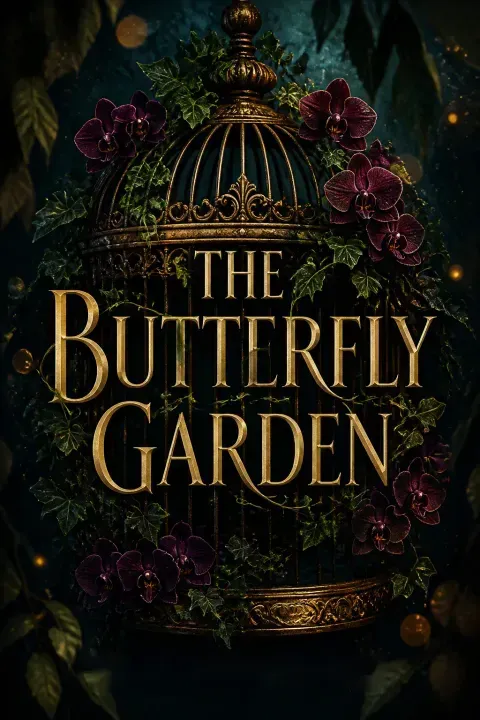


Plot Summary
The Survivor Behind Glass
FBI Special Agent Victor Hanoverian2 studies the young woman1 through the one-way mirror. Her black hair is dull and unwashed, her hands wrapped in bandages, her bare feet pulled away from the cold floor. She should be shattered after what she endured in a burning greenhouse complex where kidnapped women were kept as living butterfly displays.
Instead, she traces lazy patterns on the metal table, utterly self-contained. His partner Brandon Eddison5 wants to push harder, but Victor2 recognizes the deflection tactics from years of interviewing his own teenage daughters.
When they enter the room, she parries every question with unsettling calm. The other rescued girls all look to this one, who calls herself Maya,1 yet none of them will give their real names to the doctors. She knows exactly where every body lies in that ruined Garden.
The opening establishes a psychological chess match. Inara's composure is a survival mechanism honed over two years of captivity: she learned that revealing nothing meant retaining some power. Her refusal to give her name is the first assertion of control in a world that has stripped her of everything. Victor recognizes the deflection patterns because they mirror adolescent boundary-testing, but the stakes here are existential. The one-way mirror symbolically places her back in a glass case, observed and catalogued, just as she was in the Garden.
Abandoned on a Carousel
Her parents took her to a theme park on a marriage counselor's advice. For an hour, things seemed almost ordinary. Then the carousel. Her father waited at the exit, her mother at the entrance, and she sat trapped on a painted horse going round and round, watching them both leave arm in arm with different strangers.
A kind older boy helped her down, but she could not find either parent. After the park closed, security corralled the lost children. When she heard someone mention calling child services, she slipped away and walked to a gas station.
She called the neighbor, who drove two hours to collect her, then demanded a sexual favor as payment. She vomited on him instead, hitting the horn so his wife came out. The house was dark when she got home. No one had noticed she was gone. She never cried again after that day.
The carousel becomes the book's central metaphor for Inara's life: trapped in repetitive motion while the world moves on without her. Her parents' casual abandonment teaches her that she is fundamentally unwanted, a lesson that shapes her emotional armor. She develops hyper-self-sufficiency as a trauma response: the six-year-old who navigates bus schedules and fakes having a mother nearby is the same person who will later survive the Garden. The vomiting incident reveals her instinct for weaponizing her own body against predators.
Eight Women, One Loft
She was fourteen when Gran died. Rather than report the body, she raided the old woman's cash stash, nearly ten thousand dollars hidden inside a taxidermied German shepherd, and bought a bus ticket to New York. A forger created Inara Morrissey,1 age nineteen.
She found work at the Evening Star restaurant, where a waitress named Noémie invited her to share a sprawling loft apartment with seven other women. There was Sophia,8 a former prostitute fighting addiction to regain custody of her two daughters. Hope, irrepressibly sexual and fearless. Whitney, the high-strung psychology grad student.
Amber, the ambitious emancipated minor. Kathryn, who never spoke of her past. Jessica, Hope's adoring shadow. They shared rent, clothes, and an unspoken rule: no one asked about personal history. Her coworkers became her first real friends. She finally had a home.
The apartment represents the first functional family Inara has ever known. These women, all damaged and running from something, create a parallel community built on mutual protection rather than blood obligation. The unspoken rule against prying into personal history perfectly suits her needs. Sophia's struggle to reclaim her daughters from foster care provides an emotional template for love that fights rather than abandons. This brief period of belonging makes what comes next more devastating and gives Inara a reference point for what care looks like.
The Madame Butterfly Party
When the Evening Star was rented for a Madame Butterfly fundraiser, the waitresses wore silk wings pinned to their backs. The host, an elegant man3 with pale green eyes, stopped Inara1 with two fingers on her wrist to compliment the butterfly tattoo on her ankle, a matching design she had gotten with the apartment girls months earlier.
He remarked on the brevity of beautiful creatures. His son,9 a man in his mid-twenties with a cruel smile, cornered her in the staff locker room afterward. The busboy Kegs shouldered him away and escorted her back to the kitchen.
Guilian dismissed the incident, saying the clients had returned to Maryland. Two weeks later, while walking home alone from the library, Inara1 felt a sharp stab in her neck. Her legs collapsed. The world went black. She woke up somewhere else entirely, a place where butterfly wings were not costumes but brands carved into skin.
The fundraiser functions as a dark mirror: the costumed performance of butterfly imagery becomes literal captivity. The Gardener's comment about short-lived beauty foreshadows his rationale for killing his victims at twenty-one, preserving them at their peak. Avery's immediate predatory behavior in the locker room establishes the family dynamic: the father collects, the son destroys. Kegs's intervention provides brief, futile protection. The gap between the event and the kidnapping suggests the Gardener researched his target, waiting until she was vulnerable and alone.
Waking to the Waterfall
She came to with a skull-splitting headache in a bare room with glass walls and tracking for solid doors that could seal her inside. A tall, tawny-haired woman named Lyonette6 sat beside the bed, handing her aspirin and water.
She explained the essentials: forget your name because you will not be able to use it, call him the Gardener,3 and accept that you belong to him now. Lyonette6 led her through a cave behind a waterfall into an immense greenhouse: white sand paths, a stream feeding a pond, brilliant flowers, cloud-like butterflies, and a glass ceiling impossibly high overhead.
Twenty to twenty-five young women lived here, all with enormous butterfly wings tattooed across their backs. When they turned twenty-one, the Gardener3 killed and preserved them in glass and resin cases that lined the hallways. Lyonette6 had been there nearly five years. She was almost twenty-one.
Lyonette serves as the Virgil figure, guiding the new arrival through this lush hell. Her calm pragmatism, warning the girl to forget her name, demonstrates how thoroughly the Garden's logic has been internalized. The aesthetic luxury of the greenhouse, with its waterfall and flowers, masks the horror: this is a display case, a vivarium for human specimens. The glass walls that can become opaque isolate the captives from each other and from the maintenance workers who might otherwise discover them. The waterfall cave becomes the one space where conversation is private from the omnipresent microphones.
Three Weeks Under the Needle
Each night, drugs in her dinner kept her docile. Every few days, she woke on a leather bench while the Gardener3 worked, humming golden oldies as the needles buzzed. He never let her see his face during the sessions.
Over three weeks, he outlined and colored a Western Pine Elfin across her entire back: golden-brown upper wings flecked with bronze, rose and purple lower wings. When the final session ended, his hands shook with excitement. He pulled her to the edge of the bench and fumbled with his belt. She pressed her eyes shut and retreated inward, reciting Poe in her mind.
He called her Maya1 as he raped her, sealing the name like a brand. Afterward, Lyonette6 showed her the finished design in a mirror. It was ugly and terrible and lovely, and she hated it with everything she had. She understood now: she was his, irrevocably.
The tattooing process is a ritual of transformation and ownership. The Gardener's humming, his meticulous technique, his genuine aesthetic appreciation all complicate his monstrosity. He is not a simple sadist; he genuinely believes he is creating beauty. Maya's use of Poe as a mental escape mechanism is her first act of psychological resistance: her body submits, but her mind recites poetry. The name 'Maya' is the final seal of possession. The ambiguity of the tattoo, both lovely and horrifying, mirrors the Garden itself: beautiful surfaces hiding violence.
Twenty-One and Preserved
After six months in the Garden, Lyonette6 began trembling before her twenty-first birthday. She confessed her terror to Maya1 and Bliss:7 she wanted to fight but feared the pain. They spent the night curled together on her bed, washing her hair and braiding it into a crown.
At dawn, the Gardener3 came for her wearing black, and Lyonette6 whispered her real name into Maya's1 ear: Cassidy Lawrence.6 Please do not let him be the only one to remember me. Hours later, the solid walls rose, sealing all the rooms.
When they descended, Lyonette6 stood preserved in the hallway in a glass case, her Lustrous Copper wings pressed against the transparent surface, her head bowed so her face was hidden. Only the wings mattered now. The Gardener3 found Maya1 in the hall and ran his hand through her hair, chiding her for not pinning it up so he could see her wings clearly.
Lyonette's death establishes the emotional stakes of the Garden. Her plea to be remembered by her real name is an act of reclamation against the Gardener's systematic erasure of identity. The display case aestheticizes murder: the body is posed to showcase the tattoo, the face hidden so the butterfly becomes the only identity that matters. The Gardener's casual grooming of Maya immediately after Lyonette's preservation reveals his fundamental disconnection: one Butterfly's death is already fading from his attention as he focuses on the living. This is the moment Maya fully grasps that she is in a factory of beautiful corpses.
Avery's Playroom
Two months in, Avery9 dragged Maya1 by her hair to a locked room. Inside, a red-haired girl named Giselle hung dead from wall restraints, her neck broken, blood caked on her thighs. Avery9 had raped and strangled her. He expected Maya1 to fight or weep, but she refused to give him the fear he craved, reciting Poe until he stormed off in frustration.
She draped her torn dress over Giselle's body and walked naked to her room. The Gardener,3 summoned by Bliss,7 was horrified. He tended Maya's1 injuries, banned Avery9 temporarily, and dismantled the playroom.
Later, from a tree on the cliff, Maya1 discovered she could glimpse the outer greenhouse where the Gardener3 walked daily with his sickly wife Eleanor and their younger son Desmond.4 One night, Desmond4 himself sneaked into the Garden out of curiosity. Maya1 alerted his father,3 who introduced them and fed his son4 a sanitized story about rescuing street girls.
Avery represents unfiltered predation: he kills for pleasure rather than preserving for beauty. His father's horror is genuine but selective; he regrets damage to his collection, not the captivity itself. Maya's refusal to give Avery the fear he craves is a form of psychological warfare: she denies him the emotional payoff he seeks. Desmond's introduction creates a new variable. He is not cruel like his brother but dangerously gullible, desperate for paternal approval. His willingness to believe his father's lies makes him complicit even before he understands the full truth.
A Coward's Love
Desmond4 came to the Garden regularly, bringing textbooks and eventually his violin. He was a psychology student, sensitive and torn. He asked Maya1 questions his father3 would not answer. She recognized his potential: he was the only one with access codes who might someday be moved to act.
They kissed on the sun-warmed cliff. They danced in the waterfall cave to a waltz on his iPod. He told her he loved her. She did not say it back, but she let him believe. The Gardener,3 delighted by his son's4 attachment, stopped visiting Maya1 sexually and removed the camera from her room.
Desmond4 wanted to be good, but whenever she pressed him to call the police or let them go, he retreated behind the same excuse: it would destroy his mother, his family's reputation, their company. A name meant more than all their lives combined.
Maya's calculated seduction is morally complex: she weaponizes Desmond's genuine affection to pursue freedom for herself and the other captives. Her pragmatism is a direct inheritance from her childhood; she learned early that love is transactional. Desmond embodies liberal complicity: he knows the system is wrong, feels bad about it, but cannot overcome the personal cost of intervention. His insistence that he needs to learn to be braver is self-deceptive stalling. The Gardener's willingness to cede sexual access to Maya in favor of his son reveals his patriarchal logic: women are property to be transferred between men.
Zara's Last Toast
After Avery9 savaged a girl named Zara13 so brutally that infection set into her broken hip, the Gardener3 chose to kill her rather than risk a hospital visit. For the first time, he gave the Butterflies a full day to say goodbye. They gathered in Zara's13 room, toasting her with apple juice and laughter.
Zara,13 whose real name was Felicity Farrington,13 asked Maya1 to stage a reading of A Midsummer Night's Dream in her memory. Then the Gardener3 took her away. Desmond,4 helping his father,3 watched the embalming process: the injection that put Zara13 to sleep, the formaldehyde replacing her blood, the body posed in its glass case.
He stumbled into Maya's1 room afterward, weeping, reeking of chemicals. He finally understood that his father3 murdered these women. But even then, he did not call the police. He was too afraid of what exposure would cost him.
Zara's farewell party illustrates how the Butterflies have created rituals of meaning within their captivity. The toasts are gallows humor as survival mechanism. The Gardener's concession of a goodbye day shows his capacity for selective empathy; he genuinely believes he is being kind. Desmond's encounter with the embalming is his traumatic awakening, but his paralysis persists. Maya's refusal to comfort him afterward is a strategic withdrawal of emotional support, forcing him to sit alone with his complicity. The book argues that knowing and doing are fundamentally different moral categories.
A Child Named Keely
During the Midsummer reading, Avery9 burst through the front door carrying a tiny bundle wrapped in a blanket. He had snatched a girl10 from a mall in Sharpsburg, Maryland, raped her in his van, and brought her to the Garden as a gift to his father.3 Keely10 was twelve years old.
Blood crusted her copper hair; her Saturday underwear was torn. Maya1 took the child10 into her care and told the Gardener3 flatly that no one would touch this girl: no tattoo, no rape, nothing. He agreed. Over the following days, Maya,1 Bliss,7 and Danelle11 protected Keely,10 introducing her gently to the other Butterflies.
Desmond4 saw the child,10 learned Avery9 had taken her on her twelfth birthday, and something finally snapped. He told Maya1 he was calling the police with as many names as he knew. He asked for Keely's10 full name and address.
Keely functions as the moral limit: even the self-deluding Desmond cannot rationalize the abduction and rape of a twelve-year-old. Avery's gift is an attempt to outdo his brother and win their father's approval, but it backfires catastrophically. Maya's immediate maternal protectiveness toward Keely, despite her own emotional numbness, reveals the caregiving identity she developed in the Garden. Desmond's decision to call the police is not a redemption but a calculation: he acts only when his psychological avoidance becomes impossible, when the victim is so young that inaction would brand him as monstrous as his brother.
The Caning and the Gun
The police came but found nothing behind the Gardener's3 smooth explanations and the sealed walls that hid the captives. When the walls lifted, the Gardener3 confronted Desmond4 in a fury. Avery9 handed his father3 a bamboo cane, and the Gardener3 delivered twenty strokes across Desmond's4 bare back while Avery9 cheered.
Then Avery9 pulled a gun. He raged that their father3 had always favored Desmond4 despite Avery9 being the one who helped stock the Garden for years. He shot Desmond4 in the chest, then shot the Gardener3 in the side. Maya1 ran forward as sirens wailed again in the distance. Bliss7 grabbed the fallen gun.
Then Sirvat,12 the odd Butterfly who had long been fascinated by death and the embalming chemicals, slipped away laughing toward the locked room by the honeysuckles. She triggered an explosion. A fireball ripped through the front half of the greenhouse, shattering glass and raining debris onto everyone.
The family implosion is a domestic tragedy mapped onto a crime scene. The Gardener's caning of Desmond is ritual discipline; Avery's armed revolt is a coup attempt by the unfavored heir. The gun introduces a new scale of violence that even the Gardener cannot control. Sirvat's suicide bombing, using the very formaldehyde meant to preserve the dead, is the novel's most radical act of agency: a Butterfly using the tools of her captivity to destroy the captor's world. She transforms from passive victim to agent of annihilation, choosing destruction over preservation.
Through the Burning Glass
Flames devoured the Garden. Glass panes overhead shattered, raining down on the girls as they ran. A burning tree crashed into the wall between the inner and outer greenhouses, metal groaning as the roof collapsed. Avery9 grabbed a girl named Pia and snapped her neck before Bliss7 shot him four times.
He fell face-first into the flowers. Maya1 and several others pushed aside flaming branches and jagged glass shards, clearing a path past the fallen trunk. They carried the bleeding Desmond4 in a desperate chain. Firefighters on the other side swung axes at the outer greenhouse panels until one shattered.
A second explosion, from the fertilizer room, killed Isra and three others, hurling the Gardener3 himself into the flames. The surviving Butterflies stumbled onto cold autumn grass, choking on smoke, freezing in the open air they had not felt in years. Thirteen of them made it out.
The escape is visceral, chaotic, and costly. The girls who survive do so through collective action: clearing debris, carrying the wounded, pushing one another through the breach. Bliss shooting Avery is a moment of reclamation, using the predator's own weapon against him. The second explosion, like Sirvat's first, completes the annihilation of the Garden. The cold air outside, so ordinary, becomes a sensory shock: freedom initially feels like pain. The survivors emerge not as passive victims but as active agents who clawed their way out through fire and glass.
Samira Grantaire, Found
At the hospital, Victor2 took Inara1 to see the other survivors, then to the rooms where Geoffrey MacIntosh,3 the Gardener,3 and Desmond4 lay in critical condition. She faced the man who had owned her, now burned and helpless. Then Sophia8 burst through the door.
The apartment mother8 had seen the news and driven through the night. She had kept Maya's1 belongings, saved her money in a bank account, and promised Guilian would rehire her. Sophia8 also revealed the secret Inara1 had been protecting: Sophia8 herself had been a Butterfly once, the only one ever known to escape, having memorized Avery's9 access code a decade ago.
Inara,1 who had refused to give her real name throughout the entire interrogation, finally whispered it: Samira Grantaire.1 Then, for the first time since the carousel when she was six, she cried. Real tears, silent and shaking, as Sophia8 held her tight.
The revelation that Sophia is a former Butterfly reframes the entire narrative. Inara's fierce protection of Sophia's secret explains her evasions with the FBI; her loyalty extends beyond the Garden to the family she found before it. The giving of her birth name is an act of trust and integration: the fragmented selves, Samira the abandoned child, Inara the New York runaway, Maya the Butterfly, can finally coexist. Her tears at the end are not a sign of weakness but of healing. The carousel has finally stopped spinning, and someone is waiting for her when she steps off.
Analysis
The Butterfly Garden examines the psychology of survival through prolonged captivity and trauma bonding. The novel's central insight is that people do not break cleanly; they splinter into versions of themselves. Inara,1 Maya,1 and Samira1 are not merely aliases but selves that the protagonist constructed to survive different hells: the abandoned child, the constructed New Yorker, and the captive Butterfly. Her inability to cry, locked in place at age six on the carousel, represents emotional stasis as a survival mechanism. Crying would mean accepting loss, and she has survived by refusing to acknowledge anything worth losing. When she finally weeps at the end, it signals not weakness but the first stirring of a self that can afford to feel.
The Gardener3 embodies the banality of monstrousness. He is not a cartoon villain but a man who genuinely loves his victims according to a radically distorted definition of love that equates possession with care. He tends their injuries, provides books and musical instruments, and weeps when one dies accidentally. His tragedy, and his horror, is that he is capable of tenderness. The novel suggests that the most dangerous predators are those who have convinced themselves they are saviors.
Desmond4 represents the uncomfortable reality that moral awareness without action is another form of complicity. His arc mirrors a broader societal failure: knowing something is wrong but failing to intervene because intervention costs too much. The book refuses to let him off the hook even when he finally calls the police. His courage arrives too late for the women already sealed in glass.
The butterfly symbolism operates on multiple levels: the real butterflies fluttering through the greenhouse, the tattoos carved into skin, the costume wings at the fateful catering event. Butterflies are conventionally beautiful and fragile, ephemeral creatures to be admired briefly. The novel inverts this: the captives prove more resilient than their captor imagined. The final explosion, triggered by Sirvat12 using the Gardener's3 own embalming chemicals, is the ultimate reclamation. The tools of preservation become instruments of destruction, and the specimens escape their collector. The Garden burns, and the butterflies finally fly.
Review Summary
The Butterfly Garden is a dark, disturbing psychological thriller that captivated many readers with its unique premise and compelling storytelling. The novel follows Maya, a survivor of "The Gardener," who kidnaps and tattoos young women. While praised for its gripping narrative and complex characters, some readers found the ending unsatisfying. The book's graphic content and themes of abuse make it unsuitable for sensitive readers. Despite mixed opinions on certain aspects, many reviewers found the novel addictive and unforgettable, praising Hutchison's writing style and ability to create a haunting atmosphere.
People Also Read









Characters
Inara Morrissey / Maya / Samira Grantaire
The Three-Named SurvivorA young woman of extraordinary composure who survived two years in the Garden. She stopped crying at age six when her parents abandoned her at a theme park, and that emotional self-containment becomes both her armor and her cage. She is fiercely pragmatic, intelligent, and unsentimental, with a sharp wit that deflects intimacy. Raised by her neglectful grandmother among taxidermied animals, she learned early that she was unwanted. She found a makeshift family in a New York loft apartment with seven other damaged women before being kidnapped. In captivity, she became the guide for new arrivals, a role that required her to be maternal without being soft. Her relationship with Desmond4, the Gardener's3 younger son, is both genuinely affectionate and strategically calculated: she uses his love to engineer rescue for herself and the other captives. Her journey from frozen survival to being able to cry again marks her core transformation.
Victor Hanoverian
The Patient FBI VeteranA senior FBI agent in Crimes Against Children who has spent three decades investigating the worst humanity can do. He has three teenage daughters, and their faces appear in his mind every time he looks at a victim. This paternal instinct makes him both effective and vulnerable. He recognizes Inara's1 deflection patterns from years of navigating his own daughters' evasions, and he uses patience rather than pressure to draw out her story. Unlike his hot-tempered partner Eddison5, Victor understands that trauma narratives cannot be forced. He brings her cinnamon rolls, lends her his jacket, introduces small kindnesses that slowly earn her trust. His approach is built on the belief that victims, especially damaged children, respond to genuine care rather than interrogation tactics. He balances professionalism with a deep personal investment in justice for the broken.
Geoffrey MacIntosh / The Gardener
The Collector of Beautiful CorpsesA wealthy, cultured man who has spent over thirty years kidnapping teenage girls and imprisoning them in a private greenhouse. He tattoos elaborate butterfly wings onto their backs, gives them new names, and keeps them as his living collection. At twenty-one, he kills them by embalming them alive with formaldehyde, then seals their bodies in glass and resin display cases. He is not a simple monster; he genuinely believes he loves his Butterflies and that he is preserving their beauty for eternity. His own father collected actual butterflies, pinning them while still alive, and the Gardener sees his collection as an homage. He is married with two sons, Avery9 and Desmond4, and his sickly wife Eleanor is unaware of the Garden's true nature. He treats his captives with a tenderness that makes his violence more unsettling.
Desmond MacIntosh
The Cowardly Son in LoveThe Gardener's3 younger son, a psychology student and talented violinist. Unlike his sadistic brother Avery9, Desmond possesses a conscience but lacks the courage to act on it. He stumbles into the Garden out of curiosity and is told a sanitized version of the truth by his father3. He falls genuinely in love with Maya1, who cultivates his affection in hopes of manipulating him into helping the captives escape. He wants desperately to be good, to do the right thing, but is paralyzed by fear of destroying his family's reputation and hastening his mother's death. His arc traces an agonizing moral awakening as he witnesses horrors that become impossible to rationalize. He is a study in the gap between knowing something is wrong and being willing to pay the price of intervention.
Brandon Eddison
The Angry Partner Seeking JusticeVictor's2 younger FBI partner, driven by a quick temper and a deep well of unresolved grief. His younger sister Faith disappeared at age eight and was never found, which fuels both his commitment to the work and his impatience with uncooperative witnesses. He views Inara's1 evasions with open suspicion, wondering if she was complicit in the Garden's crimes. He prefers interrogating suspects to interviewing victims, and his bluntness often clashes with Inara's1 sardonic deflections. His character arc involves learning to channel his anger productively and recognizing that trauma survivors do not owe anyone a tidy narrative on demand. Beneath his abrasiveness lies a genuine hunger for justice.
Lyonette / Cassidy Lawrence
The Guide in the GardenA tall, graceful Butterfly with tawny hair and gold-flecked eyes who served as the welcoming guide for new arrivals, teaching them the brutal rules of survival. Her father made carousel horses, a cherished memory she carried into captivity. She folded origami constantly, creating a menagerie that she gave to the other captives. She had been in the Garden nearly five years when Maya1 arrived, longer than almost anyone, and her twenty-first birthday loomed as a deadline she could not escape. Her fierce dignity and refusal to pretend she accepted her fate made her a model for Maya's1 own survival strategy. Before she died, she whispered her real name into Maya's1 ear, asking not to be forgotten.
Bliss
The Fierce Tiny RebelA diminutive young woman with ice-white skin, brilliant blue-violet eyes, and a wild profusion of tight black curls. She is Maya's1 closest friend in the Garden, a woman of volcanic rage who refuses to pretend she accepts her captivity. She channels her fury into polymer clay sculptures, building teddy bear chess sets and intricate figurines. She speaks to the Gardener3 with open contempt, gambling that he values her honesty enough to tolerate her defiance. Her bluntness is both her greatest strength and her coping mechanism. She is fiercely loyal to Maya1 and protective of the more fragile captives, though tenderness does not come naturally to her.
Sophia Madsen
The Mother Who Escaped BeforeA former prostitute and drug addict who rebuilt her life against extraordinary odds. She was the maternal center of the New York loft apartment, mothering the seven other women with fierce devotion while fighting to regain custody of her two daughters from foster care. She holds a deep, painful secret connected to the Garden that Inara1 has been protecting throughout the FBI interrogation. Her love for her girls, Jillie and Lotte, is the defining force of her life: everything she does is in service of getting them back and keeping them safe. She taught Inara1 what it means to be family not by blood but by choice and commitment.
Avery MacIntosh
The Sadistic Older BrotherThe Gardener's3 older son, a predator who lacks his father's aesthetic pretensions and self-control. He rapes and tortures for the pleasure of fear, not for any delusion of love. He competes desperately with his younger brother Desmond4 for paternal approval, believing his years of helping stock the Garden should earn him greater favor. He keeps a locked playroom filled with restraints and implements of pain. His escalating violence repeatedly tests the boundaries of what even his father3 will tolerate, and his jealousy toward Desmond4 festers into something murderous. He is what the Gardener3 would be without the veneer of romantic delusion.
Keely Rudolph
The Child Who Broke the SystemA young girl whose arrival in the Garden marks a catastrophic breaking point in the established order. Far younger than any previous captive, she was taken on her twelfth birthday from a shopping mall. Her presence provokes an immediate and fierce protective response from Maya1 and the other Butterflies, who form a circle around her and refuse to let any of the men near her. She is brave in a way that shames the adults responsible for her safety. Her name and address become the key piece of information that finally forces a moral reckoning.
Danelle
The Butterfly with Face WingsOne of the few Butterflies marked with wings tattooed on her face as well as her back, a sign given to those who once tried to curry special favor with the Gardener3 in hopes of being released. She learned too late that pleasing their captor brought no freedom, and she carries the visible shame of her former naivety. After Lyonette's6 death, she became Maya's1 second in maintaining emotional stability among the captives. She understands the cost of false hope and has transformed her regret into a quiet, steady competence that the other women rely on.
Sirvat
The Morbid Solitary ButterflyAn odd, solitary captive with a consuming fascination for death in all its forms. She identifies poisonous plants in the Garden, studies the display cases obsessively, and asks unsettling questions about the embalming chemicals used to preserve the dead. The other captives find her inscrutable and keep their distance, unable to tell whether her strangeness is a coping mechanism or something more volatile. She spends more time visiting the dead girls in their glass cases than any of the living ones.
Zara / Felicity Farrington
The Bitter Theater LoverA sharp-tongued Butterfly with a deep love for Shakespeare and theater. She has been in the Garden for three years and shows no patience for the more fragile captives, clashing constantly with those who cling to hope. She was rehearsing A Midsummer Night's Dream with friends when she was taken, a passion preserved in the heavily annotated copy of the play she carried into captivity. Her acerbic wit masks a profound despair that she refuses to show until the very end.
Lorraine
The Cook-Nurse Who Chose CaptivityA former Butterfly from the Garden's earliest days, now serving as the facility's cook and nurse. The Gardener3 sent her for training, and she returned to serve him with pathological devotion. She is bitterly jealous of the younger captives who receive his attention and deeply resents that he no longer touches her. The other Butterflies despise her complicity and her refusal to help them escape. She represents the most extreme form of trauma bonding: someone so thoroughly broken that she has become an instrument of her own captor.
Evita
The Sweet Simple SoulA Butterfly with the cognitive understanding of a young child. She finds wonder rather than terror in the Garden and serves as an unexpected emotional comfort to the other captives, hugging them and listening without judgment. The Gardener3 rarely visits her sexually because she becomes confused and frightened. Her simple sweetness makes her beloved in a way the other captives cannot quite explain, and she is one of the few people whose tears Maya1 can always forgive.
Plot Devices
The Butterfly Tattoos
Mark of Ownership and IdentityThe elaborate butterfly wing tattoos inked onto each captive's back by the Gardener3 himself. Each girl receives a specific butterfly species chosen for her, covering nearly her entire back from shoulders to hips. The process takes weeks of painful sessions, during which the Gardener3 hums old songs and treats the work with artistic reverence. Once completed, the wings serve as both a brand of ownership and a fatal prophecy: the women cannot see their own wings without mirrors, making the mark both intimate and alienating. After death, the preserved bodies are identified solely by these wings in the display cases. The tattoos transform the women into collectible specimens, erasing their human identities and replacing them with the Gardener's3 aesthetic vision.
The Glass and Resin Display Cases
Preservation as PossessionThe hallways of the Garden are lined with floor-to-ceiling glass cases filled with clear resin, each containing the posed body of a dead Butterfly. The Gardener3 embalms his victims while they are still alive, replacing their blood with formaldehyde to prevent decay, then seals them in transparent resin. The cases serve as a constant, inescapable reminder to the living captives of their eventual fate. The Gardener3 touches the glass tenderly whenever he passes, whispering their Butterfly names. The bodies are posed so the wings are prominently displayed, while the faces are often hidden or bowed. This gallery of dead women is the logical endpoint of his obsession: beauty frozen at its peak, immune to age or escape.
The Garden Greenhouse Complex
The Gilded, Inescapable PrisonA massive indoor greenhouse consisting of an inner tropical garden with a waterfall, stream, pond, and flowering plants, surrounded by glass-walled bedrooms connected by hallways. The structure is climate-controlled and heavily surveilled with cameras and microphones. Solid walls can descend to seal the captives in their rooms, hide the display cases from maintenance workers, and create soundproof isolation. The only exit is a coded door requiring a security code for both entry and exit. The prisoners are hidden whenever gardeners come to maintain the plants. The entire complex is nested inside an outer greenhouse, making it invisible from the outside.
The Gardener's Scrapbook
The Collector's Complete CatalogueA hidden book kept in a locked drawer in the Gardener's3 office desk containing photographs of every Butterfly he ever captured, front and back, along with their assigned names, butterfly species, and dates of capture and death. The book spans over thirty years of victims and serves as the definitive record of his crimes. The FBI discovers it while searching the property, and it becomes crucial evidence for identification of the dead and prosecution of the Gardener3. Its pages reveal the true scope of his crimes, far exceeding what even the survivors knew. The scrapbook also contains the photograph and name of Sophia Madsen8, proving that a Butterfly escaped a decade earlier.
The Camera and Microphone System
Omnipresent Surveillance and ControlThe Garden is saturated with cameras and microphones, their red lights blinking visibly at night. The Gardener3 can monitor his captives from his suite or remotely at all times. The system also controls the solid walls that can seal off hallways and individual rooms. The only space where conversation is truly private is the cave behind the waterfall, where the roar of falling water drowns out the microphones. The Gardener3 eventually agrees to remove one camera from this cave at Maya's1 request, framing it as a concession to mental health. The surveillance system creates a panopticon effect: the captives never know when they are being watched, so they behave as if they always are.
FAQ
Synopsis & Basic Details
What is The Butterfly Garden about?
- Captivity and Control: The Butterfly Garden centers on a group of young women held captive in a secluded, meticulously crafted garden by a man known as the Gardener.
- Twisted Obsession: The Gardener collects these women, marking them with butterfly tattoos and preserving their bodies in glass cases after their deaths, driven by a warped sense of beauty and control.
- A Survivor's Tale: The story unfolds through the eyes of one of the survivors, Maya, as she recounts the horrors of her captivity and the complex relationships she formed with the other girls.
- Search for Justice: The narrative follows the FBI's investigation into the Garden, as they try to understand the Gardener's motives and bring him to justice, while also grappling with the psychological impact on the survivors.
Why should I read The Butterfly Garden?
- Psychological Depth: The novel delves into the complex psychological states of both the victims and the captor, exploring themes of trauma, manipulation, and the human capacity for both cruelty and resilience.
- Intricate Plot: The story is filled with twists and turns, keeping the reader engaged as the layers of the Gardener's twisted world are slowly revealed.
- Emotional Impact: The Butterfly Garden evokes a range of emotions, from horror and despair to hope and empathy, making it a powerful and thought-provoking read.
- Unique Narrative: The story is told through the perspective of a survivor, offering a fresh and compelling take on the thriller genre, and challenging the reader to confront uncomfortable truths about human nature.
What is the background of The Butterfly Garden?
- Psychological Thriller: The novel draws heavily from the psychological thriller genre, exploring the dark side of human nature and the effects of trauma on the mind.
- Fictional Setting: The Garden itself is a fictional creation, a secluded and meticulously crafted space that serves as both a beautiful sanctuary and a terrifying prison.
- Contemporary Setting: The story is set in a contemporary time, with references to modern technology and law enforcement procedures, grounding the fantastical elements in a recognizable reality.
- Exploration of Power Dynamics: The novel explores the power dynamics between captor and captive, examining the ways in which control and manipulation can shape identity and behavior.
What are the most memorable quotes in The Butterfly Garden?
- "Because a garden must have its butterflies.": This quote, spoken by the Gardener, encapsulates his twisted view of the girls as objects of beauty and possession, highlighting his dehumanization of them.
- "Sometimes it was easier to forget, you know?": This quote from Maya reveals the psychological coping mechanisms used by the girls to survive their captivity, emphasizing the need to detach from their past lives.
- "You have to understand, I didn't give him that name out of fear or reverence, or some misguided sense of propriety. I didn't give him that name at all.": This quote from Maya highlights the pragmatic approach the girls took to their situation, creating their own language and understanding of their captor.
What writing style, narrative choices, and literary techniques does Dot Hutchison use?
- First-Person Narration: The story is primarily told from Maya's perspective, allowing readers to experience the events through her eyes and gain insight into her thoughts and emotions.
- Non-Linear Storytelling: The narrative shifts between the present-day interrogation and Maya's memories of the Garden, creating a sense of suspense and gradually revealing the full scope of the horrors she endured.
- Symbolism and Imagery: Hutchison uses vivid imagery and symbolism, particularly with the butterflies and the Garden itself, to enhance the themes of beauty, captivity, and transformation.
- Psychological Realism: The author delves into the psychological complexities of the characters, exploring their motivations, fears, and coping mechanisms with a nuanced and realistic approach.
Hidden Details & Subtle Connections
What are some minor details that add significant meaning?
- The Names: The girls' names, both given and real, often reflect their personalities or the roles they play in the Garden, adding layers of meaning to their identities.
- The Music: The Gardener's fondness for oldies music contrasts sharply with the horrors of the Garden, highlighting his twisted sense of normalcy and his desire to find joy in life.
- The Clothing: The black dresses the girls wear, while seemingly uniform, are a symbol of their captivity and the loss of their individuality, while the occasional colored dresses foreshadow their deaths.
- The Scars: The scars on the girls' bodies, both physical and emotional, serve as a constant reminder of their trauma and the lasting impact of their captivity.
What are some subtle foreshadowing and callbacks?
- The Carousel: Maya's childhood experience on the carousel foreshadows her later feelings of being trapped and forgotten, and the carousel itself becomes a symbol of her trauma.
- The Drunk Pervert: The drunk pervert outside the apartment foreshadows the predatory nature of the Gardener and the constant threat of violence the girls face.
- The Book of Poe: Maya's recitation of Poe's poems during her encounters with the Gardener and Avery foreshadows her emotional detachment and her attempts to escape through literature.
- The River Stones: The river stones given to Bliss by the Gardener foreshadow the eventual discovery of the bodies buried along the riverbank, connecting the beauty of the Garden to the horrors it conceals.
What are some unexpected character connections?
- Sophia and Maya: The bond between Sophia and Maya, despite their different backgrounds, highlights the power of chosen family and the importance of support in the face of trauma.
- Desmond and Maya: The complex relationship between Desmond and Maya, marked by both attraction and repulsion, reveals the blurred lines between victim and oppressor and the potential for change.
- Lorraine and the Butterflies: Lorraine's envy of the girls in glass reveals her own brokenness and her longing for the Gardener's affection, highlighting the twisted dynamics of the Garden.
- The Girls and Their Shared Trauma: The shared trauma of the girls creates a unique bond between them, allowing them to support each other and find strength in their collective experience.
Who are the most significant supporting characters?
- Bliss: As Maya's closest friend, Bliss provides a counterpoint to Maya's pragmatism, offering a fierce spirit and a willingness to challenge authority.
- Lyonette: As a former leader in the Garden, Lyonette's influence is felt throughout the story, and her death serves as a catalyst for Maya's growth and leadership.
- Sophia: As a former prostitute and drug addict, Sophia's past experiences and her fierce love for her daughters provide a model of resilience and redemption for Maya.
- Tereza: As a new arrival in the Garden, Tereza's vulnerability and her love for music highlight the fragility of hope and the importance of human connection.
Psychological, Emotional, & Relational Analysis
What are some unspoken motivations of the characters?
- The Gardener's Need for Control: The Gardener's actions are driven by a deep-seated need for control and a desire to create a world where he can dictate beauty and order, stemming from a past trauma.
- Maya's Desire for Autonomy: Maya's seemingly detached demeanor masks a deep desire for autonomy and a need to reclaim her identity, which she does through her actions and her relationships with the other girls.
- Desmond's Search for Approval: Desmond's actions are motivated by a desire to gain his father's approval, even as he grapples with the moral implications of his family's actions.
- Avery's Need for Power: Avery's cruelty stems from a need for power and a desire to assert his dominance over others, fueled by his own insecurities and a twisted sense of entitlement.
What psychological complexities do the characters exhibit?
- Maya's Detachment: Maya's emotional detachment is a coping mechanism developed to survive the horrors of the Garden, but it also makes it difficult for her to form genuine connections.
- The Gardener's Delusions: The Gardener's delusions about his own goodness and his belief that he is providing a better life for the girls highlight his psychological instability and his inability to see the harm he is causing.
- Desmond's Moral Conflict: Desmond's internal conflict between his love for his family and his growing awareness of their crimes reveals the complexities of moral decision-making.
- Avery's Sadism: Avery's sadistic tendencies and his enjoyment of inflicting pain highlight the dark side of human nature and the destructive power of unchecked cruelty.
What are the major emotional turning points?
- Lyonette's Death: Lyonette's death serves as a major turning point, forcing Maya to step into a leadership role and confront the reality of their limited time in the Garden.
- Desmond's Discovery: Desmond's discovery of the true nature of the Garden and his subsequent decision to call the police marks a shift in the power dynamics and sets the stage for the climax.
- The Fire: The fire in the Garden is a major emotional turning point, as it forces the girls to confront their mortality and fight for their freedom, leading to the collapse of the Gardener's control.
- The Reunion with Sophia: Maya's reunion with Sophia is a powerful emotional moment, highlighting the importance of chosen family and the possibility of healing and hope.
How do relationship dynamics evolve?
- Maya and Bliss: The relationship between Maya and Bliss evolves from a shared sense of pragmatism to a deep and abiding friendship, marked by mutual respect and support.
- Maya and Desmond: The relationship between Maya and Desmond is complex and fraught with tension, as they grapple with their conflicting loyalties and their growing feelings for each other.
- The Girls and the Gardener: The relationship between the girls and the Gardener is marked by fear and manipulation, as he uses his power to control and dehumanize them.
- The Girls and Each Other: The relationships between the girls evolve from a shared sense of captivity to a deep and abiding bond, as they learn to rely on each other for support and strength.
Interpretation & Debate
Which parts of the story remain ambiguous or open-ended?
- The Gardener's True Motives: While the novel provides some insight into the Gardener's past, his true motivations for collecting and preserving the girls remain somewhat ambiguous, leaving room for interpretation.
- The Fate of the Other Girls: The novel focuses primarily on Maya's story, leaving the fates of some of the other girls somewhat open-ended, allowing readers to imagine their lives after their escape.
- Desmond's Future: While Desmond makes a choice to act against his family, his future remains uncertain, leaving readers to wonder if he will ever truly be able to escape his father's legacy.
- The Long-Term Impact: The long-term psychological impact of the trauma on the survivors is left somewhat open-ended, allowing readers to consider the complexities of healing and recovery.
What are some debatable, controversial scenes or moments in The Butterfly Garden?
- Maya's Relationship with Desmond: Maya's relationship with Desmond is a source of debate, as some readers may question her motives and the extent to which she is using him for her own purposes.
- The Gardener's "Love": The Gardener's twisted sense of love and his belief that he is providing a better life for the girls is a controversial aspect of the story, challenging readers to confront the complexities of human depravity.
- The Graphic Violence: The graphic violence and sexual abuse depicted in the novel may be disturbing for some readers, raising questions about the limits of what is acceptable in fiction.
- The Ending: The ending, while offering a sense of hope, may be seen as somewhat ambiguous, leaving readers to grapple with the long-term consequences of the trauma and the challenges of rebuilding lives.
The Butterfly Garden Ending Explained: How It Ends & What It Means
- The Garden's Destruction: The fiery collapse of the Garden symbolizes the end of the Gardener's control and the beginning of the girls' journey toward freedom.
- Desmond's Betrayal: Desmond's decision to call the police, while ultimately leading to the girls' rescue, also results in his own downfall, highlighting the complexities of moral choices.
- The Survivors' Resilience: The survivors' ability to escape the Garden and begin to rebuild their lives underscores the power of the human spirit and the importance of hope in the face of adversity.
- The Cycle of Trauma: The ending acknowledges that the trauma experienced by the girls will have lasting effects, but it also suggests that healing and recovery are possible, even in the face of unspeakable evil.
The Collector Series
Download PDF
Download EPUB
.epub digital book format is ideal for reading ebooks on phones, tablets, and e-readers.








































