
Plot Summary
Dreamwalking in Darkness
Bingmei, cursed with the ability to smell emotions, is plagued by dreamwalks that leave her body lifeless and her spirit wandering. In the oppressive palace of Sajinau, now ruled by the resurrected dark lord Echion, she witnesses the sinister fusion of man and dragon. Her visions warn of impending doom and her own role as the phoenix-chosen, destined to destroy Echion at the cost of her life. The emotional weight of guilt and fear presses on her, as she realizes her actions have unleashed a terror upon the world. The chapter sets a tone of dread and inevitability, as Bingmei's fate is entwined with the rise of a monstrous power she never wished to awaken.
Caves of Survival
Bingmei leads her ragtag ensign through the harsh winter, seeking refuge in the labyrinthine Dongxue caves. The group is fractured by hunger, mistrust, and the relentless pursuit of Qiangdao bandits, now empowered by Echion. Leadership weighs heavily on Bingmei, who must balance the safety of the young and the loyalty of her warriors. The caves become a crucible of survival, where every decision could mean life or death. The tension is palpable as the group prepares for an inevitable confrontation, and Bingmei's sense of responsibility is sharpened by the knowledge that her enemies are closing in, both outside and within her own ranks.
The Withering Touch
The Qiangdao assault the caves, and Bingmei's group is forced into a desperate battle. Amidst the chaos, she faces Liekou, a warrior wielding the legendary dianxue—the withering touch that can paralyze or kill with a single strike. Mieshi falls victim, and the group is forced to bargain with their enemy for her life. The encounter reveals that Echion's resurrection has revived lost arts and deadly secrets, making the world more dangerous than ever. The emotional toll of violence, betrayal, and the fragility of trust is keenly felt, as Bingmei realizes that survival now depends on understanding and outwitting powers beyond her experience.
Siege and Escape
Trapped between two forces in the caves, Bingmei devises a risky plan to draw the Qiangdao away, using her magical cricket to leap and fly through the tunnels. The ensuing chase is a blur of fear and exhilaration, as she becomes both hunter and hunted. The group narrowly escapes, but not without loss and trauma. The outside world is no safer, as the Iron Rules of Echion's new order spread, and the landscape is scarred by violence and oppression. The emotional arc is one of exhaustion and fleeting hope, as the survivors cling to each other and the possibility of sanctuary.
Iron Rules, Broken Hearts
As Bingmei and her companions journey toward Sihui, they learn of Echion's Iron Rules—laws that enforce order through fear, disarmament, and forced labor. The world is transformed into a place where survival means submission, and rebellion is met with brutal punishment. The group's internal dynamics are strained by grief, guilt, and the longing for lost loved ones. Bingmei's connection with Rowen deepens, but is complicated by destiny and the looming threat of sacrifice. The chapter explores the cost of order, the pain of memory, and the resilience required to endure in a world ruled by cruelty.
Sihui's Shifting Alliances
Arriving in Sihui, Bingmei's group is welcomed as valuable allies, but quickly entangled in political intrigue. King Zhumu seeks to secure his kingdom through marriage alliances, pitting Rowen and Budai against each other for the hand of Princess Cuifen. Old enemies resurface, and the city's defenses are tested by the threat of Echion's advancing armies. Bingmei is forced to navigate a web of loyalty, ambition, and suspicion, as she struggles to protect her people and honor her own heart. The emotional landscape is fraught with longing, rivalry, and the ever-present shadow of betrayal.
The Queen's Gambit
Within Sihui's palace, Bingmei faces the complexities of court life, where every gesture is a move in a larger game. The arrival of Echion's concubines, the imprisonment of old foes, and the machinations of King Zhumu create a volatile environment. Bingmei's unique gift—her ability to smell truth and emotion—becomes both a weapon and a burden. She is drawn into the orbit of Xisi, Echion's queen, whose return threatens to tip the balance of power. The chapter is a study in the costs of ambition, the dangers of envy, and the fragile alliances that can mean the difference between life and death.
Shadows Over Fusang
Bingmei is captured and brought to Fusang, the heart of Echion's empire, where she is stripped of agency and forced to participate in the resurrection of Xisi. The palace is a gilded cage, filled with rival concubines, eunuchs, and the ever-watchful eyes of the dragons. Bingmei's sense of self is eroded by humiliation, manipulation, and the constant threat of violence. The return of Xisi, as powerful and hateful as Echion, sets the stage for a new era of darkness. The emotional core is one of despair and defiance, as Bingmei clings to the hope of escape and the possibility of redemption.
The Dragon's Dominion
With both Echion and Xisi restored, their combined power casts a pall over the world. The dragons' hatred for each other is matched only by their contempt for humanity. Bingmei's survival depends on her usefulness, as she becomes a pawn in their endless struggle for dominance. The palace is a place of shifting loyalties, where even the dead can be brought back as emotionless servants. The chapter explores the nature of power, the futility of resistance, and the small acts of courage that keep hope alive in the face of overwhelming odds.
The Grave Kingdom Beckons
Bingmei's connection to the Grave Kingdom—the realm of the dead—deepens, as she is visited by the spirits of her ancestors and haunted by dreams of her own demise. The boundary between life and death grows thin, and the cost of her role as phoenix-chosen becomes clear. The world is filled with omens, prophecies, and the restless dead, all urging her toward a final act of sacrifice. The emotional journey is one of acceptance, as Bingmei prepares to face her fate and the possibility of bringing light to a world shrouded in darkness.
The Phoenix's Choice
As the dragons prepare to open the Woliu—the rift between worlds—Bingmei must choose whether to embrace her role and risk everything. Her companions are scattered, blinded, or lost, and the forces of Echion close in from all sides. The phoenix's call grows stronger, offering both guidance and the promise of annihilation. Bingmei's internal struggle reaches its peak, as she weighs the value of her own life against the hope of salvation for others. The chapter is a meditation on courage, selflessness, and the meaning of true power.
Death Wall Crossing
The journey north leads Bingmei and her dwindling group to the Death Wall, a monumental barrier built on the bones of the dead. Pursued by dragons and soldiers, they must use every ounce of cunning and strength to cross into the unknown. The wall is both a physical and spiritual threshold, marking the boundary between the world of the living and the realm of the phoenix. The crossing is fraught with danger, loss, and revelation, as Bingmei confronts the legacy of suffering and the possibility of rebirth.
The Rage of Dragons
As Bingmei and Quion scale the Death Wall, they are beset by Echion and Xisi, whose battle for supremacy threatens to destroy everything. The clash of dragons is mirrored by the struggle within Bingmei, who must summon the last reserves of magic and will to survive. The destruction of Kunmia's staff, the intervention of the phoenix's birds, and the sacrifice of friends mark the climax of the story. The emotional intensity is at its highest, as the cost of resistance and the hope of transcendence are laid bare.
The Last Sanctuary
In the aftermath of the battle, Bingmei and her companions find sanctuary in a pagoda marked by the phoenix. The killing fog, dragons, and death itself are held at bay by ancient magic. Here, Bingmei receives a vision of the phoenix's shrine beyond the Death Wall, and the promise of a new world. The chapter is suffused with peace, sorrow, and the bittersweet knowledge that the journey is not yet over. The survivors must decide whether to continue, knowing that the path ahead leads only to sacrifice and the unknown.
The Price of Power
As the group presses on, the cost of their quest becomes clear. Friends are lost, blinded, or captured; the world is scarred by violence and betrayal. Bingmei is haunted by guilt and the knowledge that her actions have unleashed forces beyond her control. The emotional landscape is one of mourning and resilience, as each character grapples with the meaning of their suffering and the hope that something better might emerge from the ashes.
The Blind King's Path
Rowen, blinded by dragon venom, discovers a new power—the ability to heal others, but not himself. Guided by the song of a bird, he helps Eomen and Jidi Majia regain their sight, but must send them away to safety. Alone and vulnerable, Rowen is captured, but his connection to Bingmei and the phoenix endures. The chapter is a meditation on loss, love, and the mysterious workings of fate, as the characters are scattered but not defeated.
The New World Dawns
Bingmei and Quion, pursued by dragons and soldiers, finally reach the phoenix shrine beyond the Death Wall. The world is transformed by the opening of the Woliu, as new dragons and ancient magics return. The journey is marked by exhaustion, sacrifice, and the promise of renewal. The final vision is one of possibility—a new world shaped by the choices of those who dared to resist, to love, and to hope. The story ends on the threshold of transformation, as the dawn breaks over a land forever changed.
Analysis
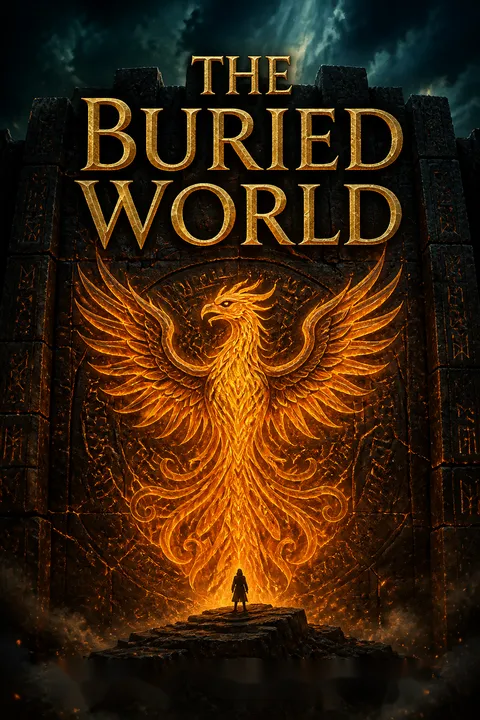
Jeff Wheeler's The Buried World is a meditation on the costs of power, the burden of destiny, and the possibility of redemption in a world scarred by violence and loss. Through the lens of fantasy, the novel explores the psychological toll of leadership, the corrosive effects of tyranny, and the resilience required to endure in the face of overwhelming odds. Bingmei's journey from reluctant survivor to self-sacrificing hero is both deeply personal and universally resonant, reflecting the struggle to find meaning and agency in a world shaped by forces beyond one's control. The use of sensory magic, dreamwalking, and mythic duality creates a rich tapestry of narrative and symbolism, inviting readers to consider the boundaries between life and death, love and hate, order and chaos. Ultimately, the story suggests that true power lies not in domination, but in compassion, self-knowledge, and the willingness to choose hope—even when the outcome is uncertain. The lessons of The Buried World are as relevant today as in any imagined past: that the fight for dignity, freedom, and connection is never truly over, and that even in the darkest times, the possibility of renewal endures.
Review Summary
People Also Read



Characters
Bingmei
Bingmei is the orphaned protagonist, marked by the winter sickness and the rare ability to smell emotions—a gift that is both a blessing and a curse. Her journey is one of reluctant leadership, as she is thrust into the role of phoenix-chosen, destined to confront the resurrected dragon lord Echion. Bingmei's relationships are complex: she is haunted by the loss of her family, guided by the teachings of her master Kunmia, and torn between the affections of Rowen and the loyalty of her friends. Psychologically, she is defined by guilt, self-doubt, and a fierce sense of responsibility. Over the course of the story, Bingmei evolves from a passive survivor to an active agent of change, embracing sacrifice and the possibility of redemption, even as she fears the cost.
Rowen
Rowen is the exiled prince of Sajinau, burdened by the loss of his family and the weight of unfulfilled destiny. His relationship with Bingmei is central—marked by longing, jealousy, and a deep, unspoken bond that transcends lifetimes. Rowen's journey is one of self-discovery, as he grapples with blindness, the limits of power, and the meaning of love. His ability to sense Bingmei and his eventual gift of healing others reflect his role as both a guide and a sacrifice. Psychologically, Rowen is driven by regret, hope, and the desire to be chosen—not just by fate, but by Bingmei herself. His arc is one of acceptance and the quiet heroism of letting go.
Echion
Echion, the Dragon of Night, is the resurrected emperor whose quest for permanent order drives the narrative's central conflict. He is both man and dragon, wielding ancient magics and enforcing the Iron Rules with ruthless efficiency. Echion's relationship with Xisi is defined by mutual hatred and the necessity of shared power. Psychologically, he is a study in narcissism, control, and the fear of chaos. His inability to love or trust makes him both a tragic and terrifying figure. Echion's arc is one of relentless domination, but also of vulnerability—his power is always threatened by the very forces he seeks to control.
Xisi
Xisi, the Dragon Queen, is Echion's counterpart—equally powerful, equally hateful. Her return marks a new escalation in the struggle for dominance. Xisi's relationship with Bingmei is complex: she is both a threat and a potential protector, sparing Bingmei for her own purposes. Psychologically, Xisi is driven by vanity, insecurity, and a deep-seated need for recognition. Her rivalry with Echion is both personal and cosmic, reflecting the story's themes of duality and the destructive nature of unchecked power. Xisi's presence amplifies the stakes, as her ambitions threaten to consume everything in their path.
Quion
Quion is the fisherman's son whose practical skills and steadfast loyalty make him an indispensable ally. His relationship with Bingmei is marked by quiet affection, unspoken love, and a willingness to risk everything for her safety. Quion's psychological resilience is rooted in humility, resourcefulness, and a deep connection to the natural world. He serves as a grounding force for the group, often providing solutions when hope seems lost. Quion's development is subtle but profound, as he moves from the periphery to the heart of the story, embodying the virtues of friendship and sacrifice.
Mieshi
Mieshi is a member of Kunmia's ensign, known for her sharp tongue and unwavering courage. Her relationship with Bingmei is one of mutual respect, though complicated by envy and grief. Mieshi's love for Damanhur and her loyalty to the group are tested by loss and betrayal. Psychologically, she is driven by a need for belonging and the pain of unhealed wounds. Mieshi's arc is one of endurance, as she learns to channel her suffering into strength and to find meaning in solidarity.
Liekou
Liekou begins as an enemy, wielding the deadly dianxue, but his journey is one of gradual transformation. His feelings for Cuifen and his eventual alliance with Bingmei's group reveal a capacity for change and self-sacrifice. Psychologically, Liekou is torn between loyalty to Echion and the desire for freedom. His arc is defined by the struggle to overcome his past and to choose love over power, making him a symbol of the possibility of redemption even in a world ruled by fear.
Jidi Majia
Jidi Majia is the steward and counselor whose knowledge of ancient magics and history is crucial to the group's survival. Marked by the winter sickness, he shares a kinship with Bingmei and serves as a bridge between the living and the dead. Psychologically, he is burdened by regret, loss, and the weight of prophecy. His role is that of mentor and witness, guiding the group through peril and offering hope when all seems lost. Jidi Majia's development is one of quiet endurance and the acceptance of fate.
Eomen
Eomen, daughter of King Shulian, is a figure of tragedy and resilience. Her experiences as a concubine and the loss of her family leave her emotionally scarred, yet she finds moments of agency and connection. Her relationship with Rowen and Bingmei is marked by shared grief and the struggle to reclaim dignity. Psychologically, Eomen embodies the cost of survival in a world that devalues compassion. Her arc is one of gradual healing and the search for meaning beyond suffering.
Marenqo
Marenqo is the group's translator and source of levity, often using humor to mask fear and uncertainty. His love of food and knack for languages make him both endearing and essential. Psychologically, Marenqo is more perceptive than he appears, offering insights and support when least expected. His development is one of growth from self-interest to genuine camaraderie, illustrating the power of laughter and kindness in dark times.
Plot Devices
Dual Worlds and Dreamwalking
The narrative structure hinges on the interplay between the mortal world and the Grave Kingdom, accessed through Bingmei's dreamwalking and visions. This device allows for foreshadowing, the revelation of hidden truths, and the exploration of fate and free will. The constant threat of slipping between worlds heightens tension and underscores the story's themes of mortality, legacy, and the cyclical nature of history.
The Scent of Emotion
Bingmei's ability to smell emotions serves as both a literal and metaphorical device, exposing lies, hidden motives, and the true nature of those around her. This unique sense shapes her relationships, decisions, and the unfolding of the plot. It also functions as a tool for psychological insight, allowing the reader to experience the world's emotional landscape in vivid detail.
Resurrection and the Cost of Power
The revival of Echion and Xisi, the use of dianxue, and the resurrection of the dead as emotionless servants all serve to illustrate the dangers of unchecked power and the erosion of humanity. These devices drive the plot's central conflicts and force characters to confront the meaning of life, death, and sacrifice. The recurring motif of bringing back the dead is both a source of hope and horror, reflecting the story's ambivalence toward destiny and agency.
The Iron Rules and Social Order
Echion's imposition of the Iron Rules creates a backdrop of oppression, fear, and enforced conformity. This device shapes the world's political landscape, motivates rebellion, and tests the characters' loyalties. The rules serve as both a source of stability and a catalyst for resistance, highlighting the tension between order and freedom.
The Phoenix and the Dragon
The recurring imagery of the phoenix and the dragon embodies the story's central themes of destruction and renewal, love and hatred, power and sacrifice. The interplay between these forces is mirrored in the characters' relationships and the structure of the plot, culminating in the final confrontation atop the Death Wall. The motif of duality is reinforced through narrative echoes, symbolic objects, and the cyclical nature of the world's history.
The Grave Kingdom Series Series
About the Author

Download PDF
Download EPUB
.epub digital book format is ideal for reading ebooks on phones, tablets, and e-readers.








































