
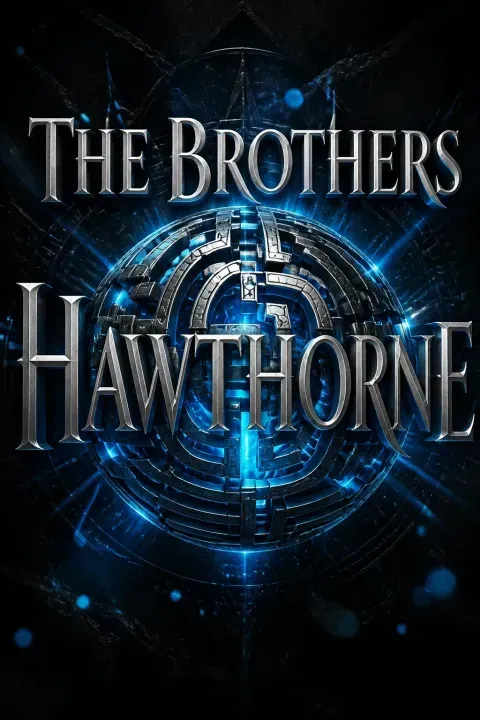


Plot Summary
Prologue
Twelve and a half years ago, on Christmas morning, four Hawthorne brothers discovered their grandfather had stripped the Great Room of presents and decorations. Following a trail of puzzle pieces hidden in ornaments across six trees, they assembled a map leading to the estate's southwest corner.
There, Tobias Hawthorne stood beside an elaborate multilevel tree house built into ancient oaks. The message was clear and already woven into their bones: nothing in Hawthorne House came without a game, and winning required seeing what others missed.
This prologue establishes the foundational dynamic of the Hawthorne brothers: they are forged in their grandfather's tests. The scavenger hunt replacing a traditional Christmas reveals that affection in this family is expressed through challenge, not comfort. The tree house becomes a symbol of childhood wonder inextricably bound to performance. The brothers operate as a unit but are already differentiated: Grayson's precision, Jameson's impulse to claim discovery, Xander's loophole logic, and Nash's steady facilitation. The memory functions as both origin story and emotional anchor, a reminder of when the game felt like magic before it became a measure of worth.
Nash Summons the Brothers
Jameson2 and Avery3 are at Iguazú Falls when Nash's13 nine-one-one text arrives, a family code that demands immediate return. Grayson,1 in London for the foundation, receives the same summons. All four brothers gather at the London flat where Nash13 presents two velvet ring boxes: one containing their grandmother's black opal ring passed down by Nan, and another empty box revealing he already proposed to Libby Grambs with his own ring.
Nash13 entrusts the heirloom to Grayson1 for safekeeping, asking him quietly, Why not you? The impromptu bachelor party that follows, complete with ice-climbing and a medieval crypt, masks deeper currents: Jameson's2 restlessness and hidden Prague secret, Grayson's1 persistent isolation.
This gathering functions as the narrative's emotional baseline, establishing the brothers' bonds before they fracture into separate quests. Nash's question to Grayson, 'Why not you?' is the novel's central psychological thesis: can Grayson accept that he deserves love and connection despite his self-perceived failures? The heirloom ring becomes a tangible symbol of inherited legacy and future possibility. Meanwhile, Jameson's evasion about Prague plants the first seed of the secret that will drive his arc, revealing how Hawthorne men use deflection to manage vulnerability.
Grayson's Phoenix Mission
A phone call alerts Grayson1 that Juliet 'Gigi4' Grayson, his biological father's younger twin daughter, has been detained after attempting to access a bank vault. Grayson1 flies to Phoenix, walks into the police station with Hawthorne authority, and extracts Gigi4 without charges being filed.
During the drive home, Gigi4 reveals she found a safe-deposit box key hidden in her father's computer and believes Sheffield Grayson left clues about his disappearance. She wears the key on a chain around her neck. Grayson,1 knowing his father died attacking Avery,3 faces an impossible conflict: he must prevent Gigi4 from uncovering evidence that could implicate Avery3 in Sheffield Grayson's death.
Grayson's introduction to Gigi reveals his core operating system: protect at all costs, even through deception. His instinct to shield Avery collides with his unacknowledged longing for family connection. Gigi represents an alternate version of Hawthorne childhood, one where affection is expressed openly rather than through tests. Her immediate trust in a stranger highlights her vulnerability and Grayson's burden: to betray her trust while protecting her from truth. The key she wears becomes a chain around Grayson's conscience.
The Devil's Mercy Beckons
A calling card arrives at the London flat from Ian Johnstone-Jameson,6 Jameson's2 biological father. Jameson2 visits Ian's6 opulent flat and learns Ian6 is a professional poker player, the black-sheep third son of an earl, who lost his mother's ancestral Scottish estate, Vantage, gambling at a secret, centuries-old club called the Devil's Mercy.
Ian6 cannot enter the club himself, having been banned, but he needs a player to win back Vantage at an annual high-stakes game. Jameson,2 restless and haunted by Prague, agrees despite recognizing Ian's6 manipulation. He brings Avery3 into the scheme, and they begin making noise among London's elite to attract the Proprietor's attention.
Ian mirrors Jameson's own hunger: both are third sons driven to prove themselves through risk. Jameson's agreement reveals how deeply his grandfather's conditioning still operates; he cannot resist an impossible challenge because winning has been equated with worth. Ian's offer of inheritance taps into Jameson's unhealed wound: the desire to be chosen. But Jameson's insistence on including Avery also shows growth; he now understands that isolation is not strength. The Devil's Mercy becomes a dark mirror of Hawthorne House, another patriarch's domain where secrets are currency and games determine fate.
The Hawthorne Heiress Bait
At Royal Ascot, dressed in formal morning attire, Jameson2 and Avery3 drop the name Devil's Mercy deliberately, claiming it as a horse they backed. Their performance attracts the club's attention. After midnight, outside the afterparty, Jameson2 encounters a chameleon-like young man, Rohan,9 who reveals himself as the Factotum, second-in-command of the Devil's Mercy.
He offers Avery3 temporary membership for two hundred thousand pounds lost at the tables, and when she insists Jameson2 be included, the price doubles. The true agenda: the Factotum9 wants Avery3 as bait to attract a new permanent member. They agree to one week's access.
This section establishes the stakes and structure of Jameson's game. The Factotum's multiple personas, waiter, fighter, charmer, embody the Mercy's ethos of performance and hidden truth. Avery's negotiation for Jameson's inclusion demonstrates their partnership as operational unit, but also creates the liability that will later endanger them: her presence means his secret could be exposed to her. The price structure, losing money to gain access, inverts normal gambling logic, signaling that the Mercy's currency is not cash but control.
Savannah Knows Everything
At the Grayson mansion, Grayson1 meets Savannah,5 Gigi's4 fraternal twin. Unlike Gigi,4 Savannah5 is cold, controlled, and immediately hostile. She reveals she has known Grayson's1 identity for years, since she was fourteen, when their father made her keep the secret. Savannah5 orders Grayson1 to leave, but their mother Acacia10 intervenes.
Acacia10 confesses she only learned about Grayson1 twenty-two months ago, on the day of her own mother's funeral. She welcomes him, but the warmth is complicated: she cannot regret her daughters enough to wish for a different life. Grayson1 realizes Savannah's5 ice is armor forged in paternal disappointment.
Savannah's recognition is a devastating mirror for Grayson. She has his eyes, his control, his desperate performance of perfection, all learned from the same father who demanded it. Her hostility masks the same wound Grayson carries: the knowledge that nothing she did was ever enough. Acacia's maternal welcome introduces an alien emotional landscape for Grayson, one where love is not conditional on achievement. The revelation that Sheffield Grayson forced a fourteen-year-old to keep his secret paints the man's cruelty in sharp relief and deepens the tragedy of the twins' loyalty to a father who used them.
Underground and Under Pressure
At the opera, Jameson2 and Avery3 use a gold key to access a hidden elevator descending to an underground canal. A child boats them through torchlit tunnels to a domed atrium where Rohan,9 now revealed as the Factotum, guides them through five archways themed to deadly sins: Sloth, Gluttony, Lust, Wrath, and finally Greed, housing the gaming tables.
Jameson2 plays piquet and vingt-et-un, winning, but the real prize is attention. When the Proprietor, an elderly man with a platinum cane, descends the grand staircase with Avery3 on his arm, every member bows their head to the table. Jameson2 alone stands and winks at the master of the Mercy.
The underground architecture literalizes the psychological descent into Jameson's addiction to risk and validation. Each sin-themed room maps a different flavor of excess, but Jameson navigates them with the trained focus of a Hawthorne heir. His wink at the Proprietor is pure calculated rebellion: he understands that deference would make him invisible, but defiance makes him memorable. The Proprietor's physical frailty, hidden by the cane, foreshadows the power vacuum that drives the Game's urgency and connects to Jameson's instinctual reading of mortality in powerful old men.
A Party for Sneaking
Gigi4 convinces Savannah's5 boyfriend Duncan to host a party at his father Kent Trowbridge's15 house, creating cover for her and Grayson1 to search the lawyer's office. Grayson1 cracks the desk lock to find Kent's15 password list, photographs it, and discovers a wall safe behind a hinged bookshelf. Before he can crack the safe, Savannah5 and Duncan enter the room.
Grayson1 and Gigi4 hide behind the desk and witness Duncan pressuring Savannah5 physically, ignoring her clear discomfort. Gigi4 interrupts by claiming Grayson1 is her boyfriend, then Grayson1 threatens Duncan. The confrontation reveals Savannah5 trapped in a relationship that mirrors her parents' marriage: performance over genuine connection.
The office break-in layers multiple betrayals: Grayson deceives Gigi about the safe, watches Savannah's violation while unable to intervene, and faces the ugly echo of his father's treatment of women in Duncan's behavior. Gigi's quick thinking with the boyfriend lie demonstrates her loyalty but also her blindness to Grayson's deception. The passwords and safe represent Trowbridge's hidden corruption, but the scene's emotional core is Grayson's rage at his helplessness, a fury that will eventually drive him to protect his sisters by destroying their trust in him.
Enter the Johnstone-Jameson Clan
Jameson2 encounters a red-haired man radiating power at the Mercy, later identified as Simon Johnstone-Jameson, Viscount Branford,7 Ian's6 eldest brother and Jameson's2 uncle. At a whist table, Branford7 dismisses Jameson2 as a boy and beats him. Zella,8 a sharp and elegant duchess, partners Jameson2 and afterward reveals Branford's7 identity.
Later, the Proprietor summons Jameson,2 Branford,7 Zella,8 and Avery3 to his office. He assures Zella8 and Avery3 their places in the year's Game, then demands additional levies from the men. Branford7 offers another secret. Jameson,2 asked to pay with a secret of his own, writes four words on a scroll under the Proprietor's cold gaze.
Branford embodies the institutional power that Hawthornes lack in Britain: inherited title, unearned deference, the weight of centuries. His dismissal of Jameson is both class contempt and perhaps something more personal, the nephew he never knew existed. The whist game becomes a microcosm: Jameson loses not through lack of skill but lack of position. The Proprietor's demand for secrets as currency reveals the Mercy's true economy: control through blackmail. Jameson's decision to write his secret marks the point of no return; he has wagered what cannot be replaced, his trust with Avery.
The Safe-Deposit Box Opens
After Grayson1 swaps Gigi's4 key for a non-functioning decoy, Savannah5 produces a second key she found with their father's fake ID. At the bank, Acacia10 uses it to open the box. Inside, they find dozens of photographs of Grayson1 at every age, from newborn to gap year, a catalogue of surveillance his father maintained their entire lives.
Gigi4 realizes Grayson1 is her half-brother and that everyone else knew. She flees, devastated by the lies. Grayson1 takes the box's remaining contents: withdrawal slips marked with the initials KM, deposits made to Sheffield Grayson's estranged sister Kimberly Wright,16 Colin's grieving mother.
The photographs are the novel's most devastating reveal, simultaneously proving Sheffield Grayson's obsession and his profound failure. He watched his son but never claimed him. For Gigi, the discovery shatters her foundational narrative: her father's love was always conditional, and her resemblance to dead Colin was both blessing and curse. Grayson's strategic sabotage of the key becomes irrelevant in the face of Savannah's competence, a miscalculation that costs him both sisters' trust. The withdrawal slips redirect the investigation toward Colin's family and away from Avery, but at the price of deepening Grayson's entanglement with a family he cannot claim.
Knockout Powder and Sunrise
Jameson's2 secret passes muster, but when he opens his Game invitation, powder explodes in his face. He awakens on a cold stone floor in Vantage, the very estate he's playing to win, with Avery,3 Branford,7 Zella,8 and Katharine Payne, an MP working for Jameson's2 other uncle Bowen.
Rohan,9 running the Game as a test for his eventual inheritance of the Mercy, announces rules: three keys hidden on the estate, three boxes to open, two containing players' secrets, one holding the prize. No violence permitted. Twenty-four hours to play. The Game will start when the bells ring.
The knockout powder is a baptism into the Game's brutality: even entry requires surrender of consciousness and control. Vantage as the playing field layers personal stakes onto strategic ones; every room holds Ian's childhood ghosts and the shadow of the grandmother Jameson never knew. Rohan's role as Game-runner positions him as both antagonist and fellow heir-in-waiting, his test mirroring Jameson's own. The five-player structure deliberately puts Jameson at the intersection of his father's family drama, with Branford representing honor and Katharine representing Bowen's ruthless machinations.
Smugglers' Caves and Bells
Jameson2 finds a children's book Rohan9 left behind, The Smugglers' Caves, with a pressed poppy inside and the inscription 'Ladies first.' He and Avery3 race to ocean-side cliffs where poppies mark a hidden staircase to the beach. There, a statue of a lady points to sea. They turn the statue through positions, each triggering different numbers of bells, until a single chime points them to the correct cave.
But Branford,7 who grew up at Vantage, beats them to the first key. Jameson2 recovers, returns to the starting room, and decodes a second clue from logs spelling 'WATCH YOURSELF' and a hidden compartment under the table revealed by turning wheels. This yields a second key.
The puzzle design mirrors Tobias Hawthorne's methodology: layered clues requiring pattern recognition and multiple interpretations. 'Ladies first' ties to the statue's female form and the number one, rewarding creative reading. Branford's childhood knowledge becomes an unfair advantage that Jameson cannot match, forcing him to rely on what Hawthornes do best: see what others miss. The second key's discovery through combined clues, the anagram, the ceiling X, the wheel mechanism, demonstrates Jameson and Avery's synergistic intelligence. Their partnership is the novel's argument that love and competition are not opposed; challenge can be a form of intimacy.
Colin's Room and Colin's Box
Savannah,5 now allied with Grayson1 for pragmatic reasons, decodes the KM withdrawal slips as Kimberly Wright,16 their aunt and Colin's mother. The three siblings visit her modest home where Kim16 reveals Sheffield Grayson, whom she calls Shep, raised Colin from childhood after their mother died.
He used to sit in Colin's preserved room during visits, guarding a wooden puzzle box he kept hidden in the closet. Grayson1 retrieves the box. After forty minutes of systematic attempts, he and his sisters solve its combination, and Grayson1 retrieves his father's coded journal.
Returning to his hotel, he uses a cipher wheel hidden in the box to decode it, discovering Sheffield Grayson's confession: embezzlement records, rage at Hawthornes, and his final, possessive recognition of Grayson1 as his son after seeing the televised kiss with Avery.3
Kim's house is a shrine to arrested grief, Colin's room preserved like a museum. The puzzle box represents Sheffield Grayson's paranoid control, his secrets locked inside a game only a Hawthorne could solve. The journal's content is the novel's darkest revelation: Sheffield Grayson's obsession with the Hawthornes predated Grayson's birth, and his hatred was always the engine of his ambition. Yet the journal also contains the only acknowledgment of Grayson as 'my son,' a toxic, possessive claim triggered by seeing Grayson kiss the girl Sheffield believed was Tobias Hawthorne's true heir. The cipher wheel hidden in the box, like the index card in the computer, shows Sheffield Grayson's mind worked in Hawthorne patterns, a bitter inheritance.
The Bell Tower Gamble
Avery3 is disqualified after burning Jameson's2 secret scroll to prevent Zella8 from reading it aloud. Rohan9 re-hides the final key, warning players to conquer their fear of heights. Jameson2 finds it in the bell tower, suspended inside a massive bell with a dozen decoys. He climbs inside the bell, wrestling for the key against Zella,8 who leaps onto the bell's rim from a trapdoor above.
When she overbalances and threatens to fall seventy feet, Zella8 presents Jameson2 with a brutal ultimatum: let go of the key and save her, or win. Jameson2 releases the key, grabs her hand, and saves her life. In gratitude, she tosses the key to Katharine, fulfilling her deal with Bowen, and tells Jameson2 she owes him.
The bell tower sequence crystallizes Jameson's character arc. When forced to choose between winning and a human life, he does not call Zella's bluff; he chooses the life. Branford later names this choice honor. This is the moment Jameson transcends his grandfather's conditioning, which equated worth with victory. He still wins the Game, but only because he let go of the need to win first. The secret scroll's destruction by Avery, without reading it, represents trust's ultimate expression: she protects him from his own dangerous knowledge, asking nothing in return. Their relationship has matured beyond challenge into mutual protection.
Silence Wins the Game
Katharine unlocks the third chest with the key Zella8 surrendered, finding a silver ballerina on a silent music box pedestal. She declares it a figurine, but Rohan9 says that's wrong. Jameson2 realizes the prize is silence itself, more valuable than secrets because it represents the power to keep them.
He states his answer and wins the mark, then immediately trades it to claim Vantage as his prize. Branford,7 rather than resenting the loss of his mother's ancestral home, acknowledges Jameson2 as family and offers to continue administering the estate's trust. Jameson2 looks out over the sea from his castle, belonging somewhere for the first time.
The answer 'silence' is thematically perfect: in a club built on blackmail, the ability to withhold secrets represents ultimate power. Jameson's victory comes not through force but through perception, the skill his grandfather told him to cultivate over raw intelligence. Choosing Vantage over the leverage of a forfeited secret represents a rejection of the Mercy's currency in favor of legacy and belonging. Branford's acceptance offers Jameson something his grandfather never did: unconditional acknowledgment without test or condition. This alternate model of family, honor over power, reframes Jameson's understanding of what it means to be extraordinary.
Gigi's Second Betrayal
Grayson1 lets his guard down, allowing Gigi4 to use his phone. She discovers the original photograph of Trowbridge's15 passwords differs from the altered version he sent her, proving he sabotaged her search from the beginning. She confronts him with the non-functional key swap, the pre-opened puzzle box, and the journal he clearly already accessed and possibly replaced.
Grayson1 cannot explain because the truth would endanger Avery.3 Gigi,4 devastated, tells him to stay away from her and Savannah.5 She leaves with the duplicate journal, and Grayson,1 alone in his hotel room, packs to return to Texas, believing he has lost both sisters permanently.
This scene is Grayson's emotional nadir, and it's entirely self-inflicted. His own carelessness, the photo left accessible, the phone left unlocked, the growing affection that made him sloppy, undoes all his careful manipulation. Gigi's speech is devastating because she names his pattern: he warned her not to trust him, then made her trust him, then proved her trust was misplaced. Her pain is not just about the lies but about the relationship the lies poisoned. Grayson's silence, his inability to explain, is the curse of his position: to protect Avery, he must become the cold manipulator his father was, destroying the family he just found.
The FBI Raids at Dawn
Returning to the Grayson house after visiting Kim,16 the siblings find FBI vehicles lining the driveway, agents executing a search warrant. Grayson1 coaches Savannah5 and Gigi4 through the encounter, advising non-cooperation. He learns from Acacia10 that Kent Trowbridge15 offered to come 'as a friend' but not as a lawyer, and that she cannot afford legal counsel.
Grayson1 calls Alisa Ortega to represent Acacia10 pro bono. He suspects Eve11 tipped off the FBI, but Avery3 later tells him Toby confirmed Eve11 only conducted surveillance, nothing more. The raid's timing, eighteen months after Sheffield Grayson's disappearance, suggests someone else pulled strings: Kent Trowbridge15 himself.
The FBI raid represents the external pressure that will force Grayson to consolidate his loyalties. His instinct to protect the Grayson women, Acacia's hand squeezing his, Savannah's reluctant alliance, all signal that he has already chosen this family. Alisa's involvement brings Hawthorne resources to bear against Trowbridge's machinations. The misattribution of blame to Eve, later corrected, demonstrates Grayson's tendency to assume betrayal from those who've hurt him before, a defensive pattern that blinds him to more proximate threats. Trowbridge's scheme, creating a crisis only he can solve, is classic predator behavior that Grayson recognizes too late.
All Four Brothers Descend
Grayson1 calls a nine-one-one, and his brothers converge. On the flight to Phoenix, Grayson1 lays out the case: Trowbridge,15 trustee of the twins' trusts, likely emptied Acacia's10 accounts to make her dependent, then orchestrated the FBI raid to increase pressure. The trusts release at age thirty or upon marriage, and Trowbridge's15 son Duncan is dating Savannah.5
Working together, the brothers uncover Trowbridge's15 financial crimes. Grayson1 confronts Trowbridge15 at his racquetball court, revealing he knows about the Singapore account and the safe combination. He implies the FBI is closing in. Trowbridge's15 bluster collapses. Acacia's10 money is restored, and the investigation diverts toward the lawyer.
This sequence fulfills the novel's thesis about brotherhood: together, the four Hawthornes are exponentially more powerful than alone. Their methods, hacking, intimidation, forensic accounting, and psychological warfare, are distributed across their distinct skill sets. Grayson's confrontation with Trowbridge echoes his grandfather's intimidation tactics but serves a protective rather than controlling purpose. The restoration of Acacia's money is both practical rescue and symbolic reparation: Grayson cannot undo his father's betrayals, but he can undo Trowbridge's opportunistic predation. The scene also establishes the pattern that will define Grayson's future: using Hawthorne power to protect, not to dominate.
Gigi Returns to Hawthorne House
Gigi4 appears at Hawthorne House's gates in the middle of the night. She confronts Grayson1 about restoring her mother's money, furious that he did something wonderful while she's trying to stay angry. He tells her the truth: their father was behind the bombing of Avery's3 plane, his revenge for Colin's death. Gigi4 absorbs this, then makes a decision.
She will protect Savannah5 from ever knowing their father was a murderer. She'll tell Savannah5 the box contained evidence of embezzlement, nothing more. She asks Grayson1 to remain her brother, with one condition: an open mind about any 'mysterious, nefarious types' she might date, a pointed reference to Mattias Slater.12 Grayson,1 for the first time, admits he likes his little sister.
Gigi's forgiveness is not naive; it's a deliberate, informed choice built on her understanding that Grayson's betrayal was protective, not malicious. Her decision to shield Savannah from the truth about their father's violence mirrors Grayson's earlier protection of Avery, creating a secret they now share rather than one that divides them. This complicity, ethically murky but emotionally coherent, binds them as siblings who understand that family sometimes requires strategic omissions. Gigi's cheerful reference to Slater is both a joke and a warning: she will make her own choices about dangerous men, and Grayson will have to trust her judgment.
Jameson Tells Avery Everything
With the tree house restored, Jameson2 and Avery3 sit in one of the towers. He speaks of Prague: the night he came home smelling of fire and ash with a cut at his collarbone. Instead of continuing to evade, he pulls out a Scrabble board and spells four words that have haunted him since he learned them. Alice Hawthorne is alive.
The grandmother whose death defined Tobias Hawthorne's philosophy of love, the woman Jameson's2 brothers never met, the ghost who shaped the old man's warnings about once-in-a-lifetime, all-consuming devotion. She faked her death, and Jameson2 has carried this explosive secret alone, afraid of what pursuing it might cost.
The Scrabble board revelation is masterful in its restraint. Jameson doesn't speak the words; he spells them, turning his explosive secret into a puzzle for Avery to solve. This method honors their relationship's foundation in games while demonstrating his growth: he trusts her to know, and he trusts himself not to act recklessly on the knowledge. Alice Hawthorne's survival recontextualizes every lesson Tobias Hawthorne ever taught his grandsons about love and loyalty. If the old man's great love story was a lie, then what other foundational truths are suspect? The secret also positions the next book's arc: finding Alice will be Jameson and Avery's next impossible challenge.
The Grandest Game Begins
Avery3 appears on television announcing the Grandest Game, an annual puzzle competition with life-changing prize money, open to anyone, designed by her and Jameson.2 Months later, Vincent Blake dies of a second heart attack, and Eve11 watches Avery's3 interview alone in the Blake mansion.
Fury and loneliness drive her decision: she orders Slate12 to arrange a meeting with Savannah Grayson.5 Eve11 intends to tell Savannah5 the truth about her father's disappearance, weaponizing the secret Grayson1 and Gigi4 protected. Her game is revenge, and her first move targets Grayson's1 most vulnerable point: the sister who most resembles him and least deserves the blow.
The epilogue positions Eve as the series' next antagonist, but with psychological depth that transcends villainy. Her loneliness after Blake's death mirrors Grayson's earlier isolation; she is also a child of a terrible father, also desperate for belonging, also lashing out. Her choice to target Savannah rather than Gigi or Avery is precisely calculated: Savannah's identification with their father, her need to believe in him, makes her the most vulnerable to Eve's revelation. The Grandest Game announcement creates the structural promise of future competition while the threat to Savannah ensures the emotional stakes will remain personal and familial.
Epilogue
In the months following Vincent Blake's death from a second heart attack, Eve11 watches Avery's3 television interview announcing the Grandest Game, an annual puzzle competition open to anyone with a substantial cash prize.
Alone in the Blake mansion, Eve11 seethes at Avery's3 charmed life and the Hawthornes who abandoned her. She orders her loyal guard Slate12 to arrange a meeting with Savannah Grayson,5 intending to reveal the truth about Sheffield Grayson's death. Eve11 positions herself as Avery's3 rival, ready to play a much darker game.
Eve's decision to target Savannah weaponizes truth as a tool of destruction, mirroring the Proprietor's use of secrets as leverage but with personal rather than institutional motivation. Her isolation after Blake's death, the television broadcasting Avery's happiness, the Hawthornes' rejection, catalyze into a calculated act of revenge that serves her emotional need for agency as much as any strategic goal. Savannah becomes a pawn because she represents what Eve herself lacks: sisters who protect her, a family that claims her. The epilogue promises that the next game will be fought not with puzzles but with secrets wielded as weapons, and Eve intends to win.
Analysis
The Brothers Hawthorne operates as a bifocal narrative: two brothers, two quests, one thesis about the nature of family and worth. Grayson's1 plotline interrogates whether a person can be loved despite their failures. Raised as the designated heir, told that mistakes were unacceptable, Grayson1 has constructed an identity around control and protection that isolates him from the very connections he craves. His arc with the Grayson sisters forces him to confront the lie at his core: that he must be perfect to be loved. Gigi's4 forgiveness, given after she knows the full scope of his betrayal, becomes the novel's answer to that lie. She chooses him not because he earned it but because she wants a brother, and the wanting is enough.
Jameson's2 plotline asks a complementary question: can a person be extraordinary without winning? His grandfather's voice, telling him his mind was ordinary, has driven him to chase impossible challenges as proof of his worth. The Devil's Mercy Game offers the ultimate validation: entry into an exclusive world, victory over powerful rivals, recognition from a patriarchal figure. But Jameson's2 turning point comes when he releases the key to save Zella's8 life. Branford7 names this action honor, a value Jameson's2 grandfather never taught. Jameson2 wins the Game anyway, but the victory matters less than the choice that preceded it.
The novel's structural genius is its use of games as emotional architecture. The original Christmas tree house treasure hunt, recalled in flashbacks, established that Hawthornes express love through challenge. The Devil's Mercy inverts this: its games express power through secrets and control. Jameson's2 choice of Vantage over a forfeited secret rejects the Mercy's currency in favor of legacy. Grayson's1 decoding of his father's journal, using a cipher wheel hidden in a puzzle box, represents a darker inheritance: the realization that Sheffield Grayson's mind worked in Hawthorne patterns, his obsession and his codes mirroring the family he hated.
Both brothers end the novel having chosen family over isolation. Grayson1 stays to protect his sisters, even when they don't know he's doing it. Jameson2 claims Vantage and accepts Branford's7 acknowledgment, building a connection to his paternal lineage that doesn't require his father's presence. The Scrabble board revelation, Alice Hawthorne is alive, and the epilogue featuring Eve's11 vengeful scheme ensure that resolution is temporary. Family secrets persist, and the next game will be fought not with puzzles but with the truths that can destroy.
Review Summary
The Brothers Hawthorne received mixed reviews, with an average rating of 3.92/5. Some readers found it disappointing, citing slow pacing and underdeveloped character dynamics. Others enjoyed the plot twists and character development, particularly Grayson's story. Many fans expressed excitement for more content featuring the Hawthorne brothers, especially Grayson. The book explores separate storylines for Jameson and Grayson, with readers divided on which was more engaging. Despite criticisms, many readers remain invested in the series and look forward to future installments.
People Also Read





Characters
Grayson Hawthorne
Heir forged in controlThe second Hawthorne brother, twenty years old, defines himself through discipline, protection, and an impossible standard of perfection inherited from his grandfather. Grayson processes emotion through physical exertion, swimming until his body fails. His biological father Sheffield Grayson despised him, and Grayson has internalized that rejection as proof of his own fundamental insufficiency. He is drawn to protect others, Avery3, his newly discovered half-sisters, but his methods always involve control and often deception. When he makes mistakes, he believes he loses people permanently because he has never been shown that love can survive failure. His arc moves from isolation toward accepting that he deserves family and connection, culminating in his admission to Gigi4 and his brothers that he is not okay.
Jameson Hawthorne
Risk-addicted puzzle solverThe third Hawthorne brother, nineteen, haunted by his grandfather's assessment that his mind is ordinary compared to his brothers'. Jameson compensates with relentless hunger: for challenge, risk, victory, and more. His biological father Ian6's appearance forces him to confront his mirrored need for paternal approval and his fear that he is fundamentally insufficient. Jameson's relationship with Avery3 has matured from thrilling chase into genuine partnership, but he still hides his deepest secret: the discovery in Prague that his grandmother Alice Hawthorne faked her death and is still alive. His arc through the Devil's Mercy Game teaches him that honor, specifically choosing another person's life over winning, constitutes a different kind of victory than his grandfather taught him to value.
Avery Grambs
Heiress, partner, shieldThe Hawthorne heiress, now nineteen, managing the impossible task of giving away twenty-eight billion dollars through a foundation. Avery is Jameson's2 equal in puzzle-solving and risk assessment, but brings emotional intelligence he lacks. She knows when to push for his secrets and when to protect him from his own impulses. Her disqualification from the Game after burning Jameson's2 secret scroll, without reading it, demonstrates her understanding that his trust matters more than her victory. She partners with Jameson2 to design the Grandest Game, channeling their shared love of challenge into something inclusive rather than exclusive.
Gigi Grayson
Chaotic good half-sisterJuliet 'Gigi' Grayson, seventeen, the younger twin by seven minutes, is defined by relentless optimism, caffeine-fueled impulsivity, and a deep need to believe in people. She looked like her dead cousin Colin, which earned her their father's affection but also trapped her in a role: the cheerful, unserious daughter who never pushed too hard. Her trust in Grayson1, even after discovering his identity and his initial lies, reveals her fundamental orientation toward hope. When she discovers his full betrayal, her devastation is proportional to her investment. Her eventual forgiveness is not naivete but a deliberate choice to have a brother, even one who lied to her.
Savannah Grayson
Ice-cold protector twinThe elder twin by seven minutes, seventeen, is Grayson's1 mirror in control, precision, and emotional armor. She has known about Grayson1 since age fourteen, when their father made her complicit in his secret. Savannah channels her need for paternal approval into basketball, but her father's diminishing pride, calling it 'girls' basketball,' taught her that nothing she achieved would be enough. She weaponizes silence and ice the way Grayson1 uses authority. Her relationship with Duncan Trowbridge is performative, a strategic alliance that leaves her vulnerable to coercion. Her arc moves toward alliance with Grayson1 and protected ignorance of their father's worst crimes.
Ian Johnstone-Jameson
Disposable father figureJameson's2 biological father, a professional poker player and third son of an earl. Ian embodies the charming manipulator who sees people as tools for his own ends. He offers Jameson2 the inheritance of Vantage as impulsive bait, only to discard the promise when a better deal presents itself. His betrayal teaches Jameson2 that his father's approval was never worth pursuing, liberating Jameson2 to define his own worth. Ian's laugh and eyes are mirrors Jameson2 would rather not recognize.
Simon, Viscount Branford
Unexpected honorable uncleIan's6 eldest brother, red-haired and severe, the heir to the earldom. Branford initially dismisses Jameson2 as Ian's6 rash son, but his assessment changes when he witnesses Jameson2 save Zella's8 life at the cost of winning. He carries his own secret, a son he cannot claim, and extends to Jameson2 the family recognition Ian6 never offered. His offer to administer Vantage's trust and his admission that he would have claimed Jameson2 as an infant represent an alternate model of paternal responsibility based on duty rather than transaction.
Zella, That Duchess
Glass-ceiling-shattering rivalA Black British duchess who broke into the Devil's Mercy and earned membership through audacity alone. Zella navigates spaces hostile to both her race and gender with strategic brilliance, forming alliances and leveraging information. She competes against Jameson2 in the Game but emerges as a rival who will become the next Proprietor's heir. Her debt to Jameson2 positions her as a powerful future ally. Her knowing commentary on privilege and winning adds political depth to the Game's stakes.
Rohan, the Factotum
Mercy's chameleon second-in-commandThe young second-in-command of the Devil's Mercy, a shapeshifter who moves between personas: charming waiter, brutal fighter, elegant emcee. Rohan was rescued as a child by the Mercy and raised within its walls, his loyalty absolute and his skills lethal. He runs the Game as his own test for eventual succession, his puzzles demonstrating both cruelty and intelligence. His relationship with Zella8 suggests unresolved history. He respects Jameson's2 refusal to stay down in the ring but has no mercy for those who break the club's rules.
Acacia Grayson
Mother choosing survivalSheffield Grayson's widow, a woman who married for love and discovered too late that her husband married for money. Acacia extends genuine maternal warmth to Grayson1, the result of her husband's betrayal, because she refuses to blame a child for parental sins. Her central truth is that she cannot regret her marriage because it gave her daughters. Financially devastated by both her husband's crimes and Trowbridge's15 predation, she fights to maintain dignity and independence despite limited options.
Eve Blake
Discarded granddaughter, rising threatToby Hawthorne's biological daughter, raised outside the Hawthorne family, now sole heir to Vincent Blake's criminal empire. Eve's relationship with Grayson1 was a calculated betrayal she has not emotionally resolved. Her appearance in Phoenix, claiming she only conducted surveillance on his sisters, reveals her continued entanglement with the family that rejected her. After Blake's death, her loneliness curdles into vengeful action. She identifies Savannah5 as Grayson's1 vulnerability and prepares to weaponize the truth about Sheffield Grayson's death.
Mattias 'Slate' Slater
Eve's lethal, loyal shadowA young man with dark eyes, scarred eyebrow, and neck tattoos who serves as Eve's11 sole loyal operative within Vincent Blake's organization. Slate's blank affect and lethal competence mask personal history: his father died in prison, his mother filed medical bankruptcy. His warning to Gigi4 about Grayson1 playing his own game and his evident concern for her safety suggest depths beneath his mercenary surface.
Nash Hawthorne
Steady oldest brotherThe eldest Hawthorne brother, now engaged to Libby Grambs. Nash functions as the family's emotional anchor, using his nine-one-one summons to force connection when his brothers drift. He gives Grayson1 their grandmother's ring and the question that haunts the book: Why not you?
Xander Hawthorne
Genius inventor, comic reliefThe youngest Hawthorne brother, whose brilliance is matched by his emotional intelligence. Xander uses humor, cookies, and absurdity to force Grayson1 out of his head. His relationship with his own father Isaiah, the only good one among the brothers' fathers, provides a counterpoint to Grayson1 and Jameson's2 paternal wounds.
Kent Trowbridge
Predatory family lawyerThe Grayson family's trustee and lawyer, who grew up alongside Acacia10 and has harbored possessive feelings for decades. He drained her trust, orchestrated the FBI raid, and manipulated circumstances to make her dependent on him, with the goal of marriage. His son Duncan mirrors his predatory behavior with Savannah5.
Kimberly Wright
Colin's grieving motherSheffield Grayson's estranged sister, a recovering addict who lost her son Colin to drugs after he was injured and pressured beyond endurance. Kim preserves Colin's room as a shrine and accepted her brother's small cash payments as both support and penance.
Plot Devices
The Devil's Mercy
Secret underground gambling clubA centuries-old establishment in London where Britain's most powerful men gamble, trade secrets, and submit to the rule of an anonymous Proprietor. Membership requires payment of a levy: a damning secret recorded in a ledger that ensures compliance through blackmail. The club is accessed through hidden entrances, including an elevator at the opera and underground canals navigated by torchlight. Five rooms themed to deadly sins offer different vices. Annually, the Proprietor hosts the Game, where players compete for prizes including forfeited secrets and assets the house has claimed.
The Game
Annual high-stakes puzzle competitionRun by the Devil's Mercy, the Game is an invitation-only competition where players solve riddles and find keys to unlock boxes. Two boxes contain players' secrets; the third holds the prize. This year's Game takes place at Vantage, with Rohan9 designing the puzzles as his test for succession. Rules prohibit violence and property damage. Players include Jameson2, Avery3, Branford7, Zella8, and Katharine. Jameson2 wins by interpreting the final box's silent music box, concluding that silence itself is the most valuable thing, more than secrets.
Sheffield Grayson's puzzle box
Multi-step security containerA wooden box hidden in Colin's preserved room at Kim Wright's16 house, secured by sliding panels, a magnetic tool, a seven-key combination mechanism, and a final lock requiring a specialized USB-like key. Inside, a coded journal documents Sheffield Grayson's embezzlement and his plot against Avery3, along with a cipher wheel used for decoding. The box's design, requiring Hawthorne-level puzzle-solving to open, suggests Sheffield Grayson anticipated his son might one day seek it.
The Cipher Wheel
Decoding tool for hidden journalTwo concentric wooden disks, the outer with letters A through Z plus common digraphs, the inner with numbers 1 through 32 in random order. The wheel is set to a different position for each journal entry, with the setting determined by the withdrawal amount on corresponding bank slips: 17, 6, 21, etc. The slips, dated and kept in the safe-deposit box, serve double duty as the key to decoding Sheffield Grayson's record of embezzlement and his confessions about his plot against the Hawthornes.
The Scrabble Board Reveal
Nonverbal confession of ultimate secretJameson2 uses a Scrabble board in the restored tree house to spell out the secret he has carried since Prague: 'Alice Hawthorne is alive.' The board transforms his explosive knowledge into a puzzle for Avery3 to decode, honoring their relationship's foundation in games while demonstrating his growth toward trust. The revelation recontextualizes Tobias Hawthorne's entire mythology of love and loss, suggesting the old man's foundational story was a lie.
FAQ
Synopsis & Basic Details
What is The Brothers Hawthorne about?
- Brothers face separate challenges: The story follows Grayson Hawthorne and Jameson Hawthorne as they navigate separate but equally high-stakes challenges. Grayson Hawthorne grapples with his family's secrets and his responsibility to protect his half-sisters, while Jameson Hawthorne is drawn into a dangerous game at a secretive gambling club.
- Legacy and identity explored: The novel explores themes of legacy, identity, and the burdens of family expectations, as the brothers confront their pasts and make choices that will shape their futures.
- High-stakes games and hidden agendas: The story is set against a backdrop of high-stakes games, hidden agendas, and complex relationships, as the characters navigate a world of wealth, power, and danger.
Why should I read The Brothers Hawthorne?
- Intricate plot and mysteries: The book offers a complex and engaging plot with multiple mysteries to unravel, keeping readers guessing until the very end.
- Compelling characters and relationships: The characters are well-developed and relatable, with complex motivations and evolving relationships that add depth to the story.
- Themes of family and identity: The novel explores universal themes of family, identity, and the struggle to find one's place in the world, making it a thought-provoking and emotionally resonant read.
What is the background of The Brothers Hawthorne?
- Wealth and privilege: The story is set in a world of immense wealth and privilege, where the Hawthorne family's legacy and fortune play a central role in the characters' lives.
- Secret societies and high-stakes games: The novel incorporates elements of secret societies and high-stakes games, creating a world of intrigue and danger.
- Family secrets and betrayals: The story is driven by family secrets, betrayals, and hidden agendas, as the characters grapple with the consequences of their pasts and the choices they must make to protect their futures.
What are the most memorable quotes in The Brothers Hawthorne?
- "Nothing matters unless you let it.": This quote, repeated by Jameson Hawthorne, highlights his philosophy of detachment and control, but also hints at his vulnerability and the things he truly cares about.
- "When words are real enough, when they're the exact right words, when what you're saying matters, when it's beautiful and perfect and true—it hurts.": This quote, spoken by Grayson Hawthorne, reveals his deep-seated belief in the power of language and the emotional impact of truth.
- "Where angels fear to tread, have your fun instead.": This quote, spoken by Rohan (The Factotum), encapsulates the dangerous and alluring nature of the Devil's Mercy, inviting the characters to embrace risk and challenge.
What writing style, narrative choices, and literary techniques does Jennifer Lynn Barnes use?
- Alternating perspectives: The narrative alternates between the perspectives of Grayson Hawthorne and Jameson Hawthorne, providing insight into their individual struggles and motivations.
- Fast-paced and suspenseful: The writing style is fast-paced and suspenseful, with cliffhangers and plot twists that keep readers engaged and eager to turn the page.
- Intricate plotting and foreshadowing: Barnes employs intricate plotting and subtle foreshadowing, weaving together multiple storylines and leaving clues for readers to discover.
Hidden Details & Subtle Connections
What are some minor details that add significant meaning?
- The key on a flashlight keychain: The key found inside the Christmas ornament is attached to a flashlight keychain, foreshadowing the importance of light and revelation in the story. It also hints at the idea of keys and locks, both literal and metaphorical.
- The black opal ring: The black opal ring, a family heirloom, symbolizes the weight of the Hawthorne legacy and the complex relationships between the brothers. It also foreshadows the importance of family and connection.
- The use of the word "mosey": Juliet "Gigi" Grayson's use of the word "mosey" to describe her actions at the bank is a subtle hint at her playful nature and her tendency to bend the rules. It also foreshadows her ability to get away with things.
What are some subtle foreshadowing and callbacks?
- The mention of Prague: The mysterious event in Prague that haunts Jameson Hawthorne is a subtle foreshadowing of the secrets and dangers that he will encounter later in the story. It also hints at a deeper connection to his past.
- The old man's lessons: The old man's lessons, often mentioned in the context of the brothers' childhood, foreshadow the challenges they will face in the present and the skills they will need to overcome them.
- The use of the phrase "nothing matters unless you let it": This phrase, repeated by Jameson Hawthorne, serves as a callback to his earlier attempts to detach himself from his emotions, but also foreshadows his eventual acceptance of his feelings.
What are some unexpected character connections?
- Grayson Hawthorne and his half-sisters: The connection between Grayson Hawthorne and his half-sisters, Juliet "Gigi" Grayson and Savannah Grayson, is unexpected, as they are initially wary of him. However, their shared history and the secrets surrounding their father draw them together.
- Jameson Hawthorne and Ian Johnstone-Jameson: The revelation that Ian Johnstone-Jameson is Jameson Hawthorne's father is unexpected, as Jameson Hawthorne had previously expressed a desire to avoid meeting his father. This connection sets the stage for a complex and fraught relationship.
- Zella (The Duchess) and Rohan (The Factotum): The subtle hints at a shared history between Zella (The Duchess) and Rohan (The Factotum) are unexpected, as they are presented as adversaries. This connection adds another layer of intrigue to the story.
Who are the most significant supporting characters?
- Zella (The Duchess): Zella (The Duchess) is a complex and enigmatic character who serves as both an ally and a rival to Jameson Hawthorne and Avery Grambs. Her knowledge of the Devil's Mercy and her own hidden agenda make her a significant player in the story.
- Rohan (The Factotum): Rohan (The Factotum) is a powerful and mysterious figure who serves as the enforcer of the Devil's Mercy. His interactions with Jameson Hawthorne are both challenging and intriguing, and his own motivations remain unclear.
- Juliet "Gigi" Grayson and Savannah Grayson: Grayson Hawthorne's half-sisters, Juliet "Gigi" Grayson and Savannah Grayson, are significant supporting characters who challenge his sense of control and force him to confront his past. Their individual personalities and their complex relationship with their father add depth to the story.
Psychological, Emotional, & Relational Analysis
What are some unspoken motivations of the characters?
- Grayson Hawthorne's need for control: Grayson Hawthorne's need for control stems from a deep-seated fear of failure and a desire to live up to the expectations placed upon him by his grandfather. He also feels a strong sense of responsibility to protect those he cares about.
- Jameson Hawthorne's yearning for purpose: Jameson Hawthorne's reckless behavior and thrill-seeking are driven by a yearning for purpose and a desire to escape the confines of his privileged life. He also seeks a connection with his father, despite knowing that he is being used.
- Avery Grambs's desire for control: Avery Grambs's desire to control her own narrative and her own life is a driving force behind her actions. She is determined to use her newfound power for good, but she also struggles with the weight of her responsibilities.
What psychological complexities do the characters exhibit?
- Grayson Hawthorne's internal conflict: Grayson Hawthorne exhibits a complex internal conflict between his desire for control and his growing awareness of his own emotions. He struggles to reconcile his need for perfection with his desire for connection.
- Jameson Hawthorne's self-destructive tendencies: Jameson Hawthorne exhibits self-destructive tendencies, driven by a need for excitement and a fear of vulnerability. He struggles to balance his desire for freedom with his need for connection.
- Avery Grambs's survivor's guilt: Avery Grambs grapples with survivor's guilt, feeling responsible for the events that led to her inheritance. She struggles to balance her desire to do good with her own need for self-preservation.
What are the major emotional turning points?
- Grayson Hawthorne's encounter with his sisters: Grayson Hawthorne's encounter with his half-sisters, Juliet "Gigi" Grayson and Savannah Grayson, forces him to confront his past and his feelings of responsibility. This encounter marks a turning point in his character arc, as he begins to let go of his need for control.
- Jameson Hawthorne's meeting with his father: Jameson Hawthorne's meeting with Ian Johnstone-Jameson forces him to confront his own identity and his desire for connection. This encounter marks a turning point in his character arc, as he begins to question his own motivations.
- Avery Grambs's decision to burn the scroll: Avery Grambs's decision to burn the scroll containing Jameson Hawthorne's secret is a major emotional turning point, as it demonstrates her loyalty and her willingness to protect him, even at her own risk.
How do relationship dynamics evolve?
- Grayson Hawthorne and his sisters: Grayson Hawthorne's relationship with his half-sisters, Juliet "Gigi" Grayson and Savannah Grayson, evolves from one of suspicion and distance to one of understanding and connection. He learns to let go of his need for control and embrace his role as their protector.
- Jameson Hawthorne and Avery Grambs: Jameson Hawthorne and Avery Grambs's relationship evolves from one of passion and intrigue to one of deep trust and understanding. They learn to rely on each other and to support each other's individual journeys.
- The Hawthorne brothers: The Hawthorne brothers' relationship is tested by the challenges they face, but their bond remains strong. They learn to rely on each other and to support each other's individual journeys.
Interpretation & Debate
Which parts of the story remain ambiguous or open-ended?
- The Proprietor's motivations: The Proprietor's true motivations for creating The Game and his ultimate goals for the Devil's Mercy remain ambiguous, leaving readers to speculate about his true intentions.
- The nature of the secrets: The nature of the secrets that are revealed in the story is left somewhat open-ended, allowing readers to interpret their significance and impact on the characters.
- The future of the Hawthorne family: The future of the Hawthorne family is left open-ended, with the characters facing new challenges and opportunities that will shape their legacy.
What are some debatable, controversial scenes or moments in The Brothers Hawthorne?
- Jameson Hawthorne's decision to risk his secret: Jameson Hawthorne's decision to risk his secret to gain entry to The Game is a controversial moment, as it highlights his recklessness and his willingness to put himself in danger.
- Grayson Hawthorne's actions toward his sisters: Grayson Hawthorne's actions toward his half-sisters, Juliet "Gigi" Grayson and Savannah Grayson, are debatable, as he is forced to make difficult choices that may ultimately hurt them.
- The nature of The Proprietor's power: The extent of The Proprietor's power and influence over the members of the Devil's Mercy is a controversial topic, as it raises questions about the nature of control and manipulation.
The Brothers Hawthorne Ending Explained: How It Ends & What It Means
- Jameson Hawthorne wins The Game: Jameson Hawthorne wins The Game by identifying the silence within the music box, demonstrating his ability to see beyond the obvious and to find meaning in the unexpected.
- Jameson Hawthorne claims Vantage: Jameson Hawthorne chooses to claim Vantage, his father's ancestral home, as his prize, signaling his acceptance of his family legacy and his desire to forge his own path.
- A new game begins: The ending hints at a new game, designed by Jameson Hawthorne and Avery Grambs, that will be open to all, suggesting a shift in power dynamics and a move towards a more inclusive future.
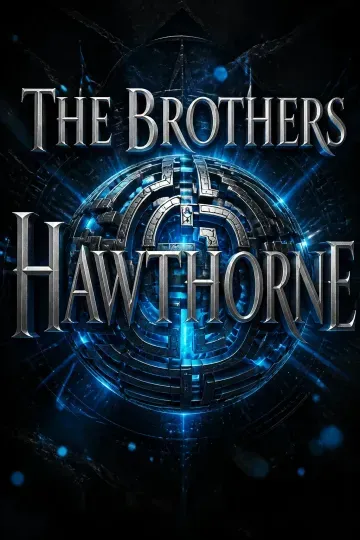
The Inheritance Games Series

About the Author
Other books by Jennifer Lynn Barnes


Download PDF
Download EPUB
.epub digital book format is ideal for reading ebooks on phones, tablets, and e-readers.








































