


Plot Summary
Prologue
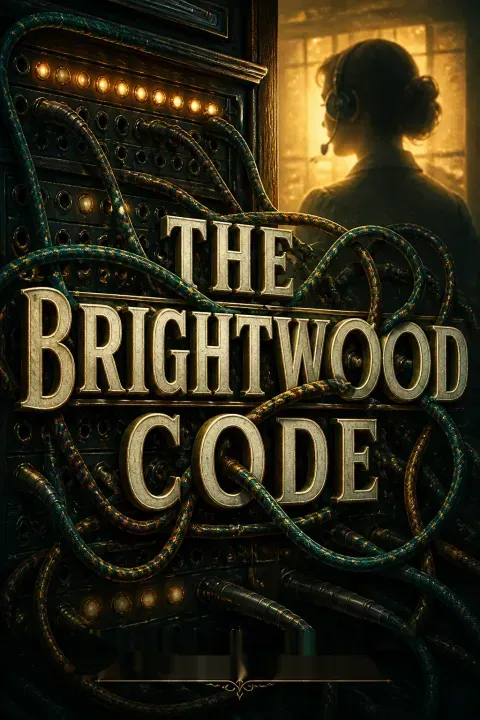
The codes changed every day. That was the entire point: two pages of code names to memorize each night, then twelve-hour shifts at the switchboard while bombs rang in their ears. Edda St. James1 was eighteen years old, one of two hundred American girls sent to the western front as telephone operators for the Army Signal Corps.
Answering calls, matching code names to numbers, connecting officers to regiments. But one night, a code she could not remember — Brightwood — became the fulcrum on which thirty-four lives turned.
She would eventually understand what happened. She would live in fear of being discovered. But in 1918, five months past her birthday, all she knew was that the ocean separating her from home was dark and deep salt water, and that a life can be ruined in ten seconds.
This opening establishes the central paradox of Edda's identity: she was trained for precision under impossible conditions, yet the story will unravel around a single moment of failure. The daily-changing codes function as a metaphor for the instability of memory and truth—what seems secure one day is useless the next. The prologue also foregrounds the gendered contradiction of the Hello Girls: they performed life-or-death tactical communications but were not considered soldiers. Edda's voice is weary and self-accusatory from the start, suggesting she has already judged herself before the evidence is fully presented. The ocean imagery—dark, deep, separating—prefigures a narrative about isolation, and the claim that a life can be ruined in ten seconds establishes the book's interest in how trauma compresses time.
The Voice on the Line
Edda1 works the night shift at Washington's Central Dispatch, her uniform rumpled, her mind fogged by the sleep she craves. She is already on thin ice with her supervisor, Miss Genovese,4 after too many infractions for untidiness. At 4:59 a.m., her final call arrives.
The voice4 is distorted, high and thin, impossible to identify as male or female. It asks for help, then insists she must tell the truth before it is too late. Irritated, assuming a prank, Edda1 nearly disconnects. Then the voice4 says a word that stops her heart: Brightwood.
The code she could not remember in France. The shift-change operator is already sliding into Edda's1 chair, taking her headset. When Edda1 wrestles it back, the line is dead. The caller4 is gone. She runs home through dark streets, her carefully buried past clawing its way to the surface.
This scene weaponizes the vulnerability of Edda's position. She is literally tethered to her workstation, unable to refuse a call, and the caller exploits this structural powerlessness. The distortion of the voice makes the threat feel inhuman and omnipresent—the past itself is calling. Edda's irritation before the word ‘Brightwood’ reveals a defensive emotional flattening: she has taught herself not to care about anything so she will not feel the weight of what she carries. The shift-change choreography—operators sliding in and out like parts in a machine—underscores her replaceability and anonymity. The call shatters both.
Paris by Blue Lantern
Seven months earlier, Edda1 arrives in Paris alone, the last Hello Girl selected after someone else dropped out. A handsome French officer named Luc L'Enfant3 escorts her through blacked-out streets to the Hotel Piedmont, a spartan YMCA hostel.
He reassures her in gentle French, noting her slight limp from ill-fitting army boots, and tells her she reminds him of his sister Grace. That night, air-raid sirens drive the operators into a basement with a dirt floor. By morning, rain has flooded their makeshift beds.
Edda's1 roommate Mae,5 a sharp-tongued operator with a flawless Parisian accent, corrects Edda's1 swearing from English to French — merde, not shit — and Edda1 feels hopelessly outclassed. Luc3 has promised she will succeed here. She clings to that promise, not yet understanding why her desperation for approval makes her a perfect target.
Luc's first appearance establishes his method: flattery wrapped in paternalism, the sister-comparison that creates false intimacy. Edda's vulnerability is structural (she arrived alone, underqualified, desperate to prove herself) and psychological (she has internalized her father's belief that she is frivolous). The flooded basement is an unsubtle baptism: the Hello Girls sleep in mud while bombs fall, yet are not considered soldiers. Mae's correction of Edda's language introduces the theme of what women are permitted to say—and who gets to define the terms. Edda's eagerness for Luc's approval will become the hook he uses to isolate and control her.
Drunk on Armistice Night
The war ends. Edda1 gets drunk on free champagne at Hecht's department store, then returns to find her aunt's6 boardinghouse in chaos. Theo,2 her sardonic neighbor, pours peppermint schnapps until she vomits on the parlor rug. He helps her upstairs. Standing in her doorway, still reeling, Edda1 refuses to let him in.
Through the oak door, the story pours out: she was a Hello Girl in France. One night, an emergency call came through ordering the 48th Regiment to retreat immediately — they had advanced behind enemy lines into a trap. But Edda1 could not remember the code name Brightwood.
For nearly a minute she froze. Another operator took over, but the delay cost thirty-four men their lives on a boat that was hit. She recites their names from memory, in alphabetical order. Theo,2 stunned, tries to reason that one minute could not have made the difference. Edda1 knows otherwise.
The door between Edda and Theo literalizes the barrier she maintains against intimacy. Even in confession, she cannot be seen. Her vomiting is both physical purging and symbolic self-disgust. The alphabetical recitation of the dead men's names reveals the obsessive ritual she has built around her guilt: she has memorized them as both penance and protection. Theo's attempt at comfort—that one minute could not have mattered—misses the point psychologically. For Edda, the delay is proof of her fundamental unfitness, the thing her father always suspected. The armistice celebration surrounding her private horror creates dramatic irony: everyone else rejoices while she dreads exposure.
Time Is Running Out
On her next shift, Edda1 barely settles at her switchboard when a bulb lights. The voice4 is back: distorted, urgent, unmistakable. The caller4 tells her she is the only one who can help them. Time is running out. Then the word again: Brightwood. Edda1 screams into her headset, demanding to know who is calling.
Other operators stare. Helen,9 the kind co-worker next to her, half-carries Edda1 to the retiring room. Miss Genovese4 and Mr. Andrews, the regional manager, intercept her there — not to discipline her, but with an unexpected proposition.
Bell System wants to feature Edda1 in promotional materials as their resident war heroine, the only Hello Girl back on American soil. They want photographs, a parade possibly, her likeness on posters. The threat of exposure and the offer of public honor arrive simultaneously, and Edda1 understands that both are forms of captivity.
The second call transforms the first from possible coincidence to undeniable pattern. Edda's public breakdown at her station strips away the protective numbness she has cultivated. The Bell System's exploitation of her service highlights the contradiction at the heart of her experience: she is being celebrated for the very identity she wishes she could shed. The timing is grotesquely cynical—she is useful precisely because the other Hello Girls have not returned yet, making her a scarce commodity. Her helplessness is complete: she cannot refuse the promotion without losing her job, and she cannot accept it without risking the exposure she fears.
Charley's Mother Sets Two Cups
Using a Baltimore directory, Edda1 and Theo2 find the address of the Dannenberg family. Mrs. Dannenberg, a narrow-shouldered woman in a worn apron, mistakes them for cemetery representatives and launches into practical arrangements: no body to bury, but she wants a headstone with Yeats inscribed, whatever the cost per letter.
When Edda1 and Theo2 admit they are not from the cemetery, they invent a cover story: Edda1 was Charley's classmate. Mrs. Dannenberg's relief at having someone to talk to about her son is palpable.
She reveals Charley was called Charles at school but always Charley at home, and Edda1 realizes she has imagined him all wrong — no large Catholic family, no country house, just two parents whose only son will never come back. Theo2 impulsively offers to pay for the headstone. Mr. Dannenberg7 arrives, hostile, and orders them to leave.
The gravestone becomes the first concrete action Edda takes toward atonement, but it is also a performance: she is paying for a story she told herself about a boy she never knew. Mrs. Dannenberg’s confusion about the day of the week signals a grief so profound it has disoriented her relationship to time itself. Edda’s invented backstory—that she was Charley’s school friend—is a lie layered on her original omission, compounding her guilt. Mr. Dannenberg’s hostility seems like simple grief-rage, but his later revelation about working for Bell System will recast this first meeting as something far more complicated.
Fingertips on Her Wrist
Edda1 and Theo2 sneak into the US Pension Bureau to search deceased soldiers' files. While a clerk is distracted by Theo's2 fabricated research request, Edda1 pulls files for the 48th Regiment dead.
Among them, she discovers something odd: Silas DuBois and Mickey Shea have identical photographs and fathers with the same first name — Philip Arnold — suggesting bigamy or a secret second family. While they wait for the clerk to return from lunch, Theo's2 tone shifts. He confesses he has been borrowing cigarettes for months not to smoke them but as an excuse to see her.
He tucks a stray piece of hair behind her ear with aching tenderness, then asks permission to do it again. Edda1 cries at the gentleness. But when she reaches for him and his hand clasps her wrist, something in her body revolts. She shoves him away, gasping, and flees the building the moment the gate unlocks.
This scene is the book’s emotional hinge. Theo’s confession—that he watched Edda because her refusal to perform happiness felt honest—reframes their entire relationship. He was drawn to her brokenness not as a project to fix but as permission to acknowledge his own. Edda’s violent reaction to his wrist-grip is the first involuntary manifestation of her assault trauma in the present timeline. She cannot name what happened to her yet, but her body remembers and will not be ignored. The records room, surrounded by files of dead soldiers, becomes the setting where her own buried death—the death of the girl she was before France—begins to surface.
Brightwood on His Drafting Table
Forced to use Theo's2 room for Bell System promotional photographs, Edda1 discovers three damning items: a sketch of her own face on an envelope, a stack of envelopes with American Expeditionary Forces return addresses from North Africa, and a borrowed architectural blueprint with the word 'Brightwood' typed in the corner.
She confronts Theo2 with a charcoal knife in her shaking hand, certain he is her tormentor. Theo2 kneels, palms up, and explains: Brightwood is a Washington neighborhood's old name on a reused map; the letters are a fraud he has been perpetuating since shooting himself deliberately to escape combat.
He tells her he could not bear either going to war or coming home a coward, so he faked his continued deployment, sneaking letters into his parents' mailbox in the dead of night. Edda1 sees the wet shoes, the predawn coat, the evasions — all explained. But the trust between them has fractured.
This scene masterfully inverts the power dynamic between Edda and Theo. She has been the broken one, the one needing help; now she holds a knife while he kneels. His confession mirrors hers: both are hiding shame about what they did (or failed to do) during the war. The difference is that Theo’s shame is about self-preservation, while Edda’s is about harm to others—and yet both have constructed elaborate lies to avoid facing the truth. The blueprint is a classic red herring that reveals character: Edda’s immediate assumption that Theo is her persecutor shows how thoroughly she believes she deserves punishment, how she sees accusation everywhere because she has already convicted herself.
Smoke in the Switchboard Room
At Souilly, a rural outpost near the front lines, Edda1 and Mae5 work tactical switchboards under fire. One day, a German bomb rips through the barracks wall. Flames lick toward the wooden interior. The commanding officer's secretary screams for evacuation. Mae5 and Edda1 lock eyes — a dare, a test — and neither moves.
Edda1 stays connected to a French soldier begging for orders while smoke sears her lungs and explosions shake the floor. She relays the critical command: fall back. Afterward, Luc3 takes her to a café to celebrate.
He tells her she has proven herself ready for a mission only he knows about: a staged call with false intelligence designed to catch German spies who may have compromised the lines. He positions her as uniquely trustworthy. Mae,5 he implies, might be the spy. Edda1 believes him, hungry for the approval he has dangled since her first night in France.
Edda’s heroism during the bombing is genuine—she saves lives through discipline and nerve. But Luc immediately co-opts this moment to further isolate her, using the staged-call mission as a pretext to deepen their secret bond. His implication that Mae might be the spy is a classic predator’s tactic: turn potential allies against each other, make the victim feel special and chosen. Edda’s belief that she is helping catch spies blinds her to the real danger. The scene also establishes the genuine competence Edda developed as a Hello Girl, which her guilt has since erased from her self-conception.
The Switchboard Interrupts
After the staged call succeeds, Luc3 produces peppermint schnapps. He insists Edda1 celebrate properly, like a grown woman. They dance clumsily, laughing. Then his hands tighten on her wrists. He presses her backward onto the table, his belt buckle digging into her hip. She tells him to stop. He tells her to be quiet, that nobody will come through the door.
His fingers find their way under her clothing while she cries into his shoulder, her thighs aching from resisting. Then a switchboard bulb flashes. A call. Edda1 lunges for the headset, desperate. The caller screams an emergency: they need Brightwood, the 48th Regiment must fall back immediately.
Edda1 repeats the code but cannot process it; her mind is a blank wall of shock. Mae5 enters, takes in the scene — Edda's1 missing button, her mussed hair — and calmly takes over the headset. Luc3 is gone. Mae5 finishes the call. Then she tells Edda1 the truth: Luc3 assaulted her too. The sister he mentioned was not Grace. Her name was Mae.5
This is the novel’s most brutal and structurally ingenious scene. The telephone call that interrupts the assault is both literal salvation and the source of Edda’s survivor’s guilt: she was saved, but thirty-four men were not. The peppermint schnapps—which Edda will forever associate with Luc’s breath and the taste of violation—becomes a sensory trigger that haunts her. Mae’s revelation that Luc used the same ‘sister’ grooming line on her shatters Edda’s belief that she was uniquely targeted or uniquely foolish. The pattern is clear: Luc positioned himself as mentor and protector to isolated young women, then exploited that trust. Edda’s cognitive freeze during the Brightwood call is not incompetence but a trauma response, yet she will blame herself for years.
The Repairman's Wrench
Alone now, Edda1 tracks Mr. Dannenberg7 to a train yard where he is repairing telephone lines — his job at Bell System, which he had hidden during their first meeting. She accuses him openly: Did he call her? Did he follow her? He is a large man holding a heavy wrench, and for a terrifying moment Edda1 thinks he might use it.
Instead, he breaks. His midnight trips to Washington were to sleep beside his son's grave at Arlington, unable to bear the thought of Charley, who hated small spaces, dying in a trench. But something does not align: Charley died on a boat, not in a trench.
Mr. Dannenberg7 seems to believe Edda1 was a wealthy classmate who bullied his scholarship-student son, not the operator who failed to connect the call. He takes the gravestone money and tells her they never need to speak again. Edda1 leaves with half-answers, the mystery unresolved.
The train yard confrontation exposes how grief distorts both memory and blame. Mr. Dannenberg’s fundamental misunderstanding of how his son died (boat, not trench) suggests he has constructed his own narrative, just as Edda constructed imaginary biographies for the dead men. His belief that Edda was a cruel classmate rather than a telephone operator means the conversation they had was not the conversation she thought she was having—a devastating metaphor for how trauma isolates people in parallel but untouching realities. His offer to ‘never have another conversation’ is a form of mercy, but it denies Edda the clarity she craves.
She Said Brightwood
Edda1 attends the funeral of Louisa Safechuck,8 a Bell operator she never met, who died by suicide. In Louisa's8 cramped apartment, Miss Genovese4 — Edda's1 stern supervisor — mentions that the neighborhood used to be called Brightwood. The word strikes Edda1 like a physical blow. On the fire escape, Miss Genovese4 confesses: she made the calls.
Luc3 trained at Central Dispatch before going to France, where he assaulted Louisa.8 Miss Genovese4 hoped Edda1 would expose him before he returned from overseas to hurt more women. She used the name Brightwood because Luc3 called himself Captain Brightwood — the English translation of Boisclair, the French nickname he told Edda1 came from a fireworks incident in the Fontainebleau forest.
The truth detonates: the Brightwood call Edda1 failed to connect may have been an attempt to reach Luc3 himself, not the 48th Regiment. Then Edda1 reveals her own terrible contribution: a fragment of Luc's3 reference letter, left in their shared locker, is what convinced Louisa8 he was coming for her.
This scene restructures the entire novel. The mystery Edda has been investigating was never about the 48th Regiment at all—it was about Luc, the man who assaulted her, and the trail of victims he left. The double meaning of ‘Brightwood’ mirrors the double trauma Edda carries: the guilt about the soldiers and the unprocessed violation. Miss Genovese’s confession reveals that Edda was never alone; a network of women was trying, however clumsily, to hold Luc accountable. At the same time, Edda’s own complicity in Louisa’s death—the letter fragment she carelessly left—complicates any clean victim/perpetrator binary. She is both. The novel refuses the comfort of innocence.
Thirty-Four Doors to Knock
With the caller's identity known and Luc3 already dead, Edda1 must create her own closure. She begins visiting the families of the 48th Regiment, one every Saturday, not to confess her failure but to tell them a different truth: on the day their sons died, she was on the telephone trying to save them. She heard the urgency in the officers' voices.
She tells them that everyone moved as fast as they could, and that not a day passes without her thinking of their boys. Some families accept this; some do not. She also visits August Danneman's sister, who tells her that August used his three extra months of life to confess to his parents that he wanted to be a veterinarian.
Grief does not shrink, the sister says, but life gets bigger around it. In her aunt's backyard, Edda1 holds a small memorial with Miss Genovese4 and Aunt Tess.6 Theo,2 freshly returned from a research trip, finds her there and asks about a walk. Edda1 is not ready for more, but she is no longer shutting the door.
The resolution resists tidy redemption. Edda does not forgive herself or receive forgiveness; she instead finds a livable relationship with her past. The shift from confessing guilt to telling a story of collective effort—‘everyone moved as fast as they could’—represents a profound psychological reframe. She is no longer the sole author of the tragedy. The Danneman sister’s wisdom about grief (it does not shrink, but life grows larger around it) provides the novel’s thesis: healing is not the erasure of pain but the expansion of the self to contain it. Edda’s tentative opening toward Theo mirrors this same principle. She cannot go back to their easy banter, but she can move forward into something more honest.
Analysis
The Brightwood Code is a mystery structured around a psychological excavation. The surface investigation — who is making the threatening calls? — drives the plot, but the real investigation is Edda's1 journey toward understanding what happened to her in France and why she has been unable to name it. The novel argues that women's war trauma takes forms that are systematically illegible: Edda1 was not a soldier (the Army never officially recognized the Hello Girls), was not wounded in combat, and was assaulted not by an enemy but by her own liaison.3 Her guilt about the 48th Regiment is real, but it also serves a protective function; focusing on the harm she caused is easier than facing the harm done to her. The novel's greatest insight is that these two traumas are not separate. The assault caused the cognitive freeze that delayed the call. Edda's1 self-blame is both true and false, both earned and undeserved. The book refuses to resolve this ambiguity. Instead, it offers a model of healing through narrative: Edda1 begins telling a story about that night that includes herself, not as the sole villain but as a girl trying her best under impossible conditions. The visits to families are not about seeking forgiveness (which may never come) but about integrating her experience into a larger, more bearable truth. Theo's2 parallel arc — a man who shot himself rather than fight — mirrors Edda's1 without equating them. Both are people who failed to live up to the gendered scripts their culture demanded. The novel's title encodes its philosophy: codes are systems of translation, of making one thing stand for another. Edda's1 task is to translate her own experience from shame into language, from isolation into connection, from a code only she can hear into a story she can finally tell.
Review Summary
Characters
Edda St. James
Traumatized Hello Girl turned operatorEighteen years old, the daughter of a rigid military historian who wished she had been a son. Edda joined the Army Signal Corps' Hello Girls to prove herself, but returned from France shattered by what Luc3 did to her and consumed by guilt over the 48th Regiment deaths. She self-medicates with sleep, isolation, and compulsive mental rituals (memorizing the dead soldiers' names). Her sharp wit survives beneath the numbness, surfacing in barbed exchanges with Theo2. She carries a newspaper clipping of the thirty-four dead men everywhere. Her arc traces the painful transition from frozen guilt to active, imperfect engagement with the world: visiting families, naming her trauma, and tolerating her own survival.
Theo Graybill
Neighbor with his own war shameA Georgetown architecture student living in the same boardinghouse as Edda1. He presents as flippant and shallow, constantly borrowing cigarettes he never smokes and deflecting intimacy with sarcasm. Beneath this persona, he is an accomplished artist whose room is covered in sensitive charcoal drawings, including sketches of Edda1. He deliberately shot himself in the leg to escape combat in North Africa and has been faking letters home to maintain his family's belief that he is a war hero. His attraction to Edda1 began with her refusal to perform emotional stability—her messiness felt honest to him in a family that never acknowledged pain.
Luc L'Enfant
Predatory French army liaisonA French officer assigned to manage the Hello Girls. Handsome, charming, and fluent in both French and English. He identifies vulnerable young women, singles them out for special attention, tells each one she reminds him of his sister (whose name changes depending on the victim). He grooms Edda1 through intensive tutoring sessions, positioning himself as her champion. His nickname 'Captain Boisclair' (Brightwood) becomes the double-edged code word at the novel's center. He assaults at least three women—Louisa8, Mae5, and Edda1—before dying under a collapsed bridge near Metz. His death forecloses any possibility of justice or confrontation.
Miss Genovese
Supervisor seeking justice for LouisaEdda's1 stern, rule-obsessed supervisor at Central Dispatch, only a few years older than the operators she manages. She was Louisa Safechuck's8 roommate and watched Luc3 groom and assault Louisa8 when he trained at Central before shipping to France. After Louisa's8 suicide, Miss Genovese made the threatening phone calls to Edda1, hoping to pressure her into exposing Luc3 publicly. Her moral clarity is compromised by her own guilt: she blames herself for introducing Luc3 to Louisa8. She smokes, lives in a cramped apartment, and has no tolerance for rule-breaking that might reflect poorly on women operators in a profession already viewed with suspicion.
Mae
Fellow Hello Girl, fellow survivorEdda's1 roommate in France, the most competent operator among the Hello Girls. Sharp, sophisticated, and initially distant, she softens toward Edda1 over time. Luc3 assaulted her as well, using the sister named Mae as his grooming strategy. She entered the switchboard room at the critical moment and took over the Brightwood call, then stayed with Edda1 through the aftermath. She represents solidarity among survivors: the one person who understood without needing explanation. She sends Edda1 a letter after the war, offering to talk, suggesting that connection remains possible.
Aunt Tess
Suffragette aunt and reluctant guardianEdda's1 father's younger sister, a Washington suffragette who encouraged Edda1 to become a Hello Girl as proof of women's capabilities. She runs a boardinghouse where Edda1 lives in a cramped fourth-floor room. Pragmatic and progressive, she believes women should support themselves and participate in politics. She is observant enough to see that Edda1 is struggling but does not know how to reach her. Her involvement with the Equal Justice League draws her attention to the working conditions of women operators. She attends Louisa's8 funeral out of principle, inadvertently bringing Edda1 to her confrontation with Miss Genovese4.
Charles Dannenberg Sr.
Grieving father and Bell repairmanCharley's father, a working-class telephone line repairman for Bell System. He initially presents as hostile, ordering Edda1 and Theo2 to leave his home. He knows she was not really his son's friend. His midnight trips to Washington are not to harass Edda1 but to sleep beside his son's grave at Arlington. His grief is private, angry, and protective of his wife. He knows details about his son's death that suggest he investigated it himself, but his understanding is incomplete—he believes Charley died in a trench rather than on a boat.
Louisa Safechuck
Dead operator, Luc’s earlier victimA young Bell operator who never appears alive in the novel. She shared a locker (alphabetically assigned) with Edda1 at Central Dispatch. Luc3 assaulted her when he trained at Central before the war. When she found the fragment of Edda's1 recommendation letter from Luc3 in their shared locker, she believed he was coming back for her. She died by suicide the morning the armistice was announced. Her death is the catalyst for Miss Genovese's4 calls to Edda1.
Helen Gibson
Kind coworker at Central DispatchEdda's1 nearest coworker at the Washington switchboard, earnest and determinedly friendly. She offers cardigans, invites Edda1 to breakfast, and covers for her during the second threatening call. She represents the normalcy Edda1 cannot access—a girl who takes pride in her work and wants to befriend her colleagues. Her fiancé-related anxiety (the operator Rose whose fiancé returned from war with brain damage) provides another window into how the war damaged those who stayed home.
Plot Devices
The code word Brightwood
Double-meaning mystery anchorBrightwood is three things at once: the code for the 48th Regiment that Edda1 failed to remember; the English translation of 'Boisclair,' Luc's3 predatory nickname; and the former name of the Washington neighborhood where Louisa8 lived and died. This triple meaning structures the entire mystery. Edda1 initially believes the calls reference her failure with the regiment. The revelation that Miss Genovese4 used it to invoke Luc3 reframes everything Edda1 thought she knew about her own guilt. The code word's slipperiness mirrors how trauma resists singular interpretation: one word, three meanings, all true.
The recommendation letter
Bribe, trigger, and fatal objectLuc3 wrote Edda1 a professional recommendation letter immediately after assaulting her, ostensibly as a bribe for her silence. She carried it home, used it to get her Bell System job, then tore it up in her coat pocket. A fragment reading 'Join you at Bell' fell into her shared locker, where Louisa Safechuck8 found it and interpreted it as a threat that Luc3 was coming for her. The letter thus functions as Luc's3 posthumous weapon: a piece of paper that kills. It also represents the impossible position of victims who must use their abuser's endorsement to survive professionally.
The telephone switchboard
Tool of both labor and terrorThe switchboard is Edda's1 workplace, her connection to her Hello Girl past, and the medium through which she is tormented. Callers cannot choose their operator, which initially seems like protection—but Theo2 demonstrates that persistence (calling and hanging up hundreds of times) can eventually reach a specific person. The switchboard's physical demands (the heavy headset, the sore collarbone, the enforced posture) mirror its psychological weight. Edda1 is literally tethered to the instrument that both saved her life (the call that interrupted Luc3) and destroyed her sense of self (the call she failed to connect).
The 48th Regiment casualty list
Talisman of obsessive guiltA newspaper clipping listing the thirty-four dead men of the 48th Regiment, which Edda1 carries everywhere in her coin purse. She has memorized the names in alphabetical order and constructed elaborate imaginary biographies for each man: Jack Albertson was the first to die, August Danneman (who loved animals) was the last. The list functions as both penance and self-punishment. When Edda1 begins visiting families, she replaces the clipping with the list of addresses Theo2 helped her compile—shifting from passive guilt to active, imperfect atonement.
The shared locker system
Mechanism of fatal misdeliveryBell System assigns lockers alphabetically, meaning Edda1 shares hers with operators on opposite shifts whom she has never met. This anonymous sharing is how the fragment of Luc's3 recommendation letter reached Louisa Safechuck8 (whose surname falls near St. James alphabetically). The locker system represents the invisible connections between women workers, the way their lives overlap without their knowledge. It is also a critique of institutional indifference: the company's efficiency-minded policy becomes the vector for a tragedy no supervisor could have anticipated.
Download PDF
Download EPUB
.epub digital book format is ideal for reading ebooks on phones, tablets, and e-readers.








































