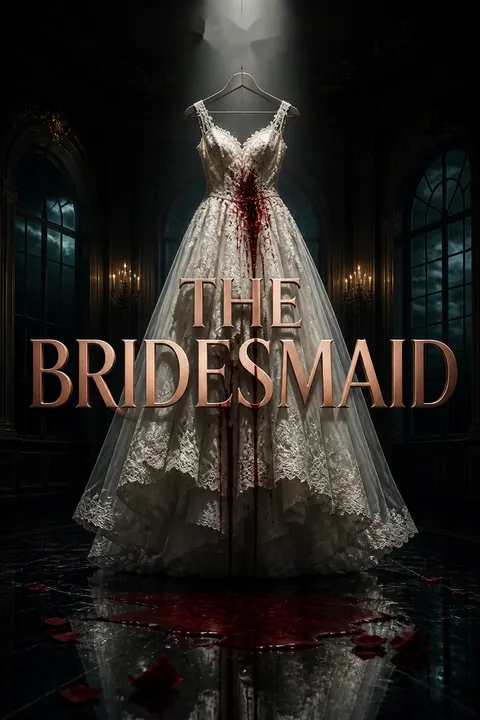

Plot Summary
Prologue: Blood On The Dress
Adrianna Kensington, New York heiress, is preparing for her extravagant wedding when she discovers a bridesmaid's corpse, dressed in a wedding gown and strung up in the Plaza Hotel's ballroom. The scene is grotesque, staged with ritualistic flair—blood, mutilation, and a chilling echo of Adrianna's own past trauma. The discovery sends shockwaves through the Kensington family and their inner circle, reigniting fears of a stalker who once kidnapped Adrianna. The opulence of the setting only heightens the sense of violation, as the family's carefully curated image is shattered by violence. Adrianna's first instinct is to call her powerful father, Leopold, signaling that the nightmare she thought was over has returned. The stage is set for a high-society thriller where secrets, trauma, and ambition collide.
Forensics In The Ballroom
Holly, a brilliant but unconventional forensic investigator, is called to the scene by Mark Li, Adrianna's fiancé. Holly's outsider status—her goth style and sharp intellect—sets her apart from the polished world of the Kensingtons. She quickly notices inconsistencies: the blood patterns, the staging, and the missing personal effects of the victim. Holly's analytical mind is both her armor and her curse, as she's forced to confront the death of her mentor, Simone Walters, who is revealed to be the murdered bridesmaid. The emotional blow is softened only by Holly's drive for truth. Her investigation is complicated by the Kensingtons' wealth, influence, and their desire to control the narrative, but Holly is determined to uncover what really happened, even as she's drawn deeper into their world.
Heiress Under Siege
The murder throws Adrianna's meticulously planned wedding into chaos. The press is kept at bay by her father's legal maneuvers, but rumors swirl about the Kensingtons' dark past and Adrianna's infamous kidnapping three years prior. Adrianna's relationships with her bridesmaids—Georgia, Petra, Ophelia, and Silky—are strained, each woman carrying her own secrets and resentments from their shared time at Kensington Manor School. The family's public image is everything, and Adrianna is forced to perform composure while privately unraveling. The trauma of her past resurfaces, and she becomes increasingly paranoid, unsure whom to trust. The murder is not just a crime but a message, and Adrianna fears the stalker who once terrorized her has returned to finish what they started.
The Invitation's Secret
Holly receives an elaborate, high-tech wedding invitation, couriered to her at a crime scene. The invitation is more than a formality—it's a summons, laced with urgency and secrecy. Mark Li, the groom, reveals that the Kensingtons don't trust the police and want Holly's expertise. The invitation's design, with its mechanical carriage and scrolling text, hints at the theatricality and control that define the Kensington brand. Holly's investigation is now personal, as she's drawn into the family's inner circle and the mystery of why she, an outsider, was chosen. The invitation is the first breadcrumb in a trail of clues that will lead Holly to the heart of the Kensingtons' darkest secrets.
Stalker Returns
The murder's staging mirrors the ritualistic elements of Adrianna's kidnapping: three dresses, cut hair, and symbolic displays. The police and Holly both suspect the return of "Trinity," the name given to Adrianna's masked abductor. The family's paranoia grows, and suspicion falls on everyone—bridesmaids, staff, even family members. Holly's forensic skills reveal that the body was moved and staged, suggesting an inside job. The past and present blur as the investigation uncovers patterns of obsession, control, and revenge. The specter of the stalker is both literal and metaphorical, haunting Adrianna and those around her, and raising the stakes for the wedding and everyone involved.
Simone's Last Message
Holly discovers that Simone, her former boss and the murdered bridesmaid, left behind a series of clues—voice messages, hidden keys, and forensic puzzles. Simone's obsession with the Kensington case was more than professional; she was investigating the family's secrets and the truth behind Adrianna's kidnapping. Holly follows Simone's trail, uncovering evidence that points to the bridesmaids' involvement and the possibility of a cover-up. The emotional weight of Simone's death drives Holly to push past her own grief and anger, determined to honor her mentor by solving the case. Simone's legacy is both a guide and a warning, as Holly realizes the dangers of getting too close to the truth.
Three Dresses, Three Days
The murder's staging—three blood-soaked wedding dresses, a circle of candles and flowers, and the victim's shorn hair—mirrors the rituals of Adrianna's kidnapping. The number three recurs: three dresses, three days of captivity, three blows to the head. Holly's forensic analysis reveals that the killer is both methodical and theatrical, blending personal vendetta with symbolic messaging. The dresses themselves are a statement about identity, femininity, and the commodification of women in the Kensington world. The ritualistic elements suggest that the killer is intimately familiar with Adrianna's trauma and the family's history, raising the possibility that the threat is coming from within.
Boarding School Shadows
The investigation turns to Kensington Manor School, where Adrianna and her bridesmaids were educated. The school's culture of discipline, secrecy, and hierarchy left deep scars on its students. Silky, the most troubled bridesmaid, once sued the school for abuse, but her case was overshadowed by Adrianna's kidnapping. The rituals of the school—hair cutting, penance, and the legend of "Trinity"—echo in the current violence. Holly uncovers evidence of bullying, power games, and a tradition of older girls tormenting the younger ones. The school's ethos of "fine metal withstands great heat" becomes a metaphor for the emotional survival strategies of the women involved. The line between victim and perpetrator blurs, as old wounds are reopened.
Bridesmaids And Betrayals
The bridesmaids—Georgia, Petra, Ophelia, and Silky—each have motives and secrets. Georgia, the PR mastermind, manipulates the narrative for the family brand. Petra, the supermodel, is entangled with Leopold and haunted by her own past as both victim and bully. Ophelia, the creative, is obsessed with Adrianna and desperate for approval. Silky, the outcast, is fragile and unstable, her addiction and trauma making her both suspect and victim. Holly's investigation exposes the toxic dynamics among the women, as old rivalries and betrayals resurface. The murder becomes a catalyst for confession and confrontation, as the bridesmaids are forced to reckon with what they did—and didn't do—at school and beyond.
The Corpse In The Closet
Silky is found dead, apparently of a heroin overdose, but Holly suspects foul play. The discovery of Silky's obsessive shrine to Adrianna, filled with photos and hate-filled notes, deepens the suspicion that the violence is rooted in the group's shared history. The police and family are quick to label Silky's death a suicide, eager to close the case and proceed with the wedding. But Holly's forensic instincts tell her otherwise. The deaths are linked by ritual, symbolism, and the legacy of abuse. The group's unity fractures, as guilt, fear, and blame threaten to destroy what's left of their friendship—and the wedding itself.
The Island Of Secrets
The wedding moves to Elysium, the Kensingtons' private Caribbean island, where Adrianna was once kidnapped. Holly and Fitzwilliam, the undercover detective, discover mass graves, abandoned prison cells, and evidence of a brutal reform school for girls. The island's history of female oppression and forced penance is mirrored in the present-day violence. Simone's hidden documents reveal that the original Kensington Manor School was a place of suffering and death, its legacy carried on by the New York institution. The island itself becomes a character—a beautiful facade hiding rot and cruelty. The truth about the family's wealth and power is inseparable from the suffering of generations of women.
Rituals And Reputations
As the ceremony approaches, the pressure to maintain the Kensington brand intensifies. Georgia's PR machinations, Petra's desperate bid for relevance, and Ophelia's obsessive devotion to Adrianna all come to a head. Holly and Fitzwilliam race to uncover the final pieces of the puzzle, even as they are targeted by the family's security. The wedding is staged for maximum publicity, but beneath the surface, alliances are shifting and violence simmers. The rituals of the wedding—dresses, cake, vows—are haunted by the rituals of the past. The line between performance and reality collapses, and the truth threatens to destroy everyone involved.
The Panic Room Truth
Holly and Fitzwilliam discover a secret passage from the Tower Suite to the panic room where Adrianna was held captive. There, they find Simone's final evidence: documents proving that the original kidnapping was staged, and that the family's secrets run deeper than anyone imagined. Petra, desperate to protect herself and Leopold, tries to destroy the evidence, but Holly's forensic skills and determination prevail. The panic room becomes the crucible where all the lies, betrayals, and traumas are confronted. The truth about the kidnapping, the murders, and the family's legacy is finally exposed.
The Mass Grave
The discovery of mass graves on Elysium forces a reckoning with the past. The graves are filled with the remains of girls who died at the original Kensington Manor School, victims of neglect, abuse, and forced penance. The family's wealth is built on the suffering of women, and the present-day violence is revealed as both a continuation and a cover-up of that legacy. The revelation leads to the closure of the New York school and the sale of the island. The survivors—Adrianna, Georgia, Holly, and even Petra—are left to grapple with what it means to survive, and what debts they owe to the dead.
The Wedding That Wasn't
The wedding devolves into chaos as Holly interrupts the ceremony with the truth: the kidnapping was staged, the murders were cover-ups, and the family's legacy is built on lies. Adrianna, pushed to the brink, confronts her father and her own complicity. In a moment of violence and catharsis, Petra is shot, Leopold is mortally wounded, and the family's secrets are laid bare. The wedding, meant to be a celebration of love and power, becomes a public unmasking of trauma and survival. The survivors must choose between continuing the cycle or breaking free.
The Brand Of Survival
In the aftermath, the Kensingtons spin the story for the press, turning tragedy into publicity. Adrianna and Mark marry quietly, selling the island and stepping away from the family business. Georgia takes over the brand, reimagining it for a new era. Petra survives, her notoriety cemented by scandal. Holly, once an outsider, finds her place as a forensic investigator and reluctant member of the family. The survivors are marked by what they endured, but they refuse to be defined by it. The brand of survival is both a shield and a scar, as they navigate a world that rewards performance over truth.
The Final Confession
Holly reflects on the lessons of the case: the difference between truth and perception, the cost of silence, and the power of confession. The survivors are left to reckon with their own roles in the cycle of abuse and complicity. The closure of the school and the exposure of the family's secrets offer a measure of justice, but not redemption. The final confession is not just about who committed the crimes, but about the ways in which everyone was shaped by the same system. Forgiveness is possible, but only if the truth is faced.
Aftermath And New Beginnings
The story ends with Holly opening her own forensic practice, Fitzwilliam by her side. The Kensingtons have been transformed by scandal, but they remain survivors, adapting to a world that is both fascinated and repelled by their story. The island is sold, the school is closed, and the survivors are left to build new lives from the wreckage. The lessons of the past linger, but there is hope for change. The final image is one of resilience—a reminder that even in the darkest stories, there is the possibility of new beginnings.
Analysis
A modern gothic of privilege, trauma, and survivalThe Bridesmaid is a razor-sharp deconstruction of wealth, image, and the cycles of female suffering perpetuated by elite institutions. Cate Quinn uses the trappings of a high-society thriller—weddings, luxury, scandal—to explore the psychological scars left by abuse, complicity, and the relentless pressure to perform. The novel's central mystery is not just who committed the murders, but how generations of women have been shaped—and broken—by systems designed to control them. The rituals of the school and the wedding become metaphors for the ways in which women are taught to split themselves into pieces to survive. The story's resolution is both cathartic and unsettling: justice is partial, survival is messy, and the line between victim and perpetrator is blurred. In the end, The Bridesmaid is a meditation on the cost of silence, the power of confession, and the possibility of new beginnings, even in the shadow of old wounds.
Review Summary
The Bridesmaid receives mixed reviews, averaging 3.3/5. Readers praise protagonist Holly Stone as a compelling, quirky character, and appreciate the short chapters, multiple POVs, and atmospheric destination wedding setting. The whodunit premise and unexpected twists earn consistent commendation. However, criticisms include uneven pacing, underdeveloped characters, an unsatisfying ending, and implausible procedural elements around law enforcement. Many found the wealthy supporting cast unlikeable, though some considered this intentional. Fans of fast-paced mystery thrillers generally enjoyed it, while others felt the execution fell short of its promising premise.
People Also Read



Characters
Holly Stone
Holly is a brilliant, self-taught forensic investigator whose unconventional appearance and background set her apart from the elite world of the Kensingtons. Raised in poverty, she is fiercely independent, skeptical of authority, and driven by a need to uncover the truth—both for justice and for her own sense of self-worth. Holly's relationship with Simone Walters, her mentor, is both formative and fraught; Simone's death propels Holly into the heart of the mystery and forces her to confront her own vulnerabilities. Holly's outsider status allows her to see through the family's performances, but it also makes her a target. Over the course of the story, she evolves from a defensive loner to a reluctant member of the Kensington circle, learning to balance empathy with skepticism and finding her own place in a world that values image over substance.
Adrianna Kensington
Adrianna is the glamorous, brittle center of the Kensington world. Raised to be the face of the family brand, she is both victim and architect of her own narrative. Her kidnapping, once thought to be the work of a stalker, is revealed as a desperate act of self-invention—a way to seize control in a world that commodifies her. Adrianna's relationships with her bridesmaids are shaped by the traumas of boarding school, where survival meant splitting herself into pieces. She is both manipulator and manipulated, capable of great cruelty and deep vulnerability. Her journey is one of reckoning—with her family, her past, and herself. In the end, Adrianna chooses survival on her own terms, stepping away from the family business and seeking a quieter life, but the scars of her upbringing remain.
Leopold Kensington
Leopold is the self-made nightclub mogul whose rise from poverty is both his pride and his curse. Obsessed with legacy and control, he will do anything to protect his family and brand—even orchestrate cover-ups and manipulate the truth. His relationship with his daughters is complex: he is both loving and ruthless, seeing them as extensions of his own ambition. Leopold's affair with Petra and his role in the cover-up of Simone's death reveal his willingness to sacrifice others for the greater good. In the end, his own mortality and the collapse of his empire force him to confront the cost of his choices. His final act is both an admission of guilt and a last attempt to protect his family from the consequences of his actions.
Georgia Kensington
Georgia is Adrianna's half-sister and the architect of the Kensington brand's public image. Calm, competent, and fiercely protective, she is the family's fixer, spinning every crisis into an opportunity. Her loyalty to Adrianna is genuine, but it blinds her to the harm caused by their shared past. Georgia's own ambitions are shaped by the need to survive in a world that punishes vulnerability. Her complicity in the family's secrets is both a survival strategy and a source of guilt. When the truth comes out, Georgia is forced to choose between loyalty and honesty, ultimately taking over the family business and steering it in a new direction.
Petra Morka
Petra is the glamorous, enigmatic bridesmaid whose beauty and poise mask a history of trauma and cruelty. Once a victim at Kensington Manor School, she became a perpetrator, leading the rituals of penance and bullying that scarred her classmates. Her affair with Leopold is both a bid for power and a search for belonging. Petra's desperation to remain relevant drives her to manipulate the narrative, even as she is haunted by guilt and regret. Her near-death at the wedding is both punishment and absolution, forcing her to confront the consequences of her actions. In the end, Petra survives—scarred but unbroken, her notoriety cemented by scandal.
Ophelia Mills-Herd
Ophelia is the bridesmaid whose cheerful exterior hides a deep need for approval and belonging. Her devotion to Adrianna borders on obsession, and her creativity is both a gift and a coping mechanism. Ophelia's role as caretaker masks her own insecurities and complicity in the group's toxic dynamics. Her inability to stand up for Silky in court is a source of shame, and her relationship with Adrianna is marked by both love and resentment. Ophelia's journey is one of self-discovery, as she learns to assert her own identity and break free from the patterns of the past.
Silky Eversfield
Silky is the most fragile and damaged of the bridesmaids, her life shaped by trauma, addiction, and the legacy of abuse at Kensington Manor School. Her lawsuit against the school is an act of courage, but it is overshadowed by Adrianna's kidnapping and the family's need to control the narrative. Silky's death is both a tragedy and a catalyst, forcing the survivors to confront the cost of silence and complicity. Her obsessive shrine to Adrianna and her final confession reveal the depth of her pain and the complexity of her relationships with the other women.
Simone Walters
Simone is Holly's mentor and the murdered bridesmaid whose death sets the story in motion. A brilliant attorney and TV host, Simone is driven by a need for justice and a personal connection to the Kensington case. Her investigation into the family's secrets is both professional and personal, and her death is both a warning and a guide for Holly. Simone's legacy is her insistence on truth, even when it is dangerous or unpopular. Her clues and messages propel Holly to solve the case, and her memory haunts the survivors as they seek closure.
Mark Li
Mark is Adrianna's fiancé, a tech millionaire whose calm, logical demeanor contrasts with the emotional chaos of the Kensingtons. He is both attracted to and bewildered by Adrianna's world, and his desire for order is constantly challenged by the family's secrets and scandals. Mark's role is that of mediator and protector, but he is ultimately powerless to prevent the unraveling of the wedding and the exposure of the truth. His relationship with Adrianna is tested by betrayal and violence, but he remains a steady presence, choosing love over ambition.
Fitzwilliam
Fitzwilliam is the undercover NYPD detective who partners with Holly in the investigation. His privileged background and adherence to protocol contrast with Holly's outsider status and rule-breaking instincts. Over the course of the story, Fitzwilliam learns to trust Holly's intuition and unconventional methods, and their partnership evolves into mutual respect and affection. Fitzwilliam's own struggles with family expectations and professional duty mirror the themes of survival and reinvention that define the story.
Plot Devices
Ritualistic Staging and Symbolism
The novel uses ritualistic staging—three dresses, cut hair, symbolic displays—to blur the line between crime and performance. The killer's actions are both personal and theatrical, designed to send a message and control the narrative. The number three recurs throughout: three dresses, three days, three blows, three dolls. This symbolism ties the present-day murders to Adrianna's kidnapping and the legacy of Kensington Manor School. The rituals of the school—penance, hair cutting, and the legend of Trinity—are echoed in the violence, suggesting that the true crime is the perpetuation of trauma and the commodification of suffering.
Dual Timelines and Flashbacks
The story unfolds in two timelines: the present-day investigation and the characters' shared past at Kensington Manor School. Flashbacks reveal the origins of the group's trauma, the rituals of the school, and the events leading up to Adrianna's kidnapping. The dual timelines create suspense and deepen the psychological complexity of the characters, showing how the past shapes the present and how survival often requires complicity and silence.
Unreliable Narration and Misdirection
The novel employs multiple points of view—Holly, Adrianna, Petra, and others—each with their own biases and blind spots. The family's obsession with image and control creates layers of misdirection, as characters manipulate the narrative for personal and professional gain. The reader is constantly challenged to question what is real and what is performance, mirroring the characters' own struggles with truth and perception.
Forensic Investigation as Narrative Engine
Holly's forensic skills drive the plot, as she uncovers clues, deciphers rituals, and exposes cover-ups. The use of forensic detail grounds the story in reality, even as the events become increasingly theatrical. The contrast between Holly's scientific approach and the family's obsession with performance highlights the tension between truth and perception, justice and publicity.
The Island as Microcosm
Elysium, the Kensingtons' private island, is both paradise and prison—a beautiful facade hiding rot and cruelty. The island's history as a reform school and mass grave mirrors the family's own legacy of oppression and survival. The isolation of the setting heightens the sense of claustrophobia and inevitability, as the characters are forced to confront the past they tried to bury.
Download PDF
Download EPUB
.epub digital book format is ideal for reading ebooks on phones, tablets, and e-readers.








































