
Key Takeaways
1. The Invisible Force: Wind's Enduring Mystery and Scientific Unveiling
Wind, they say, is essential, invisible, and eternal.
A paradoxical calm. The author recounts a rare visit to Mount Washington, "the windiest place in the world," only to find it in a state of perfect calm, a "Great Terrestrial Stilling." This unexpected windlessness serves as an ironic prelude to a book exploring wind's omnipresence, hinting at a controversial theory that average global wind speeds might be declining despite increasingly violent storms. This phenomenon, if it becomes a trend, could have vast consequences for life on Earth.
Early human understanding. For early civilizations, wind was a bewildering, unseen force that bent trees, swayed branches, and toppled structures. Ellsworth Huntington's "Civilization and Climate" theory, though now discredited for its eugenic undertones, posited that varied weather, driven by wind, fostered intellectual development. Early writings, like Sumerian cuneiform (lil), Egyptian hieroglyphs (a boat's sail), and Chinese characters (feng), attest to wind's central role in human history and language, often linking it to gods and mysterious powers.
From myth to science. As civilizations evolved, so did the understanding of wind. While many cultures attributed wind to deities—from Finnish blacksmith Ilmarinen to Chinese crone Feng Popo—the Greeks, particularly Aristotle in his "Meteorologica," began to apply scientific reasoning. Aristotle's work, though still deferring to gods, attempted to explain wind's origin through solar heating and pressure differences, laying groundwork for future meteorological inquiry.
2. Earth's Atmospheric Engine: The Science Behind Wind's Global Dance
The atmosphere and oceans have a mission: to relentlessly transport energy poleward, in order to balance the books and to provide energy to the polar regions which can then be lost to space.
Atmosphere and heat. For wind to exist, a celestial body needs both an atmosphere and a heat source. Our moon, lacking a substantial atmosphere, is windless, a fact NASA engineers cleverly circumvented to make the American flag appear to fly. Planets like Jupiter and Neptune, despite their distance from the sun, exhibit tremendous winds, often driven by internal heat or cryovolcanoes, demonstrating these universal principles on a grand scale.
Thermodynamic principles. The sun's thermal energy, transferred to Earth's atmosphere, causes air molecules to move faster, expand, and become lighter, leading warm air to rise. This rising air creates areas of lower pressure, which cooler, denser air rushes in to fill, generating wind. This fundamental process, governed by the First and Second Laws of Thermodynamics, ensures continuous atmospheric motion, preventing the planet from overheating.
Global circulation patterns. Earth's spherical shape, tilt, rotation, and orbit create differential heating, leading to complex global wind patterns. The Coriolis effect, explained by Gaspard-Gustave de Coriolis, deflects moving air, causing winds to curve. This effect, combined with George Hadley's and William Ferrel's theories of atmospheric convection cells (Hadley, Ferrel, and Polar cells), explains the existence of prevailing winds like the trade winds and westerlies, and the high-altitude jet streams that steer weather systems.
3. Gentle Breezes: Wind's Subtle Power and Unseen Journeys
Even the gentlest of winds possesses not only speed and direction but pressure and force.
Distant smoke and ash. Gentle winds, though seemingly benign, possess enough power to transport vast quantities of material across continents and oceans.
- Wildfire smoke: Canadian wildfire smoke traveled 1,000 miles to obscure Wyoming's Heart Mountain.
- Volcanic ash: Eruptions like Krakatoa (1883) and Eyjafjallajökull (2010) sent dust globally, creating vivid sunsets and disrupting air travel.
- Radioactive fallout: The Lucky Dragon 5 fishing boat was contaminated by wind-borne fallout from a US hydrogen bomb test in 1954, and Chernobyl's radiation spread across Europe in 1986, revealing Soviet secrecy.
Seed dispersal and sounds. Wind is a crucial agent for plant propagation, a process called anemochory.
- Poplar and dandelion seeds: Light, parachute-like structures allow them to float far from parent plants.
- Maple samaras: Wing-like designs enable autorotation, extending their flight.
- Tumbleweed: The prickly Russian thistle, introduced to the American prairies in 1879, became an invasive menace, its seed-filled spheres efficiently dispersed by wind, often piling up against modern developments.
Wind's ethereal music. Wind also creates sounds, not inherently, but by rubbing against fixed objects. Tim Dee's experiment to record pure wind sound in the flat Wash of East Anglia revealed a "soft, thunderous hum." Similarly, "singing sands" in deserts and beaches, with specific grain sizes and conditions, produce booming or whistling sounds as wind moves them, a phenomenon that has inspired literature and music.
4. Harnessing the Wind: From Ancient Sails to Modern Power
Man hoisted sail before he saddled a horse.
Coastal and oceanic navigation. Sea breezes, thermal winds generated by temperature differences between land and sea, allowed early mariners to navigate coastlines. On the Nile, prevailing winds blowing against the river's current enabled upstream travel. The development of sails, particularly the outrigger canoe in the Pacific, revolutionized long-distance oceanic travel, allowing Polynesians to explore and settle thousands of islands without modern navigational aids.
The Age of Sail. From the 15th to 19th centuries, wind was the primary engine of global exploration, trade, and empire.
- Early European voyages: St. Brendan's legendary Atlantic crossing and Phoenician expeditions hinted at transoceanic possibilities.
- Viking longboats: Their sleek design and mastery of North Atlantic winds enabled settlement in North America (L'Anse aux Meadows).
- Imperial expansion: Portugal's global empire was built on the back of favorable winds, allowing sailors to round treacherous capes like Bojador and reach distant lands.
- Square-riggers: Massive ships like the Peking, with acres of canvas, navigated perilous routes like Cape Horn, demonstrating the immense power of working winds.
Wind power on land and sea. The harnessing of wind extended beyond sailing.
- Prairie wind pumps: Aermotor windmills provided vital water for American farms, enabling settlement.
- Dutch windmills: For centuries, these iconic structures ground grain and drained polders, shaping the Netherlands' landscape.
- Electricity generation: James Blyth's 1887 wind-powered generator in Scotland, though initially met with skepticism, pioneered modern wind energy. Today, massive wind turbines, both onshore and offshore, are rapidly becoming a crucial source of clean electricity globally.
5. Wind in Warfare: Deciding the Fate of Nations
I sent the Armada against men, not against God’s winds.
Wind's strategic role. In the Age of Sail, wind was a critical, often decisive, factor in naval warfare.
- Spanish Armada (1588): King Philip II's invasion of England was thwarted not just by British naval tactics but by "Protestant Winds" that scattered the fleet and drove many ships to wreck off the Irish coast.
- Battle of Salamis (480 BCE): Fickle and contrary winds, combined with unfamiliarity with local swells, led to the disarray and defeat of the massive Persian fleet by the nimble Greek ships.
- Mongol invasions of Japan (1274, 1281): Kublai Khan's two attempts were devastated by typhoons, which the Japanese hailed as "kamikaze" or divine winds, saving their nation.
Modern warfare and weather. Even with advanced technology, wind and weather remain crucial.
- D-Day (1944): Oceanographer Walter Munk's wave predictions, based on wind forecasts, led to a critical 24-hour delay, ensuring safer landings for Allied troops on Normandy beaches.
- Typhoon Haiyan (2013): Admiral Samuel J. Locklear III, commander of US forces in the Indo-Pacific, controversially declared climate change and its resulting extreme windstorms a greater security threat than geopolitical rivals, highlighting wind's enduring military significance.
6. The Poetry of Measurement: Quantifying the Invisible
Hereafter I shall estimate the force of the wind according to the following scale, as nothing can convey a more uncertain idea of wind and weather than the old expressions of moderate and cloudy, etc., etc.
Early attempts at quantification. Before precise instruments, wind measurement was rudimentary.
- Alberti's metal sheet (1450): A thin metal sheet deflected against a scale, offering a qualitative sense of wind force.
- Brice's cloud shadows (1763): Alexander Brice measured cloud shadow movement across a marked field to estimate wind speed at altitude.
- Pitot tubes: Henri Pitot's discovery of the relationship between fluid speed and pressure led to devices that instantly measure wind velocity, still used on aircraft today.
The Robinson Anemometer. Thomas Romney Robinson's 1846 invention, the four-cup rotational anemometer, became the standard. Its genius lay in exploiting the drag coefficient difference between the concave and convex sides of the cups, ensuring rotation and allowing for arithmetic conversion into precise wind speed, a beautiful example of Victorian engineering.
Beaufort's poetic scale. Rear Admiral Sir Francis Beaufort, a seasoned mariner, created his eponymous scale in 1805, not on numbers, but on observable effects. His thirteen-point scale, from "Calm" (Force 0) to "Storm" (Force 10) and "Hurricane" (Force 12), described wind's impact on the sea surface and ship's sails. This "poetry of the approximate" offered practical guidance to sailors and remains a beloved, universally understood meteorological trope, famously used in the BBC's Shipping Forecast.
7. Inclement Winds: Nature's Destructive Fury
Listen. Listen! That’s some of what done it—the dusters. Started it, anyway. Blowin’ like this, year after year—blowin’ the land away, blowin’ the crops away, blowin’ us away now.
The Dust Bowl's devastation. The "dusters" of the 1930s, massive windblown clouds of topsoil, devastated the American High Plains, driving thousands of farmers westward. This catastrophe, though exacerbated by drought, was primarily caused by human actions:
- Destruction of native grasses: Steel plows ripped away the soil-binding vegetation.
- Unsuitable farming practices: Dry-land farming methods were ill-suited to the arid environment.
- Speculative greed: Short-sighted agricultural practices prioritized immediate profit over sustainability.
President Roosevelt's "Great Plains Shelterbelt" project, planting millions of trees, eventually helped curb the wind's destructive power, transforming the region.
Europe's named gales. Europe experiences its own powerful, named winds that profoundly impact local life.
- Mistral (Provence): A cold, blustery northwesterly wind, channeled by the Rhône Valley and Alps, known for its mood-altering effects, even cited as an extenuating circumstance in French courts for "crimes of passion."
- Bora (Trieste): A frigid, gusty katabatic wind from the Dinaric Alps, it funnels into Trieste, upending vehicles and knocking people off their feet. The city's "Museo della Bora" celebrates this unique, often brutal, local phenomenon.
Cyclonic catastrophes. Tropical cyclones (hurricanes, typhoons) are among the most destructive wind events.
- Wahine sinking (1968): A massive cyclonic gust off Wellington, New Zealand, capsized the ferry, leading to significant loss of life.
- Great Storm of 1987 (England): An "extra-tropical cyclone" with hurricane-force winds caused widespread death and destruction, felling 15 million trees and shutting down London.
- Tokyo firestorm (1945): American napalm bombings created self-generating "firestorms" (cumulonimbus flammagenitus clouds) with hurricane-force winds, causing more casualties than the atomic bombs and utterly devastating the city.
8. Tornadoes: America's Unstoppable, Capricious Wind
A tornado is a wind that, without breaking a sweat, can pick up a house, a child, and a pet and much, much more, and then move on as it will and where it will.
Birth of a whirlwind. Tornadoes, often called "America's wind," are typically born from ferocious cumulonimbus clouds, specifically those with "mammatus" protuberances. Within these turbulent clouds, intense shear forces—layers of air streaming in opposite directions—create horizontal cylinders of spinning air. A powerful hot-air updraft then tips these cylinders vertically, causing them to poke through the cloud base as a pendulous, rotating funnel.
Destructive power. Once a tornado touches down, it scours the land, darkening with debris and becoming a near-vacuum at its core. Its outer wind speeds can reach hundreds of miles per hour, vastly exceeding hurricanes. The Enhanced Fujita Scale measures tornado intensity by the physical damage caused:
- EF2: Rips bark from trees.
- EF4: Destroys brick supermarkets.
- EF5: Obliterates structures, leaving no trace.
These localized, non-synoptic windstorms cut narrow, devastating swathes, leaving behind legendary misery.
Shifting patterns. The 2023 tornado that nearly destroyed Rolling Fork, Mississippi, killing seventeen, is seen by some meteorologists as evidence of "Tornado Alley" shifting eastward from its traditional plains location. Despite their destructive power, tornadoes, like all winds, are an integral part of Earth's atmospheric dance, bringing both devastation and, occasionally, the much-needed rain that sustains life.
9. Wind in Literature: A Timeless Source of Inspiration and Terror
Whether writers are considering this new phenomenon or one as old as time, literature has long been fascinated by the invisible power of the wind.
Biblical and classical narratives. From ancient texts to modern novels, wind has served as a powerful literary device, symbolizing divine power, chaos, or human struggle.
- The Bible: Depicts God's power (parting the Red Sea, Elijah's vision) and Jesus's calming of storms.
- Shakespeare: Uses raging winds to reflect inner turmoil and external chaos in "King Lear" and "The Tempest."
- Daniel Defoe: His firsthand account of the Great Storm of 1703, "The Storm," transformed him into a pioneering journalist, vividly detailing the wind's destructive impact on London.
Modern literary storms. Later authors continued to explore wind's dramatic and symbolic potential.
- Joseph Conrad's "Typhoon": Masterfully portrays a ship's struggle against a raging storm in the South China Sea, highlighting human resilience and the overwhelming force of nature.
- Richard Hughes's "A High Wind in Jamaica": Features a ship caught in a Caribbean hurricane, with a memorable description of the storm's aftermath and the ship's miraculous survival.
Iconic wind-driven tales. L. Frank Baum's "The Wonderful Wizard of Oz" famously begins with Dorothy Gale's house being swept away by a Kansas cyclone, launching her into a fantastical adventure. Other works like Emily Brontë's "Wuthering Heights," Herman Melville's "Moby-Dick," and Margaret Mitchell's "Gone with the Wind" all use powerful winds to shape their narratives, characters, and themes, cementing wind's place in the human imagination.
10. The Enduring Breath: Wind's Essential and Eternal Role
A world without wind is just too dreadful to contemplate. Rather, one trusts and prays, it shall remain as it has been since creation—invisible, eternal, and essential.
Wind's multifaceted impact. Wind, in its ceaselessly cycling trinity of dispersing, doing, and destroying, underpins the main components of the world's climate. It lifts seeds, supports birds, warms and chills, builds and destroys. From gentle breezes that dry clothes to roaring gales that sink ships, wind touches every aspect of life on Earth, shaping geography, human existence, and cultural narratives.
The Great Stilling and future uncertainty. While there is ongoing debate about a "Global Stilling" or wind drought, with some evidence suggesting a decline in average continental wind speeds, the planet continues to experience increasingly intense and unpredictable storms. These shifts in atmospheric patterns, potentially linked to rising ocean temperatures and climate change, introduce new challenges and anxieties about wind's future behavior.
An essential force. Despite its occasional malevolence, wind remains an indispensable, invisible, and eternal force. It is the undisputed prime component of our atmospheric shifting, vital for transporting energy, moisture, and life itself across the globe. A world without wind would be a world without life as we know it, underscoring its profound and irreplaceable role in the planet's delicate balance.
Review Summary
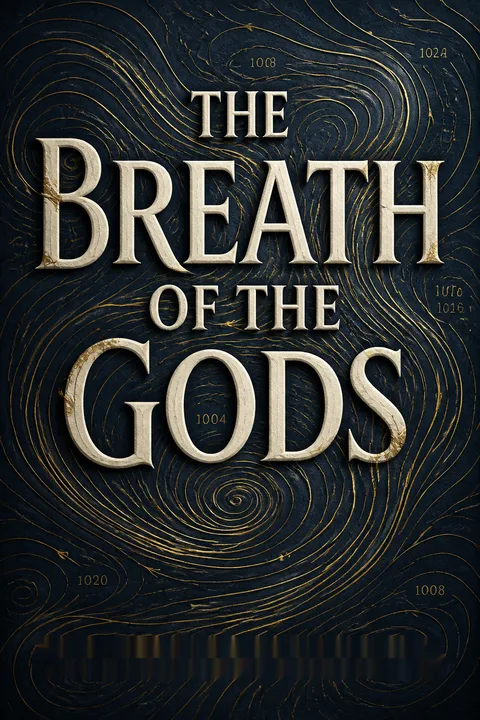
Reviews for The Breath of the Gods are generally positive, averaging 3.81 out of 5. Many readers praise Winchester's ability to make wind a captivating, wide-ranging subject, weaving together history, science, and personal anecdotes with erudite, conversational prose. Fans particularly enjoy the diverse topics covered, from the Dust Bowl to D-Day to modern wind energy. Critics feel the book is overly long and loosely connected, with some noting factual errors and excessive digressions. Overall, dedicated Winchester readers tend to enjoy it, while casual readers may find it meandering.
People Also Read








Download PDF
Download EPUB
.epub digital book format is ideal for reading ebooks on phones, tablets, and e-readers.








































