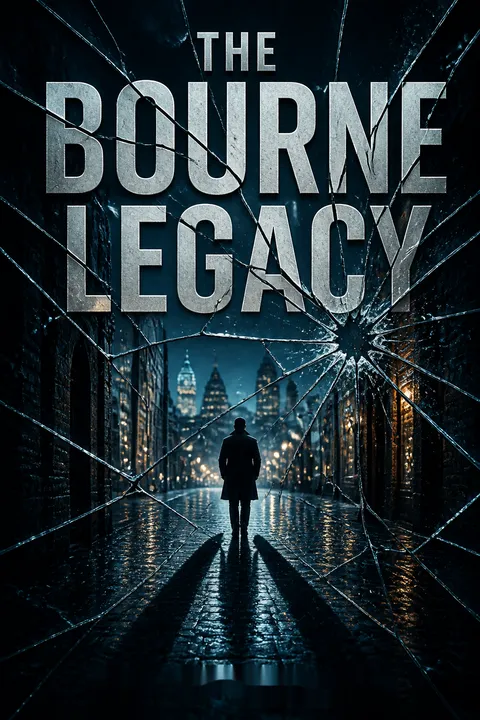

Plot Summary
Shadows Over Grozny
In the war-torn ruins of Grozny, Chechen rebel leader Khalid Murat navigates a devastated city, haunted by memories of peace and beauty now lost to violence. As he and his second-in-command, Hasan Arsenov, reflect on their people's suffering, an assassin named Khan orchestrates a brutal attack, killing Murat with chilling precision. The murder is not random; it is a calculated move in a larger, shadowy game. Khan, working for the enigmatic Stepan Spalko, receives a new target: David Webb, also known as Jason Bourne. The stage is set for a global conspiracy, as the seeds of vengeance and manipulation are sown amidst the ashes of Chechnya.
The Awakening of Bourne
David Webb, now a linguistics professor at Georgetown, is thrust back into the world of violence when he intervenes in an attack on a student. The dormant persona of Jason Bourne awakens, revealing Webb's struggle to suppress his lethal instincts. Haunted by the loss of his first family in Cambodia and the trauma of his past as an assassin, Webb's fragile peace shatters when a sniper attempts to kill him on campus. Realizing the threat is from his Bourne identity, Webb seeks help from his old handler, Alex Conklin, only to find himself framed for murder and forced to flee, his life unraveling as the ghosts of his past return with deadly intent.
A Deadly Setup
Webb's visit to Conklin's estate turns into a nightmare when he discovers Conklin and his friend, Dr. Panov, murdered. The evidence is expertly manipulated to implicate Webb, making him the prime suspect in a professional hit. As police and intelligence agencies close in, Webb is forced to rely on his Bourne instincts to escape. The real killer, Khan, stalks him through the woods, testing Bourne's skills and resolve. Webb's family is sent into hiding, and he is left isolated, pursued by both law enforcement and a mysterious enemy who knows his every move. The trap is tightening, and Bourne must unravel the conspiracy before he is destroyed.
Flight and Pursuit
Fleeing through forests and cities, Bourne evades police and assassins alike, using every ounce of his training. He encounters allies and enemies, each encounter deepening the mystery of who wants him dead and why. The CIA, convinced of his guilt, issues a worldwide sanction for his termination. Bourne's journey takes him from seedy motels to clandestine meetings, as he pieces together clues about a shadowy plot involving stolen identities, secret weapons, and a humanitarian organization with a sinister agenda. The line between friend and foe blurs, and Bourne's only hope lies in uncovering the truth behind the setup.
The Trap Tightens
As Bourne delves deeper, he discovers that the conspiracy reaches into the highest levels of government and intelligence. He is relentlessly pursued by Khan, whose motives are as personal as they are professional. The enigmatic Spalko manipulates events from the shadows, orchestrating chaos for his own ends. Bourne's search leads him to Budapest, where he uncovers links between Chechen terrorists, a missing scientist, and a devastating biological weapon. Betrayals abound, and Bourne must navigate a labyrinth of lies, facing old wounds and new dangers as the net closes around him.
Into the Labyrinth
In Budapest, Bourne seeks out allies, only to find that trust is a dangerous commodity. Annaka Vadas, daughter of a murdered contact, becomes both companion and betrayer, her loyalties shifting with the winds of survival. The search for Dr. Schiffer, the missing scientist, leads Bourne into the heart of Humanistas, Ltd., Spalko's humanitarian front. Here, torture and deception are tools of the trade, and Bourne is captured, enduring brutal interrogation. Khan, too, is ensnared in Spalko's deadly web, and the two adversaries must decide whether to destroy each other or unite against a common enemy.
The Humanitarian's Mask
Stepan Spalko, revered as a global humanitarian, is unmasked as the architect of a plot to unleash a biological weapon at an international summit in Reykjavik. Using Chechen terrorists as pawns, Spalko manipulates political and personal loyalties, orchestrating assassinations and betrayals to further his vision of a new world order. The weapon, NX 20, is a portable bio-diffuser capable of mass destruction. As Spalko's plan accelerates, the lines between savior and monster blur, and the fate of thousands hangs in the balance. Bourne and Khan, battered but unbroken, race against time to stop him.
Ghosts of the Past
The revelation that Khan is Joshua, Bourne's long-lost son, shatters both men. Years of pain, abandonment, and survival in the jungles of Southeast Asia have transformed Joshua into a lethal assassin, consumed by hatred and longing for answers. Their reunion is fraught with violence, accusation, and the desperate hope for redemption. As they navigate the ruins of their relationship, both must confront the choices that led them here. The past refuses to stay buried, and the bond between father and son becomes both a weapon and a lifeline in the battle to stop Spalko's apocalyptic scheme.
The Assassin's Son
Khan's journey from abandoned child to world-class assassin is laid bare. His life has been a crucible of suffering, manipulation, and betrayal, shaped by the loss of his family and the cruelty of those who exploited him. His hatred for Bourne is matched only by his yearning for connection. As the truth of his parentage emerges, Khan is forced to choose between vengeance and reconciliation. The psychological scars run deep, and the path to healing is fraught with danger. Together, Bourne and Khan must forge an uneasy alliance, their fates intertwined in the shadow of Spalko's looming threat.
Betrayals and Revelations
Annaka's duplicity is revealed, her allegiance to Spalko and her own vendettas complicating the mission. The web of betrayal extends to every corner of the conspiracy, as friends become enemies and enemies become reluctant partners. The CIA, blinded by its own bureaucracy and internal politics, remains a step behind, while Spalko's machinations reach their zenith. The race to find and neutralize the NX 20 weapon becomes a desperate struggle, with Bourne and Khan navigating a minefield of shifting alliances, personal demons, and the ever-present threat of annihilation.
The Weapon Unleashed
Spalko's plan comes to fruition as the Chechen cadre infiltrates Reykjavik, using disguises and subterfuge to position the NX 20 for maximum devastation. A hepatitis outbreak serves as a diversion, sowing chaos and confusion among the city's defenders. As the summit's security is breached, Bourne and Khan must use every skill at their disposal to track the weapon and its handlers. The tension mounts as the countdown to catastrophe accelerates, and the true cost of failure becomes clear. Sacrifice, courage, and the hope for redemption drive the final confrontation.
Reykjavik Under Siege
The Oskjuhlid Hotel becomes a battleground as Bourne and Khan confront Spalko and his remaining followers. Amidst gunfire, betrayal, and the looming threat of mass death, the two men must overcome their own wounds and mistrust to stop the release of the bio-weapon. Zina, torn between love and fanaticism, faces her own reckoning. The lines between hero and villain blur as each character is forced to confront the consequences of their choices. In the crucible of crisis, old enmities are set aside, and the possibility of forgiveness emerges from the ashes of violence.
Redemption and Sacrifice
As the dust settles, the survivors count the cost of victory. Spalko is dead, his grand design undone by the very people he sought to manipulate. Khan, having found a measure of peace with his father, chooses his own path, seeking meaning beyond vengeance. Bourne, scarred but alive, returns to his family, forever changed by the ordeal. The world, saved from disaster, remains as fragile and uncertain as ever. The bonds of blood and loyalty are tested, and the hope for redemption lingers in the aftermath of sacrifice.
The End of Spalko
Spalko's escape is thwarted in a final, brutal confrontation with Bourne. The mastermind's arrogance and cruelty are met with the relentless determination of a father fighting for his son and the world. In a struggle echoing the battles of the past, Bourne prevails, ending Spalko's reign of terror. The victory is bittersweet, marked by loss and the knowledge that evil can never be fully eradicated. Justice is served, but the scars remain, a testament to the cost of survival in a world where shadows and light are forever entwined.
Fathers and Sons
Bourne and Khan, united by blood and forged in adversity, face the reality of their fractured relationship. The journey from hatred to understanding is incomplete, but the possibility of healing exists. Khan chooses to walk his own path, carrying the lessons of the past and the hope for a future free from the burdens of vengeance. Bourne, embracing both his identities, returns to his family, grateful for the chance to begin anew. The legacy of fathers and sons endures, shaped by love, loss, and the enduring quest for meaning.
Epilogue: The Cost of Survival
In the quiet aftermath, the world moves on, forever altered by the events in Reykjavik. Political careers rise and fall, secrets are buried, and the survivors seek solace in the routines of daily life. Bourne, now David Webb once more, celebrates his son's birthday, haunted by memories and the absence of Joshua. The scars of the past remain, but the possibility of redemption endures. The cost of survival is high, measured in blood, sacrifice, and the fragile hope for peace. In the end, the story is one of endurance, forgiveness, and the unbreakable bonds of family.
Analysis
Modern espionage, trauma, and the search for selfThe Bourne Legacy is a meditation on the costs of survival in a world defined by violence, betrayal, and shifting allegiances. Through the lens of Jason Bourne's fractured identity, the novel explores the psychological toll of trauma, the longing for redemption, and the enduring power of familial bonds. The narrative interrogates the nature of trust in a world where deception is the norm and survival often demands moral compromise. The use of a biological weapon as the central threat reflects contemporary anxieties about invisible dangers and the fragility of civilization. Ultimately, the novel suggests that healing is possible, but only through the painful process of confronting the past, accepting responsibility, and choosing forgiveness over vengeance. The legacy of fathers and sons, the possibility of change, and the resilience of the human spirit are the enduring lessons of Bourne's journey—a story as much about the search for meaning as it is about the fight for survival.
Review Summary
The Bourne Legacy received mixed reviews. Some praised the action and suspense, while others criticized inconsistencies, weak characterization, and deviation from Ludlum's original portrayal of Bourne. Many felt Lustbader failed to capture Bourne's complexity and aging, making him unrealistically superhuman. The plot was seen as convoluted and implausible by some. Fans of the original trilogy were often disappointed, though some appreciated the continuation of the series. Several reviewers noted factual errors and sloppy writing. Overall, opinions varied widely, with some enjoying the thriller aspects while others found it lacking compared to Ludlum's work.
People Also Read

Characters
Jason Bourne / David Webb
David Webb, known to the world as Jason Bourne, is a man divided between his peaceful life as a linguistics professor and his violent past as a government assassin. Scarred by the loss of his first family in Cambodia and the psychological trauma of his covert operations, Webb struggles to suppress the Bourne persona, which emerges in times of crisis. His journey is one of self-discovery, as he confronts betrayal, loss, and the revelation that his long-lost son, Joshua, is alive as the assassin Khan. Bourne's arc is defined by his quest for redemption, the reconciliation of his dual identities, and the enduring hope for forgiveness and connection.
Khan / Joshua Webb
Khan, born Joshua Webb, is the product of abandonment, survival, and manipulation. Raised in the jungles of Southeast Asia after being presumed dead, he endures unimaginable suffering, shaping him into a world-class assassin consumed by hatred for his father. His psychological complexity is rooted in the trauma of loss and the desperate need for answers. The revelation of his true identity forces Khan to confront his own humanity, torn between vengeance and the longing for reconciliation. His relationship with Bourne is fraught with violence, accusation, and the fragile hope for healing.
Stepan Spalko
Spalko is the embodiment of duplicity, revered as a humanitarian while orchestrating a plot to unleash a biological weapon on the world stage. His intelligence, charm, and ruthlessness make him a formidable adversary. Spalko's motivations are driven by a desire for power and a belief in his own vision of a new world order. He exploits the vulnerabilities of others, using betrayal and psychological manipulation as his primary tools. His downfall is marked by hubris and the inevitable consequences of his actions.
Annaka Vadas
Annaka is a master of deception, her loyalties shifting between Bourne, Khan, and Spalko. Scarred by a troubled past and a fractured relationship with her father, she navigates the world through manipulation and self-preservation. Her psychological complexity is revealed in her capacity for both compassion and cruelty. Annaka's ultimate betrayal is rooted in her inability to form genuine attachments, a defense mechanism against the pain of abandonment. Her fate is a testament to the dangers of living without trust or love.
Hasan Arsenov
Arsenov rises to lead the Chechen rebels after Murat's assassination, driven by a vision of freedom and respect for his people. His idealism is undermined by insecurity, jealousy, and the manipulations of Spalko and Zina. Arsenov's arc is one of disillusionment, as he realizes too late that he has been used as a pawn in a larger game. His tragic end is marked by betrayal and the collapse of his dreams.
Zina Hasiyev
Zina is both lover and lieutenant to Arsenov, her strength and cunning making her indispensable to the Chechen cause. Her ambition and adaptability draw her into Spalko's orbit, where she becomes both instrument and victim of his schemes. Zina's psychological journey is one of survival, shaped by loss, betrayal, and the relentless pursuit of agency in a world dominated by men. Her final moments are marked by regret and the hope for redemption.
Alex Conklin
Conklin is the architect of Bourne's transformation, a spymaster whose loyalty to his protégé is both his strength and his undoing. His decision to "disappear" Dr. Schiffer sets the plot in motion, making him a target for Spalko's vengeance. Conklin's death is a catalyst for Bourne's journey, symbolizing the end of an era and the cost of secrets kept too long.
Dr. Felix Schiffer
Schiffer's expertise in biological weapons makes him the linchpin of Spalko's plot. His abduction and eventual death underscore the vulnerability of those with dangerous knowledge. Schiffer's arc is one of victimhood, manipulated by forces beyond his control, his fate a warning about the perils of unchecked ambition and secrecy.
Martin Lindros
Lindros serves as the moral compass within the CIA, questioning the official narrative and seeking the truth behind the conspiracy. His determination to clear Bourne's name and expose Spalko's machinations positions him as a crucial ally. Lindros's arc is one of integrity, navigating the treacherous waters of bureaucracy and political intrigue to uphold justice.
Jamie Hull
Hull is responsible for the summit's security, his judgment clouded by personal animosities and the desire for recognition. His inability to see beyond his own ambitions makes him vulnerable to manipulation and ultimately leads to his downfall. Hull's arc is a cautionary tale about the dangers of ego and the importance of humility in positions of power.
Plot Devices
Dual Identity and Amnesia
The central device of the novel is Bourne's struggle with his dual identity—David Webb and Jason Bourne. His amnesia and psychological fragmentation create tension, vulnerability, and unpredictability, both for himself and those around him. This device allows for deep exploration of trauma, memory, and the search for self, while also serving as a mechanism for suspense and misdirection.
Framing and False Evidence
The plot hinges on Bourne being expertly framed for murder, with evidence planted to implicate him at every turn. This device not only isolates Bourne but also forces him to question his own reality and the trustworthiness of those around him. The use of false evidence and shifting allegiances keeps the reader—and Bourne—off balance, heightening the stakes.
Betrayal and Shifting Loyalties
Characters frequently betray one another, with loyalties shifting in response to personal agendas, manipulation, and survival instincts. This device underscores the novel's themes of trust, deception, and the cost of survival. It also allows for complex character development and unexpected twists, as no relationship is ever entirely secure.
Biological Weapon as MacGuffin
The search for and threat of the NX 20 bio-diffuser serves as the novel's MacGuffin, propelling the action and uniting disparate plot threads. Its potential for mass destruction raises the stakes from personal survival to global catastrophe, forcing characters to confront moral and ethical dilemmas.
Father-Son Psychological Mirror
The revelation that Khan is Bourne's son introduces a powerful psychological mirror, exploring themes of abandonment, guilt, and the possibility of redemption. Their relationship is both a source of conflict and a path to healing, reflecting the broader struggle between violence and forgiveness.
Foreshadowing and Parallelism
The narrative structure employs foreshadowing and parallel events—such as Bourne's repeated near-drownings and betrayals—to create resonance and depth. These devices reinforce the cyclical nature of trauma and the difficulty of breaking free from the past.
Ticking Clock and Red Herrings
The impending summit and the countdown to the weapon's release create a relentless sense of urgency. Red herrings—such as the hepatitis outbreak and false leads—distract both characters and readers, maintaining tension and uncertainty until the final confrontation.
FAQ
Synopsis & Basic Details
What is The Bourne Legacy about?
- Espionage and Identity Crisis: The Bourne Legacy follows David Webb, a linguistics professor, who is also Jason Bourne, a former clandestine operative, as he gets drawn back into a world of danger and conspiracy.
- Unraveling a Conspiracy: Webb finds himself targeted by unknown forces, leading him to uncover a plot involving the murders of his mentor and psychiatrist, forcing him to confront his dual identity.
- Survival and Truth Seeking: The story centers on Webb's struggle to survive while piecing together the truth behind the conspiracy, navigating a complex web of alliances and betrayals in the world of international espionage.
- High-Stakes Global Threat: The narrative builds towards a confrontation with a powerful antagonist who plans to unleash a devastating bio-weapon at a global summit, raising the stakes to a global scale.
Why should I read The Bourne Legacy?
- Intriguing Dual Identity: Experience the psychological complexities of a protagonist torn between a normal life and a dangerous past, creating a compelling character study.
- Espionage and Conspiracy: Dive into a world of international espionage, conspiracies, and betrayals, filled with twists and turns that keep you guessing until the very end.
- Action-Packed Thriller: Enjoy a fast-paced, action-packed narrative with thrilling fight scenes, daring escapes, and high-stakes confrontations that will keep you on the edge of your seat.
- Exploration of Morality: Explore themes of morality, loyalty, and redemption as the characters grapple with difficult choices and face the consequences of their actions in a morally ambiguous world.
What is the background of The Bourne Legacy?
- Post-Cold War Espionage: The story is set in the context of post-Cold War espionage, where the lines between friend and foe are blurred, and covert operations continue to shape global events.
- Chechen Conflict: The Chechen conflict serves as a backdrop, highlighting the political and social unrest in the region and the involvement of various factions in the world of international terrorism.
- Technological Advancements: The novel incorporates technological advancements in weaponry, surveillance, and communication, reflecting the evolving nature of modern warfare and espionage.
- Psychological Warfare: The narrative delves into the psychological aspects of espionage, exploring the mental and emotional toll on individuals involved in covert operations and the manipulation of human behavior.
What are the most memorable quotes in The Bourne Legacy?
- "I could kill you now, but I won't. Not until there is enough light so that I can look into your eyes while you die.": Highlights Khan's Ruthlessness: This quote encapsulates Khan's cold and calculating nature, revealing his desire for personal satisfaction in exacting revenge on David Webb.
- "We're men of secrets, aren't we?": Emphasizes Shared Understanding: This quote underscores the complex relationship between Khan and Spalko, highlighting their shared understanding of the power and danger of secrets in their world.
- "The belief and courage of one inevitably grows and spreads, and soon that one is ten, twenty, a hundred, a thousand!": Murat's Vision of Hope: This quote reflects Khalid Murat's unwavering belief in the power of hope and courage to inspire change, even in the face of overwhelming adversity.
What writing style, narrative choices, and literary techniques does Eric Van Lustbader use?
- Fast-Paced and Action-Oriented: Lustbader employs a fast-paced writing style with vivid descriptions of action sequences, creating a sense of urgency and excitement.
- Multiple Perspectives: The narrative shifts between multiple perspectives, allowing readers to gain insights into the thoughts and motivations of various characters, adding depth and complexity to the story.
- Detailed Technical Descriptions: Lustbader incorporates detailed technical descriptions of weaponry, surveillance equipment, and espionage techniques, enhancing the realism and authenticity of the narrative.
- Psychological Exploration: The author delves into the psychological complexities of the characters, exploring their inner conflicts, motivations, and emotional states, adding depth and nuance to their portrayals.
Hidden Details & Subtle Connections
What are some minor details that add significant meaning?
- The Ship Clock's Toll: The antique ship's clock in Conklin's study chiming ominously foreshadows the disruption of Bourne's life and the impending danger, connecting a seemingly innocuous object to the overarching theme of loss and betrayal.
- The Githathi Stone: The gift of the githathi stone from the Kenyan president to Spalko subtly highlights Spalko's manipulative nature and his ability to exploit cultural traditions for his own gain, foreshadowing his exploitation of the Chechen rebels.
- The Broken Firing Pin: When Webb checks the gun he confiscated from the strung-out thug, the firing pin breaks, symbolizing the brokenness of his past and the futility of trying to revert to violence, even in self-defense.
What are some subtle foreshadowing and callbacks?
- Recurring Nightmares: Khan's recurring nightmare of drowning foreshadows his eventual confrontation with Bourne in the water and symbolizes his internal struggle with his past and his identity.
- The Importance of Silence: Mo Panov's discussion of silence as a tool for memory work foreshadows the sniper's use of a silencer and highlights the importance of uncovering hidden truths, connecting a psychological technique to the central mystery.
- The Virginia Creeper Trap: Webb's use of Virginia creeper to create a trap in the forest is a callback to his jungle warfare training and foreshadows his resourcefulness in evading his pursuers, highlighting his ability to adapt to any environment.
What are some unexpected character connections?
- Robbinet and Conklin's Shared History: The revelation that Jacques Robbinet and Alex Conklin were longtime friends and colleagues adds a layer of complexity to their relationship and raises questions about their shared past and the secrets they may have kept.
- Spalko and Zina's Alliance: The unexpected alliance between Stepan Spalko and Zina, the Chechen rebel, reveals a deeper conspiracy at play and highlights Spalko's manipulative nature and his ability to exploit individuals for his own gain.
- Khan and Richard Wick: Khan's past connection to Richard Wick, the American missionary, adds a layer of complexity to his character and raises questions about the influences that shaped his identity and his motivations.
Who are the most significant supporting characters?
- Jacques Robbinet: Loyal Friend and Ally: As a high-ranking French intelligence officer and longtime friend of both Bourne and Conklin, Robbinet provides crucial support and resources to Bourne, highlighting the importance of trust and loyalty in the world of espionage.
- Ethan Hearn: Insider with a Conscience: As a new employee at Humanistas, Ltd., Hearn's naivete and empathy make him a valuable source of information for Khan, revealing the inner workings of Spalko's organization and highlighting the power of conscience in the face of evil.
- Detective Harris: Tenacious and Principled: As the Virginia State Police detective investigating the murders, Harris's unwavering commitment to justice and his refusal to be swayed by political pressure make him a valuable ally to Lindros, highlighting the importance of integrity in law enforcement.
Psychological, Emotional, & Relational Analysis
What are some unspoken motivations of the characters?
- Spalko's Desire for Control: Beneath his humanitarian facade, Spalko is driven by a deep-seated desire for power and control, seeking to manipulate global events and establish his dominance over others, as evidenced by his meticulous planning and ruthless actions.
- Khan's Yearning for Acceptance: Despite his violent tendencies and his desire for revenge, Khan secretly yearns for acceptance and connection, as evidenced by his conflicted feelings towards Bourne and his inability to fully commit to killing him.
- Annaka's Need for Validation: Driven by a need for validation and a desire to prove her worth, Annaka seeks to align herself with powerful figures like Spalko, even at the cost of her own morality, as evidenced by her willingness to betray those closest to her.
- Bourne's Guilt and Responsibility: Haunted by the loss of his first family, Bourne feels a deep sense of guilt and responsibility to protect others, driving him to risk his life to stop Spalko's plan and prevent further tragedy.
What psychological complexities do the characters exhibit?
- Bourne's Dissociative Identity Disorder: The ongoing struggle between David Webb and Jason Bourne highlights the complexities of trauma and the fragmented nature of identity, showcasing the psychological toll of espionage and violence.
- Khan's Internal Conflict: Torn between his desire for revenge and his yearning for connection with his father, Khan exhibits a deep internal conflict, struggling to reconcile his past experiences with his present identity and his future aspirations.
- Spalko's Narcissism and Delusions of Grandeur: Spalko's inflated sense of self-importance and his belief in his own exceptionalism reveal a narcissistic personality disorder, driving him to seek power and control at any cost.
- Annaka's Emotional Detachment: Annaka's ability to detach emotionally from others and her willingness to betray those closest to her suggest a history of trauma and a defense mechanism against vulnerability, highlighting the psychological impact of living in a world of espionage and deceit.
What are the major emotional turning points?
- Bourne's Discovery of Joshua's Fate: The revelation that Joshua's body was never found triggers a wave of grief and guilt in Bourne, forcing him to confront his past and reevaluate his identity and his purpose.
- Khan's Recognition of Bourne as His Father: The moment Khan recognizes Bourne as his father marks a turning point in their relationship, forcing him to confront his own identity and his long-held beliefs about his past.
- Zina's Betrayal of Arsenov: Zina's decision to betray Arsenov and align herself with Spalko marks a major emotional turning point, highlighting her ambition and her willingness to sacrifice personal relationships for power.
- Spalko's Loss of Control: The moment Spalko realizes that his plan is unraveling and that he is losing control marks a turning point in his character, revealing his vulnerability and his desperation to maintain his power.
How do relationship dynamics evolve?
- Bourne and Khan's Tentative Alliance: Initially driven by animosity and mistrust, Bourne and Khan gradually form a tentative alliance based on their shared goal of stopping Spalko, highlighting the potential for reconciliation and redemption even in the face of deep-seated conflict.
- Spalko and Zina's Power Dynamic: The relationship between Spalko and Zina evolves from one of mentorship to one of manipulation and control, highlighting the corrupting influence of power and the willingness of individuals to sacrifice their own morality for personal gain.
- Lindros and the DCI's Shifting Power: The power dynamic between Lindros and the DCI shifts as Lindros uncovers the truth about the conspiracy, forcing the DCI to confront his own biases and make difficult choices, highlighting the complexities of loyalty and the cost of upholding justice.
Interpretation & Debate
Which parts of the story remain ambiguous or open-ended?
- Khan's Ultimate Fate: The ending leaves Khan's ultimate fate ambiguous, raising questions about his future and whether he will ever be able to fully reconcile with his past and embrace a new identity.
- The Full Extent of Spalko's Influence: The novel hints at a vast network of power and influence surrounding Spalko, but the full extent of his reach and the identities of his allies remain largely unexplored, leaving room for speculation and further investigation.
- The Long-Term Impact of the Summit: While the immediate threat is averted, the long-term impact of the events at the Reykjavik summit on international relations and the fight against terrorism remains uncertain, raising questions about the effectiveness of global cooperation and the enduring nature of conflict.
What are some debatable, controversial scenes or moments in The Bourne Legacy?
- The Torture Scenes: The graphic depiction of torture raises ethical questions about the use of violence and the justification of extreme measures in the pursuit of information, sparking debate about the moral boundaries of espionage and the treatment of prisoners.
- The Portrayal of Zina's Sexuality: The objectification of Zina and the use of her sexuality as a tool for manipulation may be seen as problematic, raising questions about the portrayal of women in espionage thrillers and the reinforcement of gender stereotypes.
- The Justification of Collateral Damage: The acceptance of collateral damage as a necessary evil in the fight against terrorism raises ethical questions about the value of human life and the moral implications of sacrificing innocent lives for the greater good.
The Bourne Legacy Ending Explained: How It Ends & What It Means
- Spalko's Demise and the Averted Threat: The ending sees Spalko's death, signifying the defeat of his immediate plan to unleash a bio-weapon at the Reykjavik summit, but the larger implications of his actions and the potential for future threats remain unresolved.
- Bourne and Khan's Separate Paths: Despite their tentative reconciliation, Bourne and Khan choose to go their separate ways, highlighting the enduring impact of their past experiences and the difficulty of forging new relationships in the wake of trauma and betrayal.
- The Cycle of Violence and Redemption: The ending underscores the cyclical nature of violence and the ongoing struggle for redemption, as Bourne and Khan are left to grapple with the consequences of their actions and the uncertain future that lies ahead.
- The Enduring Legacy of Espionage: The ambiguous nature of the ending suggests that the world of espionage and conspiracy will continue to exist, posing a constant threat to global security and individual lives, highlighting the enduring legacy of the Bourne saga.
Jason Bourne Series
Download PDF
Download EPUB
.epub digital book format is ideal for reading ebooks on phones, tablets, and e-readers.








































