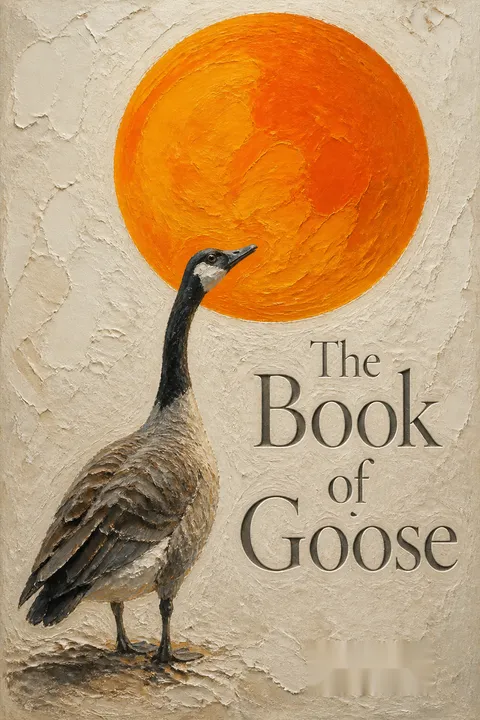

Plot Summary
Oranges and Knives
The story opens with Agnès reflecting on the impossibility of making something whole again once it's been cut—an orange cannot be reassembled, a knife divides. This metaphor sets the tone for the novel's exploration of friendship, fate, and the irreparable changes that come with growing up. Agnès, now living in America, receives news of Fabienne's death, which prompts her to revisit their shared past in rural postwar France. The narrative is tinged with longing and the knowledge that some wounds—like those inflicted by knives or by life—never truly heal. The chapter establishes the central dynamic: Agnès, the passive observer, and Fabienne, the forceful instigator, whose friendship will shape and scar them both.
Fabienne's Shadow
Agnès downplays her own importance, insisting that her name is irrelevant compared to Fabienne's. Fabienne is described as a shapeshifter, someone who could be anything—knife, orange, singer, ghost. The news of Fabienne's death is delivered almost as an afterthought, yet it triggers a cascade of memories and unresolved feelings. Agnès's life in America is marked by distance, both literal and emotional, from her French origins and from motherhood. She raises geese, is called "Mother Goose" by her in-laws, and feels that her secrets have left no room for a child. Fabienne's death is both a loss and a strange liberation, as if Agnès has been granted parole from a sentence she never fully understood.
Growing Happiness, Growing Misery
At thirteen, Agnès and Fabienne debate whether happiness can be grown like potatoes or beets, or if misery is a weed that grows on its own. Their conversations are filled with nonsense and philosophical musings, mocking God and the world's logic. Fabienne is the provocateur, always pushing boundaries, while Agnès follows, asking questions she knows won't be answered. Their bond is intense, exclusive, and lopsided—Fabienne leads, Agnès trails. The world outside is full of suffering and absurdity, but within their friendship, they create their own rules and meanings, even as they sense that happiness is fleeting and perhaps unattainable.
The Book Game Begins
After the death of the village postmaster's wife, Fabienne proposes that she and Agnès write a book together, with Agnès as the scribe and Fabienne as the storyteller. They enlist M. Devaux, the postmaster, to help them, exploiting his loneliness and need for distraction. The stories they create are macabre, centered on dead children and the ghosts that haunt their village. Writing becomes a way to assert their existence, to take revenge on a world that ignores them. The process is both a game and a test of power—Fabienne dictates, Agnès writes, and M. Devaux edits, each shaping the narrative in their own way.
Death, Stories, and Myths
As the girls' stories accumulate, so do the deaths within them—children, animals, adults, all rendered with a mix of detachment and dark humor. M. Devaux criticizes their work as morbid and incoherent, yet he is drawn to it, needing their stories as much as they need his validation. The act of writing transforms Agnès into a minor myth, a vessel for Fabienne's imagination and M. Devaux's ambitions. The boundaries between fact and fiction blur, and the girls realize that myths are necessary to mask the hideousness and tedium of real life. Their book becomes a way to control their narrative, even as it exposes them to new dangers.
M. Devaux's Bargain
M. Devaux takes a more active role, rewriting the girls' stories to make them more palatable for publication. Agnès feels herself becoming less like Fabienne and more like herself, yet she is weary of the game. The triangle between Agnès, Fabienne, and M. Devaux grows volatile—each needs something from the others, but none can fully trust or understand the others' motives. When the book is finished, M. Devaux arranges for Agnès to travel to Paris to meet publishers, leaving Fabienne behind. The bargain is clear: Agnès's name will be on the book, but it is Fabienne's voice and M. Devaux's connections that make it possible.
Paris: Becoming a Prodigy
In Paris, Agnès is coached to present herself as a mysterious, intuitive child author. She is tested by publishers, photographed, and paraded before the press, who are fascinated by her rural origins and the morbid content of her stories. Agnès learns to play the role expected of her—half herself, half Fabienne—answering questions with calculated innocence and ambiguity. The city is both dazzling and alienating, and Agnès feels the absence of Fabienne acutely. The experience marks the beginning of her public life as a prodigy, even as it deepens her sense of dislocation and unreality.
Fame and Its Cost
The publication of Les Enfants Heureux brings Agnès fame, but also scrutiny and isolation. The press debates the origins of her talent, attributing it to ambition, necessity, or the influence of M. Devaux. Agnès is celebrated as a savage chronicler of postwar life, yet she feels neither morbid nor romantic—only detached. The distance between her and Fabienne grows, as does the gap between her public persona and her private self. The world's fascination with her story comes at the cost of her own sense of agency and belonging.
The Village Spectacle
Back in the village, Agnès is both admired and resented. Her parents and neighbors see her fame as a curiosity, not a triumph. Fabienne remains the driving force behind their creative partnership, insisting that Agnès's name alone should appear on their books to preserve the game's balance. Their friendship is tested by jealousy, misunderstanding, and the intrusion of outsiders like M. Devaux and the Parisian photographer. The village becomes a stage, and Agnès a reluctant performer, caught between loyalty to Fabienne and the demands of her new identity.
Letters, Lies, and Love
When Agnès is sent to an English finishing school under the supervision of Mrs. Townsend, she and Fabienne maintain their connection through letters. Fabienne writes both as herself and as "Jacques," a fictional boyfriend, blurring the lines between reality and invention. The letters become a lifeline, a way to sustain their intimacy across distance, but also a source of pain and misunderstanding. Agnès struggles to reconcile her feelings for Fabienne, Jacques, and the life she has left behind. The act of writing, once empowering, now feels like a trap.
England's Gilded Cage
At Woodsway, Agnès is both a curiosity and an outsider. Mrs. Townsend treats her as an experiment, determined to mold her into a proper society girl and literary star. The other students are older, wealthier, and more sophisticated, and Agnès feels her difference acutely. She finds solace in gardening with Meaker, the school's handyman, and in her secret correspondence with Fabienne. The pressure to write a new book about her life at Woodsway becomes suffocating, as Agnès realizes that her story is no longer her own.
The Experiment of Agnès
Mrs. Townsend's supervision grows more intrusive—she reads Agnès's journal, censors her letters, and rewrites her manuscript. Agnès is expected to produce a sanitized, marketable version of her experience, erasing the darkness and ambiguity that defined her earlier work. The school becomes a gilded cage, and Agnès's attempts to assert her autonomy are met with manipulation and threats. The experiment is not just educational, but existential: can Agnès remain herself under such relentless pressure to conform?
The Escape Plan
Feeling trapped and desperate, Agnès plots to escape Woodsway with the help of Meaker. She appeals to his sympathy, even suggesting marriage as a means of liberation. Meaker, however, is unable or unwilling to help, and ultimately betrays her confidence to Mrs. Townsend. The plan collapses, and Agnès is left more isolated than ever. The episode underscores the limits of trust and the inevitability of betrayal in a world where power is always unevenly distributed.
Betrayals and Endings
Mrs. Townsend fires Meaker and confronts Agnès, accusing her of ingratitude and emotional instability. Agnès retaliates by threatening to expose the truth about her books and Mrs. Townsend's role in shaping her narrative. The standoff ends with Mrs. Townsend arranging for Agnès's return to France, her experiment deemed a failure. The episode marks the end of Agnès's brief, tumultuous career as a prodigy and the shattering of her illusions about friendship, authority, and self-determination.
Homecoming and Loss
Agnès's return to Saint Rémy is anticlimactic—her parents and neighbors treat her as if nothing has changed. The fame and adventure that once set her apart now seem distant and irrelevant. She resumes her old life, helping on the farm and contemplating her future. The only lasting mark of her journey is the sense of loss—of Fabienne, of Jacques, of the self she once imagined she could become. The world has moved on, and Agnès must find a way to live with what remains.
Fabienne's Final Game
Agnès and Fabienne are reunited, but their friendship is irrevocably altered. Fabienne reveals that "Jacques" is dead—a final, cruel twist in their long game of invention and betrayal. They revisit the cemetery, the site of so many childhood games, and confront the reality that their best days are behind them. Fabienne, ever the instigator, suggests that only violence or death could make their lives feel real again. Agnès, passive as always, can only ask questions, hoping for answers that will never come.
The Weight of Survival
The friendship between Agnès and Fabienne fades, not with a dramatic rupture but with a slow, mutual withdrawal. Both are marked by their shared past, but neither can recapture the intensity or innocence of their youth. Agnès moves away, tries and fails at love, and eventually emigrates to America. Fabienne disappears, rumored to have joined a circus, and later returns to die in childbirth. Survival is not a triumph but a burden, a testament to the impossibility of sustaining the magic and pain of childhood into adulthood.
The Story That Remains
In the end, Agnès reflects on the story she has told—the story of a faux-prodigy, of a friendship that was both monumental and inconsequential. She acknowledges that the real story was never about the books or the fame, but about the bond between two girls who tried and failed to save each other. The world will never understand or care about their truth, but Agnès writes it anyway, as an act of remembrance and defiance. The story that remains is not one of triumph, but of survival, loss, and the enduring mystery of love.
Analysis
Yiyun Li's The Book of Goose is a haunting meditation on the complexities of female friendship, the construction of identity, and the costs of survival in a world that is both indifferent and predatory. Through the intertwined lives of Agnès and Fabienne, the novel explores how stories—those we tell ourselves, those others tell about us—can both liberate and imprison. The friendship at the heart of the book is at once a source of solace and a crucible of pain, marked by power struggles, mutual dependence, and the ever-present threat of betrayal. Li deftly interrogates the myth of the child prodigy, exposing the ways in which talent is commodified, manipulated, and ultimately discarded by adults and institutions. The novel's structure—fragmented, recursive, and deeply introspective—mirrors the instability of memory and the impossibility of fully capturing the truth of experience. In the end, The Book of Goose is less a coming-of-age story than a reckoning with the aftermath of childhood: the scars left by love, the burden of survival, and the enduring mystery of what it means to be known and to know another. It is a profound, unsettling work that lingers long after the final page, challenging readers to confront the limits of empathy, the dangers of narrative, and the inescapable solitude at the heart of every life.
Review Summary
Reviews of The Book of Goose are mixed, averaging 3.68/5. Fans praise Yiyun Li's restrained, psychologically astute prose and the compelling portrayal of Agnes and Fabienne's intense, obsessive friendship in post-war rural France. Many found it an absorbing character-driven coming-of-age story with beautiful writing and rich themes of friendship, power, and identity. Critics, however, felt it was cold and detached, lost momentum midway, and drew unfavorable comparisons to Ferrante's My Brilliant Friend, with some finding the characters unconvincing and the plot meandering.
People Also Read







Characters
Agnès Moreau
Agnès is the narrator and central figure, yet she is defined by her passivity and her willingness to be shaped by others—especially Fabienne. She is intelligent, sensitive, and capable, but lacks the force of will to direct her own life. Her relationship with Fabienne is both sustaining and suffocating; she is the scribe to Fabienne's storyteller, the face to Fabienne's voice. Agnès's journey from rural France to Parisian fame and English exile is marked by a constant sense of displacement and longing. She is haunted by the knowledge that her story is not truly her own, and her eventual survival feels more like a concession than a victory. Her psychological complexity lies in her ambivalence—she desires connection but fears the cost, she seeks meaning but doubts her own agency.
Fabienne Martin
Fabienne is the driving force behind every major event in Agnès's life. Charismatic, cunning, and often cruel, she is both muse and tormentor. Fabienne's creativity is matched by her restlessness and her need to test boundaries—whether by inventing stories, orchestrating games, or manipulating adults like M. Devaux. She refuses to be ordinary, yet is ultimately trapped by the limitations of her world. Fabienne's relationship with Agnès is deeply intimate but also exploitative; she needs Agnès as an audience, a collaborator, and a mirror. Her death in childbirth is both a tragic repetition of her sister's fate and a final, ironic escape from the constraints of life. Psychologically, Fabienne embodies the dangers and allure of unchecked imagination and the longing for a reality that matches her inner intensity.
M. Devaux
The village postmaster, M. Devaux, is drawn into the girls' world as a mentor and facilitator, but his motives are mixed—part loneliness, part vanity, part desire. He helps shape their stories for publication, but also seeks to control and possess them, especially Fabienne. His eventual downfall—driven out of the village after a scandal—mirrors the dangers of adult involvement in children's games. M. Devaux is both a victim and a perpetrator, a figure of pity and suspicion. His relationship with the girls is marked by mutual exploitation and misunderstanding, and his presence lingers as a reminder of the blurred boundaries between guidance and manipulation.
Mrs. Townsend (Kazumi)
Mrs. Townsend is the headmistress of Woodsway, the English finishing school where Agnès is sent. She sees Agnès as an experiment, a project to be molded and displayed. Her methods are intrusive and often cruel—she reads Agnès's journal, censors her letters, and rewrites her manuscript. Mrs. Townsend's own frustrated ambitions as a writer fuel her need to control Agnès's narrative. She is both a benefactor and a jailer, offering opportunities while denying autonomy. Her psychological makeup is defined by a need for order, recognition, and the validation of her own authority.
Meaker
Meaker is the gardener and handyman at Woodsway, a quiet, solitary man who becomes Agnès's confidant. He represents a possible escape from the oppressive environment of the school, but ultimately cannot or will not help Agnès. His own history of loss and isolation mirrors Agnès's, and his inability to act underscores the limits of kindness in a world governed by power and suspicion. Meaker's dismissal from the school is a turning point, marking the collapse of Agnès's last hope for agency.
Jacques (Fabienne's invention)
Jacques is a fictional character created by Fabienne to correspond with Agnès during her time in England. Through Jacques, Fabienne explores themes of love, jealousy, and betrayal, complicating Agnès's emotional landscape. The letters from Jacques blur the line between reality and invention, allowing both girls to express feelings they cannot articulate directly. Jacques's "death" is a final act of narrative control by Fabienne, severing one more tie between them.
Agnès's Parents
Agnès's parents are emblematic of the rural, postwar world she comes from—hardworking, resigned, and emotionally reserved. They support her in a minimal, transactional way, seeing her fame as a curiosity rather than a source of pride. Their inability to understand or nurture Agnès's inner life contributes to her sense of isolation and her dependence on Fabienne.
The Girls at Woodsway (Catalina, Margareta, Rose, Helen)
The other students at Woodsway represent the world Agnès is expected to join—wealthy, cultured, and self-assured. They are both welcoming and exclusionary, curious about Agnès's origins but ultimately unable to bridge the gap between their experiences. Catalina, in particular, serves as a potential friend and confidante, but even she cannot fully understand or accept Agnès's difference. The girls' presence highlights Agnès's outsider status and the impossibility of true assimilation.
M. Chastain
M. Chastain is the Parisian publisher who facilitates Agnès's rise to fame and later her return to obscurity. He is practical, opportunistic, and ultimately indifferent to Agnès's well-being. His role underscores the transactional nature of literary success and the ease with which prodigies are discarded when they cease to be profitable or interesting.
The Village
The village of Saint Rémy is more than a backdrop—it is a living, breathing entity that shapes and constrains the lives of its inhabitants. It is a place of poverty, gossip, and stasis, but also of shared history and unspoken bonds. The village's indifference and hostility toward difference drive much of the novel's tension, making escape both necessary and impossible.
Plot Devices
Dual Narration and Unreliable Memory
The novel is structured as a retrospective narrative, with Agnès recounting her past from the vantage point of adulthood. Her memories are selective, subjective, and often contradictory, reflecting the instability of identity and the unreliability of storytelling. The interplay between what is remembered, what is invented, and what is omitted creates a sense of ambiguity and complexity, inviting readers to question the nature of truth and the power of narrative to both reveal and conceal.
Letters and Epistolary Interludes
The use of letters—between Agnès and Fabienne, Agnès and Jacques, and others—serves as a crucial plot device, allowing for intimacy, miscommunication, and the blurring of boundaries between reality and invention. The letters are both lifelines and weapons, sustaining relationships while also enabling deception and manipulation. They provide insight into the characters' inner lives, but also highlight the limitations of language and the impossibility of full understanding.
Metafiction and Self-Referentiality
The novel is deeply self-aware, constantly interrogating the act of storytelling itself. The process of writing, publishing, and performing one's life is foregrounded, with Agnès and Fabienne both as creators and creations. The narrative draws attention to its own artifice, questioning the ethics and consequences of turning life into literature. This metafictional approach invites readers to reflect on the relationship between author, character, and audience.
Power Dynamics and Manipulation
The relationships at the heart of the novel—between Agnès and Fabienne, Agnès and M. Devaux, Agnès and Mrs. Townsend—are defined by imbalances of power. Each character seeks to use or control the others, whether out of love, ambition, or desperation. The shifting alliances and betrayals drive the plot, exposing the vulnerabilities and dangers inherent in intimacy and dependence.
Foreshadowing and Circular Structure
The narrative is marked by a sense of inevitability—early metaphors of cutting, division, and irreparability foreshadow the eventual dissolution of Agnès and Fabienne's friendship. The story circles back on itself, with the ending echoing the beginning: the impossibility of making something whole again once it has been divided. This circularity reinforces the themes of loss, survival, and the enduring impact of childhood.

Download PDF
Download EPUB
.epub digital book format is ideal for reading ebooks on phones, tablets, and e-readers.








































