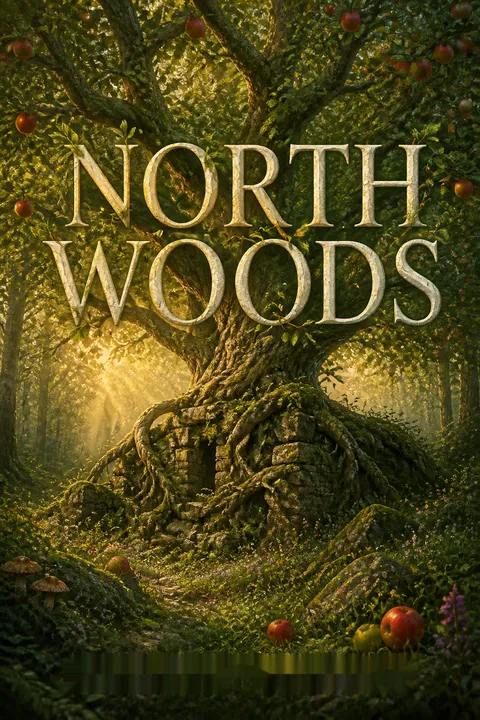

Plot Summary
Lovers Flee Into Wilderness
In the lush, untamed forests of colonial New England, two young lovers—an Englishwoman and a rebellious man—flee the constraints and dangers of their Puritan settlement. Their journey is both desperate and exhilarating, as they evade pursuers and embrace the wildness of the land. They find solace in each other and in the natural world, forging a new life in a remote clearing. Their union is marked by a sense of freedom and belonging to the land, but also by the ever-present threat of violence and the unknown. Their story is the seed from which the novel's central location—a house in the north woods—will grow, setting the stage for centuries of human drama and natural change.
Captivity and Survival
A harrowing letter recounts the ordeal of a woman captured during a violent raid. Forced to march through the wilderness with her infant, she endures loss, fear, and the strangeness of her captors. Eventually, she is left in the care of an enigmatic woman who bridges the worlds of colonists and Native Americans. The two women, both marked by loss and survival, form a tenuous bond. When English soldiers arrive, violence erupts again, and the narrator is forced to commit desperate acts to protect herself and her child. The land absorbs these traumas, and the bodies buried in the meadow become part of the soil's memory, foreshadowing the cycles of violence and renewal that will haunt the place.
The Apple Orchard Dream
Major Charles Osgood, a British veteran, is drawn to the land by a mystical dream and a near-death experience. Forsaking war, he devotes himself to cultivating a unique apple, the Osgood Wonder, and raising his twin daughters in the wilderness. His eccentricity and passion for apples become the foundation of the family's legacy. Through humor, myth, and practical wisdom, he instills in his daughters a love for the land and the orchard. The orchard flourishes, but Osgood's life is shadowed by the approach of war and the knowledge that his time is limited. His testament to his daughters is both a practical guide and a plea to cherish the fragile beauty of their home.
Sisters of the Orchard
Alice and Mary Osgood, the Major's daughters, inherit the orchard and the house. Their lives are deeply intertwined, marked by both love and rivalry. The sisters' bond is tested by the outside world—suitors, social expectations, and the hardships of rural life. Mary's practicality and Alice's yearning for romance create tension, especially when love and loss enter their lives. The orchard becomes both their refuge and their prison, a place of shared memory and unspoken resentments. As they age, their world contracts, and their devotion to each other becomes both sustaining and suffocating, culminating in a tragic, ambiguous act that blurs the line between love and violence.
Love, Rivalry, and Loss
The sisters' relationship is further strained by the arrival of George Carter, a childhood friend who returns as an adult. Alice's longing for connection leads her into a late romance, while Mary's possessiveness and fear of abandonment intensify. The orchard, once a symbol of unity, becomes a battleground for their competing desires. A moment of passion and betrayal leads to a violent rupture, leaving one sister dead and the other haunted by guilt and loneliness. The house, now marked by tragedy, becomes a mausoleum of memory, and the orchard's fruit carries the taste of both sweetness and sorrow.
The Catamount and the Pasture
As the years pass, the land itself undergoes transformation. The introduction of sheep farming brings prosperity but also vulnerability. A catamount (mountain lion) preys on the flock, symbolizing the wildness that persists beneath human attempts at control. The sisters' efforts to tame the land are ultimately futile, as nature reasserts itself through cycles of predation, disease, and regrowth. The pasture, once cleared with such effort, is gradually reclaimed by bramble and forest. The story of the catamount becomes a local legend, echoing the larger theme of the house as a place where human ambition and natural forces are in constant tension.
Succession and Decay
With the decline of the Osgood family, the house and orchard fall into neglect. The land is sold, inherited, and abandoned by a succession of owners, each leaving their mark and their detritus. The once-proud orchard is overtaken by wild growth, and the house becomes a repository of forgotten lives. The narrative shifts to the perspective of the land itself, chronicling the slow, relentless process by which nature reclaims what was once cleared. Seeds brought by wind, animals, and human hands take root, and the boundaries between wilderness and civilization blur. The ghosts of past inhabitants linger, their stories embedded in the soil and the stones.
Hauntings and Inheritance
The house becomes a site of haunting, both literal and metaphorical. New owners sense the presence of those who came before—through unexplained noises, dreams, and the uncanny persistence of the orchard's apples. A séance conducted by a fraudulent medium unexpectedly conjures real apparitions, forcing the living to confront the unresolved traumas of the past. The boundaries between history and myth, reality and imagination, are porous. Inheritance is not just a matter of property, but of burdens, secrets, and the weight of memory. The house endures as a vessel for the stories and sorrows of its many inhabitants.
Madness in the Woods
A new chapter begins with the arrival of Lillian and her son Robert, who suffers from schizophrenia. Their struggle to manage his illness in the isolation of the woods is both poignant and harrowing. Robert's delusions are shaped by the landscape—he believes he must "stitch" the world together through ritual walks, and is tormented by unseen forces. Lillian's love is fierce but ultimately powerless against the progression of his disease. The medical establishment offers only crude solutions, and the family is left to navigate the thin line between care and despair. The woods, once a place of refuge, become a labyrinth of fear and longing.
The Blight and the Beetle
The arrival of the chestnut blight and the elm bark beetle brings ecological catastrophe to the land. The great trees that once defined the forest are felled by invisible enemies, their loss echoing the decline of the families who lived among them. The narrative zooms in on the microscopic dramas of spores and beetles, drawing parallels between natural and human cycles of destruction and renewal. The blight is both a literal and symbolic force, erasing the past and forcing adaptation. The house and its orchard are now surrounded by a changed, diminished forest, yet life persists in unexpected forms.
Letters, Loss, and Return
Lillian, now elderly and increasingly confused, finds solace in writing letters—first to prisoners as part of a benevolence program, then to her missing son, who assumes a false identity. Their correspondence is a lifeline, sustaining hope in the face of loss and uncertainty. The act of writing becomes a way to remember, to confess, and to seek forgiveness. When Robert's fate is finally revealed, the reunion is bittersweet, marked by the passage of time and the irretrievability of what was lost. The house, battered by storms and neglect, stands as a testament to endurance and the longing for connection.
Ghosts, Mediums, and Truth
A flamboyant medium is hired to exorcise the house's ghosts, but the performance takes an unexpected turn when genuine supernatural phenomena occur. The living are confronted with the unresolved pain and passion of the past, as the spirits of former inhabitants make their presence known. The séance becomes a moment of reckoning, forcing the characters to acknowledge the complexity of the house's history and the impossibility of closure. The boundaries between fraud and faith, performance and reality, are blurred, and the house's legacy is revealed to be both a burden and a blessing.
The Amateur Historian's Quest
An amateur historian, driven by obsession and loneliness, sets out to prove the authenticity of a centuries-old captivity narrative linked to the house. His quest leads him through archives, pulp magazines, and the physical landscape itself. As he digs—literally and figuratively—he uncovers not only artifacts but also the layers of longing, grief, and desire that have shaped the place. His journey is both comic and tragic, culminating in a final encounter with the ghosts of the past. The historian's search for meaning mirrors the novel's larger meditation on the persistence of memory and the hunger for connection.
The Enduring House
The house, now a patchwork of renovations and decay, is bought, sold, and inhabited by a succession of new owners. Each brings their own dreams and disappointments, but the land resists easy domestication. The narrative shifts through time, showing the house as a wedding venue, a retreat, a commune, and finally as a ruin overtaken by nature. The cycles of human ambition and abandonment are mirrored by the rhythms of the forest, the return of wild animals, and the slow reclamation of the land. The house endures as both a symbol of human striving and a reminder of the limits of control.
The Botanist's Arrival
In the present day, a young botanist named Nora arrives in the region to study spring wildflowers. After a car accident, she is taken in by an eccentric old man, Charles Osgood, who claims a connection to the land's deep past. As Nora recovers, she is drawn into the mysteries of the house and its orchard, finding in the landscape both solace and a sense of belonging. Her scientific perspective is enriched by the stories and ghosts that linger in the woods. The encounter between past and present, science and myth, becomes a source of healing and renewal.
Cycles of Change
The novel's final chapters trace the ongoing cycles of succession—ecological, familial, and historical—that define the house and its land. Generations come and go, species rise and fall, and the boundaries between the living and the dead grow porous. The house is both a grave and a cradle, a place where stories are buried and reborn. The narrative embraces the inevitability of change, the persistence of loss, and the possibility of renewal. In the end, the land itself is the true protagonist, holding the memory of all who have passed through.
Succession and Renewal
As the novel closes, the house is finally overtaken by fire and the forest reclaims the last traces of human habitation. Yet even in destruction, there is the promise of renewal. Seeds sprout in the ashes, and the spirits of the past linger in the changing landscape. The story ends not with closure, but with the assurance that life—human and nonhuman—will continue to adapt, endure, and transform. The north woods remain a place of mystery, beauty, and endless possibility, their stories carried forward by wind, water, and memory.
Analysis
North Woods is a sweeping, polyphonic meditation on the passage of time, the persistence of memory, and the entanglement of human and natural histories. Through its kaleidoscopic structure, the novel invites readers to see a single patch of land as a microcosm of American experience—marked by violence, ambition, love, loss, and the relentless cycles of change. The house in the north woods is both a stage and a character, bearing witness to generations of striving and suffering, while the land itself endures, adapts, and ultimately reclaims what was once taken. The novel's use of multiple voices and forms underscores the subjectivity of history and the impossibility of closure; every ending is a new beginning, every loss a prelude to renewal. At its heart, North Woods is a celebration of resilience—of people, of nature, and of the stories that bind them. It is a reminder that while individual lives are fleeting, the land remembers, and in that memory lies both sorrow and hope.
Review Summary
North Woods by Daniel Mason receives mostly exceptional praise, with an overall 4.1 rating from 114,201 reviews. Readers celebrate Mason's exquisite prose, particularly his nature writing, and the novel's innovative structure—interconnected stories spanning four centuries around a single Massachusetts house. The inventive format includes narratives, letters, poems, and historical documents. While many declare it Pulitzer-worthy, some critics find the characters lack emotional depth or connection. A few readers struggled with the episodic structure and supernatural elements. Nearly all agree Mason's descriptive writing is masterful, though opinions divide on whether beautiful prose compensates for the fragmented narrative.
People Also Read









Characters
The House in the North Woods
The house is more than a setting; it is the novel's central character, absorbing the hopes, traumas, and dreams of its many inhabitants. It is a vessel for memory, a stage for human drama, and a participant in the cycles of nature. The house's changing architecture reflects the passage of time and the shifting fortunes of those who live within. Haunted by ghosts both literal and figurative, it endures as a symbol of persistence and transformation. Its presence shapes the destinies of all who enter, binding together disparate lives into a single, ongoing story.
Alice Osgood
Alice is one of the twin daughters of Major Osgood, marked by a quiet longing for connection and beauty. Sensitive and artistic, she is drawn to music, romance, and the enchantment of the orchard. Her relationship with her sister Mary is both nurturing and fraught, as Alice's desires often clash with Mary's pragmatism. Alice's emotional vulnerability makes her both beloved and isolated, and her fate is entwined with the orchard's fortunes. Her tragic end is both a culmination of her longing and a testament to the destructive power of love denied.
Mary Osgood
Mary, Alice's twin, is the more pragmatic and industrious of the sisters. She is devoted to the orchard and to the preservation of their way of life, often at the expense of her own happiness. Mary's sense of duty and her fear of abandonment drive her to acts of both care and violence. Her relationship with Alice is the central axis of her life, and her inability to let go leads to tragedy. In her later years, Mary is consumed by loneliness and regret, yet she remains a guardian of the house's memory and a symbol of endurance.
Major Charles Osgood
A British veteran turned American settler, Major Osgood is driven by a mystical vision to create an orchard in the wilderness. His passion for apples and his devotion to his daughters shape the family's destiny. Osgood is both a figure of humor and pathos, his eccentricities masking a deep wisdom about the land and the cycles of life. His legacy is both a blessing and a burden to his descendants, and his presence lingers in the stories, songs, and trees he leaves behind.
Lillian S.
Lillian is a woman defined by her fierce love for her son Robert, whose schizophrenia dominates their lives. Her resilience and resourcefulness are tested by isolation, poverty, and the failures of the medical system. Lillian's longing for connection leads her to seek solace in letter-writing and community, but she is ultimately left alone with her memories and regrets. Her story is one of endurance in the face of overwhelming loss, and her voice—by turns confessional and lyrical—embodies the novel's themes of longing and survival.
Robert S.
Robert is Lillian's son, a brilliant and sensitive man whose life is derailed by schizophrenia. His delusions are shaped by the landscape, and he becomes obsessed with the idea that he must "stitch" the world together through ritual walks. Robert's illness isolates him from others, yet he remains deeply attuned to the beauty and mystery of the woods. His story is a meditation on the limits of understanding, the pain of exclusion, and the possibility of finding meaning in madness.
George Carter
George is a neighbor's son who grows up alongside Alice and Mary, later returning as an adult to rekindle old bonds. His presence disrupts the sisters' equilibrium, awakening desires and resentments that have long lain dormant. George's own life is marked by wandering and a search for purpose, and his relationships with the sisters are both tender and fraught. He serves as a bridge between past and present, and his actions set in motion the novel's central tragedy.
Charles Osgood (Modern)
A descendant or namesake of the original Osgood, Charles is an old man who tends the land in the present day. He is a repository of local lore, a jack-of-all-trades, and a guide to the mysteries of the house and orchard. His humor, wisdom, and kindness make him a stabilizing presence for newcomers like Nora. Charles embodies the persistence of memory and the ways in which the past continues to shape the present.
Nora (The Botanist)
Nora is a young botanist who arrives in the region to study wildflowers and finds herself drawn into the house's web of stories. Her scientific training is complemented by a deep sensitivity to the land's history and its ghosts. Nora's journey is one of healing—from personal loss, from the wounds of the past, and from the ecological grief that pervades the novel. Through her, the narrative embraces the possibility of renewal and the enduring power of wonder.
The Land / Nature
The land itself is a character, shaping and being shaped by the lives of those who inhabit it. It is both nurturing and indifferent, a source of beauty and of destruction. The cycles of growth, decay, and renewal that define the forest mirror the human dramas that unfold within it. The land remembers what people forget, and its persistence is both a comfort and a challenge to the illusion of human control.
Plot Devices
Interwoven Narratives Across Time
The novel's structure is a tapestry of stories, letters, songs, and documents spanning centuries. Each chapter adopts a new voice or form—captivity narrative, orchardist's memoir, ballad, medical case notes, séance transcript, crime report, and more. This polyphonic approach allows the house and land to be seen from many angles, revealing the complexity of history and the persistence of certain themes: love, loss, survival, and the tension between nature and civilization. The shifting perspectives create a sense of accumulation, as each generation adds its own layer to the story.
Recurring Motifs and Symbols
The apple orchard is a central symbol, representing both human ambition and the fragility of dreams. Trees—chestnut, elm, beech, and apple—embody the passage of time and the impact of ecological change. Ghosts, both literal and metaphorical, haunt the narrative, blurring the boundaries between past and present, reality and imagination. The motif of succession—ecological, familial, and historical—underscores the novel's meditation on change and continuity.
Foreshadowing and Echoes
The novel is rich in foreshadowing, with early events and images—buried bodies, lost children, storms, and fires—echoing in later chapters. The cycles of violence, love, and loss are mirrored in the land's own rhythms. The recurrence of certain names, objects, and places creates a sense of fate and inevitability, while also inviting the reader to see each story as both unique and part of a larger whole.
Blending of Fact and Fiction
The narrative frequently adopts the forms of historical documents—letters, ballads, case notes, advertisements, and lectures—blurring the line between fact and fiction. This device both grounds the story in a sense of realism and highlights the constructed nature of history and memory. The inclusion of invented texts and playful metafictional elements invites the reader to question the reliability of narrative and the possibility of ever fully knowing the past.
Nature as Active Agent
Nature is not a passive backdrop but an active force in the novel. Ecological events—blight, predation, succession, and fire—drive the plot and mirror human dramas. The land's capacity for renewal and destruction challenges the characters' illusions of control and permanence. The interplay between human ambition and natural cycles is a central theme, explored through both lyrical description and narrative action.
About the Author


Download PDF
Download EPUB
.epub digital book format is ideal for reading ebooks on phones, tablets, and e-readers.








































